Cat urine odor lingers because of uric acid residue. Learn vet-approved enzymatic cleaning steps for carpet, floors, wood, and fabrics—plus how to stop rep...
Article
•
Designer Mixes
How to Get Rid of Cat Pee Smell Permanently

Shari Shidate
Designer Mixes contributor
Cat urine smell can feel impossible to remove because it is not just an unpleasant odor. It is chemistry. As urine dries, it concentrates and leaves behind uric acid and urate residues (often crystallized) that can cling to carpet fibers, padding, wood, and even concrete. Add in bacteria and humidity, and that smell can return weeks later even after you cleaned.
The good news is that with the right approach, you can get rid of cat pee smell permanently and prevent repeat accidents. I will walk you through what actually works, what tends to fail, and how to make your home feel fresh again.
Why the smell keeps coming back
Many people clean the spot until it smells better, only to notice the odor reappearing later. That usually happens for one of three reasons:
- The urine soaked deeper than the surface. Carpet and rugs often hide urine in the padding and subfloor.
- The cleaner did not break down uric acid and urate residue. Soap and many all-purpose cleaners can remove surface grime but leave odor-causing crystals behind.
- Moisture reactivates residue. Humidity, steam mops, and even rainy weather can make old urine smells “bloom” again.
Permanent removal depends on finding the full area and using an enzyme-based cleaner (sometimes an enzymatic and bacterial formula) that targets the compounds that cause lingering odor.
Step 1: Find the full urine spot
Before you clean, make sure you are treating the entire affected area. Cats often urinate in the same spot repeatedly, and one visible stain may not reflect the full spread.
Use your senses first
- Smell close to the floor, especially near walls, furniture legs, and corners.
- Look for discoloration, stiff fabric, or areas that dry differently.
Use a UV blacklight for hidden spots
A handheld UV light makes old urine easier to identify in a dark room. Scan slowly and mark the edges with painter’s tape so you clean beyond what you see. Keep in mind that some detergents and materials can glow too, so confirm with smell and texture, and clean a little wider than the brightest area.
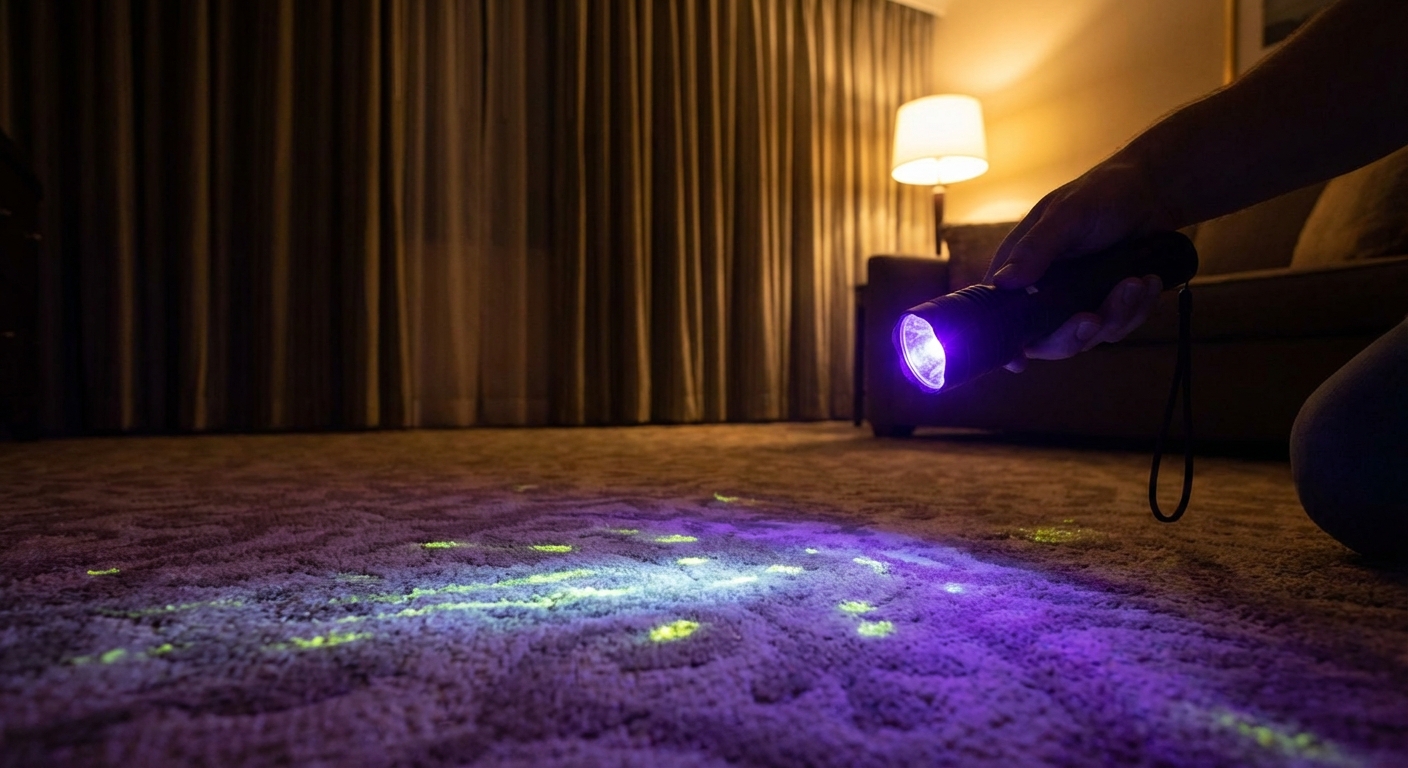
Tip: Clean a little larger than the visible stain. Urine spreads outward as it wicks through fabric and padding.
Step 2: Blot first, do not scrub
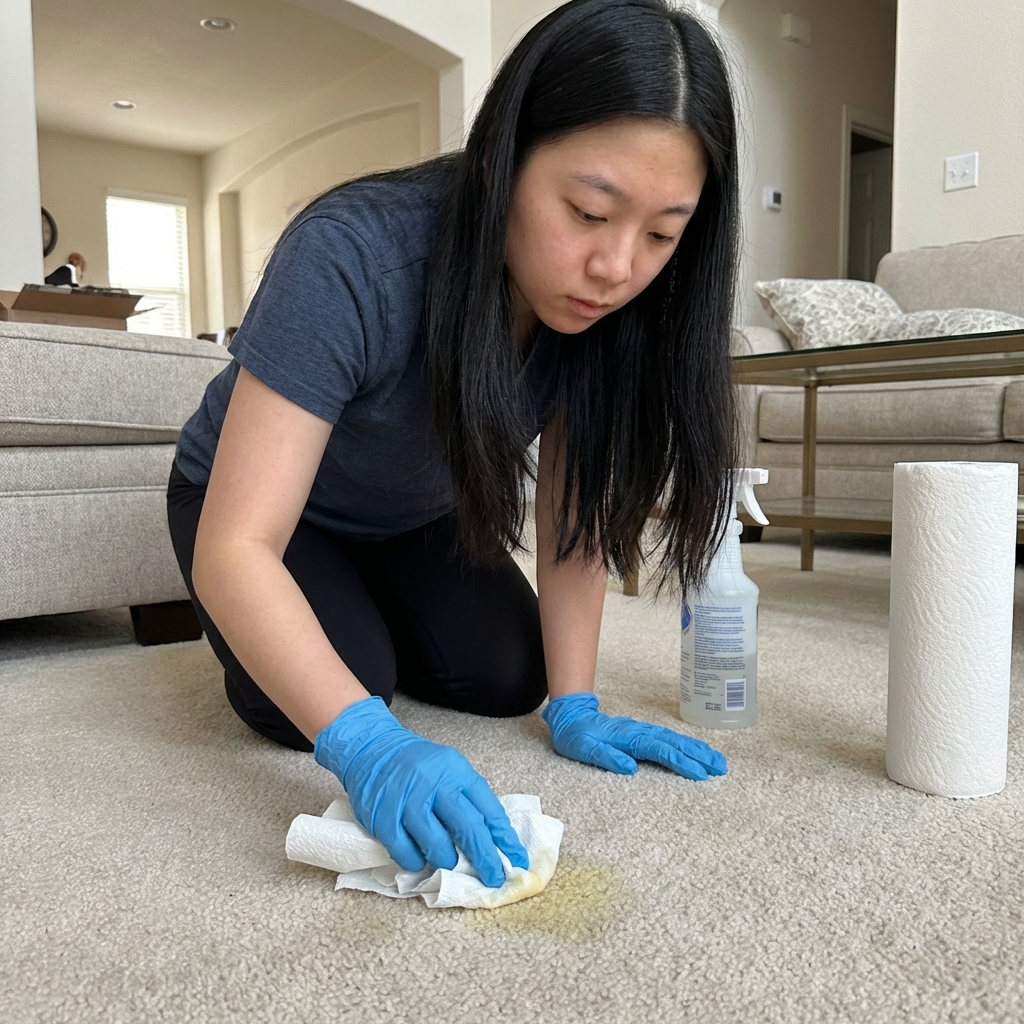
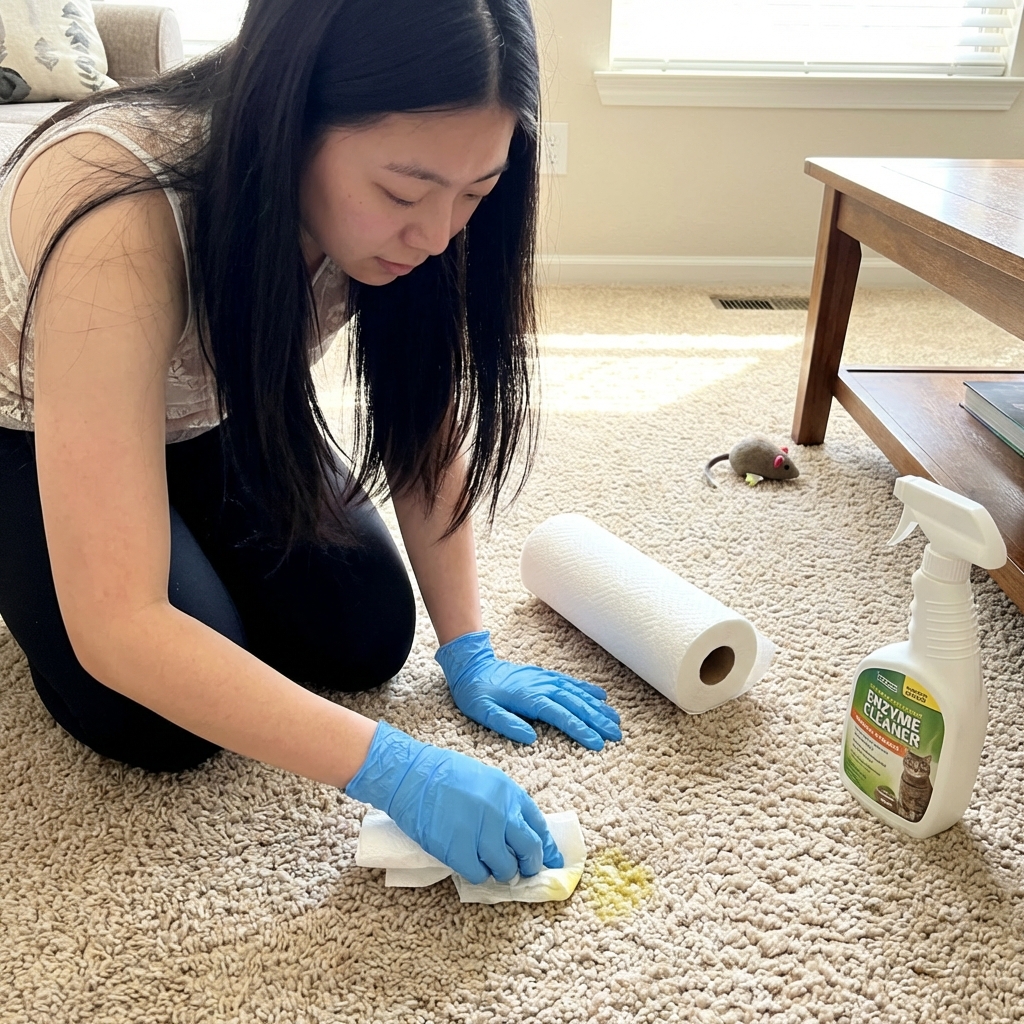
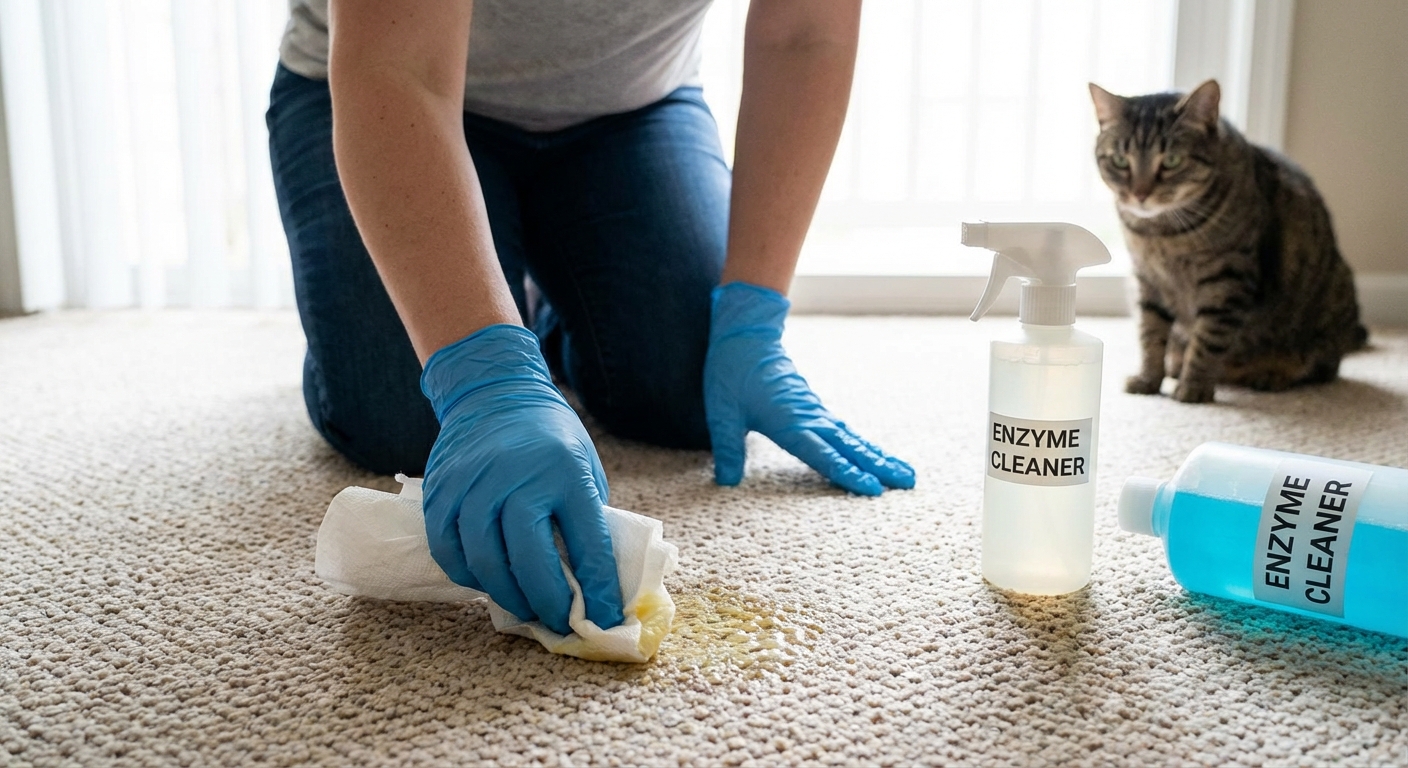
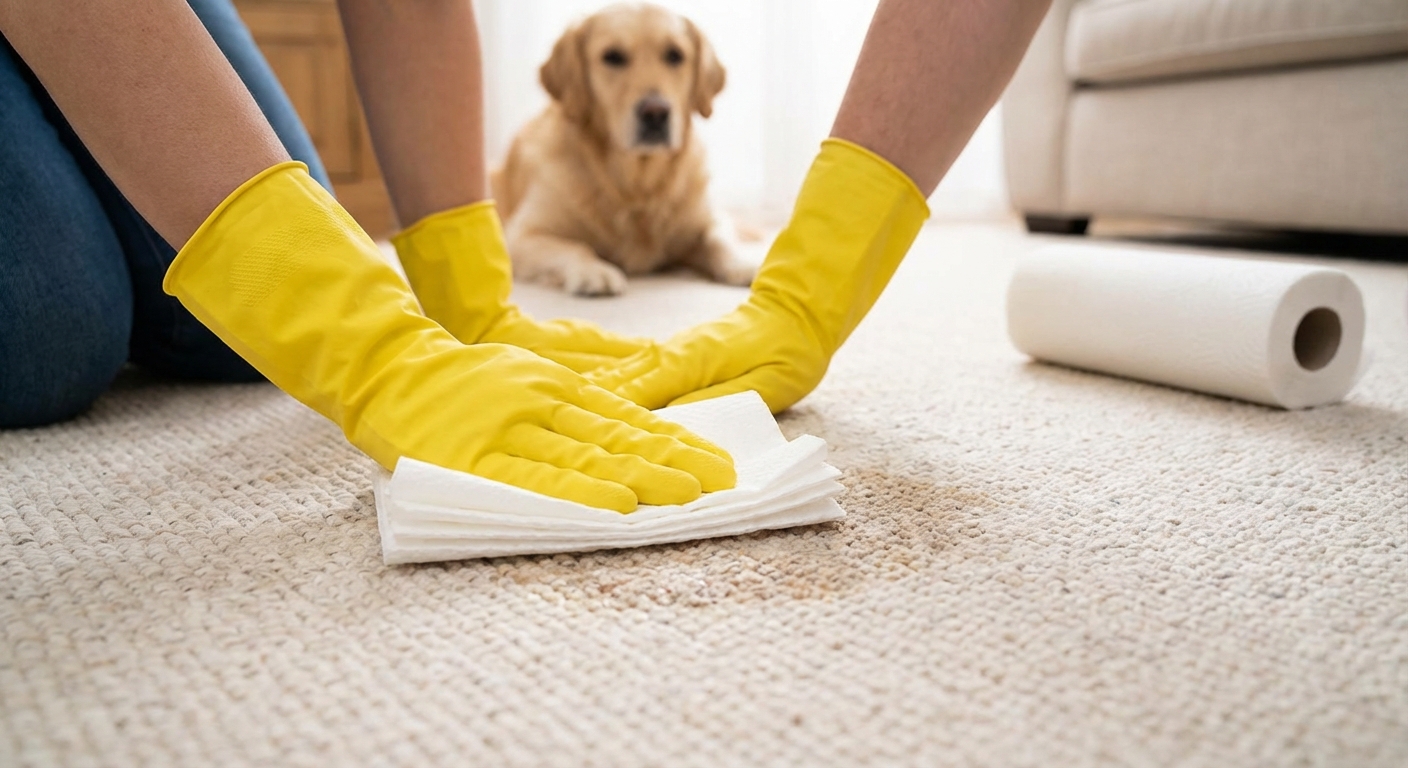
If the accident is fresh, blot immediately with paper towels or an absorbent cloth.
- Press firmly and hold for 10 to 20 seconds at a time.
- Replace towels until you are no longer pulling up moisture.
- Avoid scrubbing, which pushes urine deeper and damages fibers.
If you have a wet-dry vacuum (wet/dry vacuum), you can use it to pull up moisture. Avoid steam cleaners at this stage. Heat can make odor harder to remove and can set staining in some fibers.
Step 3: Use the right product
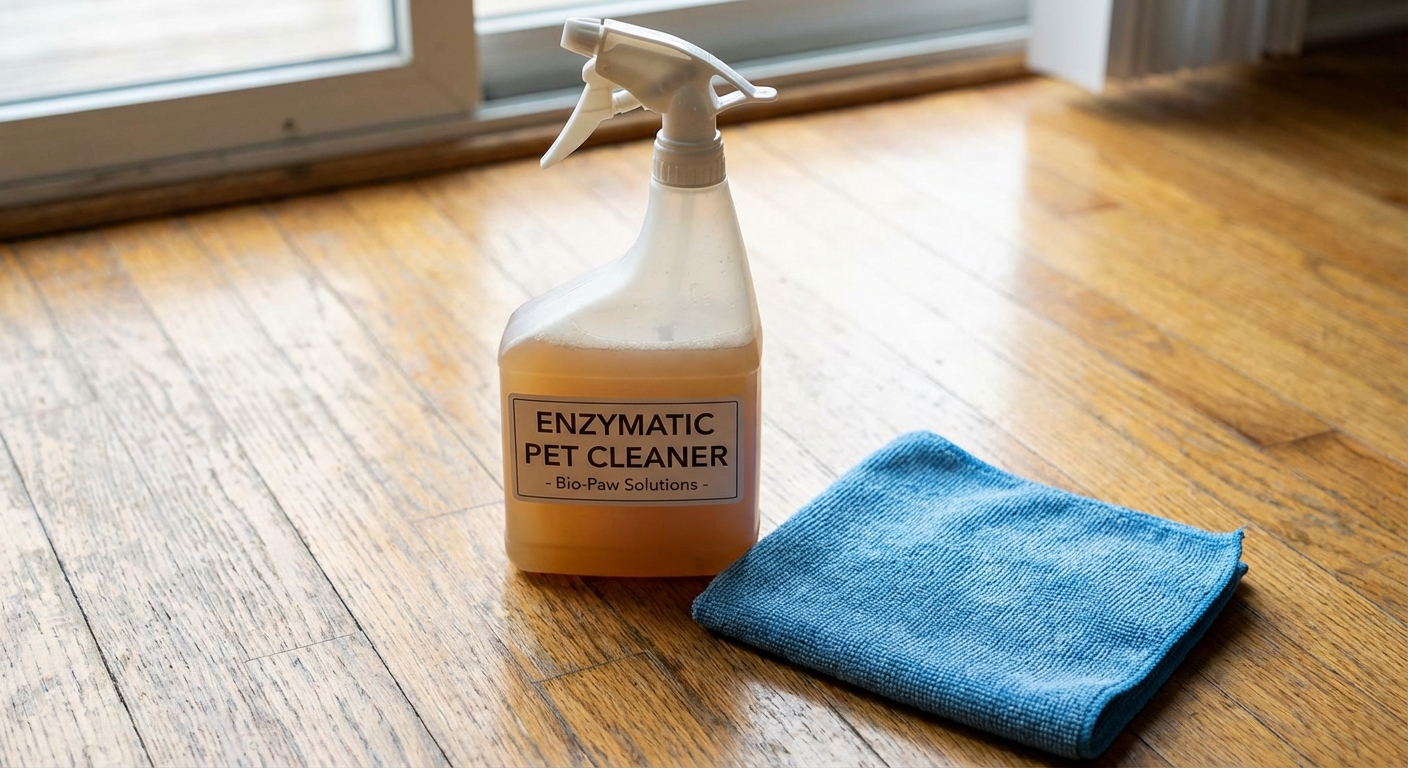
For permanent odor removal, pet-urine enzyme cleaners are the gold standard because they are designed to break down the compounds in urine that cause lingering smell. Some formulas use enzymes plus beneficial bacteria. Results vary by product, so always follow the label directions closely.
How to use an enzyme cleaner
- Saturate the area. If urine reached padding or wood, the cleaner must reach that same depth.
- Follow the dwell time. Many products need 10 to 15 minutes or longer to work. Some require staying damp for several hours.
- Air dry. Let it dry naturally. Do not use heat to speed it up.
- Repeat if needed. Older or heavily soaked areas often need two or three rounds.
Common mistakes to avoid
- Applying too little product to avoid “overwetting.” Depth matters more than surface wetness.
- Cleaning with soap or vinegar first and then applying enzymes. Residues can interfere with enzyme activity.
- Rinsing too soon. Enzymes need time to finish the job.
Safety and care
- Patch test first. Especially on upholstery, rugs, and finished wood.
- Do not mix cleaners. Mixing products can create harmful fumes or reduce effectiveness.
- Keep pets and kids away until dry. Ventilate the space and let the area fully dry before allowing traffic.
What to do by surface
Carpet and rug
- Blot, then saturate with enzyme cleaner.
- Cover with plastic wrap for a few hours if the label allows it. This slows evaporation so enzymes can work longer.
- After the dwell time, blot again. If your product allows it, use a wet-dry vacuum or extractor to pull up excess liquid, then let it fully air dry.
- After drying, vacuum thoroughly.
Upholstery and mattresses
- Test cleaner on an inconspicuous spot first.
- Use controlled amounts of liquid but enough to reach the depth of the urine. A practical approach is to apply a small amount, blot or extract, then repeat until you have treated the full depth.
- After treatment, blot again and use a fan for airflow.
Hardwood floors
Hardwood is tricky because urine can seep into seams and under finish.
- Wipe up immediately and apply an enzyme cleaner that is safe for sealed wood.
- Keep liquid controlled to avoid warping. Use a dampened cloth rather than pouring.
- If odor persists, urine may be under the finish or in the subfloor. You may need professional refinishing or replacing affected boards.
Tile and grout
- Use enzyme cleaner and work it into grout lines.
- Let it dwell, then rinse and dry.
- For stubborn grout odor, repeated applications are often necessary.
Concrete (basements, garages)
Concrete is porous and can hold urine deeply.
- Use an enzyme cleaner intended for porous surfaces.
- Saturate and cover with plastic to slow drying.
- In severe cases, sealing the concrete after treatment can prevent future odor release.
Home remedies
I am all for simple, budget-friendly solutions, but cat urine is one place where the wrong DIY approach can waste time.
Usually not enough
- Vinegar and baking soda: can reduce surface odor, but often does not remove uric acid and urate residue deep in materials.
- Bleach or ammonia: not recommended. Ammonia can smell similar to urine and can encourage repeat marking in some cats. Bleach can damage surfaces and is unsafe if mixed with other cleaners.
- Fragrance sprays: they mask odor temporarily and can irritate pets and people.
Helpful support
- Ventilation and airflow: fans and open windows help treated areas dry faster.
- Dehumidifier: especially helpful in humid rooms to speed full drying and reduce musty smells.
- HEPA vacuuming: once everything is fully dry, vacuuming helps remove surface residues (like dried cleaner and particles) and dander that can trap odors.
Step 4: Prevent repeat accidents
Removing the odor is essential, but prevention is what makes the result permanent. If your cat keeps returning to the same spot, it is often about comfort, stress, or a medical issue. It also helps to know whether you are dealing with marking (often small amounts on vertical surfaces) or full urination (larger puddles). Both need cleanup, but the cause can differ.
Rule out health problems
Urinary tract infections, bladder inflammation, kidney disease, diabetes, and arthritis can all change litter box habits. If accidents are new, frequent, or accompanied by straining, blood, crying, or excessive licking, contact your veterinarian promptly.
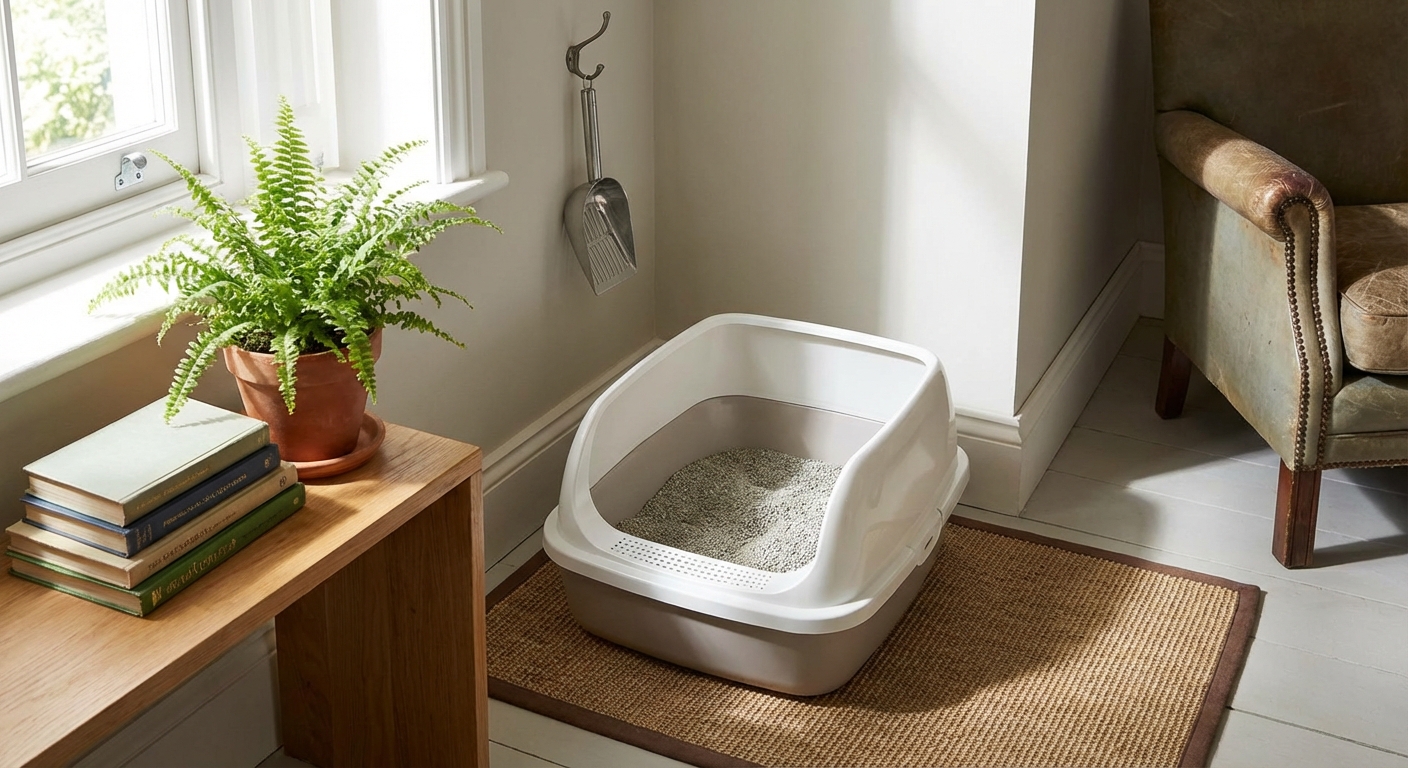
Make the litter box easier
- Number of boxes: aim for one box per cat, plus one extra.
- Placement: quiet, accessible, and not trapped behind closed doors.
- Cleanliness: scoop daily and wash the box regularly with mild soap and water.
- Litter preference: many cats prefer unscented, fine-grained litter. Strong scents can be off-putting.
- Box style: some cats dislike covered boxes, while others prefer privacy. If in doubt, offer one of each.
Reduce stress and marking
- Keep routines consistent for feeding and play.
- Add vertical space like cat trees and shelves if you have multiple cats.
- Consider pheromone diffusers if stress or conflict seems to be a factor.
When to replace materials
Sometimes the most honest answer is that the urine penetrated too deeply for cleaning alone to solve it. Consider replacing materials if:
- The odor returns strongly after multiple enzyme treatments.
- Carpet padding is saturated or crumbly.
- Subfloor or drywall near the floor has absorbed urine.
In these cases, removing and replacing carpet pad or sealing the subfloor with an odor-blocking primer after treatment can be the turning point.
Quick checklist
- Find the full area with a UV light if needed.
- Blot, do not scrub.
- Saturate with a cat-specific enzyme cleaner and give it time to work.
- Let it air dry completely and repeat if necessary.
- Address the cause with litter box setup, stress reduction, and veterinary support when needed.
With patience and the right tools, you can truly reclaim your space and keep it smelling clean long term.