Get rid of cat urine smell permanently with step-by-step cleaning for carpet, padding, hardwood, tile, and bedding. Learn why odor returns, what to avoid, an...
Article
•
Designer Mixes
How to Get Rid of Cat Pee Smell

Shari Shidate
Designer Mixes contributor
Cat urine odor is one of the toughest household smells because it is not just “stinky.” It is chemistry. When urine sits, bacteria break it down and release ammonia and other volatile compounds. Over time, uric acid residues can bind to fabric, grout, and wood, then the smell can resurface when moisture in the air rehydrates what is left behind.
As a veterinary assistant, I want you to know two things can be true at once: you can absolutely fix the smell, and you should also treat it as a clue. If your cat is peeing outside the box, there is often a medical or stress-related reason that needs attention.
First: Rule out a health issue
If your cat is suddenly urinating outside the litter box, schedule a vet visit, especially if you notice frequent trips to the box, vocalizing or crying while urinating, licking the genital area, blood-tinged urine, or accidents from a normally reliable cat.
Common medical triggers include:
- Feline idiopathic cystitis (sterile inflammation often linked to stress, and very common)
- Urinary tract infection (possible, but less common in many otherwise healthy adult cats than people assume)
- Urinary crystals or blockage (an emergency, especially in male cats)
- Kidney disease and increased urination
- Diabetes and increased urine volume
- Arthritis making the box painful to access
Cleaning without addressing the cause often turns into a frustrating cycle for both you and your cat.
Why regular cleaners fail
Many all-purpose cleaners, vinegar solutions, and fragranced sprays can reduce odor temporarily, but they often do not break down the uric acid residues that create long-lasting smell. Some products also leave behind scents or residues, which may contribute to repeat soiling if the area is not fully neutralized.
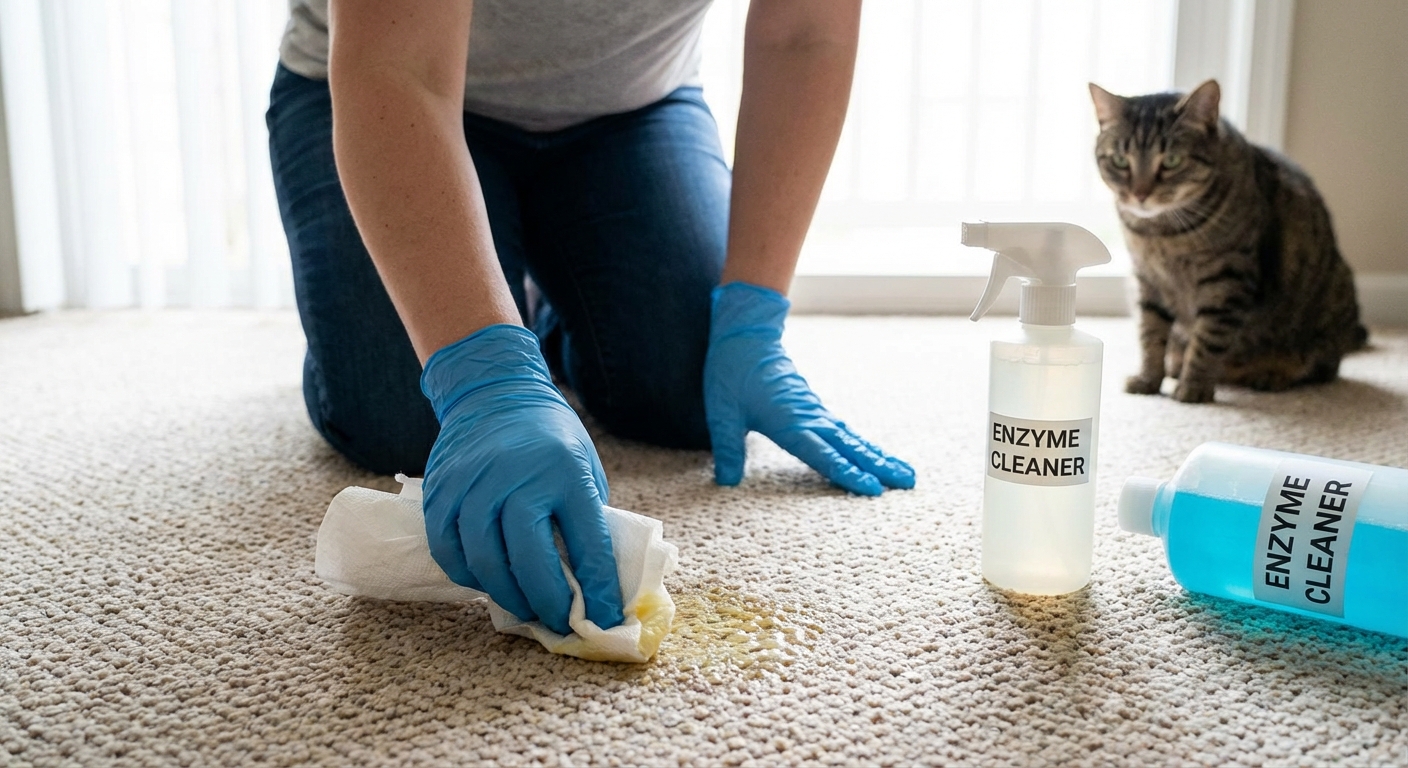
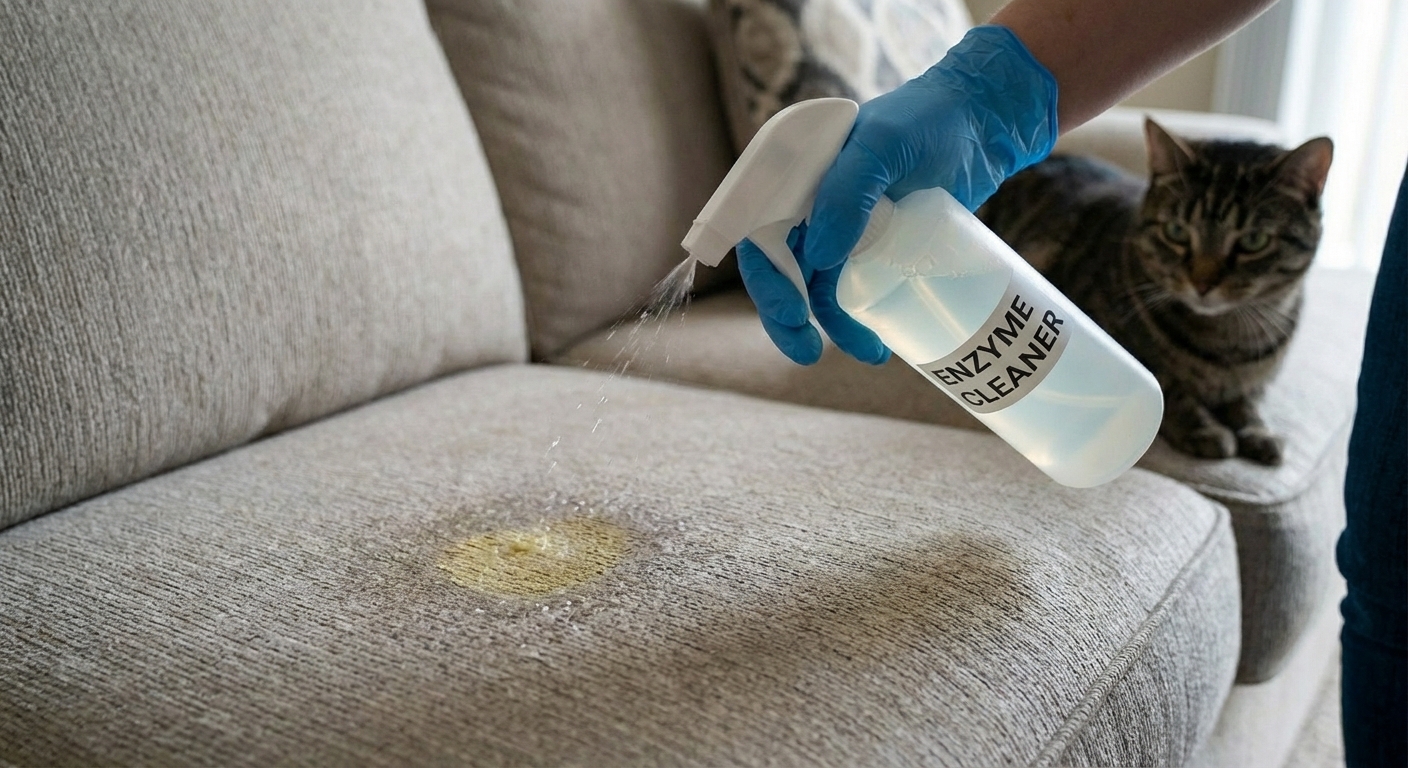
Commonly vet-recommended approach: use an enzymatic cleaner formulated for cat urine. These products contain enzymes and bacteria cultures that digest the odor-causing compounds, not just mask them.
What to use (and what to avoid)
Best option: enzymatic urine cleaners
Look for pet urine products labeled enzymatic or bio-enzymatic. Follow the label closely, because contact time matters.
- Pros: breaks down urine at the source, helps reduce repeat marking
- Cons: needs time to work, may require repeat treatments for older stains
Helpful tools
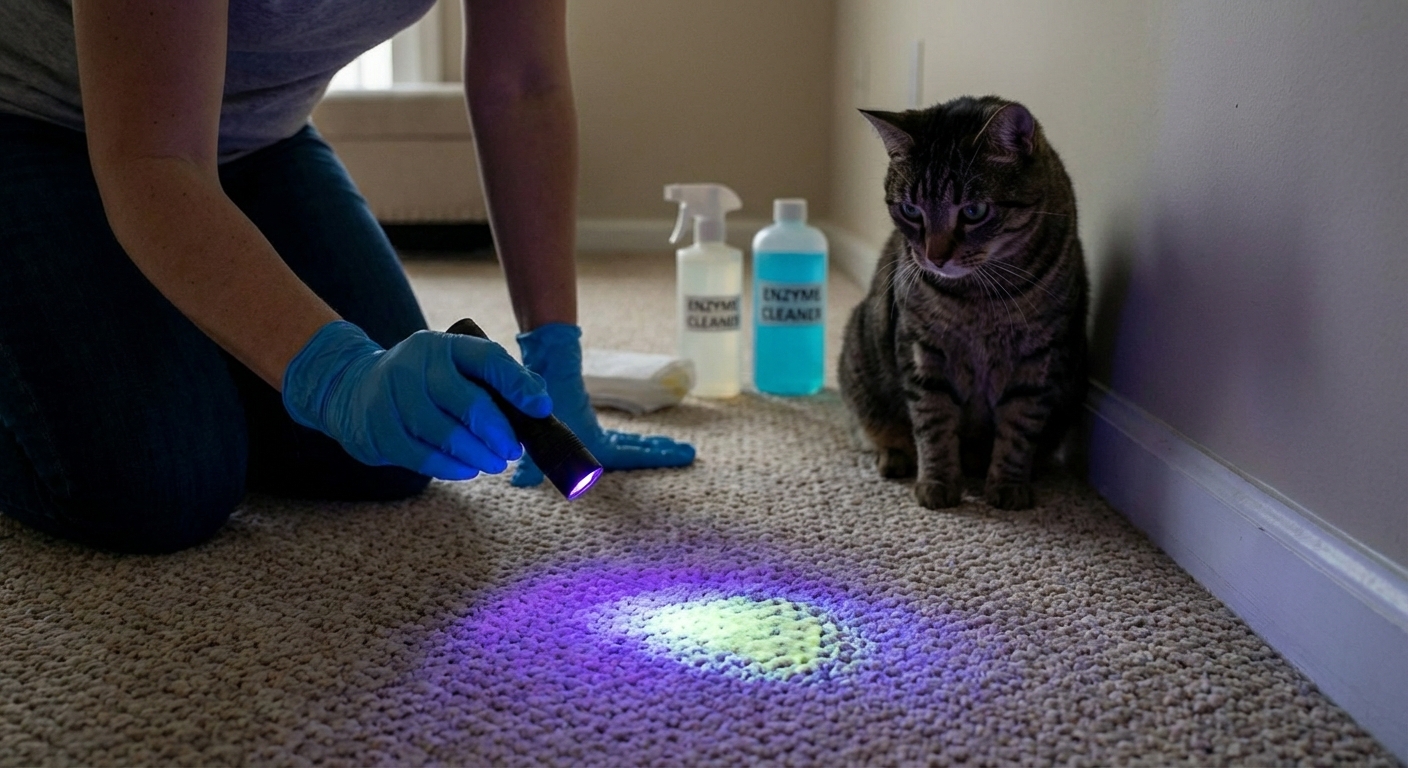
- Blacklight (UV flashlight): helps you find hidden or older urine spots, especially on carpet edges, baseboards, and upholstery.
- Wet-dry vacuum or carpet extractor (water only): useful for rinsing after treatment. Avoid adding detergent unless the enzyme label says it is compatible.
- Disposable gloves and paper towels: for blotting without pushing urine deeper.
Product compatibility and safety
- Do not mix cleaners: disinfectants, bleach, and many strong soaps can inactivate enzymes. If you used something else first, rinse thoroughly and let the area dry before applying enzymes.
- Avoid hot water: high heat can reduce enzyme performance. Use room-temperature or cool water if rinsing is recommended.
- Ventilate and dry: open windows if possible, and keep kids and pets away until the area is fully dry.
Avoid these common mistakes
- Ammonia-based cleaners: urine already contains ammonia-like compounds, and the smell can cue repeat peeing.
- Steam cleaning fresh or untreated urine: heat and moisture can drive residues deeper and make odor harder to remove.
- Bleach on urine: can create harsh fumes and is not effective for uric acid residues. Never mix bleach with other cleaners.
Step-by-step: remove cat pee smell based on the surface
Carpet and rugs
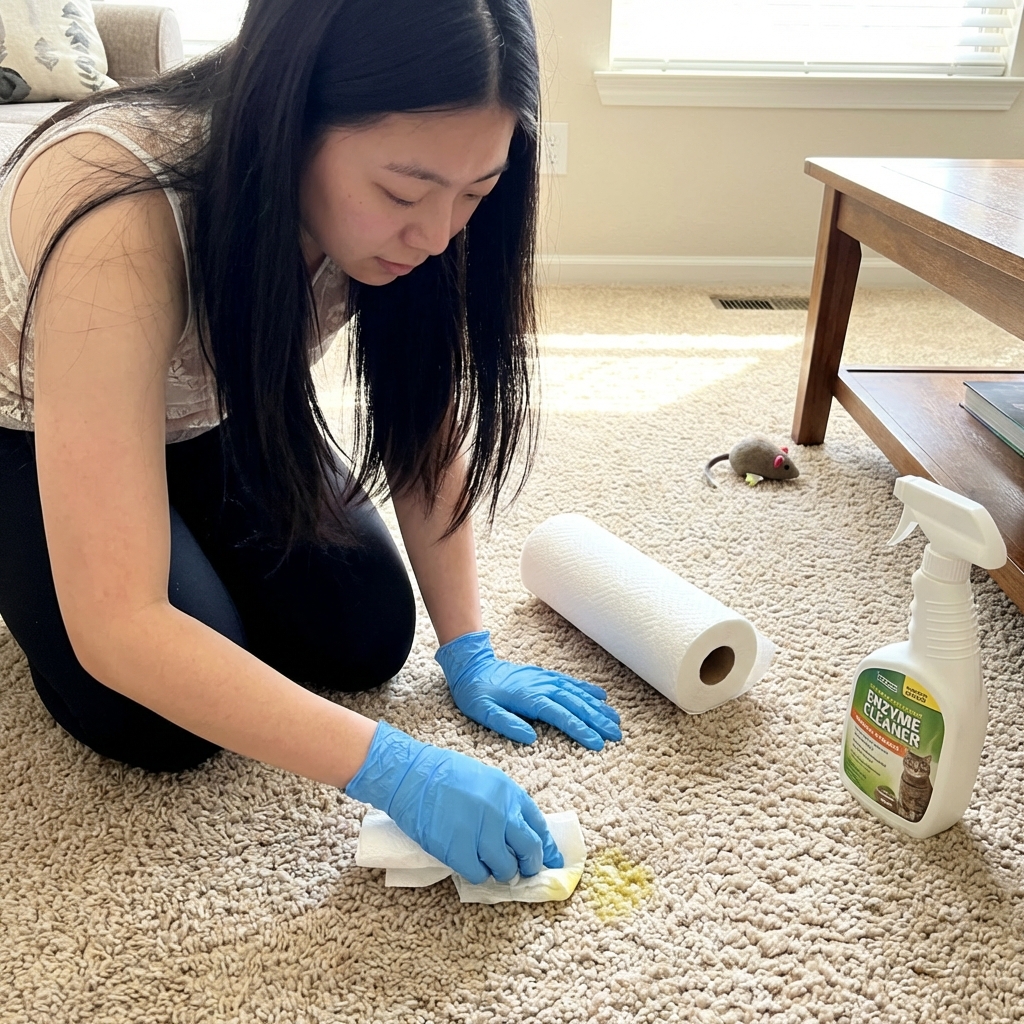
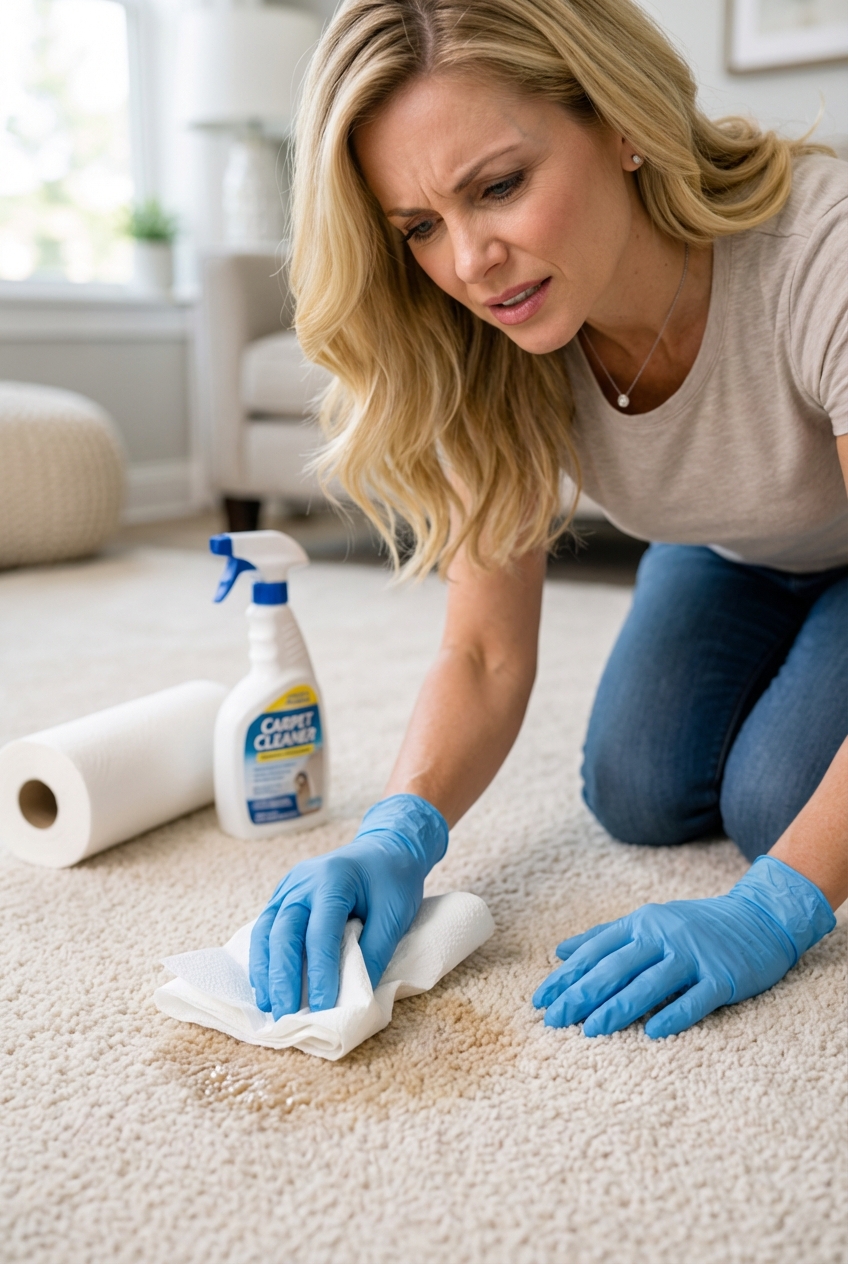
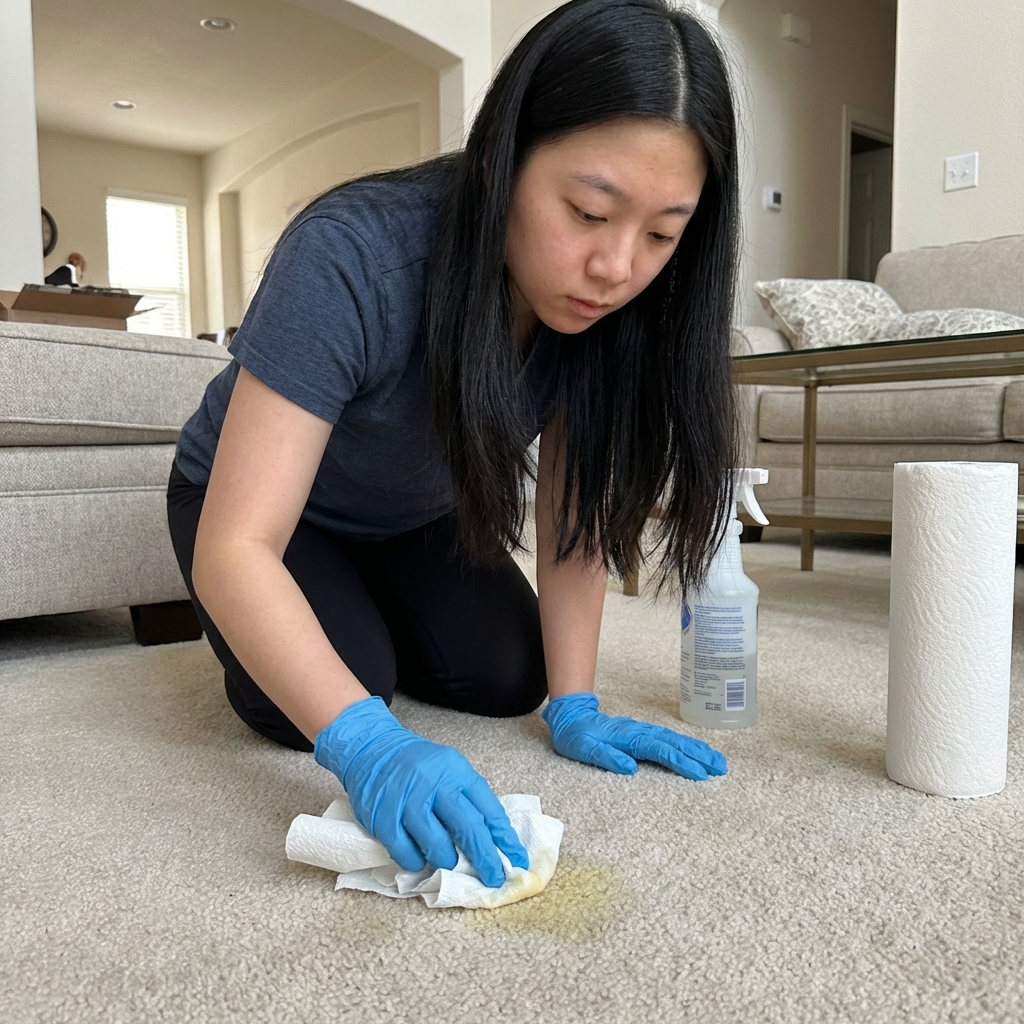
- Blot, do not rub. Use paper towels to absorb as much as possible. Stand on the towels to apply pressure.
- Soak with enzymatic cleaner. The key is saturation to the depth of the urine, which often reaches the pad.
- Cover and wait. Many enzymatic products work best if kept damp for 10 to 15 minutes or longer. Some recommend hours. Follow the label.
- Blot again. Remove excess moisture.
- Air dry completely. A fan helps. Odor may briefly seem stronger while the product breaks down compounds, then fade as it dries.
For old or heavy accidents: you may need multiple treatments. If the pad underneath is saturated, professional pad replacement can be the only true fix.
Hard floors (tile, vinyl, laminate)
- Wipe up immediately.
- Apply enzymatic cleaner. Let it sit per directions.
- Pay attention to grout lines and edges. Use a soft brush to work cleaner into grout or textured flooring.
- Rinse lightly if the label recommends it. Then dry.
Note: Some laminate floors swell if liquid seeps into seams. Use enough product to treat the spot, but do not flood the seams.
Wood floors
Wood is tricky because urine can soak between boards and into the subfloor. Start with an enzymatic cleaner labeled safe for sealed wood, and avoid over-wetting seams. If the smell persists, you may need a refinishing professional, because the source can be below the finish.
In severe cases, sealing with an odor-blocking primer (after cleaning and fully drying) can help. Look for shellac-based or oil-based odor sealers, and use good ventilation while they cure.
Upholstery and mattresses
- Blot thoroughly.
- Spot test first. Enzymes can discolor some fabrics.
- Saturate the affected area. Urine can spread wider than you think.
- Allow full dry time. Use a fan and open windows if weather allows.
If the smell returns on humid days, that is a sign the urine penetrated deeper and needs another enzyme application.
Clothing and washable bedding
For washable fabrics, enzymes can work well as a pre-treatment.
- Rinse in cold water first if the item is heavily soiled.
- Pre-soak with an enzymatic laundry additive or use an enzymatic pet urine product if the label indicates it is laundry-safe.
- Wash as directed. Avoid hot drying until odor is fully gone, because heat can lock in smells.
How to find the source when you cannot see it
Cat urine can be surprisingly sneaky. If you smell it but cannot locate it:
- Use a UV flashlight at night with room lights off.
- Check vertical surfaces like walls, curtains, bed skirts, and furniture legs. Spraying and marking are common on vertical areas.
- Look near litter boxes for overspray or “misses,” especially with high-sided boxes or cats who stand to pee.
- Sniff low near baseboards and corners. That is where odor collects.
Stop repeat accidents: the behavior side
Even the best cleaner cannot help if the environment keeps encouraging repeat peeing. Here are veterinarian-aligned, practical steps that help most households.
Improve the litter box setup
- Number of boxes: aim for one box per cat, plus one extra.
- Placement: quiet, accessible locations, not next to loud appliances.
- Cleanliness: scoop daily, deep-clean weekly with mild soap and water. Avoid strong scents.
- Litter preference: many cats prefer unscented, clumping litter with a soft texture.
- Box style: some cats dislike covered boxes. Senior cats often need low-entry boxes.
Wash boxes the right way
- Skip ammonia cleaners: they can smell urine-like to cats.
- Avoid harsh disinfectants on the box surface: strong residues can be aversive and can interfere with enzyme products if you are also treating nearby misses.
- Replace scratched plastic boxes: deep scratches can hold odor over time, even with good cleaning.
Reduce stress triggers
Stress can directly impact urination habits, especially in cats prone to cystitis. Helpful changes include consistent routines, interactive play, vertical space like cat trees, and separate feeding stations in multi-cat homes.
Consider pheromone support
Some cats respond well to feline pheromone diffusers or sprays as part of a broader plan, especially during moves, new pets, or household schedule changes.
When to call in backup
Get professional help when:
- The odor returns repeatedly after cleaning
- You suspect urine is in the carpet pad, subfloor, or HVAC vents
- Your cat is spraying large areas or multiple rooms
- A male cat shows straining, crying, or little urine output (emergency)
A veterinarian can rule out medical causes, and a qualified behavior professional can help if marking is territorial or anxiety-related.
If you remember just one thing, let it be this: treat the stain, treat the cause. That combination is what stops the smell for good and helps your cat feel safe again.
Quick checklist
- Use an enzymatic cleaner and let it sit long enough to work
- Do not use ammonia or steam on urine spots
- Do not mix enzymes with bleach or strong disinfectants
- Find hidden spots with a UV flashlight
- Make the litter box easier and more inviting
- See your vet for sudden changes or urinary symptoms