Stop fleas fast with a simple 3-part plan: use cat-safe medication, clean your home to break the life cycle, and prevent re-infestation for months. Avoid uns...
Article
•
Designer Mixes
How to Get Rid of Cat Fleas

Shari Shidate
Designer Mixes contributor
Realizing your cat has fleas is frustrating. The good news is you can get control of them, but it takes a complete approach. Fleas live on your cat, in your home, and sometimes in your yard too. If you only treat one area, the problem often comes right back.
In this guide, I will walk you through what actually works, what to avoid, and how to prevent fleas from returning. I am writing this as a veterinary assistant in Frisco, Texas, and I will keep it practical, evidence-based, and doable.
Quick note: This is general education, not a substitute for veterinary care. Product choice and dosing matter a lot, especially for kittens, pregnant cats, seniors, and cats with chronic illness.
Flea life cycle
One reason fleas are so hard to eliminate is that most flea stages are in the environment, not on your cat. A commonly cited rule of thumb is that only about 5% of the flea population is adult fleas on the pet, while roughly 95% is eggs, larvae, and pupae in the home or yard. The exact ratio varies by setting, but the takeaway is the same: you have to treat more than just the cat.
Fleas go through four stages:
- Eggs laid on the pet, then they fall into carpets, bedding, and cracks in floors.
- Larvae hide in dark areas and feed on organic debris.
- Pupae (in cocoons) can “wait” for weeks to months (sometimes longer) before emerging, depending on conditions.
- Adults jump onto pets to feed and reproduce.
This is why a single bath or a single home spray rarely solves the problem. You have to treat your cat and your environment long enough to break the cycle.
Signs of fleas
Sometimes you never see the fleas themselves. Here are common signs:
- Frequent scratching, chewing, or over-grooming
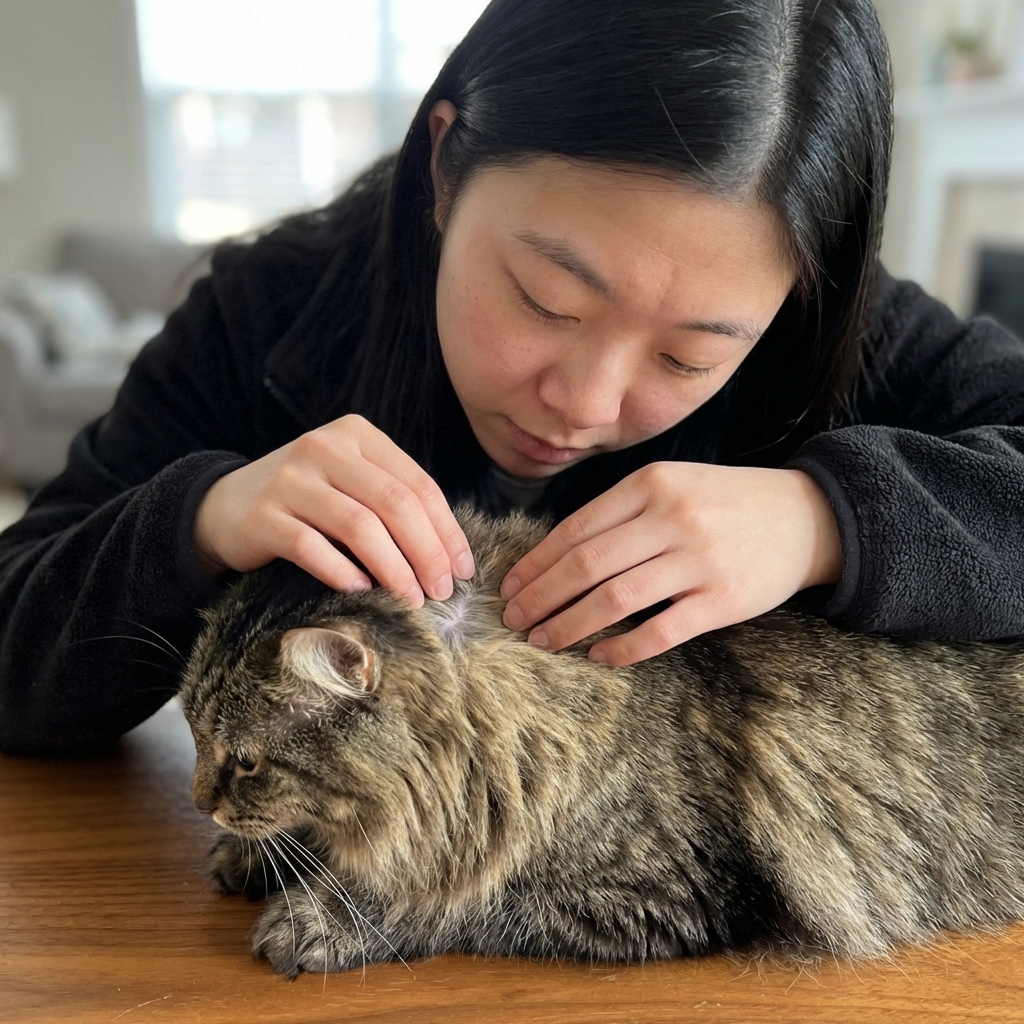
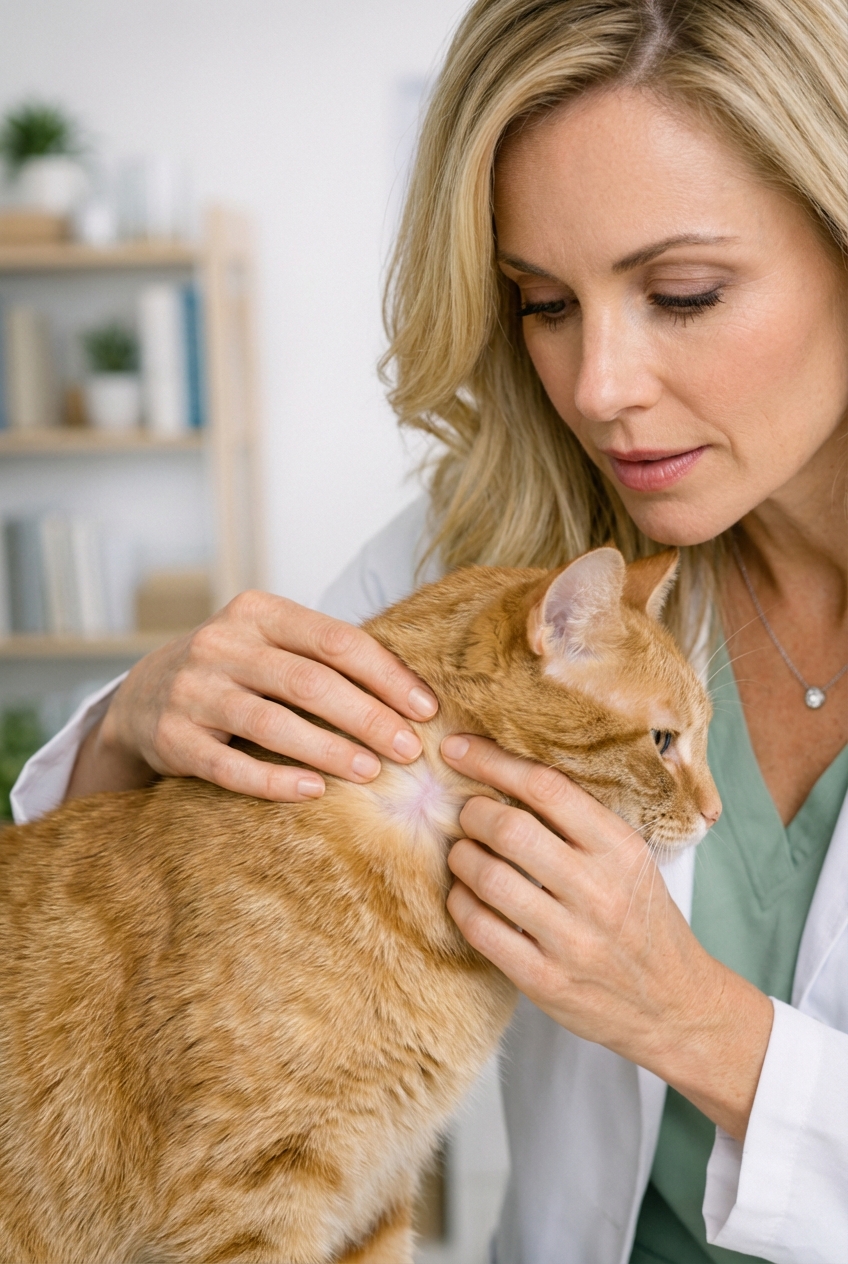
- Hair loss or scabs, especially around the neck and base of the tail
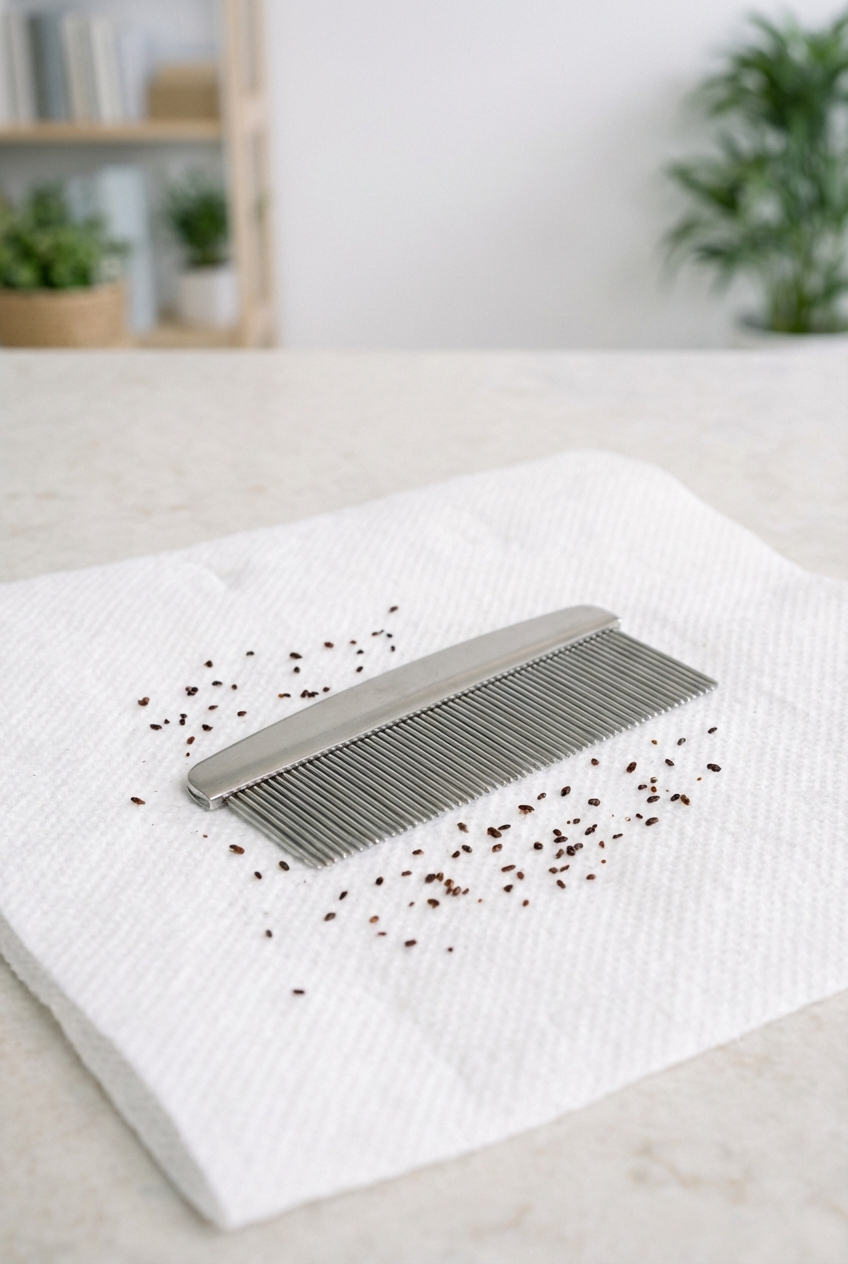
- “Flea dirt” (tiny black specks) in the coat that turns reddish-brown when wet
- Restlessness, hiding, or changes in sleep
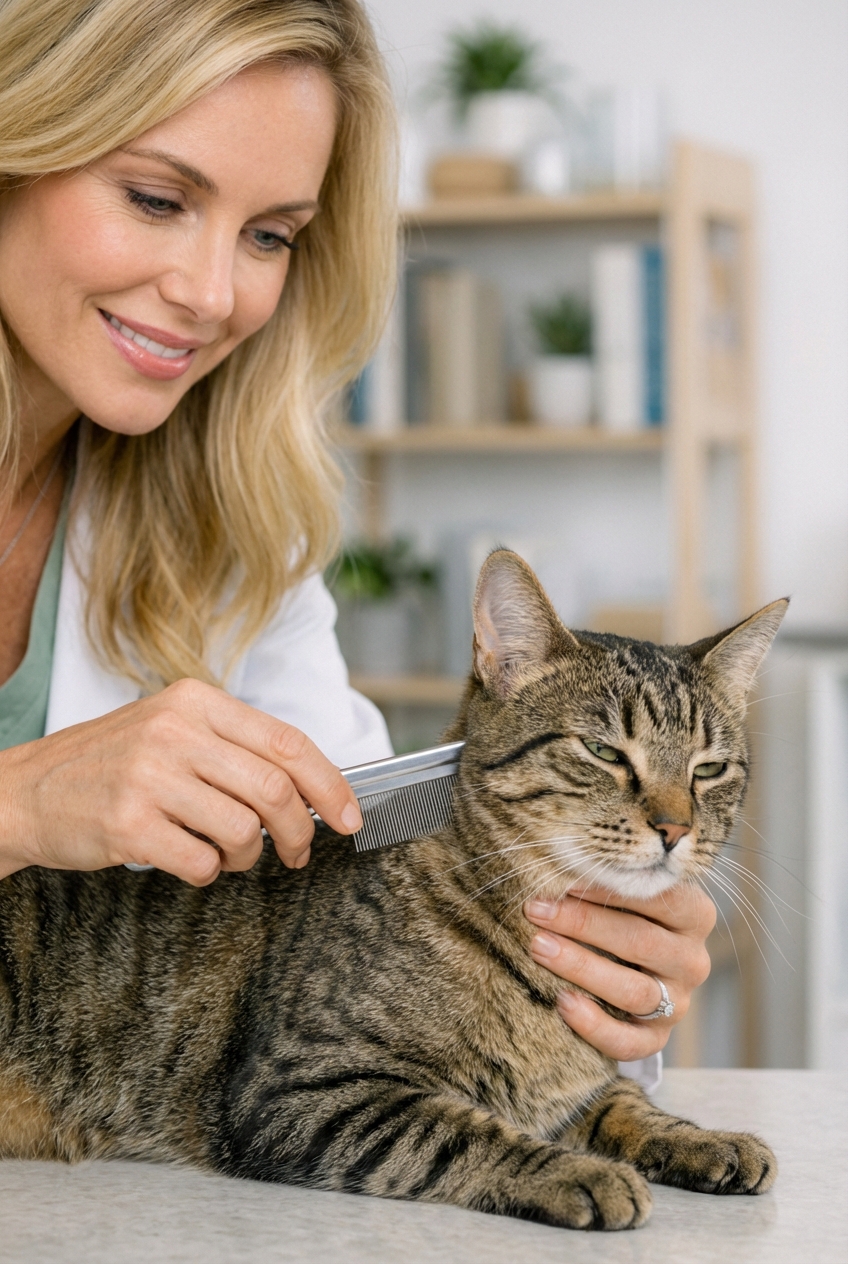
Quick check: Use a flea comb over a white paper towel. If you see black specks, add a drop of water. If it smears rust-red, that is digested blood (flea dirt).
Step 1: Treat all pets
If you have multiple pets, treat them all, even if only one is itching. Fleas spread quickly, and untreated pets keep the infestation going.
Important: “Treat every pet” does not mean “use the same product on every pet.” Dogs, cats, and other species need species-appropriate medications.
Use vet-recommended prevention
The most reliable flea control today comes from modern monthly (or longer-acting) preventives. Your veterinarian can help you choose based on your cat’s age, weight, medical history, and whether you also need tick, mite, or worm coverage.
- Topical spot-ons applied to the skin at the back of the neck
- Oral medications (some are approved for cats, including certain isoxazolines, but the right option depends on the individual cat and dosing must be exact)
- Flea collars can help in some cases, but quality and safety vary widely
Safety warning: Never use a dog flea product on a cat unless your veterinarian specifically tells you it is safe. Some dog products contain permethrin, which is highly toxic to cats.
What about baths?
Baths can remove some fleas, but they do not provide lasting protection. Cats also tend to find bathing extremely stressful. If you bathe, consider it a short-term helper while a true preventive does the long-term work.
Kittens and fragile cats
Kittens, seniors, and cats with chronic illness may need a customized plan. Call your veterinarian before using any over-the-counter flea treatment.
Step 2: Clean your home
Home treatment matters because that is where eggs, larvae, and pupae live. Your goal is to remove as many stages as possible while your cat’s preventive kills newly emerging adults.
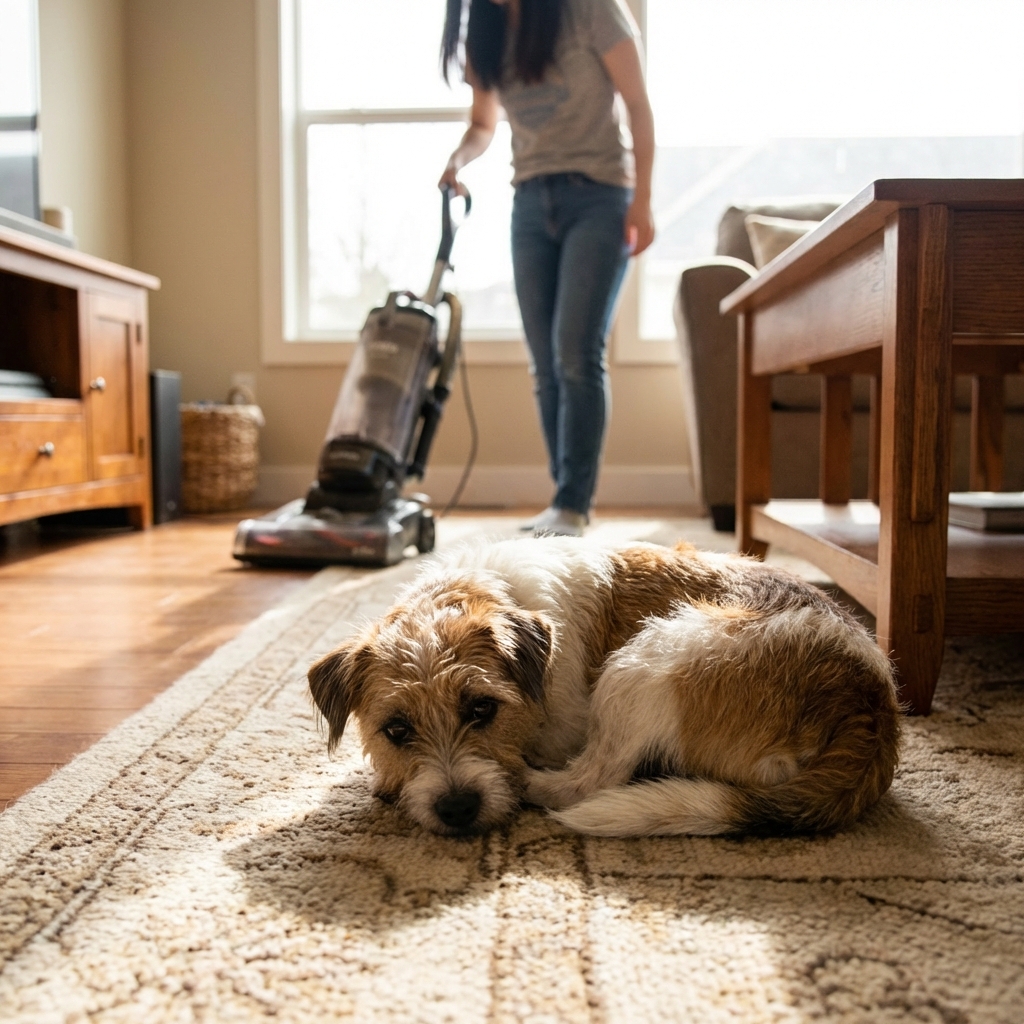
Vacuum often
- Focus on carpets, rugs, baseboards, under furniture, and along pet “highways.”
- Vacuum upholstered furniture and cat trees.
- Immediately empty the canister outdoors or seal the vacuum bag in a trash bag.
Vacuuming helps remove eggs and larvae and may also help stimulate pupae to emerge (vibration and activity can be cues), which is useful if your pets are on an effective flea preventive.

Wash what your cat uses
- Wash bedding, blankets, and slipcovers in hot water when possible.
- Dry using the hottest setting the fabric allows.
- Do this at least weekly during an active infestation.
Home sprays and IGRs
In many households, consistent vacuuming, laundering, and strong pet prevention is enough. In heavier infestations, your vet may recommend an indoor spray that targets multiple flea stages and includes an insect growth regulator (IGR) to stop eggs and larvae from developing.
If you use any home product, follow the label exactly and keep cats away until surfaces are fully dry and the space is ventilated.
Skip foggers
Many flea foggers or “bombs” do not reach under furniture or into cracks where flea stages hide, and they can be irritating if used incorrectly. A targeted approach (vacuuming, laundering, pet prevention, and an IGR-based spray or professional help when needed) is usually more effective.
Step 3: Stop re-infestation
Once you have fleas under control, prevention is where you win for good.
Stay on prevention
Many cats get fleas even if they are strictly indoors. Fleas hitchhike on people, other pets, or come through shared hallways in apartments. In warmer climates, fleas can be a year-round issue.
Limit wildlife contact
Outdoor cats, feral cats, raccoons, opossums, and rodents can all contribute to flea pressure around your home. If your cat goes outside, talk with your vet about a consistent prevention plan.
Yard basics
- Keep grass trimmed and remove leaf litter where fleas and hosts may hide.
- Limit access to under-deck and shaded “wildlife hangouts.”
- If infestation is severe, consider professional pest control with pet-safe protocols.
Common mistakes
- Stopping too soon. Most plans need multiple months to fully break the cycle.
- Skipping other pets in the home or using a product meant for a different species.
- Relying on “natural” remedies alone such as essential oils. Some oils are toxic to cats, and many do not reliably kill fleas.
- Using the wrong dose or applying a topical incorrectly (it must reach the skin, not just the fur).
- Not cleaning the environment during active infestation.
What to expect
Even with the right plan, it is common to still see fleas for 2 to 6 weeks or longer. That does not always mean the products failed. Often, it is pupae emerging on their own schedule. Consistency is what breaks the cycle.
When to call the vet
Please reach out to your veterinarian promptly if you notice any of the following:
- Your cat is a kitten, underweight, pregnant, or has a chronic condition
- Open sores, scabs, or suspected skin infection
- Signs of anemia (pale gums, weakness, rapid breathing), especially in kittens
- Persistent itching even after starting flea control (could be allergy, mites, or secondary infection)
- Tapeworm segments (small rice-like pieces) in stool or around the rear end
Fleas can cause flea allergy dermatitis in sensitive cats, and they can transmit tapeworms. Flea control also helps reduce the risk of flea-associated infections like Bartonella (linked to cat-scratch disease). Getting the right medical plan early saves time and discomfort for everyone.
14-day action plan
If you want something you can follow step-by-step, here is a practical starting point:
Day 1
- Start a vet-approved flea preventive on every pet (species-appropriate products only).
- Vacuum thoroughly and empty the vacuum outside.
- Wash bedding and dry using the hottest setting the fabric allows.
Days 2 to 7
- Vacuum daily (especially where your cat sleeps).
- Continue laundering bedding mid-week.
- Flea comb once daily to monitor progress.
Days 8 to 14
- Vacuum every other day.
- Wash bedding again.
- Keep prevention consistent and set reminders for the next dose.
Most households see major improvement quickly, but complete resolution can take several weeks or more depending on how many flea pupae were already in the home.
Bottom line
To get rid of cat fleas, you need a two-part strategy: protect the cat with a proven preventive and clean the environment long enough to stop the life cycle. Stay consistent, avoid risky home remedies, and lean on your veterinarian for product selection and safe dosing. You and your cat deserve a comfortable, itch-free home.