
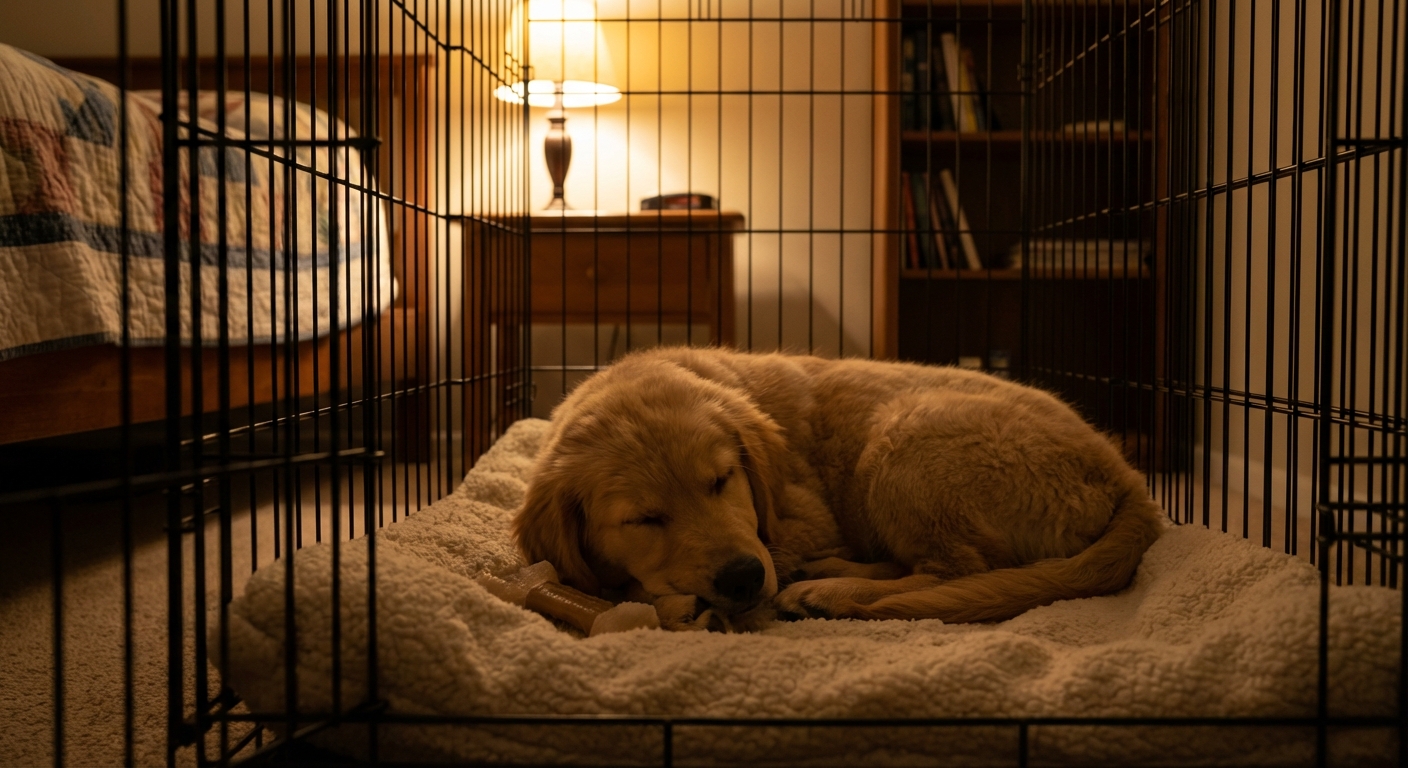
Vet-informed, practical tips to help puppies sleep 6–8 hours: daytime rhythm, crate setup, bedtime routine, potty timing, and how to respond to crying with...
Article
•
Designer Mixes
How to Get Puppies to Sleep at Night

Shari Shidate
Designer Mixes contributor
As a veterinary assistant, I can tell you this with confidence: most “puppy won’t sleep” problems are not bad puppies. They are normal puppy brains and bodies trying to feel safe in a brand-new world. The goal is not to force sleep. The goal is to build a routine that makes sleep the easiest choice.
Below are practical, clinic-tested steps you can start tonight, plus what to do when your puppy cries, wakes up at 2 a.m., or seems to have endless energy at bedtime.
What “normal” puppy sleep looks like
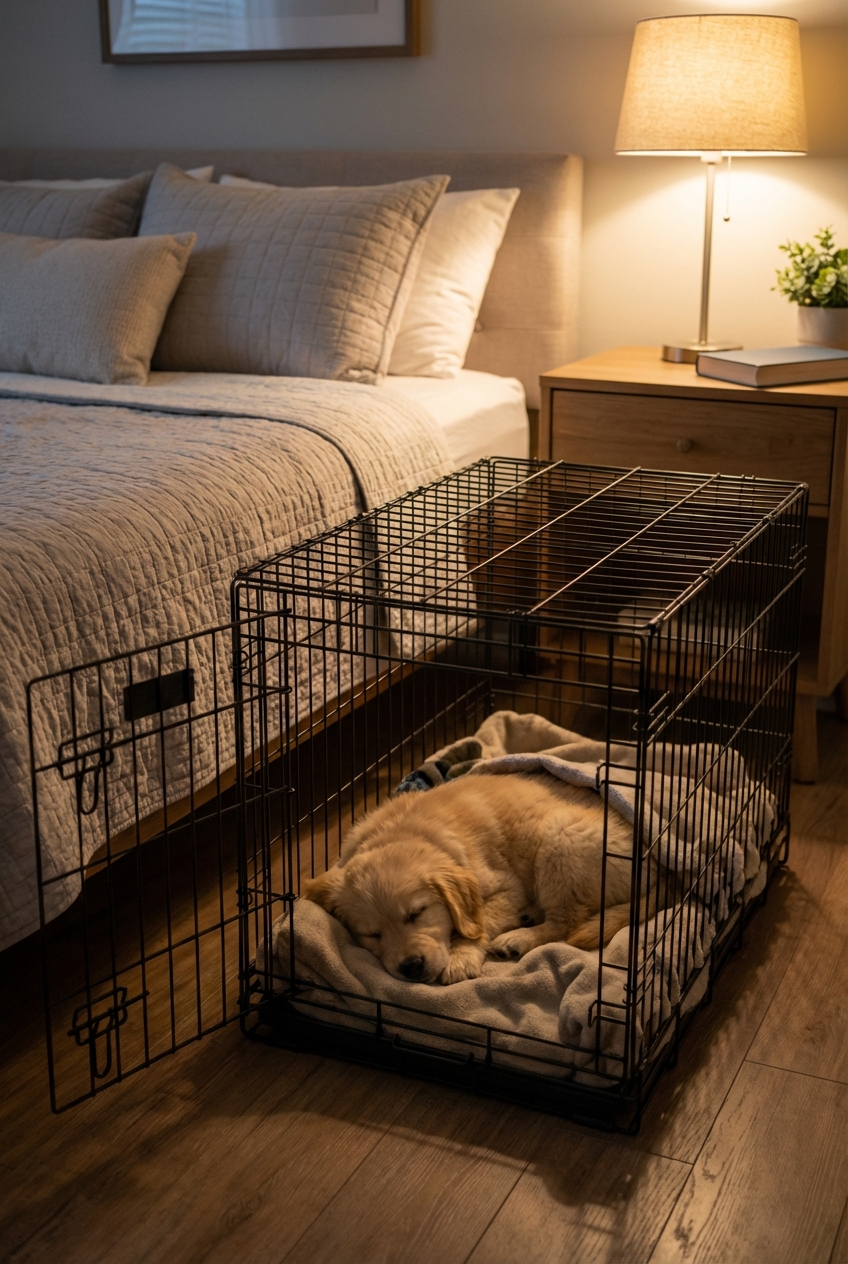
Puppies need a lot of sleep, often 16 to 20 hours in a 24-hour period in the early months. The tricky part is that they do not automatically know how to settle. Many pups get overtired, then act wired.
Why puppies wake at night
- Potty needs: small bladders, especially in the first few months (and in smaller breeds).
- Separation distress: they were just taken from mom and littermates.
- Overstimulation or overtiredness: too much excitement close to bedtime, or not enough rest during the day.
- Hunger: very young or small-breed puppies may need a later meal, per your vet’s guidance.
- Discomfort: too hot, too cold, itchy, upset stomach, or teething.
Set up a sleep-friendly space
Your puppy’s sleep environment matters as much as your routine. You are building a “sleep cue” that signals safety and calm.
Crate, pen, or room?
A crate is often the fastest route to night sleep because it limits roaming and helps with house training.
If a crate is not right for your household, a small exercise pen can work. Some people set up a bed on one side and a potty area on the other. That setup can be helpful in special situations (medical issues, mobility limits, or when you truly cannot do frequent trips), but it can also slow or confuse house training because it teaches, “sometimes we potty indoors.” If you use a pen potty area, plan to phase it out as soon as your puppy can reliably go outside.
Wherever your puppy sleeps, make it:
- Small enough to discourage pottying in one corner (use a crate divider if needed).
- Quiet and dim at night.
- Consistent, same spot every night.
Make the crate feel secure
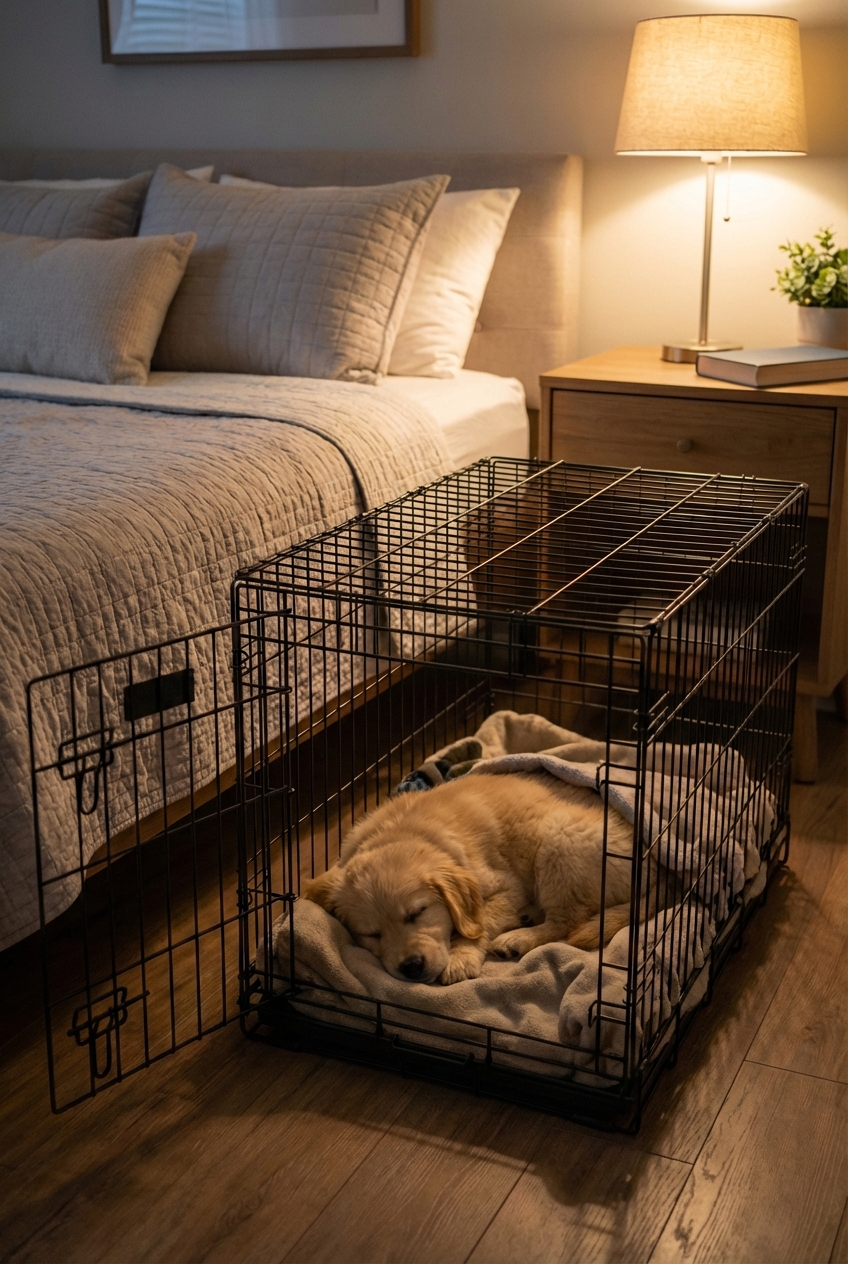
- Comfort: a firm, washable pad. Safety note: if your puppy shreds fabric or eats bedding, skip soft beds and loose blankets and use a safer, chew-resistant option.
- Warmth: many puppies sleep better with gentle warmth. Use only vet-approved warming products and avoid anything the puppy can chew or get tangled in.
- Sound: soft white noise can reduce startle wake-ups.
- Cover: some puppies relax with a light crate cover on three sides for a den-like feel, as long as airflow stays good and your puppy is not overheating.
Location matters
For the first week or two, many puppies do best when the crate is next to your bed. You can offer calm reassurance, and potty trips are easier. Once sleep is stable, you can gradually move the crate toward your preferred location.
Your evening routine
If you want your puppy to sleep longer, think of bedtime as a sequence. Predictability lowers anxiety and helps the nervous system downshift.
2 to 3 hours before bed
- Water: offer water normally. Many pups do best if you avoid a large water intake right before bed (unless your veterinarian advises otherwise, especially in hot weather or with tiny breeds).
- Normal play and training: a short training session (sit, down, touch, leash skills) plus gentle play is more settling than chaotic wrestling.
- Offer a calm chew: licking and chewing can be soothing. Choose safe, size-appropriate chews and supervise until you know your puppy’s chewing style. If your puppy tries to swallow chunks, skips chewing, or shreds and eats pieces, switch to a safer option and ask your vet what they recommend.
30 to 60 minutes before bed
- Lower the volume: dim lights, reduce loud TV, avoid intense play.
- Final potty trip: take your puppy out on leash to the same spot, boring and consistent.
- Bed cue: say a simple phrase like “bedtime,” then place your puppy in the crate with a small reward.
Warm tip from the clinic: your puppy learns fastest when nights are boring. Calm in, calm out, calm potty trips, calm back to bed.
What to do when they cry
This is the part that keeps people up, and I get it. Here is the decision tree that helps most families.
Step 1: Assume potty first
If your puppy is very young, newly home, or has not pottied in a few hours, take them out. Keep it silent and quick:
- Leash on
- Same potty spot
- No play, no wandering
- Quiet praise after they go
- Back into the crate
If they do not go within 3 to 5 minutes, back to the crate. This prevents “crying = fun nighttime adventure.”
Step 2: If potty is not it, reassure briefly
Many puppies settle if you place your fingers near the crate or speak softly for 10 to 20 seconds. Keep it calm, not exciting. You are teaching, “I’m here, and it’s time to sleep.”
Step 3: Avoid accidental rewards
Try not to open the crate door while your puppy is actively crying intensely. Wait for a brief pause in vocalizing, then proceed with a potty trip or reassurance. That tiny pause is what you reinforce.
If it escalates
If your puppy ramps up into panic (drooling, frantic scratching, trying to escape, or cannot settle even after potty and brief reassurance), pause the “push through it” approach and get help. Panic is not the same as protest, and it deserves a thoughtful plan with your veterinarian and a qualified professional.
What not to do
- Do not yell or bang on the crate. It increases stress and can worsen noise.
- Do not use the crate for punishment.
- Do not bring the puppy into bed unless that is your long-term plan. Switching back and forth is confusing.
Night potty frequency
Every puppy is different, but these are common ranges. Always adjust based on your puppy’s size, age, and your veterinarian’s advice.
- 8 to 10 weeks: often 1 to 2 nighttime potty trips.
- 10 to 12 weeks: often 1 trip.
- 12 to 16 weeks: many puppies start sleeping through, but not all.
You may hear a rough guideline like “months old + 1” hours. It is not a guarantee and it is not evidence-based for every puppy, but it can help you set expectations. Tiny breeds, anxious pups, and puppies with stomach or urinary issues often need more frequent trips.
Daytime habits that help
Teach an “off switch” with naps
Many puppies do not choose sleep. They need your help. If your puppy is mouthy, zoomy, or cranky, that is often a sign of overtiredness.
Try scheduled crate naps:
- Up for 45 to 60 minutes (potty, play, train)
- Down for 1 to 2 hours (crate nap)
This is not strict, but it gives you a rhythm. Puppies with better daytime sleep often sleep better at night.
Mental exercise matters
A puppy can run and still not be settled. Add brain work:
- Sniff walks (slow, on leash, lots of smelling)
- Food puzzles or scatter feeding in the grass
- Short training sessions, 3 to 5 minutes at a time

Common bedtime problems
“My puppy bites and gets wild at night.”
That evening “witching hour” is usually overtiredness plus overstimulation. Move dinner earlier, reduce rough play after sunset, add a calm chew, and schedule a nap in the early evening.
“My puppy sleeps, then wakes up at 3 a.m. ready to party.”
Do a boring potty trip, then right back to bed. No toys, no training, no bright lights. During the day, increase mental enrichment and make sure your puppy is not sleeping for a long stretch late in the evening.
“My puppy hates the crate.”
Go back to crate training basics during the day:
- Feed meals in the crate with the door open.
- Toss treats in, let the puppy exit freely.
- Close the door for a few seconds while they chew, then open before they panic.
- Gradually build duration.
If your puppy is truly panicking, talk with your veterinarian and consider working with a reward-based trainer. For severe anxiety, ask about a referral to a board-certified veterinary behaviorist. Pushing a panicked puppy can backfire.
“My puppy has accidents at night.”
- Make sure the crate is not too large (a divider helps).
- Increase nighttime potty trips temporarily.
- Clean accidents with an enzymatic cleaner.
- Check with your vet if accidents are frequent, as urinary infections and parasites can be factors.
When to call your veterinarian
Sleep issues are often behavioral, but health problems can absolutely disrupt rest. Contact your veterinarian if you notice:
- Vomiting, diarrhea, or bloody stool
- Frequent urination, straining, or accidents that suddenly worsen
- Coughing, labored breathing, or persistent restlessness
- Signs of pain, intense itching, or ear shaking
- Sudden behavior changes, extreme anxiety, or inability to settle at any time
Timeline and expectations
With a consistent routine, many families see improvement within 1 to 2 weeks. Some puppies, especially anxious pups or puppies in a one-pet household, can take several weeks to truly settle in. Progress is not always linear. It is normal to have a few rough nights during growth spurts, teething, schedule changes, or after vaccines and vet visits.
If you only take one thing from this article, let it be this: calm, consistent nights plus planned daytime naps is the combination that helps most puppies sleep.
