Puppy whining is usually normal communication. Use a quick needs check, reward quiet moments, build positive crate routines, and spot red flags that need a vet.
Article
•
Designer Mixes
How To Get My Puppy To Stop Whining Daily

Shari Shidate
Designer Mixes contributor
Puppy whining is one of the most common concerns I hear from new dog parents, and it can feel nonstop. The good news is that whining is communication, not “bad behavior.” Your puppy is telling you something: I need comfort, I am overwhelmed, I have to potty, I am bored, or I have learned that noise brings you running.
Below are practical, positive-reinforcement-based ways to reduce daily whining while still meeting your puppy’s needs. You do not have to do everything at once. Start with the basics, stay consistent, and your puppy will learn what works.
First: rule out physical needs
Before you treat whining as a training issue, do a quick needs checklist. Many “behavior problems” improve quickly when the body is comfortable.
- Potty: Puppies have tiny bladders. A good rule is to offer a potty break after waking, after eating or drinking, after play, and about every 1 to 2 hours depending on age. Very young puppies may need more frequent breaks, and overnight needs vary.
- Hunger or thirst: Confirm your puppy is on a consistent feeding schedule and has fresh water (unless your veterinarian has advised otherwise).
- Overtired: Like toddlers, puppies get cranky when they miss naps. Many young puppies sleep a lot, often around 16 to 20 hours per day.
- Too hot or too cold: Adjust bedding, drafts, and crate placement.
- Pain or illness: If the whining is sudden, intense, or paired with vomiting, diarrhea, coughing, limping, straining to urinate, a swollen belly, or lethargy, call your vet the same day.
If your puppy’s needs are met and they are still whining, move on to the training side.
What is your puppy asking for?
Whining has patterns. Spend a day or two observing when it happens most and what happens right before and right after. This helps you fix the real trigger instead of guessing.
Quick example: “My puppy only whines in the playpen when I start cooking.” That is useful data. You can plan a chew or food puzzle before you begin, and practice short “pen time” while you move around the kitchen.
Common reasons puppies whine
- Attention seeking: Your puppy learned that whining makes you talk, touch, pick up, or look at them.
- Separation distress: Being alone is new and scary, especially in the first weeks.
- Barrier frustration: Whining in a crate, playpen, or behind a baby gate because they want access to you or the room.
- Excitement: Some puppies whine when they anticipate food, walks, or play.
- Under-stimulation: Not enough appropriate activity or enrichment.
- Over-stimulation: Too much activity, noise, visitors, or rough play.
Demand whining vs distress
This matters because the right response depends on what you are seeing.
Often mild protest
- Whining comes and goes, and your puppy can pause to sniff, chew, or lie down.
- They can take treats and respond to simple cues.
- They settle within a few minutes with a consistent routine.
Possible panic or true distress
- Escalating vocalizing that does not stop, or sounds frantic.
- Drooling, heavy panting when it is not hot, trembling.
- Trying to escape, biting bars, scratching nonstop, hurting themselves.
- Refusing high-value food or cannot engage with a chew at all.
If you are seeing the second list, skip “ignore it” strategies and get support from your veterinarian and a qualified positive-reinforcement trainer.
The daily plan
If you only do one thing, do this: build a predictable rhythm. A steady routine can help your puppy feel safer and calmer, which often reduces whining.
1) Use the “potty, play, pause” rhythm
- Potty first, so you are not guessing.
- Play or train for a short, age-appropriate session.
- Pause with settle time (chew, lick mat, crate nap).
Many puppies whine because they are either bored or overtired. This rhythm addresses both.
2) Teach a calm “settle” every day
Calm is a skill. Reward your puppy for quiet moments, even if they are brief.
- Place a comfy bed or mat in the same spot each day.
- When your puppy steps onto it, calmly drop a treat between their paws.
- Repeat until they start choosing the mat on their own.
- Gradually reward longer quiet moments: sitting, then lying down, then relaxing.
This is one of the most humane ways to reduce whining because you are teaching what to do, not just what not to do.
3) Add chewing and licking on purpose
Chewing and licking are natural, self-soothing behaviors for many dogs. They often help puppies settle with less help from you.
- Use a safe chew that is size-appropriate. Supervise, remove small pieces, and avoid brittle bones or anything that splinters.
- Try a stuffed frozen food toy for crate time, especially during the first 10 minutes of being alone. Keep an eye on added calories and adjust meals if needed.
- Offer a lick mat with a thin smear of puppy-safe food for short calm sessions, and supervise to prevent chewing chunks off the mat.
How to respond in the moment
If whining reliably earns attention, whining becomes a habit. You can stay kind while also staying consistent.
If your puppy is safe and has pottied
- Do not reward the noise: avoid eye contact, talking, or touching while the whining is happening.
- Wait for one second of quiet: then calmly reward with attention, a treat, or letting them out.
- Build slowly: one second of quiet becomes three seconds, then five, then ten.
Expect an extinction burst
If whining used to work, it may briefly get louder or more persistent when it stops working. That is normal. Stay consistent if your puppy is safe. Do not “wait it out” if you suspect panic, a potty emergency, or an injury risk.
Teach a better way to ask
Teach a simple alternate behavior like sit or touch (nose to your hand). Once your puppy understands it, you can prompt it when they start to fuss. Reward the alternate behavior, not the whining.
You are not ignoring your puppy’s needs. You are teaching them a calmer, clearer way to communicate.
When not to wait for quiet
- They just woke up and might truly need to potty.
- Whining is paired with vomiting, diarrhea, limping, or other signs of illness.
- They are escalating into panic behaviors (scratching, biting bars, nonstop screaming).
- They could hurt themselves or get stuck (collar caught, crate wire, pen gaps).
Crate and nighttime whining
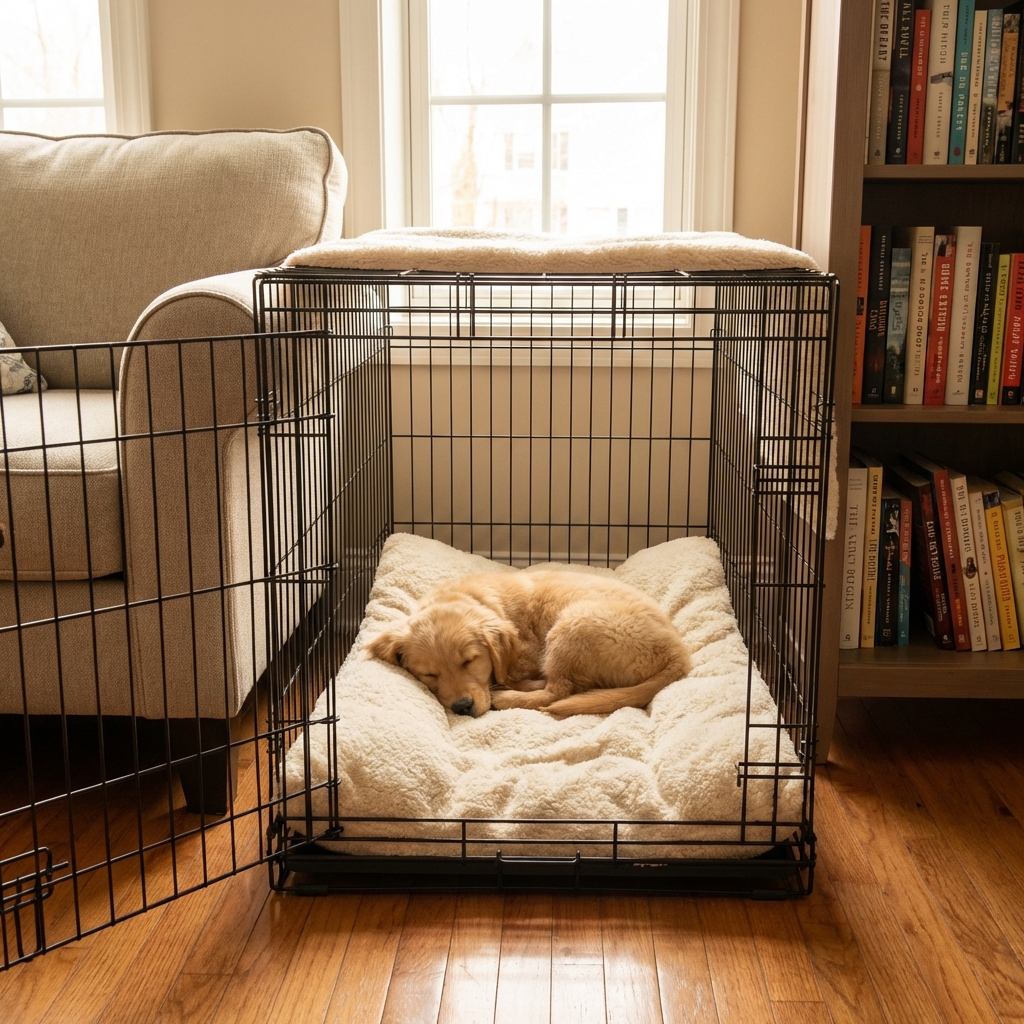
Crate whining is usually about separation, discomfort, or going too fast. A crate should feel like a safe bedroom, not a punishment.
Set up the crate for success
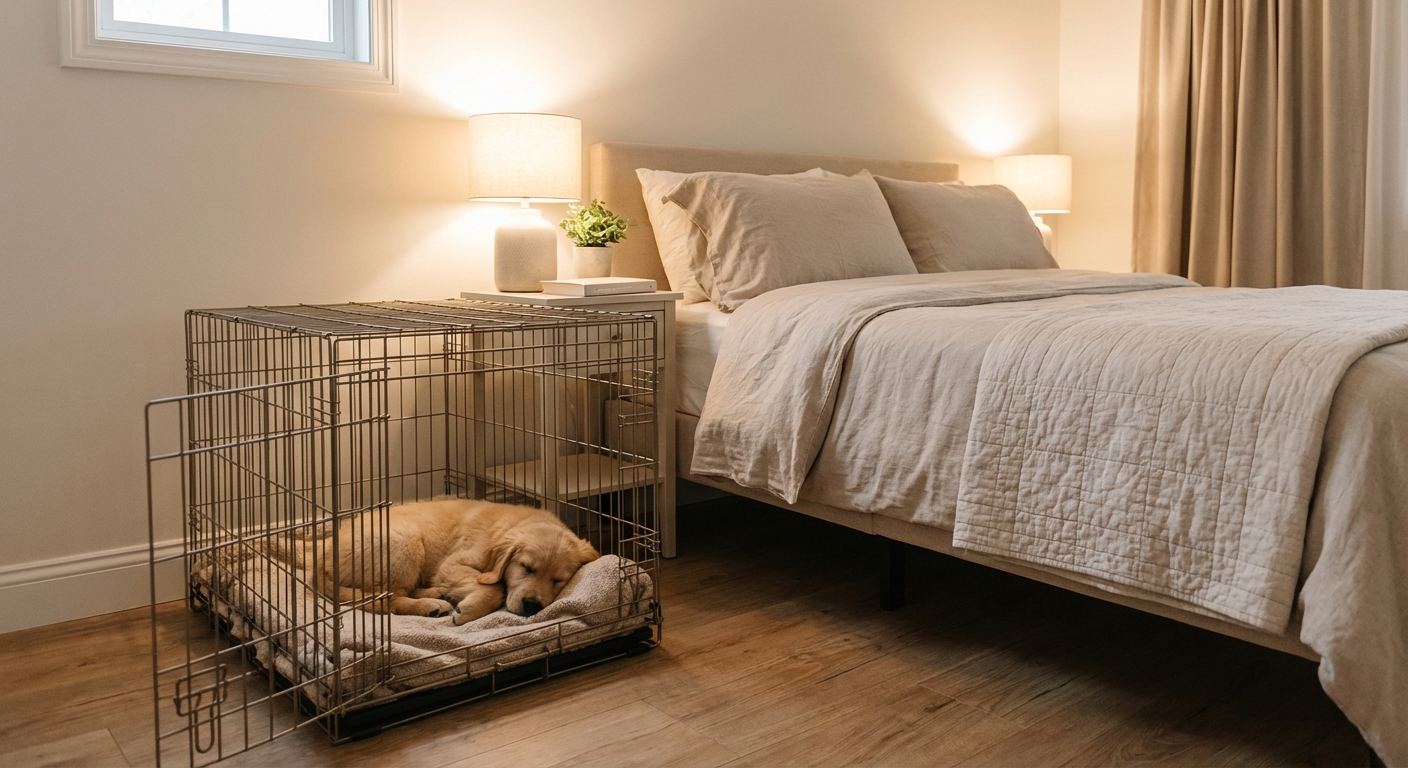
- Location: early on, many puppies settle best when the crate is near you at night.
- Comfort: supportive bedding and a stable temperature.
- Sound: a fan or white noise can soften household sounds that wake puppies.
- Pre-bed potty: always give one last calm potty break right before bedtime.
Go slower for young puppies
If your puppy is 8 to 12 weeks old, whining at night and during short alone-time practice is extremely common. Keep your expectations realistic and focus on short, successful reps that build confidence.
Crate training in tiny steps
- Feed a few meals near the crate, then inside the crate.
- Toss treats in and let your puppy walk in and out freely.
- Close the door for 5 to 10 seconds while they chew, then open it before whining starts.
- Increase time gradually across days, not minutes.
If you wait until your puppy is already upset, it is harder for them to learn. Aim to practice when they are calm.
Separation whining
Many puppies whine because they have never practiced being alone. Independence is learned through short, successful reps.
Try this daily 10-minute exercise
- Give your puppy a safe chew or stuffed toy.
- Step out of sight for 5 to 15 seconds.
- Return quietly before whining escalates, then leave again.
- Gradually increase the time over days.
Progress is not perfectly linear. If whining increases, shorten the time and rebuild. Separation distress can take longer than basic attention whining, so do not rush this step.
What not to do
- Do not punish whining: yelling, leash pops, or “alpha” tactics can increase fear and anxiety, which often worsens vocalizing.
- Do not accidentally reward it: opening the crate door during whining teaches “noise opens doors.” Wait for a brief quiet moment when it is appropriate to do so.
- Do not over-exercise a young puppy: too much intense activity can create an overtired, whiny pup. Choose short, age-appropriate play and training.
- Do not ignore true distress: if your puppy is panicking, drooling, hurting themselves in the crate, or cannot settle, get help from your vet and a qualified trainer.
When to call a vet or trainer
Whining is normal, but these situations deserve professional support:
- Whining is sudden, intense, or paired with signs of pain or illness.
- Your puppy cannot settle even with routine, potty breaks, and enrichment.
- Crate or alone-time whining escalates to panic behaviors (scratching until bleeding, breaking teeth on bars, nonstop screaming).
- You suspect separation anxiety or noise phobia.
Ask your vet about medical causes first, then consider a positive reinforcement trainer (look for certifications like CPDT-KA or IAABC) who has experience with puppies.
Quick daily checklist
- Potty breaks on a schedule
- Short training session (3 to 5 minutes)
- Enrichment: chew, lick mat, or food puzzle
- Planned naps and quiet time
- Reward calm, ignore safe attention-whining, reinforce quiet
With consistency, many dog parents notice early improvement within 1 to 2 weeks. Bigger changes often take several weeks as your puppy matures and your routine clicks. If separation-related distress is part of the picture, it can take longer, and getting help sooner is a smart move.