Stop kitten biting without punishment. Learn why kittens bite, how to freeze and disengage, redirect to toys, prevent ankle attacks, and build a daily play r...
Article
•
Designer Mixes
How To Get Kittens To Stop Biting

Shari Shidate
Designer Mixes contributor
Kittens bite for a reason. Sometimes it is playful hunting practice, sometimes it is overstimulation, and sometimes it is fear. The good news is that most kitten biting can improve quickly when you respond the right way, build better habits, and make sure your kitten has healthy outlets for all that growing energy.
As a veterinary assistant, I want you to know this is incredibly common, and it is not a sign your kitten is “bad.” Think of it as a communication and skills issue. Your job is to teach bite inhibition and redirect the behavior into appropriate play.
Quick note: This article is educational and not a substitute for veterinary advice. If something feels sudden, severe, or out of character, check in with your veterinarian.
Why kittens bite
Biting is normal kitten behavior, especially during the early months as they learn how to interact with the world. Play biting often peaks in the juvenile period and can continue past 16 weeks, particularly in high-energy kittens or those without enough play outlets.
1) Play and hunting practice
Kittens are tiny predators. They stalk, pounce, grab, and bite. If hands and ankles become the “toy,” your kitten will practice on you.
2) Teething and mouth exploration
Like puppies, kittens explore with their mouths. Teething can add increased mouthing and chewing, especially as adult teeth start erupting around 3 to 4 months and finish coming in closer to 6 months.
3) Overstimulation
Some kittens get overstimulated during petting and switch from purring to biting. This is not “spite.” It is often a threshold issue: their nervous system has had enough input.
4) Fear, stress, or pain
Sudden biting, especially if it is new or intense, can be a stress response. Pain can also make a kitten bite when touched, picked up, or approached.
5) Learned behavior
If biting makes you react, chase, or play, your kitten can learn that biting works. Even negative attention can reinforce the behavior.
What not to do
Some common responses accidentally make biting worse or create fear.
- Do not use hands as toys. Wrestling games teach your kitten that human skin is fair game.
- Do not hit, flick, or punish. Punishment can increase fear and defensive aggression, and it does not teach what to do instead.
- Do not “scruff” to control behavior. Scruffing can cause stress and may damage trust, especially as kittens grow.
- Do not chase your kitten after a bite. Many kittens see this as a game.
- Avoid yelling or startling sounds. Some people try a sharp sound, but it can backfire by increasing fear or arousal. A calm, neutral disengagement is usually more effective.
Your goal is simple: end the fun when teeth touch skin, then immediately show your kitten what is acceptable to bite.
Instead, use this simple plan.
How to stop kitten biting
Step 1: Make biting boring
When teeth touch skin, calmly stop all interaction. Freeze for one to two seconds, then gently remove your hand and turn away. If your kitten follows and keeps biting, stand up and step behind a baby gate or close a door for a brief break, usually 20 to 60 seconds.
This approach is widely used in positive-reinforcement training. The key is that it is immediate, short, and consistent.
- Keep breaks short. You are teaching cause and effect, not punishing.
- Be consistent. One bite should end the session every time.
Step 2: Redirect to the right target
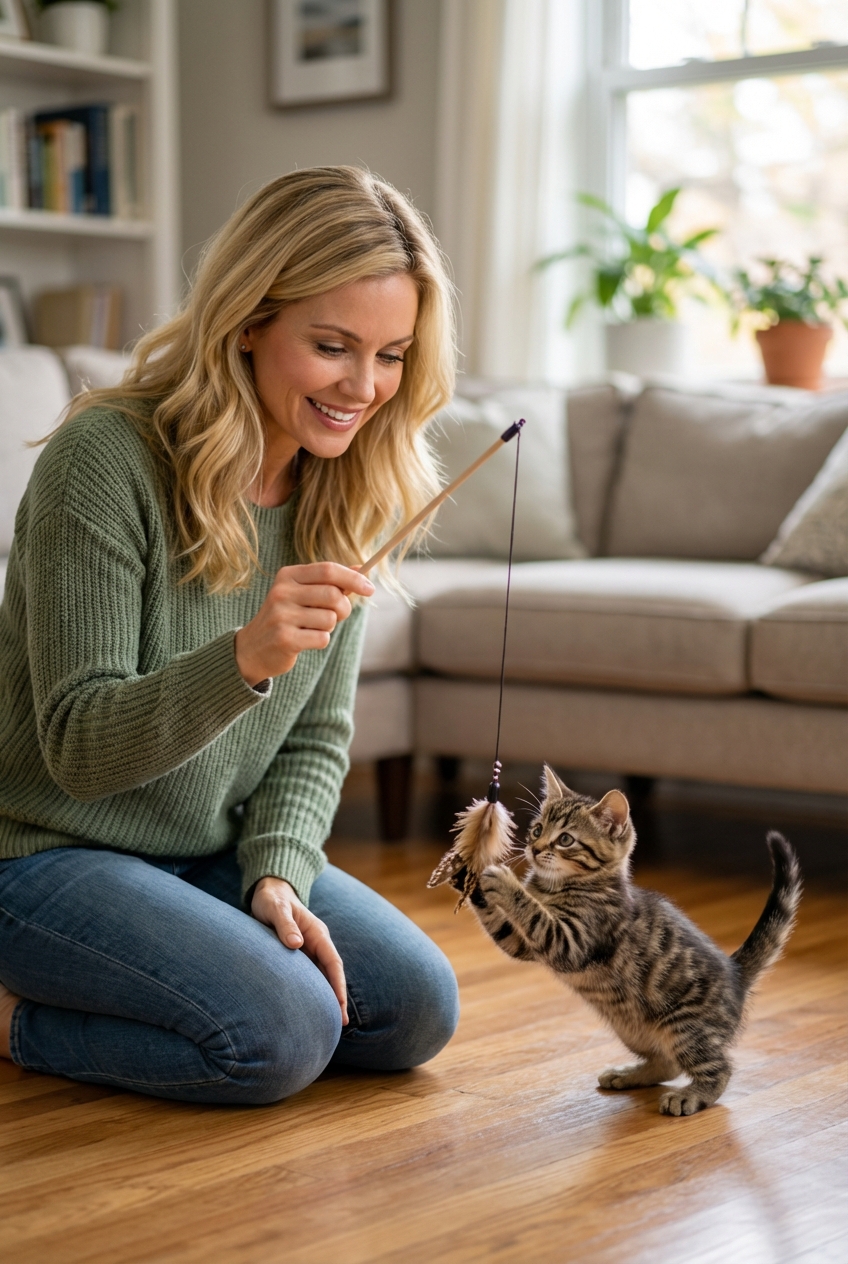
Have appropriate toys within reach in the rooms where you spend time. When your kitten goes for hands or feet, redirect to a toy immediately.
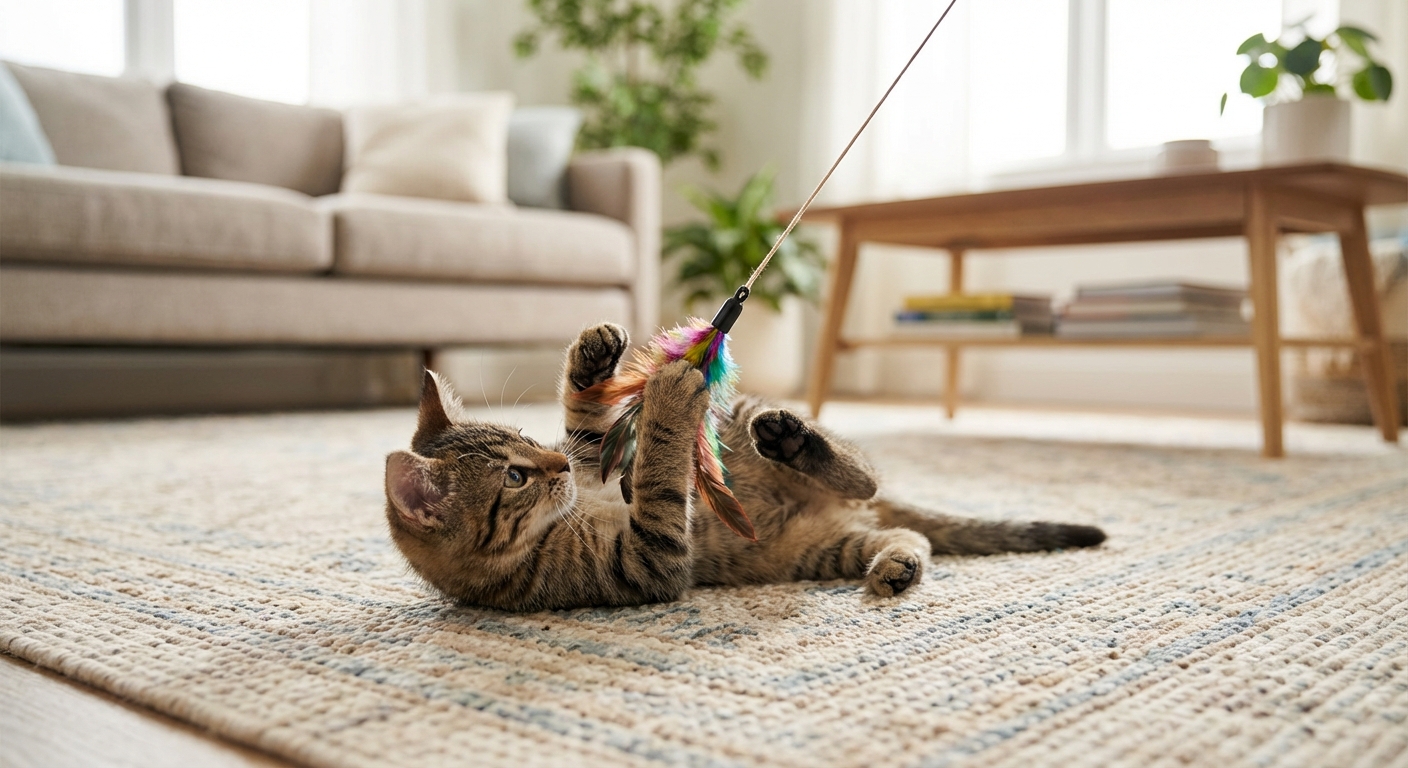
- Wand toys are ideal because they keep your hands far away from teeth and claws.
- Small kicker toys let kittens bunny-kick and bite safely.
- Soft balls or mice toys are great for fetch-style play.
Chew safety tip: Skip string, yarn, ribbon, hair ties, and toys with easily torn pieces. If swallowed, they can cause dangerous intestinal problems. Choose sturdy, cat-safe chew and kicker toys, and supervise play.
Step 3: Build a daily play routine
Many biting issues improve dramatically when kittens get predictable, structured play. Aim for two to four short sessions daily, about 10 to 15 minutes each.
A simple routine that works well:
- Hunt: wand toy play with chasing and pouncing
- Catch: allow occasional successful captures so your kitten does not get frustrated
- Eat: offer a small meal or a few treats after play to complete the hunt cycle
- Rest: many kittens will nap after this
Step 4: Teach gentle play
When kittens play with each other, they learn that biting too hard ends the game. You can teach a similar lesson at home. The realistic goal is usually “gentler and less frequent,” not necessarily “never mouth at all,” and the timeline varies by kitten.
- If your kitten bites hard, end interaction immediately.
- If your kitten uses a soft mouth or licks, quietly continue gentle play or offer calm petting for a moment.
- Reward the behaviors you like: gentle paws, soft mouth, and choosing toys.
Step 5: Manage your hands and feet
Hands moving quickly can trigger the chase instinct. To prevent surprise attacks:
- Do not wiggle fingers at your kitten.
- Wear slippers and avoid dangling shoelaces if your kitten is ankle-focused.
- Keep blankets tucked if your kitten attacks moving feet under covers.
Step 6: Watch for overstimulation
Many “petting bites” have a warning. Common early signs include:
- Skin twitching along the back
- Tail flicking or thumping
- Ears rotating sideways or back
- Dilated pupils
- Sudden stillness before the bite
If you see these, stop petting before the bite happens. Give space, offer a toy, or let your kitten walk away.
Common scenarios
Biting during cuddles
Keep cuddles brief and stop while it is still pleasant. Many kittens prefer short affection sessions. Offer a toy nearby so your kitten can switch from petting to chewing appropriately.
Attacking ankles
This is classic play predation. Increase play sessions and keep a small toy in your pocket to toss away from your feet. You can also preempt it with a short, scheduled play session when you notice stalking cues like crouching, wiggle-butts, or intense staring.
Biting when picked up
Some kittens do not enjoy being held. Support the chest and hind end, keep pick-ups short, and place your kitten down before they struggle. Pair handling with tiny treats so hands predict good things.
Biting guests or kids
Use management plus teaching:
- Give your kitten a quiet room with toys if visitors are overwhelming.
- Teach kids to play with wand toys only and to avoid grabbing.
- Supervise all interactions. Kittens can get overstimulated quickly.
Enrichment that helps
A bored kitten is often a bitey kitten. Enrichment does not have to be expensive, but it should be consistent.
- Vertical space: a cat tree, window perch, or shelves for climbing
- Food puzzles: slow feeders or treat balls to engage the brain
- Rotation: put some toys away and swap them weekly so they feel “new”
- Scratching options: at least one vertical and one horizontal scratcher
- Safe chew outlets: sturdy kicker toys and cat-safe chew toys
Claw management helps, too: keep nails trimmed (or ask your vet to show you how), and provide scratchers so your kitten has a legal place to shred. Declawing is not recommended because it can cause pain and long-term behavior issues.
If you have the right home set-up, your kitten is less likely to turn you into their favorite chew toy.
Second kitten
Sometimes, yes. A well-matched second kitten can provide appropriate play, help teach bite inhibition, and burn energy. But it is not a guarantee and it is not the right choice for every household.
Consider a second kitten if:
- Your kitten is highly social and constantly seeking rough play
- You can afford double veterinary care, food, and supplies
- You can do a proper introduction and provide enough space and resources
If your kitten is fearful, reactive, or has health issues, talk with your veterinarian first.
When to call the vet
Reach out for medical advice if:
- Biting is sudden, severe, or paired with hiding or vocalizing
- Your kitten seems painful when touched or picked up
- You notice limping, bad breath, drooling, or trouble eating
- Your kitten is not eating, has diarrhea, is lethargic, or seems “off”
Also consider professional help from a feline behavior consultant if biting is escalating despite consistent training and enrichment. Early support can prevent a long-term habit.
Human bite safety
Even a small cat bite can become infected. If your kitten breaks skin, wash the area right away with soap and running water. Contact a medical professional promptly for deep punctures, bites to the hand or face, spreading redness, swelling, warmth, worsening pain, drainage, fever, or if you are immunocompromised.
Daily plan
- Morning: 10 minutes wand-toy play, then breakfast
- Midday: puzzle feeder or treat hunt in one room
- Evening: 10 to 15 minutes play, then dinner
- Any time teeth touch skin: freeze, disengage, brief break, then redirect to a toy
With kittens, consistency beats intensity. Small, repeated lessons build a gentle, confident cat who knows exactly what is okay to bite and what is not.