Stop fleas fast with a simple 3-part plan: use cat-safe medication, clean your home to break the life cycle, and prevent re-infestation for months. Avoid uns...
Article
•
Designer Mixes
How to Get Fleas Off Your Cat: Facts Every Owner Should Know

Shari Shidate
Designer Mixes contributor
If your cat has fleas, you are not failing as a pet parent. Fleas are tiny, fast, and annoyingly good at hitchhiking indoors on people, other pets, or even wildlife that passes through the yard. The good news is that getting fleas off your cat is absolutely doable when you understand a few key facts and treat the whole problem, not just the cat.
Flea facts to know
Most fleas are not on your cat
This surprises almost everyone. Adult fleas live on your cat, but in many homes, most of the flea population is in the environment as eggs, larvae, and pupae hiding in carpet fibers, couch seams, pet bedding, and floor cracks. That is why treating only your cat often looks like it “did not work.”
Fleas can make cats sick fast
Fleas are more than an itch. Heavy infestations can contribute to anemia, especially in kittens, seniors, and smaller cats. Fleas can also trigger flea allergy dermatitis, where a single bite causes intense itching, scabs, and hair loss. And fleas can transmit tapeworms when cats swallow fleas during grooming.
Some cats do not look flea-y
Cats groom like pros, so you might not see crawling fleas. What you often see instead is flea dirt, which looks like black pepper at the skin level. Flea dirt is basically digested blood.
Natural is not always safer
As a veterinary assistant, I have seen well-meaning owners accidentally make cats much sicker by using essential oils or dog products. Cats metabolize some compounds differently (for example, certain phenols found in some essential oils), which can increase the risk of toxicity. When in doubt, ask your vet before applying anything to your cat’s skin or using it in your home.
How to spot fleas
If your cat is scratching, over-grooming, or has little scabs around the neck and lower back, fleas are high on the list. Here are simple, evidence-based ways to confirm.
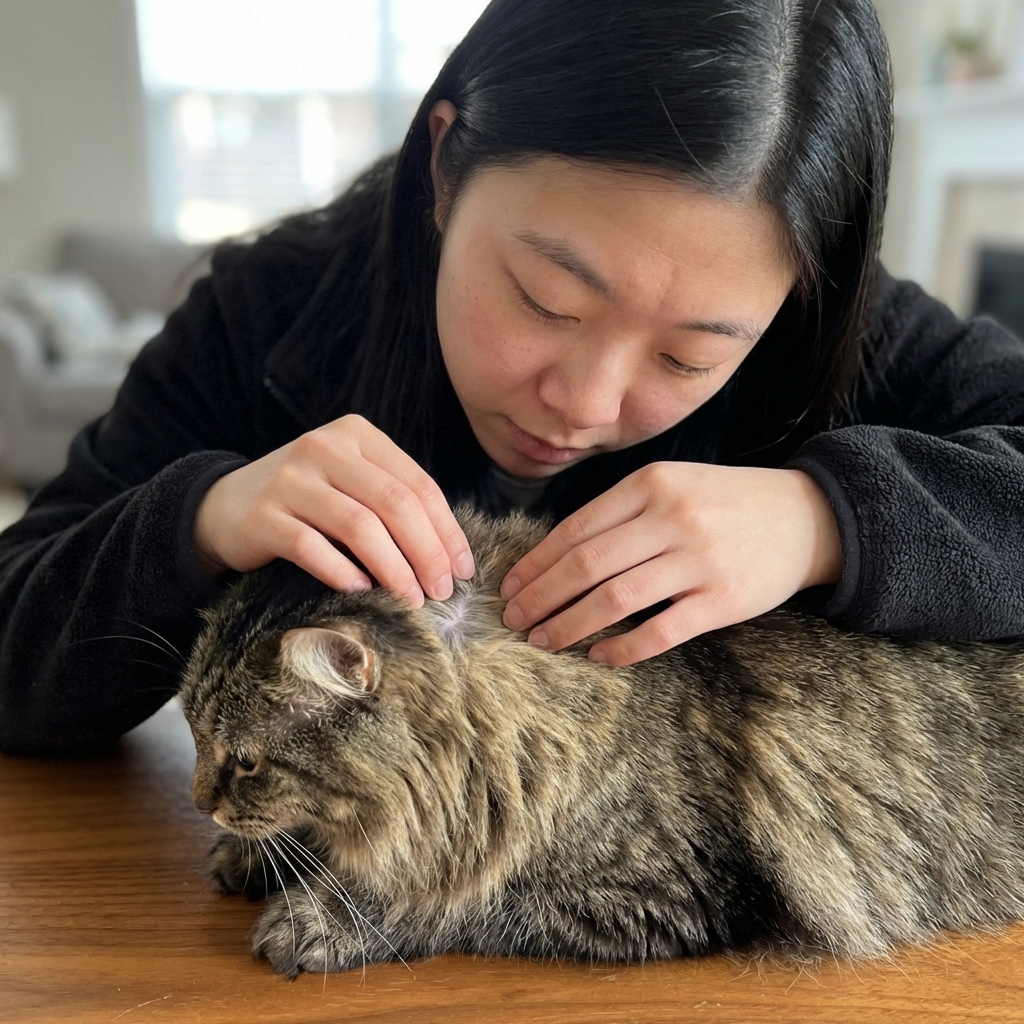
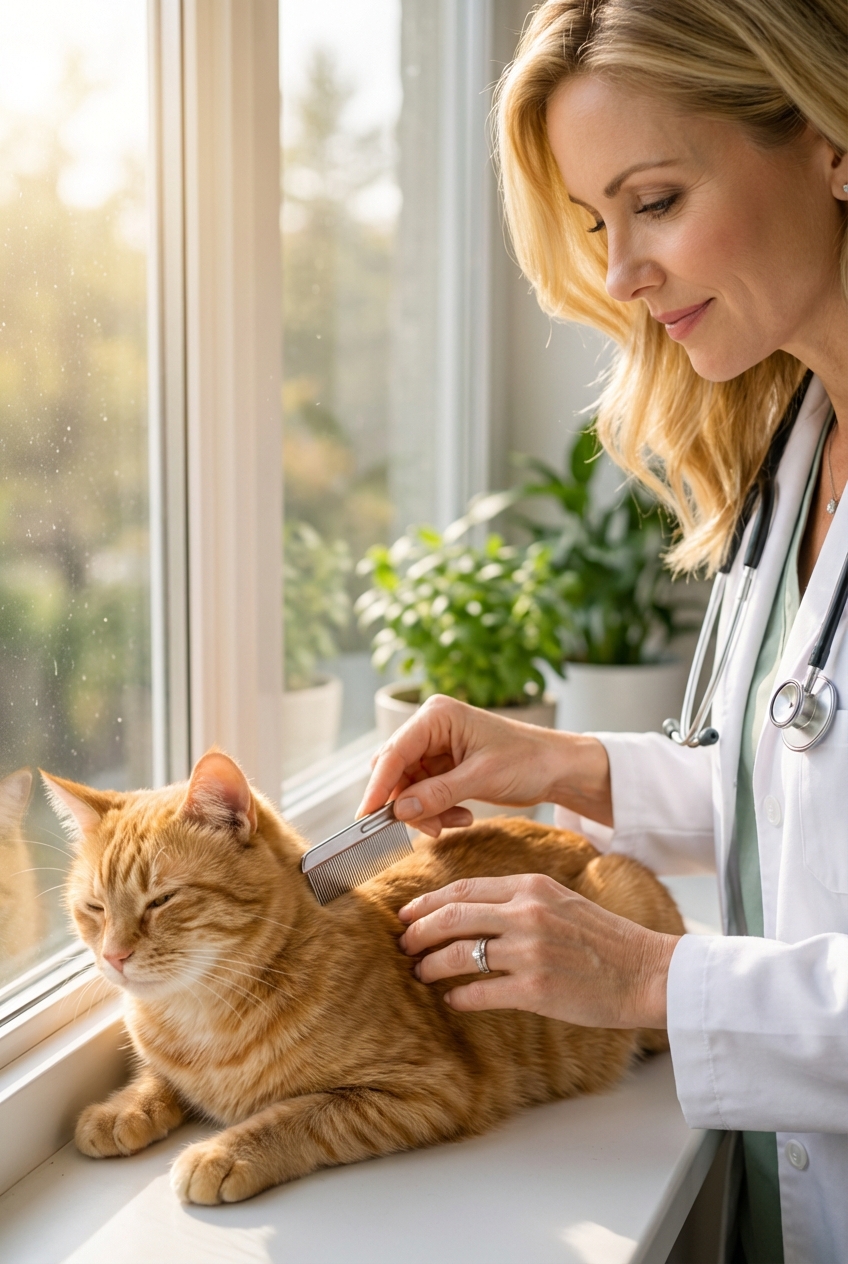
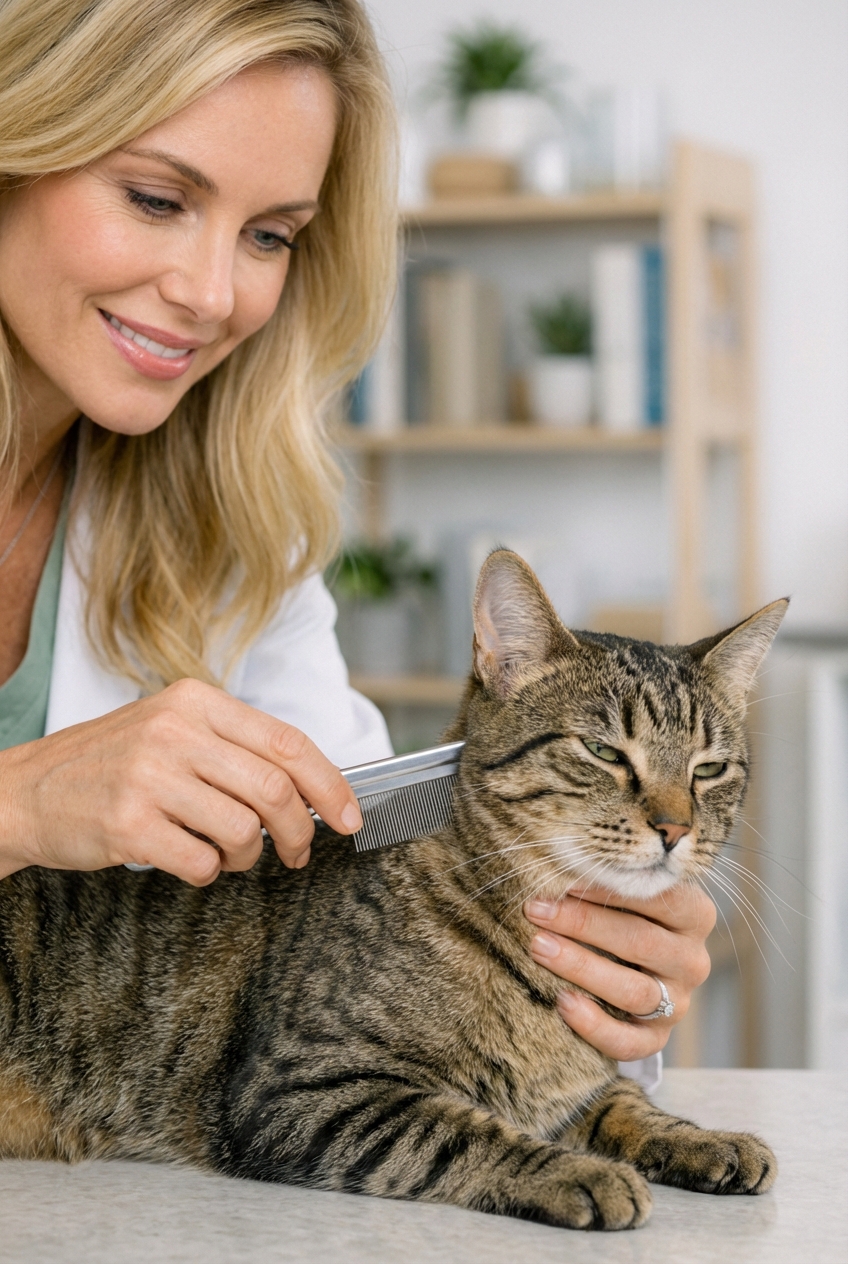
Do a flea comb check
- Use a fine-tooth flea comb, especially over the rump, base of the tail, and belly.
- Comb onto a damp white paper towel.
- If the specks smear reddish-brown, that is strong evidence of flea dirt.
When to call the vet soon
Get veterinary help promptly if you see any of the following:
- Weakness, pale gums, or lethargy (possible anemia)
- Kittens with fleas (they can become anemic quickly)
- Open sores, significant hair loss, or intense discomfort
- Persistent itching even after treatment (could be allergy, infection, mites, or ringworm)
Steps to get rid of fleas
Quick reminder: The goal is to treat the whole problem, not just the cat. That means using an effective cat-safe medication and addressing the home environment.
Step 1: Use a cat-safe product
For most cats, the fastest and most reliable option is a vet-recommended topical or oral flea medication. These products are designed to kill adult fleas and many also help break the life cycle. Some preventives also cover ticks and certain mites, but not all do, and not every product is safe for every age and weight. Your best choice depends on your cat’s age, weight, health history, and whether you have other pets in the home.
Important safety reminders:
- Never use dog flea products on cats. Some contain permethrins that can cause severe neurologic signs in cats.
- Follow weight ranges and age limits exactly.
- If your cat is on other medications or has chronic disease, ask your vet which ingredient is best.
Step 2: Remove live fleas now (optional, but satisfying)
If you want immediate relief while the medication starts working:
- Flea comb once or twice daily for several days.
- Dip the comb into soapy water to trap and kill fleas you remove.
- Focus on warm zones like the neck, armpits, groin, and tail base.
Step 3: Bathe only if your cat can handle it
Bathing is not required for most cats if you use an effective flea medication, and it can be stressful. But if your cat tolerates baths, a gentle bath can remove flea dirt and some fleas. Use only a cat-safe shampoo and avoid essential oil additives.
Avoid harsh detergents (including dish soap) unless your veterinarian specifically directs you to use them. They can irritate skin, and bathing too often can dry the coat and make itching worse.
If your cat becomes highly stressed, stop. Stress and injury risk are not worth it. Medication plus combing and home treatment can still get you there.
Step 4: Treat the home
This is the part that makes treatment stick. Here is what helps most:
- Vacuum daily for 1 to 2 weeks, especially carpet edges, baseboards, and under furniture. Empty the canister outside right away.
- Wash bedding in hot water and dry on high heat, including your cat’s bedding and any blankets your cat sleeps on.
- Consider a home flea spray labeled for indoor use, ideally one that includes an insect growth regulator (IGR) to stop eggs and larvae from maturing. Always follow the label and keep cats away until fully dry.
Step 5: Treat every pet
If you have multiple pets, untreated pets become a flea safe haven. Dogs and cats should be on compatible flea prevention. Your vet can help you choose products that work together and fit your home.
Tips that help a lot
Do not stop too early
Flea pupae can stay protected in the environment and then hatch when conditions are right, including when vibrations from walking or vacuuming signal that a host is nearby. That is why you might see fleas “come back” even after good cleaning. Stick with consistent prevention for at least a few months, or year-round if your vet recommends it for your area.
Timeline expectations
Even with the right medication and solid cleaning, it is common to still see fleas for 1 to 3 weeks as pupae emerge from the environment. This does not always mean the product failed. It usually means you are finally pulling the hidden population into the open where it can be killed.
Watch for flea allergy dermatitis
If your cat has scabs, inflamed skin, or intense itching from just a few bites, they may have flea allergy dermatitis. These cats need strict prevention because even one flea can restart the cycle. Your veterinarian may also prescribe medication for itching or secondary skin infection.
Tapeworms are a common follow-up
If you notice small rice-like segments near the tail or in the litter box, contact your vet. Treating fleas helps prevent tapeworm reinfection, but your cat may also need a specific dewormer.
A well-timed vacuum helps
Vacuuming does more than pick up debris. It may encourage flea pupae to hatch, which makes them easier to kill with consistent prevention and environmental control. It feels backwards, but it is often helpful.
Outdoor sources can keep fleas coming
If your cat goes outdoors, or if wildlife passes through your yard, fleas can be reintroduced. Consistent prevention is often the long-term solution, even after you stop seeing fleas.
What to avoid
- Dog-only flea products used on cats
- Essential oils applied to the coat or used in diffusers in closed spaces (cats can be sensitive)
- DIY home remedies that do not break the flea life cycle and can irritate skin
- Multiple flea products at once unless your veterinarian tells you it is safe
If your cat drools, vomits, tremors, or seems unsteady after any flea product, call your veterinarian or a pet poison hotline right away.
A simple plan to start
If you are feeling overwhelmed, start here:
- Today: Confirm fleas with a flea comb, then start a vet-recommended cat flea medication.
- Next 7 days: Vacuum daily, wash bedding, keep combing if your cat tolerates it.
- Next 30 to 90 days: Continue prevention monthly (or as directed) and treat all pets consistently.
You do not have to do everything perfectly. You just have to do the right few things consistently long enough to outlast the flea life cycle.
When to involve your vet
Please call your vet if your cat is a kitten, pregnant, nursing, elderly, or has chronic disease, or if you are not sure which product is safe. Also call if fleas persist after 4 weeks of consistent treatment and environmental cleaning. Most of the time, ongoing fleas are due to missed doses, incorrect application, untreated pets, or an environmental reservoir that has not been fully addressed. Less commonly, fleas may have reduced susceptibility to a product, and your vet can help you switch to a better option.
Your cat deserves comfort, and you deserve peace of mind. With the right prevention, a little persistence, and a whole-home approach, fleas can become a short chapter, not a recurring story.