A vet-assistant guide to removing fleas from kittens safely: check age and weight, use a flea comb, bathe only when appropriate, choose vet-approved preventi...
Article
•
Designer Mixes
How to Get Fleas Off a Kitten

Shari Shidate
Designer Mixes contributor
If you have a kitten with fleas, I know how stressful that feels. The good news is that you can get relief quickly, but you have to use the right steps for a kitten’s age and size. Kittens are tiny, and some common flea products made for adult cats can be dangerous for them.
This guide walks you through safe, practical ways to remove fleas now, plus how to keep them from coming right back.
First, check age and weight
Before you apply anything, confirm approximately how old your kitten is and how much they weigh. Labels and veterinary guidance matter here, because many flea preventives have both a minimum age and a minimum weight.
- Under 4 weeks old: usually no chemical flea products. Focus on flea combing and gentle baths only if needed and if the kitten can stay warm.
- 4 to 8 weeks old: some flea control options may be safe depending on the product and your kitten’s weight. Follow the label and your veterinarian’s guidance.
- 8 weeks and older: more options open up, including veterinarian-recommended topical or oral preventives. Many products still require a minimum weight (often around 1.5 to 2 pounds), so confirm both.
If you are unsure of age, a vet or shelter can estimate based on teeth and body development.
Fast, safe flea removal today
1) Use a flea comb
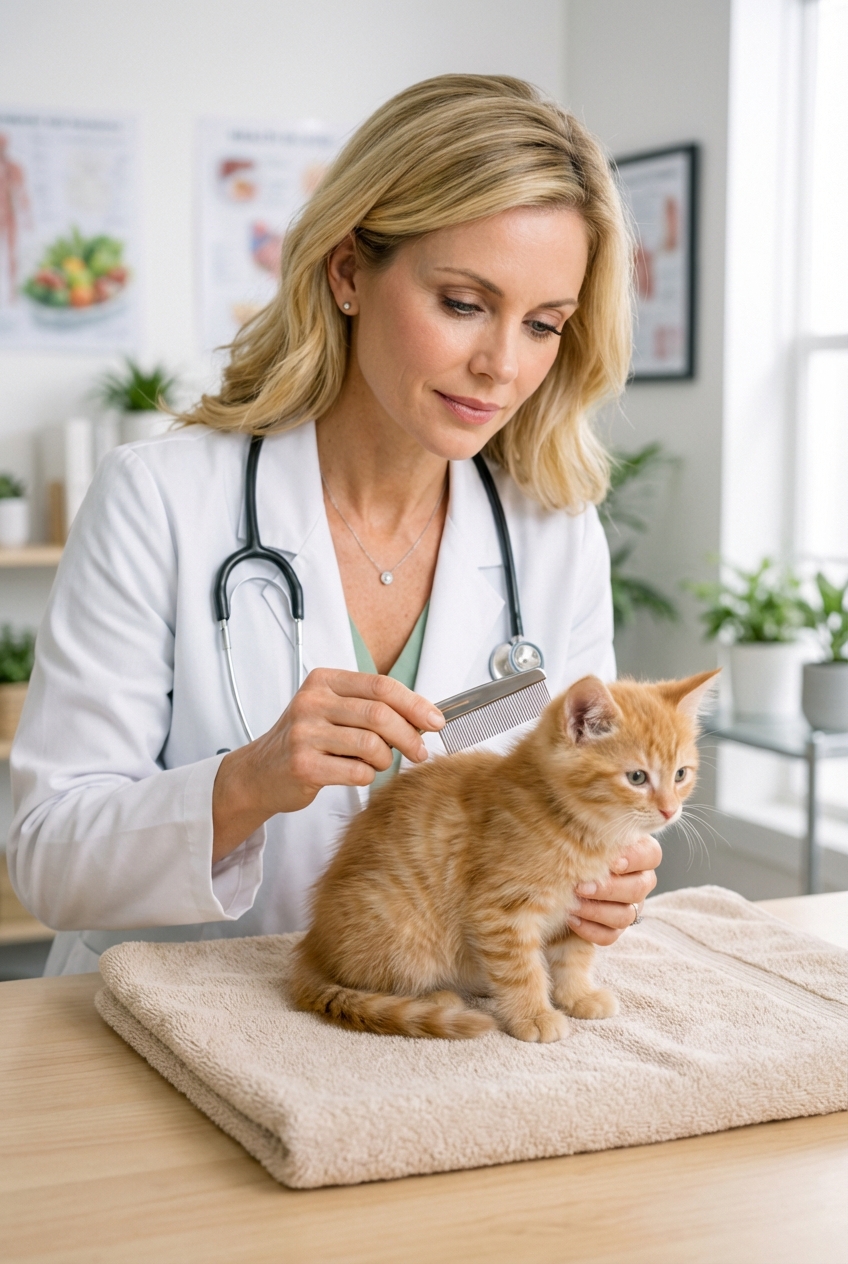
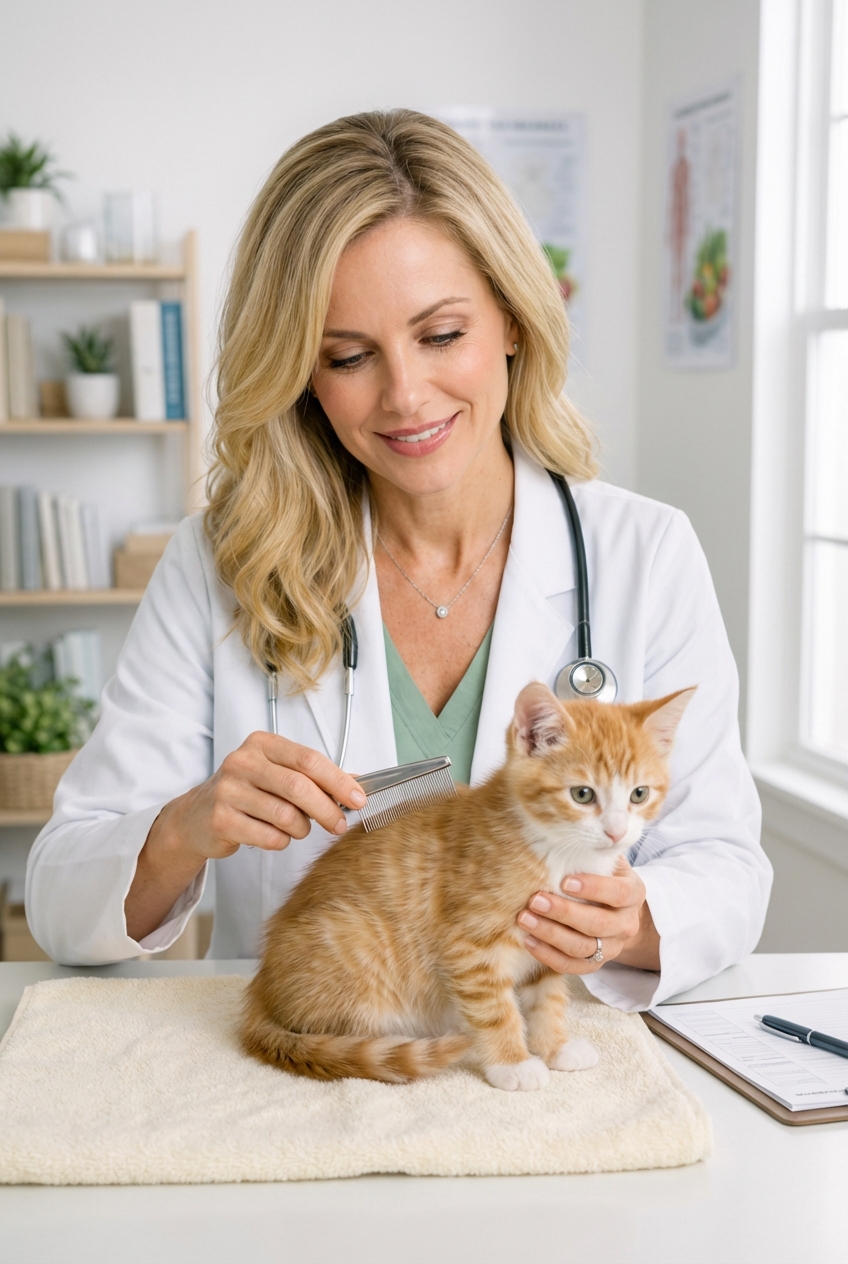
A flea comb is one of the safest tools for kittens of any age. It physically removes adult fleas and flea dirt.
- Sit with your kitten on a towel in good light.
- Comb slowly from head to tail, paying extra attention to the neck, base of tail, and belly.
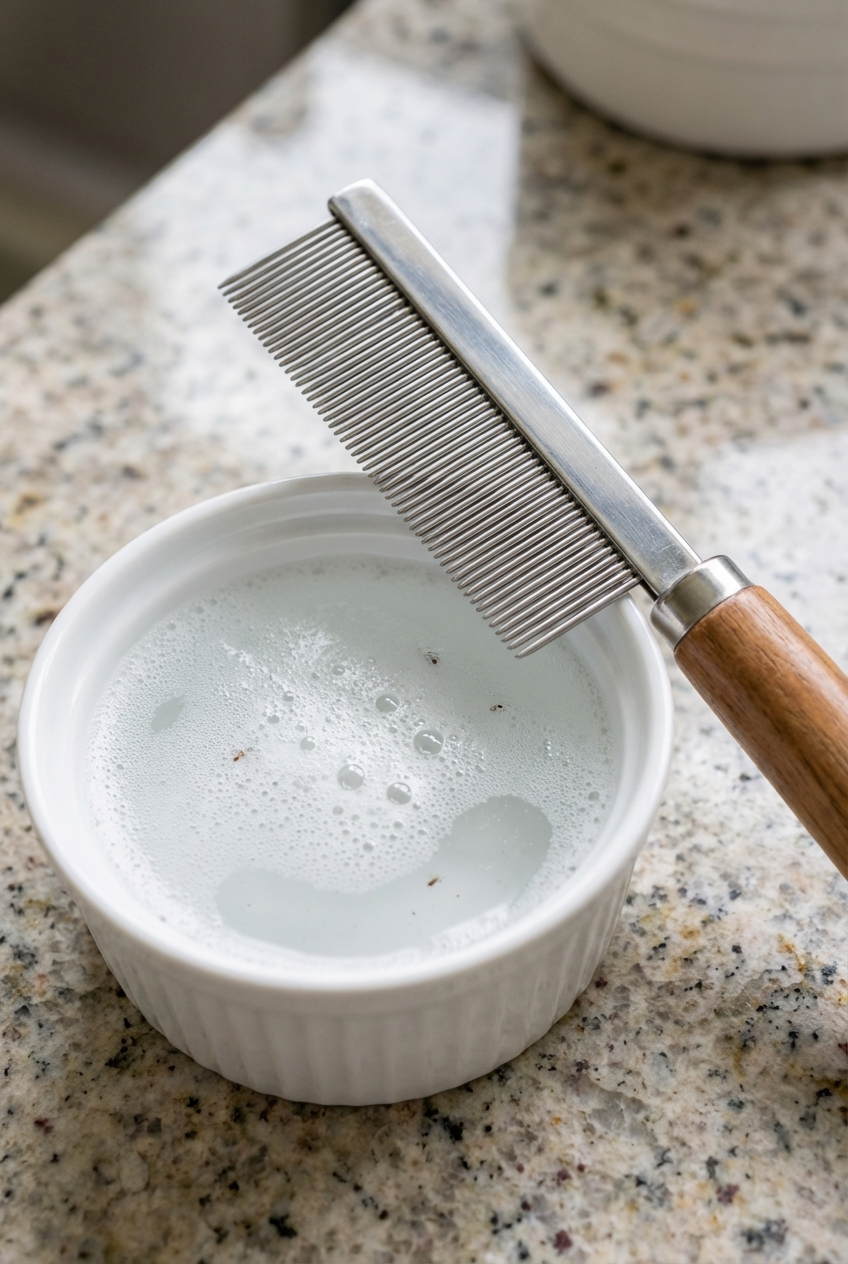
- After every few strokes, dip the comb into a bowl of warm water with a small drop of dish soap. This traps fleas you remove.
- Repeat 1 to 2 times daily for several days, then as needed.
2) Try a gentle bath if you can keep them warm
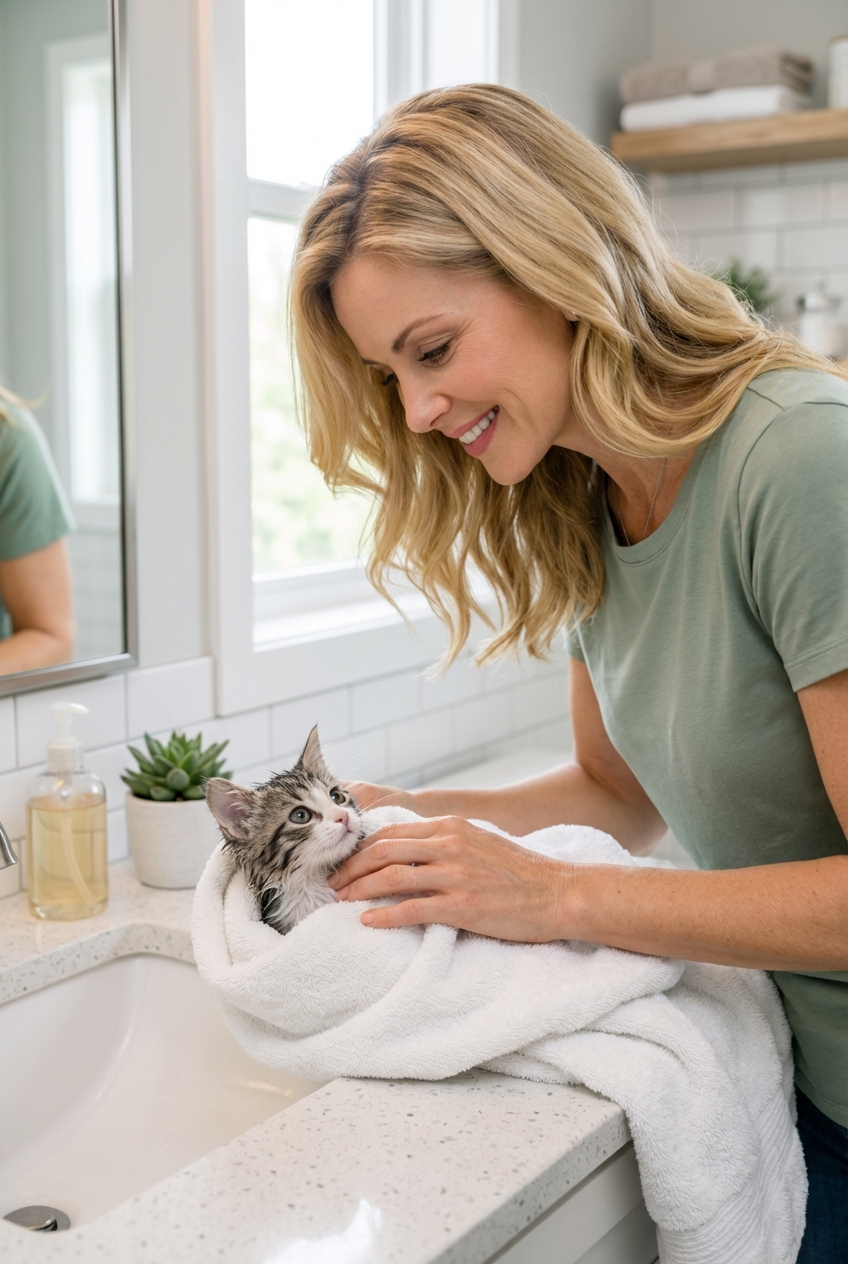
Bathing can help remove fleas, but kittens chill easily. If your kitten is very young, weak, underweight, or cold, skip the bath and comb only, then call your vet.
If you do bathe, keep it short and warm.
- Use a warm room, warm (not hot) water, and have towels ready.
- If you are using kitten-safe shampoo, you can lather a small ring around the neck first. This may help reduce fleas moving up toward the face. Do not get soap in the eyes, nose, or mouth.
- Gently lather the body, avoiding eyes, nose, and mouth.
- Rinse thoroughly and dry immediately with towels.
Drying tip: For most kittens, skip the hair dryer. The noise can be scary and heat can burn sensitive skin. Focus on thorough towel drying, then keep your kitten in a warm, draft-free room until fully dry. If your veterinarian has advised extra warming, a covered heating pad on low (or a warm water bottle wrapped in a towel) can help, but always provide space for the kitten to move away from the heat.
Important: Never use essential oils on kittens, and do not use dog flea shampoos or dips. If you use dish soap in a pinch, use only a tiny amount, rinse very well, and do not repeat frequently since it can dry and irritate skin.
3) Clear fleas around the face
For the face and around the eyes, skip soaps. Use a damp cotton ball and a flea comb, working carefully. Fleas often hide near ears and under the chin.
What not to use
This is where I see the most accidental problems. Avoid these unless your veterinarian specifically instructs you:
- Dog flea products on a kitten. Some contain permethrin, which can be toxic to cats.
- Adult cat flea products on a kitten that is too young or too small for the label directions.
- Essential oils (tea tree, peppermint, cedar, eucalyptus). Cats can be very sensitive and kittens even more so.
- Flea collars on young kittens. Many are too strong and can cause irritation or worse.
- Home remedies like alcohol or harsh chemicals. They can burn skin and cause poisoning.
- “Natural” powders and sprays that are not specifically labeled for kittens. Be especially cautious with diatomaceous earth, which can irritate lungs if inhaled.
When to call the vet
Fleas are not just itchy. In kittens, they can cause flea anemia, which can become life-threatening.
Contact your veterinarian urgently if you notice:
- Pale or white gums
- Weakness, lethargy, or trouble staying upright
- Rapid breathing
- Not eating
- Heavy flea infestation you cannot get under control
If your kitten came from outdoors or a stray situation, ask your vet about deworming too. Fleas commonly transmit tapeworms. Also keep an eye out for skin irritation, scabs, or oozing sores from scratching, since those can need treatment.
Stop the cycle at home
Here is the part most people miss: a minority of the flea population is on your kitten. Eggs, larvae, and pupae can be in bedding, carpets, and cracks in flooring. If you do not treat the environment, fleas return.
Do this daily for at least 2 to 4 weeks
Two weeks is a good start, but many infestations take longer. Depending on temperature and humidity, the flea life cycle can keep going for several weeks.
- Wash bedding the kitten touches in hot water, then dry on high heat.
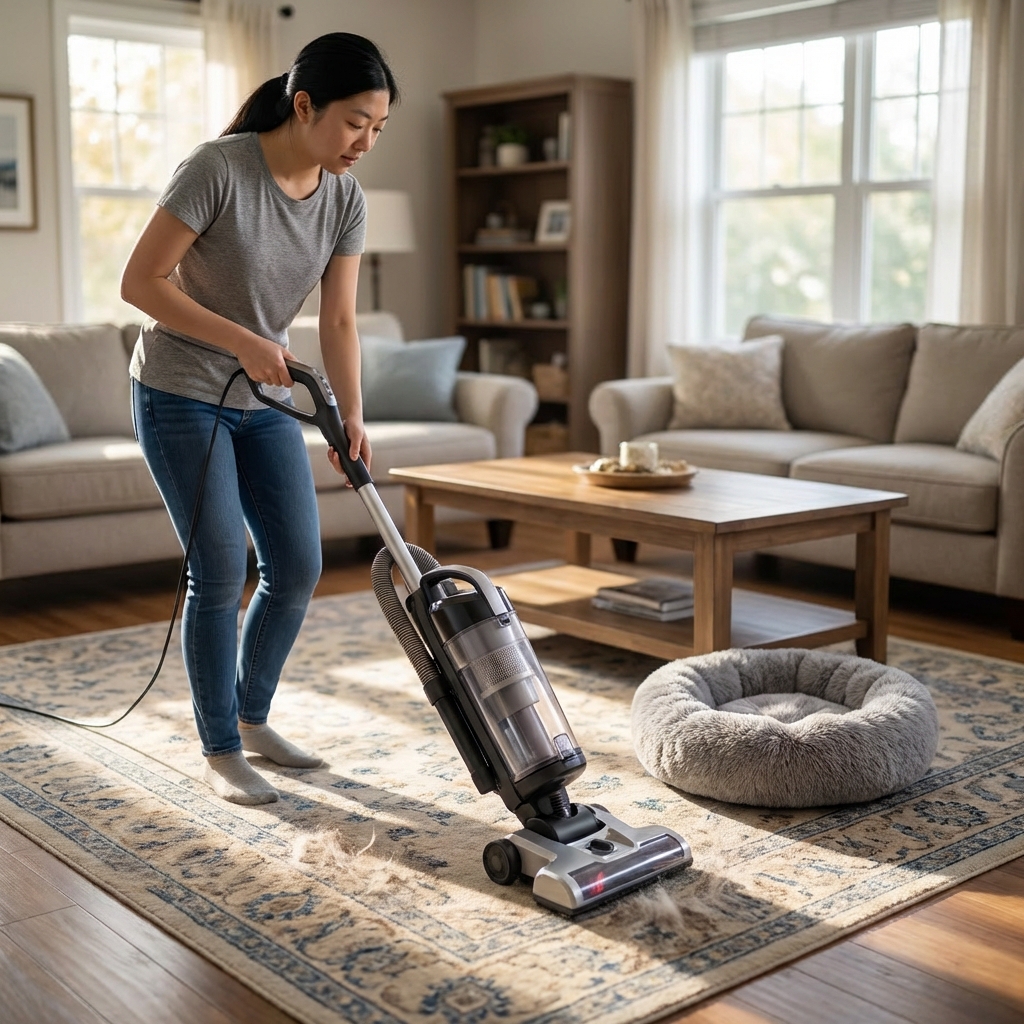
- Vacuum daily (carpets, rugs, couch cushions, baseboards). Immediately empty the vacuum contents outside.
- Limit space temporarily to one easy-to-clean area so you can keep up with laundering and vacuuming.
Prevention that works
Once your kitten is old enough and meets the minimum weight, the most reliable way to prevent repeat infestations is consistent, veterinarian-recommended flea prevention. Your vet will choose based on age, weight, health status, and your household (especially if you have dogs or small kids).
Bring the product box or a photo of what you are considering to your vet before applying anything. A quick check can prevent an emergency visit later.
If you have other pets, plan to treat them too. Treating only the kitten often leads to reinfestation.
Quick answers
Can I use Dawn dish soap?
In a pinch, a small amount of mild dish soap can help remove fleas during a bath, but it is not a preventive and it can dry skin. Flea combing and a vet-approved preventive (when age and weight appropriate) are the long-term solution.
Do I need to treat my other pets?
Yes, usually. If there are other cats or dogs in the home, ask your veterinarian for the safest plan for each pet. Treating only the kitten often leads to reinfestation.
Why do fleas keep coming back after a bath?
Because most flea life stages are in the environment. A bath may remove adult fleas today, but eggs and pupae can hatch for weeks unless you clean consistently and use proper prevention.
Simple action plan
- Today: flea comb session, warm towel dry, wash bedding.
- This week: vacuum daily and repeat combing. Monitor gums and energy.
- Ongoing: keep up environmental cleaning for at least 2 to 4 weeks, and longer if you still see fleas.
- As soon as appropriate: start a vet-recommended flea preventive based on your kitten’s age and weight, and treat other pets as advised.
Make a note of your kitten’s estimated age and weight, plus any products you are considering, to discuss the safest options with your veterinarian.