Fleas aren’t just on your cat—most live in your home. Learn how to spot flea dirt, choose cat-safe flea meds, treat every pet, clean effectively, and kno...
Article
•
Designer Mixes
How to Get Fleas Off a Cat

Shari Shidate
Designer Mixes contributor
Fleas are tiny, fast, and surprisingly tough. The good news is you can get them off your cat safely, but it works best when you treat the cat, the home, and any other pets at the same time. As a veterinary assistant, I always tell families: fleas are less about being “dirty” and more about biology. One flea can turn into a household problem quickly.
This article shares general information and is not a substitute for veterinary care. If you are unsure what is safe for your cat, call your veterinarian.
First, confirm it is fleas
It sounds obvious, but it saves time and keeps you from using the wrong product. Common signs include:
- Frequent scratching, especially near the lower back, tail base, and neck
- Flea dirt that looks like ground black pepper on the skin or in the coat
- Small scabs or hair loss from licking and chewing
The wet paper towel test
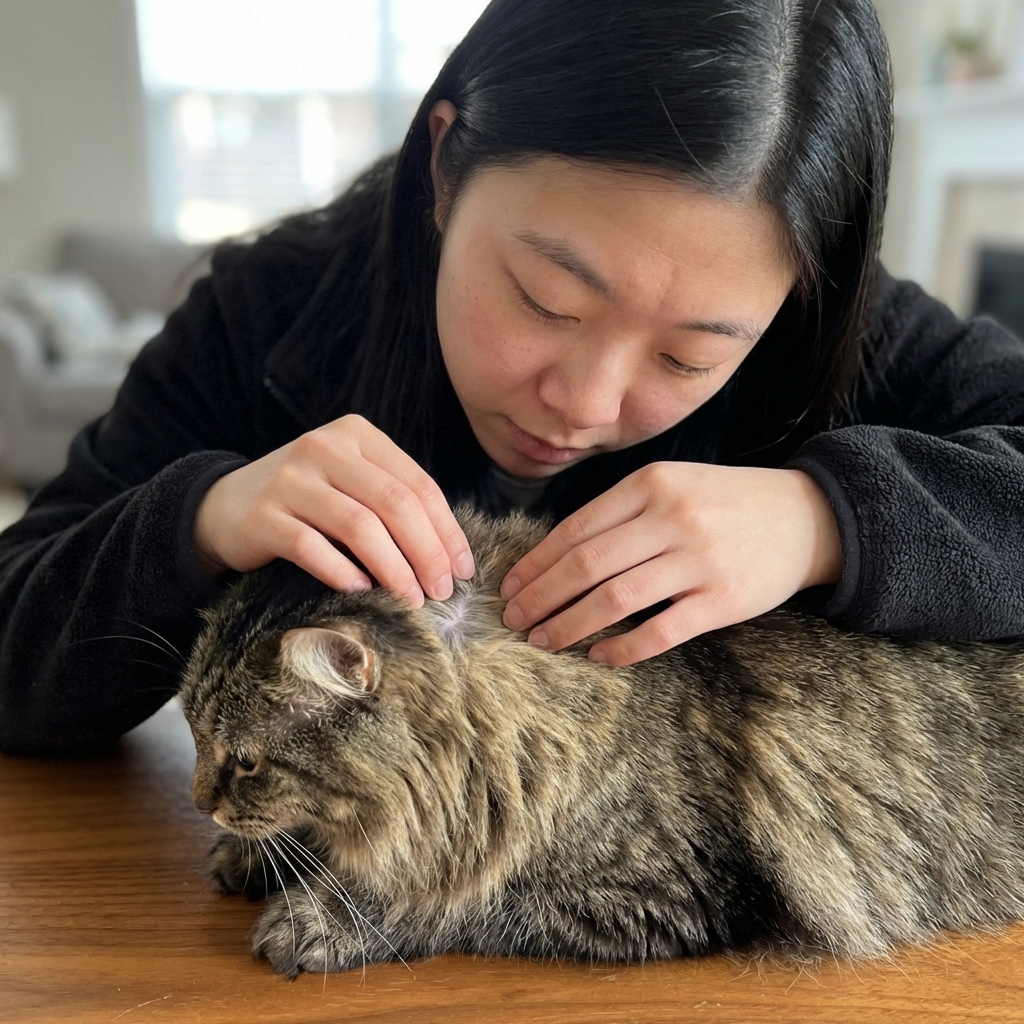
Brush your cat over white paper or a white towel. If you see black specks, dab them with a wet paper towel. If they smear reddish-brown, that is flea dirt (digested blood). That is your sign to move into flea-removal mode.
How to get fleas off your cat now
Step 1: Use a flea comb the right way
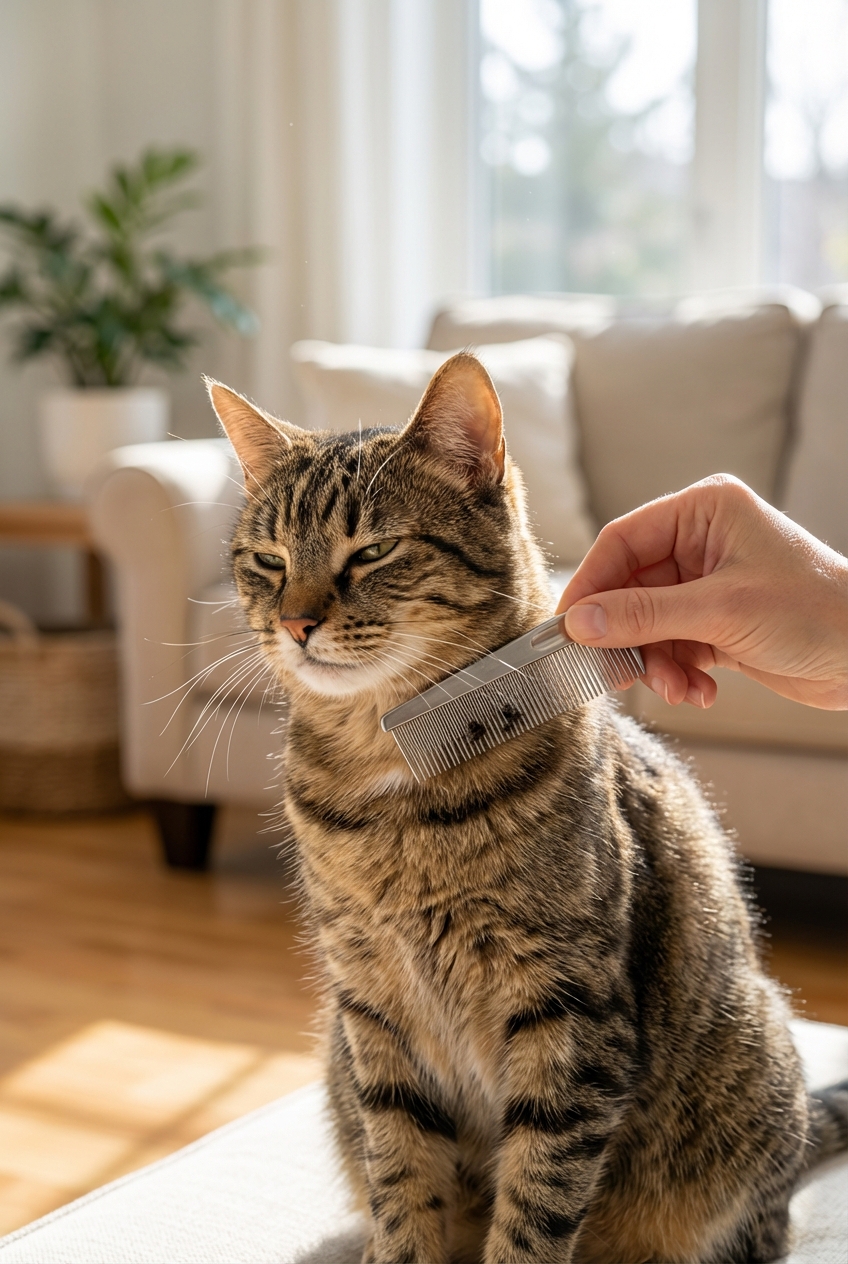
A flea comb is one of the fastest, safest tools to physically remove fleas, especially if your cat is sensitive or you are waiting for medication to kick in.
- Pick a time your cat is calm, like after a meal.
- Comb slowly from head to tail, focusing on the neck, behind the ears, armpits, belly, and tail base.
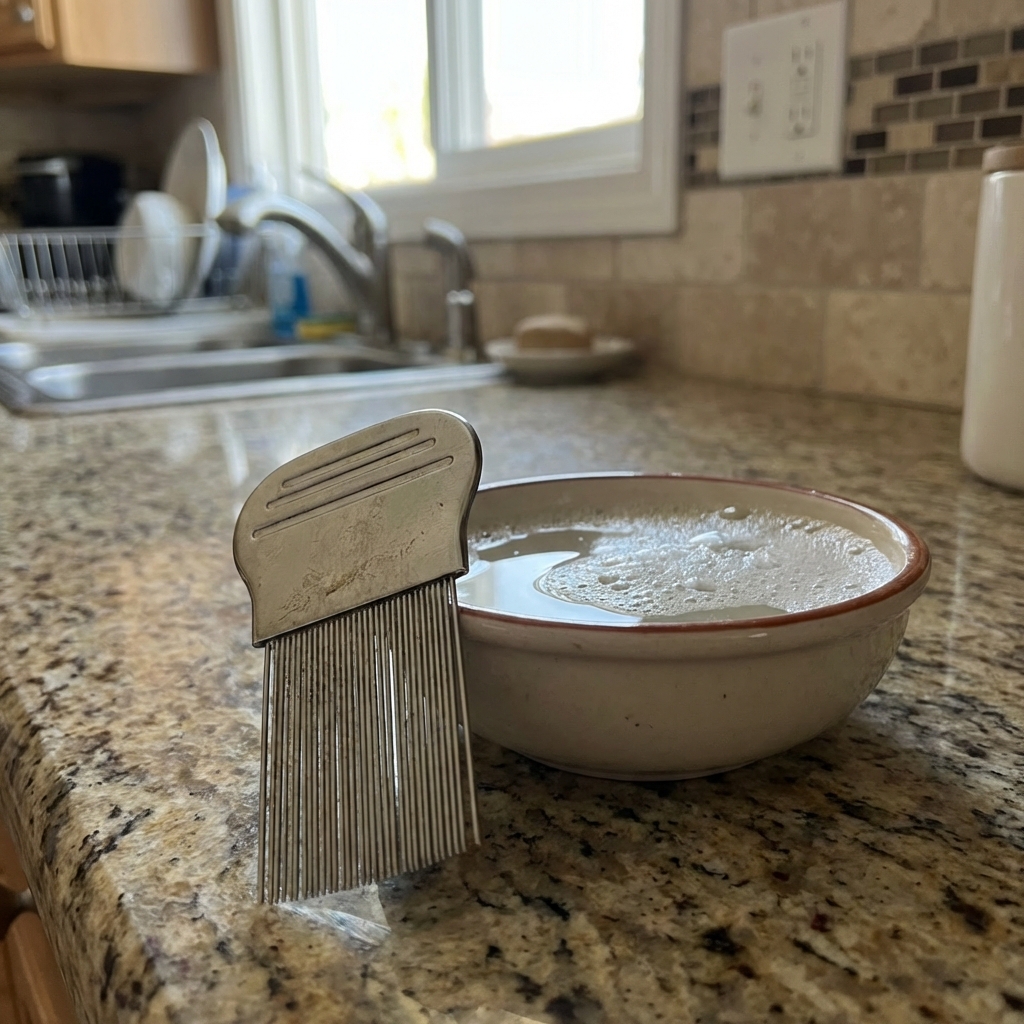
- Keep a bowl of warm water with a drop of dish soap nearby and dip the comb after each pass to drown fleas.
- Repeat once or twice daily for several days.
If your cat gets stressed: keep sessions short, take breaks, and stop before your cat escalates. A towel wrap (leaving the head out) can help some cats. If you are at risk of getting bitten or scratched, do not push it. Call your veterinarian for safer options.
Step 2: Start an evidence-based flea medication
Combing helps, but it rarely ends an infestation by itself. Most cats need a proven flea product to stop the life cycle. The most reliable options are vet-recommended topical or oral preventives that kill adult fleas and keep working for weeks.
- Use cat-only products and follow weight and age directions exactly.
- Treat every pet in the home (dogs included) or fleas will keep bouncing back.
- If your cat has a history of seizures, is very young, elderly, pregnant, or chronically ill, call your veterinarian first for the safest choice.
If you like having names to ask about, common vet-used options may include ingredients like selamectin, fluralaner, or other isoxazolines (availability and safety vary by country and by pet). Your veterinarian can match the right product to your cat’s age, weight, and health history.
Important safety note: Never use dog flea products on cats. Some dog spot-on treatments contain permethrins that can be dangerous, even life-threatening, to cats. The same caution applies to many dog-labeled sprays, shampoos, and powders.
Step 3: Skip DIY dips and essential oils
I know the internet loves home remedies, but cats are not small dogs. Many essential oils (including tea tree oil) can be toxic to cats, and harsh baths can stress them and irritate the skin. If you want to bathe your cat, ask your vet for a cat-safe flea shampoo recommendation and a plan for anxious cats.
Step 4: Be careful with flea collars
Some over-the-counter flea collars are ineffective or irritating, and the wrong collar can cause skin reactions. Some vet-grade collars can help in certain homes, but I recommend checking with your veterinarian before choosing one, especially if you have a cat that grooms heavily or has sensitive skin.
Do not forget the home
Here is the fun and frustrating fact: most of the flea population is usually not on your pet. In many infestations, only a small portion of fleas are on the animal, while the rest are in the environment as eggs, larvae, and pupae. That is why treating the environment is not optional.
What to do today
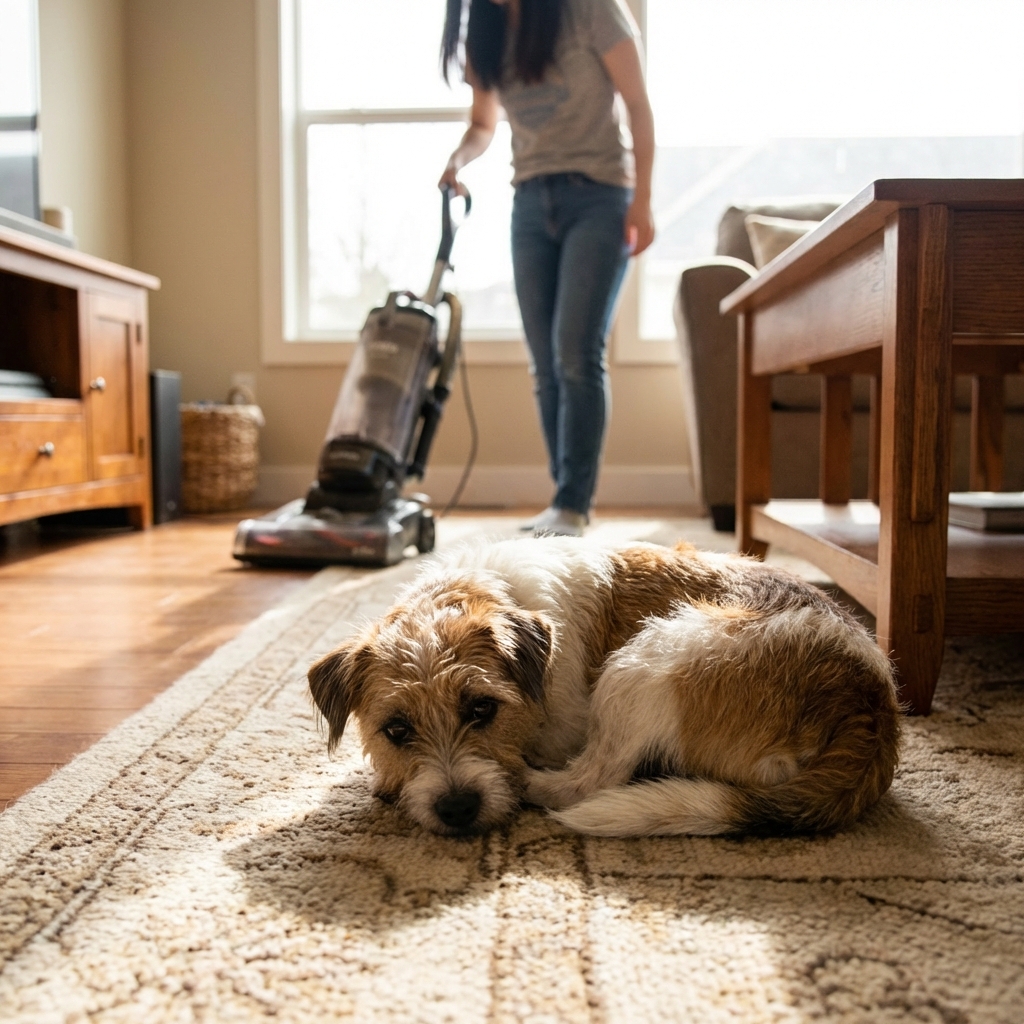
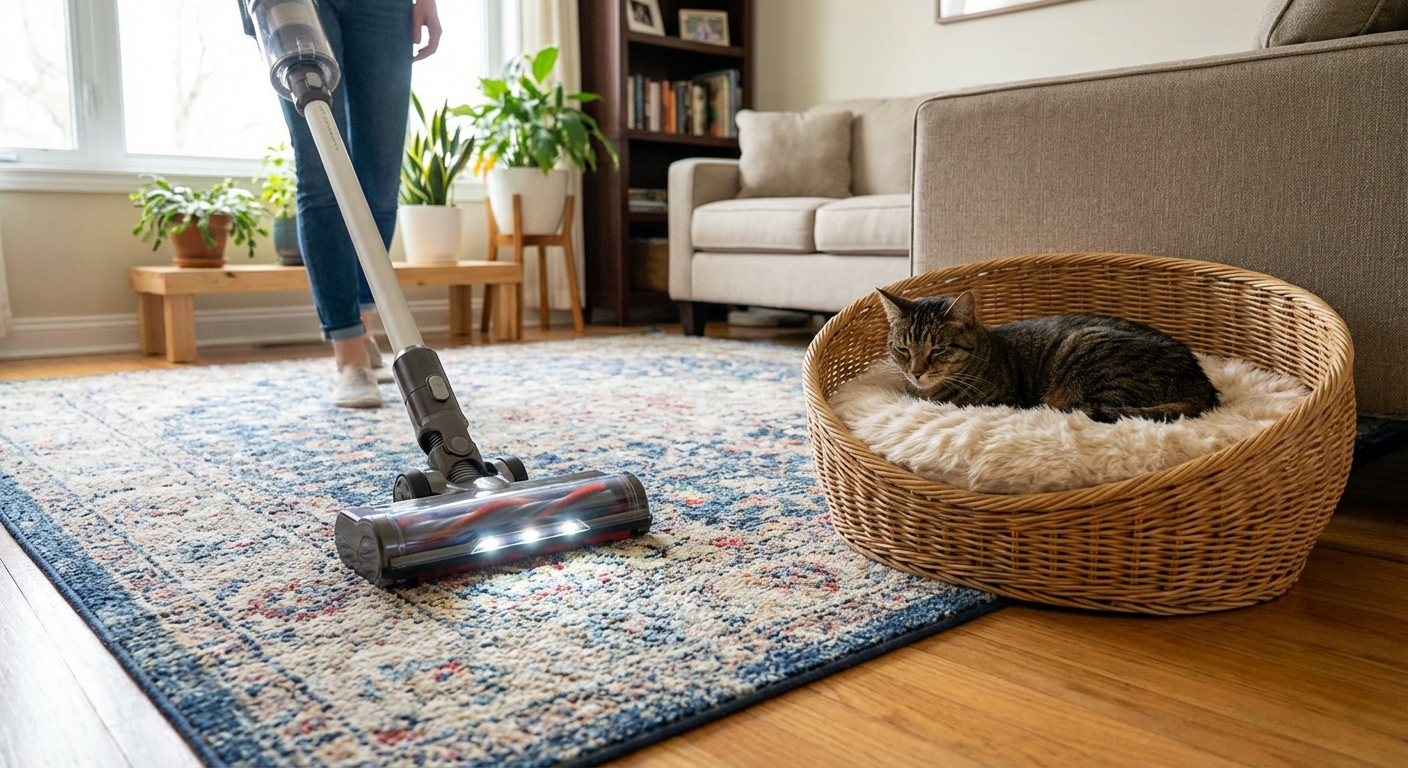
- Vacuum carpets, rugs, baseboards, and upholstered furniture. Go slow and make multiple passes.
- Wash bedding your cat uses (and your bedding if your cat sleeps with you) in hot water, then dry on high heat.
- Empty the vacuum outside right away, or seal contents in a bag and discard.
What to do over the next 2 to 8 weeks
- Vacuum every 2 to 3 days at first, then weekly as things improve.
- Keep all pets on a monthly flea preventive consistently (or the schedule your veterinarian recommends).
- Consider an integrated approach: medication plus cleaning plus treating all pets.
Flea pupae can delay emergence for days to weeks (and sometimes longer) and may hatch when they sense cues like warmth, vibration, and carbon dioxide. That is why you can still see fleas for a while even when you are doing everything right. In some homes, it can take 2 to 8 weeks to get full control.
When you may need extra help
If you are dealing with a heavy infestation, ask your veterinarian about home products that include an insect growth regulator (IGR), which helps stop eggs and larvae from developing. Professional pest control can also be useful in tough cases. If your home is treated, follow label directions closely and keep cats away until it is safe.
Helpful tips for tricky situations
If your cat is a kitten
Age and weight matter. Some flea products are not safe for very young kittens. Use a flea comb and contact your veterinarian for the safest product based on your kitten’s exact age and weight.
If your cat has flea allergy dermatitis
Some cats are intensely allergic to flea saliva and may itch severely from just one or two bites. In these cases, fast, consistent flea control is essential, and your vet may recommend itch relief or treatment for secondary skin infections.
If you see tapeworm segments
Tapeworms commonly come from swallowing fleas during grooming. If you see rice-like segments around your cat’s rear end or in the litter box, ask your vet about deworming along with flea treatment.
Flea facts
- Fleas can jump many times their body length, which is why they spread easily between pets.
- Flea eggs are not sticky, so they fall off into carpets and bedding.
- A single flea can lay dozens of eggs, and a mild issue can become a big one quickly.
- Indoor cats can get fleas from other pets, rodents or wildlife around the home, and sometimes fleas can be brought in on people or items.
When to call the veterinarian
Reach out promptly if:
- Your cat is lethargic, pale, or weak (possible anemia, especially in kittens).
- There are open sores, hair loss, or significant scabbing.
- You have tried treatment and cleaning but still see fleas after a few weeks.
- You are unsure which flea product is safe for your cat’s age, weight, or medical history.
If you feel overwhelmed, you are not failing. Fleas are persistent. A simple, steady plan is what wins.
Quick checklist
- Confirm fleas or flea dirt
- Comb daily with a flea comb and soapy water
- Start a vet-recommended flea preventive (cat-safe only)
- Treat every pet in the home
- Vacuum and wash bedding consistently for 2 to 8 weeks
With the right steps, most families see noticeable improvement within days, and real control within a few weeks. In tougher infestations, it can take longer, but consistency pays off. Your cat will feel better, and you will too.