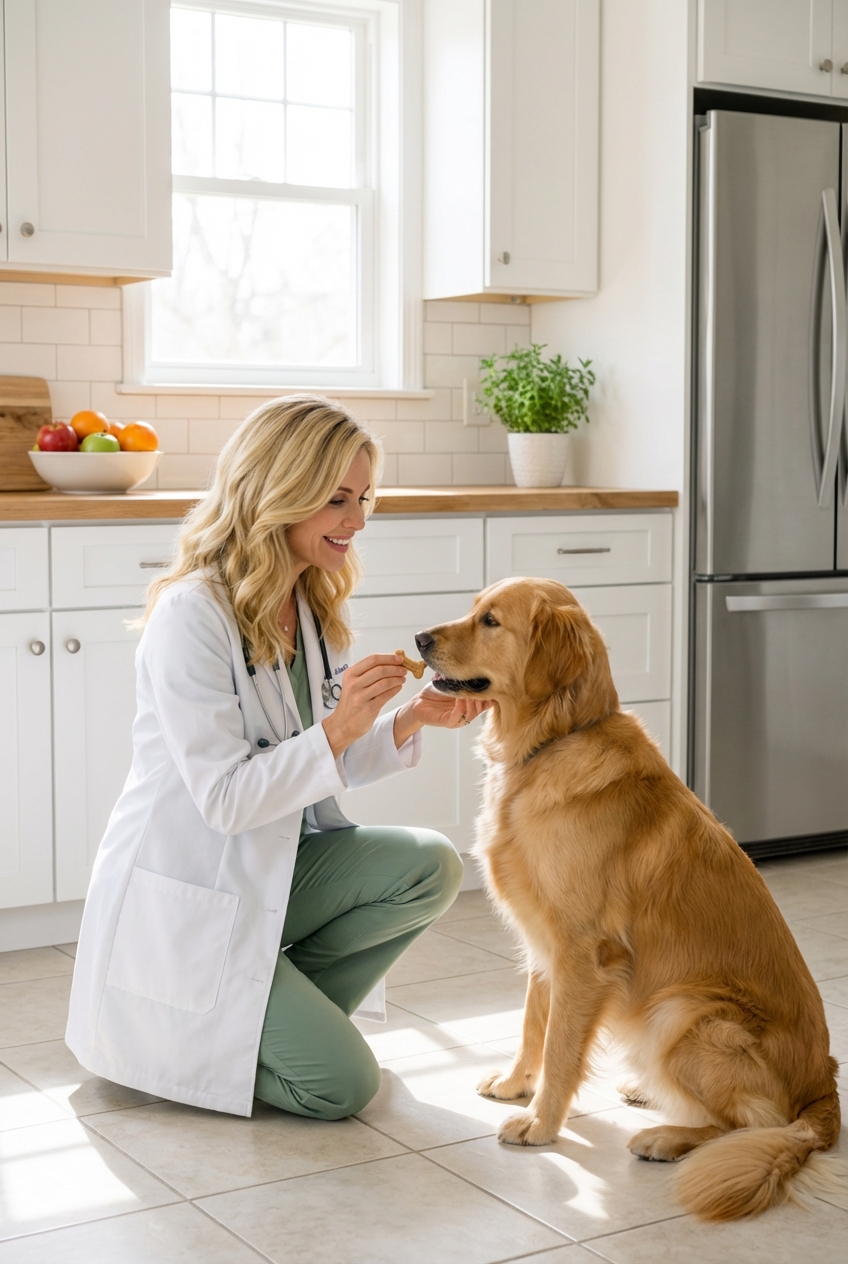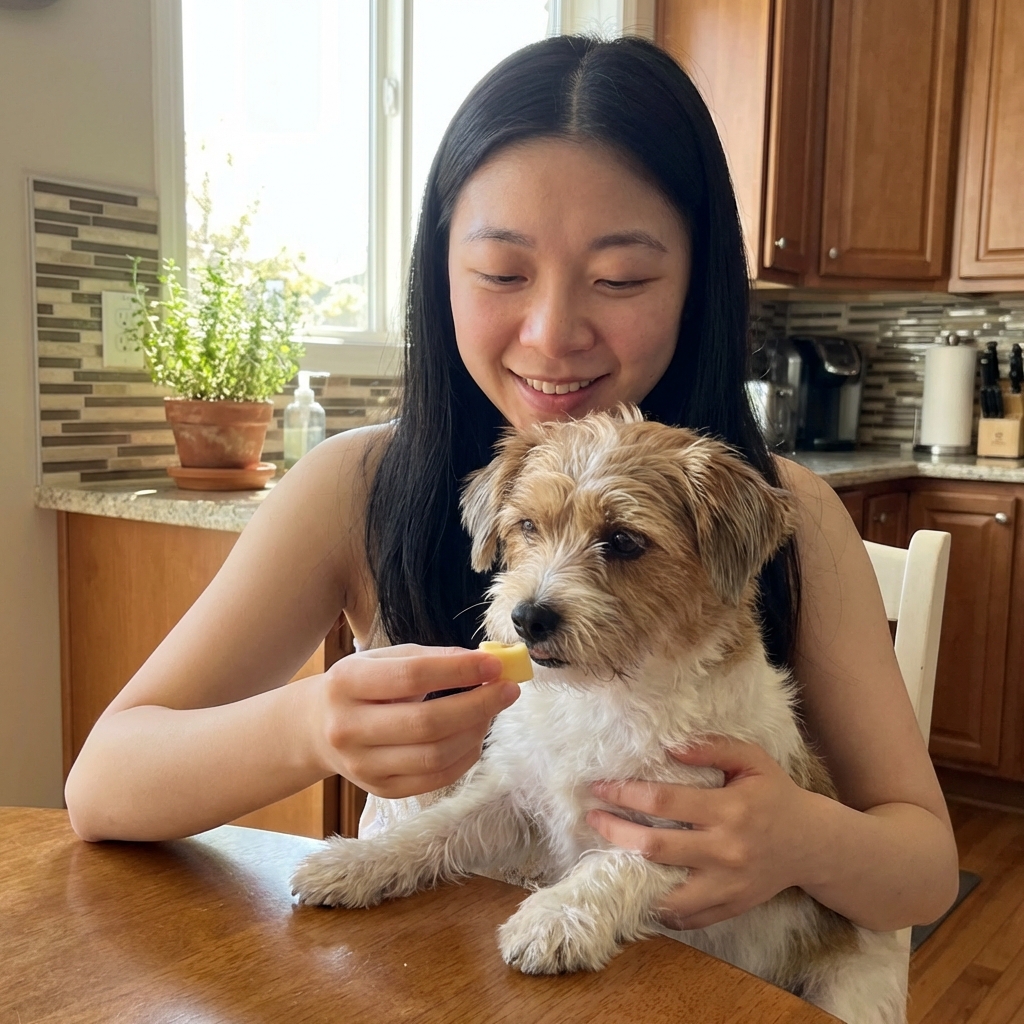
Struggling with pill time? Learn 5 safe, vet-recommended methods, how to tell if your dog swallowed, mistakes to avoid, and when to call your veterinarian.
Article
•
Designer Mixes
How To Get Dogs To Take Pills

Shari Shidate
Designer Mixes contributor
As a veterinary assistant, I can tell you this: most dogs are not being “difficult” when they refuse a pill. They are doing what dogs do best, which is investigate smells, textures, and anything that feels even slightly suspicious.
The good news is that pill time can be quick and low-stress with a simple plan. Below are the safest, most reliable techniques I have seen work in real homes, plus a few clinic-tested tips that can prevent common mistakes.
First, make sure the pill is safe to hide or split
Before you reach for cheese or a pill pocket, take a moment to double-check the medication directions. Some pills should not be crushed or split because it can change how the drug is absorbed or irritate the mouth and stomach.
- Ask your vet or pharmacist if the medication can be crushed, split, put in a gel cap, or given with food.
- Look for special forms like enteric-coated, extended-release, or capsules. These often should not be altered.
- Confirm food compatibility before using dairy, high-fat foods, or large meals. Some medications have specific instructions about taking with food, avoiding certain foods, or timing around meals.
- If your dog is vomiting, drooling excessively, or pawing at the mouth after pills, stop and call your clinic. Some meds are bitter and can trigger a strong reaction if they dissolve on the tongue.
If your dog has ever had a reaction to a medication, or you are giving multiple meds, it is especially important to confirm the best method with your veterinary team.
The fastest methods that work for most dogs
1) The “three-treat” trick (my top choice for speed)
This is quick, low drama, and works because your dog gets into a happy chewing rhythm.
- Prepare three small treats your dog loves.
- Hide the pill in the second treat.
- Give treat #1 fast, then immediately treat #2, then treat #3 right away.
The third treat encourages swallowing, and many dogs do not even pause long enough to detect the pill.
2) Use a soft, sticky “pill wrap” food
Choose something that molds around the pill and does not crumble. Great options include:
- Peanut butter (xylitol-free only, and avoid or use extra caution if your dog has a history of pancreatitis or needs a low-fat diet)
- Cream cheese (small amount, and only if your vet says the medication can be given with dairy)
- Canned dog food
- Plain Greek yogurt (small amount, and only if dairy is allowed)
- Wet cat food (often irresistible, use a tiny amount as an occasional helper, and confirm food compatibility with your vet)
Tip: Make the outside smell stronger than the pill. If the pill is large, ask your vet if it can be split or if a different size or formulation is available.
If hiding fails: how to pill your dog safely
Some dogs can smell any medication through any treat, especially bitter tablets. In that case, a direct method can actually be kinder because it is over quickly.
Step-by-step
- Stay calm and get set up. Have the pill ready and a high-value reward within reach.
- Position your dog safely. Small dogs can sit on your lap facing away from you. Larger dogs can sit with their back end against your legs.
- Open the mouth gently. Place your non-dominant hand over the top of the muzzle and tilt the head slightly up, not straight back.
- Place the pill far back on the tongue. Use your dominant hand to drop it behind the “hump” of the tongue if possible.
- Close the mouth and encourage swallowing. Hold the mouth closed briefly and stroke the throat downward. Blowing lightly toward the nose may help some dogs, but skip it if it stresses your dog.
- Confirm it went down. Watch for a swallow or a quick nose lick, then gently check the cheeks and front of the mouth for “stored” pills if your dog allows.
- Reward immediately. Offer a tasty treat and, if your vet allows, a small drink of water or a bite of food to help it move down the esophagus.
Safety notes: Do not force the mouth open if your dog is panicking, and never risk a bite. For dogs who guard their face or have pain, ask your vet about alternative forms like liquid, chewable tablets, or compounding. Transdermal options exist for a limited number of medications, and absorption can be inconsistent in dogs, so they should only be used if your veterinarian specifically prescribes them.
Pill tools that make life easier
Pill pockets
Commercial pill pockets can be very effective, especially if you warm them slightly in your fingers to increase the smell. Some dogs learn to eat around them, so combine with the three-treat trick.
Pill popper (pill gun)
A pill popper can help you place the pill farther back without putting fingers in the mouth. It is a great option for medium and large dogs, and for anyone worried about being bitten.
Compounded medications
If daily battles are happening, compounding can be a game-changer. Many veterinary pharmacies can flavor liquids or create smaller capsules. Ask your clinic if your dog’s medication is eligible.
Common reasons dogs refuse pills (and how to fix them)
The pill is bitter
Bitter pills can cause foaming drool and immediate rejection. Ask your vet if the medication can be placed in a gel cap to reduce taste and make it easier to swallow. Some meds still should not be encapsulated or given with food, so confirm first. You can also try a stronger-smelling outer layer like canned food.
Your dog is nauseated or painful
If your dog is sick, they may refuse even favorite treats. Talk to your veterinarian. Sometimes treating nausea first makes pill time much easier.
Too much pressure and chasing
When pill time turns into a wrestling match, dogs learn to run. Instead, practice calm handling when you are not giving meds, and pair gentle mouth and muzzle touches with rewards.
Pilling with dry mouth
A dry pill can stick. If your vet approves giving it with food, follow with a small treat, a little broth, or water to help it go down.
Quick troubleshooting guide
- Dog spits pill out: Try the three-treat trick, use a softer wrap, try a gel cap if approved, or place the pill farther back with a pill popper.
- Dog eats around the treat: Use smaller treats, seal the pill completely, and avoid crunchy foods that crumble.
- Dog refuses all food: Call your vet. Do not skip critical meds without guidance.
- Dog vomits after meds: Ask if it should be given with food, whether the food type matters, or if nausea support is needed.
- Multiple pills: Ask if any can be combined into one compounded capsule or if dosing times can be simplified.
When to call your veterinarian right away
Please contact your veterinary clinic promptly if:
- Your dog may have missed a time-sensitive dose (for example, seizure, heart, or endocrine medications, and some antibiotics)
- Your dog choked, coughed repeatedly, or seems to have inhaled a pill
- You notice facial swelling, hives, severe vomiting, collapse, or trouble breathing
- Your dog has new drooling, pawing at the mouth, or oral irritation that does not quickly resolve
It is always okay to ask for a different formulation. Your dog is not the first picky patient, I promise.
A calm routine makes it quick
The real secret is consistency. Choose one method, practice it, reward generously, and keep your energy upbeat and matter-of-fact. Most dogs learn fast when pill time is predictable and ends with something good.
If pills are a long-term thing in your home, ask your veterinary team about cooperative care exercises and whether a chewable or compounded form is available. A small plan tailored to your dog can save a lot of stress over time.