Cat urine odor lingers because of uric acid residue. Learn vet-approved enzymatic cleaning steps for carpet, floors, wood, and fabrics—plus how to stop rep...
Article
•
Designer Mixes
How to Get Cat Pee Smell Out

Shari Shidate
Designer Mixes contributor
Cat urine odor is one of those household problems that can feel impossible, especially when you have kids, guests, or pets sharing the same spaces. The good news is that you can get the smell out, but you have to treat it the right way.
Cat urine is not just “stinky liquid.” It contains compounds (including uric acid and urates) that can persist in fibers and porous surfaces. Those residues can re-odor with moisture and warmth, which is why the smell sometimes seems to come back on rainy days or when the heat turns on.
Below are family-friendly, evidence-based steps you can use to remove odor at the source and reduce repeat accidents.
First: find every spot
If you only treat the obvious puddle, a hidden edge or older stain can keep your home smelling like urine. Before you start deep-cleaning, do a quick “detective sweep.”
- Use your nose strategically: get low to the ground and sniff along baseboards, corners, and near furniture legs.
- Check common targets: rugs, laundry piles, bath mats, kids’ backpacks, pet beds, and the outside of the litter box.
- Use a UV/blacklight at night: dried urine often fluoresces. Mark spots with painter’s tape so you can treat them all.
UV tip: UV light is a locator tool, not a guarantee. Many substances can glow, and some urine spots do not. If a spot is in a likely location, it is usually worth treating anyway.
Safety note: Do not shine UV light into anyone’s eyes. Supervise kids closely if they are nearby.
Why regular cleaners fail
Many all-purpose cleaners and “nice smelling” sprays only cover odor temporarily. Cat urine contains:
- Urea and bacteria that can create ammonia-like smells as they break down
- Uric acid and urates that can bind to carpet fibers, grout, and fabric and re-release odor later
What actually works: an enzymatic cleaner made for pet urine. Enzymes break down odor-causing compounds instead of masking them. This is the same basic principle used in many professional bio-enzymatic products.
Family-friendly tip: if you only buy one product for cat urine, make it an enzymatic urine remover. It is usually the difference between “better for a day” and “actually gone.”
Common pitfall: Avoid pre-treating with vinegar, bleach, or other cleaners unless the product label says it is compatible. Leftover residues can reduce how well enzymes work.
Fresh accidents: step by step
For a fresh spot, speed matters. The more urine you remove before it dries, the less it can soak into padding and subfloor.
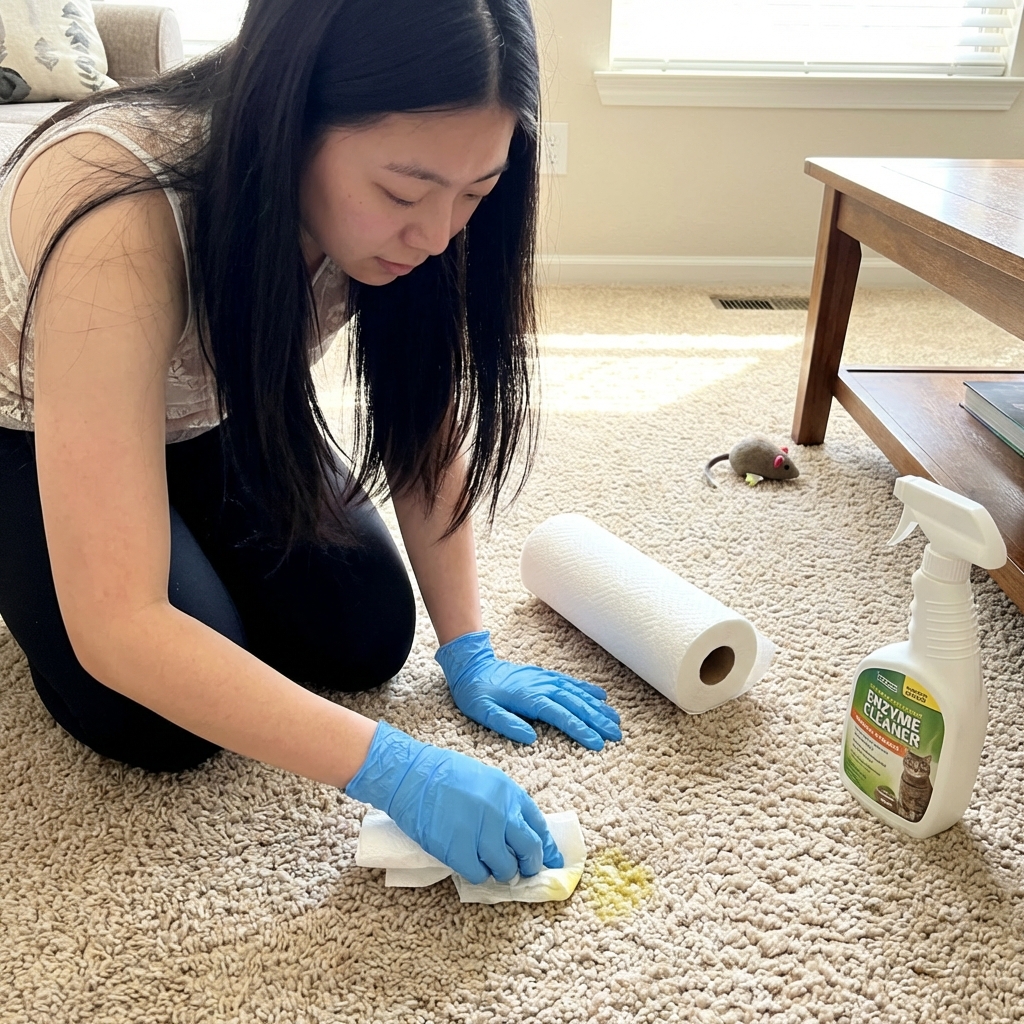
1) Blot, do not scrub
- Use paper towels or clean cotton towels.
- Stand on the towels to press down firmly.
- Repeat with fresh towels until little to no moisture transfers.
2) Rinse lightly (optional)
If it is safe for the surface, a small amount of cool water can help dilute what remains. Blot again thoroughly.
3) Saturate with enzymatic cleaner
Follow the label, but the key is this: you typically need to apply enough cleaner to reach the same depth the urine reached. That may mean more product than you expect, especially on carpet.
4) Give it time
Enzymes need contact time to work. Follow the label (often 10 to 30+ minutes, and some products work best with longer dwell times). If it is safe in your home, covering the area with a towel can help prevent it from drying too quickly.
5) Air dry completely
Use fans and open windows when possible. Avoid heat until the odor is gone and the area is fully treated. Warmth can intensify odor and may make residues harder to remove. Heat can also reduce enzyme effectiveness.
Dried urine: old smells
Old urine is common in multi-cat homes, during stressful changes (new baby, moving, schedule shifts), or when a cat has been sick. For older spots:
- Rehydrate the area slightly with a little water if it is completely dry, then blot.
- Apply enzymatic cleaner generously and allow a longer dwell time per label.
- Repeat treatments until the odor stops returning. Deep stains can take 2 to 4 rounds.
If the smell returns after cleaning, it often means the urine went deeper than the cleaner reached, especially into carpet padding or wood seams.
When to call a pro or replace materials: If you still get strong re-odor after multiple enzyme treatments, if the area was heavily saturated, or if the smell is coming from padding or subfloor, you may need professional extraction, pad replacement, or repairs (and in some cases sealing the subfloor).
Surface tips
Carpet and rugs
- Blot first. Then enzymatic cleaner. Then blot again after dwell time if the label allows.
- Avoid steam cleaning until the odor is resolved. Heat can intensify odor and make residues harder to remove.
- Consider lifting the carpet edge if odor persists. The padding may need treatment or replacement.
Hardwood and laminate
Urine can seep between boards and into subflooring. Use minimal liquid, and do not let it pool.
- Blot immediately.
- Apply an enzymatic cleaner meant for sealed wood, following label instructions.
- Dry thoroughly with fans.
If boards are warped or the smell lives in cracks, you may need professional help, sanding, sealing, or replacing a small section.
Tile and grout
- Use enzymatic cleaner and let it sit long enough to penetrate grout.
- Rinse and dry well.
- Re-seal grout if it is older and porous.
Mattresses, couches, and upholstery
- Blot, then enzymatic cleaner.
- Use a wet-dry vacuum if you have one to pull moisture back out.
- Dry with fans until fully dry, often 24 to 48 hours depending on saturation and humidity.
Once fully dry, a vacuuming pass can help lift any residue if a powder product was used.
Washable fabrics
- Rinse in cold water first if possible.
- Pre-treat with an enzymatic laundry additive or enzymatic spray.
- Wash according to fabric instructions.
- Air dry before using the dryer to make sure odor is truly gone. Heat can lock in smells.
Family do’s and don’ts
Do
- Ventilate the room while cleaning.
- Wear gloves and wash hands after handling soiled materials.
- Test cleaners in a hidden spot first to protect fabrics and floors.
- Store products up high and locked away from children and pets.
Don’t
- Do not mix cleaners (especially bleach with anything). Mixing products can create dangerous fumes.
- Do not use ammonia-based cleaners on urine spots. Ammonia smells similar to urine and may encourage repeat marking.
- Do not rely on scented sprays alone. They often fail because the source remains.
If your cat keeps peeing outside the box
I always like to gently flag this: inappropriate urination is sometimes a medical issue, not a behavior problem. If your cat is suddenly peeing outside the litter box, talk with your veterinarian promptly. Common causes include urinary tract disease, bladder inflammation, crystals, pain, constipation, and stress.
At-home checks
- Litter box basics: many cats prefer unscented litter, a larger box, and a quiet location.
- Box count: a common guideline is one box per cat, plus one extra.
- Scooping schedule: scoop daily, and fully wash the box routinely (mild soap and water, rinse well).
- Reduce stress: provide hiding spots, vertical spaces, predictable routines, and enrichment.
Urgent warning: If your cat is straining, crying out, producing only drops, or cannot urinate at all, treat it as an emergency. This is especially critical in male cats, where urinary blockage can become life-threatening quickly.
Quick checklist
- Find all spots with a UV light.
- Blot thoroughly and avoid scrubbing.
- Use an enzymatic cleaner and apply enough to reach the depth of the urine.
- Allow proper dwell time per label and let the area fully air dry.
- Repeat if odor returns, especially for old stains.
- Address the reason for accidents so the problem does not repeat.
With the right product and a little patience, most families can get their home smelling fresh again without harsh chemicals or constant “cover-up” scents.