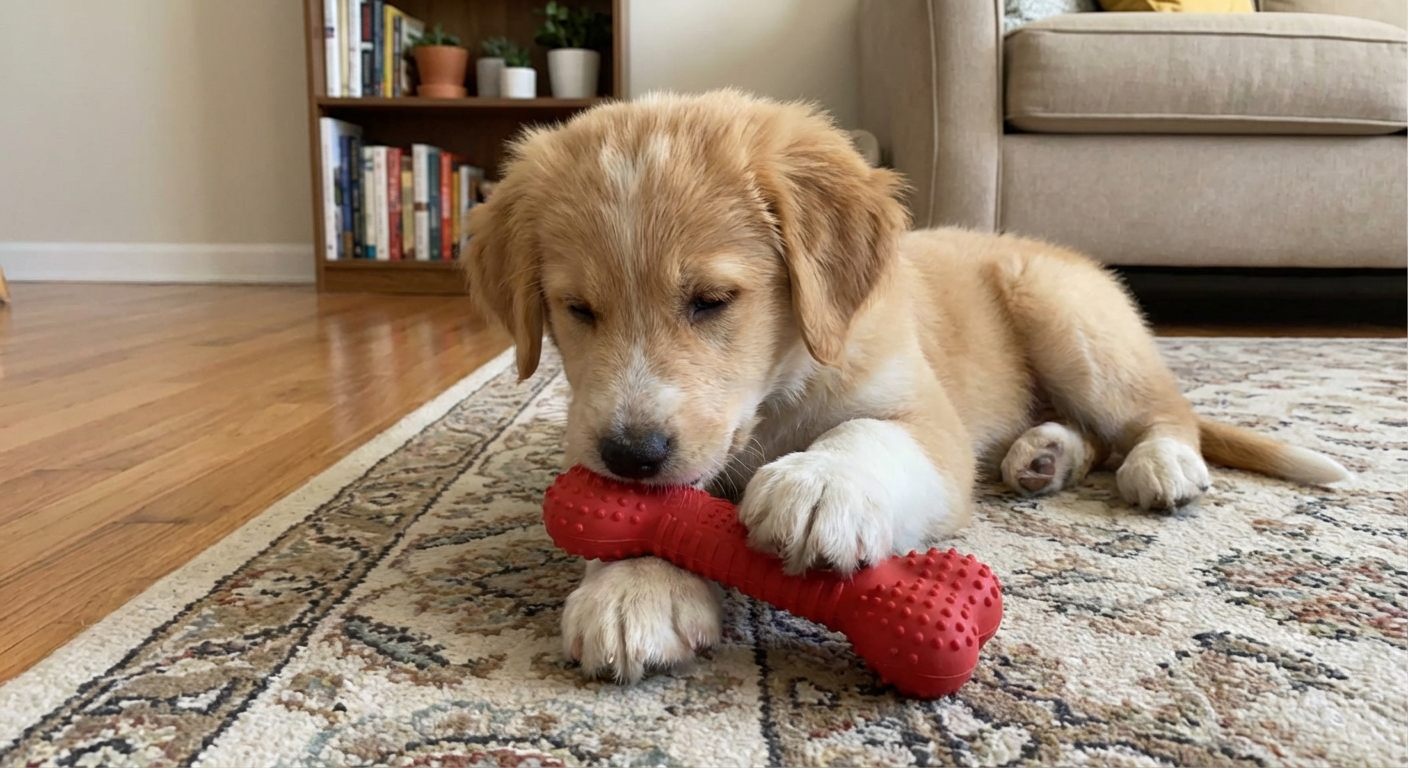
Puppy biting is usually normal. Learn why it happens and how to reduce it fast with redirects, reverse time-outs, calm breaks, naps, enrichment, and teething...
Article
•
Designer Mixes
How to Get a Puppy to Stop Nipping

Shari Shidate
Designer Mixes contributor
Puppy nipping is one of the most common reasons pet parents feel overwhelmed, and I get it. Those tiny teeth are sharp, the biting can feel constant, and it can make you worry you are doing something wrong. The good news is that nipping is usually normal puppy behavior, not “aggression.” Puppies explore with their mouths, play like little predators, and they are also dealing with teething discomfort.
With a few consistent steps, you can teach your puppy what is appropriate to bite, how hard is too hard, and what to do instead. This guide walks you through practical training that is gentle, evidence-based, and realistic for busy households. The approach aligns with modern, reward-based training principles and least-intrusive methods recommended by many credentialed trainers and veterinary behavior organizations.
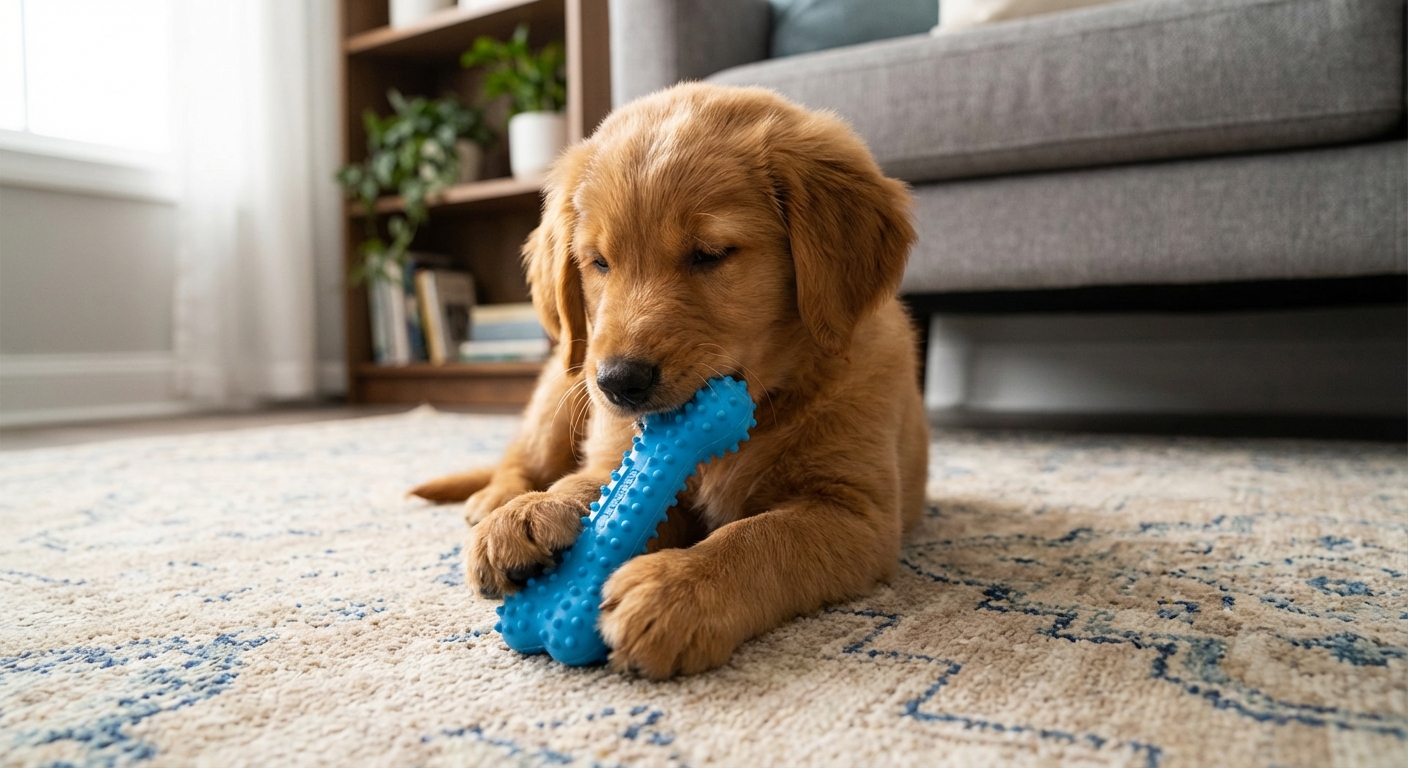
Why puppies nip
Nipping is a behavior with several common causes. When you match the solution to the reason, progress is faster.
- Normal play behavior: Puppies bite and wrestle with littermates. Humans feel like a playmate, too.
- Teething and oral discomfort: Adult teeth typically erupt around 3 to 7 months (breed-dependent). Mouthiness can start earlier and often spikes during this window.
- Overstimulation and overtiredness: Many puppies bite more when they are “wired,” past their nap window, or overwhelmed.
- Reinforcement by accident: If nipping makes hands move, people squeal, or a fun chase starts, the puppy may learn “biting works.”
- Need for appropriate chewing outlets: Puppies have a biological drive to chew. If they do not have safe, appropriate chews, they will use what is available.
- Breed tendencies: Ankle nipping can be more common in herding breeds and mixes. It is still trainable, but you may need extra management and structured outlets for chasing and tugging.
Take a breath. Most nipping improves dramatically with maturity plus training. Your job is to guide the habit now so it does not become an adult pattern.
What not to do
A lot of common advice makes nipping worse or can create fear. Here are approaches to skip.
- No hitting, nose tapping, or “alpha” techniques: These can increase anxiety and can teach your puppy that hands are scary.
- No holding the mouth shut: This can escalate arousal and does not teach an alternative behavior.
- Do not encourage rough hand play: Wrestling with hands teaches “hands are toys.”
- Avoid shouting: High energy reactions can reward the puppy like a game.
If you feel frustrated, it is completely okay to step behind a baby gate and take 30 seconds to reset. Consistency beats intensity every time.
House rules that help
Nipping improves faster when everyone plays by the same rules. Post this on the fridge if you need to.
- No one plays with hands: Hands deliver food, toys, and gentle petting, not wrestling.
- Same cue every time: Pick one (like “Oops”) so your puppy gets a clear pattern.
- Teeth on skin ends attention: Brief, calm, and consistent.
- Reward calm choices: Sitting, chewing a toy, and soft mouths earn attention.
Set up your home
Management is not “giving up.” It is how you prevent practice of the bad habit while your puppy learns the good habit.
Use simple barriers
- Baby gates to separate puppy from kids during high-energy moments.
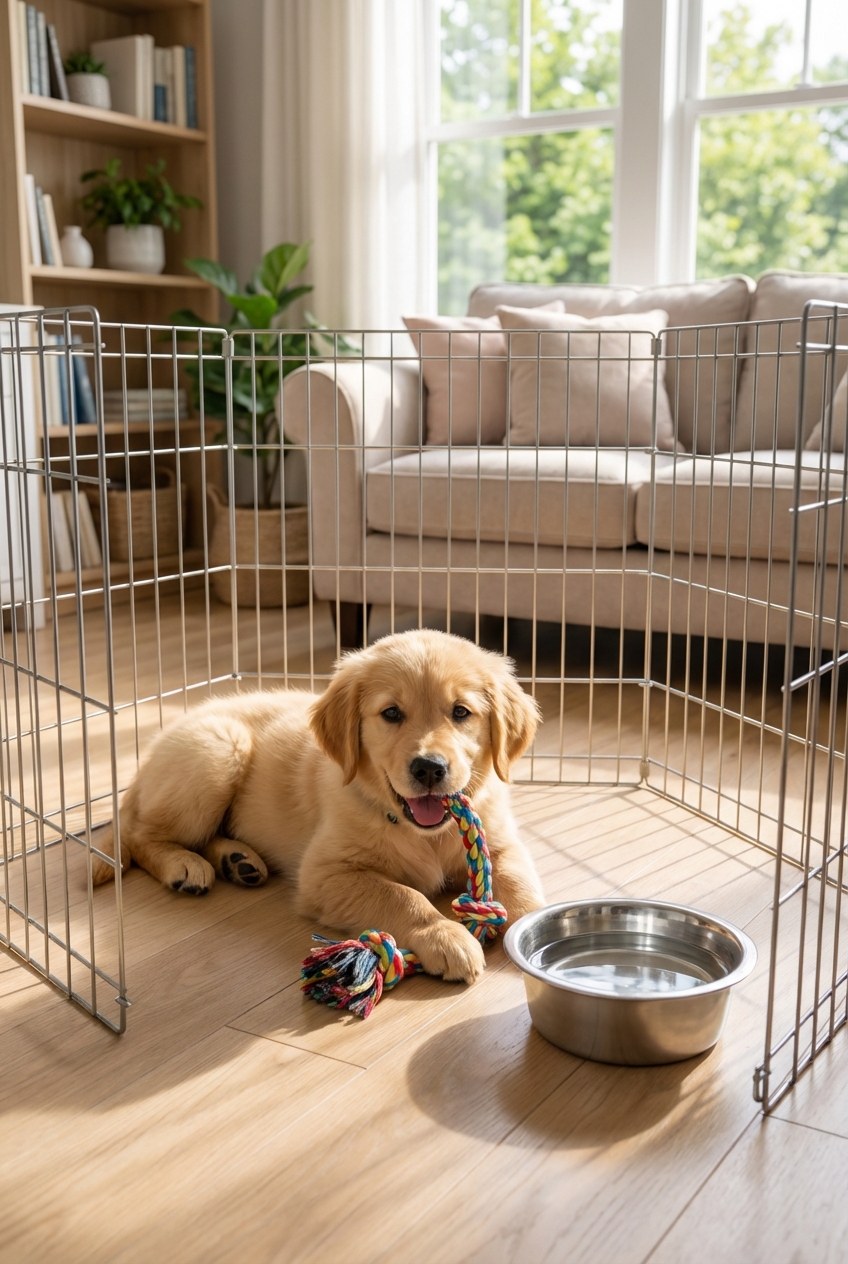
- Exercise pen for safe play with chew toys.
- Crate for rest and structured naps (with a positive introduction).
Have the right chew options
Place chew toys in every area you spend time. Think of it like keeping phone chargers in every room.
- Rubber chew toys you can stuff with food.
- Textured teething toys (some can be chilled in the fridge).
- Appropriate chews recommended by your veterinarian for your puppy’s age and chewing style.
- Long tug toys to keep hands farther from teeth during play.
Toy tip: Rotate 3 to 5 toys every few days. A “new” toy often beats your sleeve.
Safety note: Always supervise chews, avoid items that splinter, and choose sizes that cannot be swallowed.
Teach bite inhibition
Bite inhibition means your puppy learns to control jaw pressure. Even if your goal is “no teeth on skin,” bite inhibition is a valuable safety skill while your puppy is learning.
Step-by-step
- Play calmly. Use a toy, not bare hands.
- If teeth hit skin, freeze. Think statue: stop moving, keep hands still (some people tuck hands to their chest), and avoid yanking away, which can trigger chasing.
- Mark the moment with a calm cue. Say “Too bad” or “Oops” in a neutral voice.
- End attention for 5 to 10 seconds. Stand up, turn away, or step behind a gate.
- Return and offer a toy. Let them succeed by biting the right thing.
Most puppies will test limits repeatedly. You are not failing. You are teaching. Aim for calm, consistent repetitions.
Teach alternatives
“Stop biting” is hard for puppies to understand. “Grab this toy” or “sit for attention” is much clearer.
1) Redirect to a toy
Redirection works best when you do it early, before your puppy is fully revved up.
- Keep a toy within reach.
- Move the toy like prey, briefly. A short wiggle on the floor can be enough.
- Praise when they bite the toy. You are reinforcing the correct choice.
2) Train “Sit for greetings”
This is one of the most powerful ways to reduce nipping at hands, sleeves, and ankles.
- Approach your puppy calmly.
- If they jump or mouth, pause.
- Ask for sit.
- The moment they sit, reward with a treat and gentle petting.
Soon your puppy learns: calm behavior makes people come closer, biting makes people go away.
3) Teach “Touch”
“Touch” gives your puppy a job for that busy mouth and brain.
- Hold out your palm a few inches away.
- When their nose bumps your hand, say “Yes” and give a treat.
- Practice in short sessions, then use it when you see nipping coming.

Time-outs that stay kind
A time-out should not be scary or harsh. It is a brief removal of attention: nipping makes the fun stop.
Two effective options
- Reverse time-out: You step away behind a gate for 10 to 30 seconds.
- Calm reset in a pen: Puppy goes into an exercise pen with a chew for 30 to 60 seconds.
Key tip: Keep it short and boring. If your puppy vocalizes, wait for a one-second pause of quiet before returning so you do not accidentally teach that yelling brings you back.
Important: If your puppy is panicking in confinement (not just protesting), back up and improve the crate or pen setup with slower, positive training, higher-value chews, and shorter durations. A trainer can help you tailor this.
Meet basic needs
Training works best when your puppy’s body and brain are not running on empty. Many nipping spikes happen because a puppy is tired or understimulated.
Make naps part of the plan
Puppies need a lot of sleep. Many sleep roughly 16 to 20 hours a day, but it varies by age and individual. A common pattern is 45 to 90 minutes awake, then a nap. If your puppy turns into a little land shark in the evening, you may be missing a nap window.
Provide daily enrichment
- Food puzzles or stuffed rubber toys.
- Sniff walks where your puppy can explore at their pace.
- Short training sessions (3 to 5 minutes) a few times a day.
- Appropriate tug and chase outlets with toys (especially helpful for herding breeds).
When puppies get appropriate outlets, they use their teeth less on people.
Kids and guest safety
Puppies and kids can be a wonderful match, but the rules must be clear because fast movement and squealing can trigger more nipping.
- Active supervision only: If an adult cannot actively watch, separate puppy and children with a gate, pen, or closed door.
- No running games indoors with a nippy puppy.
- Teach kids “be a tree” if the puppy gets mouthy: stand still, arms crossed, look away.
- Use gates and pens during playdates, parties, and high chaos moments.
- Give guests a job: ask them to toss treats on the floor for calm behavior instead of reaching over the puppy’s head.

Teething comfort
For teething pups, chewing is relief. Your goal is to make the appropriate chewing options more appealing than hands.
- Chilled chew toys (refrigerator, not freezer unless the product is designed for freezing).
- Wet washcloth twist chilled in the fridge for supervised chewing.
- Ask your veterinarian about safe chew options for your puppy’s age and dental development.
Important: Avoid giving cooked bones. They can splinter and cause serious injury.
Common nipping problems
“My puppy bites my ankles when I walk.”
- Stop moving the moment it starts.
- Toss a treat a few feet away to redirect, then ask for “sit” and reward.
- Practice calm leash walking indoors with frequent treats.
- If you have a herding breed or mix, add structured toy play (tug, fetch, flirt pole used safely) and reward calm disengagement.
“My puppy bites most in the evening.”
- Add a scheduled nap in the late afternoon.
- Do a sniff walk or food puzzle before the witching hour.
- Lower household excitement: dim lights, quiet voices, calmer play.
“Redirection works, then they go right back to biting.”
- You may need a brief reverse time-out after the redirect if teeth hit skin again.
- Increase nap frequency and reduce high-arousal play.
- Make sure toys are truly satisfying: different textures, sizes, and firmness.
- Try longer tug toys and rotate options to keep them interesting.
When does nipping end?
Many puppies improve significantly after teething and with consistent training, often as adult teeth finish coming in (around 6 to 7 months). Some mouthiness can linger into adolescence, especially during high excitement. If you keep the rules consistent, it typically keeps trending in the right direction.
When to get help
Most puppy nipping is normal, but you should get professional help if you see signs that do not feel like typical play.
- Growling with stiff body posture, guarding, or hard staring during interactions.
- Bites that break skin beyond normal puppy sharpness.
- Sudden behavior changes that could indicate pain.
- Nipping that is not improving with consistent training over several weeks.
A qualified positive-reinforcement trainer can help you build a plan that fits your puppy’s breed mix, age, and home routine. Your veterinarian should be involved if pain, dental issues, or medical concerns are possible.
A simple 7-day reset
If you want something you can start today, here is an easy weekly structure.
Days 1 to 2: Management
- Add gates and a pen.
- Place chew toys in every main room.
- Track naps and add at least one extra planned nap.
Days 3 to 4: Replacement skills
- Practice “sit for greetings” before meals and before petting.
- Teach “touch” for 3 minutes twice daily.
Days 5 to 7: Real-life practice
- Redirect to toy early.
- If teeth hit skin, do a calm reverse time-out.
- Reward calm behavior generously.
Many families notice improvement within a couple of weeks when everyone uses the same rules, but timelines vary by age, breed, and consistency. The steady trend matters more than the day-to-day ups and downs.
You are not trying to “dominate” your puppy. You are teaching a baby animal how to live politely in a human world, one repetition at a time.