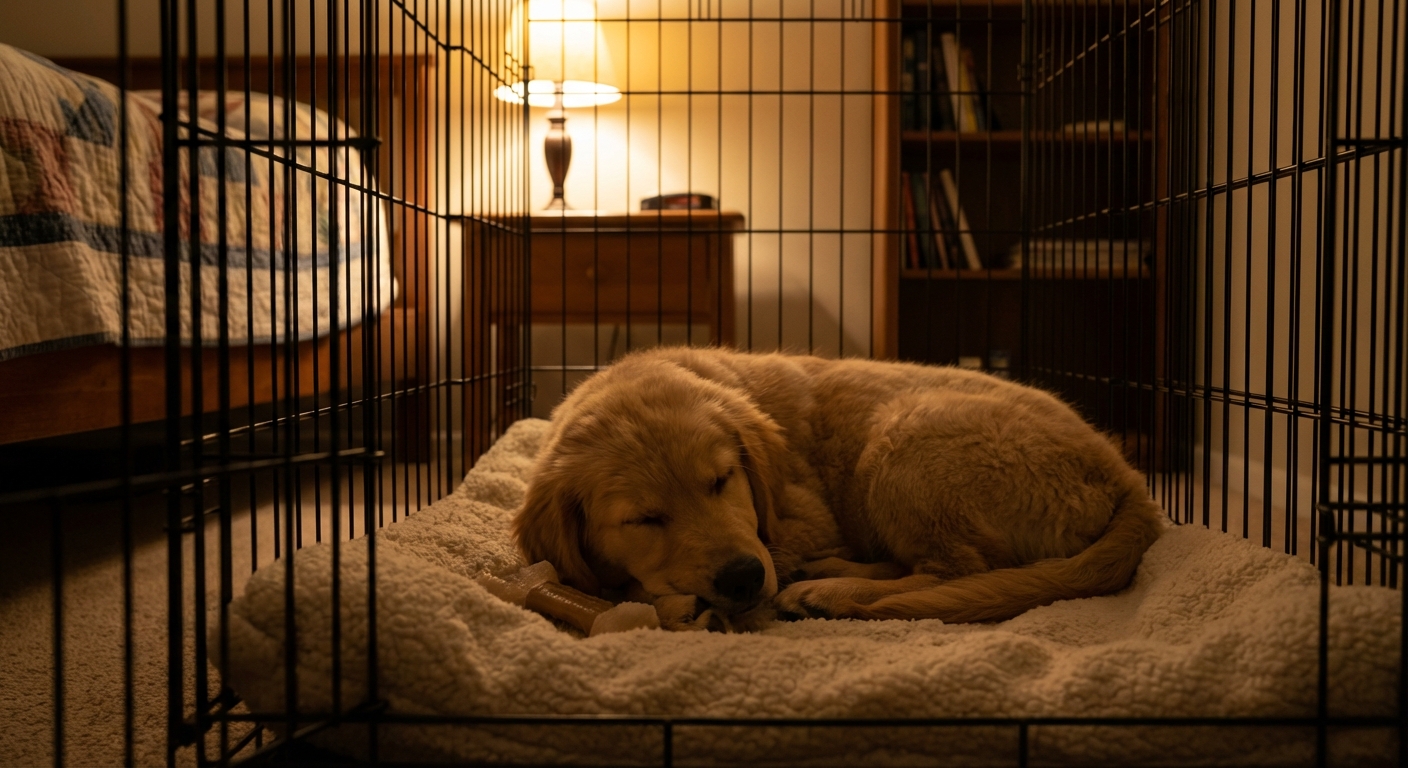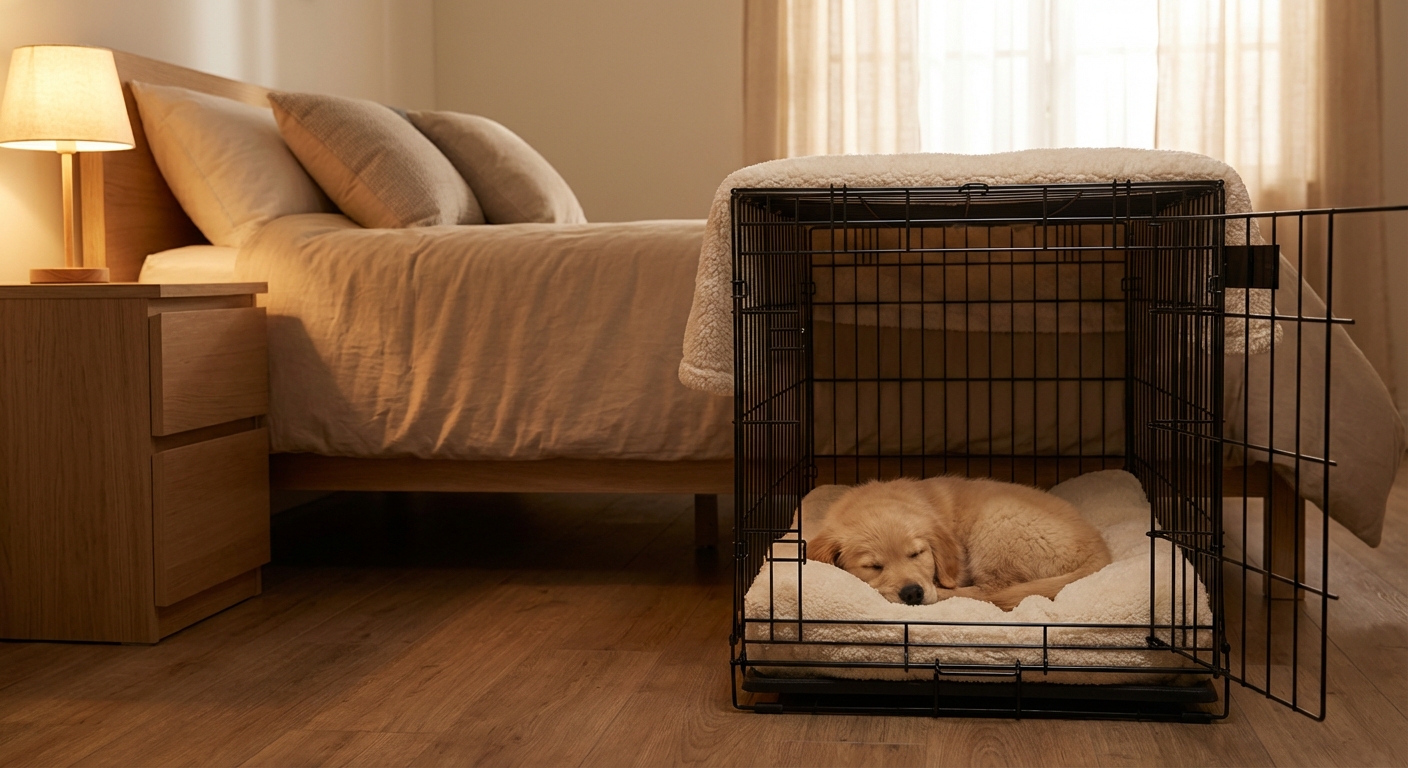
Learn a gentle, family-friendly nighttime crate training plan: ideal crate setup, predictable bedtime routine, potty-break expectations by age, and calm ways...
Article
•
Designer Mixes
How to Get a Puppy to Stop Crying at Night

Shari Shidate
Designer Mixes contributor
Your puppy is not being “bad” when they cry at night. They are being a baby in a brand-new place, away from their mom and littermates, with new smells, new sounds, and a new routine. The good news is that nighttime crying often improves when you meet a puppy’s needs consistently and teach them that bedtime is safe.
As a veterinary assistant, I see this a lot, especially in the first couple of weeks after a puppy comes home. Below are practical, vet-informed, best-practice steps that help many families get real sleep again while building healthy crate habits.
Why puppies cry at night
Night crying usually comes from one or more of these very normal reasons:
- Separation distress: your puppy is suddenly alone after sleeping in a warm pile of siblings.
- Potty needs: small bladders and brand-new potty training often mean nighttime trips.
- Overtiredness: an overtired puppy can become more frantic, not more sleepy.
- Hunger or thirst: especially in very young puppies or small breeds.
- Discomfort: cold, too hot, itchy collar, a crate that feels unsafe, or pain.
- They learned crying brings company: if crying repeatedly results in playtime or being taken into bed, the behavior can strengthen.
Your job is to separate “needs help” from “learning the routine,” and respond in a way that supports both comfort and training.
Set up bedtime for success
1) Put the crate close to you
For the first week or two, put the crate in your bedroom, right next to the bed. This reduces separation distress and helps your puppy settle. You can gradually move the crate farther away over days if your long-term goal is another room.
2) Make the crate feel safe
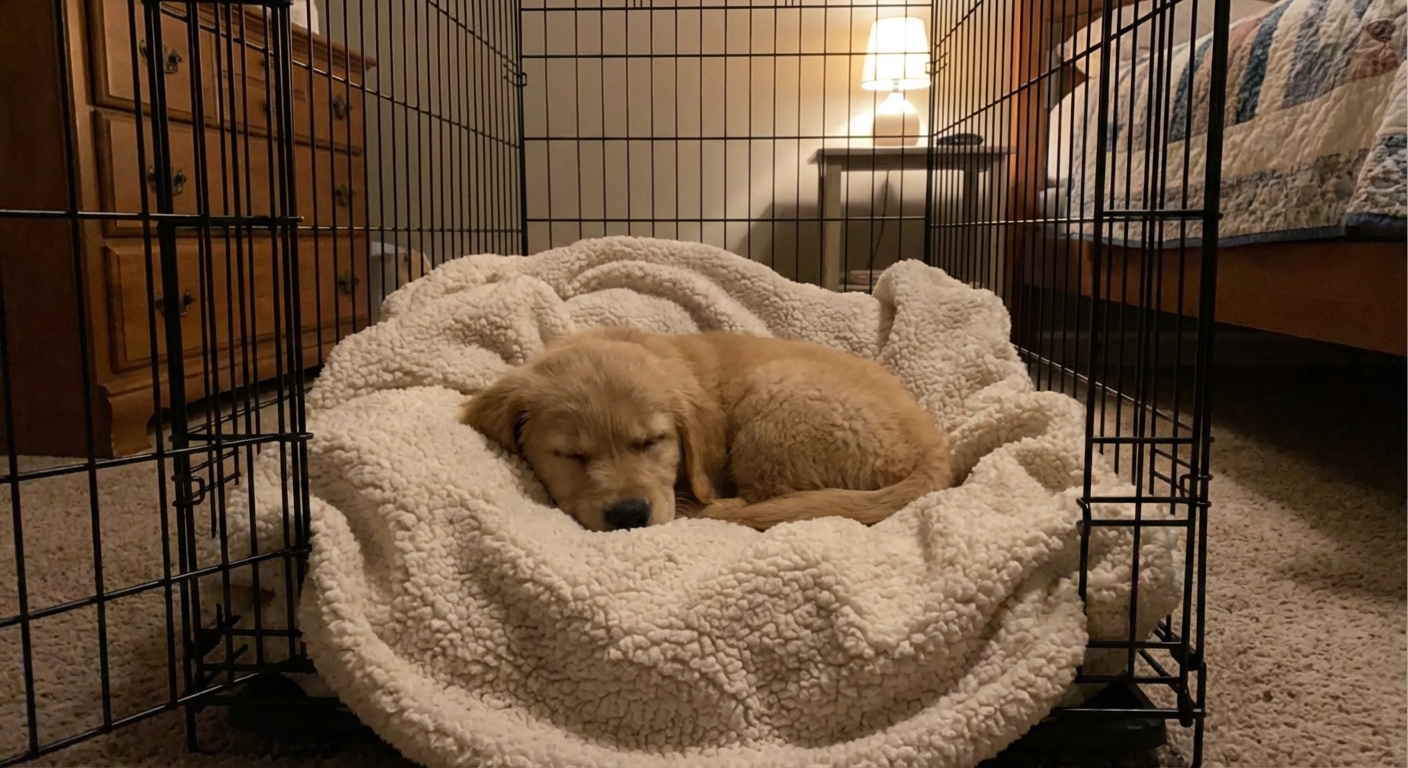
- Use a properly sized crate: big enough to stand and turn around, not so big they can potty in one corner and sleep in the other. (If your puppy still soils, think stress or a medical issue, not “stubbornness.”)
- Add comfortable bedding that is safe for your puppy’s chewing stage.
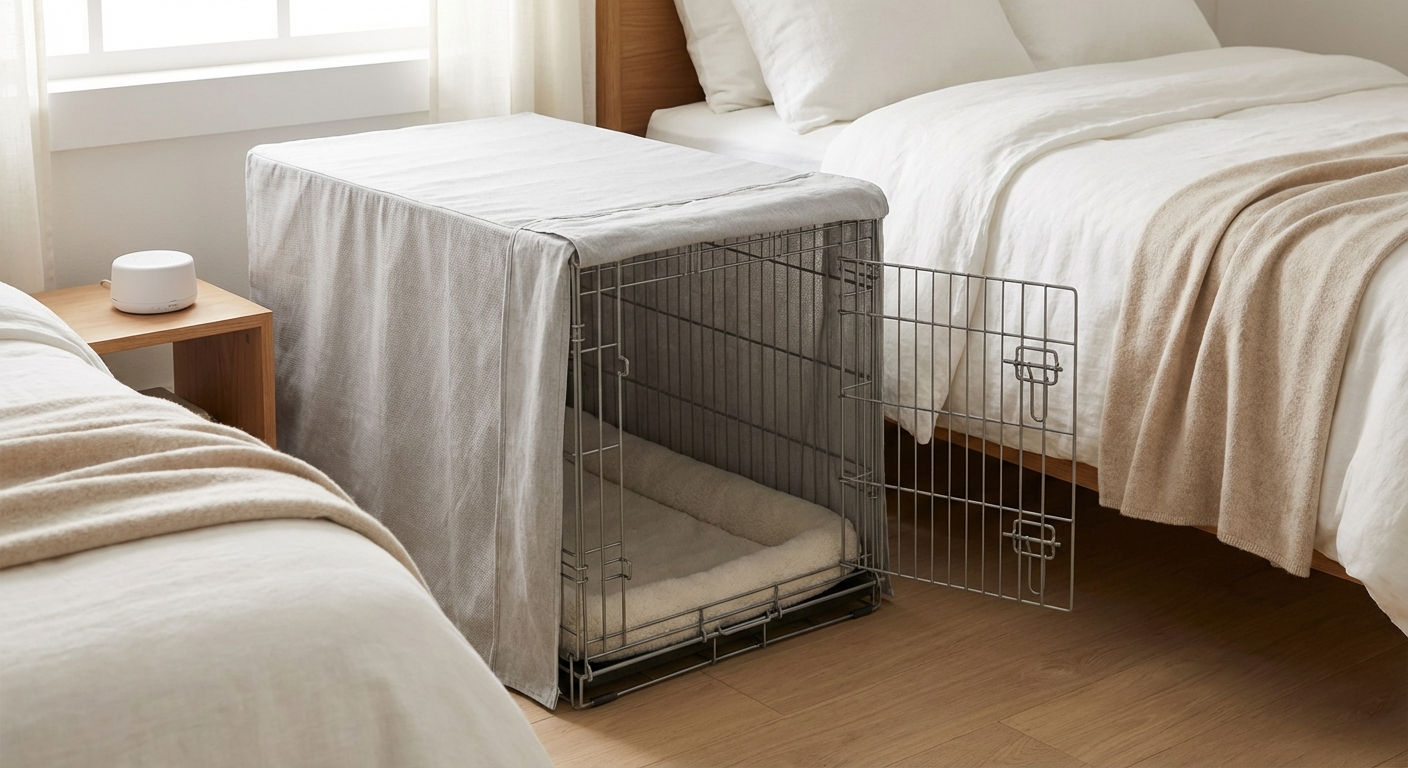
- Cover 3 sides with a breathable crate cover or light blanket if it helps your puppy relax (watch for chewing and overheating).
- Use a calming white noise machine or a fan to soften random sounds.
- Crate safety: remove collars, tags, and harnesses before crating to reduce snagging and strangulation risks.
3) Add a safe comfort item
Many puppies settle faster with:
- A warmth source designed for pets (avoid heating pads unless specifically made for animals and used per instructions).
- A heartbeat-style comfort toy that mimics litter sounds.
- A shirt that smells like you (no loose strings, and only if your puppy will not shred and ingest it).
What to do when they cry
Step 1: Meet needs before bed
A solid bedtime routine prevents a lot of crying. Aim for:
- Evening play and training: 10 to 20 minutes of age-appropriate activity, then calm time.
- Last potty trip: right before crate time, on leash, boring and business-only.
- Small final snack (optional): for young puppies, a tiny portion of their daily food can help them settle. Keep it consistent and avoid exciting treats right at bedtime.
- Water: do not restrict water all day. Some families pick up the water bowl about 1 to 2 hours before bed to reduce frequent pee trips, but this is not right for every puppy. Do not limit water for puppies that are very young, toy-breed, sick, dehydrated, or having diarrhea or vomiting. When in doubt, ask your veterinarian.
Step 2: Use a calm “back to bed” plan
If your puppy cries, pause and listen for about 30 to 60 seconds. Some puppies fuss briefly and then settle. If it escalates, sounds panicked, or continues, do a quick check.
- If you suspect potty: take them out on leash, no talking, no play, no extra freedom. If your puppy is tiny or easily stimulated, you can carry them to the potty spot. Give them 3 to 5 minutes to go, then straight back to the crate.
- If they do not potty: back into the crate calmly. This prevents your puppy from learning that crying equals a fun middle-of-the-night hangout.
Consistency matters more than perfection. Most puppies learn the pattern faster when every nighttime wake-up is quiet and boring.
Important: if your puppy is frantic, cannot settle, or seems uncomfortable despite a potty attempt and reassurance, reassess. Check temperature, crate setup, and possible pain or illness. Persistent, panicked crying can also signal a bigger separation-related issue.
Step 3: Make the crate a good place during the day
Night training is much easier when the crate is already a positive place.
- Feed meals in the crate with the door open.
- Scatter a few pieces of kibble inside and let your puppy wander in and out.
- Practice short “crate naps” after potty breaks and play sessions.
- Use a safe chew or food puzzle in the crate, then remove it when done.
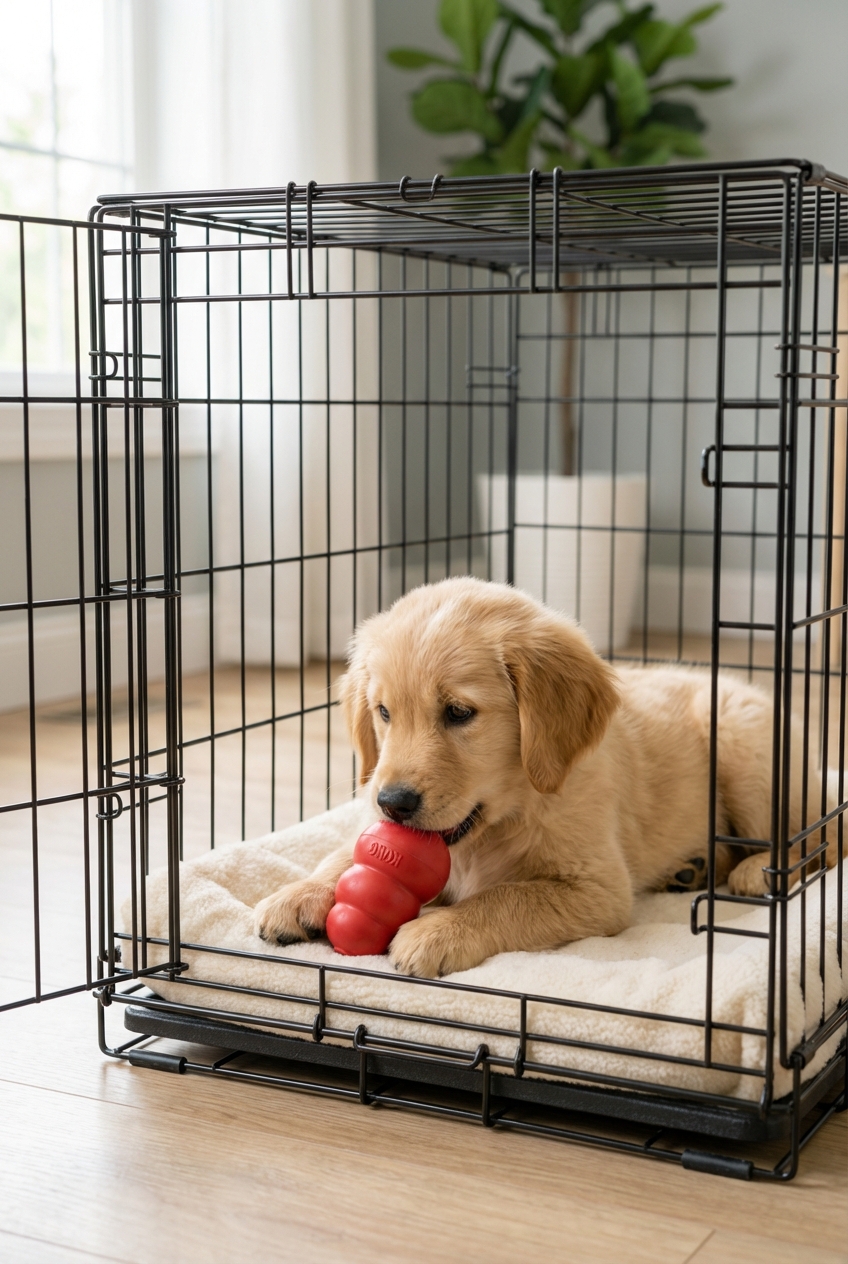
Step 4: Reassure without accidentally rewarding the crying
If your puppy is in the bedroom and still crying, you can offer a few seconds of quiet reassurance:
- Soft voice: “Shhh, bedtime.”
- Fingers near the crate for a moment.
- Then stop and let them settle.
Try not to open the crate door while they are actively crying. If you need to open it, wait for a brief pause, even 1 to 2 seconds of quiet, then proceed. That timing helps prevent accidental reinforcement.
A simple first-week plan
Here is a realistic approach that helps many families. Adjust based on your puppy’s age, size, and comfort level.
A quick potty guide
As a rough rule of thumb, many puppies can hold their bladder at night for about their age in months plus 1 hour. This is not exact, and some puppies need more frequent trips.
Nights 1 to 3
- Crate next to your bed.
- Set an alarm for one planned potty trip (often about 3 to 4 hours after bedtime for an 8 to 10 week old puppy).
- Respond to crying with a quick potty check if needed, then straight back to bed.
Nights 4 to 7
- Keep the routine identical.
- If your puppy wakes less, gradually reduce planned potty trips.
- Increase daytime crate games and short naps in the crate.
Many puppies show noticeable improvement within the first week, but it can take a couple of weeks (or longer for sensitive pups). That is normal.
Mistakes that keep it going
- Playing at 2 a.m.: even 3 minutes of fun can teach your puppy to cry for entertainment.
- Inconsistent responses: sometimes cuddles, sometimes ignoring, sometimes scolding. Puppies thrive on predictable patterns.
- Crate only at night: if the crate only means isolation, it is harder to accept.
- Too much freedom too soon: letting a puppy roam can lead to accidents, chewing, and more nighttime stress.
- Using punishment: yelling or banging the crate increases fear and can worsen crying.
When it might be medical
Please contact your veterinarian promptly if your puppy’s crying is paired with any of these red flags:
- Diarrhea, vomiting, or refusal to eat
- Frequent urination, straining to pee, or accidents far beyond what is expected for age
- Coughing, nasal discharge, or labored breathing
- Bloated belly, repeated attempts to vomit, or extreme restlessness
- Limping, yelping when picked up, or signs of pain
- Sudden behavior change that feels “not like your puppy”
Very young puppies can become dehydrated quickly, and parasites are common. It is always better to ask early if you are unsure.
Tools to use and skip
Often helpful
- White noise or a fan
- Crate cover for a den-like feel (supervise chewing)
- Comfort toy with heartbeat and warmth features
- Enzyme cleaner for accidents (helps prevent repeat soiling)
- Appropriate chew toys to reduce stress chewing
Use caution or avoid
- Sedating medications or supplements unless specifically recommended by your veterinarian
- Essential oils around puppies, since some can irritate airways or be toxic if ingested
- Loose bedding or plush items if your puppy is shredding and eating fabric
- Overnight chews or food puzzles unless you are confident they are safe for your puppy and cannot be broken into swallowable pieces. When you cannot supervise, keep the crate setup simple.
Quick answers
Should I ignore my puppy crying at night?
Ignore crying that is clearly attention-seeking after you have met needs and done a calm potty trip. If you are not sure, do one quick potty break and keep it boring.
If crying is intense, panicked, or does not improve with a consistent routine, do not just “push through.” Recheck comfort and health, and consider help from your veterinarian or a qualified trainer.
How long will this last?
Many puppies improve within a few nights to a couple of weeks, but it varies with age, temperament, and previous experience. Consistency makes the biggest difference.
Should my puppy sleep in my bed?
That is a personal choice, but it can make potty training harder and can accidentally reinforce crying. If your long-term plan is bed sleeping, I still recommend building crate comfort first for travel, vet visits, and safety.
Can I use a playpen instead of a crate?
Yes, as long as the area is puppy-proof, small enough to discourage pottying far from the sleep spot, and you are still building calm nighttime habits.
When to get extra help
Normal adjustment fussing should gradually improve. Reach out for professional support if you see:
- Nonstop vocalization for long periods night after night with no improvement
- Panic behaviors like trying to escape, chewing bars until the mouth bleeds, or self-injury
- Signs your puppy cannot settle even with needs met and a calm routine
Your veterinarian can help rule out medical causes and may refer you to a credentialed trainer or veterinary behaviorist.
Bottom line
The fastest way to help a puppy stop crying at night is to combine compassion with consistency. Keep the crate close, make bedtime predictable, meet potty needs calmly, and teach during the day that the crate is a safe place. Many puppies settle in once they realize, night after night, that they are secure and you will always help them in a calm, boring way.
If you want one small step to start tonight: put the crate beside your bed, do one last quiet potty trip, and practice the same calm response every time your puppy wakes.
References: For deeper reading on humane, science-based training, see guidance from the American Veterinary Society of Animal Behavior (AVSAB) and other veterinary behavior resources.