A vet-assistant guide to getting puppies to sleep at night: ideal sleep setup, step-by-step bedtime routine, what to do when they cry, potty timing, naps, an...
Article
•
Designer Mixes
How to Get a Puppy to Sleep Through the Night

Shari Shidate
Designer Mixes contributor
If you are exhausted, you are not doing anything “wrong.” Most puppies wake at night for the same reasons human babies do: their bladders are tiny, their brains are still learning to self-soothe, and everything feels new. The good news is that with a simple plan and a little consistency, most puppies can steadily stretch their sleep and learn that nighttime is for resting.
Below are my need-to-know tips, written from the perspective of someone who has worked with plenty of tired pet parents and wiggly puppies in a veterinary setting. This is practical, veterinary-informed, best-practice guidance, not guilt.
What “sleeping through the night” means
For most puppies, sleeping through the night means about 6 to 8 hours without needing a potty break. Many puppies are not ready for that at 8 weeks old, and that is normal.
- 8 to 10 weeks: commonly needs 1 to 3 potty trips overnight
- 10 to 12 weeks: many drop to 1 trip, and some manage none
- 3 to 4 months: lots of puppies can go most nights without a break, but not all
Breed, size, and individual bladder capacity vary widely. Tiny breeds usually need more time. Rescue puppies may need extra reassurance. If your puppy does not match a timeline you saw online, that does not mean you are failing.
If you like rules of thumb, some people use an “hours they can hold it” estimate based on age. Treat this as a rough guide only, not a promise, and always prioritize your puppy’s comfort and health.
Daytime sets up nighttime
Nighttime success starts with what happens when the sun is up. Puppies who are under-exercised, over-napped all evening, or overstimulated right before bed tend to wake more.
1) Keep a predictable rhythm
Puppies do well with patterns. Aim for consistent windows for meals, potty, play, training, and naps.
- Feed meals on a schedule rather than free-feeding, unless your veterinarian recommends otherwise.
- Build in structured naps. Overtired puppies often get bitey and frantic, then struggle to settle at night.
2) Use gentle, brain-tiring activities
You do not need a marathon to get a puppy to sleep. Often, short training sessions and sniffing are more effective than intense physical play.
- 5-minute training sessions (sit, down, touch, leash walking basics)
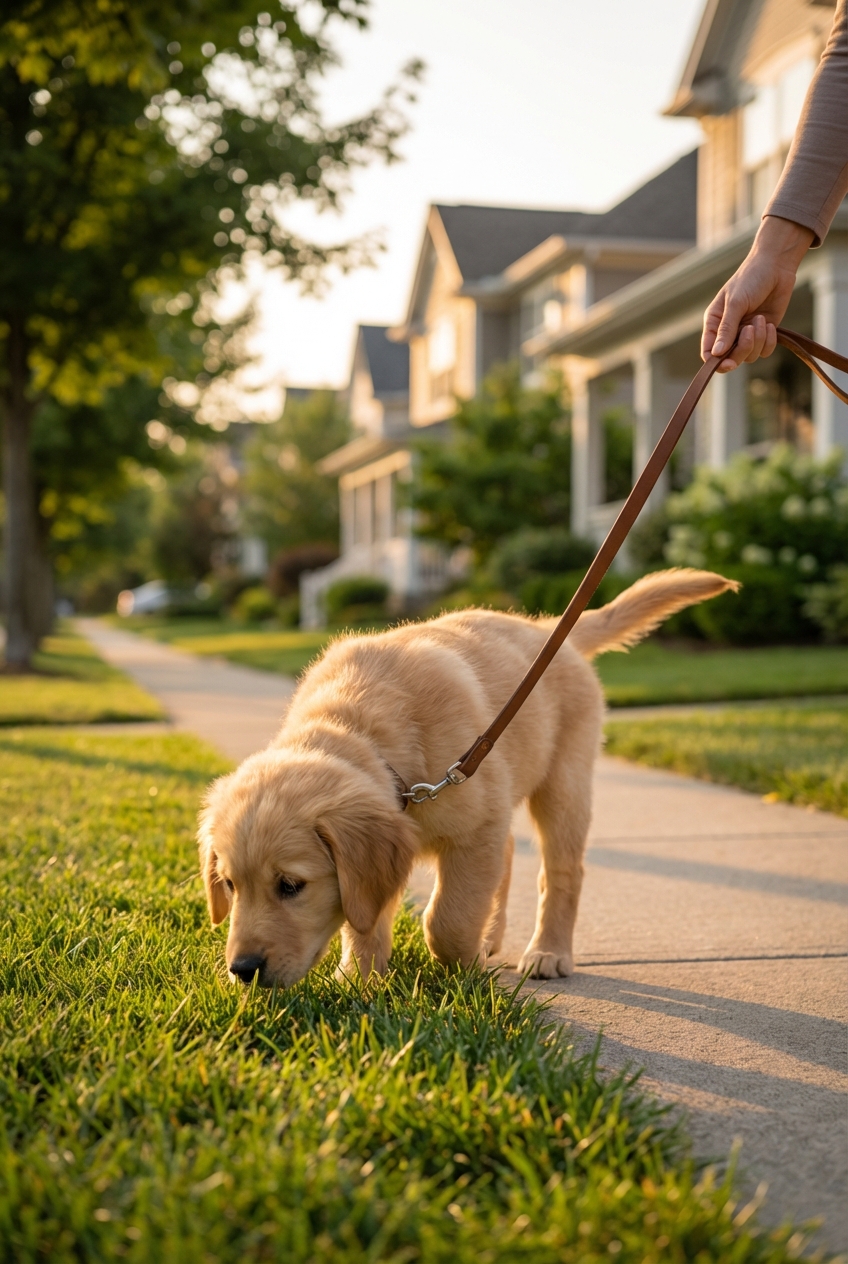
- Sniff walks and “find it” games with kibble or treats
- Food puzzles and stuffed Kongs (age-appropriate, correctly sized, and supervised)
Try to avoid roughhousing right before bed, which can rev puppies up instead of calming them down.
Set up sleep for success
Your goal is simple: create a safe space where your puppy can relax and where you can manage potty training without constant surprises.
Crates help many puppies
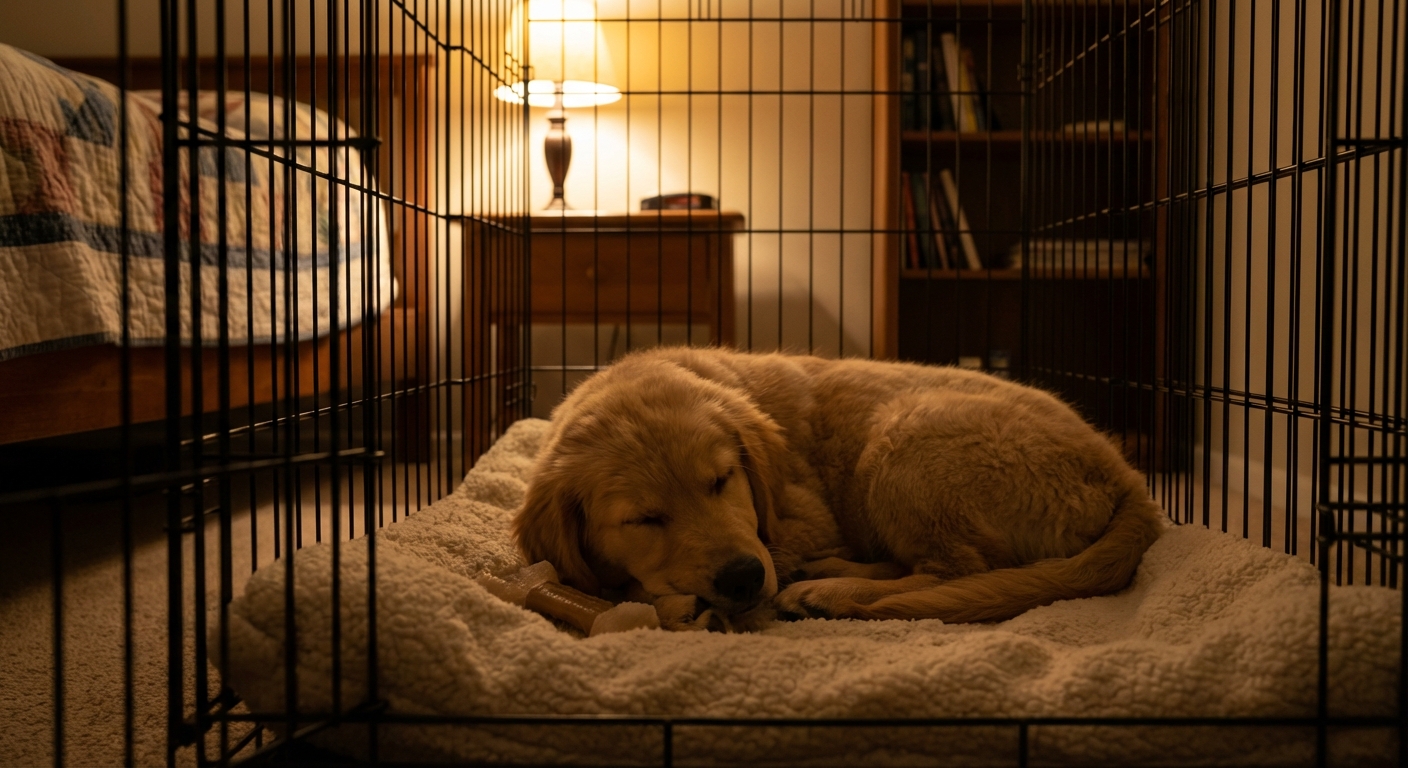
A properly sized crate can be a game-changer because it helps many puppies avoid soiling their sleeping area. Most dogs prefer not to eliminate where they sleep, so a good setup often supports longer stretches at night.
- Right size: your puppy should be able to stand up, turn around, and lie down comfortably. Too big can lead to pottying in one corner.
- Comfort: add a washable mat or blanket. If your puppy chews bedding, use a safer option recommended by your trainer or veterinarian.
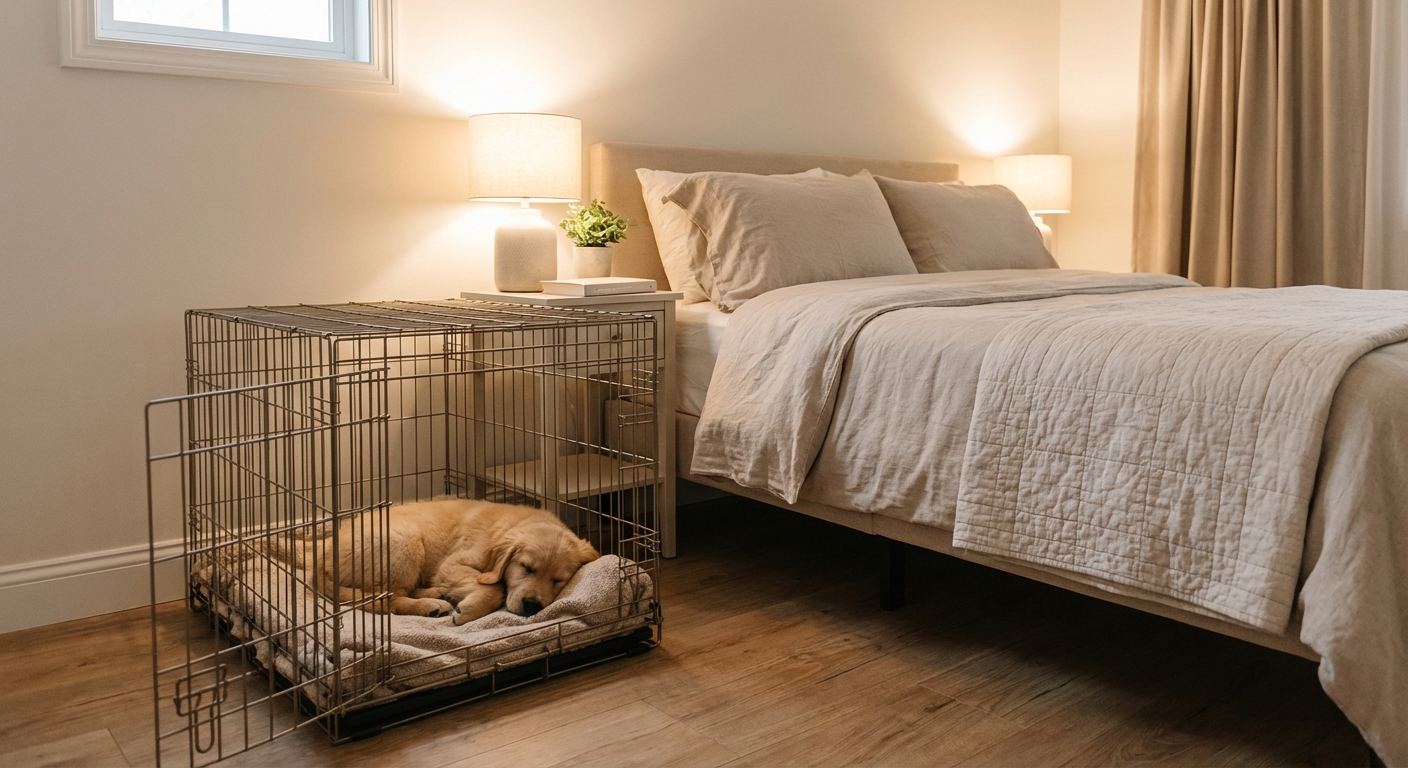
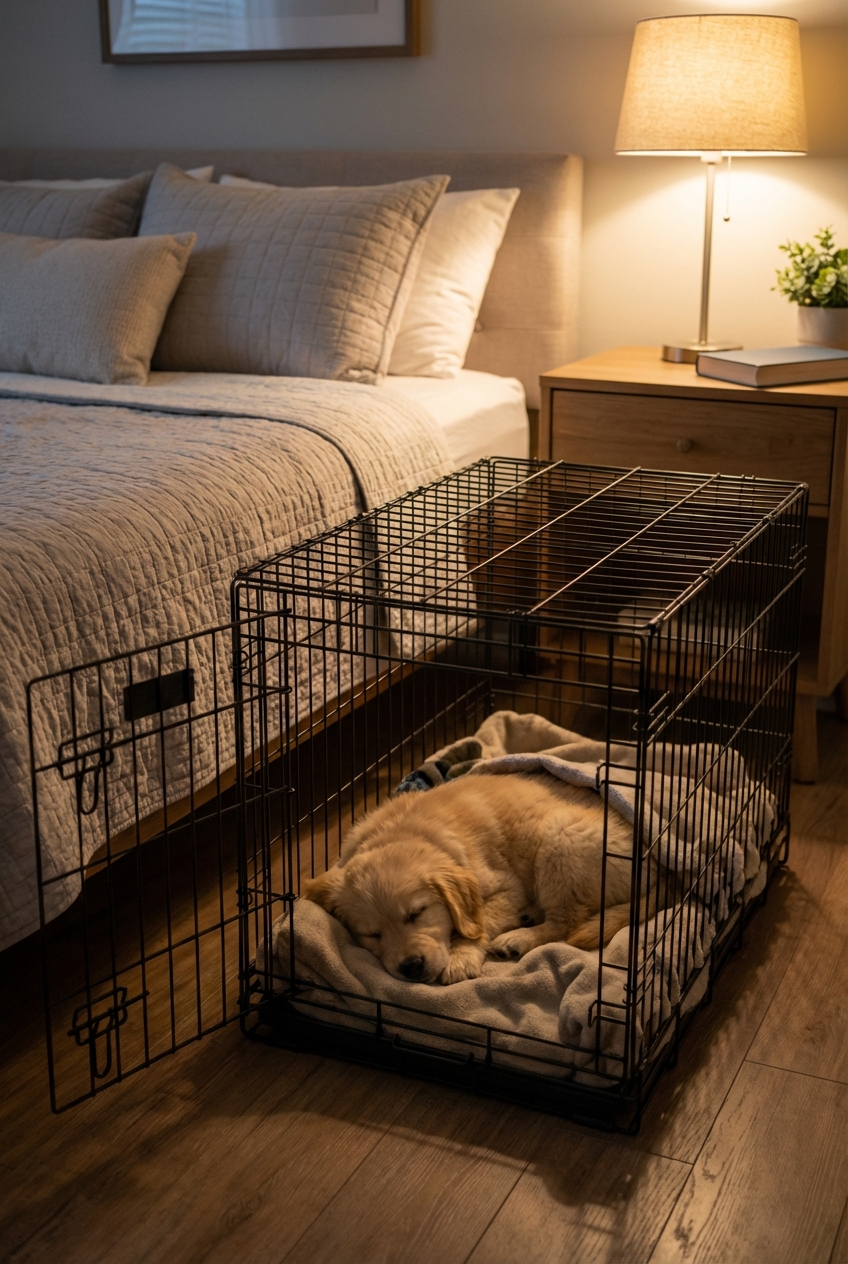
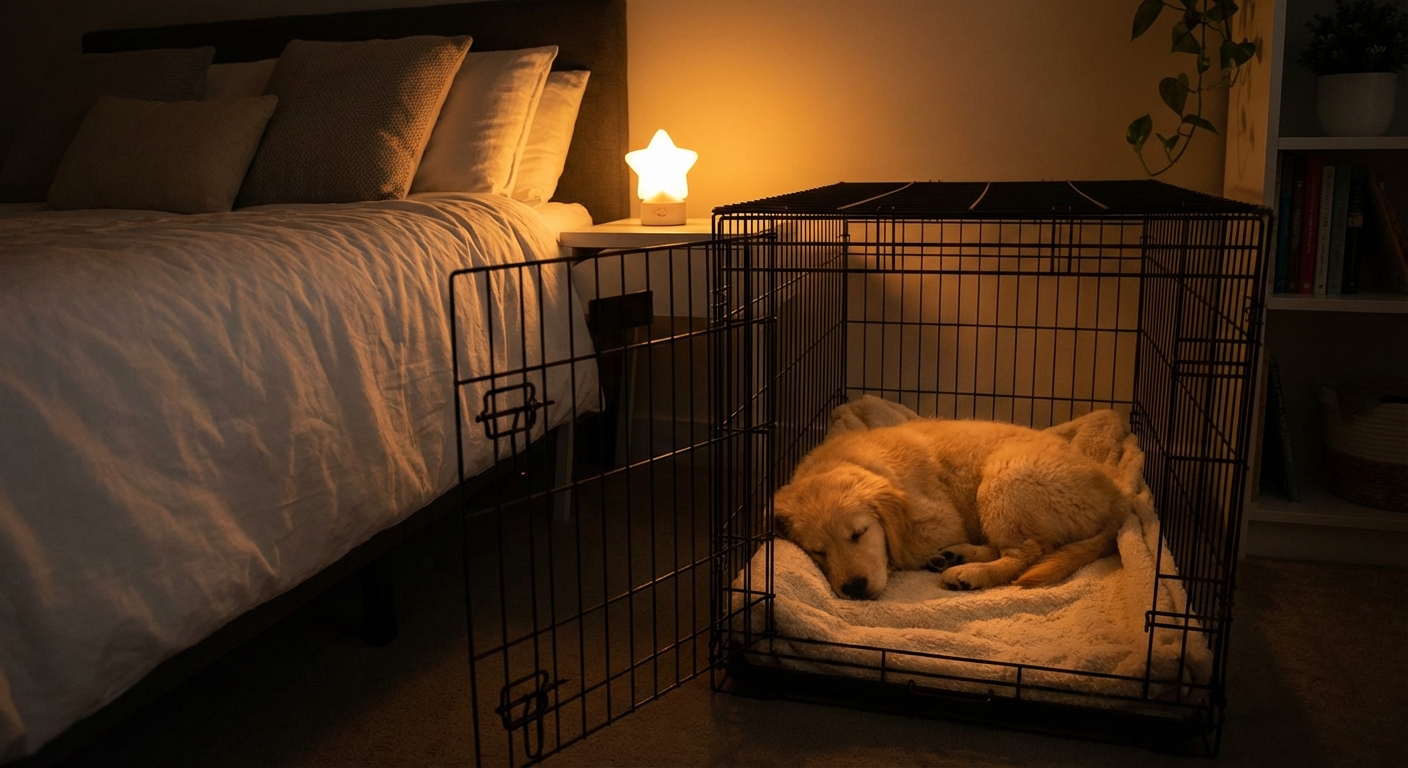
- Location: for many puppies, the best early setup is the crate near your bed. Being close reduces anxiety and makes nighttime potty trips easier.
Crate distress vs normal protests
Some whining is normal at first. But if your puppy truly panics, a different plan is kinder and safer. Signs of distress can include prolonged screaming, heavy drooling, frantic attempts to escape, or hurting teeth and nails trying to get out. If you see that, pause and ask your veterinarian or a qualified trainer for help.
Try a pen plus crate
If a crate is a tough transition, a puppy pen with a crate inside can give your puppy more room while you build positive associations. This can be a helpful middle step for sensitive pups.
Keep night calm and low-stim
Nighttime should not feel like party time.
- Dim lights or use a small nightlight
- White noise can help some puppies settle
- Keep the room cool and comfortable
A bedtime routine to try
Puppies thrive on routines that repeat in the same order every night. Here is a simple one that works well for many families.
Step-by-step
- Water timing: offer normal access to water through the day. In the evening, some puppies do well if you pick up the water bowl about 1 to 2 hours before bed. Water should never be withheld for long periods. Use extra caution for very young or small puppies, hot climates, and any puppy with medical concerns, and follow your veterinarian’s guidance.
- Calm play and connection: 10 to 20 minutes of low-key play or gentle training.
- Final potty break: take your puppy out right before crating. Stand quietly and give them time to fully empty.
- Into the crate with a calm reward: a small treat, a lick mat, or a stuffed Kong can create a positive association. Choose items that are appropriately sized and in good condition to reduce choking risk.
- Lights out: keep your energy low and your voice soft.
Do you need a dream potty?
A dream potty is when you gently carry your puppy out once right before you go to sleep (for example, 10:30 or 11:30 pm), let them potty, and then calmly return them to the crate. This can reduce overnight wake-ups for some puppies.
- Keep it quiet, dark, and all business.
- No play, no wandering, no snacks.
If your puppy cries at night
This is the hard part, emotionally. You want to comfort them, but you also want to avoid teaching “crying equals fun attention.” The key is to respond thoughtfully and consistently.
Assume potty first
If your puppy wakes crying, especially early in training, take them out for a quick potty break.
- Leash on, straight to the potty spot
- Quiet praise when they go
- Back to the crate immediately
If they do not potty within a few minutes, return to the crate. You are teaching that nighttime outings are not for exploring.
Potty need vs company
- Potty need: sudden wake-up, restless circling, sniffing, or crying that escalates quickly
- Company: on-and-off whining, pauses to listen for you, seems fine once you talk
It is not always obvious, and that is okay. When in doubt, do a quick potty trip and keep it calm.
Reassure without reinforcing
If your puppy is safely pottied but still upset, you can offer reassurance without turning it into a fun interaction.
- Keep the crate near your bed so your presence is calming.
- Speak softly once or twice.
- Some puppies settle with your fingers near the crate for a minute.
Avoid letting them out for cuddles in the middle of the night unless you are intentionally choosing that long-term routine.
Potty training and night sleep
Most night waking is potty related. A few tweaks often make a big difference.
Use a consistent cue
Say the same phrase each time, like “go potty,” and reward immediately after your puppy finishes.
Clean accidents correctly
If your puppy has an accident, use an enzymatic cleaner. Regular household cleaners may not remove the scent markers that tell a puppy “this is a bathroom spot.”
Track patterns for one week
Write down:
- Last meal time
- Last water time
- Last potty time
- Wake-up times
- Accidents
Patterns show you what to adjust. For example, if your puppy wakes every night at 2:30 am, set an alarm for 2:15 am for a few nights, then gradually push it later by 15 minutes.
If your puppy suddenly starts waking again after making progress, consider recent changes (food schedule, new treats, stress, temperature, a new sleeping location) and keep an eye out for signs of illness.
Common mistakes
- Too much freedom at night: roaming the bedroom makes potty accidents more likely and can turn nighttime into playtime.
- Inconsistent response to crying: if sometimes crying gets a cuddle and sometimes it does not, the behavior can become stronger.
- Late evening zoomies: rough play right before bed often backfires.
- Crate is too big: encourages pottying in one area and sleeping in another.
- Not enough daytime naps: overtired puppies often sleep worse, not better.
Safety notes
Your puppy’s safety matters more than any sleep hack.
- Avoid collars in crates unless your veterinarian or trainer advises a specific safe option (such as a breakaway design). Even then, use caution.
- Be cautious with plush bedding if your puppy chews or eats fabric.
- Avoid essential oils and strong fragrances around puppies. Some oils can be toxic if ingested, and diffusers and scented products can irritate sensitive airways.
- Skip over-the-counter sleep aids unless your veterinarian specifically recommends them.
If anxiety seems intense, do not “push through” alone. A qualified trainer and your veterinarian can help you create a plan that is both kind and effective.
When to call your vet
Night waking is often normal, but these signs deserve a call:
- Diarrhea, vomiting, or straining to poop
- Frequent urination, accidents after recent progress, or signs of pain when peeing
- Excessive thirst
- Persistent coughing or breathing changes at night
- Crying that sounds like pain rather than protest
- Sudden new night waking paired with low appetite, lethargy, or any “something is off” behavior
- No improvement after 2 to 3 weeks of consistent training
Medical issues like urinary tract infections, parasites, diet intolerance, or pain can disrupt sleep, and you will never regret checking in early.
A realistic timeline
Most puppies improve in small steps. Celebrate the wins.
- Week 1: puppy learns the bedtime routine, the sleep setup becomes familiar, fewer frantic wake-ups
- Weeks 2 to 3: longer sleep stretches, fewer potty trips
- Weeks 4 to 6: many puppies can sleep most nights with little to no interruption
Progress is not always linear. A growth spurt, a vaccination day, an illness, or a new environment can cause a temporary setback. Go back to basics for a few nights, and you will usually get back on track.
You are building lifelong skills here: calm independence, a healthy potty routine, and a sense of security. That is worth doing slowly and kindly.