
A vet assistant’s complete guide to giving dogs tablets, capsules, and liquids safely. Learn pill-in-food tricks, direct pilling, pill poppers, and when to...
Article
•
Designer Mixes
How to Get a Dog to Take a Pill

Shari Shidate
Designer Mixes contributor
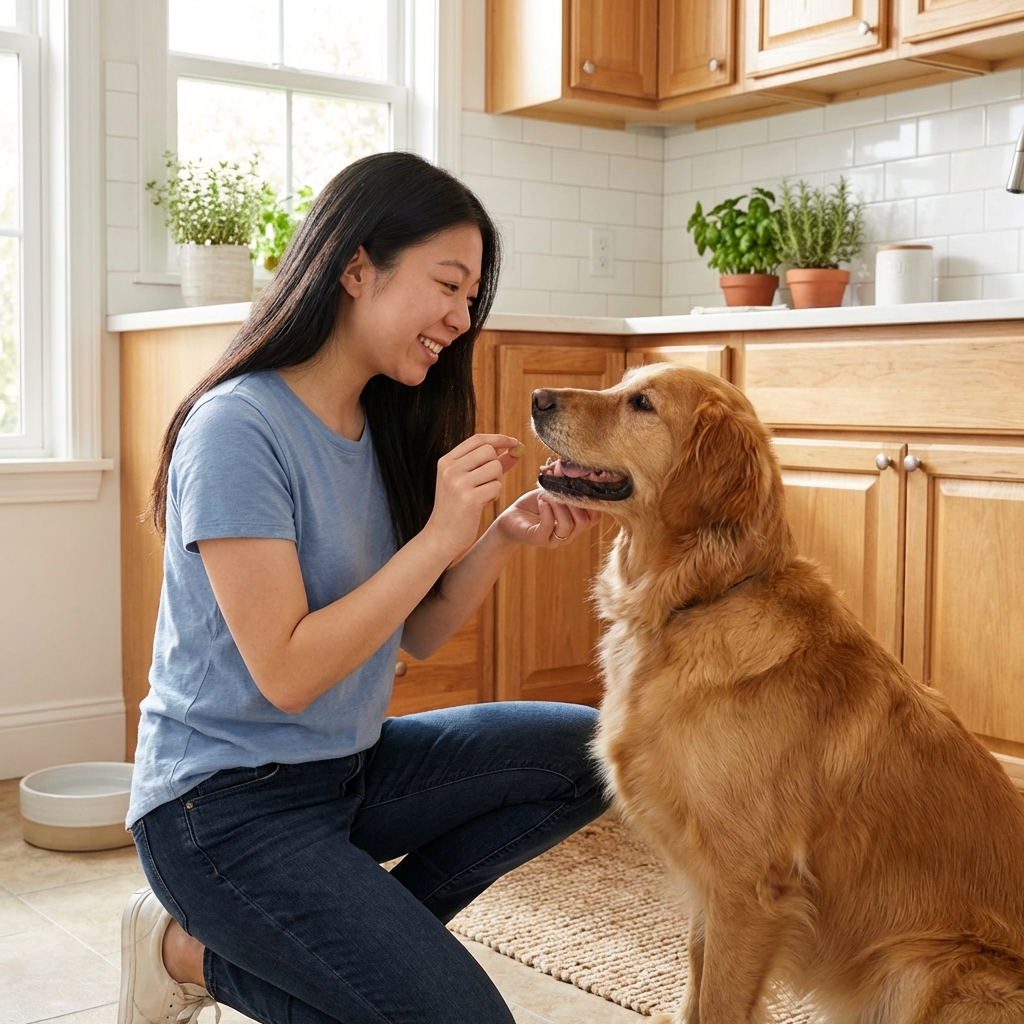
If you have ever tried to give a dog a pill, you already know the truth: dogs can turn into tiny, furry magicians. One second the pill is “gone,” and the next second it is on the floor, in their cheek, or somehow back in your hand.
As a veterinary assistant in our clinic, I promise you this can get easier. The goal is not to “win” the moment. The goal is to get the full dose in safely, with as little stress as possible for you and your dog.
Below is a quick, vet-aligned guide you can use today, plus tips to avoid the most common reasons pills fail.
Before you start: a quick safety check
- Confirm the dose and schedule on the label. If you are unsure, call your vet or pharmacy.
- Ask if it can be crushed, split, or opened. Some medications must stay intact (enteric-coated, extended release, certain capsules). Crushing the wrong pill can change how it works or irritate the mouth.
- Check food directions. Some meds work best with food, some require an empty stomach, and some should not be paired with certain foods.
- Know what “success” looks like. Many dogs can hide a pill in the cheek. Plan to confirm a swallow.
Do not force it if your dog is coughing, gagging, struggling to breathe, or escalating toward a bite. If you suspect choking or a pill went down the wrong way, treat it as an emergency and seek veterinary care right away.
The fastest methods
1) The “treat, treat, pill, treat” trick
This is my go-to for many dogs because it uses momentum. You are not negotiating, you are creating a quick rhythm.
- Have 3 to 5 small, high-value treats ready.
- Give one treat fast. Then another.
- Give the pill hidden in a treat (pill pocket, cheese, meatball of wet food).
- Immediately follow with 1 to 2 “chaser” treats.
Why it works: Many dogs swallow quickly when they expect another treat right away, so they do not stop to investigate the pill.
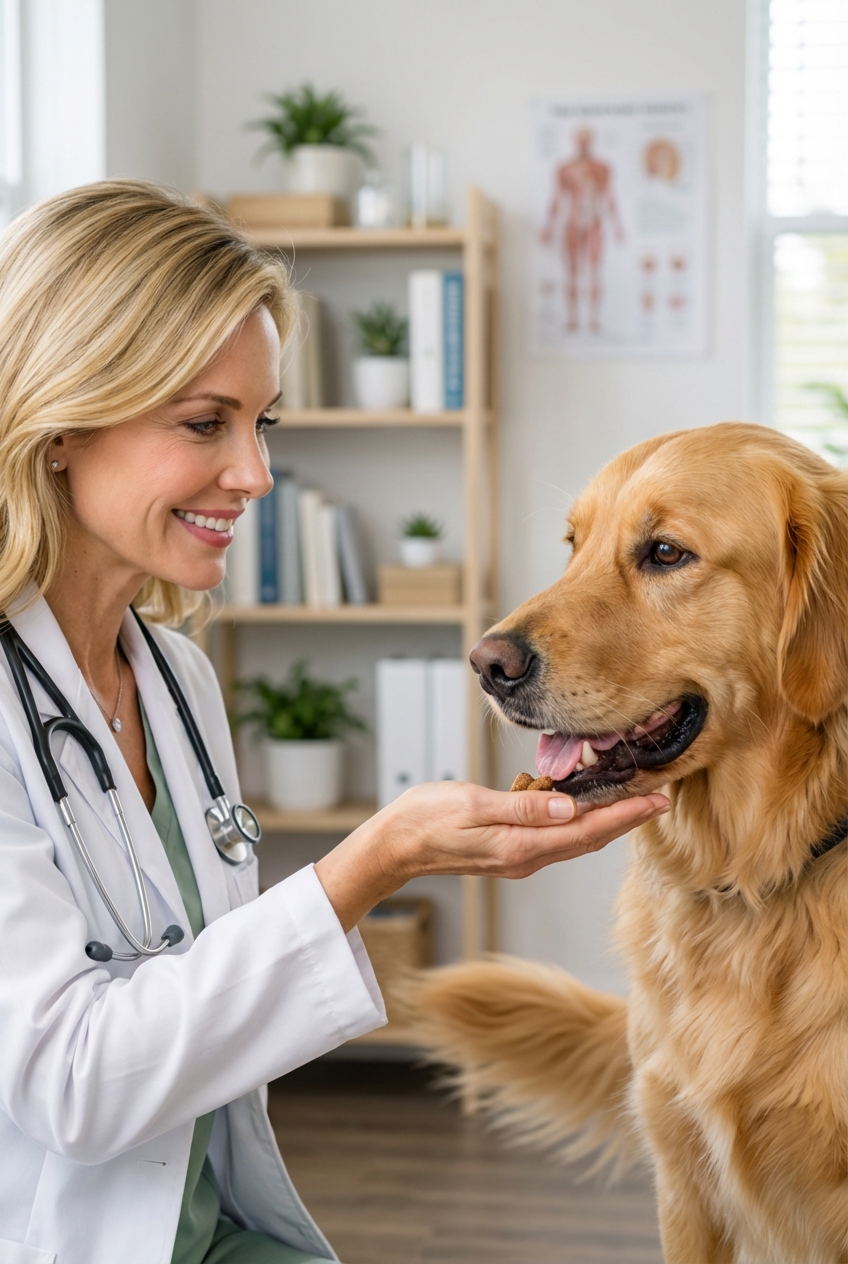
2) Pill pocket, done right
Pill pockets are convenient, but technique matters.
- Use enough pocket to fully seal the pill so there is no smell or bitter dust on the outside.
- Warm it in your fingers for a few seconds. Softer treats mold and seal better.
- Offer a plain piece first so your dog trusts the “new treat.”
3) Direct pilling (the no-nonsense option)
If your dog is suspicious of all hidden pills, direct pilling can be the quickest and most reliable method. Go gently and confidently.
- Have the pill ready. If your vet says it is OK, you can add a tiny bit of canned food to help it slide.
- Stand or kneel beside your dog, not directly in front. Keep your energy calm.
- Keep your fingers clear of the back teeth and do not pry if your dog resists. If your dog is struggling, pause and switch strategies.
- With one hand, gently hold the upper jaw. Lift the nose slightly (no need to tilt far back, especially for short-nosed breeds).
- Use your other hand to open the lower jaw and place the pill as far back on the tongue as you safely can.
- Close the mouth, keep it closed, and gently stroke the throat until you see a swallow. Many dogs lick their nose after swallowing.
- Offer a treat afterward and, if your dog wants it, offer a small drink of water. Do not syringe water into a resisting dog.
Tip: If your dog is likely to bite or panics with handling, stop and ask your veterinarian for alternatives. Safety first for everyone.
When hidden pills fail
Some dogs are experts at tasting bitterness or feeling the “hard thing” in a soft treat. These tweaks can help.
Choose better hiding foods
- Canned dog food “meatball”: sticky and aromatic, great for sealing.
- Cream cheese: molds well and masks taste for many dogs.
- Peanut butter (xylitol-free only): very effective, but use a small amount due to calories and fat.
- Strong-smelling options like sardine or tuna water mixed into a little food can distract from pill scent.
Important: Avoid foods that are toxic to dogs like grapes, raisins, and anything containing xylitol. If your dog has a history of pancreatitis or a sensitive stomach, ask your vet before using fatty foods.
Coat the pill (only if your vet says it is OK)
A light coating can reduce bitter taste and make swallowing smoother, but it is not right for every medication or every dog.
- A dab of canned food
- A thin layer of cream cheese
- A tiny smear of butter
Note: Some meds should not be given with certain foods, and fatty coatings can be a poor choice for dogs prone to pancreatitis. When in doubt, ask your veterinarian.
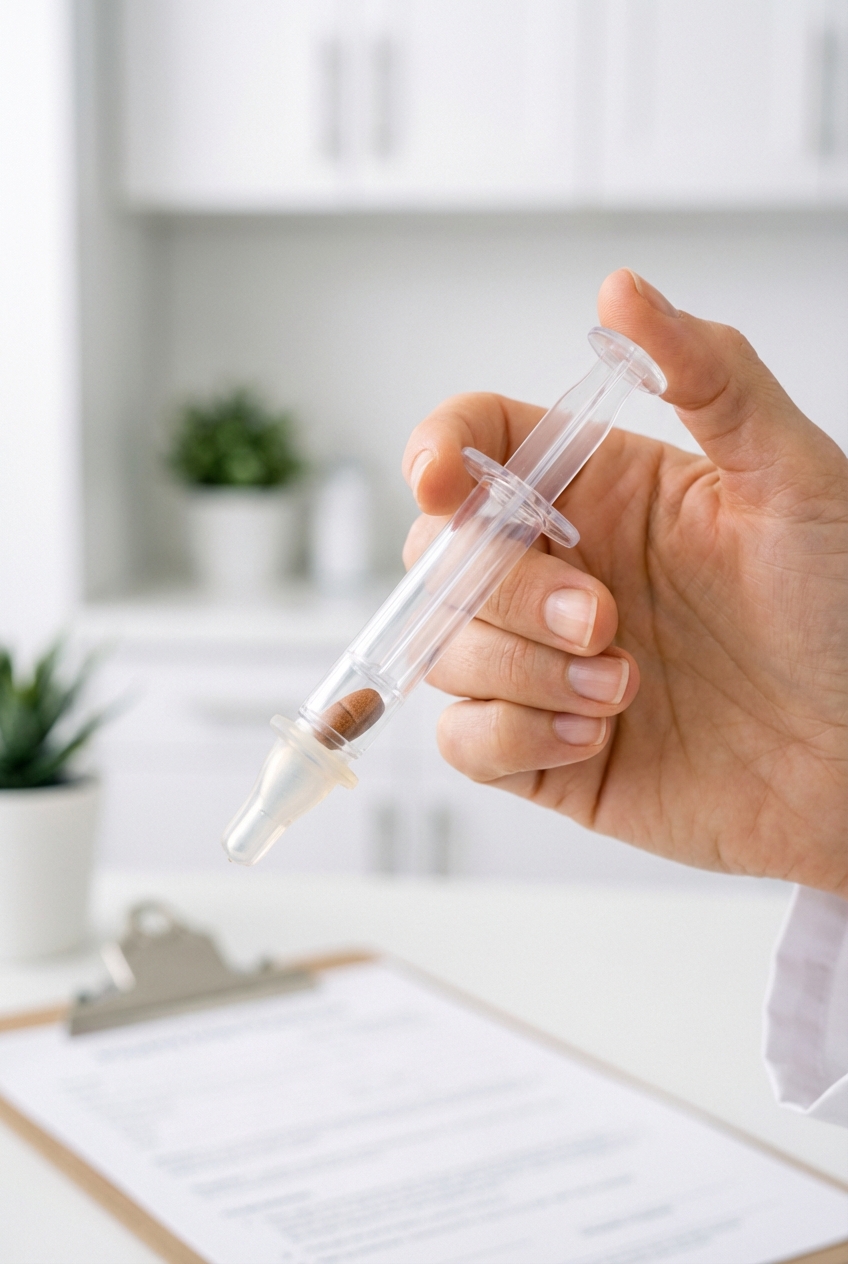
Use a pill popper (pill gun)
A pill popper can help you place the pill farther back while keeping your fingers out of the mouth. Ask your veterinary team to demonstrate the right angle and depth for your dog.
Did they swallow it?
Dogs can “pretend swallow” and store pills in the cheek. Quick checks help.
- Watch for a lick of the nose after swallowing.
- Gently open the mouth and look for a pill tucked along the gums.
- Offer a small chaser treat. If they chew slowly and then spit something out, you will catch it.
- Check the floor and bedding a few minutes later, especially with clever dogs.
If your dog needs more than one pill, give one at a time with a chaser in between. It helps prevent the classic cheek “pill dump.”
Common mistakes
- Letting the pill touch the outside of the treat. Bitter dust is a giveaway.
- Too much talking and hesitation. Calm and quick wins more often than pleading.
- Using a treat they rarely get only for pills, then wondering why they no longer trust it. Rotate hiding foods or give that treat sometimes without medication.
- Chasing your dog around the house. This turns medicine into a scary game. Instead, bring your dog to a quiet spot and keep it consistent.
- Crushing a pill without asking. Some medications should never be altered.
- Taking big risks with a scared dog. If you think you might get bitten, stop and call your veterinary team for safer options.
If they still refuse
You are not failing if this is hard. Some medications are bitter, some dogs are sensitive, and some pets have past negative experiences.
Call your veterinary clinic and ask if there is an alternative form:
- Chewable tablets (often flavored)
- Liquid medication
- Transdermal gel for certain drugs (absorption is medication-dependent and is less commonly used in dogs than cats, so confirm suitability)
- Long-acting injections when appropriate
- Compounded formulations from a compounding pharmacy (custom flavor or smaller size)
The best medication plan is the one you can actually give consistently and safely.
A simple daily routine
If your dog needs a pill every day, consistency reduces stress. Here is a simple routine:
- Same place, same time (kitchen, laundry room, or another low-distraction spot).
- Prepare first: pill, treats, water, and any food.
- Use the treat rhythm: treat, treat, pill, treat.
- Confirm swallow with a chaser treat.
- End on a win: praise, a short play session, or a walk.
When to call your vet
Please reach out to your veterinarian if:
- Your dog vomits after the pill, especially more than once.
- You miss doses because your dog will not take the medication.
- Your dog drools excessively, paws at the mouth, or seems in pain after taking it (possible irritation or bitterness).
- The pill is accidentally chewed when it is supposed to be swallowed whole.
- You are unsure whether it can be given with food.
References: Guidance here aligns with common veterinary client education recommendations, including AAHA client resources and veterinary hospital handouts on oral medication administration.