Struggling to pill your cat? Learn calm, vet-safe techniques: hiding pills in food, direct pilling steps, using a pill popper, and towel wraps—plus mistake...
Article
•
Designer Mixes
How to Get a Cat to Take a Pill

Shari Shidate
Designer Mixes contributor
Giving a cat a pill can feel like trying to medicate a tiny, suspicious ninja. You are not failing, and your cat is not being “bad.” Cats are wired to avoid unfamiliar tastes and sensations, especially anything forced into their mouth.
The good news is that there are several safe, vet-approved ways to help a cat take medication with less stress for everyone. Below, I will walk you through the gentlest options first, then the more hands-on methods, plus what to do if you get scratched, drooled on, or the pill mysteriously vanishes.
Before you start
Confirm the basics
- Double-check the dose and instructions on the label. Some pills must be given with food, others on an empty stomach. Do not change timing or how you give it unless your vet says it is okay.
- Ask if it can be crushed or split. Not all medications are safe to crush because they may be time-released, enteric-coated, or bitter enough to cause drooling and refusal.
- Ask about alternatives if pilling is a nightmare. Many meds come as flavored liquids, compounded treats, or different pill sizes. Transdermal gels exist for certain drugs, but they are very medication-specific and absorption can vary, so do not assume any pill can be turned into a gel.
Set up for success
- Pick a quiet room with the door closed so your cat cannot bolt under the bed.
- Have everything ready: pill, a few high-value treats, a small syringe of water (plain), and a towel.
- Stay calm and efficient. Cats read tension fast. Aim for a “quick, kind, confident” approach.
Safety note: If your cat is having trouble breathing, extreme drooling, facial swelling, collapse, or repeated vomiting after medication, contact an emergency vet right away.
Start with the least stressful methods
1) Hide the pill in food (if allowed)
If your cat takes treats or canned food, this is the easiest win.
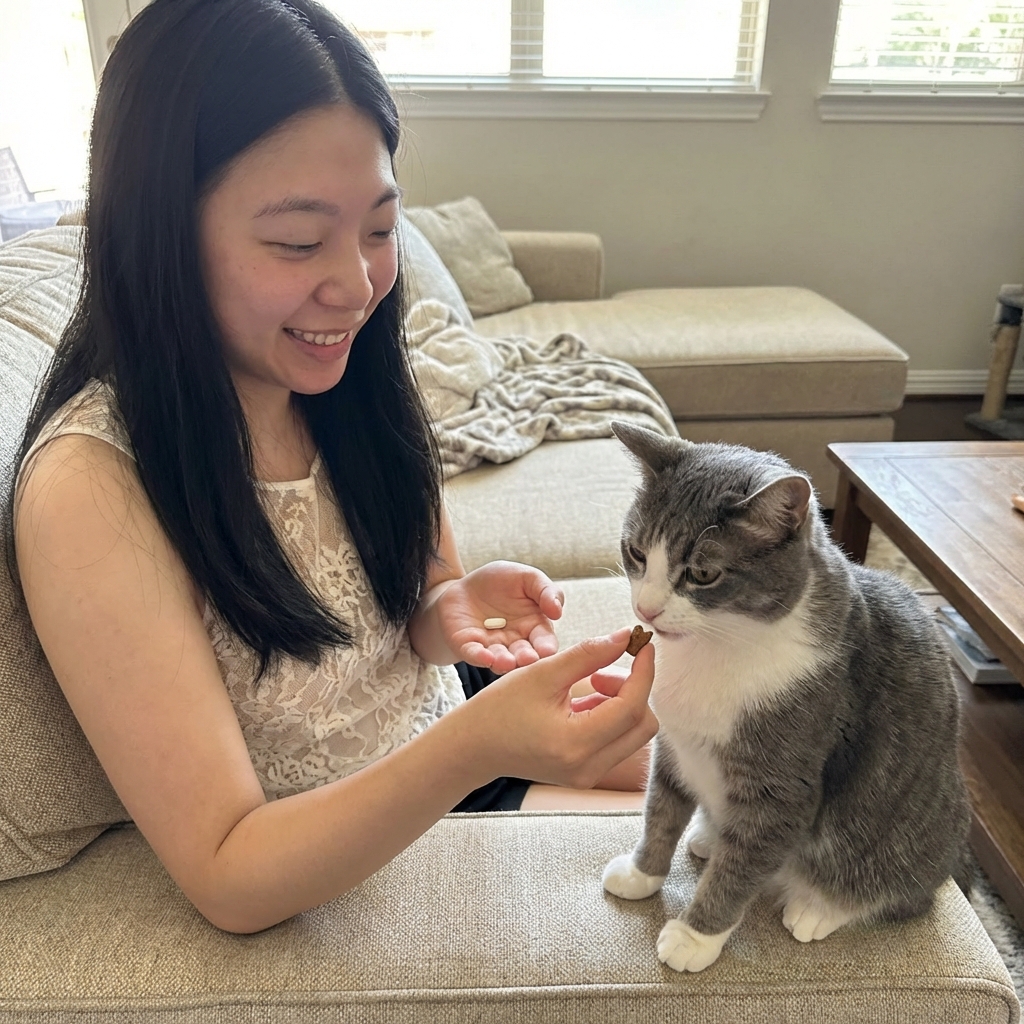
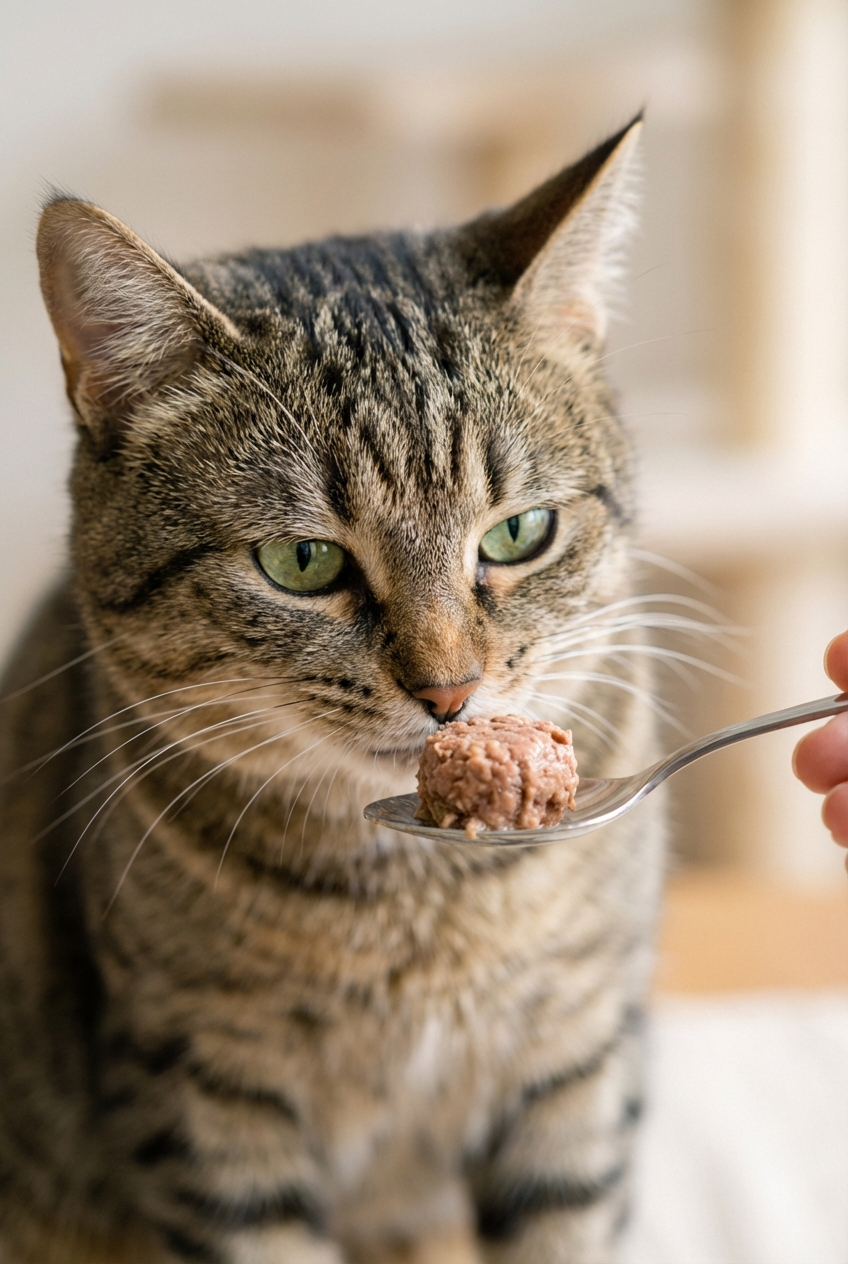
- Pill pockets: Commercial pill treats can work well. Warm it in your fingers and fully seal the pill inside.
- Soft wet food “meatball”: Press the pill into a small ball of strong-smelling wet food (many cats like fish-based varieties), then offer a second “chaser” bite right after.
- Triple treat trick: Offer 1 plain treat, then the treat with the pill, then another plain treat quickly. Many cats swallow without chewing much when treats come fast.
Tip from the clinic: If your cat is a chewer, the pill may be bitten and the bitter taste can ruin this method for future doses. When that happens, switch strategies rather than trying to “convince” them with the same food again.
Using a pill popper
A pill popper (also called a pill gun) is a simple tool that helps place the pill farther back on the tongue without putting your fingers in your cat’s mouth. Many owners find this safer and quicker.
- Load the pill into the soft tip.
- Gently hold your cat’s head from above, thumb and fingers behind the cheekbones.
- Angle the nose slightly upward.
- Open the lower jaw with your other hand and place the pill popper toward the back of the tongue.
- Depress the plunger to release the pill.
Follow with a small sip of water (with a syringe at the side of the mouth) or a lickable treat if your vet says it is okay. This helps the pill go down smoothly.
Quick hygiene note: Rinse and wash the pill popper and syringe after use, then let them dry.
How to pill by hand
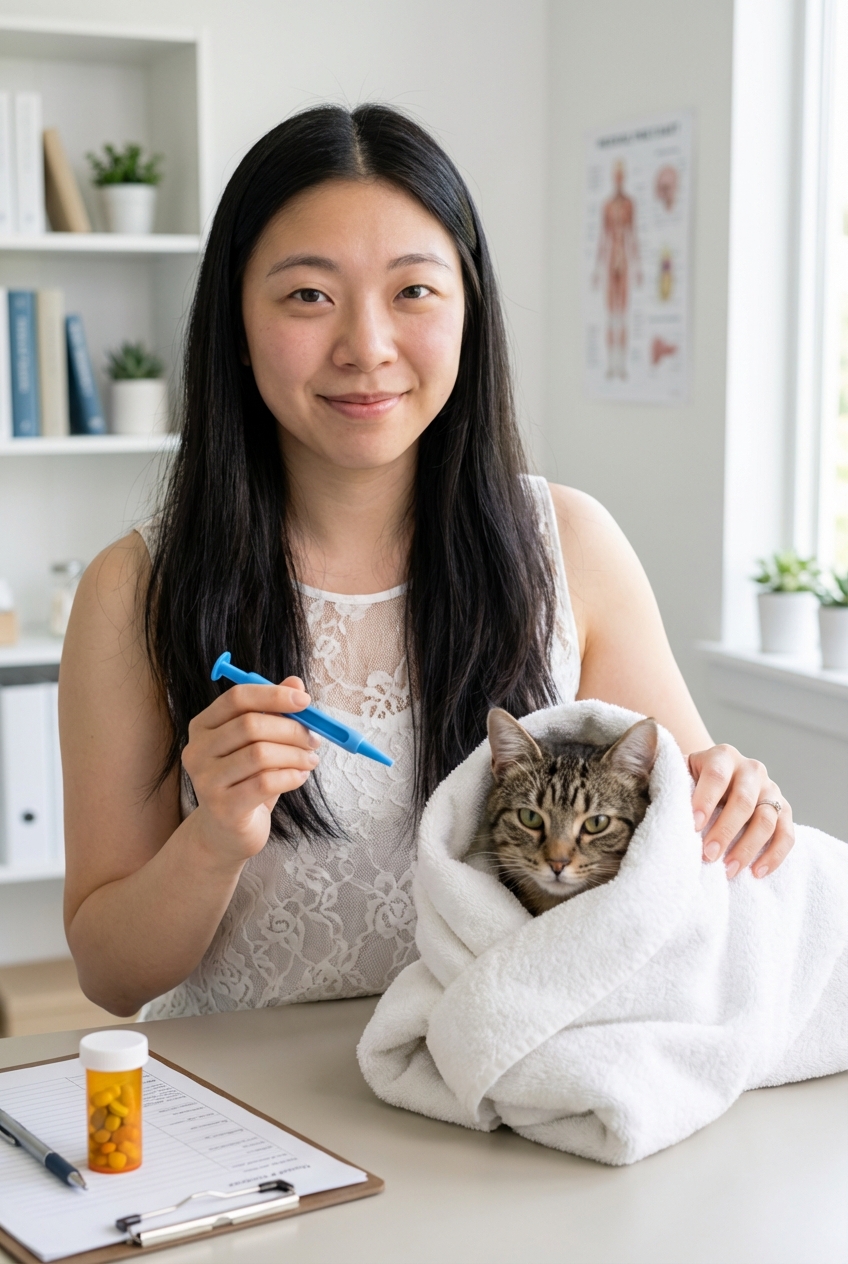
If food tricks fail and you do not have a pill popper, you can pill by hand. The goal is to place the pill far enough back that your cat reflexively swallows. Keep your fingers away from the very back of the mouth to reduce bite risk.
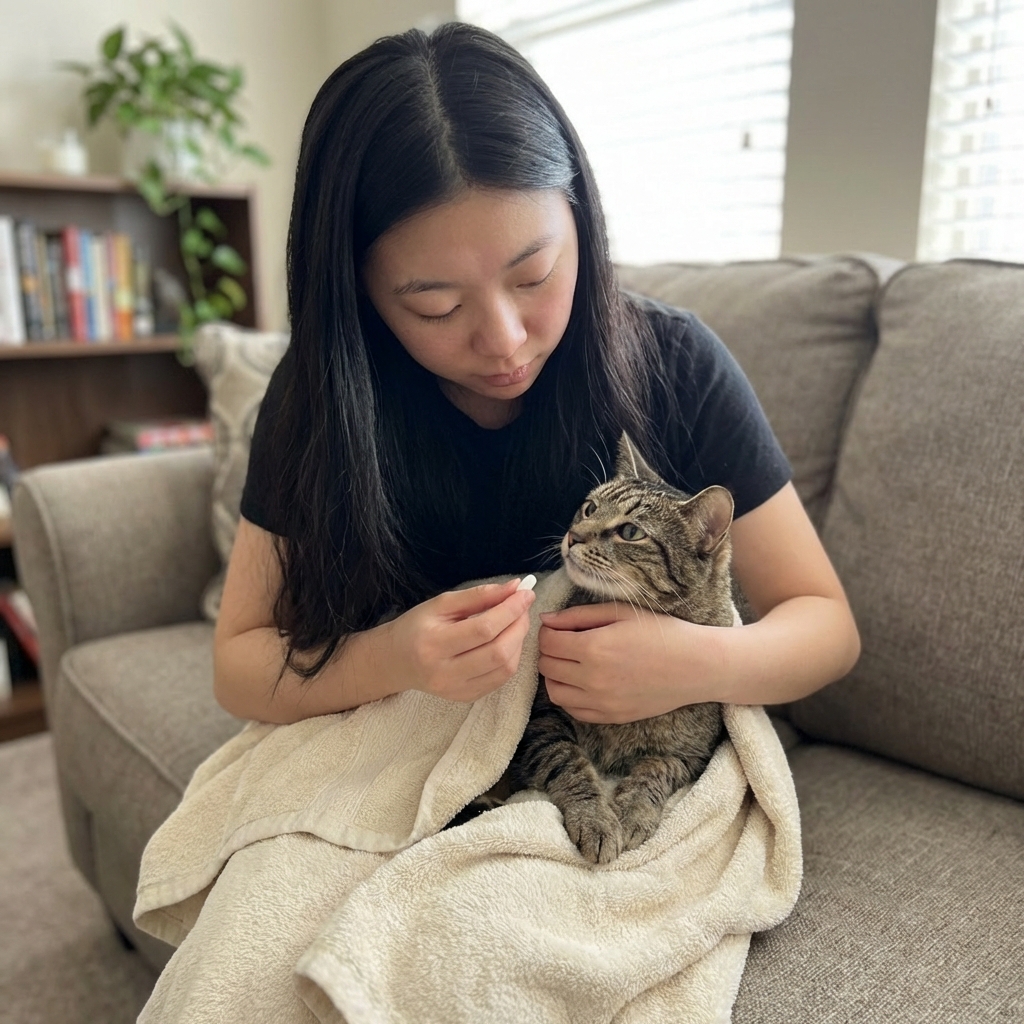
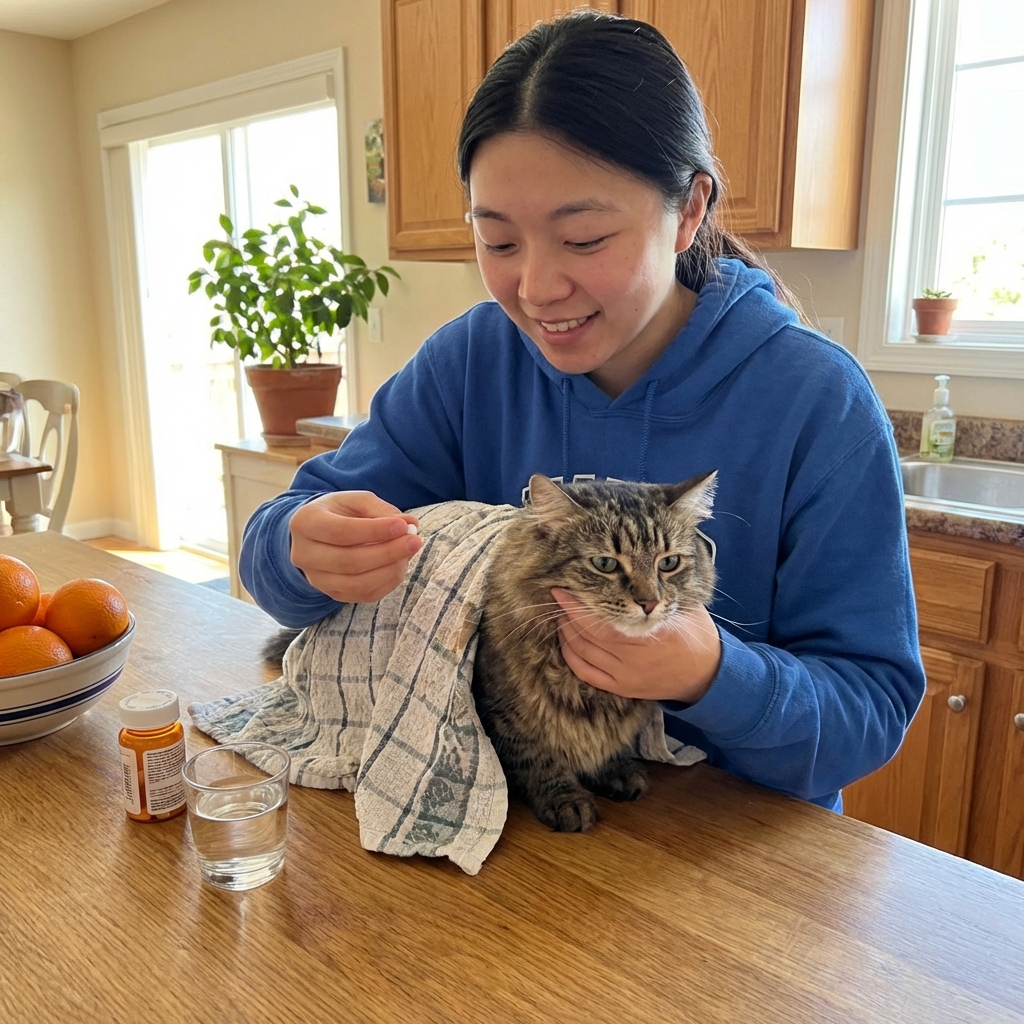
Step 1: Towel wrap
Wrap your cat in a towel like a snug burrito, leaving only the head out. This protects you and helps your cat feel contained rather than chased.
Step 2: Position
Place your cat on a non-slip surface, like a bath mat or folded towel on a counter. Keep your body close behind them so backing up is harder.
Step 3: Hold head and prep your hand
- With your non-dominant hand, hold the top of the head (thumb and fingers behind the cheekbones).
- Tilt the head back so the nose points toward the ceiling. This often makes the lower jaw drop slightly and gives you a clearer path.
- With your dominant hand, hold the pill between your thumb and index finger. Use the middle finger of that same hand to gently lower the jaw.
Step 4: Place the pill
Place the pill as far back on the tongue as you safely can, ideally behind the hump of the tongue, then close the mouth gently.
Step 5: Encourage swallowing
- Keep the mouth closed gently for a moment.
- Lower the nose back to a neutral position.
- Stroke the throat, or blow softly toward the nose, which may encourage swallowing.
Offer a treat or a small amount of wet food right after, if allowed. End on a positive note whenever possible.
Most “pill failures” happen because the pill lands too far forward. If it is in the front half of the tongue, many cats will spit it out like a pro.
Aftercare
Some cats can develop esophageal irritation if a pill sticks on the way down, especially with certain medications (doxycycline is a well-known example). When appropriate, a small “chaser” can help.
- Water chaser: About 1 to 3 mL of water for many cats, by syringe at the side of the mouth, given slowly. Stop if your cat coughs, struggles, or seems stressed.
- Food chaser: A lick of wet food or a lickable treat.
Ask your veterinarian what they recommend for your specific medication. A few drugs have particular instructions for timing with meals.
Common problems
“My cat foams and drools after the pill.”
This often happens when a pill is very bitter or was partially crushed by chewing. It looks scary but is commonly a taste reaction. Offer water, a small amount of food if allowed, and talk to your vet about a flavored compound or a different form. If drooling is severe, lasts a long time, or comes with vomiting, swelling, hives, weakness, or breathing trouble, contact your vet urgently.
“She spits it out every time.”
- Try a pill popper for deeper placement.
- Ask your vet about a pet-safe pill lubricant or gel caps to reduce taste. Avoid using random oils or human products unless your vet approves.
- Follow with a treat chaser quickly to encourage swallowing.
“The pill vanished and I am not sure it went down.”
- Check the classics: corners of the mouth, under the tongue, stuck to the lips, or “cheeked” in the side of the mouth.
- Look around: floor, towel folds, your shirt, and the counter.
- Watch for signs of a swallow: lip licking, a single swallow, and no immediate tongue-flicking or head shaking.
- Use a chaser: a lickable treat or a small sip of water (slowly, at the side of the mouth) can help confirm it went down.
- Do not automatically give another pill. If you are unsure whether it was swallowed, call your vet or pharmacist for guidance before re-dosing.
“He hides and now he is scared of me.”
This is so common. Separate “love time” from “medicine time.” Spend a few minutes before and after with calm petting, play, or treats. Some cats do best when the routine is predictable and fast, not a long chase.
“I got scratched.”
Wash the area with soap and water right away. Cat scratches can become infected. If you have swelling, redness that spreads, fever, or pain that worsens, call your doctor. For future doses, use the towel wrap and consider asking your vet for an alternative medication form.
Missed doses
If your cat misses a dose or spits one out, do not double up unless your veterinarian specifically tells you to. Many medications have specific timing rules. Call your clinic and ask what to do based on the drug, your cat’s weight, and how close you are to the next scheduled dose.
When to call your vet
Get veterinary guidance if:
- Your cat misses doses because pilling is not working. Many conditions need consistent dosing to be effective.
- Your cat vomits repeatedly or seems painful after medication.
- You suspect the pill is stuck (gagging, repeated swallowing, drooling, refusing food) or your cat is coughing after dosing.
- Your cat is very difficult to handle. Your clinic can demonstrate technique, recommend tools, or prescribe a different form.
Veterinary teams often see even “impossible to pill” cats turn into manageable cases with the right tool, the right treat, and a calm, consistent routine.
Build cooperation
If your cat needs long-term medication, practice when you are not giving a pill:
- Touch the cheeks and lift the lips briefly, then give a treat.
- Handle the towel, wrap for two seconds, then treat and release.
- Use a lickable treat during calm handling to create a positive association.
- Keep nails trimmed to reduce accidental scratches during handling.
Small steps add up. Your cat does not need to “like” pilling, but they can learn that it ends quickly and good things follow.