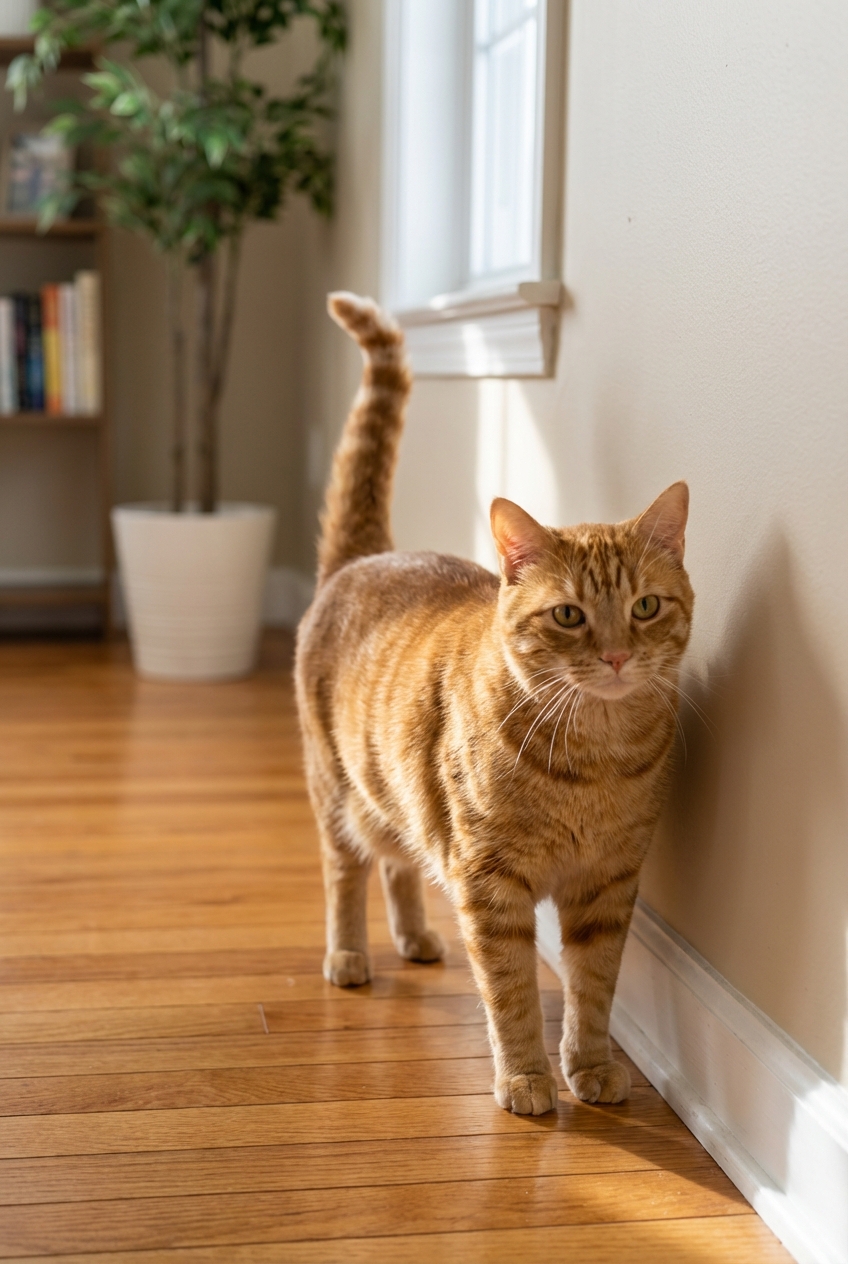
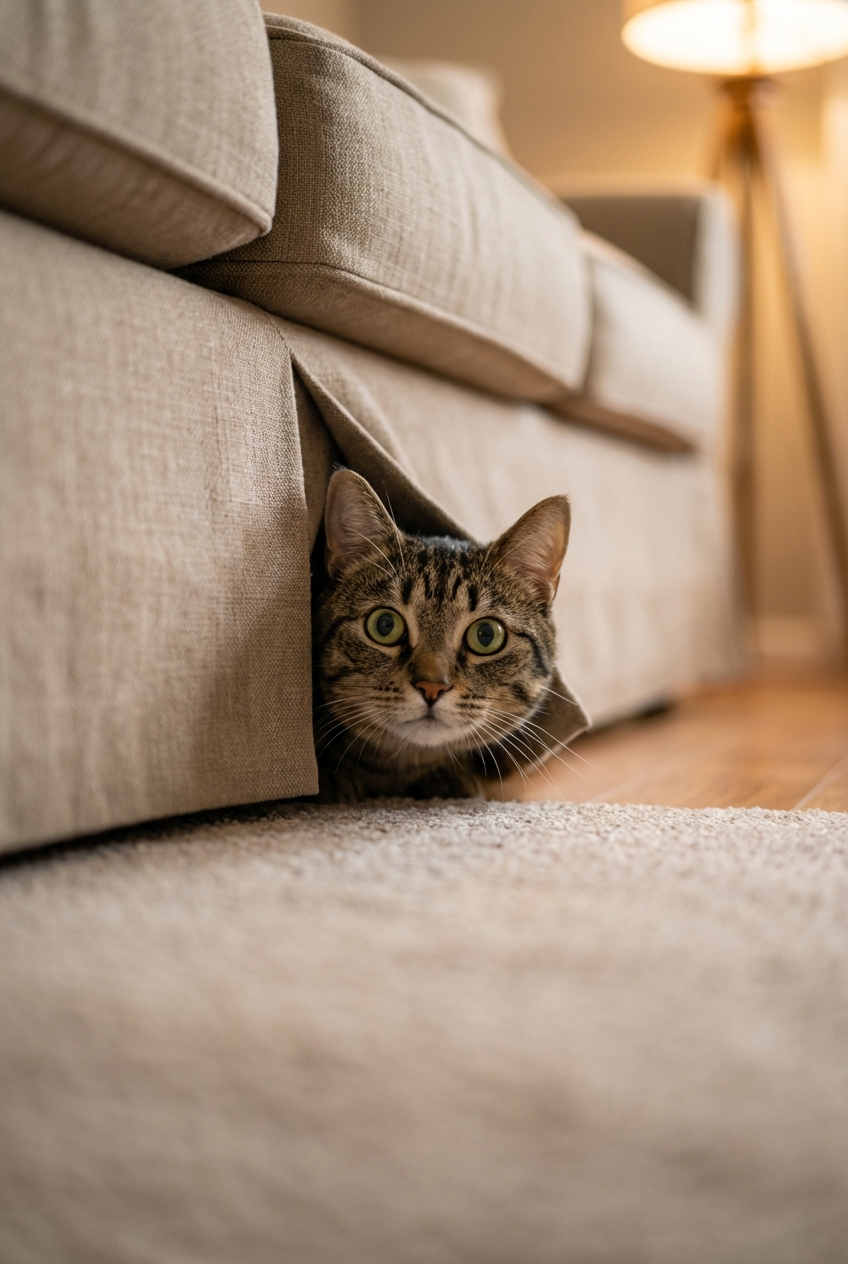
Cat spraying is usually communication, not spite. Learn how to tell spraying vs accidents, rule out medical issues, improve litter boxes, reduce stress, and ...
Article
•
Designer Mixes
How to Get a Cat to Stop Spraying

Shari Shidate
Designer Mixes contributor
Cat spraying can feel personal, but it is rarely “spite.” Cats do not typically eliminate out of revenge. In most cases, spraying is normal communication that shows up when a cat feels stressed, territorial, or physically uncomfortable. The good news is that with the right steps, most spraying can be greatly reduced or stopped.
As a veterinary assistant, I always start with two goals: rule out medical causes first, then create a home setup that helps your cat feel safe and consistent.
Quick terms: “Spraying” is a type of urine marking. People often use “marking” and “spraying” interchangeably, but spraying usually refers to the classic vertical-surface behavior.
This article is educational and not a substitute for a veterinary diagnosis.
Spraying vs peeing outside the box
These look similar, but the cause and fix can be different.
- Spraying (urine marking) is usually a small amount of urine on a vertical surface like a wall, couch side, or door. The cat often stands, tail up, and may “quiver” the tail.
- Inappropriate urination is typically a puddle on a horizontal surface like carpet, bedding, or a bath mat. This more often points to litter box issues or a medical problem.
If you are not sure which one is happening, watch for posture and location. A cheap motion camera or an old phone set up safely (out of reach) can help you catch patterns without hovering.
One more note: a strong smell is not always urine spray. Very rarely, cats can leave other odor signals (like anal gland secretions), and some urine accidents simply smell stronger than expected. If you are uncertain, your vet can help you sort it out.
Step 1: See your veterinarian first
If your cat has started spraying suddenly, is older, or is visiting the litter box more often, schedule a vet visit before you assume it is behavioral. Pain or urinary discomfort can make cats feel vulnerable, and marking can increase when they are not feeling well.
Medical issues to rule out
- Urinary tract infection: possible, but true bacterial UTIs are uncommon in otherwise healthy adult cats. They are more common in seniors and cats with conditions like kidney disease or diabetes.
- Feline idiopathic cystitis (FIC): stress-related bladder inflammation
- Urinary crystals or stones
- Kidney disease, diabetes: often increased thirst and urine volume that can contribute to house-soiling
- Hyperthyroidism: increased thirst and urine volume can contribute to accidents, especially in older cats
- Arthritis or pain: can cause litter box avoidance (for example, if the box is high-sided or in a hard-to-reach spot)
Ask your vet what testing is appropriate. Often that includes a urinalysis, and sometimes bloodwork or imaging depending on symptoms and history.
Step 2: Spay or neuter
This is one of the most effective steps you can take. Intact males are the most likely to spray, but females and neutered males can spray too. Neutering commonly reduces hormonally-driven spraying, and it tends to work best when done before sexual maturity or before the habit becomes established.
If your cat is already fixed and still spraying, you are not out of options. It just means we look harder at stress, territory, learned behavior, and litter box setup.
Step 3: Fix the litter box setup
Even when the behavior is true spraying, improving litter box comfort reduces overall stress and can lower marking frequency.
Basics that usually work
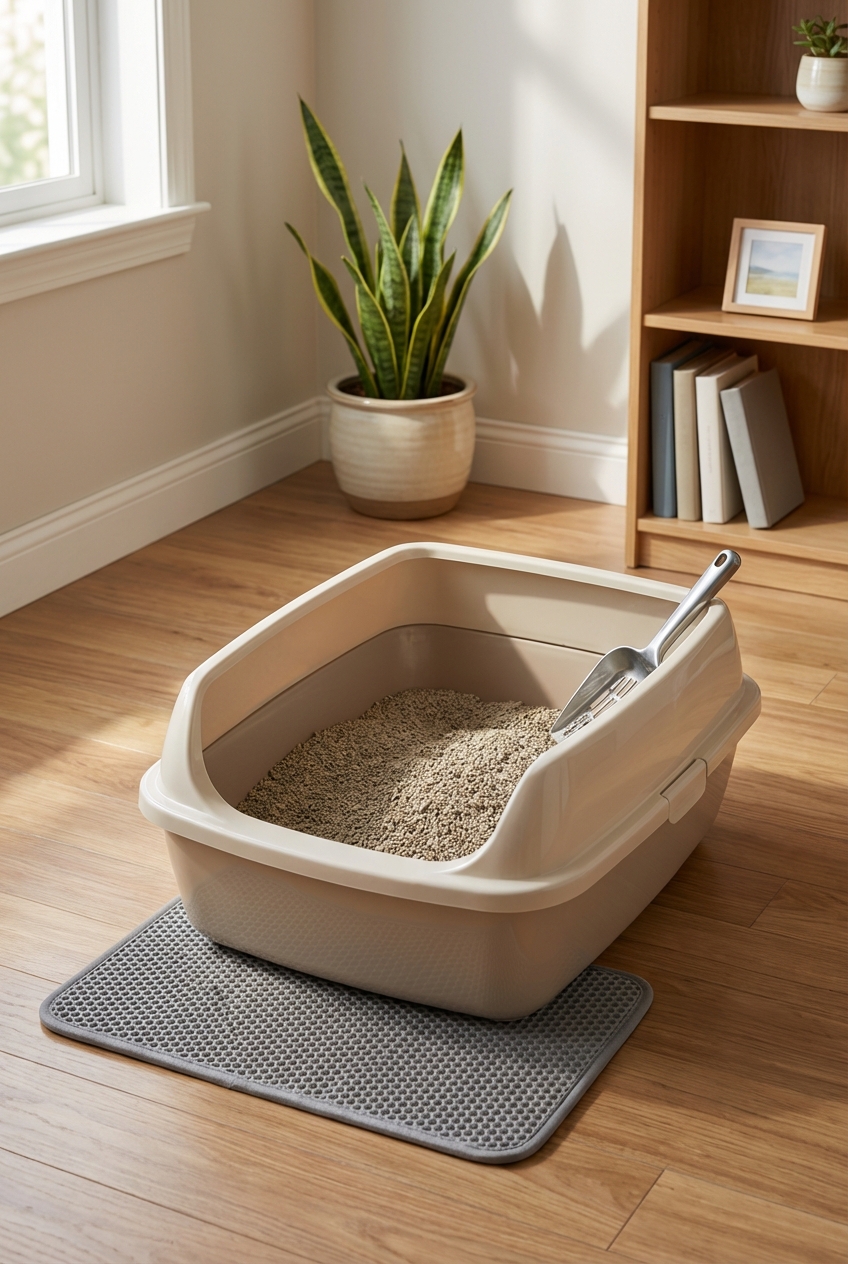
- Number of boxes: one per cat, plus one extra.
- Placement: quiet, easy-to-access spots on each level of the home. Avoid laundry rooms if the washer startles your cat.
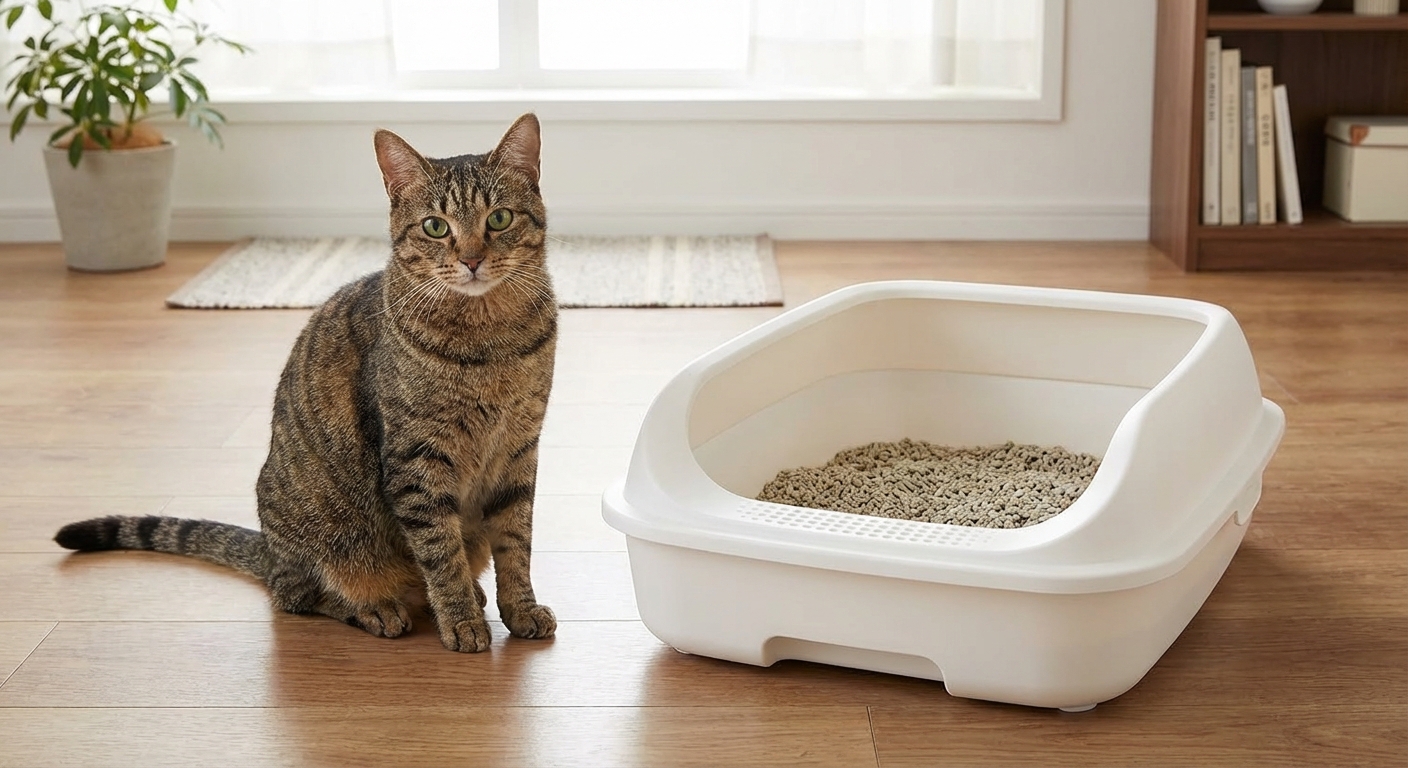
- Size: big enough for your cat to turn around comfortably. Many cats prefer large, uncovered boxes.
- Litter depth: start with about 2 to 3 inches. If your cat seems reluctant to step in, tries to perch on the edge, or flings litter aggressively, try a shallower layer and see if preference changes.
- Scooping: daily, ideally twice daily in multi-cat homes.
- Cleaning: wash boxes with mild soap and water regularly. Avoid strong fragrances.
If you recently changed litter, box style, location, or cleaning products, consider switching back temporarily. Cats love consistency.
Step 4: Reduce stress triggers
Spraying is often a cat saying, “This is my space,” or “I do not feel secure.” The trigger can be subtle, especially in sensitive cats.
Common triggers
- New cat, dog, baby, roommate, or frequent visitors
- Outdoor cats visible through windows
- Moving homes, remodeling, new furniture, or changed routines
- Conflict between cats, even quiet “staring contests” and blocking hallways
- Not enough vertical space or hiding places
Easy environment wins
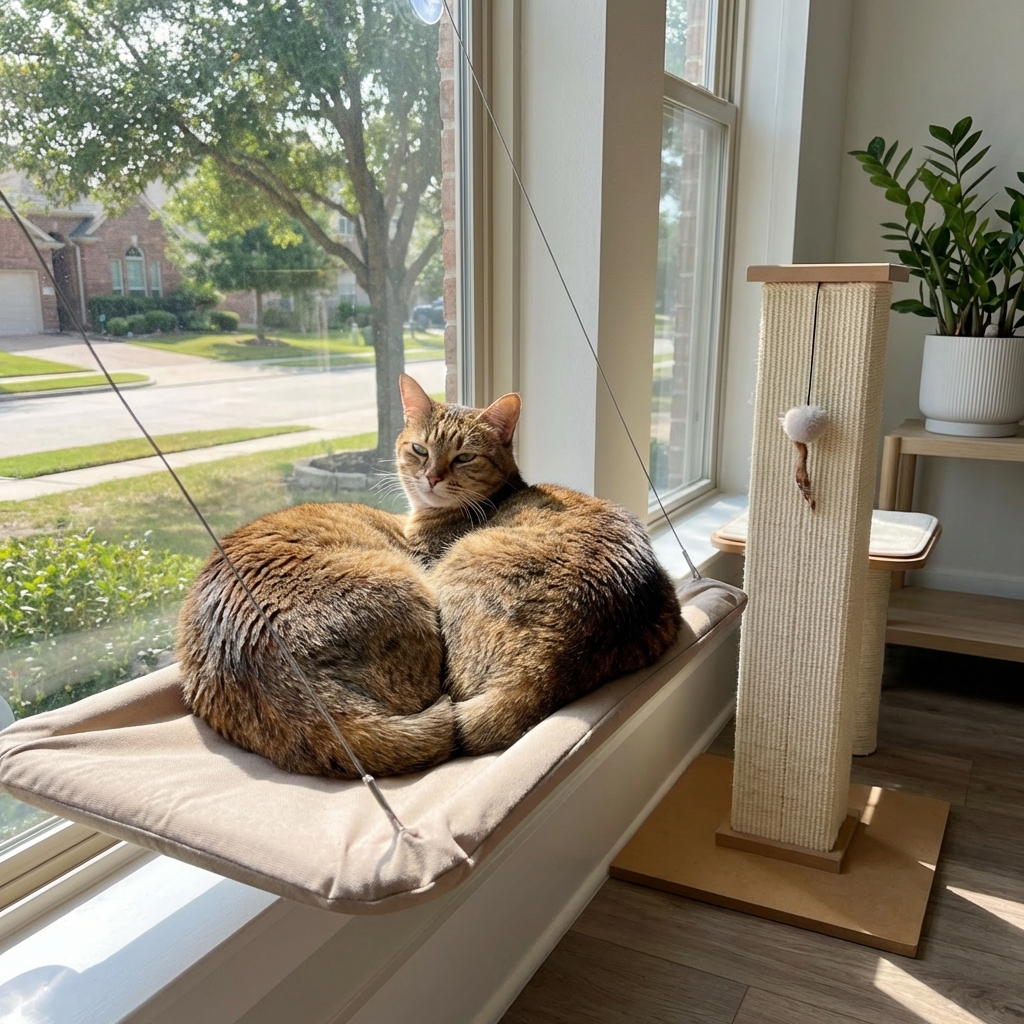
- Add vertical territory: cat trees, window perches, shelves, or a tall scratching post.
- Create safe zones: at least one quiet resting spot per cat, away from other pets.
- Increase enrichment: short daily play sessions with wand toys, food puzzles, and predictable routines.
- Block outdoor cat views: frosted window film or blinds in high-trigger areas.
In multi-cat homes, spread resources out. That means multiple feeding stations, water bowls, resting spots, and litter boxes so no one can guard them.
Multi-cat tension fixes
If spraying started after adding a new cat (or even after one cat came back from the vet smelling different), social stress is a common root cause.
Simple steps that help
- Slow introductions: separate spaces at first, then gradual, controlled visual access.
- Scent swapping: rub each cat gently with a soft cloth (cheeks and head), then place the cloth near the other cat’s resting spot. You can also rotate bedding.
- Site swapping: let cats take turns exploring each other’s areas without direct contact.
- Reduce choke points: add extra routes around tight hallways, doorways, and stairs. Even moving furniture can create more “pass-by” space.
If there is active fighting or one cat is hiding constantly, bring in your vet or a behavior professional sooner rather than later.
Step 5: Clean the right way
If any urine scent remains, your cat is more likely to return. Regular household cleaners often do not fully remove urine proteins.
- Use an enzymatic cleaner made for pet urine.
- Blot first, do not scrub (scrubbing can push urine deeper into fabric).
- Follow the product directions for soak time. Most need time to work.
- For laundry, add enzymatic products if appropriate and avoid heat drying until the smell is truly gone.
If spraying has soaked into baseboards, carpet padding, or a couch interior, you may need deeper treatment or replacement of the affected material. That is frustrating, but it can be the turning point.
Step 6: Pheromones and calming support
Pheromone diffusers or sprays can help some cats feel more secure in their environment. They are not magic, but they can be a helpful layer in your plan.
- Use diffusers in the rooms where your cat spends the most time or where spraying happens.
- Give it a few weeks to judge results, and combine with the environment and routine changes above.
Some cats also benefit from veterinarian-guided calming supplements or diets, especially if anxiety is a big driver. Always check with your vet first, particularly if your cat has medical conditions or takes medications.
In the moment: if you catch it
If you see your cat preparing to spray or actively spraying, think “interrupt, not punish.” The goal is to stop the moment and reduce the need to do it again.
- Stay calm. Do not yell or chase.
- Gently interrupt: a clap, a soft “hey,” or briefly tossing a pillow onto the floor nearby (not at your cat) can be enough.
- Redirect: lure your cat to a litter box with a treat or a toy, then reward for moving away from the spot.
- Increase distance from the trigger: close blinds, move the other pet away, or block access to the area until you can clean properly.
Step 7: When you need more help
If you have tried the basics consistently and spraying continues, it is time to escalate support. Ongoing spraying can be a sign that your cat is stuck in chronic stress, or that a learned habit has formed.
Who can help
- Your primary veterinarian
- A board-certified veterinary behaviorist (best for complex cases)
- A qualified cat behavior consultant who uses humane, evidence-based methods
In some cases, prescription anti-anxiety medication can be a humane, effective tool. This is not “sedating your cat into silence.” It can lower anxiety enough that training and home changes finally stick.
What not to do
I know how stressful spraying is, especially when it hits furniture or bedding. But punishment typically makes it worse because it increases fear and insecurity.
- Do not yell, chase, or rub your cat’s nose in it.
- Do not use ammonia-based cleaners. To some cats, the scent may read urine-like and can keep the area “interesting.”
- Do not confine your cat to a tiny area long-term as a solution unless your vet or behavior professional recommends a structured reset plan.
A simple 14-day plan
If you want a clear starting point, here is a realistic plan you can begin today.
Days 1 to 3
- Book a vet appointment.
- Start enzyme-cleaning all sprayed areas.
- Add at least one additional litter box if you are short.
- Start a simple log: date, time, location, and what was happening right before (visitor, outdoor cat at the window, another cat nearby).
Days 4 to 7
- Optimize litter box locations and scoop daily.
- Begin daily play sessions and add scratching posts.
- Identify triggers: outdoor cats, inter-cat tension, routine changes.
Days 8 to 14
- Add pheromone support if desired.
- Block outdoor-cat views where needed.
- Use your log to check progress: fewer episodes, fewer locations, or less intensity still counts as improvement.
- Follow your vet’s treatment plan if medical issues are found.
If there is no meaningful improvement after medical causes are addressed, bring in behavior support. The earlier you intervene, the easier it is to break the cycle.
When to seek urgent care
Spraying itself is usually not an emergency, but urinary problems can be. Get immediate veterinary care if you notice:
- Straining to urinate, crying, or frequent trips with little output
- Blood in urine
- Vomiting, lethargy, hiding, or not eating
- A male cat unable to pass urine (this can be life-threatening)
The bottom line
Most spraying problems improve when you address the cause instead of only treating the mess. Start with your vet, make your litter box setup easy and inviting, reduce stress triggers, and clean thoroughly with enzymes. Your cat is communicating, and with a little detective work and a lot of consistency, you can usually restore peace in your home.