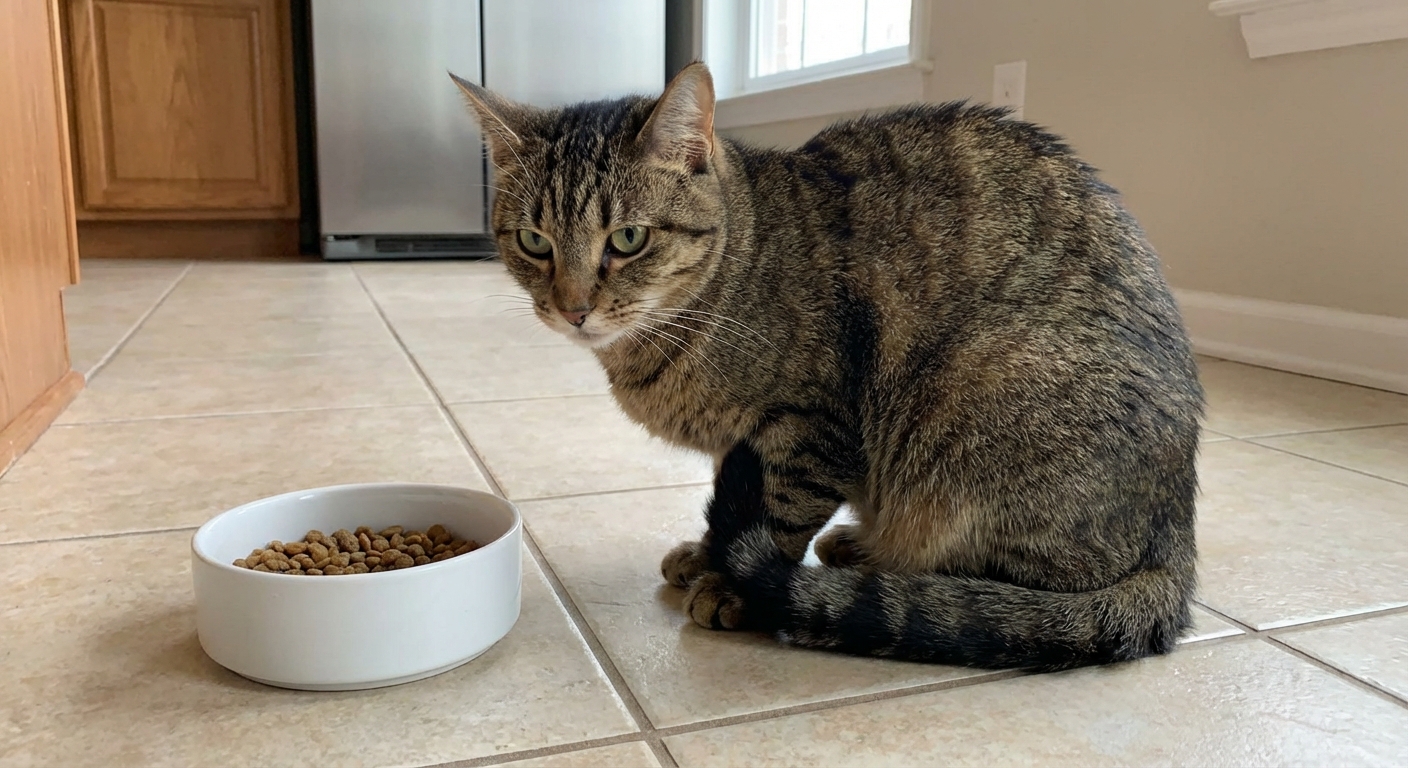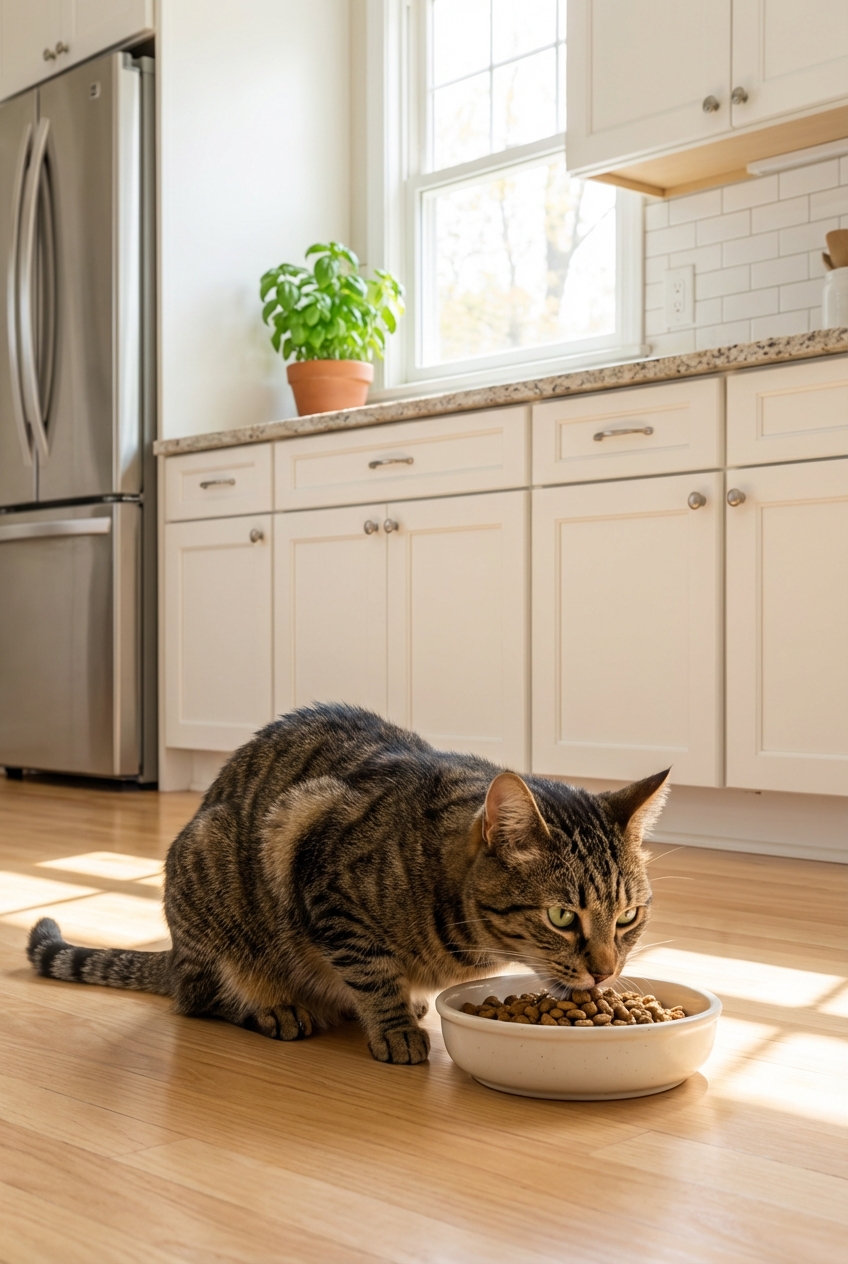
If your cat throws up right after gulping food, try these proven strategies: smaller frequent meals, slow feeders, lick mats, dish changes, and stress reduct...
Article
•
Designer Mixes
How to Get a Cat to Eat Slower

Shari Shidate
Designer Mixes contributor
If your cat eats like they are in a race, you are not imagining it. Fast eating is common, especially in multi-cat homes, cats with a history of food insecurity, or cats who simply love their meals. The good news is that most “speed-eaters” can learn to slow down with a few simple changes that support both comfort and digestion.
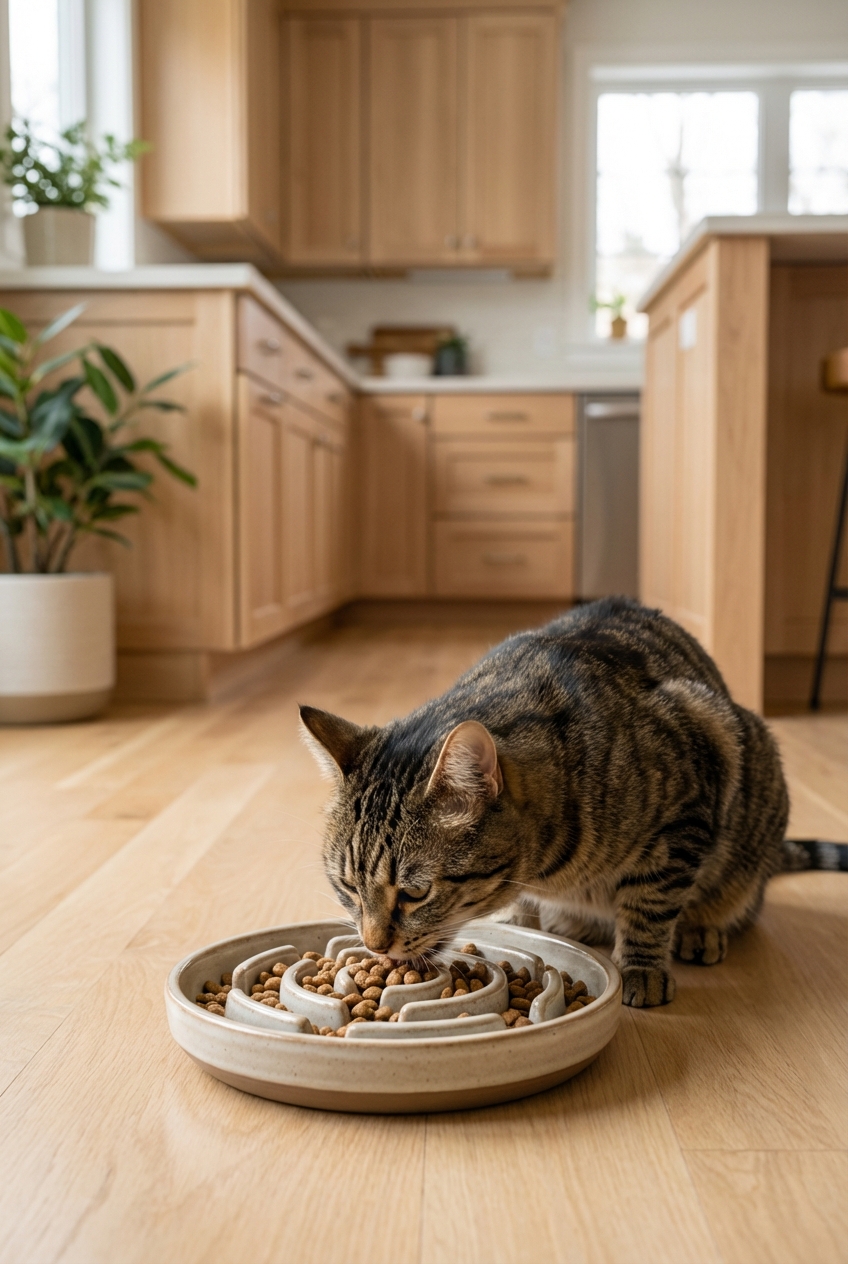
As a veterinary assistant, I see the downsides of fast eating all the time: vomiting or regurgitation right after meals, overeating too quickly (and sometimes swallowing air), begging again because satiety signals can lag behind eating, and sometimes weight gain. Let’s walk through practical, cat-friendly ways to slow meals down without turning feeding time into a daily battle.
Why cats eat too fast
Before you troubleshoot, it helps to understand the most common causes. Cats are smart, and their eating pace is often a response to their environment.
- Competition in multi-pet households, even if no one is actively “stealing” food.
- Food insecurity from a past of limited access (common in rescues and former strays).
- Meal timing that leaves them overly hungry, such as one or two large meals per day.
- Highly palatable food that is easy to gulp (some kibble shapes and soft foods).
- Anxiety or conflict around the feeding area (for example, another cat watching, blocking, or ambushing after meals).
- Medical issues that increase appetite, such as hyperthyroidism, diabetes, intestinal parasites, or some medications like steroids.
- Mouth pain (dental disease or oral inflammation) that makes chewing uncomfortable, so some cats swallow pieces quickly.
If your cat suddenly starts inhaling food, loses weight despite eating well, drinks more than usual, seems ravenous all the time, or acts uncomfortable when chewing, schedule a veterinary checkup. Sudden appetite changes deserve a medical look.
Is fast eating a problem?
Sometimes fast eating is just a quirky habit. But it can become a health issue when it causes:
- Vomiting after meals (often from eating too much too fast and stomach overdistension, and sometimes from swallowing air).
- Regurgitation (food comes up quickly and looks tubular, often with little effort).
- Weight gain from overeating or constant hunger cues.
- Stress and guarding around the food bowl, especially with other pets nearby.
Even when vomiting seems tied to eating speed, frequent vomiting or regurgitation can irritate the esophagus and can also be a sign of gastrointestinal disease. If it is happening often or your cat seems unwell, bring it up with your veterinarian.
Smaller meals, more often
If your cat is getting one or two big meals, try splitting the same daily amount into more feedings. Many cats do well with 3 to 4 smaller meals, and some households can manage up to 5 or 6.
- If you are home: offer smaller portions at set times.
- If you are away: consider a timed automatic feeder (especially helpful for early-morning begging).
Smaller meals can reduce urgency, help prevent “overloading” the stomach, and may improve nausea in cats prone to scarf-and-barf.
Slow feeders for cats
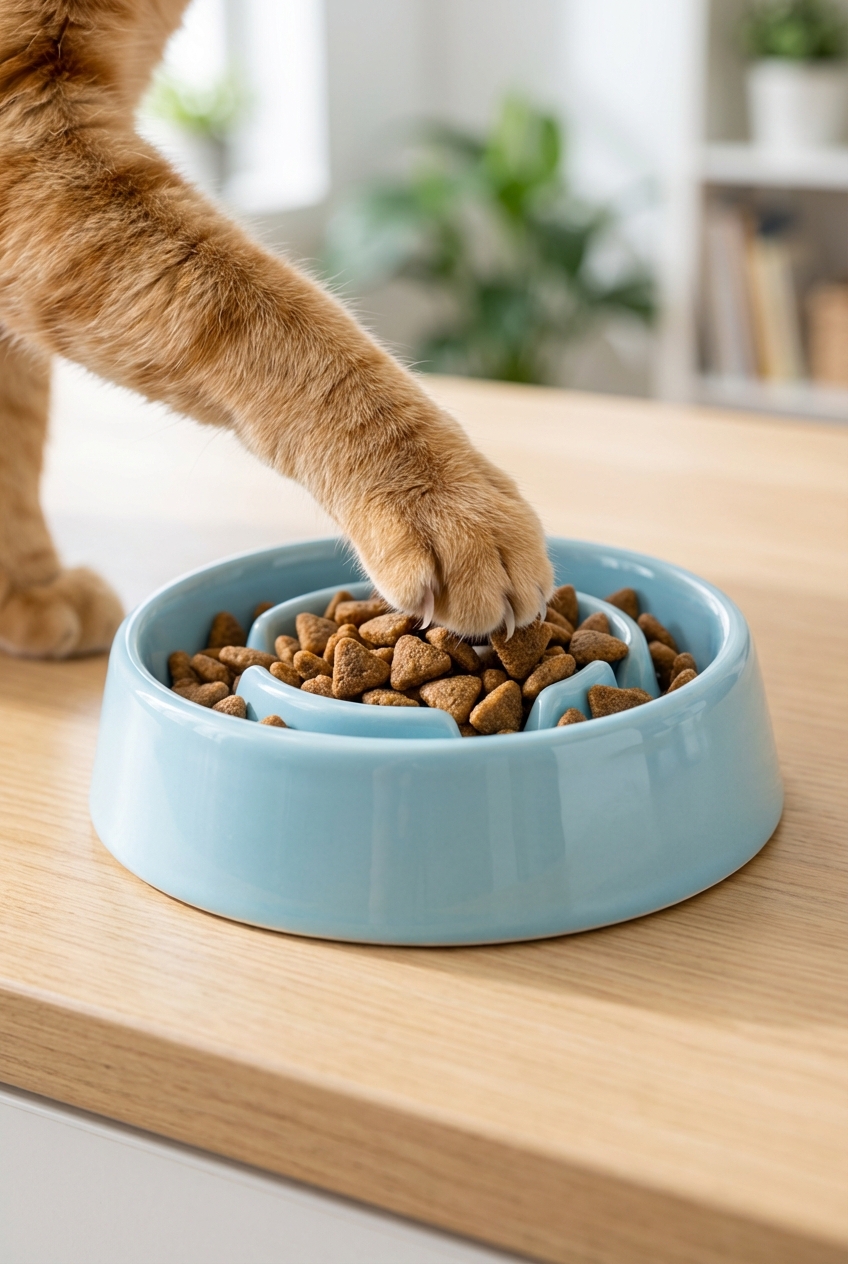
Many slow feeders are designed for dogs and can frustrate cats. The goal is gentle pacing, not making meals feel impossible.
What to look for
- Shallow and wide, since some cats seem sensitive to deep or narrow bowls. A wider, lower-profile dish can make eating more comfortable.
- Wide base and stable so it does not tip or slide.
- Easy to clean (dishwasher-safe is a plus).
- Appropriate difficulty so your cat stays engaged and does not give up.
Safety note
Supervise at first. Make sure the design does not snag claws, pinch paws, or frustrate your cat to the point of food refusal. If your cat walks away repeatedly or seems stressed, switch to an easier option.
Helpful tip
If your cat is new to slow feeding, start by using it for part of the meal, or choose a simpler design and increase difficulty gradually.
Puzzle and hunt feeding
For many cats, fast eating is not just hunger, it is boredom plus easy access. Puzzle feeding channels natural hunting behavior, slows intake, and provides enrichment.
Easy options
- Treat balls or puzzle cubes for kibble or dry treats.
- Station feeding: place small piles of kibble in multiple locations so your cat has to walk between them.
- Snuffle mats made for cats (low profile, easy to clean).
Start simple. You want your cat to succeed quickly, then work up to more challenging puzzles as they learn.
Portion control tip: puzzles still count as meals. Measure the day’s portion first, then put that measured amount into the puzzle feeders so you do not accidentally overfeed.
Slow down wet food
Wet food can disappear in seconds for some cats. Here are gentle ways to slow it down without reducing the joy of eating.
- Spread it thin on a large plate so it takes longer to lick up.
- Use a lick mat designed for pets (choose one with shallow texture for cats).
- Feed in layers: offer a few spoonfuls, pause for 1 to 2 minutes, then offer the rest.
- Add a small amount of warm water to increase volume and slow licking (only if your cat still eats it happily).
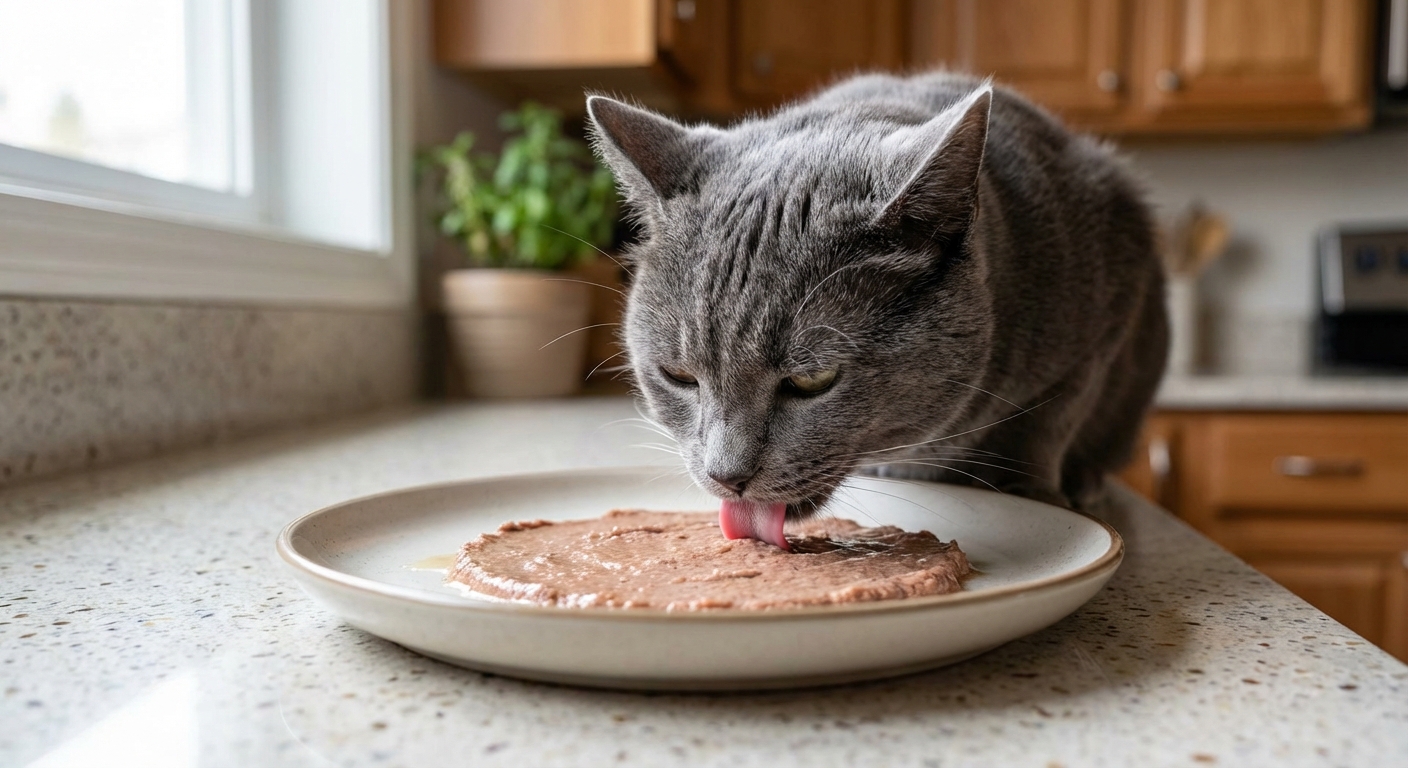
If your cat vomits after wet meals, slowing the pace often helps, but talk with your veterinarian if it is frequent to rule out nausea, food sensitivity, oral pain, or GI disease.
Calm feeding setup
Stress can make cats eat faster. If there are loud noises, kids running by, or another pet hovering, your cat may rush.
What helps
- Separate feeding stations for each pet, ideally in different rooms.
- Quiet location away from litter boxes and heavy foot traffic.
- Consistent routine so your cat trusts that food will arrive.
In multi-cat homes, this is one of the most important changes. Many speed eaters slow down naturally when they do not feel watched, challenged, or pressured.
Automatic feeders
Automatic feeders are not just for convenience. For some cats, they are a powerful behavior tool.
- Timed feeders can deliver small meals throughout the day and night.
- Microchip feeders help in multi-cat homes by preventing food stealing and reducing mealtime anxiety.
If your cat is on prescription food or needs portion control, these feeders can help you stay consistent.
How fast is too fast?
You are not trying to turn your cat into a slow, dainty eater overnight. Many owners aim to move a meal from 30 to 60 seconds to something closer to 5 to 15 minutes, depending on the cat, food type, and feeding method.
Watch for these signs you are on the right track:
- Less vomiting or regurgitation after meals
- Less frantic behavior around the bowl
- Better satisfaction between meals
- More relaxed body language while eating
When to call the vet
Fast eating can be behavioral, but it can also be your cat’s way of telling you something is off. Make an appointment if you notice:
- Sudden increase in appetite or speed eating
- Weight loss despite eating well
- Vomiting more than occasionally, blood in vomit, or repeated retching
- Diarrhea, constipation, or changes in stool quality
- Increased thirst or urination
- Signs of pain when eating (drooling, pawing at the mouth, chewing on one side)
A quick exam and basic lab work can rule out common issues and give you peace of mind.
7-day slow-down plan
If you want a simple starting point, try this gentle one-week approach:
- Days 1 to 2: Split the daily amount into 3 to 4 smaller meals.
- Days 3 to 4: Add a shallow, wide slow feeder for dry food, or spread wet food thin on a plate.
- Days 5 to 6: Introduce one easy puzzle feeder session per day (supervise at first).
- Day 7: Evaluate vomiting, hunger cues, and stress level. Adjust difficulty so your cat stays confident.
Go slowly and keep it positive. When cats feel secure, they eat with more ease.