Learn how often to feed clownfish, how much to give in 30–60 seconds, the best pellets and frozen foods, plus a simple weekly schedule and water-quality tips.
Article
•
Designer Mixes
How to Feed Fish While You’re on Vacation

Shari Shidate
Designer Mixes contributor
Leaving town should not mean gambling with your fish’s health. The best “vacation feeding” plan is usually the simplest one: keep the routine steady, avoid overfeeding, and protect water quality. In aquariums, dirty water often harms fish faster than a missed meal, so your goal is to prevent food from rotting in the tank while you are gone.
Below is practical, evidence-based guidance I share with pet families all the time, adapted for fish keepers. You have options, and you can choose the safest one based on how long you will be away and how reliable your setup is.
Start With the #1 Rule: Do Not Overfeed
Most vacation fish problems come from one issue: too much food. Excess food breaks down into ammonia, which can spike quickly and stress or even kill fish. Even if your filter normally keeps up, a sudden increase in waste can overwhelm it.
A helpful mindset shift is this: fish can usually handle less food for a short time, but they often cannot handle bad water.
- If you are unsure, feed less, not more.
- Do a “trial run” before your trip so you are not experimenting on departure day.
- Remove uneaten food within about 5 to 10 minutes, or once feeding activity slows and food remains, so you learn the correct portion for your fish.
How Long Can Fish Go Without Food?
This depends on species, age, temperature, tank maturity, and overall health, but general guidelines can help you plan.
- 1 to 3 days: Most healthy adult community fish do fine with no feeding at all. For very short trips, it is usually safest to feed normally before you leave and again when you return, rather than adding blocks or an untested feeder.
- 4 to 7 days: Many healthy adult freshwater fish can often go up to a week without food, and that can be safer than using an untested feeder or a well-meaning helper. If you have fry, juveniles, thin-bodied species, heavy stocking, or special diets, plan a controlled feeding method.
- Over a week: Plan for a tested automatic feeder or a trained fish sitter. Consider reducing feeding frequency rather than increasing portions.
Extra caution: Fry, juvenile fish, some thin-bodied species, and fish with special diets (including many marine fish) generally need more consistent feeding.
Best Options for Vacation Feeding
What is “safest” depends on trip length and how well you have tested your plan. Use the options below as a menu, then choose the simplest setup you can trust.
Option 1: Use an automatic feeder (tested)
For many freshwater community tanks, a quality automatic feeder that you have tested is a consistent choice, especially for trips longer than a few days. It also reduces the biggest risk with human helpers: “love feeding” too much.
- Test it for at least 5 to 7 days before your trip.
- Use dry food that dispenses reliably (small pellets often work better than large flakes).
- Set it to one small feeding per day or even every other day for adult fish.
- Place the feeder away from air stones and humid openings where condensation rises, so food is less likely to clump or jam.
- Secure the feeder so it cannot shift, and install fresh batteries (or confirm stable power) before you go.
- During your trial run, confirm the portion stays consistent, even as the food level drops in the reservoir.
Option 2: Use a fish sitter (make it foolproof)
If a neighbor or friend is feeding, your job is to make “the right thing” the easiest thing.
- Pre-portion food into a pill organizer or small labeled cups for each feeding day.
- Write a one-page instruction sheet with: how much, which days, and what to do if fish do not eat.
- Add a clear rule: “If you are unsure, skip feeding that day.”
- Add another clear rule: Do not feed if an automatic feeder is already scheduled to feed.
- Ask them to send a quick photo of the tank every visit so you can spot issues early.
Option 3: Skip feeding entirely (short trips)
For many established freshwater tanks, skipping food can be the lowest-risk option for short trips, because it avoids the biggest danger: excess waste and water quality issues.
- Do not “fatten them up.” That often just increases waste.
- Instead, keep the week before travel steady with modest meals and clean water.
- This is generally best for healthy adult fish, not for fry, juveniles, or fish with strict feeding needs.
Option 4: Vacation feeder blocks (use with caution)
Those dissolving “feeding blocks” can work in a pinch, but they are not my first choice. Some can cloud water or change water chemistry, and fish may ignore them depending on the formula.
- Only use a feeding block if you have tested the exact product in your tank first.
- Do not combine blocks with an automatic feeder or a fish sitter feeding schedule.
- Be extra cautious in small tanks, where water parameters can swing faster and waste concentrates more quickly.
Vacation Prep Checklist
Think of this as setting your tank up for stability.
- Do a partial water change (often 20% to 30%) and vacuum debris if your tank needs it.
- Top off water to the normal level (use dechlorinated water for freshwater tanks).
- Check temperature and verify the heater is working reliably.
- Confirm filter flow is normal. Do not do a major filter overhaul right before leaving.
- Set lights on a timer to prevent algae blooms and keep a day-night rhythm.
- Secure lids and check for evaporation risk, especially in warm, dry homes.
Plan for Power and Equipment Issues
Most tanks do not fail because you missed a feeding. They fail when something stops working and nobody notices.
- If outages are common where you live, consider a battery backup air pump or backup power for critical equipment.
- If you have a sitter, show them how to do a quick visual check: water moving, filter running, heater behaving normally.
- Optional but helpful: a smart plug or temperature alert so you can catch issues early.
If You Have a Fish Sitter
When someone is helping, clarity is kindness. Here is what I recommend leaving on the counter.
What to feed
- Use only the food you provide.
- Feed only the pre-measured amount.
- If an automatic feeder is running, do not add extra food.
When to feed
- Choose specific days and times.
- For many tanks, every other day is plenty while you are gone.
What not to do
- No extra treats.
- No “they look hungry” second feeding.
- No new equipment, no new fish, no cleaning projects.
Quick emergency steps
- If the filter stops: check that it is plugged in, unplug and replug once, and confirm water is moving. If it does not restart, text or call you immediately.
- If fish are gasping or water is cloudy: do not feed. Contact you right away.
What to watch for
- Fish gasping at the surface.
- Cloudy water.
- Filter not running.
- Heater light off when it should be on.
If any of those happen, have them contact you immediately.
Special Situations
Betta fish
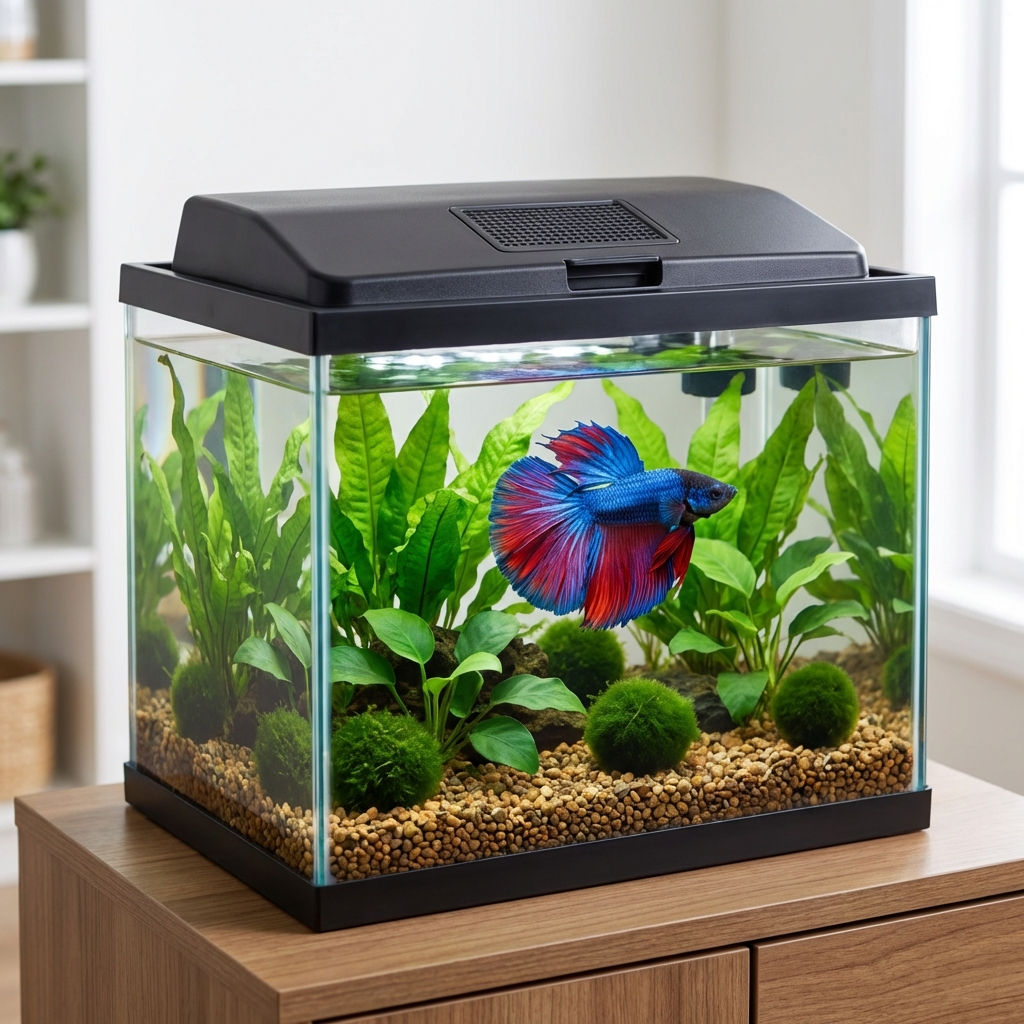
Bettas are often kept in smaller tanks where water parameters can swing quickly. A tiny overfeed can cause a big problem. Consider an automatic feeder set to very small portions, or have a sitter feed every other day with pre-portioned meals.
Goldfish
Goldfish are messy and produce a lot of waste. Their tanks benefit from stable filtration and avoiding excess food. A tested automatic feeder with small pellet portions is often safer than a helper who might overfeed.
Reef and saltwater tanks
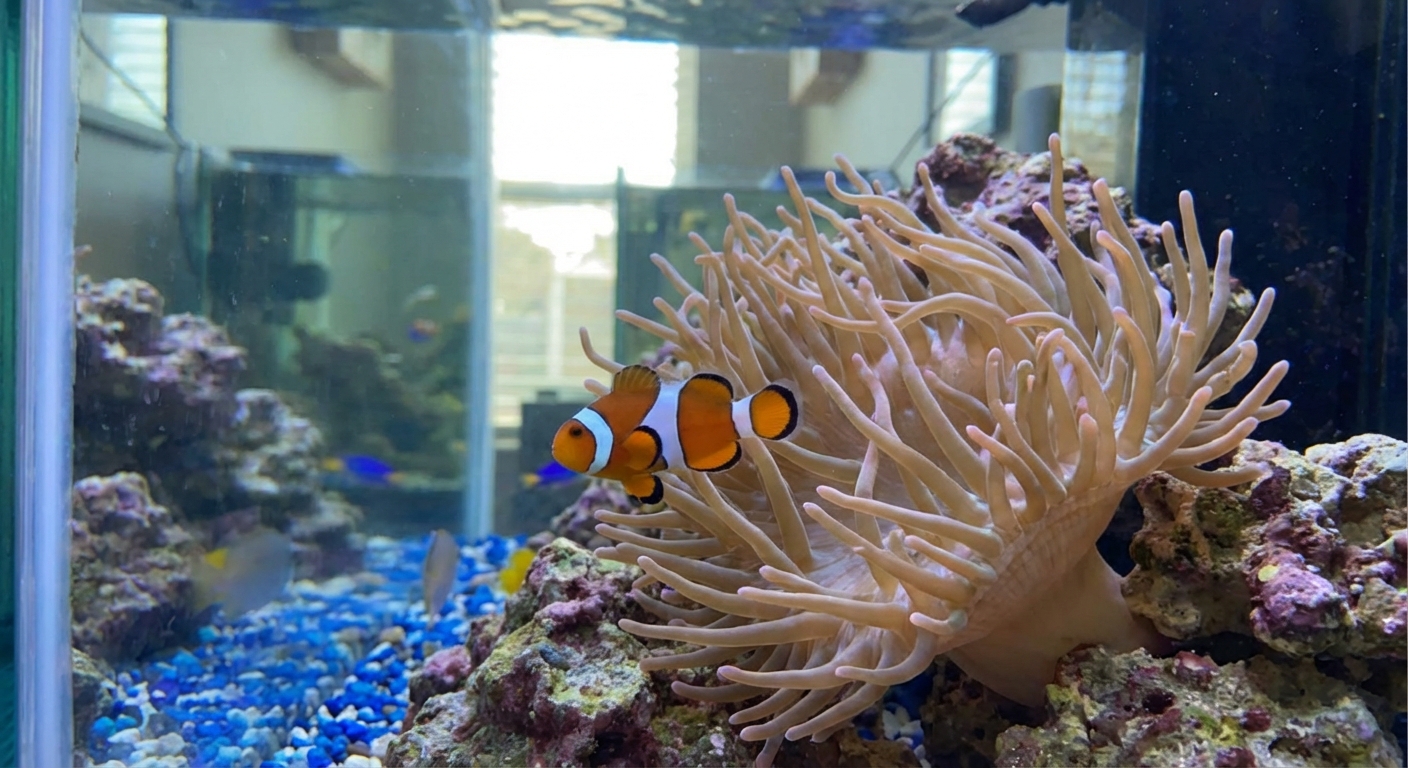
Saltwater systems can be less forgiving if parameters shift. For many reef tanks, top-off and salinity stability are the biggest vacation risks, sometimes even more than feeding.
- Consider an auto top-off (ATO) system if appropriate for your setup, and test it well before you travel.
- Leave pre-measured RO/DI top-off water for your sitter, with clear instructions.
- If you have a reef tank, ask a trusted experienced hobbyist to check in, especially for top-off needs, salinity, and equipment monitoring.
When You Get Home
Resist the urge to throw in a big meal as a “welcome back.” Instead:
- Feed a normal small portion.
- Check temperature, filter flow, and fish behavior.
- Test water if you can (ammonia, nitrite, nitrate).
- Do a partial water change if water is cloudy, fish seem stressed, or tests are off.
Quick Takeaway
If you remember one thing, let it be this: skipping a meal is often safer than risking an overfeed. Plan for consistency, protect water quality, and test your setup before you leave.