A practical, evidence-based kitten feeding guide from a veterinary assistant: choose kitten food, set age-based meal schedules, portion by calories, transiti...
Article
•
Designer Mixes
How to Feed a Kitten

Shari Shidate
Designer Mixes contributor
Bringing home a kitten is pure joy, and it also comes with one big question: Am I feeding them correctly? As a veterinary assistant, I can tell you this with confidence: kittens are not just small cats. They are growing fast, building bones, organs, and an immune system, which means their nutrition needs are unique.
This guide walks you through the basics, the common mistakes I see, and simple routines that help kittens thrive. (General guidance helps most kittens, but individual needs can vary. When in doubt, your veterinarian is the best source for a personalized plan.)
Kittens have different nutritional needs
Kittens need more calories and more specific nutrients than adult cats. Their bodies are building muscle, brain tissue, and strong bones at a rapid pace.
- Protein: Essential for growth and healthy muscle development.
- Fat: A concentrated energy source that supports brain and eye development.
- Calcium and phosphorus: Crucial for bones and teeth, and they must be in the right balance.
- Taurine: An essential amino acid for heart health, vision, and normal development.
- Water: Hydration matters, especially if your kitten eats mostly dry food.
Practical rule: Choose a food labeled complete and balanced for growth (kittens) or all life stages (often suitable for kittens too). On many labels you may see AAFCO or FEDIAF wording that references “growth” or “growth and reproduction.” If the label only says “maintenance,” it is meant for adult cats, not kittens.
Milestone to know: Most kittens are weaned between about 4 and 8 weeks. Once fully weaned, they should stay on a kitten or growth-appropriate diet until around 12 months (sometimes longer for certain large breeds, depending on your vet’s advice).
Best foods for kittens
Wet food
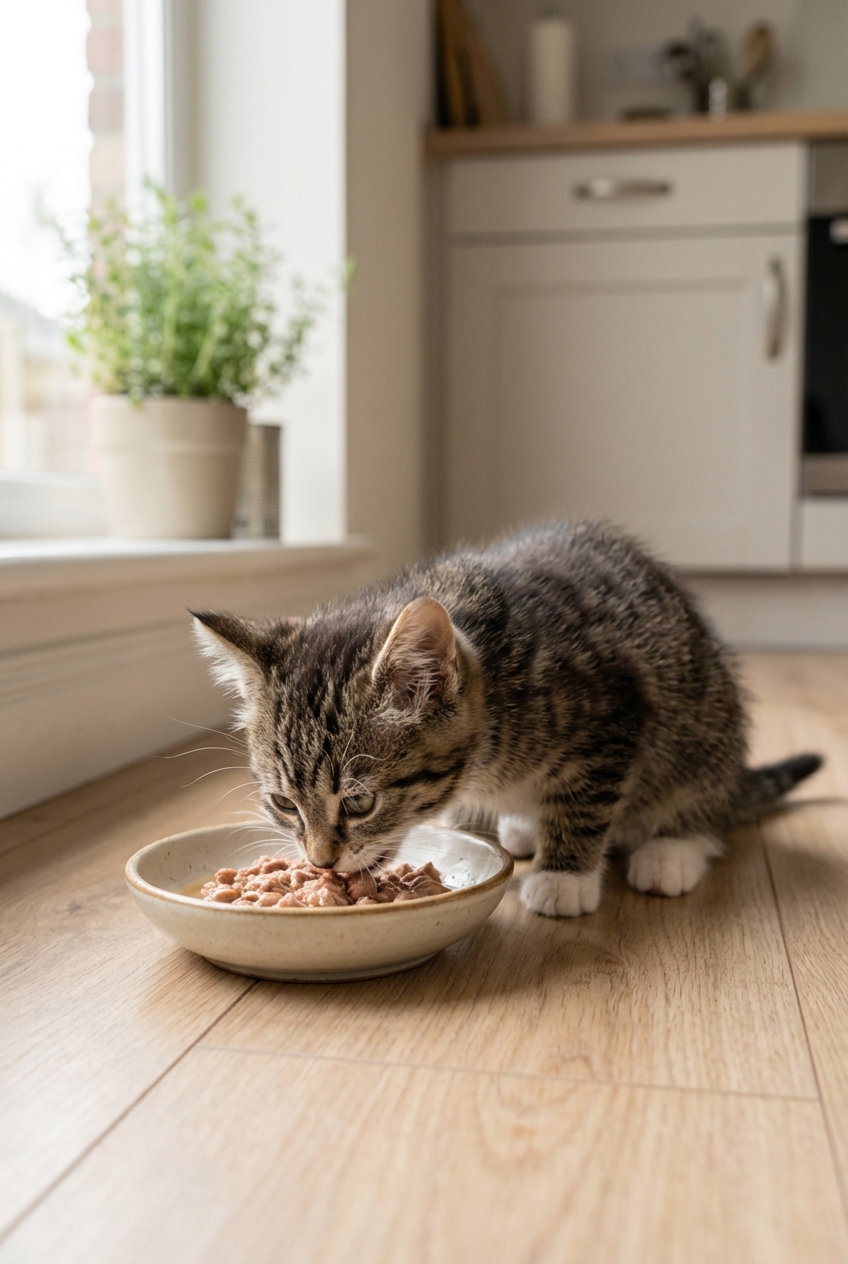
Wet food is often a great foundation for kittens because it is easy to chew, highly palatable, and helps with hydration.
- Helpful for kittens that do not drink much water yet.
- Often easier to portion into multiple meals.
- Can be warmed slightly to boost aroma if your kitten is picky.
Dry food
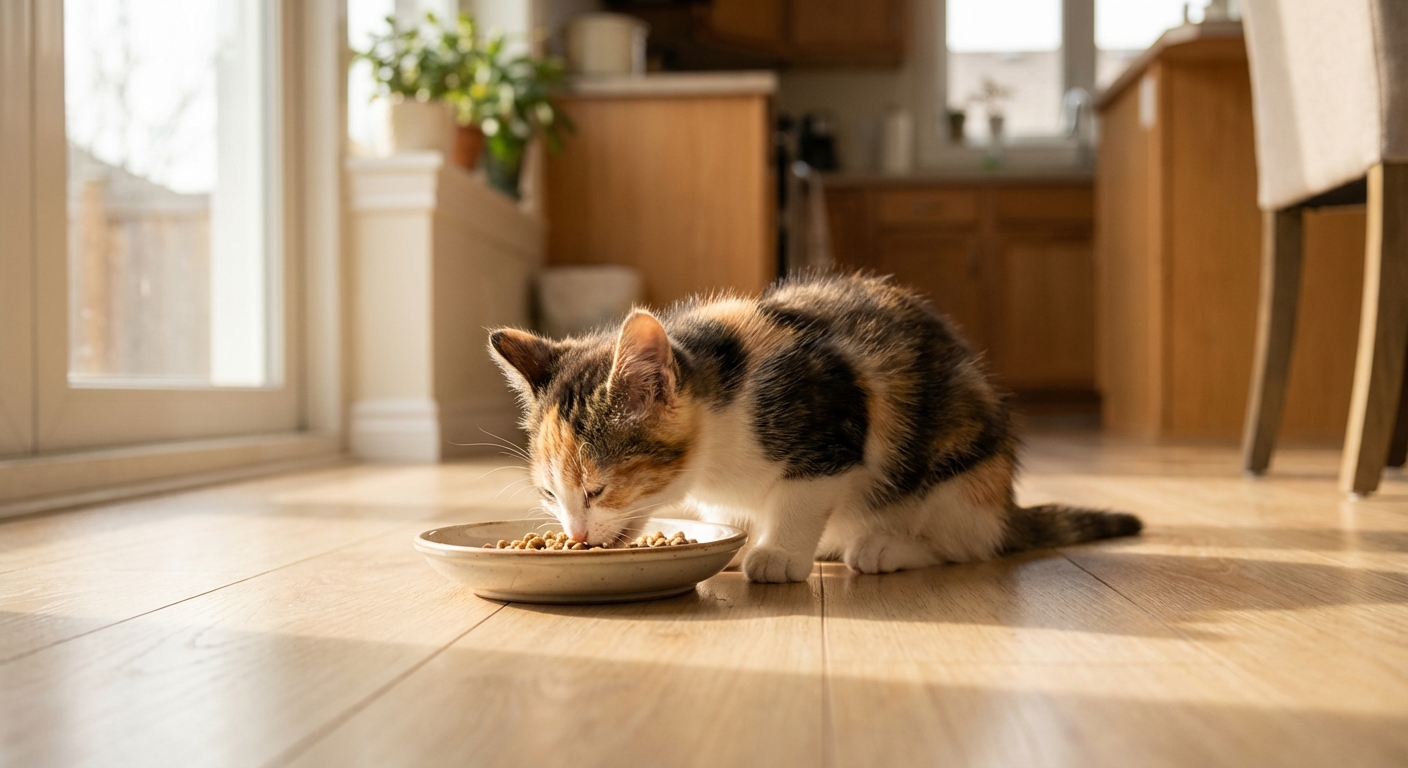
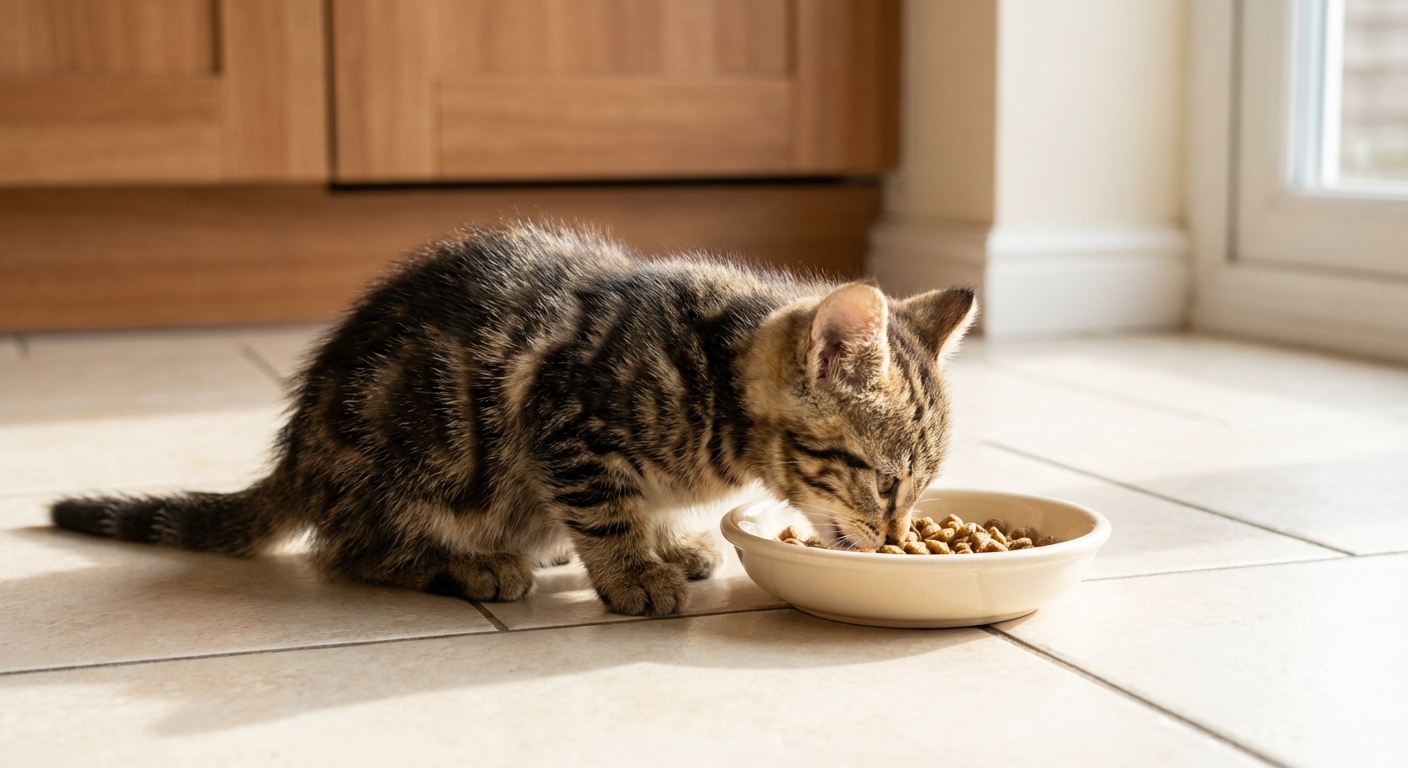
Dry food can be convenient and budget-friendly, and many kittens do well with it.
- Works well for free-choice feeding in some homes. (Free-choice means leaving kibble out all day.)
- Encourages nibbling behavior, but can contribute to overeating in some cats.
A simple, kitten-friendly combo
Many veterinarians recommend a mix: wet meals on a schedule plus a measured amount of dry if your kitten tolerates it well.
How much to feed a kitten
The most accurate answer is the one that matches your kitten’s age, current weight, body condition, and the calorie density of the specific food.
Start here:
- Use the feeding guide on the label as a starting point, not a forever rule.
- Split the daily amount into several small meals.
- Adjust every 1 to 2 weeks based on growth and body condition.
Meal frequency by age
- 8 to 12 weeks: 4 meals per day
- 3 to 6 months: 3 to 4 meals per day
- 6 to 12 months: 2 to 3 meals per day
If your kitten acts hungry all the time, it does not automatically mean they need more food. It can mean they need more frequent meals, a higher-calorie kitten formula, or a vet check to rule out parasites.
Quick body condition check
At a healthy growth pace, you should be able to feel your kitten’s ribs with gentle pressure but not see sharply protruding ribs, and you should see a waist when looking down from above. If you are unsure, ask your veterinarian to show you how to assess body condition in person.
Feeding schedule that works
Kittens thrive on routine. A predictable schedule supports digestion, litter box consistency, and good behavior.
Example schedule
- Morning: Wet food meal
- Midday: Wet food meal or a measured portion of dry
- Evening: Wet food meal
- Before bed (for young kittens): Small wet food meal
Tip from the clinic: If your kitten wakes you up at 4 a.m. for food, try adding a slightly larger final meal, and keep mornings consistent. Rewarding early wake-ups with food often trains the behavior.
How to transition foods safely
Sudden food changes can commonly cause diarrhea in kittens. Their digestive systems are still maturing.
Slow transition plan
- Days 1 to 3: 25% new food, 75% old food
- Days 4 to 6: 50% new food, 50% old food
- Days 7 to 9: 75% new food, 25% old food
- Day 10+: 100% new food
If your kitten develops vomiting, significant diarrhea, or stops eating, pause the transition and contact your veterinarian.
Water and hydration tips
Hydration supports urinary tract health and overall wellness. Some kittens drink plenty, others barely touch their bowl.
- Try a wide, shallow water dish, which may help some cats that are sensitive about their whiskers.
- Place water away from the litter box and away from food if your kitten seems hesitant.
- Consider a cat water fountain if your kitten is drawn to running water.
- If feeding mostly dry food, add at least one wet meal daily for extra moisture.
Treats and what to avoid
Treats are fine, but think of them as fun extras, not nutrition. Keep treats to under 10% of total daily calories.
Safer treat ideas
- Small kitten treats designed for growth
- Tiny bites of their regular wet food
- Freeze-dried single-ingredient treats (check size and supervise)
Foods to avoid
- Cow’s milk: many kittens get diarrhea from lactose.
- Raw diets for kittens: higher risk for bacteria and nutrient imbalance unless formulated and handled with extreme care.
- Onion, garlic, chives: toxic to cats.
- Grapes and raisins: toxicity in cats is less clearly defined than in dogs, but there are concerning reports, so it is safest to avoid.
- Cooked bones: splinter risk.
- Dog food: not formulated for feline taurine needs.
Food safety and storage
Good food hygiene matters, especially for kittens.
- Opened wet food: Cover and refrigerate leftovers promptly.
- Time out: Discard wet food that has been sitting out for more than 1 to 2 hours (sooner in warm rooms).
- Clean bowls daily: Wash food and water bowls with hot, soapy water to reduce bacteria buildup.
- Fresh water: Refill daily, and wash the bowl regularly.
Signs your kitten is eating well
Here is what I like to see in a healthy, well-fed kitten:
- Steady weight gain and growth
- Bright eyes, clean ears, and a glossy coat
- Playful energy with good rest cycles
- Normal stools that are formed, not watery
- Good appetite without frantic behavior
If you are unsure, ask your veterinarian to show you how to assess body condition. It is one of the simplest ways to make sure you are feeding the right amount.
When to call the vet
Kittens can go from “a little off” to truly ill quickly. Contact your veterinarian promptly if you notice:
- Not eating for more than 12 to 24 hours (and call sooner for very young kittens, especially under 12 weeks, or if there are other symptoms)
- Repeated vomiting or diarrhea
- Bloated belly, poor growth, or pot-bellied appearance (possible parasites)
- Lethargy, weakness, or hiding more than usual
- Difficulty chewing or drooling while eating
And if you are adopting a kitten who was orphaned or bottle-fed, it is worth getting individualized feeding guidance since those little ones have special timing and formula needs.
The bottom line
Feeding a kitten well is not about perfection. It is about choosing a complete kitten diet, offering small frequent meals, keeping an eye on growth, and adjusting as your kitten changes week by week.
If you want the most personalized plan, bring the exact brand you are feeding to your first vet appointment. We can calculate calories, review ingredients, and make sure your kitten is set up for a healthy first year.