Scooting, licking, fishy odor? Learn what anal glands do, common behavior signs, how to try safe external expression at home, prevention tips, and urgent red...
Article
•
Designer Mixes
How to Express a Dog’s Anal Glands

Shari Shidate
Designer Mixes contributor
As a veterinary assistant here in Frisco, Texas, I can tell you this topic is more common than most pet parents realize. Anal gland issues can look like scooting, licking, a fishy odor, or sudden discomfort around the rear end. The good news is that many dogs never need help, and when they do, you have options ranging from simple diet changes to a quick visit with your vet or groomer.
Before we jump into any step-by-step instructions, here is the most important truth: expressing anal glands at home is not the right choice for every dog. If your dog is painful, swollen, bleeding, or has a wound, skip the DIY and get veterinary care. Anal gland infections and abscesses can worsen quickly.
Quick note: This article is for educational purposes and is not a substitute for veterinary diagnosis or treatment. If you are unsure what you are seeing, it is always safer to start with a vet exam.
What anal glands do
Dogs have two small scent glands (anal sacs) located just inside the anus, roughly at the 4 o’clock and 8 o’clock positions. They often release a small amount of fluid during a firm bowel movement, but some dogs do not fully empty them every time. The sacs can also release when a dog is stressed, startled, or very excited.
Problems happen when the sacs do not empty well. Common contributors include:
- Soft stool that does not provide enough pressure to naturally empty the sacs
- Allergies (environmental or food) that cause inflammation around the area
- Obesity, which can change anatomy and reduce natural emptying
- Chronic skin issues or recurring infections
- Individual anatomy, especially in some small breeds and mixes
Signs your dog may need help
These signs can mean full or irritated anal glands, but they can also be caused by parasites, skin infections, rectal irritation, or pain from the spine or hips. If you are unsure, a vet exam is the safest first step.
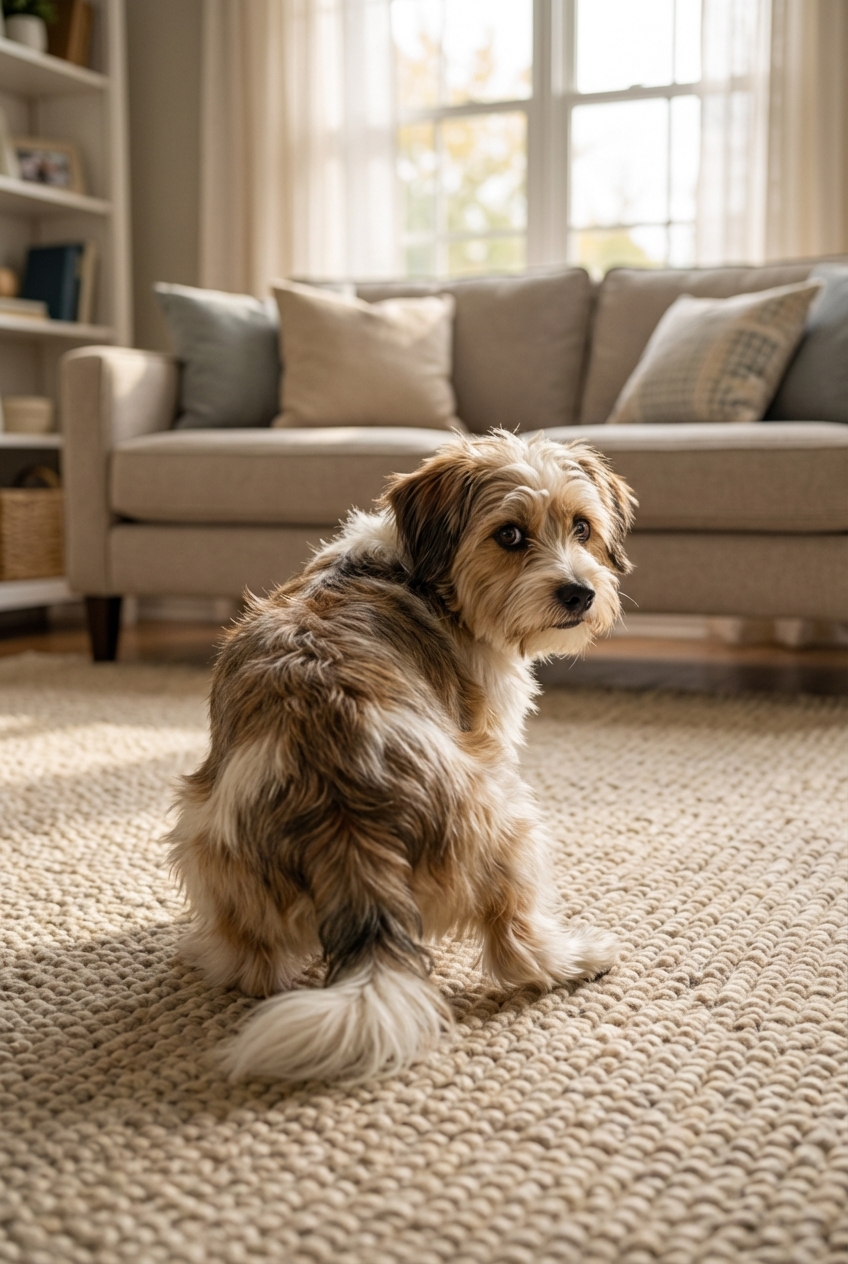
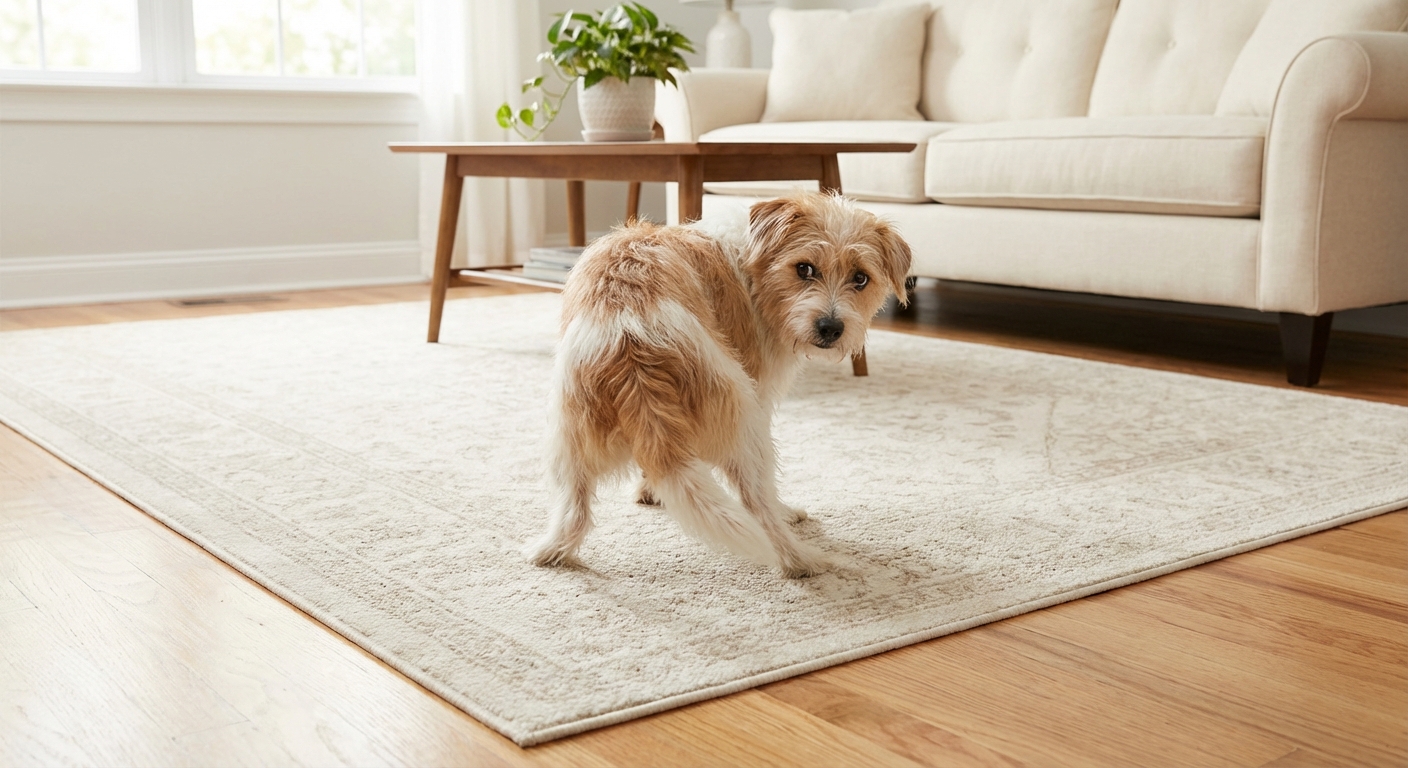
- Scooting on carpet or grass
- Excessive licking or chewing at the rear
- Fishy or metallic odor
- Sudden sitting discomfort, especially on hard surfaces
- Swelling near the anus, redness, or discharge
Go to the vet urgently if you notice swelling on one side, a hot painful lump, blood, pus-like discharge, fever, lethargy, or your dog cries when sitting. Those are red flags for infection or abscess.
Should you do this at home?
If you are considering DIY expression, ask yourself these quick questions:
- Has your dog had anal gland impactions before and your vet confirmed that is the issue?
- Is your dog calm enough to be handled safely?
- Is there no swelling, bleeding, open skin, or extreme pain?
- Do you have a safe way to prevent bites or sudden twisting, including a helper if needed?
- Are you prepared for a strong odor and a messy process?
If the answer is no to any of these, I recommend having your veterinarian or a trained groomer handle it. Many groomers do external expression only, and in some dogs that is not enough. Also, policies and what is allowed can vary by location and local regulations. Veterinary teams can check for infection and prescribe treatment if needed.
Supplies to gather
Set yourself up before you bring your dog into the space. This reduces stress for both of you.
- Disposable gloves
- Paper towels or gauze
- Pet-safe wipes
- Warm water and mild soap for cleanup
- A plastic bag for waste
- An assistant to gently hold your dog, if possible
- An old towel or washable blanket
- Optional: eye protection and a mask if you are sensitive to odors or splatter
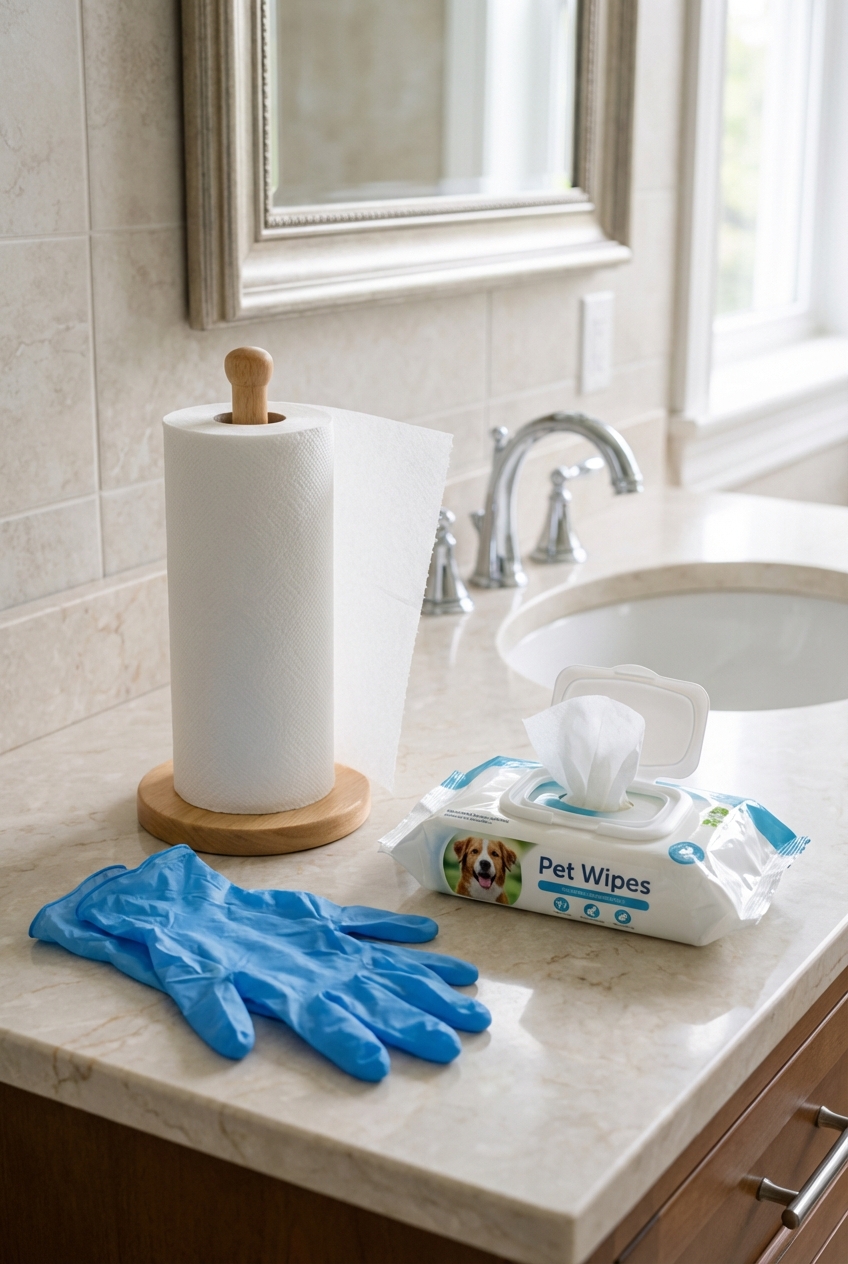
Location tip: A bathtub, walk-in shower, or easy-to-clean laundry area is usually the least stressful place to do this. The smell can linger in carpet and upholstery.
Step-by-step: external method
This is the method most commonly attempted at home because you do not insert a finger. It can work for mild fullness, but it is not effective for every dog.
1) Keep your dog steady
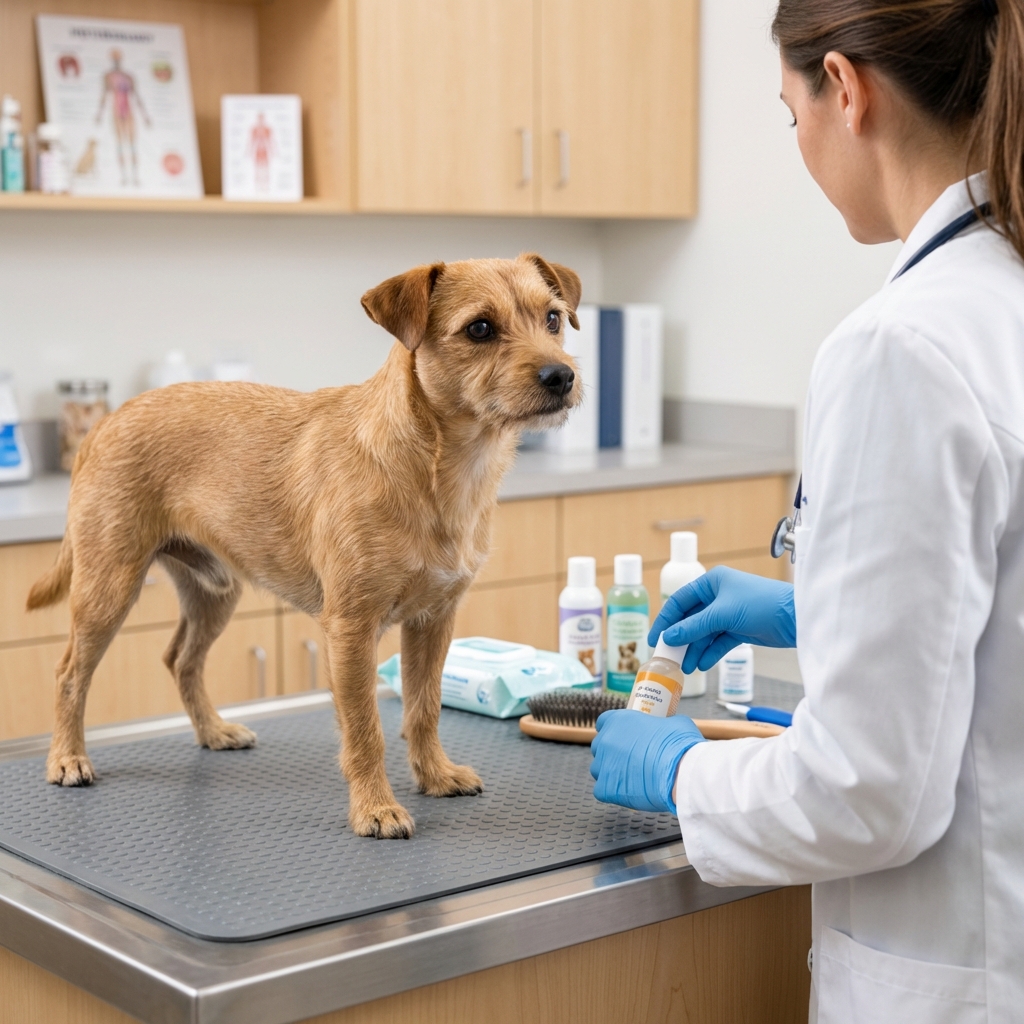
Have your helper hold your dog standing. For small dogs, a nonslip mat on a counter can help. Speak gently and keep everything slow. If your dog is panicking, growling, or snapping, stop. No anal gland issue is worth a bite.
2) Lift the tail and find the sacs
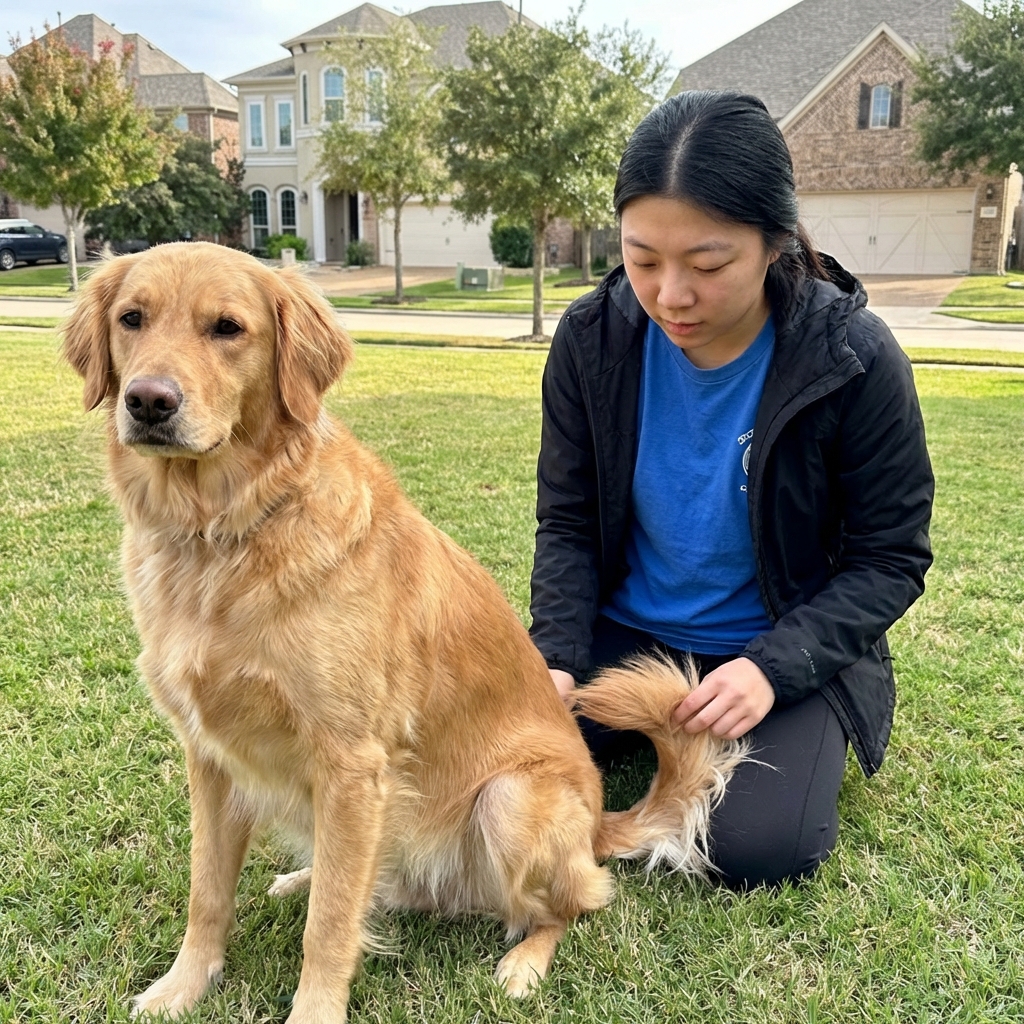
With a gloved hand, lift the tail upward. Imagine the anus as a clock face. The sacs sit around 4 and 8 o’clock, just under the skin.
3) Use a paper towel barrier
Hold a folded paper towel over the anus area. This helps catch fluid and reduces splash. Trust me, you want this.
4) Apply gentle pressure
Place your thumb and forefinger on either side of the anus at the 4 and 8 o’clock positions. Apply gentle, steady pressure inward toward the center and slightly upward. Think of compressing a small grape under the skin, not pinching.
5) Watch the fluid, then stop
Anal sac fluid is often tan to brown and can be watery or thicker, with a strong fishy odor. A small amount is common.
Stop and call your vet if you see blood, a lot of gray or yellow-green fluid, chunky material, pus-like discharge, or if the odor is suddenly overwhelming and your dog seems painful. Those can be signs of infection or an abscess.
If you get a small amount and then nothing else comes out, stop. Over-squeezing can bruise the tissue.
6) Clean and reward
Wipe the area with pet-safe wipes, wash your hands, and reward your dog with calm praise and/or a treat. If your dog seems sore afterward, call your vet for guidance.
What you should not notice on external touch: a hard marble-like lump, significant heat, obvious one-sided swelling, or intense pain. Also, some dogs will not have much you can feel externally even when the sacs are full. If you are unsure, do not keep squeezing. Let your vet check.
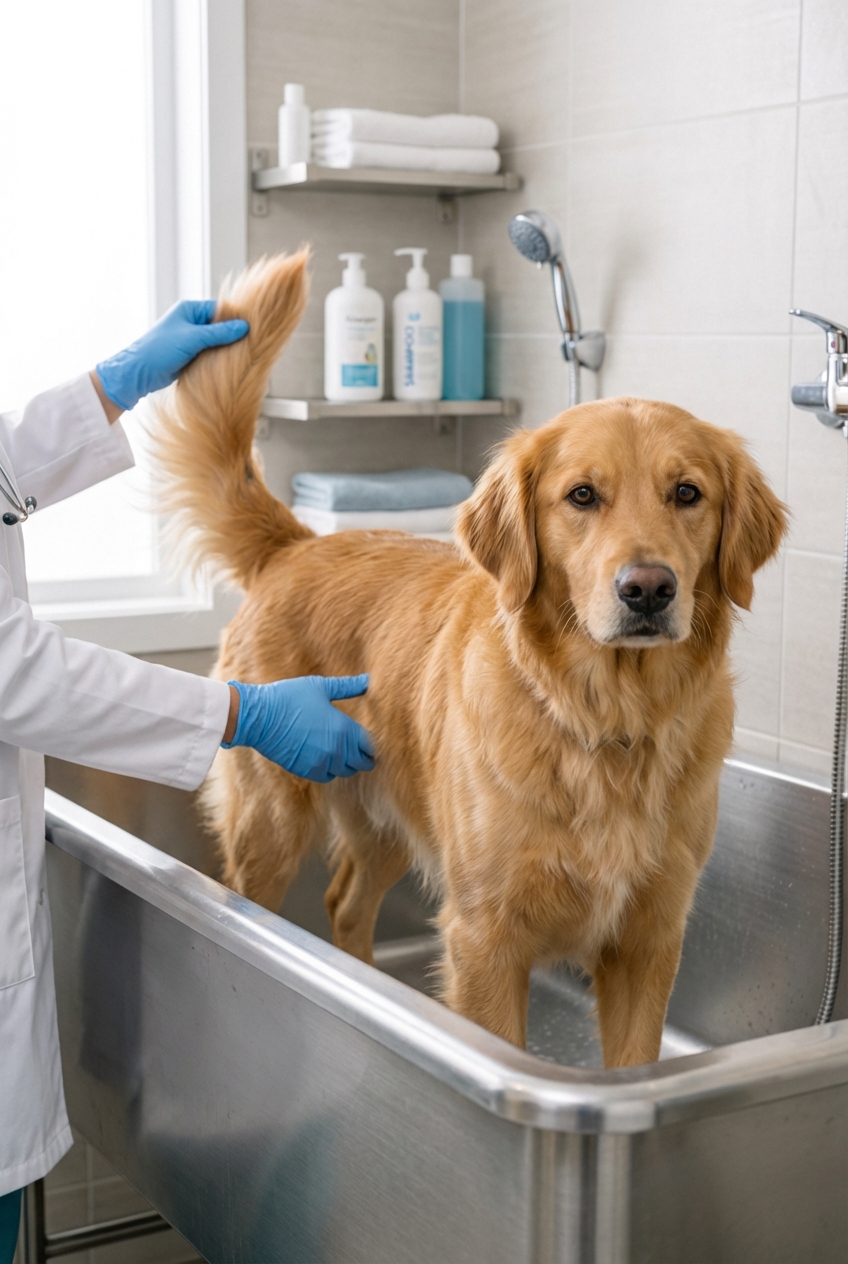
If you see blood, pus, or your dog yelps, stop and contact your veterinarian. Pain is a sign something more than simple fullness may be happening.
Aftercare and monitoring
A little extra licking for a short time can be normal after expression. What I want you to watch for over the next 24 to 48 hours is whether your dog actually seems more comfortable.
- Usually OK: brief licking, mild odor that improves after cleanup, acting normal otherwise
- Call your vet: continued scooting, ongoing licking that does not stop, new redness, swelling, discharge, a painful reaction when sitting, or symptoms that return quickly
Why I avoid internal DIY
Internal expression involves inserting a finger into the rectum to milk the sac from the inside. It can be more effective, but it also carries more risk of pain, injury, and spreading infection if a gland is inflamed. In a clinic, we can assess whether the sac is impacted, infected, or rupturing, and we can do this with better restraint and proper medical follow-up.
If your dog truly needs internal expression regularly, that is a sign to talk with your veterinarian about underlying causes and a long-term plan.
When it is not anal glands
Scooting and licking can come from several issues, including:
- Fleas or skin allergies
- Tapeworm segments or other parasites
- Diarrhea or constipation
- Perianal dermatitis (skin infection)
- Rectal polyps or masses
- Orthopedic pain that makes sitting uncomfortable
If symptoms are recurring, it is worth a vet visit to confirm the cause rather than repeatedly expressing the glands.
Prevention
In my experience, prevention makes a bigger difference than perfect technique. Many dogs improve when we focus on consistent stool quality and inflammation control.
Support firm stools
- Gradual fiber changes can help some dogs. Plain canned pumpkin (not pie filling) is often used, but dosage should be guided by your vet because too much fiber can backfire.
- Hydration matters. Encourage water intake, add moisture to meals if needed, and address chronic diarrhea with your veterinarian.
- Probiotics may help some dogs with stool consistency. Choose a product formulated for pets.
Address allergies
- If your dog is itchy, has recurrent ear infections, or chews paws, talk with your vet about allergy management. Reducing inflammation can reduce anal gland flare-ups.
- Keep the rear end clean and dry, especially for dogs with long hair.
Healthy weight
- Maintaining a lean body condition can improve natural emptying and overall comfort.
FAQ
How often should glands be expressed?
Some dogs never need it. Others may need help every few months. If your dog needs expression monthly or more, or if symptoms keep returning, it is a sign to look for an underlying issue like chronic soft stools or allergies.
Is a fishy smell always anal glands?
Not always, but it is a classic clue. Skin infections and yeast can also cause odor. If odor is persistent, a vet exam is the best next step.
Can expressing too often cause problems?
Yes. Repeated unnecessary expression can irritate tissue, cause inflammation, and potentially make the glands less likely to empty naturally.
Bottom line
Anal gland care is one of those unglamorous parts of dog parenting, but you are not alone. If your dog has mild, occasional signs, external expression may help. If your dog is painful, swollen, bleeding, has pus-like discharge, or the problem keeps coming back, your veterinarian can check for impaction, infection, abscess, or other causes and set up a plan that actually solves the root issue.
If you want, tell me your dog’s breed mix, age, and symptoms, and I can help you think through whether this sounds like anal glands or something else that needs a vet visit.