Help your indoor cat thrive in a small apartment with smart enrichment: vertical routes, window perches, puzzle feeders, prey-style play, scratch zones, quie...
Article
•
Designer Mixes
How to Entertain a Bored Cat

Shari Shidate
Designer Mixes contributor
Boredom in cats is more than a minor behavior issue. In my work as a veterinary assistant here in Frisco, Texas, I have seen how an under-stimulated cat can slide into stress, weight gain, destructive scratching, nighttime restlessness, and even stress-related urinary flare-ups in susceptible cats. The good news is that most indoor cats do not need expensive gadgets or constant attention. They need the right mix of hunting-style play, climbing, problem-solving, and predictable daily routines.
This vet-informed guide reflects common feline behavior recommendations used in many veterinary clinics. It will help you spot boredom, choose safe enrichment, and build a simple plan you can actually stick with.
Is your cat bored or something else?
Cats are masters at hiding discomfort, so it is smart to do a quick check before assuming it is boredom. If a behavior is new, intense, or getting worse, consider a vet visit, especially for cats that are senior, overweight, or have a history of urinary or gastrointestinal problems.
Common boredom signs
- Excessive meowing, especially at night
- Rough play, ankle ambushing, or biting for attention
- Overgrooming or sudden interest in chewing non-food items
- Destructive scratching outside of normal scratching areas
- Daily “zoomies” without a clear outlet
- Begging for food shortly after eating, scavenging, counter surfing
- Sleeping all day, then becoming restless when you are trying to sleep
Red flags that need veterinary attention
- Straining to urinate, frequent trips to the litter box, blood in urine, crying in the box
- Vomiting, diarrhea, constipation, or sudden appetite changes
- Hiding, aggression when touched, limping, or notable weight loss
- Sudden litter box accidents after being consistent
Safety note: Male cats that cannot pass urine can become blocked, and that is an emergency. If you see repeated straining with little or no urine, seek care right away.
Use the hunt cycle
Veterinarians and feline behavior pros often recommend modeling enrichment around a cat’s natural rhythm: hunt, catch, eat, groom, sleep. Indoor life can break that pattern, so we recreate it on purpose.
- Hunt: stalking and chasing
- Catch: pouncing, grabbing, bunny-kicking a toy
- Eat: a meal or a few treats after play
- Groom: self-soothing behavior
- Sleep: deep rest after the job is done
When you support that cycle, many “bored” behaviors calm down naturally because your cat finally feels like their day makes sense.
Play that works
Before you buy more toys, focus on two basics: short, structured play with you and safe options for when you are busy.
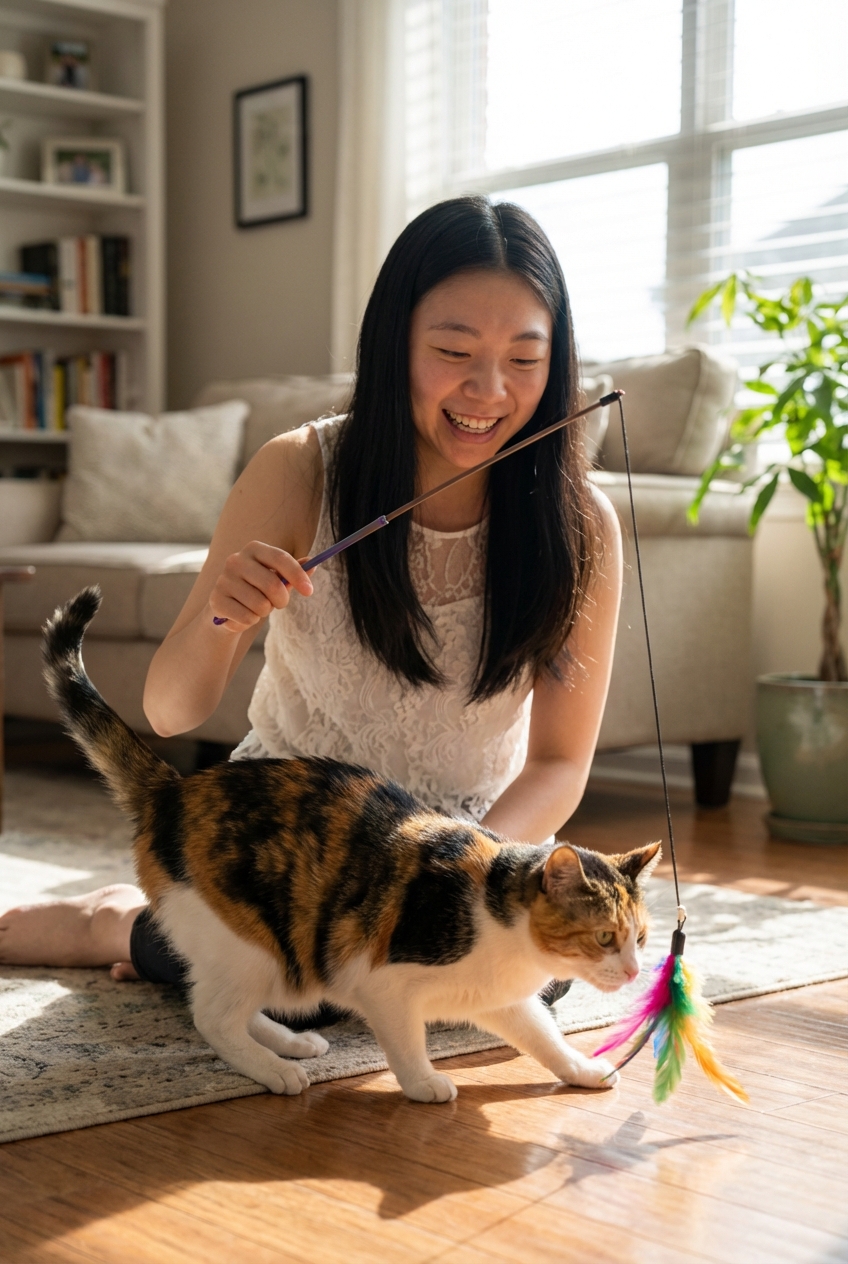
1) Interactive play (best return on effort)
If you do only one thing, do this. Structured play builds confidence, burns calories, and reduces attention-seeking behaviors.
- Tools: wand toys, feather teasers, fleece ribbons, toy “snakes” that slither
- Timing: 5 to 15 minutes, 1 to 3 times daily
- Technique: keep the toy moving like prey, not like a helicopter. Use corners, furniture edges, and “hiding” moments.
- Finish strong: let your cat catch the toy at the end, then offer a small meal or a few treats to complete the cycle.
Safety tip: Put wand toys away after play. Strings and ribbons can cause serious intestinal injury if swallowed. Also check toys for loose feathers, small parts, or exposed wire.
2) Independent play (when you are busy)
These can help, but many cats still need daily structured play as the main course.
- Soft mice or crinkle toys rotated weekly so they feel “new”
- Balls that roll well on your flooring
- Kick toys for bunny-kicking (especially helpful for high-energy cats)
- Cat-safe electronic toys used with supervision
Safety tip: Supervise electronic toys, especially anything with batteries, motors, or small detachable pieces. Inspect toys regularly and toss anything cracked, frayed, or chewed.
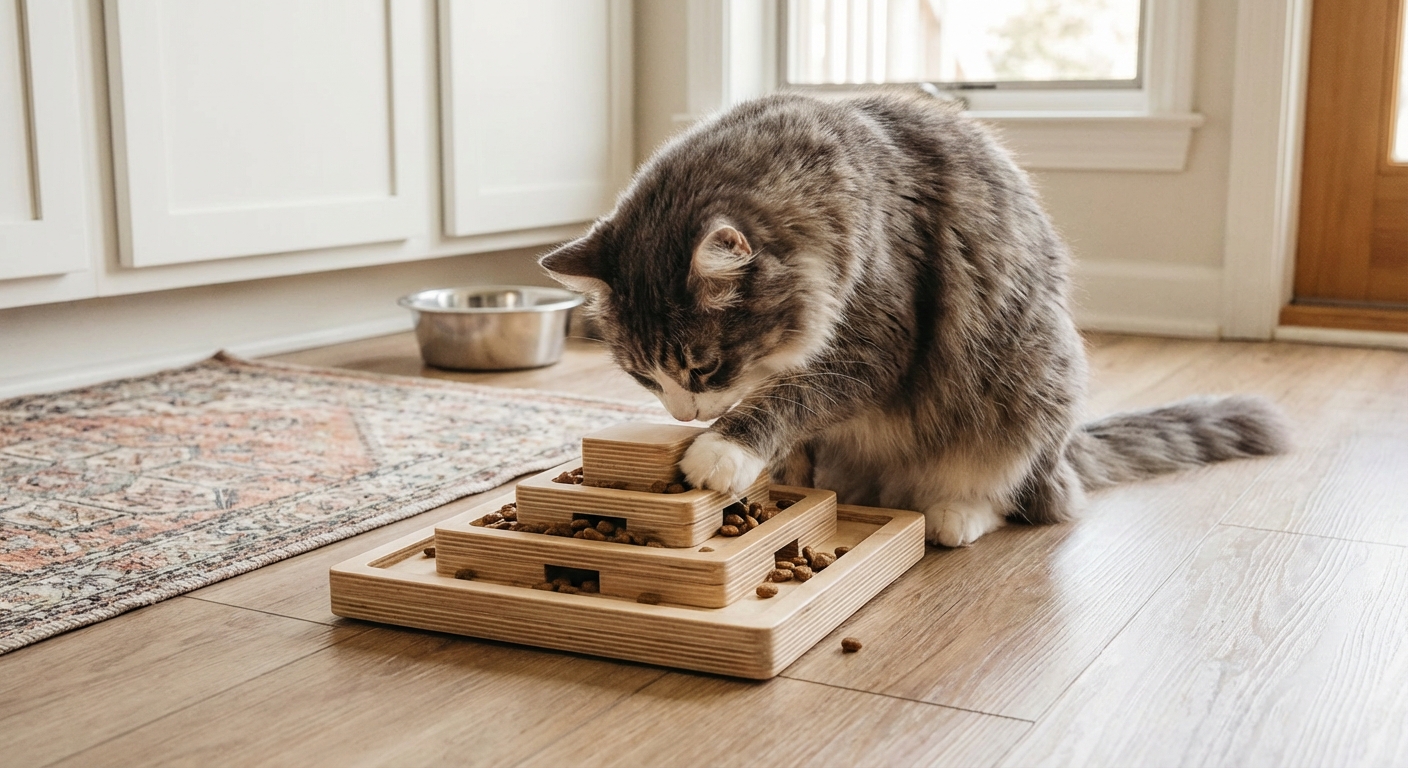
3) Food puzzles (mental enrichment plus weight support)
Many indoor cats get bored because food is too easy. Turning meals into a “job” is a well-supported enrichment strategy that feline behavior guidelines commonly recommend.
- Start with easy puzzles and slowly increase difficulty
- Use part of your cat’s daily kibble or treats, not extra calories
- Try foraging by hiding a few pieces in multiple safe spots
Pro tip: If your cat eats canned food, you can still do puzzle feeding by using lick mats, slow feeders, or freezing a thin layer of wet food for a longer-lasting session.
Set up your home
Once play is in place, your home setup can do a lot of the enrichment work for you.
Vertical territory
Cats feel safer and more in control when they can climb, perch, and observe. This can reduce boredom and tension in multi-cat homes.
- Cat trees placed near where you spend time
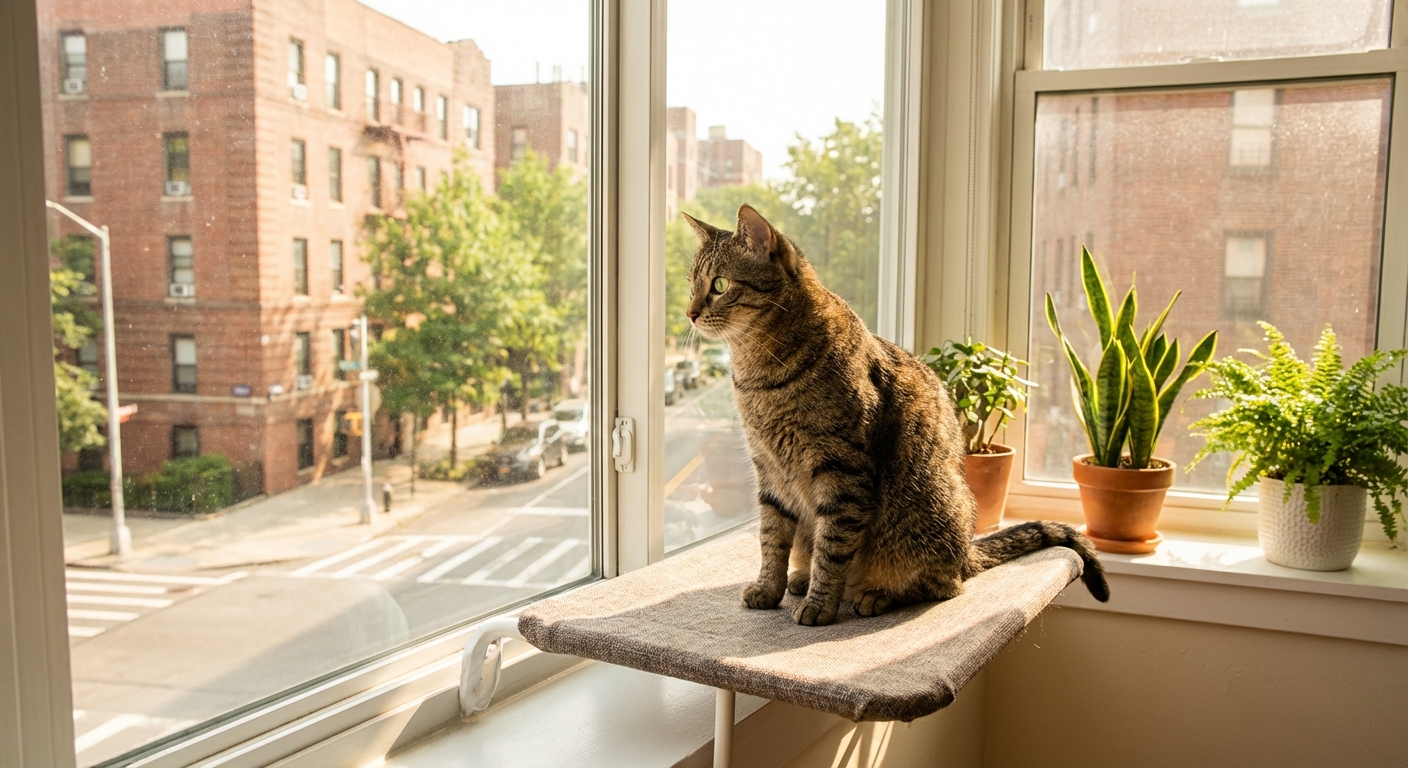
- Window perches for “cat TV”
- Shelves or stable furniture that create a climbing route
Scratching options
Scratching is enrichment and stress relief. If you only offer one scratching post in a random corner, your cat may pick your couch instead.
- Offer both vertical and horizontal scratchers
- Place scratchers near sleeping spots and near problem-scratch areas
- Choose sturdy materials like sisal and heavy cardboard
Safe “cat TV”
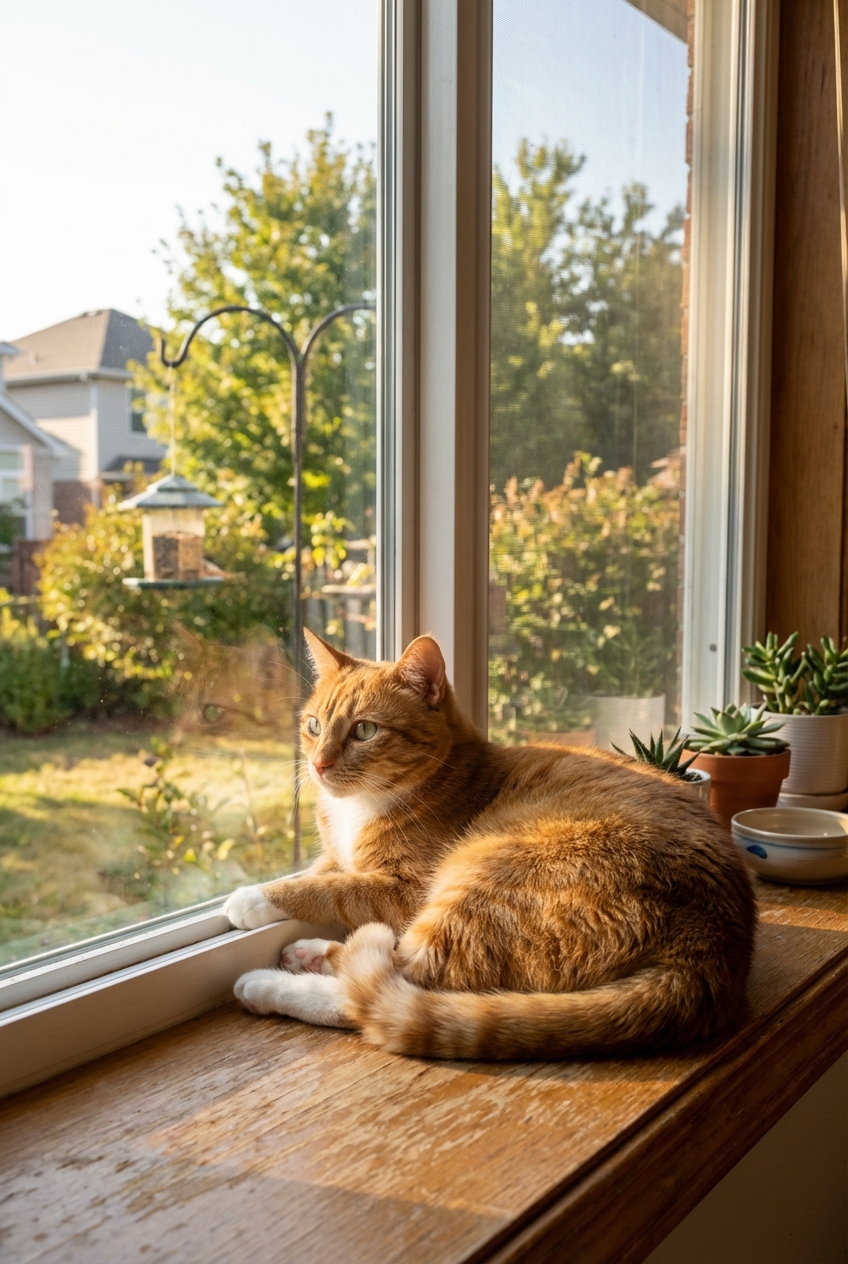
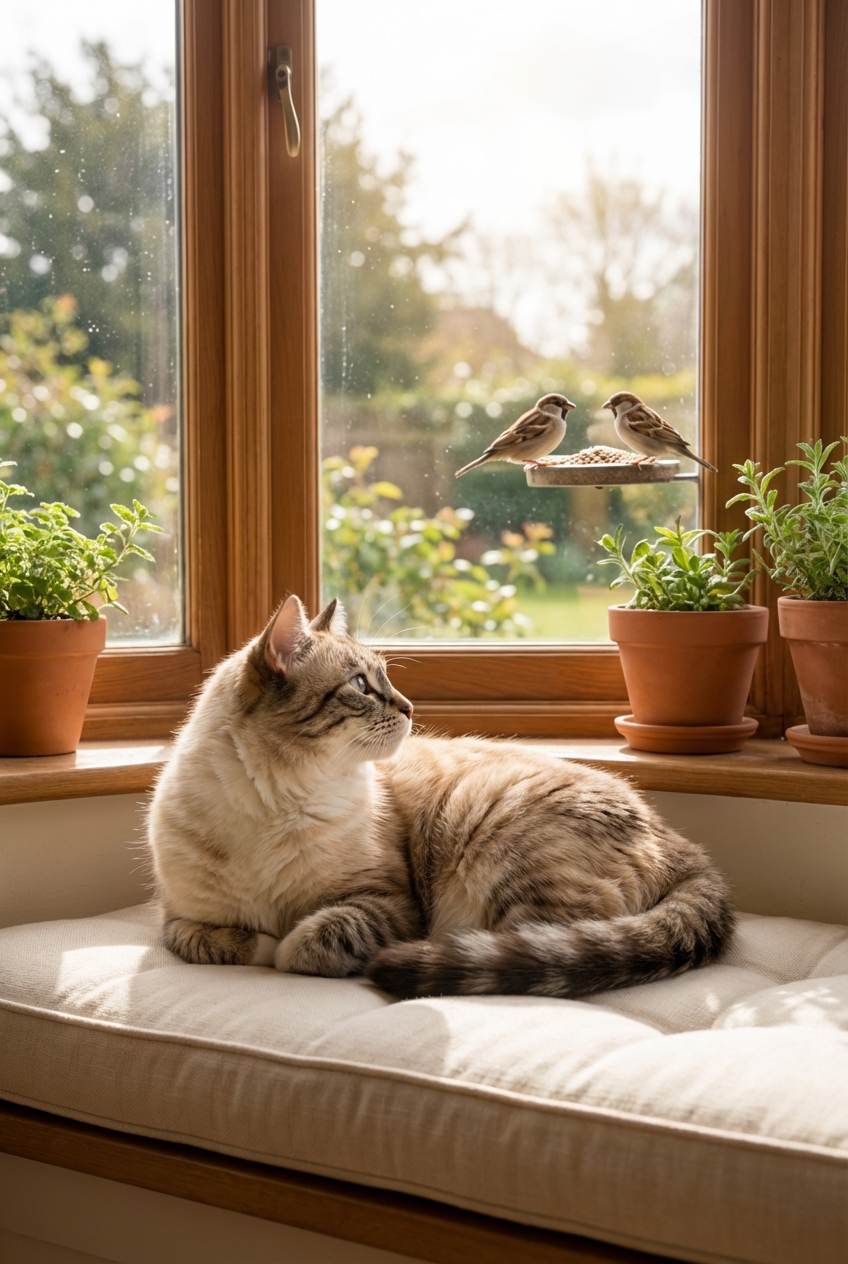
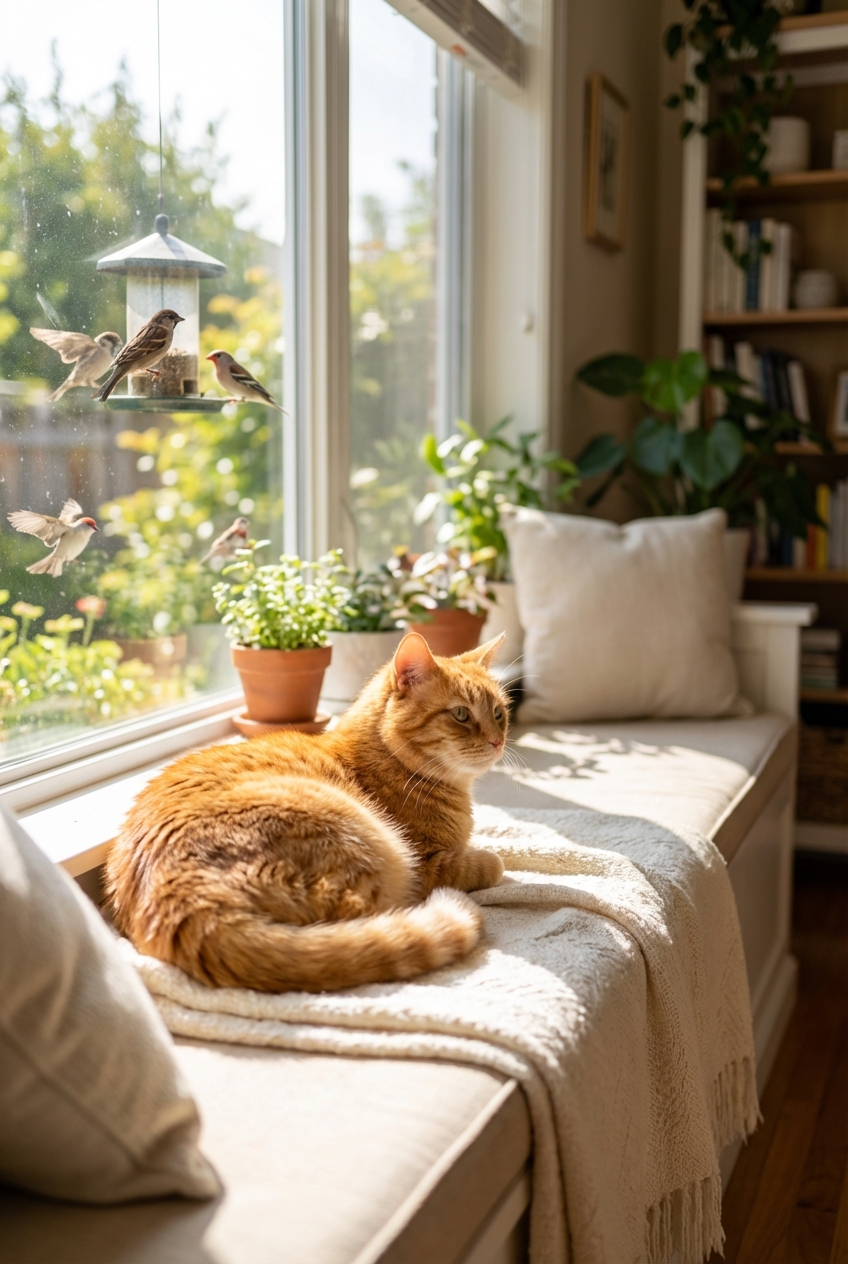
A sunny window can be a daily enrichment session. If you can, add a bird feeder outside the window, but place it far enough away that your cat cannot launch at the glass or screen. The goal is viewing, not pouncing practice.
- Keep blinds cords secured
- Make sure window screens are secure and intact
- Provide a comfy perch so your cat does not have to balance on the sill
- Keep cats indoors and avoid any setup that encourages them to charge the window
Rotate toys
Many people buy more toys, but the secret is rotation. Novelty matters, and too many options at once can backfire.
A realistic rotation plan
- Keep 4 to 6 toys out at a time
- Store the rest in a closed bin
- Swap toys every 5 to 7 days
- Add a pinch of catnip to a toy occasionally, if your cat responds well
Catnip note: Not all cats respond, and kittens often do not react until they are older. Some cats do better with silvervine instead.
Training counts too
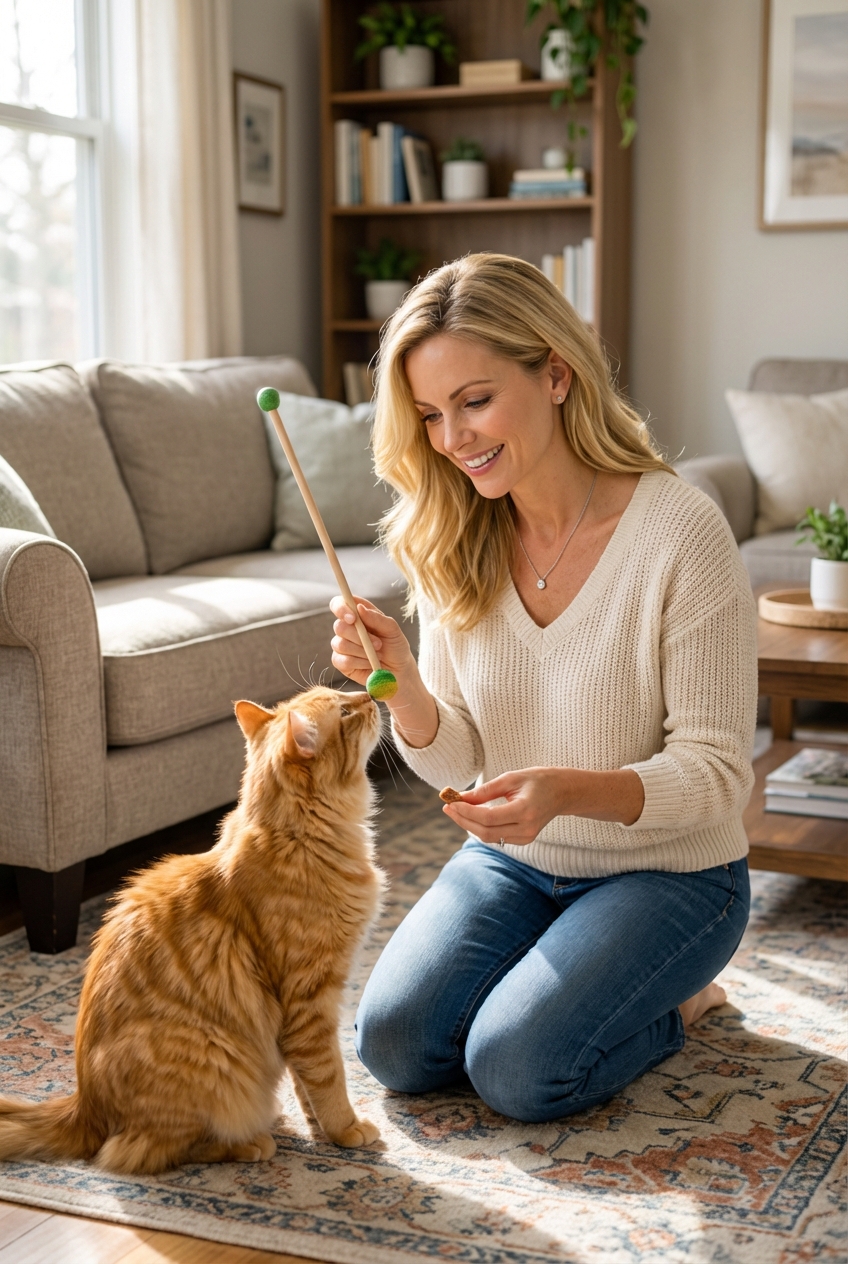
Positive reinforcement training gives your cat a way to earn rewards and attention. It is also a confidence builder for shy cats.
Easy behaviors to teach
- Touch a target (like a spoon handle)
- Sit
- Go to a mat
- Enter a carrier calmly
Keep sessions short, 1 to 3 minutes, and end while your cat is still interested.
Age and ability
Enrichment should fit your cat’s body, not just their personality.
- Kittens: more frequent, shorter play sessions and lots of safe solo toys. Expect big bursts of energy.
- Adults: consistent play times and puzzle feeding are usually the sweet spot.
- Seniors or arthritis-prone cats: choose low-impact play (ground-level chase, slower wand movements, short “sprints”), and add steps, ramps, or lower perches so climbing is comfortable.
Note: If your cat is overweight or you suspect arthritis (stiffness, trouble jumping, grumpiness when touched), start slowly and ask your veterinarian about a safe activity plan.
Solo vs. multi-cat homes
If you have one cat
- Build predictable playtimes into your day
- Offer a window perch plus a puzzle feeder
- Consider a second cat only if your cat enjoys other cats and you can do a slow, structured introduction
If you have multiple cats
Boredom and stress can look similar, and competition can make both worse.
- Provide multiple resources: litter boxes, water, beds, and scratchers
- Use more than one play station to prevent bullying
- Feed separately if one cat guards food
A common veterinary behavior guideline is one litter box per cat, plus one extra, placed in different locations.
Litter box basics
Since litter box issues can be a red flag, it helps to keep the setup as cat-friendly as possible. Comfort reduces stress, and stress can affect bathroom habits in some cats.
- Use a box that is large enough for your cat to turn around comfortably
- Many cats prefer uncovered boxes with easy access
- Scoop daily and fully wash the box regularly
- If problems start, do not “punish.” Call your veterinarian and consider simple changes like a second box, a quieter location, or a different litter texture.
A simple daily plan
Try this for two weeks and track what changes. Many people report improvements in nighttime activity, attention-seeking, and destructive scratching, but every cat is different. Adjust the intensity to match your cat’s age and fitness.
Morning (5 to 10 minutes)
- Wand play session
- Small meal afterward
Midday (2 minutes)
- Refresh a puzzle feeder or hide a few treats for foraging
Evening (10 to 15 minutes)
- Play session with a strong “catch” ending
- Dinner or a final snack
- Calm wind-down time
Weekly
- Rotate toys
- Wash or replace worn toys
- Check scratching posts for stability
What to avoid
- Laser pointers with no payoff: they can frustrate cats. If you use one, end with a toy they can catch and a treat.
- Leaving strings unattended: yarn, ribbon, and hair ties are frequent foreign body risks.
- Sudden intense exercise for overweight or senior cats: start slowly and ask your veterinarian if your cat has arthritis signs.
- Too much stimulation at once: some cats get overstimulated and bite. Keep sessions short and positive.
How to tell it is working
Pick a few simple markers and watch trends over time.
- Sleeping more at night and less nighttime vocalizing
- Less ankle ambushing or “attention biting”
- Fewer scratching incidents in off-limit areas
- More relaxed body language and more predictable energy bursts
- Stable weight or gradual weight loss if that is a goal (check with your vet)
When to call your vet
If boredom-busting does not help within a couple of weeks, or if you see any medical red flags, it is time to check in. Many issues that look like “bad behavior” have a medical component like dental pain, arthritis, skin allergies, or urinary discomfort.
Your cat is not giving you a hard time. They are having a hard time. Enrichment is one of the kindest, most practical tools we have to improve feline quality of life.