Make your dog’s meals more nourishing with 18 homemade recipes for full meals and treats, plus clear safety rules, storage tips, and guidance to keep diets...
Article
•
Designer Mixes
How to Discourage Puppy Biting

Shari Shidate
Designer Mixes contributor
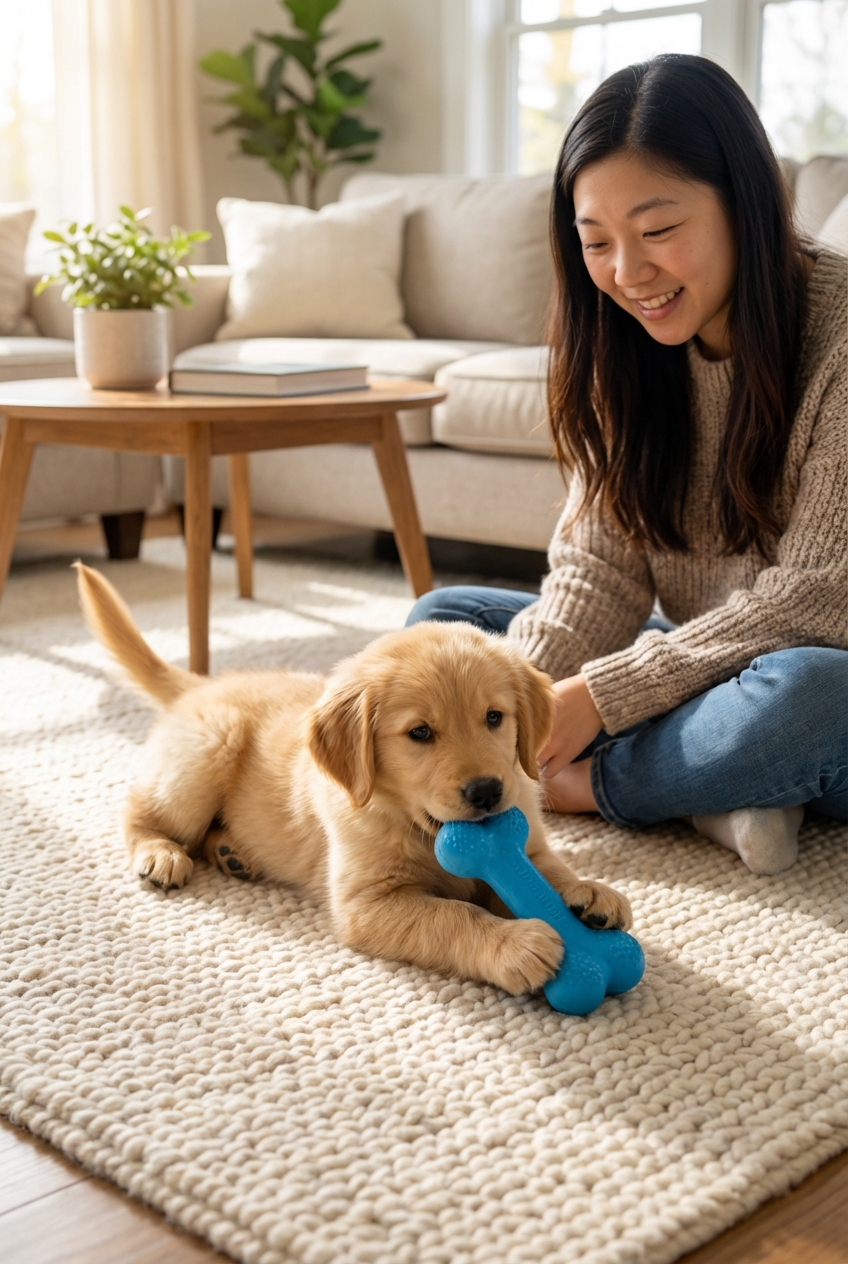
Puppy biting can feel personal, but it is usually normal, healthy development. Puppies explore the world with their mouths, practice social skills, and soothe sore gums during teething. The goal is not to stop all mouthing overnight. It is to teach bite inhibition and give your pup safe, appropriate outlets so you can live together peacefully.
As a veterinary assistant here in Frisco, Texas, I talk with lots of new owners who worry their puppy is “aggressive.” Most of the time, the puppy is simply tired, overstimulated, or has not learned yet what to do instead.
Quick note: This article is general education and does not replace advice from your veterinarian or a qualified, reward-based trainer, especially if biting is escalating or anyone is getting hurt.
Why puppies bite
Understanding the “why” helps you respond calmly and consistently.
- Teething discomfort: Many puppies start losing baby teeth around 3 to 4 months, and adult teeth often finish coming in around 6 months (it can vary by breed and individual). Chewing can help relieve gum soreness.
- Play behavior: Puppies play with littermates using their mouths. They are practicing how hard is “too hard.”
- Attention seeking: If biting makes you squeal, wave hands, chase, or talk, your puppy may learn it works to get a reaction.
- Overtired or overstimulated: Many puppies get mouthier when they need a nap, not more play.
- Herding or high-drive instincts: Some mixes are more likely to nip at ankles during movement or excitement.
Good news: With patient training and the right management, most puppies improve dramatically as they mature.
Puppy biting facts
1) “No bite ever” is not the first goal
The first goal is teaching your puppy soft mouth. Puppies need feedback and repetition to learn that human skin is sensitive. If you only punish, you can create fear without building skills.
2) Your timing matters more than intensity
Corrections that happen even a few seconds late confuse puppies. Calmly responding immediately and consistently is what changes behavior.
3) Reinforcement happens, even when you do not mean it
If your puppy bites and you laugh, pull away quickly, or start wrestling, your puppy may interpret that as a game. Many “problem biters” are simply rewarded biters.
4) Many bite episodes are actually sleep issues
A puppy who is awake too long can turn into a tiny piranha. Many puppies need a lot of sleep, often 16 to 20 hours per day (including naps), depending on age and the individual puppy.
5) Teething is real, but training still applies
Teething makes chewing more urgent, but it does not mean your puppy cannot learn gentle behaviors. Think: more management and more chew options, plus short, simple training.
What to do in the moment
Step 1: Freeze your movement
Fast hand movements trigger chase and bite. If teeth touch skin, go still for one beat (about 1 to 2 seconds). This helps break the excitement loop.
Step 2: Mark and redirect
Say something consistent like “Oops” or “Too bad” in a neutral voice, then immediately offer an appropriate toy or chew.
- Keep toys in every room so you can redirect quickly.
- Choose a toy that is longer than your hand, like a tug toy, so your fingers stay safe.
Step 3: If biting continues, use a brief time-out
Many puppies bite because play continues. If your puppy keeps going, calmly end the interaction for a brief time-out (20 to 60 seconds).
- Option A: Stand up and turn away with arms folded.
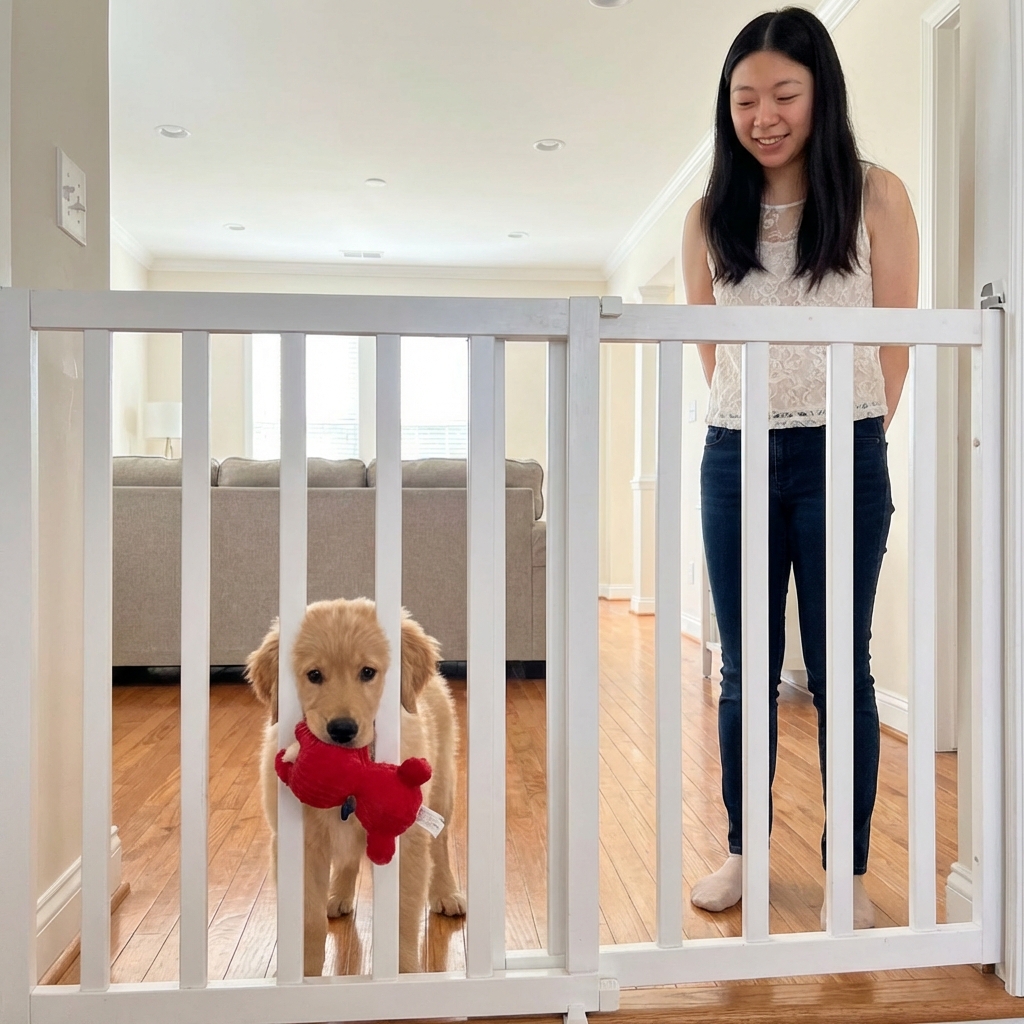
- Option B: Step behind a baby gate.
- Option C: Put the puppy in a safe, puppy-proof area with a chew (not as punishment, just a reset).
Then come back and try again. This teaches: gentle play keeps people close.
About the “yelp” advice: Some training tips suggest yelping like a littermate. For some puppies that works, but many get more excited by squeals. If yelping ramps your puppy up, skip it and use calm disengagement and a brief time-out instead.
Extra management tip: If your puppy launches at hands or ankles, a light drag leash indoors (supervised) can help you guide them away without grabbing their collar or turning it into a chase game.
Teach bite inhibition
Bite inhibition is the puppy’s ability to control jaw pressure. This is a lifelong safety skill.
A simple approach for families
- Reward gentle mouth: During calm play, if your puppy mouths softly, praise quietly and keep playing.
- Interrupt hard mouth: If you feel pressure, use a brief time-out (20 to 60 seconds).
- Repeat consistently: Puppies learn through patterns, not lectures.
If your puppy is extremely mouthy, keep play sessions shorter and calmer, and use more structured games like “touch” or “find it” (treat scatter) instead of wrestling.
Chew choices
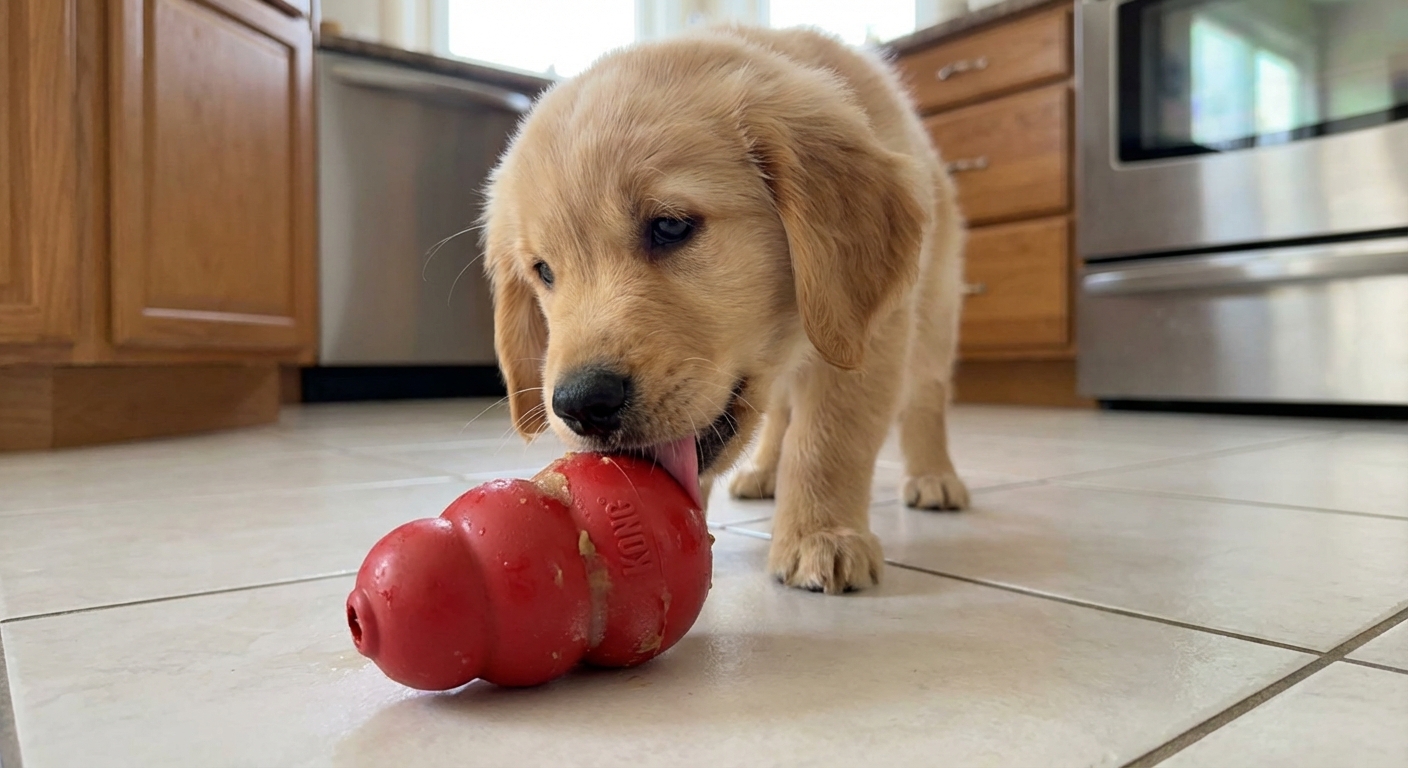
The best chew is safe, durable enough for your puppy, and interesting enough to beat your ankles.
Great options
- Stuffable rubber toys (with a little kibble, canned puppy food, or plain yogurt, then frozen)
- Soft puppy teething chews approved for your pup’s age and size
- Wet washcloth twist, frozen for sore gums (supervise closely)
Safety notes I share in clinic
- Supervise all chews, especially edible ones.
- Avoid chews that are so hard you cannot dent them with a fingernail. This is a rule of thumb, and your vet can help you choose what is safest for your puppy.
- Choose size-appropriate chews to reduce choking risk.
Daily routine to prevent biting
Most biting improves when a puppy’s needs are met predictably.
A routine that works for many puppies
- Nap schedule: Plan naps before your puppy becomes frantic. Use a crate or pen if it helps your pup settle.
- Short training: 3 to 5 minutes, a few times a day. Focus on “sit,” “touch,” “leave it,” and “drop it.”
- Enrichment: Food puzzles, sniff games, short walks (age-appropriate), and safe socialization.
- Calm play: Tug is fine if you teach rules like “take it” and “drop.” Avoid using hands as toys.
When owners tell me “it’s worst at night,” that is often the witching hour: a combination of fatigue and pent-up energy. Add an early evening nap and a calm chew session after dinner.
Kids and puppy biting
This is one of the biggest safety and sanity factors in family homes.
- Supervise closely: Puppies and kids should not “work it out.” Adults manage the interaction.
- No running or squealing games: Fast movement and high-pitched sounds can trigger chasing and nipping.
- Use barriers: Baby gates and play pens let everyone take breaks.
- Give kids a script: “Be a tree” (stand still, arms tucked) if the puppy gets mouthy, then an adult redirects with a toy and uses a brief time-out if needed.
Common mistakes
- Yelling or harsh physical corrections: These can increase fear and arousal, and they do not teach what to do instead.
- Playing with hands: Even “gentle” hand play teaches that skin is a toy.
- Inconsistent rules: If one person allows nipping and another does not, the puppy keeps trying.
- Too much freedom: Overwhelmed puppies make poor choices. Use pens, gates, and supervised drag leashes indoors as needed.
- Skipping sleep: Overtired puppies bite more, period.
When it is not normal
Most puppy biting is developmental, but you should reach out to your veterinarian and a qualified trainer if you notice:
- Growling, freezing, or guarding behavior around food or toys
- Biting that breaks skin frequently or escalates rapidly
- Snapping when touched, picked up, or approached
- Signs of pain (limping, crying, not wanting to chew, sudden behavior change)
Pain or illness can make puppies irritable and mouthy. Issues like upset stomach, allergies and itchy skin, ear infections, or orthopedic soreness may play a role, so it is always okay to rule out medical causes.
If you are feeling discouraged, please hear this: puppy biting is one of the most common concerns I see. With consistent redirection, brief time-outs, and plenty of sleep, most puppies turn a big corner within weeks.
What to expect
Most families see improvement over a few weeks when everyone is consistent. Mouthing often peaks during heavy teething, then gradually fades as adult teeth come in and your puppy learns better self-control. Many puppies are significantly less mouthy by about 6 to 8 months, but timelines vary.
Quick 7-day plan
- Day 1: Put a toy basket in every room and start redirecting immediately when teeth touch skin.
- Day 2: Add two scheduled naps and watch whether evening biting improves.
- Day 3: Teach “touch” and use it to interrupt nipping before it starts.
- Day 4: Begin a calm “chew time” after play, using a frozen stuffed toy.
- Day 5: Practice “drop it” with tug and trade for treats.
- Day 6: Increase enrichment with a sniff walk or treat scatter game.
- Day 7: Review what triggers biting most and adjust routine (more sleep, less rough play, more management).
Small changes, done consistently, add up fast.