Stop kitten biting without punishment. Learn why kittens bite, how to freeze and disengage, redirect to toys, prevent ankle attacks, and build a daily play r...
Article
•
Designer Mixes
How to Discipline a Kitten

Shari Shidate
Designer Mixes contributor
Kittens are tiny, curious, and a little chaotic. If you are wondering how to discipline a kitten, the goal is not punishment. The goal is teaching. As a veterinary assistant here in Frisco, Texas, I see the best results when people use simple, consistent training that fits how cats actually learn.
This handbook will walk you through what works (and what backfires), plus step-by-step scripts you can use today to stop biting, scratching, climbing, and litter box trouble without damaging your bond.
Note: This article is general education, not medical advice. If you are worried about pain, illness, or sudden behavior changes, call your veterinarian.
How kittens learn
Kittens learn by association. They repeat behaviors that feel rewarding and avoid behaviors that feel unrewarding or scary. That is why effective kitten discipline usually looks like two things:
- Prevent and redirect unwanted behavior to an appropriate outlet.
- Reward the right behavior right away so it sticks.
Unlike dogs, most cats do not respond well to “being corrected” after the fact. If you find a mess later, your kitten will not connect your reaction to what happened earlier. Timing matters.
Golden rules
1) Never use physical punishment
No hitting, scruffing, shaking, or pinning. These can cause fear, defensive biting, and long-term stress. They also do not teach your kitten what to do instead.
2) Do not yell or chase
Yelling can be frightening and unpredictable, and chasing often turns the whole situation into a game. A kitten that runs away is not “being bad.” They are being a kitten.
3) Fix the environment
Most “misbehavior” is a mismatch between kitten needs and your home setup. If your kitten is climbing the curtains, they probably need a taller cat tree. If they are biting hands, they need better play routines and toy options.
4) Be consistent
If the kitten is allowed on the counter sometimes, they will keep trying. Consistency from everyone in the home is the difference between a 3-day fix and a 3-month struggle.
In the moment: 3 steps
When your kitten does something you do not want, use this sequence:
- Interrupt calmly: a neutral “ah-ah” or a gentle clap once (not yelling).
- Redirect immediately to the right option: scratcher, toy, cat tree, litter box.
- Reward the right choice right away (ideally within a couple seconds): treat, praise, petting (if your kitten likes it), or a few seconds of play.
This approach is grounded in learning theory: interrupt, offer an alternative, reinforce.
Common issues
Next, let’s plug that 3-step script into the real-life stuff families deal with every day.
Play biting
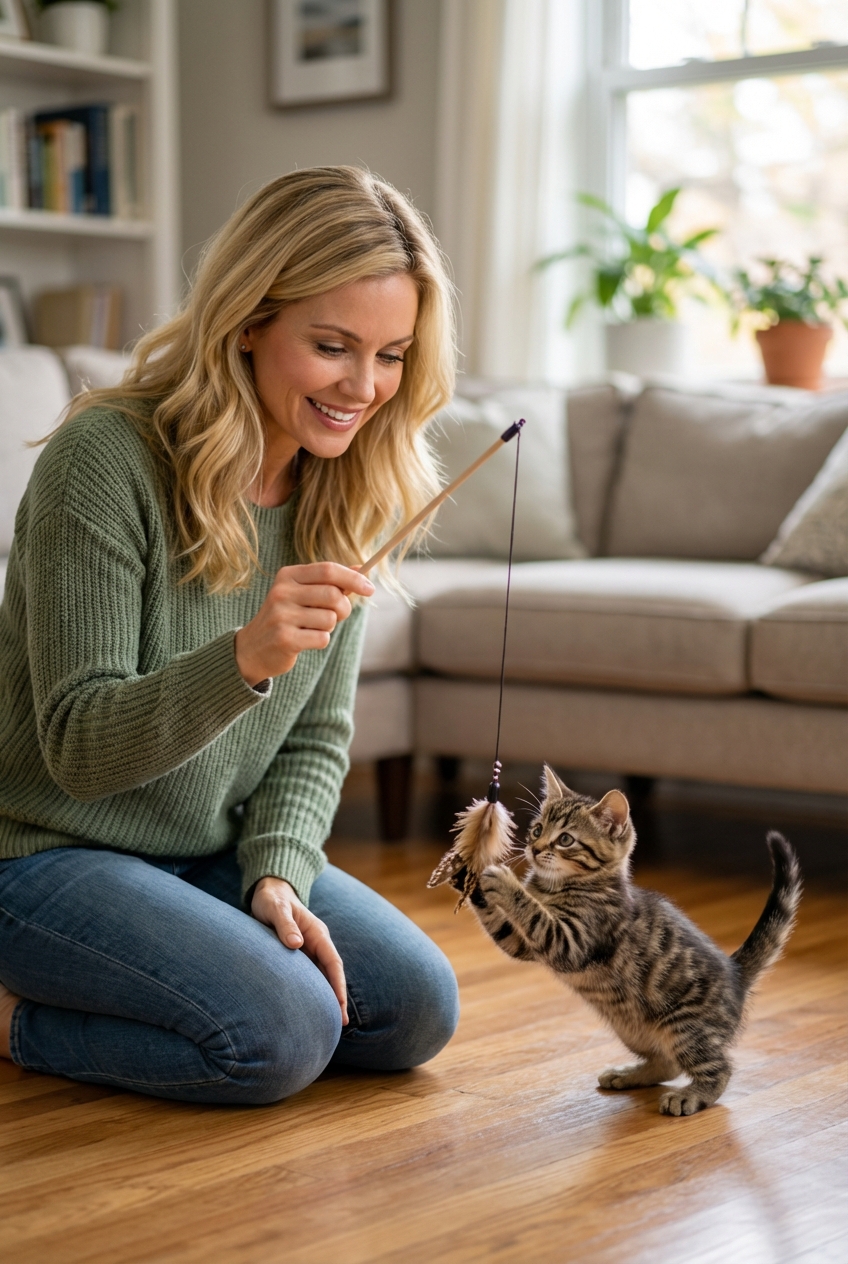
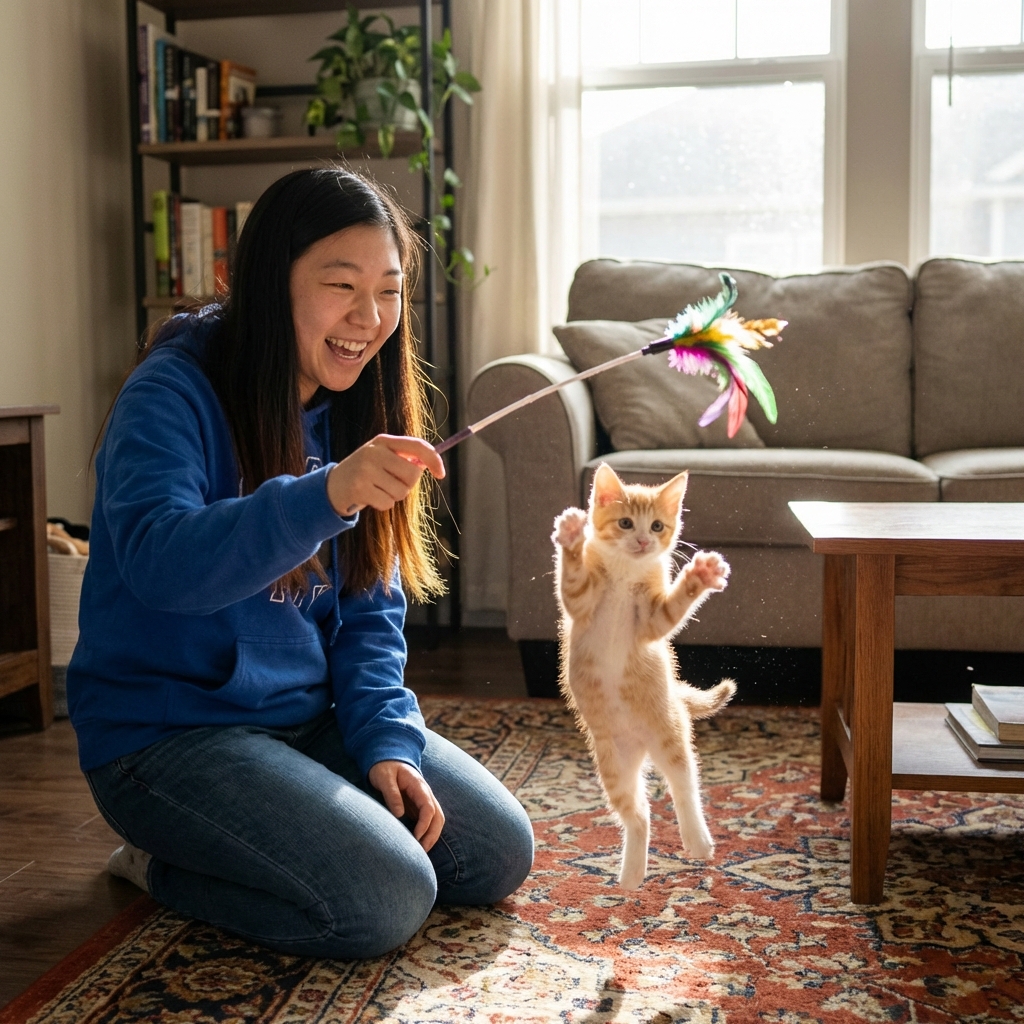
Most kitten biting is play. If your hands become “prey,” it is because hands have been used like toys. The fix is to make toys the prey instead.
- Freeze your hand or foot the second teeth touch skin. Do not pull away fast, that can trigger more chase-bite behavior.
- Say a calm cue like “oops” or “gentle.”
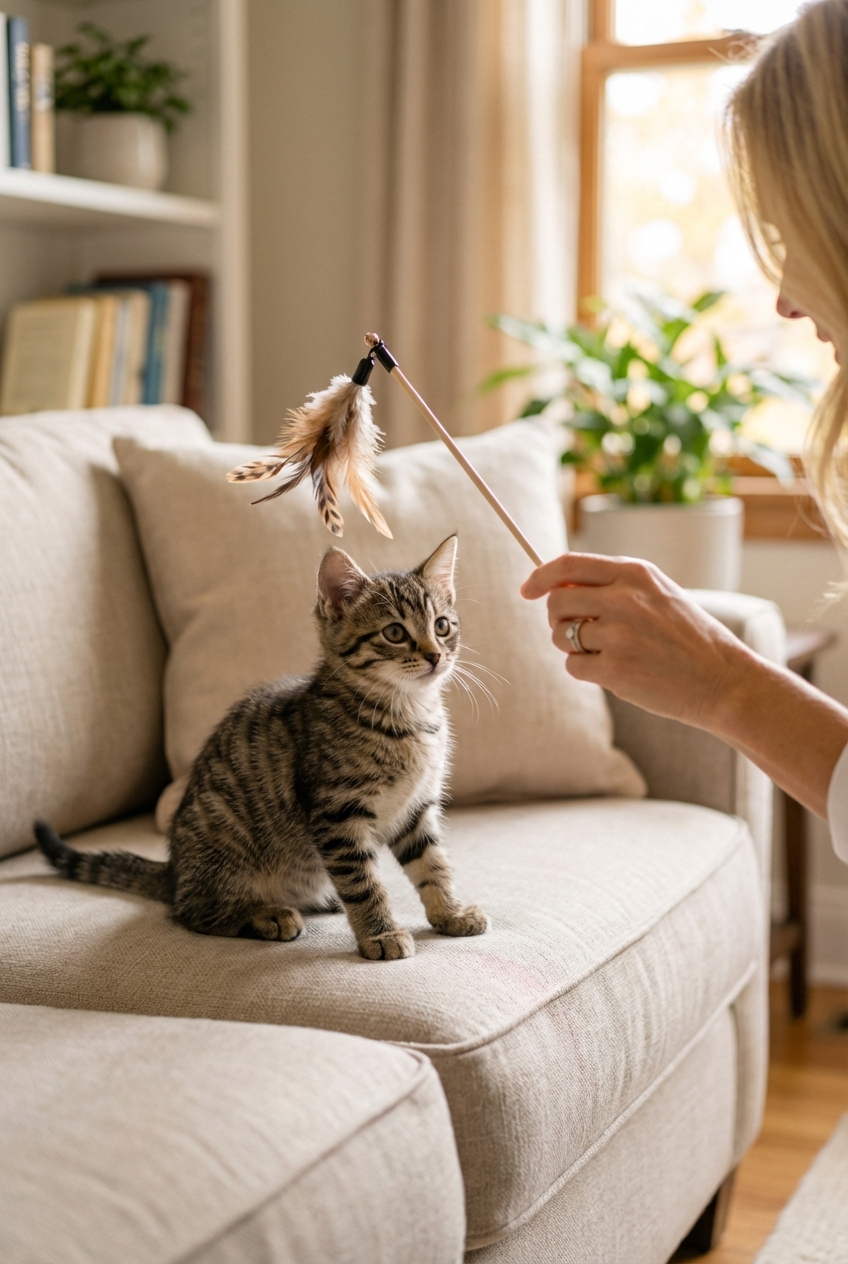
- Redirect with a wand toy or small kicker toy.
- End play for 10 to 30 seconds if biting continues. This teaches that biting makes the fun stop.
Pro tip: Aim for 2 to 4 short play sessions per day (5 to 10 minutes). A tired kitten is a well-behaved kitten.
Solo kitten note: If you have a single kitten, you may need extra play and enrichment since there is no other kitten to help teach bite inhibition and social boundaries. If adopting in pairs is an option, many families find it helps.
Scratching furniture
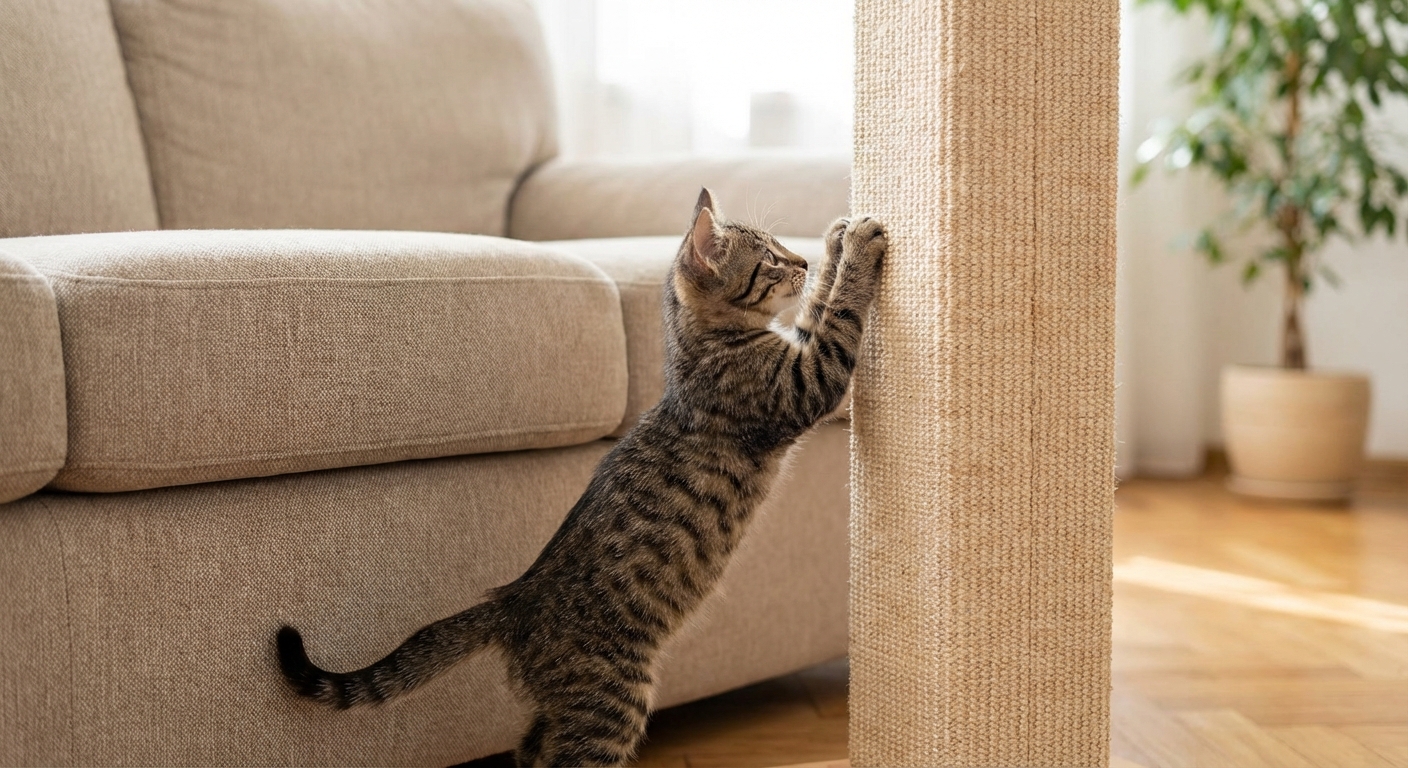
Scratching is normal and healthy. It stretches muscles, maintains claw health, and marks territory. We do not stop scratching, we give the right place to scratch.
- Provide scratchers in multiple textures: sturdy vertical (sisal) and horizontal (cardboard).
- Place scratchers where the problem happens, especially near couches and doorways.
- Use catnip or silvervine on scratchers if your kitten responds to it.
- Praise and treat when they use the scratcher.
- Protect furniture temporarily with double-sided tape or a furniture cover while habits form.
Skip: Declawing is not a training tool and is widely discouraged due to pain and behavior fallout. Keep nails trimmed instead, and ask your vet team to show you how if you are unsure.
Counters and tables
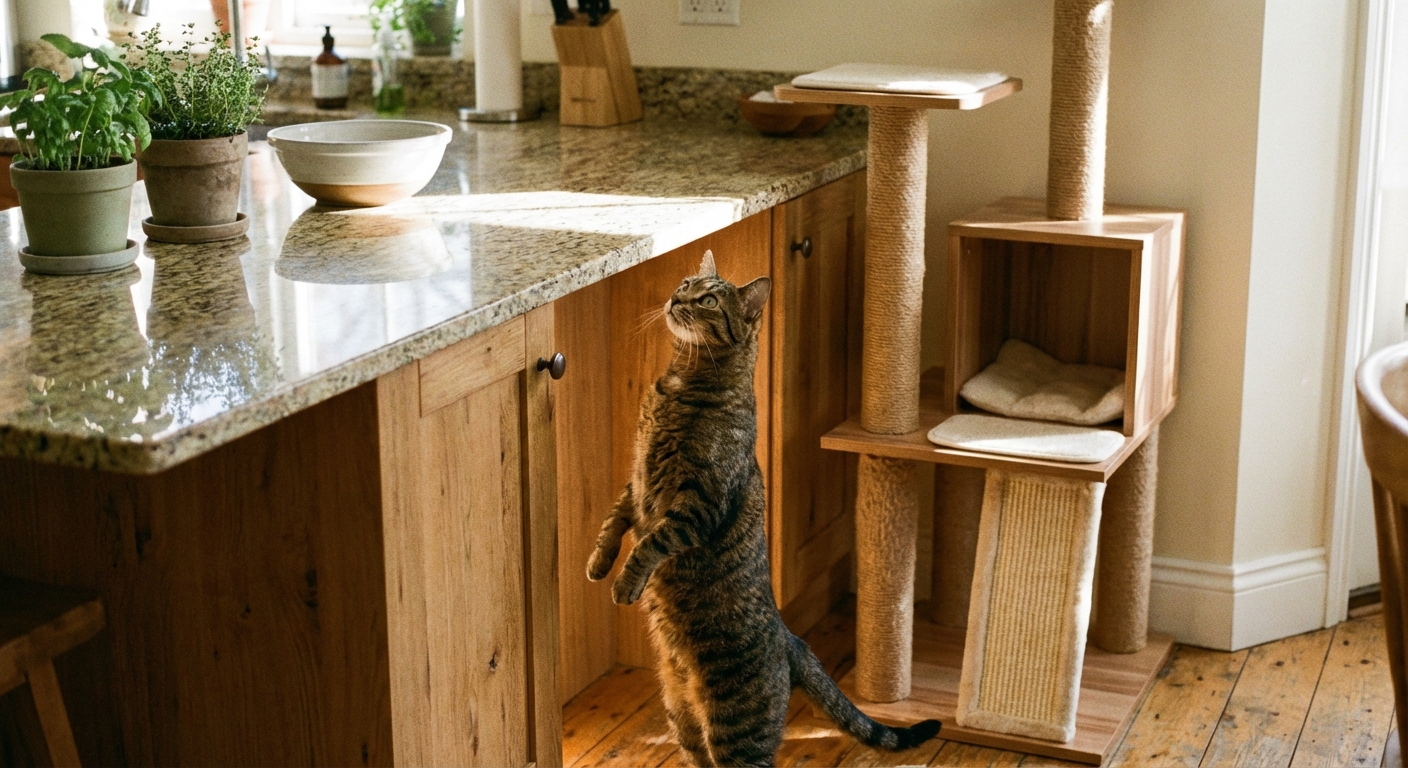
Cats like height. Counters also smell like food, so they are naturally rewarding. If your kitten is surfing the kitchen, make the “yes” option better and the “no” option boring.
- Add a cat tree or window perch near the kitchen so your kitten has a legal viewpoint.
- Keep counters clear of crumbs and food.
- Teach an alternative: reward your kitten for sitting on a stool, mat, or cat tree while you cook.
- Use gentle deterrents: double-sided tape or a temporarily placed textured mat can make the surface less appealing.
Safety note: Block access to hot stoves, sharp tools, and sink chemicals. This is one of those habits that is easier to prevent than fix later.
Avoid: Spraying water. Some kittens become more anxious around you, and others simply learn to jump up when you are not there.
Knocking things down
This can be play, boredom, or attention-seeking. If objects falling leads to you rushing over, that is attention, and attention is a reward.
- Increase enrichment: play sessions, puzzle feeders, safe solo toys.
- Kitten-proof by moving breakables and using museum putty for decor.
- Do not reinforce: calmly pick items up without a big reaction, then guide your kitten to a toy.
Litter box problems
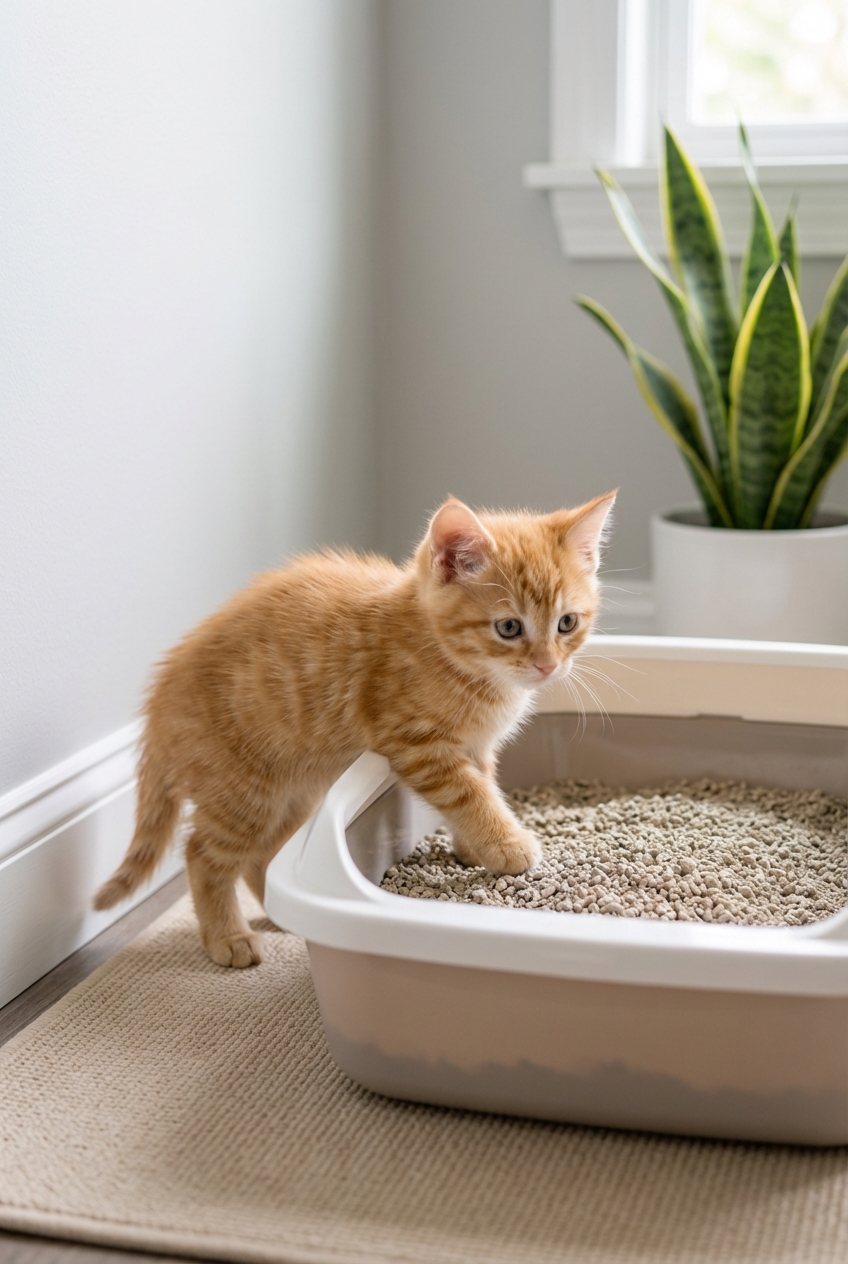
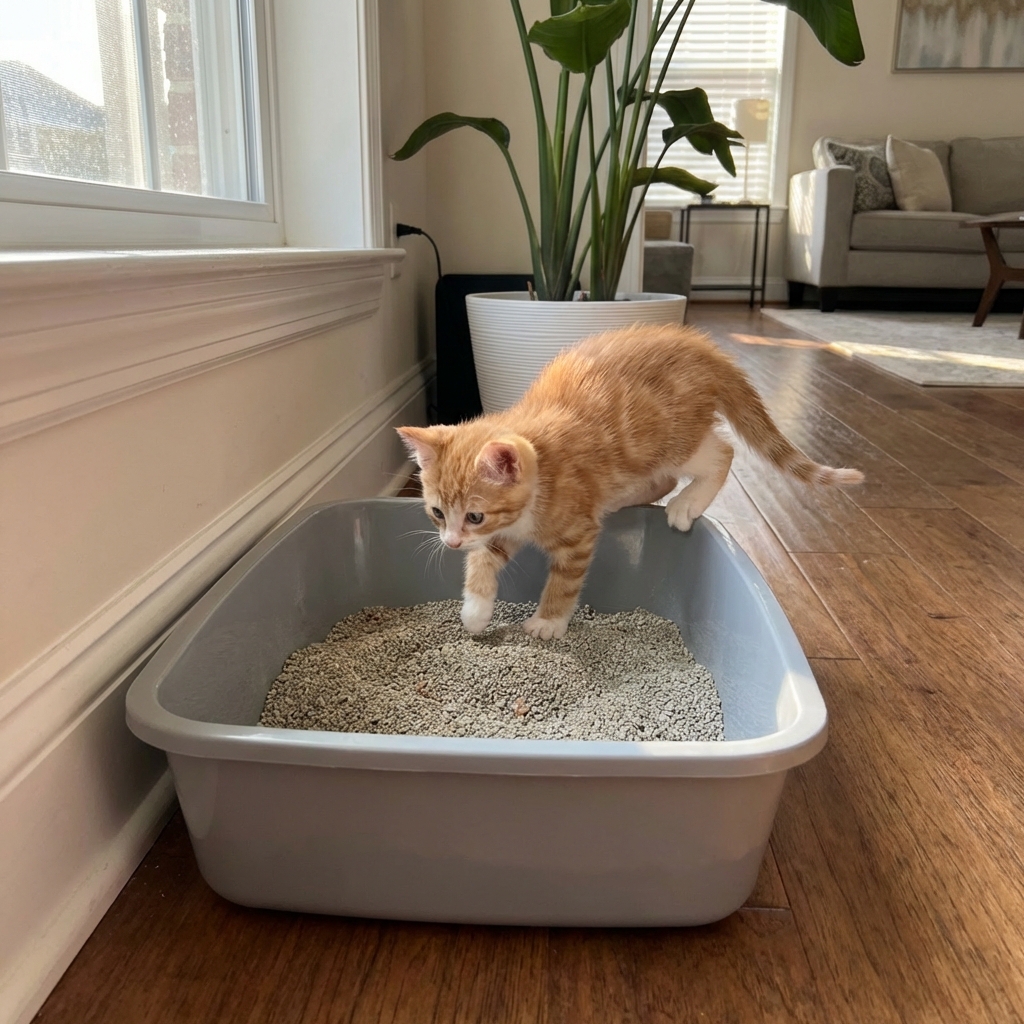
If your kitten is missing the box, treat it as a health and setup issue first, not a discipline issue. Kittens can have diarrhea, constipation, urinary issues, parasites, or stress that changes bathroom habits.
First step: Call your veterinarian if accidents are sudden, frequent, or paired with straining, blood, crying, lethargy, vomiting, or reduced appetite.
Then check the basics:
- Box count: one box per cat, plus one extra.
- Location: quiet, easy to reach, not trapped behind loud appliances.
- Cleanliness: scoop daily.
- Litter: many kittens do well with unscented, soft litter. For very young kittens (often under about 3 to 4 months) ask your vet or shelter if a non-clumping litter is safer to reduce ingestion risk.
- Box style: many kittens do better with low sides and no lid at first.
Important: Never rub a kitten’s nose in accidents. It increases fear and does not improve litter habits.
Time-outs
Time-outs can help some kittens when they are short, calm, and consistent. I mainly use them for repeat behaviors like biting too hard during play, and only alongside more enrichment and better play habits.
- Length: 30 to 60 seconds is usually enough.
- Location: a safe kitten-proof room with water, litter box, and a toy.
- How: silently place the kitten in the room, close the door, wait, then resume normal life without “lecturing.”
Do not use long isolation or make the space feel scary. If your kitten escalates or becomes fearful, skip time-outs and focus on prevention, enrichment, and redirection instead.
Rewards that work
Rewards do not have to be big. They do have to be immediate.
- Treats: tiny, soft treats or a lickable cat treat.
- Play: a quick pounce opportunity with a wand toy.
- Affection: gentle petting if your kitten enjoys it.
- Environmental rewards: access to a perch, window view, or a favorite box.
When you catch your kitten doing something right, like using the scratcher or choosing a toy instead of your hands, that is your training moment.
Kitten-proof once
The easiest discipline is prevention. A kitten-proofed home reduces opportunities for unwanted habits to form.
- Secure cords, strings, hair ties, and rubber bands.
- Store lilies and other toxic plants out of the home.
- Use lidded trash cans.
- Block access to unsafe gaps behind appliances.
- Provide multiple legal climbing and scratching spots.
If your kitten chews cords: interrupt calmly, offer a chew-safe alternative (ask your vet for options if needed), increase play, and physically block access with cord covers or routing. Do not rely on punishment.
Zoomies at night
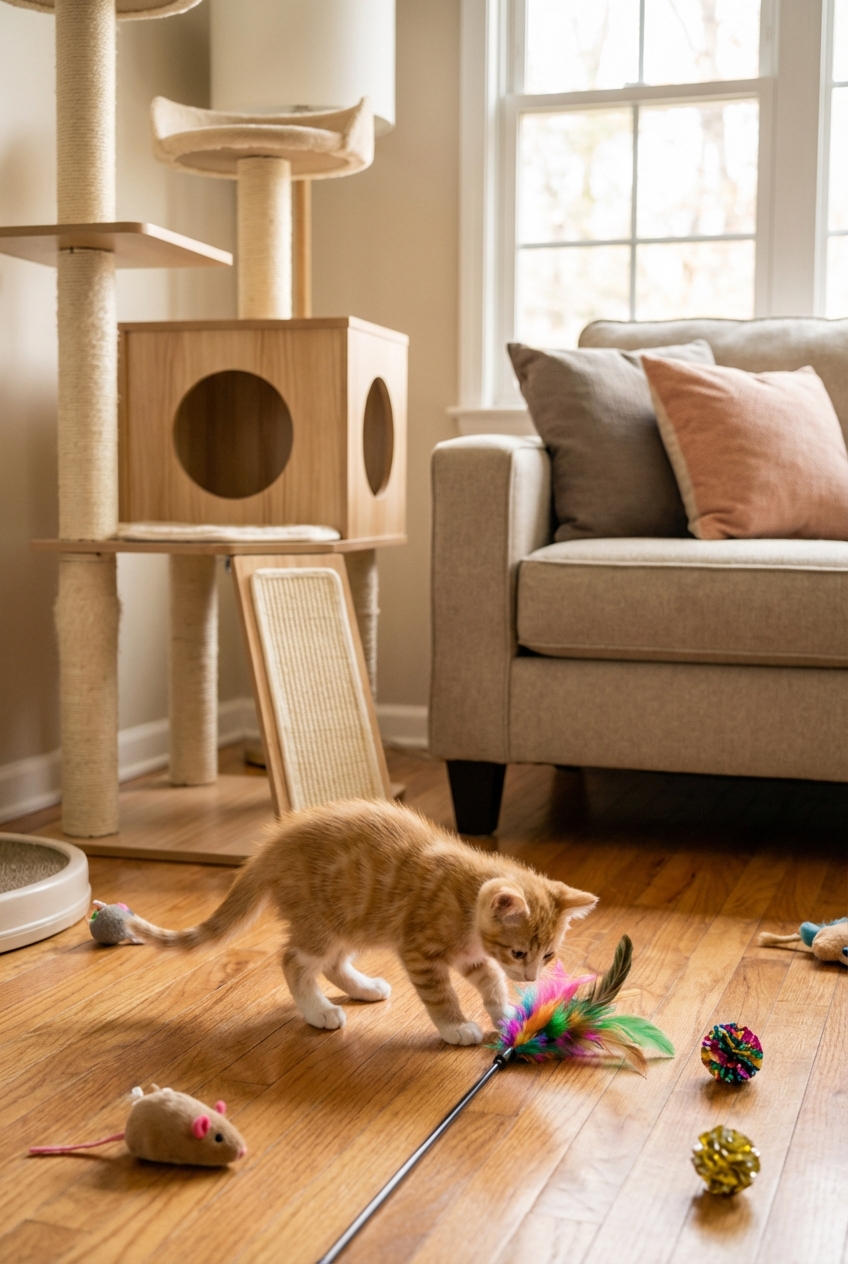
Nighttime zoomies are usually a schedule problem, not a “bad kitten” problem.
- Do a play session 30 to 60 minutes before bed.
- Then offer a small meal to match hunt, catch, eat, rest.
- Ignore early wake-ups if you can. If you get up and feed, you may accidentally train a very persistent alarm clock.
- Use enrichment like puzzle feeders or a few safe solo toys overnight.
Handling practice
A lot of “discipline problems” later (nail trims, vet visits, carrier drama) get easier if you practice handling while your kitten is still flexible about life.
- Leave the carrier out with a soft blanket and treats so it becomes normal.
- Practice quick, gentle touches: paws, ears, mouth, and a brief “hold,” then reward.
- Keep sessions short and end on a win.
Stress or illness
As a vet assistant, I always encourage families to watch for red flags that deserve a vet check instead of a training plan.
- Sudden aggression or hiding
- Bathroom accidents after being reliable
- Loss of appetite or weight
- Vomiting, diarrhea, or straining to urinate
- Excessive vocalizing or restlessness
Behavior is communication. If something changes quickly, it is worth ruling out pain or illness.
Quick cheat sheet
- Do: interrupt calmly, redirect, reward.
- Do: provide scratchers, vertical space, daily play.
- Do: use short time-outs for hard play biting if needed.
- Do not: hit, yell, chase, or spray water.
- Do not: punish litter box accidents.
The bottom line: discipline that works for kittens is gentle, immediate, and consistent. You are not trying to “win.” You are building habits your kitten can repeat for life.
FAQs
When can you start?
You can start simple training as soon as your kitten comes home. Keep expectations realistic and focus on redirection and rewards.
Is it okay to hiss?
Some people do, but it can confuse or scare sensitive kittens. A neutral sound cue plus redirection is usually more predictable and kinder.
How long to stop biting?
Many families see improvement within 1 to 2 weeks with consistent toy-based play and ending play immediately when teeth touch skin. Timelines vary based on age, energy level, whether your kitten has a playmate, and how consistent the household is.
What if my kitten is aggressive?
True aggression in kittens is less common than overstimulated play, fear, or pain. If you see growling, stalking, repeated hard bites, or your kitten seems fearful, talk with your veterinarian and consider a qualified behavior professional.