Cats scratch to stretch, maintain claws, mark territory, and relieve stress. Use this vet-assistant plan to redirect scratching with the right post, placemen...
Article
•
Designer Mixes
How to Discipline a Cat Without Causing Fear or Stress

Shari Shidate
Designer Mixes contributor
Living with a cat is a lot like living with a very intelligent roommate. They are curious, routine-driven, and highly sensitive to their environment. So when a cat scratches the couch, bites during play, or jumps on the counter, the goal is not to punish. The goal is to teach, gently and consistently, without creating fear or stress.
In my work in health and behavior change, I always come back to one principle: what you repeat, you reinforce. The same is true for cats. Effective discipline is really about shaping behavior with clear boundaries, calm redirection, and rewards for the behaviors you want more of.
If you like a simple mental model, think habit loop: cue, routine, reward. Your job is to change the routine by offering a better option, then make that option pay off.
Quick start
- Interrupt calmly.
- Redirect to a better option.
- Reward within a few seconds.
- Reset the environment so the problem is harder to repeat.
What discipline means
Cats do not interpret punishment the way humans do. If you yell, chase, or physically correct a cat, they are more likely to learn that you are unpredictable, not that the behavior is wrong. This can lead to hiding, stress-related litter box issues, or defensive aggression.
Healthy discipline for cats looks like this:
- Interrupt the unwanted behavior briefly and calmly.
- Redirect to an appropriate alternative.
- Reinforce the right behavior with something your cat values.
- Adjust the environment so the unwanted behavior is less rewarding.
Why punishment backfires
Fear-based strategies may suppress a behavior in the short term, but they do not reliably teach an alternative. From a behavior science standpoint, harsh corrections can elevate stress and arousal, which can make impulsive behaviors more likely. They also risk damaging the bond you are trying to build.
A few common punishment methods to avoid:
- Spraying with water (often teaches avoidance, not understanding).
- Yelling or clapping loudly near the cat (can increase fear and hypervigilance).
- Rubbing a cat’s nose in accidents (does not teach proper litter habits, increases stress).
- Scruffing or physical correction (can trigger panic or defensive reactions).
If a strategy makes your cat startle, freeze, hide, or avoid you, it is not a training tool. It is a stressor.
Start with the why
Before you try to correct a behavior, ask: What is my cat getting out of this? Cats repeat behaviors that meet a need, such as play, attention, comfort, safety, or territory.
Common reasons cats misbehave
- Normal instincts: scratching, climbing, stalking, chewing.
- Under-stimulation: boredom can look like troublemaking.
- Stress: changes in the home, new pets, schedule shifts, loud noises.
- Resource issues: litter box location, dirty box, not enough scratching posts, not enough vertical space.
- Medical causes: pain, urinary issues, cognitive changes in senior cats.
If a behavior appears suddenly or comes with appetite changes, hiding, vocalizing, or litter box problems, schedule a veterinary check. Behavior is often a health signal.
A calm framework
1) Interrupt without fear
Use a neutral cue that gets attention without intimidation. A gentle cue word like “oops,” a soft kissy noise, or a light tap on the floor can be enough. The goal is to break the loop, not startle your cat into panic.
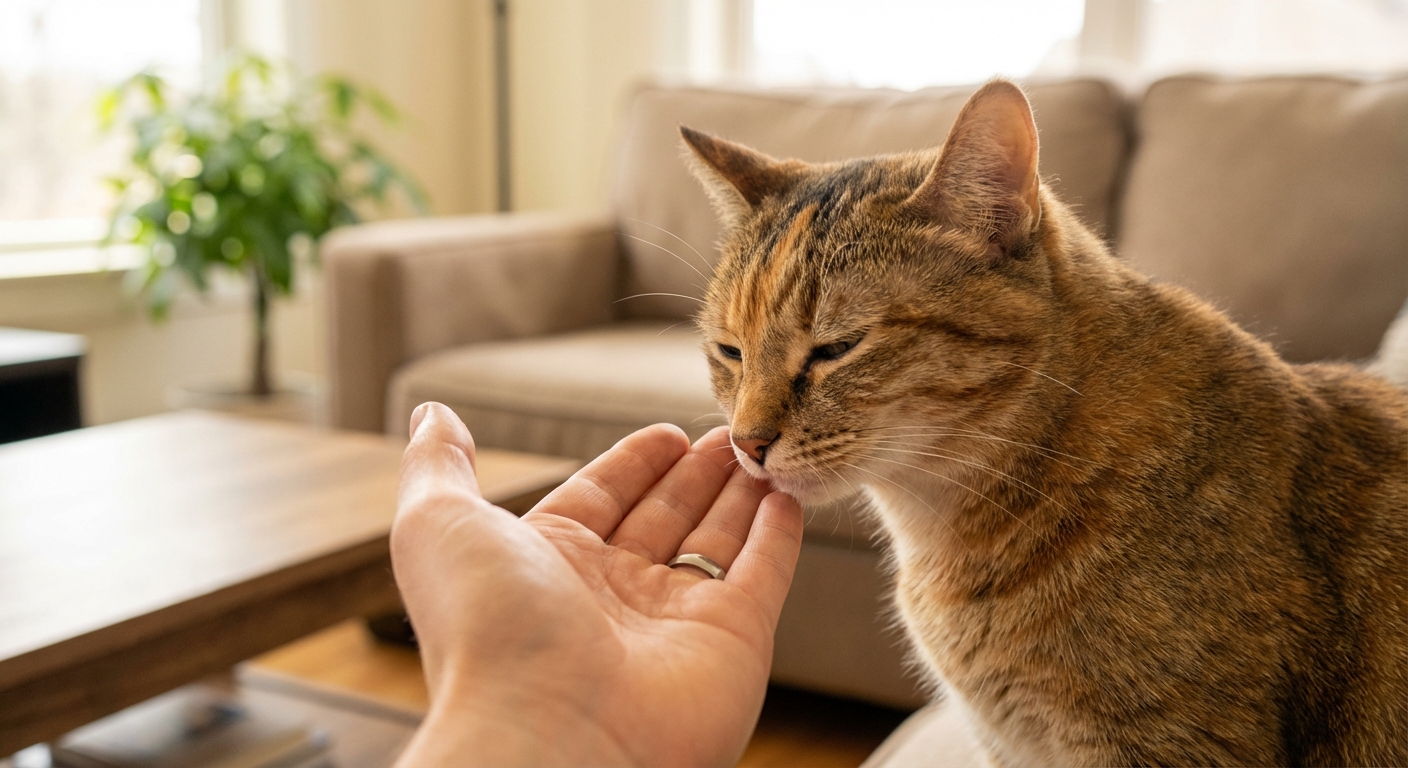
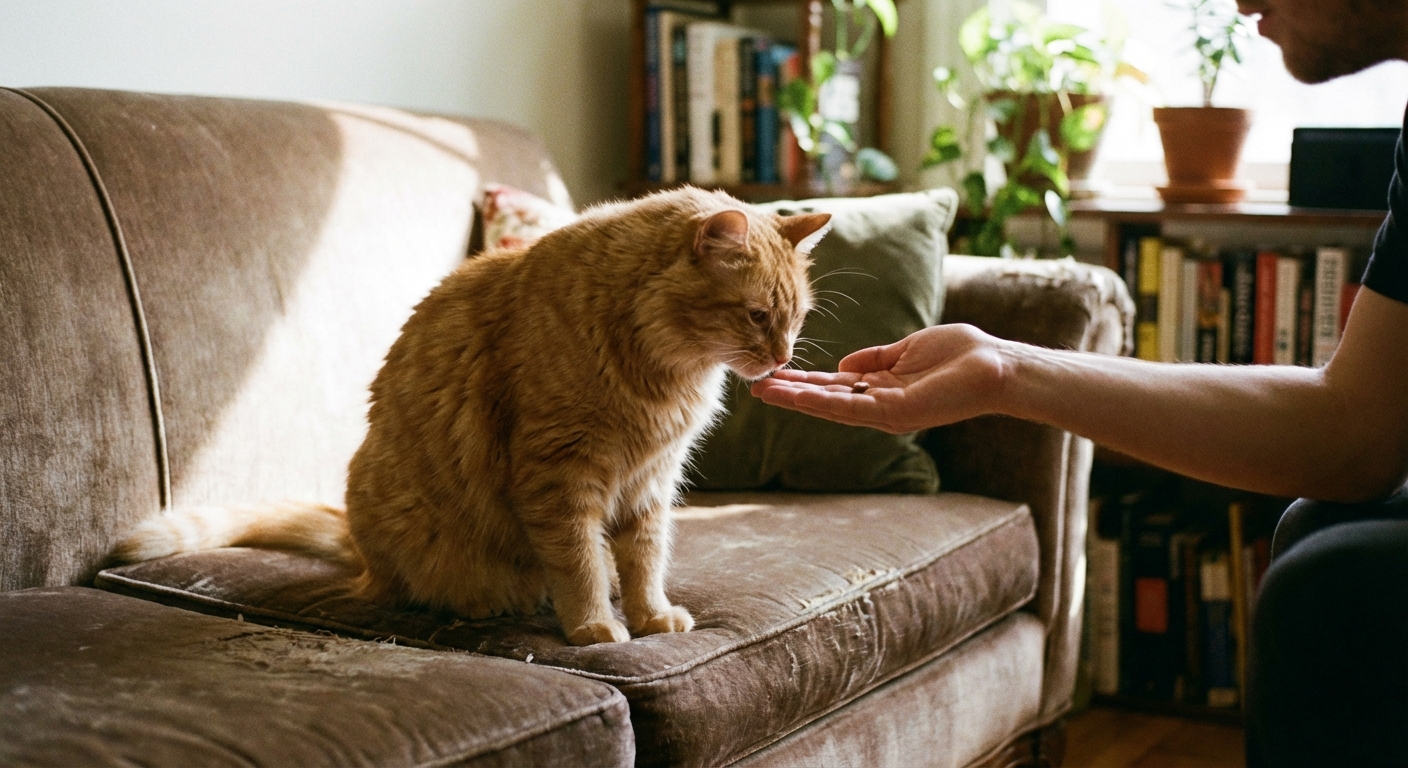
Another option that works well for many cats is tossing a treat away from the problem area. It interrupts, moves your cat where you want them to go, and keeps the moment positive.
2) Redirect fast
Offer a clear alternative that meets the same need:
- Scratching couch? Place the cat at a scratching post nearby.
- Biting during play? Switch to a wand toy and end hand play.
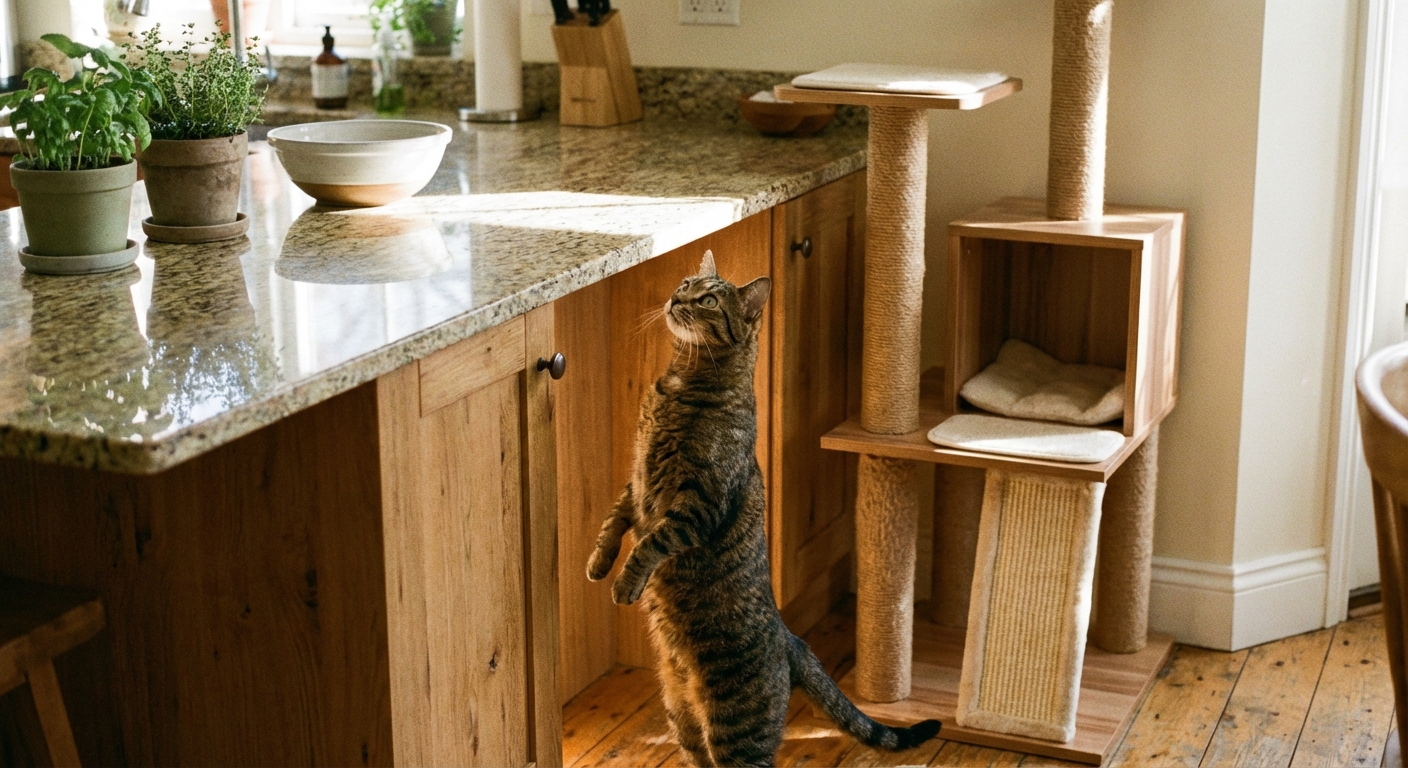
- Counter surfing? Guide them to a cat tree or window perch.
3) Reward the right choice
Cats learn fastest when the reward happens immediately or within a few seconds of the behavior. Use:
- tiny treats
- favorite toys
- affection if your cat enjoys it
- meal-time reinforcement for routines
Think of it as paying your cat for good choices.
4) Make the unwanted behavior less rewarding
Behavior often fades when it stops working. For example, if your cat scratches the sofa because it feels amazing, provide an even better scratching surface and temporarily protect the sofa so the payoff disappears.
Common problems
Scratching furniture
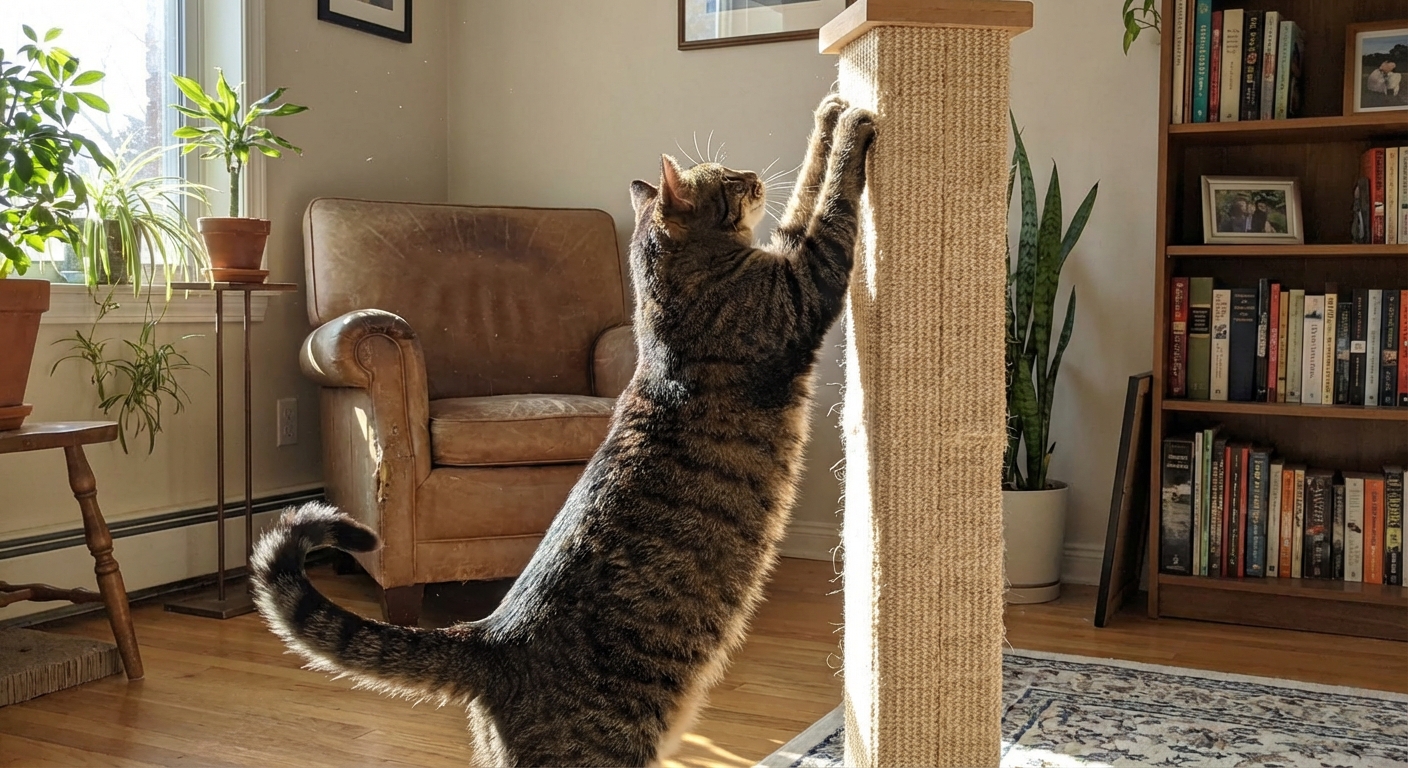
Scratching is essential for cats. It helps them stretch, mark territory, and shed the outer nail sheath. Your job is not to stop scratching. It is to guide it.
- Place posts where the problem happens. One near the couch is often more effective than one across the room.
- Choose the right style. Many cats prefer tall, stable posts with sisal. Others like cardboard scratchers.
- Make it irresistible. Use catnip, silvervine, or a toy lure.
- Protect the target area temporarily. Use furniture covers or pet-safe double-sided tape.
- Optional management tools. Regular nail trims can reduce damage. Soft nail caps can help in some households, but they are not a behavior fix by themselves and should be used with guidance if you are unsure.
Play biting and rough play
If your cat bites hands or ankles, it is often overstimulation or predatory play. The fix is both training and better play outlets.
- Stop the game immediately when teeth touch skin. Freeze, then disengage.
- Redirect to a wand toy so your cat can chase something appropriate.
- Use short, frequent play sessions (5 to 10 minutes, 1 to 3 times daily).
- End with a catch and a small treat to satisfy the hunt cycle.
Safety note: If your cat is highly aroused, avoid grabbing, restraining, or trying to “show them who’s boss.” Create space, step away, and give a brief cool-down period. You can restart with a toy once your cat is calm.
Counter surfing
Cats like high places and food smells. Prevention and alternatives work best.
- Keep counters boring. Wipe crumbs, store food, cover tempting items.
- Use management when needed. Close the kitchen door, use a baby gate, or block access during food prep if your cat is persistent.
- Create a better yes spot. A tall cat tree or a perch in the kitchen can meet the height need.
- Reward four paws on the floor and reward using the perch.
Important note: avoid booby traps that frighten your cat. The goal is calm boundaries, not a stressful home.
Litter box problems
This one deserves extra care. Punishing a cat for accidents often worsens the problem.
- Rule out medical issues first, especially for sudden changes.
- Check the basics. Many behaviorists recommend one box per cat plus one extra, placed in easy-access locations, and scooped daily.
- Try unscented litter and avoid sudden litter changes.
- Clean accidents thoroughly with an enzymatic cleaner to remove odor cues.
Meowing for food and attention
Cats learn quickly that vocalizing works. You can change this without being harsh.
- Do not reward the meow. Wait for a brief pause, then respond.
- Build predictability. Feed on a schedule or use a timed feeder.
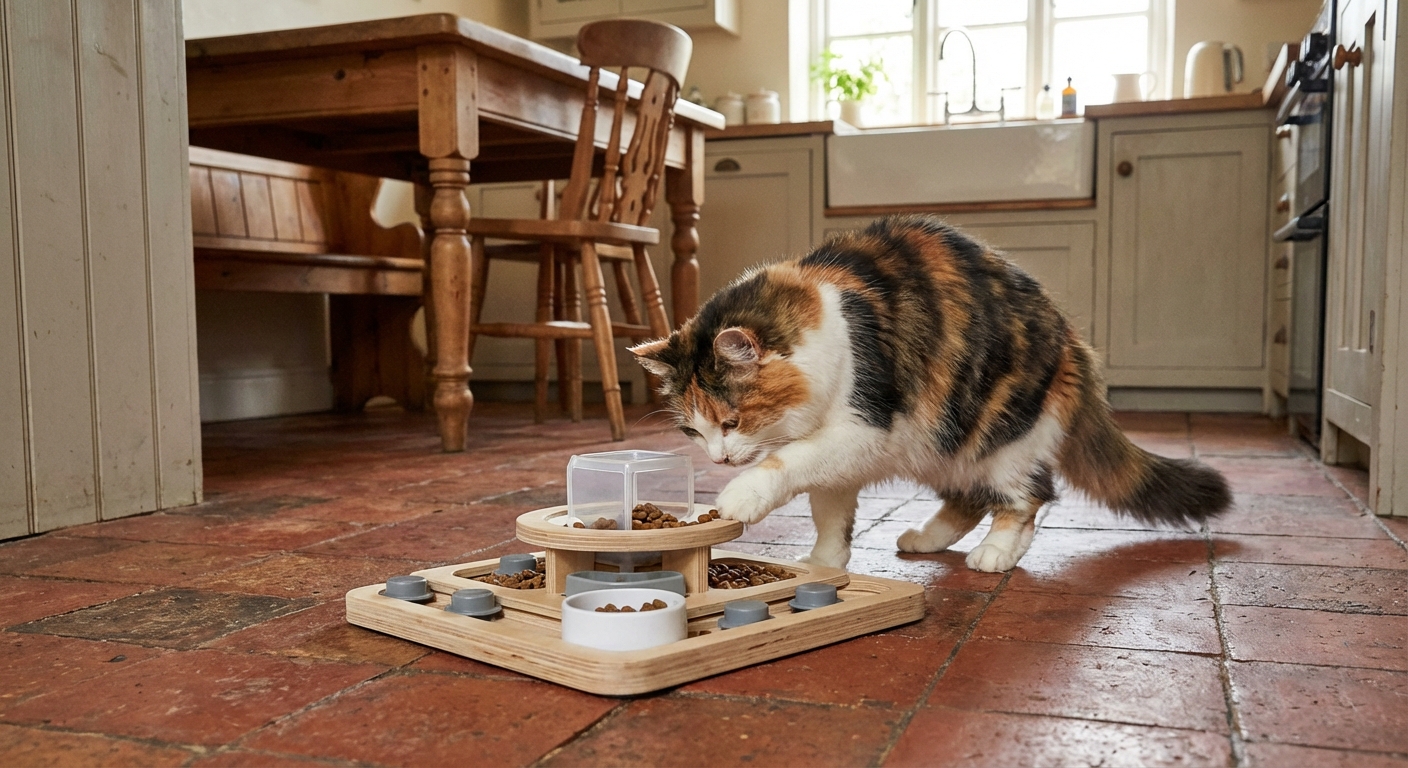
- Offer enrichment like puzzle feeders and window perches.
Enrichment helps
Many discipline problems improve dramatically when a cat’s needs are met. Enrichment is not extra. It is preventive care for behavior.
- Vertical space: cat trees, shelves, safe perches.
- Scratching options: at least one tall post and one horizontal scratcher.
- Daily interactive play: wand toys mimic hunting and reduce pent-up energy.
- Foraging: puzzle feeders, treat balls, scattered kibble for healthy hunting.
- Safe hiding spots: covered beds or quiet rooms reduce stress.
In the moment script
If you want a calm plan you can repeat, try this:
- See it: Notice the behavior early when possible.
- Interrupt: Use a neutral sound or cue word.
- Redirect: Move to a toy, scratcher, or perch.
- Reward: Treat, praise, or play within a few seconds of the right choice.
- Reset: Adjust the environment so the problem spot is less tempting.
Small, consistent habits compound into remarkable results over time. With cats, consistency is often the difference between a behavior that fades and a behavior that becomes a routine.
Multi-cat notes
In multi-cat homes, “misbehavior” is often a resource problem in disguise. Cats may compete quietly, then act out in ways that look random.
- Spread resources out. Separate food, water, and litter boxes across rooms when possible.
- Add vertical escape routes. Shelves and cat trees reduce conflict by giving cats options.
- Watch for subtle tension. Blocking doorways, staring, or chasing can lead to stress and litter box issues.
When to get help
Reach out to your veterinarian or a qualified feline behavior professional if you notice:
- aggression that escalates or causes injury
- fearful behavior that is worsening
- urinating outside the litter box, especially suddenly
- compulsive behaviors like overgrooming
- major changes after a move, new pet, or household stress
Getting help early is kinder and usually faster than trying to fix a complex issue alone.
Sources
- American Association of Feline Practitioners (AAFP) and International Society of Feline Medicine (ISFM) guidance on feline-friendly handling and behavior
- ISFM resources on feline stress and environmental needs
- General operant conditioning principles used in veterinary behavior and animal training
Bottom line
Disciplining a cat without fear or stress is really about teaching. Cats thrive with clear alternatives, predictable routines, and rewards for good choices. When you combine gentle interruption, consistent redirection, and an enriched environment, you create a home where your cat can be a cat and your furniture and sanity can stay intact.
If you want to start today, pick just one behavior to work on and practice one simple cycle: interrupt, redirect, reward. Do that consistently for a week, and you will often see meaningful change.