Stop scratching, play biting, counter surfing, and litter box issues without fear-based punishment. Use a simple interrupt-redirect-reward plan plus enrichme...
Article
•
Designer Mixes
How To Discipline a Cat

Shari Shidate
Designer Mixes contributor
As a veterinary assistant here in Frisco, Texas, I hear a version of this all the time: “My cat knows better, but she keeps doing it.” The tricky part is that cats do not learn like dogs do. What looks like “spite” is usually normal cat behavior mixed with stress, boredom, or an environment that makes the unwanted behavior rewarding.
The good news is that you can often change a cat’s behavior successfully. You just have to use the kind of discipline that works for cats: clear boundaries, immediate redirection, and making the right choice easier than the wrong one.
What discipline means for cats
With cats, “discipline” is not punishment. It is teaching. Effective discipline has three goals:
- Stop the behavior safely (without fear or force).
- Show an acceptable alternative (where you want your cat to scratch, climb, or play).
- Prevent practice (so the unwanted habit does not become your cat’s new normal).
Many veterinary behaviorists and feline welfare guidelines (including AAFP and ISFM guidance) caution that harsh punishment can increase fear and stress. In real life, that often looks like more hiding, more reactivity, and sometimes worse biting or urine marking. In a clinic setting, we see the aftermath: a cat that is less trusting, not a cat that is “fixed.”
Start with the why
Before you correct anything, ask: what is my cat trying to do?
- Scratching = nail maintenance, stretching, scent marking.
- Jumping on counters = height-seeking, food smells, curiosity.
- Play biting = overstimulation, lack of appropriate play outlets.
- Elimination outside the box = medical issue, litter box issue, stress or territory conflict.
If you treat a need like it is “bad behavior,” you will end up in a frustrating loop. When you meet the need in a better way, the problem often shrinks fast.
Quick safety note: If your cat suddenly starts peeing outside the litter box, straining, crying in the box, or producing only small amounts of urine, call your veterinarian promptly. Urinary problems can be medical emergencies, especially if your cat is male and cannot pass urine.
A 3-step method
1) Interrupt calmly
Timing matters. Cats connect consequences to behavior best when it happens immediately, typically within a few seconds, not minutes later.
- Use a gentle, neutral interrupter: “Ah-ah” or a light clap.
- Avoid loud startling noises (like yelling or banging). Those can create fear or noise sensitivity.
- Stay calm. Big reactions can make your cat anxious without teaching an alternative.
- If your cat is biting or grabbing, freeze briefly. Movement can “reward” the bite by making it more exciting.
2) Redirect to a yes
The best discipline is giving your cat a clear “yes.”
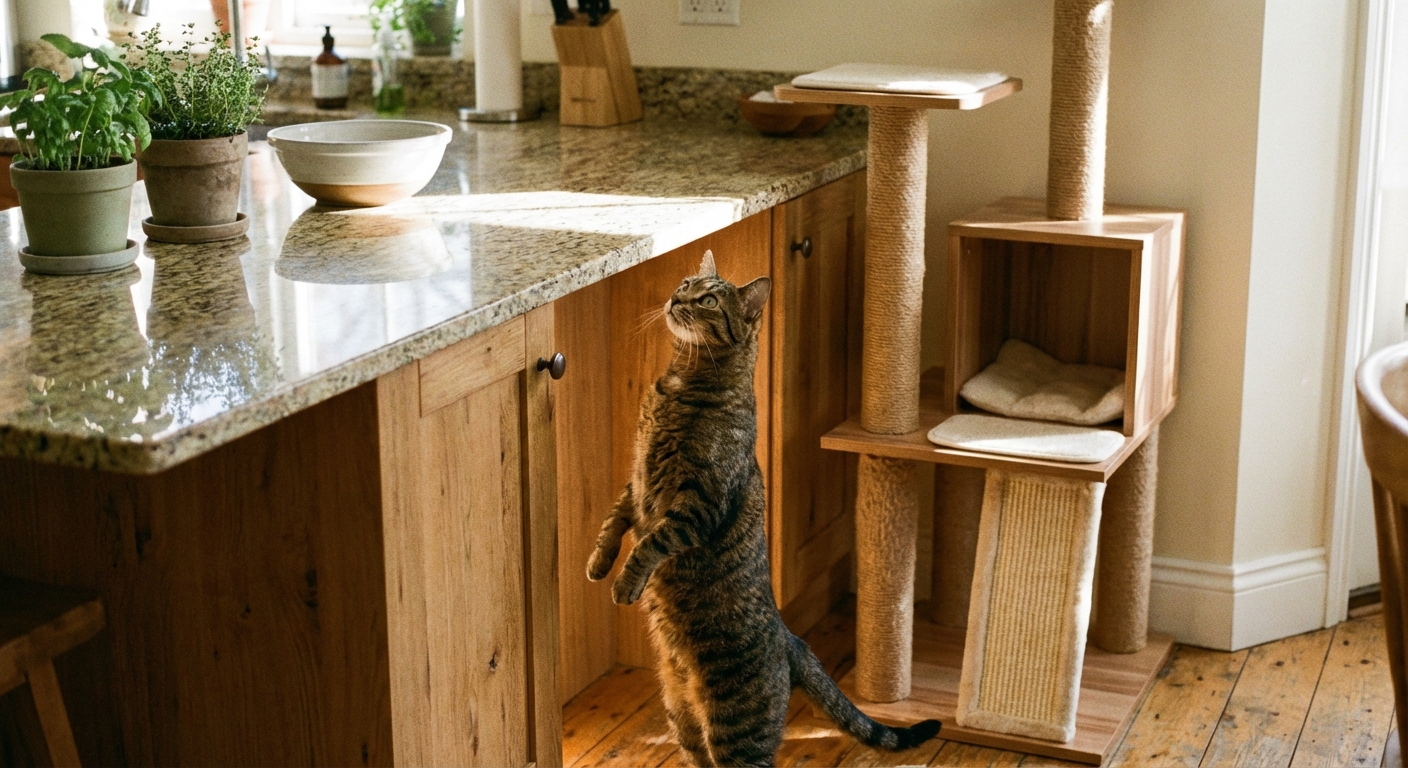
- Counter surfing: calmly place your cat on a cat tree or window perch, then reinforce.
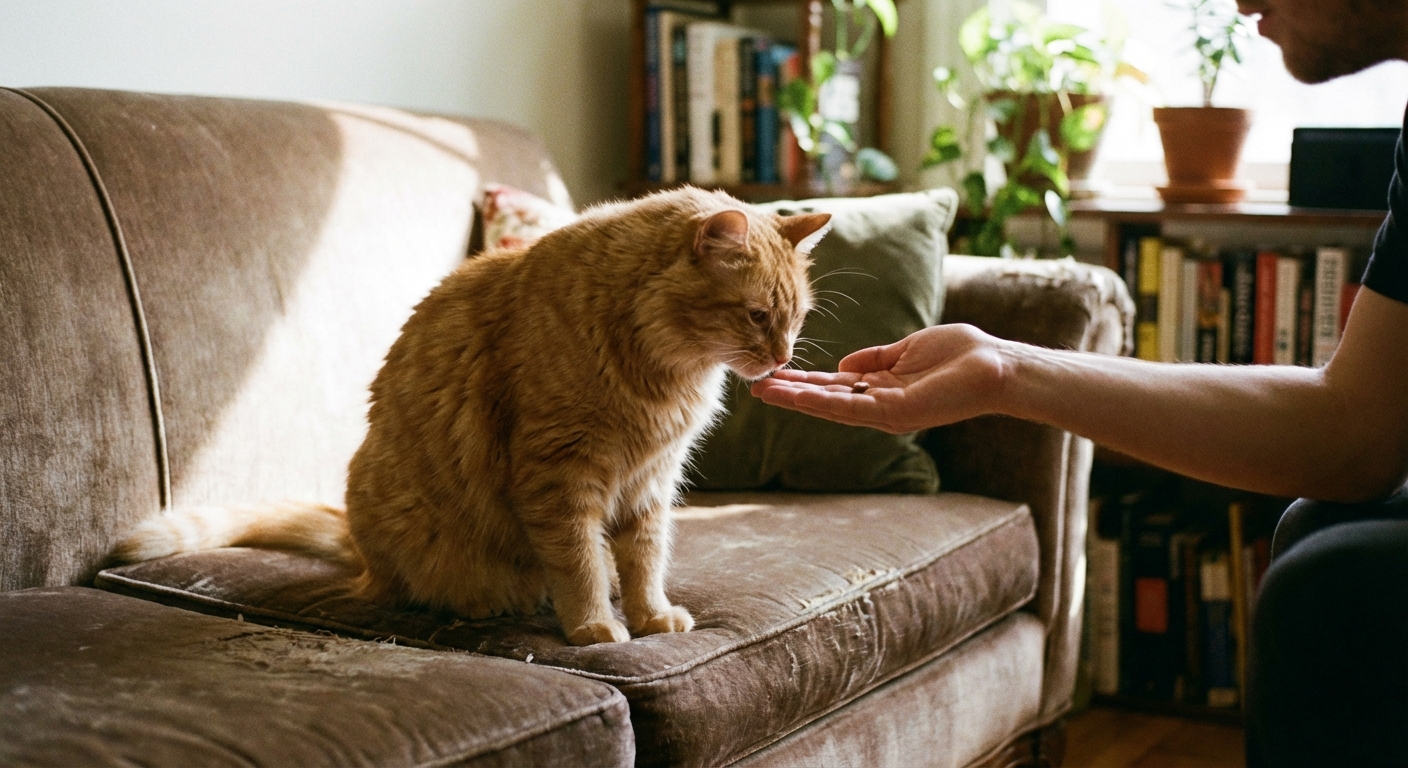
- Scratching furniture: move your cat to a scratching post, then reinforce.
- Rough play: swap hands for a wand toy, kicker toy, or tossed mouse toy.
Redirection works best when the alternative is closer, easier, and more rewarding than the problem behavior. It also works faster when everyone in the household responds the same way every time.
3) Reinforce what you want
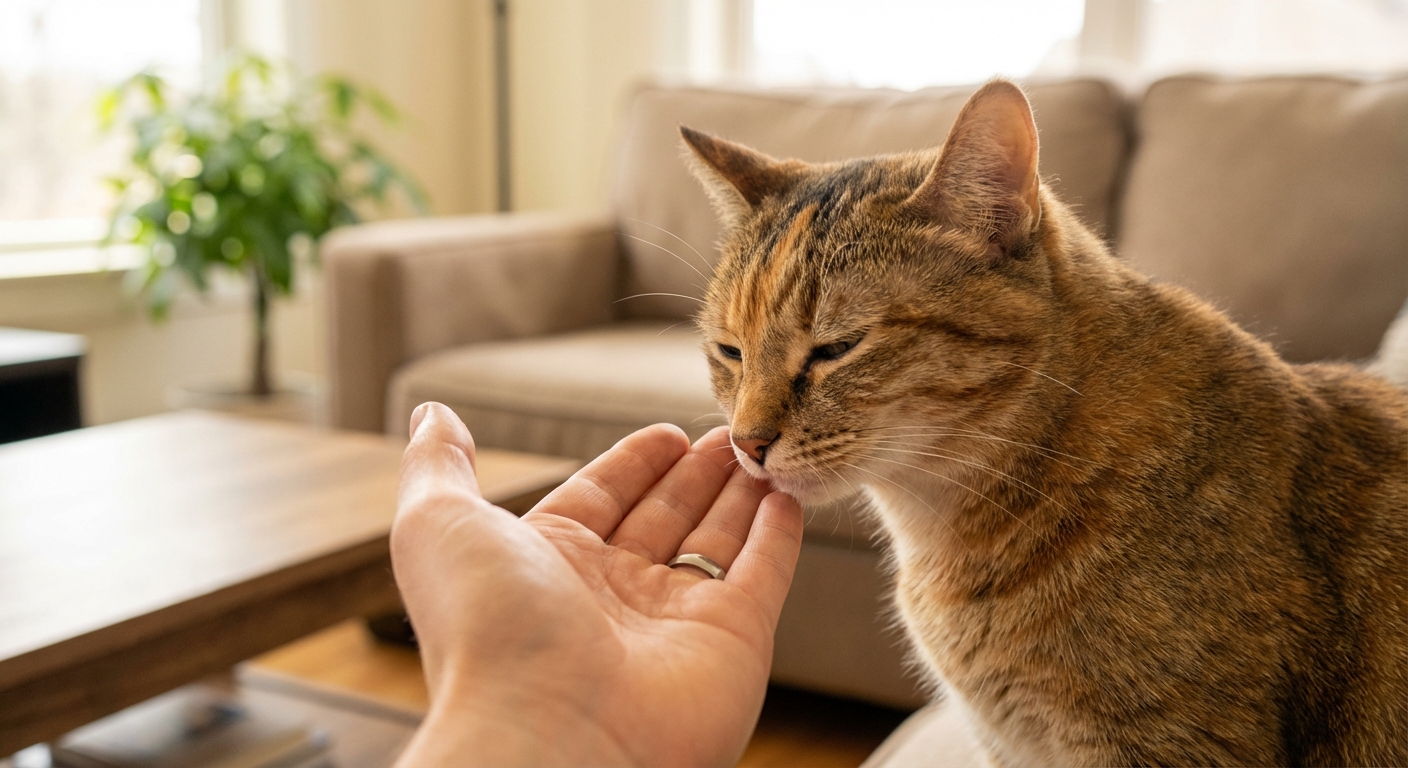
Cats repeat what pays off. Use tiny rewards your cat loves.
- Small treats (pea-sized)
- Play (10 to 30 seconds with a wand toy)
- Affection (if your cat enjoys it)
If your cat needs to watch calories or has dietary restrictions, you can still reinforce with a few pieces of their regular kibble from the daily allotment, low-calorie treats, or a short play burst.
Catch your cat being good. Reinforce paws on the floor, scratching the post, relaxing on the cat tree, or chewing an appropriate toy.
What not to do
- Do not hit, flick, or scruff your cat. This increases fear and can trigger defensive aggression.
- Do not rub your cat’s nose in urine or feces. It does not teach litter box skills and often increases anxiety.
- Do not yell. Your cat may learn to avoid you, not the behavior.
- Do not punish after the fact. Your cat will not connect it to what happened earlier.
If the behavior stops only when you are in the room, your cat has learned to avoid you, not the behavior.
Common problems
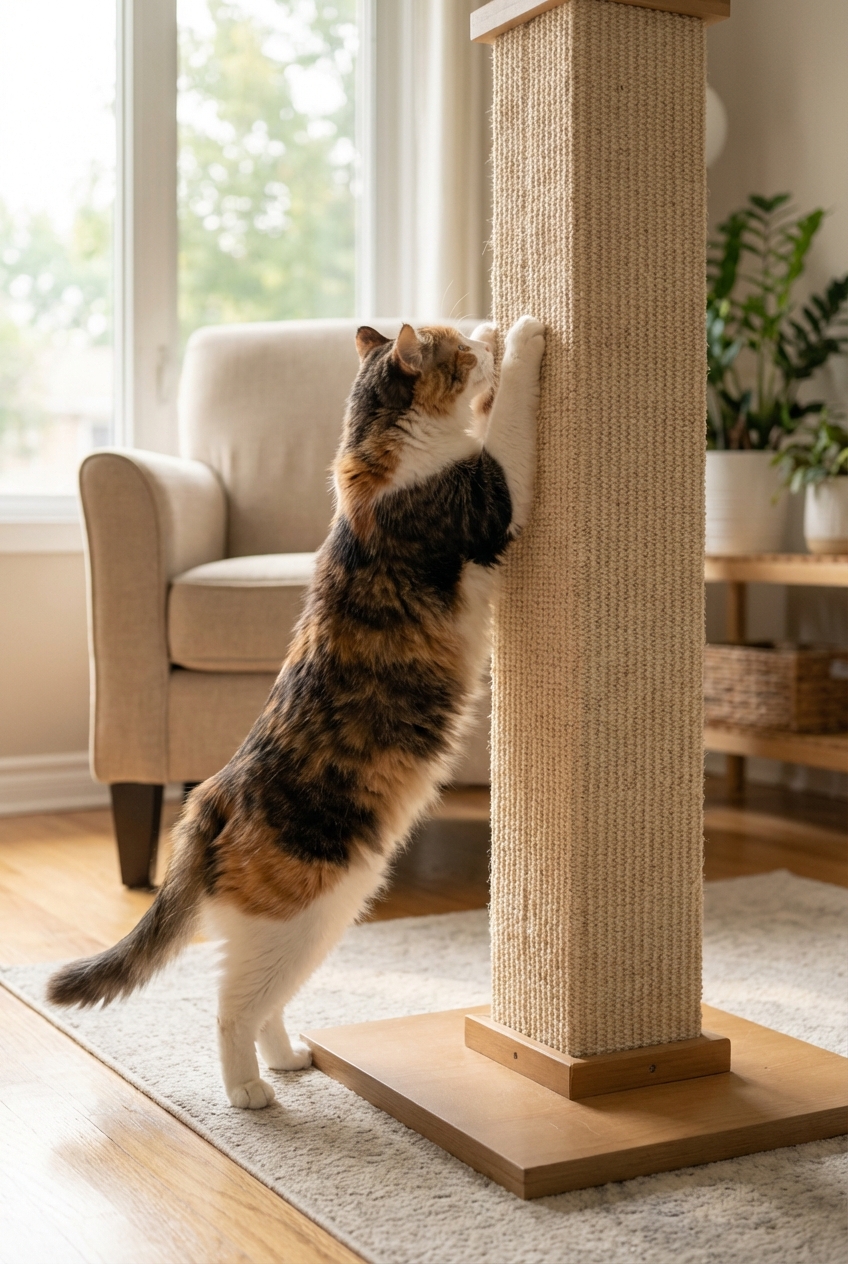
Scratching furniture
Scratching is normal. Your job is to make the “legal” scratching option irresistible.
- Place a sturdy scratching post right next to the scratched area first.
- Choose the right style: many cats like tall, stable posts with sisal; others prefer horizontal cardboard scratchers.
- Reinforce immediately when your cat uses it.
- Make the furniture less rewarding: double-sided tape or a scratch deterrent sheet can help.
Play biting and pouncing
This is often “bad manners,” not aggression.
- Stop using hands as toys. Hands should only deliver good things.
- Schedule play: 2 to 3 short sessions daily can reduce ambush behavior.
- End play before your cat gets too revved up, then offer a small meal or treat to complete the hunt cycle.
- If bitten, freeze and gently disengage. Then redirect to a toy.
Jumping on counters
Cats love vertical space. If you only say “no,” they will keep trying.
- Create an approved “up” spot nearby: cat tree, shelf, or window perch.
- Remove rewards: keep food put away, wipe counters to remove smells.
- Teach an alternative: lure your cat to the cat tree, reinforce, repeat.
Some households use non-contact environmental deterrents (like motion-activated air puffs) to reduce counter access. These can help some cats, but they can also increase fear or stress. Use cautiously, stop if your cat seems more anxious, and always pair it with a better “yes” spot your cat can use instead.
Meowing for food
If meowing gets fed, meowing grows.
- Feed on a routine schedule.
- Use puzzle feeders or slow feeders for cats who “demand” meals.
- Reinforce quiet behavior: wait for a pause in meowing before you set the bowl down.
Litter box issues
This is a big one, and it is rarely solved with “discipline.” Start with a vet visit, then check your setup.
- Common guideline: one box per cat plus one extra.
- Many cats prefer a large box that lets them turn around comfortably.
- Unscented litter is often preferred.
- Scoop daily, full change regularly.
- Boxes should be in quiet, accessible locations.
- Some cats avoid covered boxes, especially if they feel trapped or smells build up.
If you have multiple cats, stress and bullying can also play a role. Sometimes adding vertical space, separate resources, and predictable routines makes a dramatic difference.
Set up success
The easiest discipline is prevention. If your cat can practice the unwanted behavior all day, it becomes normal.
- Manage the environment: close doors, use baby gates, cover cords, keep tempting items out of reach.
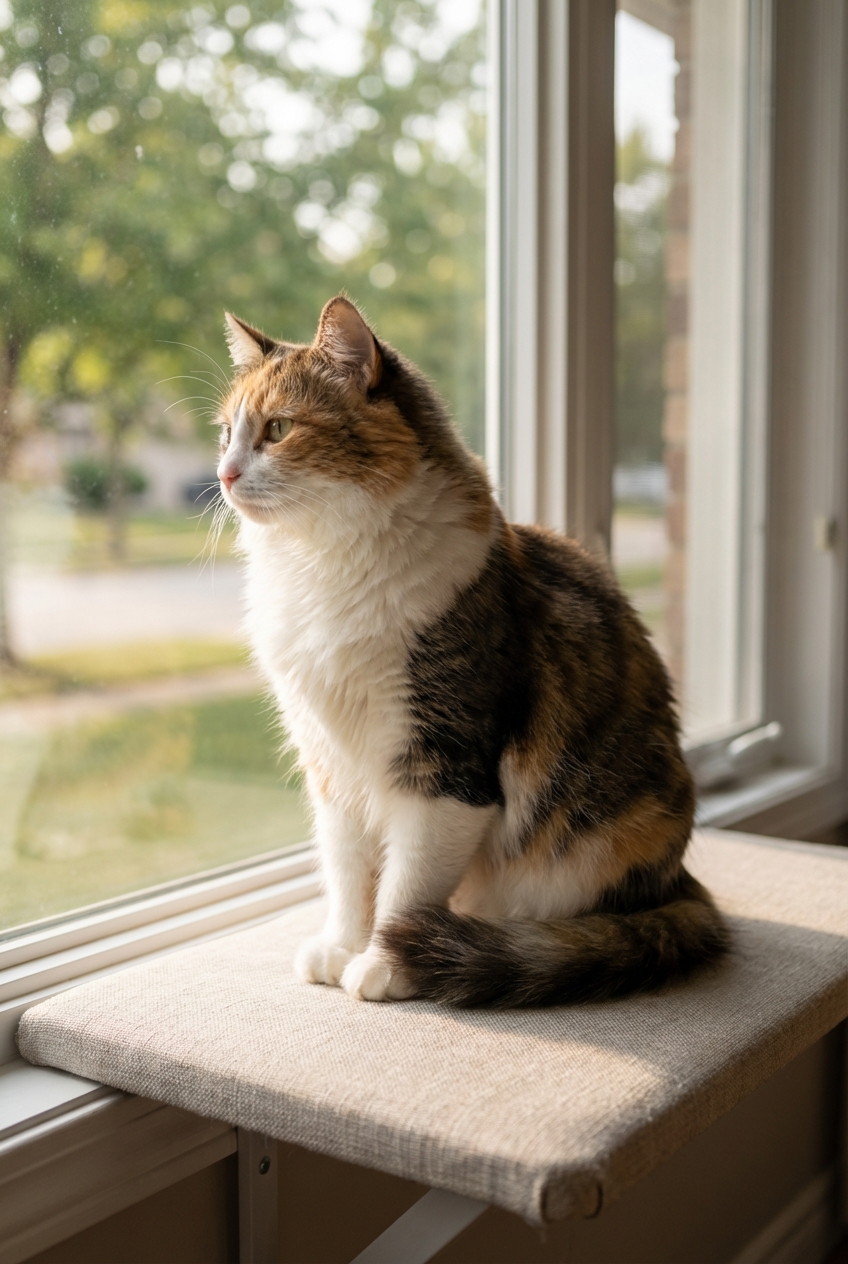
- Add enrichment: window perches, bird feeder views, puzzle feeders, rotating toys.
- Provide vertical territory: cat trees and shelves reduce conflict and boost confidence.
- Meet energy needs: a tired cat is usually a better-behaved cat.
How long it takes
Many cats show improvement within 1 to 2 weeks when you are consistent, but strong habits can take longer. Think in terms of repetition: your cat is learning a new routine.
Track progress with simple notes: what happened, time of day, what your cat got out of it (attention, food, play, escape). Patterns make solutions clearer.
When to get help
Get help sooner rather than later if you notice:
- Sudden behavior changes
- Aggression that breaks skin
- Litter box accidents after being reliably trained
- Hiding, decreased appetite, or signs of pain
- Conflict between cats that is escalating
Your veterinarian can rule out medical causes and may recommend a certified cat behavior consultant or a veterinary behaviorist. Sometimes a small change in environment, routine, or treatment plan is all it takes to help your cat feel secure again.
A simple daily plan
- Morning: 5 to 10 minutes of wand-toy play, then breakfast.
- Midday: puzzle feeder or a few treats hidden in a snuffle mat.
- Evening: another short play session, then dinner.
- Anytime unwanted behavior happens: interrupt calmly, redirect immediately, and reinforce the right choice.
Disciplining a cat successfully is really about relationship and routine. Be patient, be consistent, and remember that your cat is not trying to give you a hard time. They are trying to have a need met. When you show them a better way, most cats take it.