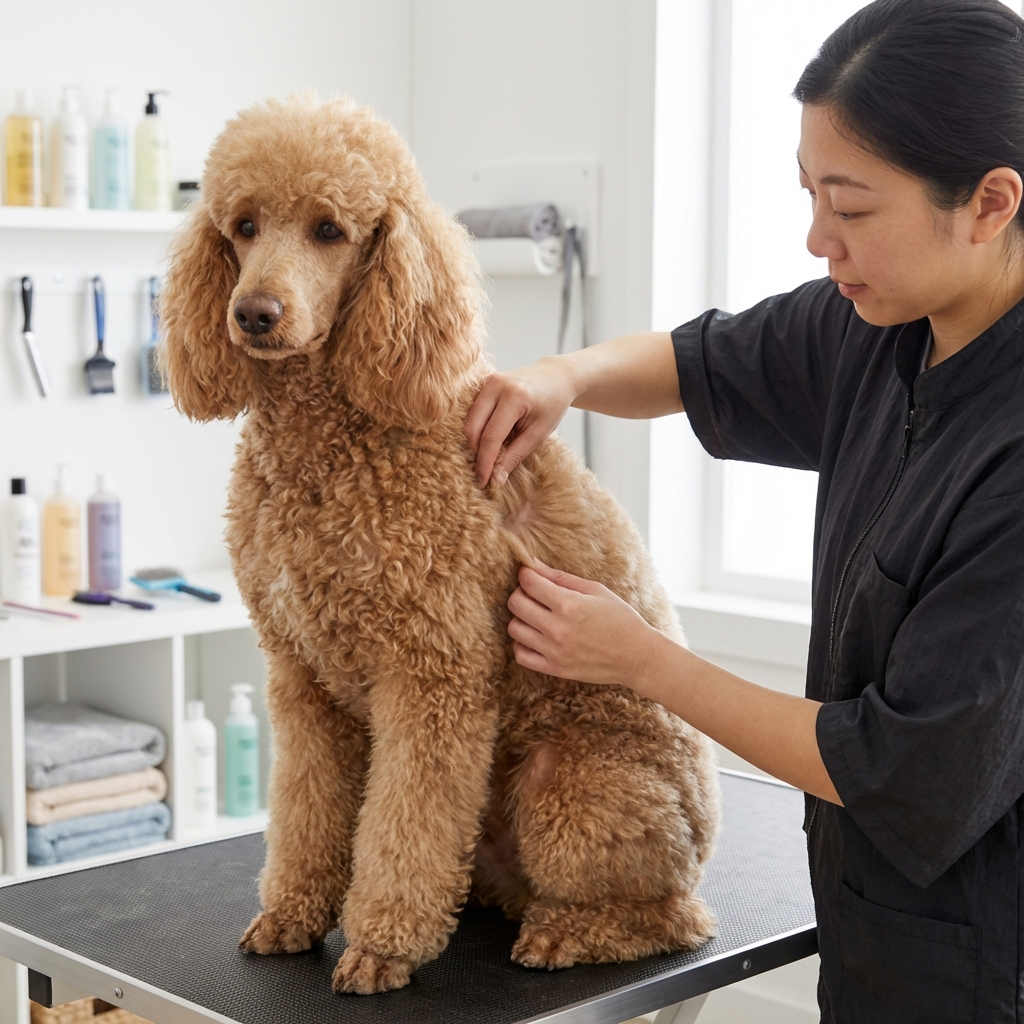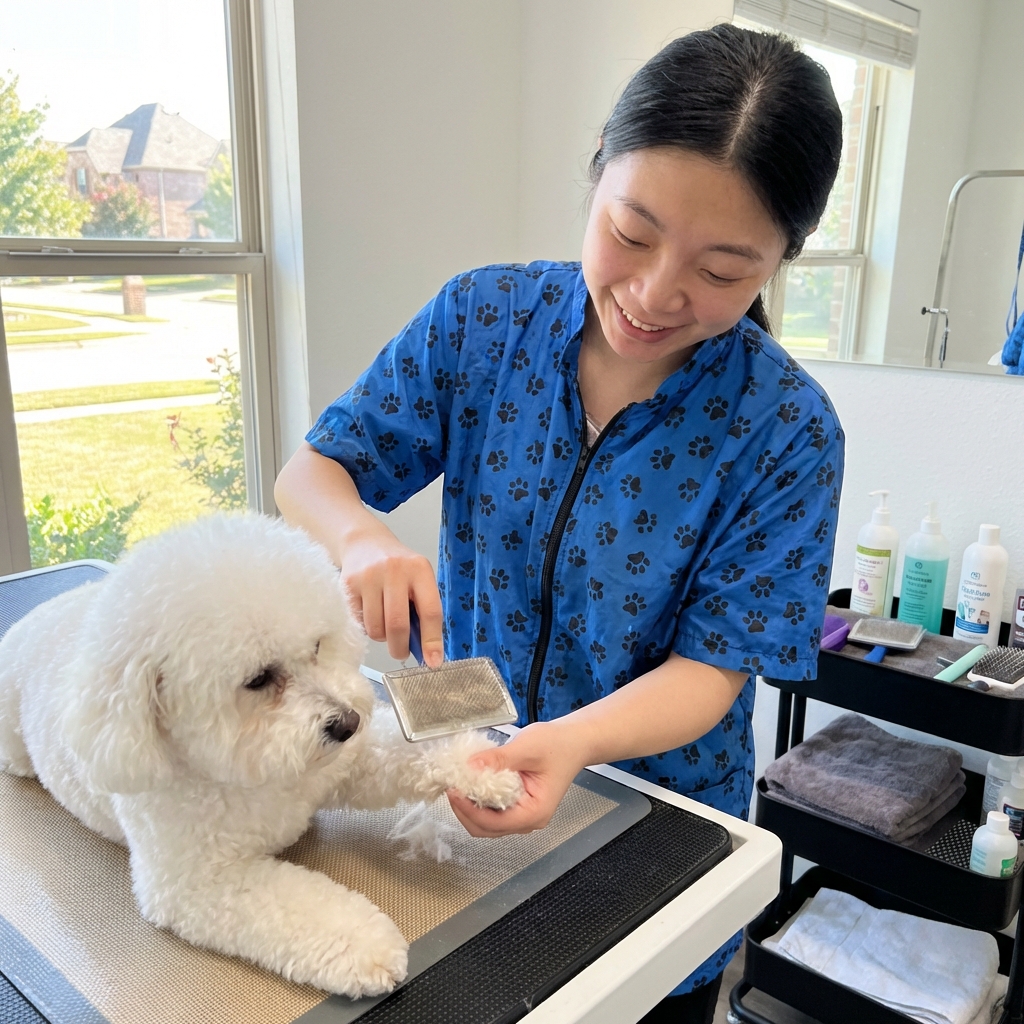
Tight mats can hurt and hide skin problems. Follow a vet assistant’s step-by-step method to remove small mats safely, avoid scissors, and know when a groom...
Article
•
Designer Mixes
How to Demat a Dog

Shari Shidate
Designer Mixes contributor
Mats can sneak up on even the most loved and well-groomed dogs. One day your pup feels fluffy, and the next you find a tight knot behind the ear or a clump in the armpit that seems glued to the skin. As a veterinary assistant here in Frisco, Texas, I can tell you this with total confidence: dematting is not about “getting the knot out” at all costs. It is about protecting your dog’s skin, comfort, and trust while you work.
This guide will walk you through what mats are, how to remove them as safely as possible at home, when to stop and call a groomer or veterinarian, and how to prevent them from coming right back. This is general education and is not a substitute for veterinary care for painful skin, infection, or severe matting.
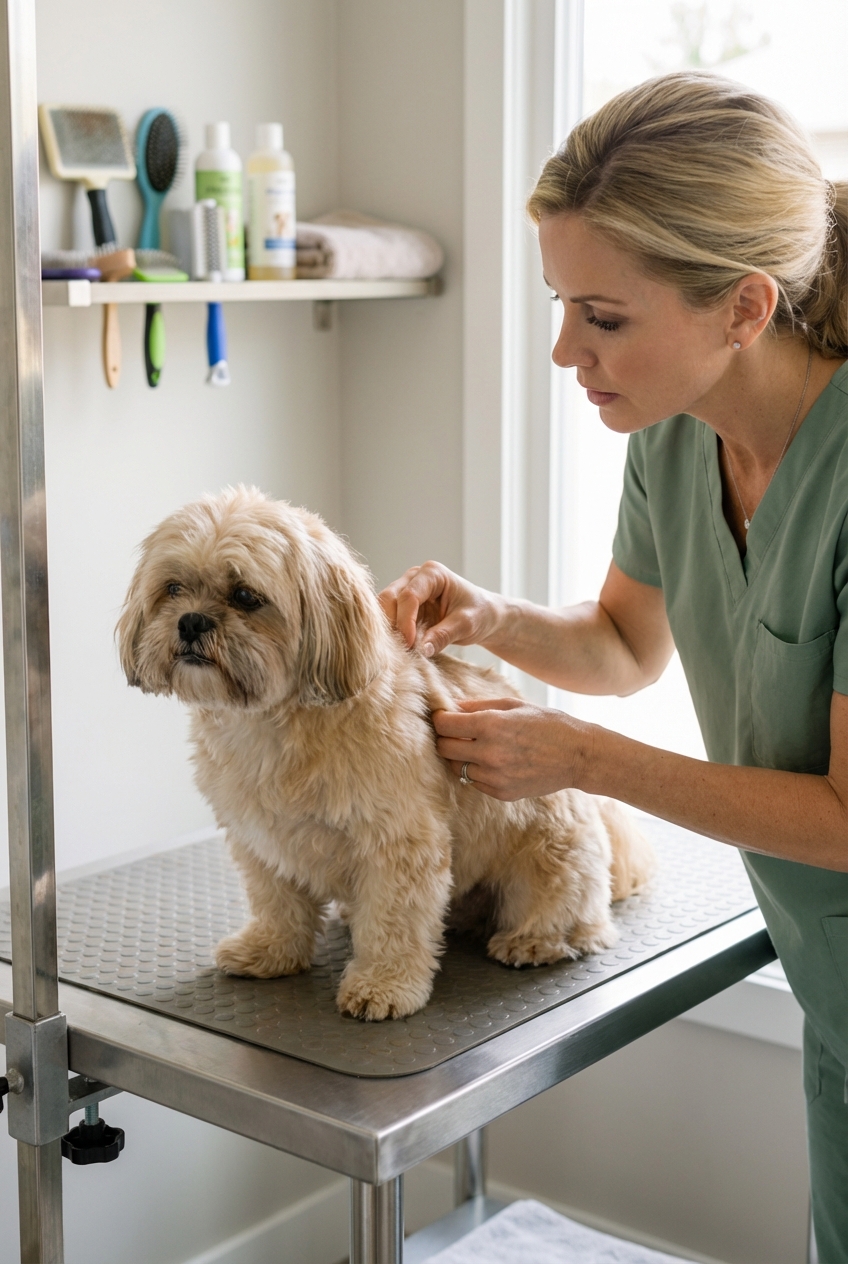
Why mats matter
A mat is more than messy hair. It is a tangle of fur that tightens over time and can pull on the skin like a constant pinch. Under a mat, moisture and debris get trapped, which can lead to:
- Skin irritation and inflammation from tension and friction
- Hot spots (moist dermatitis) and secondary bacterial infections
- Yeast overgrowth in damp, poorly ventilated areas
- Hidden parasites such as fleas or ticks
- Pain with movement, especially in armpits, groin, and around the collar
Mats are especially common in curly, fine, or “cottony” coats (like poodles and many doodle mixes), long or feathered coats, and coats with a soft undercoat that tangles easily. They also form quickly in high-friction zones like behind the ears, under the collar or harness, at the tail base, and in the “pants” on the back legs.
First: size it up
Before you reach for tools, do a quick assessment. This helps you choose the safest plan.
How tight is it?
- Light tangle: you can separate hairs with your fingers and see some skin when you part the fur.
- Moderate mat: compact knot, difficult to separate, may be attached close to the skin.
- Pelted coat: matting is widespread and feels like a thick, solid layer. Skin is hard to see anywhere.
How is your dog responding?
If your dog is flinching, yelping, freezing, snapping, or trying to escape, that is valuable information. Pain and fear make accidental injury more likely. It is completely OK to pause and get professional help.
Tools that help
You do not need a full grooming salon at home, but the right basics can prevent skin tears.
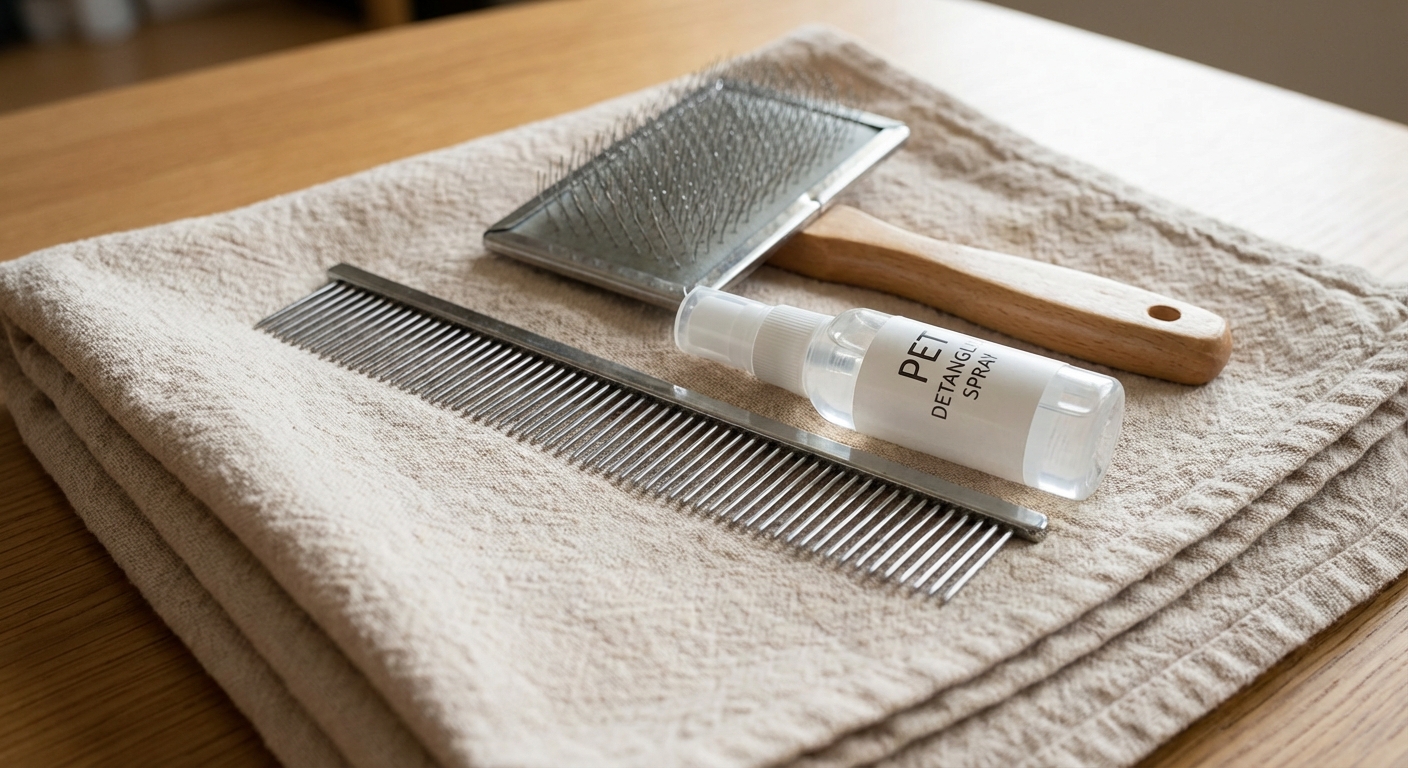
- Slicker brush for gentle surface brushing and finishing
- Metal grooming comb (often called a “greyhound comb”) to check your work down to the skin
- Dematting spray or leave-in conditioner made for pets to reduce friction and breakage
- Blunt-tip scissors for carefully splitting a mat (not cutting it out at the skin)
- Mat splitter or dematting tool only if you know how to use it without scraping skin
- Treats to keep sessions short and positive
A note about scissors: A very common reason dogs end up at the vet is an accidental cut while someone is trying to remove a mat. Dog skin can be thin and can fold into mats in ways you cannot see. If you are not 100% certain you can see exactly where the skin is, do not cut.
What not to use
These choices can make things worse or cause injury:
- Human detanglers or conditioning sprays unless your veterinarian confirms the ingredients are pet-safe
- Essential oils on mats or skin (many are irritating or toxic to pets)
- Razor scissors or sharp, pointed scissors near the skin
- Electric clippers without training (clipper burns and skin cuts happen fast, especially in pelted coats)
Step-by-step: dematting at home
1) Set up a calm, grippy space
Choose a quiet room. Put a non-slip mat or towel down so your dog feels stable. Keep sessions short, even 5 to 10 minutes. Many small sessions are safer than one long battle.
2) Use your fingers first
Lightly mist the mat with a pet-safe dematting spray or a little diluted conditioner. Then use your fingers to gently tease the edges apart. Think “crumbs,” not “yank.” Your goal is to loosen the outside of the mat before any tool touches it.
3) Hold hair at the base
Hold the hair at the base (between the mat and the skin) with your fingers. This helps reduce tugging on the skin while you work the mat out in tiny sections.
4) Work small from the ends
Using a slicker brush or comb, start at the outer end of the mat and make short, gentle strokes. After you loosen a little, move slightly closer to the base. Avoid digging straight down toward the skin.
5) Split the mat if needed
For a moderate mat, you can sometimes “split” it into smaller pieces. Use blunt-tip scissors to cut into the mat vertically (like making a seam) only if you can clearly keep the scissors away from skin. Angle the scissors away from the body, go slowly, and stop immediately if your dog wiggles or you lose your view. Then return to finger-teasing and combing each smaller section.
6) Comb-check to the skin
After you think the mat is out, run a metal comb through the area. If the comb glides to the skin without snagging, you are truly detangled. If it catches, there is still matting to address.
7) End on a good note
Stop before your dog is overwhelmed. Give treats and a break. You want grooming to feel safe, not like restraint and discomfort.
Extra-cautious zones
Some mat locations are higher risk because the skin is thin or folds easily.
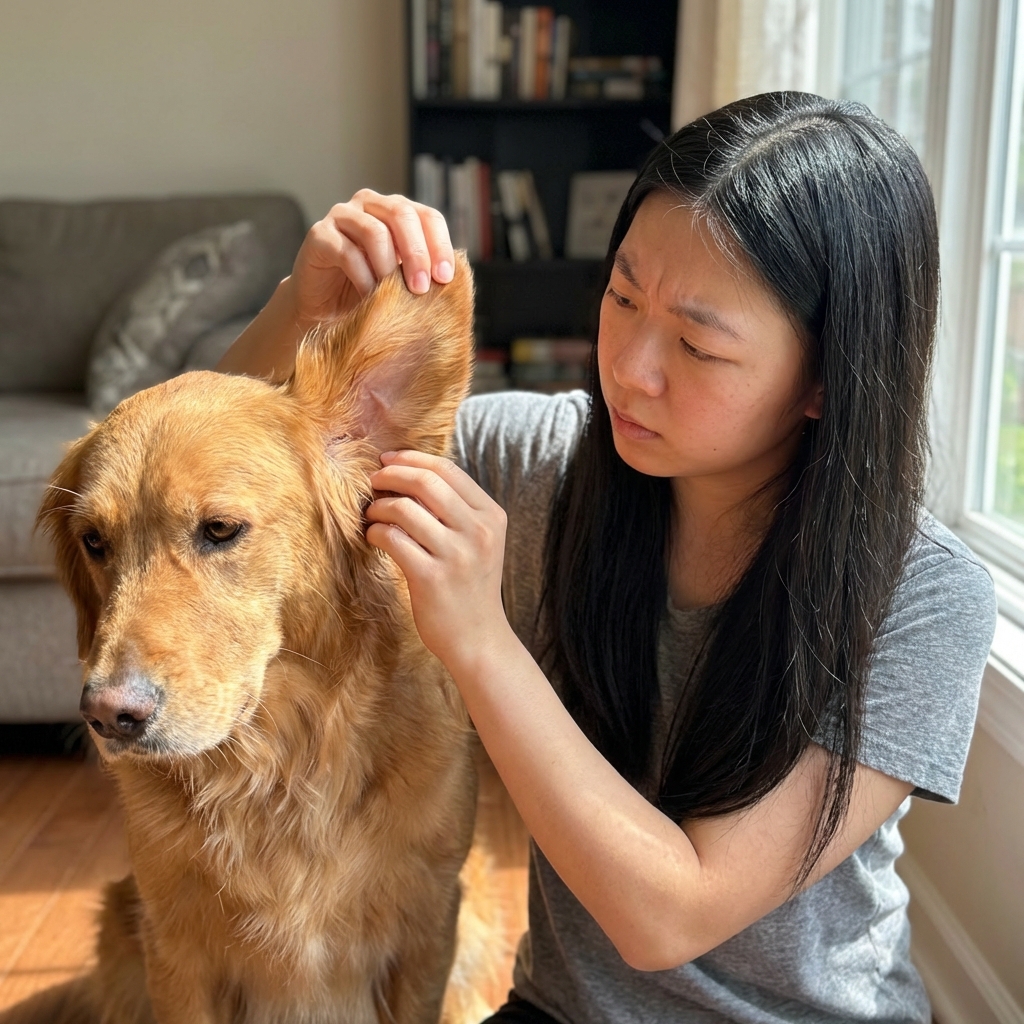
- Behind the ears: tangles form fast and pull painfully
- Armpits: friction plus thin skin makes injury easier
- Groin and belly: very delicate skin and lots of movement
- Tail base: sensitive and often tightly packed
- Between toes: mats can trap foxtails, dirt, and moisture
When to call a pro
Home dematting is best for small tangles and early mats. It is not the kindest choice for every situation. Contact a groomer or veterinarian if:
- The mat is tight to the skin or you cannot see where skin begins
- Your dog is pelted over large areas
- You notice redness, odor, oozing, scabs, or bleeding
- Your dog shows significant pain, fear, or aggression
- The mat is in a high-risk area (armpit, groin, toes) and feels dense
- You suspect fleas, ticks, foxtails, or anything embedded
Professional groomers have the equipment and experience to remove severe matting with less risk. For severely pelted coats, the most humane option is often a professional shave-down rather than prolonged dematting. In some cases, a veterinarian may recommend shaving under medical supervision, especially if the skin is infected or your dog cannot safely tolerate grooming.
After: check the skin
Once a mat is removed (or clipped off by a professional), take a moment to look and sniff the area. If you see redness, sores, scabs, bruising, swelling, parasites, or notice a strong odor, call your veterinarian. Mats can hide problems that need treatment, not just grooming.
Common mistakes
- Mistake: Bathing a matted dog first. Why it is a problem: water can make existing mats more compact and harder, sometimes more painful, to brush out. Do instead: detangle first, then bathe.
- Mistake: Pulling hard to “get it done.” Do instead: use short sessions, spray, and finger-teasing.
- Mistake: Cutting a mat out flush to the skin. Do instead: only split mats when you can clearly control distance from skin, or have a groomer clip it safely.
- Mistake: Brushing only the topcoat. Do instead: line-brush and check with a metal comb down to the skin.
Prevention: keep mats away
Once mats happen, they tend to happen again unless you adjust the routine. The best prevention plan is simple and consistent.
Brush schedule
- Curly and doodle coats: comb-check daily or every other day, full line-brush 3 to 4 times weekly
- Long or feathered coats: 3 to 4 times weekly, with extra focus on friction zones
- Double coats: 2 to 3 times weekly, more during shedding seasons
- Smooth coats: weekly brushing, but still check friction zones
Focus on friction zones
Spend a minute behind ears, under collar and harness points, armpits, and tail base. These areas mat first, even when the rest of the coat looks fine.
Consider a practical haircut
If your dog’s coat mats repeatedly, a shorter trim can be a loving, health-first decision. Comfort matters more than fluff, especially in Texas heat.
Extra help for anxious or senior dogs
If your dog is older, painful, or very anxious, do not turn grooming into a wrestling match. Try shorter sessions, higher-value treats, and consider having a second person calmly support your dog. For dogs that truly cannot tolerate grooming safely, talk with your groomer and veterinarian about safer options, including medical evaluation, pain control, or sedation when appropriate.
Support coat health from the inside
Nutrition does not “cure” mats, but healthy skin and coat can reduce breakage and excessive shedding that contributes to tangles. Ask your veterinarian about a balanced diet and whether omega-3 fatty acids (EPA and DHA) are appropriate for your dog.
Quick checklist
- Keep sessions short and calm
- Use a pet-safe detangling spray, not plain water
- Start at the ends of the mat and work inward
- Hold hair at the base to protect skin
- Use a metal comb to confirm you reached the skin
- Stop and call a pro if it is tight, widespread, or painful
If you remember one thing, let it be this: if dematting is hurting your dog, it is time to change the plan. Shaving can feel emotional, but pain and skin injury are worse.