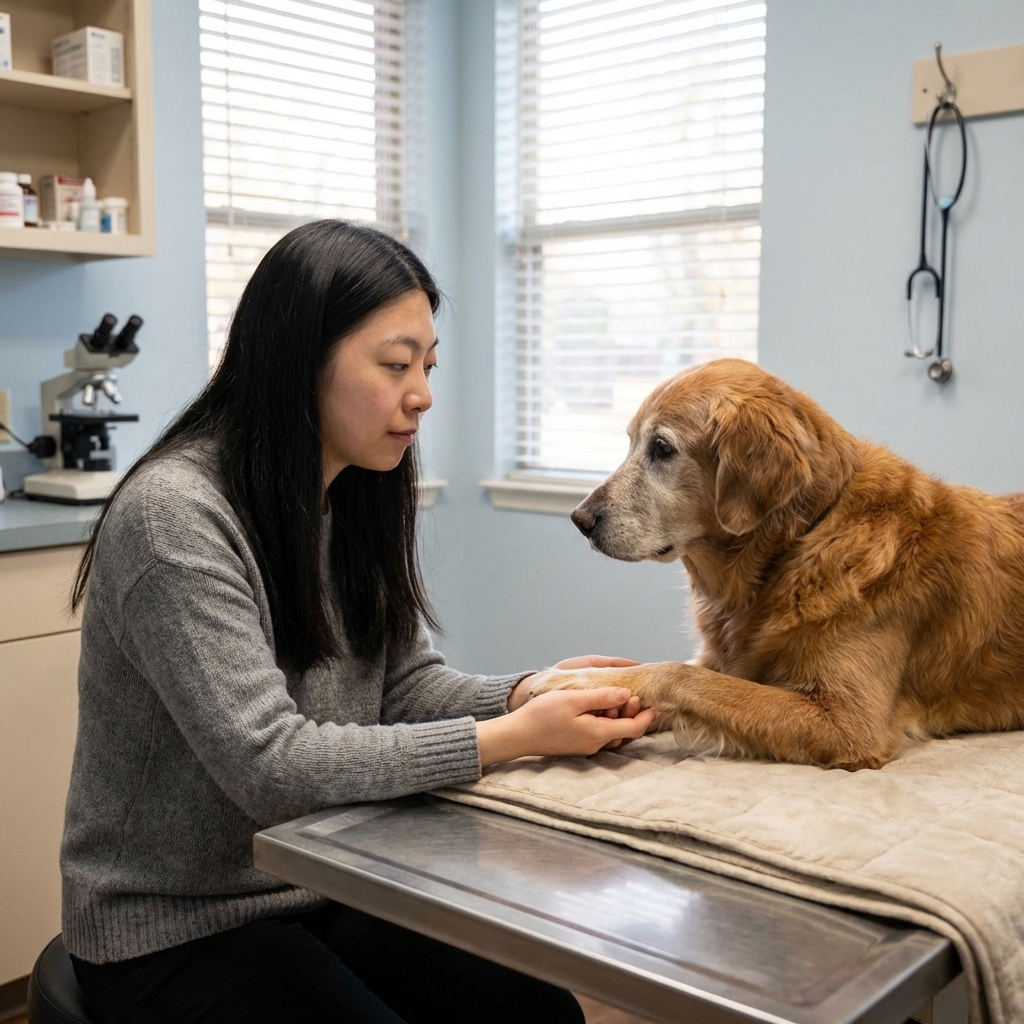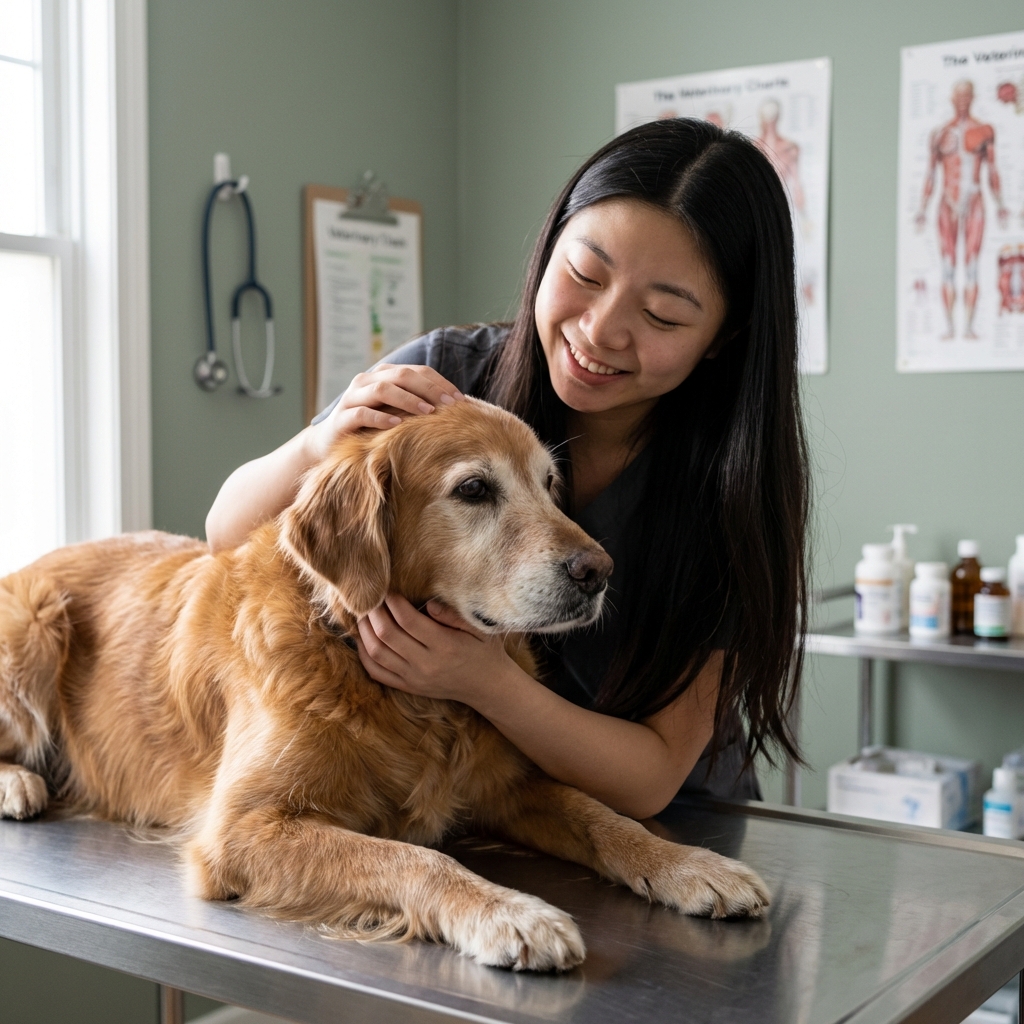
A compassionate guide to deciding when it’s time to euthanize a dog. Learn quality-of-life signs, a daily checklist, urgent red flags, and what to expect a...
Article
•
Designer Mixes
How to Decide When to Put Your Dog Down

Shari Shidate
Designer Mixes contributor
Making the decision to say goodbye is one of the hardest, most loving responsibilities we take on as dog parents. If you are searching for answers, it usually means your heart already knows something important: your dog is struggling, and you want to prevent suffering while still honoring their life.
As a veterinary assistant in Frisco, Texas, I have seen how deeply people love their dogs of all breeds and mixes. This guide will walk you through how veterinarians evaluate quality of life, what signs matter most, and how to make a decision you can live with.
Quick note: This article is educational and cannot replace advice from your veterinarian. If your dog is in distress (especially breathing trouble, collapse, or uncontrolled pain), contact your vet or an emergency clinic right away.

What euthanasia is
Euthanasia literally means “good death.” In veterinary medicine, it is a peaceful, medically guided way to prevent ongoing suffering when recovery is no longer likely or when good days have become rare.
A euthanasia visit often includes calming medication (sedation) first, then an injection of euthanasia solution (a form of anesthetic) that gently stops the heart. Many clinics place an IV catheter to keep things smooth and predictable. Your dog typically passes within a few minutes, but timing can vary, especially if circulation is poor.
If you are afraid your dog will feel pain in the process, please know the goal is comfort. Your veterinarian can adjust medications based on anxiety, pain level, and breathing comfort.
What to expect
Most goodbyes are very calm, but a few normal reflexes can happen. Knowing about them ahead of time can make the moment less scary.
- Eyes often stay open, and your dog may not blink much after sedation.
- You may see a few deeper breaths or sighs after passing.
- Muscle twitches can happen.
- Some pets release urine or stool as the body relaxes.
If anything concerns you during the appointment, ask the veterinarian or technician to talk you through what you are seeing. That is part of our job.
The core question
We often get stuck waiting for a clear, dramatic sign. But for most families, the decision comes down to a pattern: your dog’s world is shrinking, and their ability to enjoy normal life is fading.
A helpful approach is to look at your dog’s day through five simple lenses:
- Hurt: Are pain and discomfort controlled with medication, or are they breaking through?
- Hunger: Are they eating enough to maintain weight and strength?
- Hydration: Are they drinking, staying hydrated, and able to keep fluids down?
- Hygiene: Can they stay clean and dry, or are they soiling themselves and developing skin irritation?
- Happiness: Do they still seek affection, wag, engage, or enjoy small pleasures?
Rule of thumb: if two or more of these categories are consistently poor despite treatment, it is often a sign that quality of life is slipping and you need a frank conversation with your veterinarian.
Signs your dog may be suffering
Dogs are incredibly brave. Many will keep eating, greeting you, or wagging even while they are hurting. That is why it helps to watch for specific signs, especially changes from your dog’s normal personality.
Pain and discomfort
- Restlessness, pacing, or inability to get comfortable
- Shaking, trembling, or panting at rest
- Whining, groaning, or flinching when touched
- Withdrawing, hiding, or acting “not themselves”
- Stiffness, limping, trouble standing, or repeated slipping
Breathing distress (urgent)
- Labored breathing, belly effort, or “air hunger”
- Gums that look pale, bluish, or gray
- Collapse or inability to recover after mild activity
If you suspect your dog is struggling to breathe, call an emergency vet immediately. Breathing distress is frightening and can escalate quickly.
Not eating or drinking
- Refusing food for more than 24 hours, or eating only tiny amounts for several days
- Significant weight loss, muscle wasting, or weakness
- Vomiting that prevents keeping food, water, or medications down
Bathroom changes
- Frequent accidents, inability to get up in time, or loss of bowel control
- Straining to urinate or no urine output (urgent)
- Severe diarrhea, black tarry stool, or repeated blood in stool (urgent)
Neurologic decline
- Seizures that are increasing in frequency or severity
- Disorientation, getting “stuck,” or staring into space
- Falling, circling, head pressing, or sudden behavior changes

Hospice and comfort care
Euthanasia is not the only end-of-life option. Many dogs benefit from hospice or palliative care for days, weeks, or sometimes longer, depending on the diagnosis.
Your veterinarian may recommend a comfort plan that can include pain control, anti-nausea medications, appetite support, fluids, mobility aids (slings, ramps, non-slip rugs), skin care, and anxiety relief. The goal is simple: keep your dog comfortable and safe, and help you track whether those good days are holding steady.
Use a quality-of-life score
When you are exhausted and emotional, it is hard to track patterns accurately. A daily check-in makes things clearer. Use the same categories every time so you are not juggling multiple frameworks.
The 0 to 10 daily score
Each evening, rate these five categories from 0 (terrible) to 10 (excellent):
- Hurt
- Hunger
- Hydration
- Hygiene
- Happiness
Add the numbers for a total out of 50. Many families find that a score consistently below about 35 out of 50 (or a steady downward trend) is a sign that comfort is getting harder to maintain, even with good care. Treat this as guidance, not a strict medical cutoff. Your veterinarian can help you interpret what the numbers mean for your dog’s specific condition.
The good day vs bad day calendar
Put a calendar on the fridge. Mark good days with a green dot and hard days with a red dot. Many families are surprised when they see how quickly the reds start outnumbering the greens.
Questions for your vet
Veterinarians do not want you to feel alone in this. A good conversation can turn a fog of worry into a clear plan.
- What is my dog’s diagnosis and likely timeline? Ask what “best case,” “most likely,” and “worst case” look like.
- What symptoms should trigger an emergency visit? Get specific red flags and an after-hours plan.
- Can we realistically keep pain controlled? Ask what options are left to try and what side effects to watch for.
- What would a peaceful euthanasia look like for my dog’s condition? This helps you plan rather than panic.
- What would you do if this were your dog? Many vets will answer honestly when asked with kindness.
Scenarios that make it harder
“But my dog still wags their tail”
Tail wags are meaningful, but they are not the whole story. Dogs can wag while in pain or while confused. Look at the full picture: breathing, appetite, sleep, and whether your dog can relax comfortably.
“They have a good morning, then crash at night”
This pattern is common in chronic illness. Pay attention to how much of the day is comfortable. If evenings repeatedly become distressing despite medication, that matters.
“I’m worried it’s too soon”
In my experience, many families report they do not regret choosing peace a little early, but they do regret waiting until a crisis forces an emergency decision. A gentle goodbye at home or in a calm clinic room can be a gift compared to a traumatic final night.
“I’m worried it’s too late”
If you feel you waited longer than you wish you had, please offer yourself compassion. You were acting out of love and hope. If suffering is present now, the most important thing is what you do next.
How to plan a peaceful goodbye
At-home vs in-clinic
- At home: Often calmer for anxious dogs. Your dog can rest in their favorite spot with familiar smells.
- In clinic: May be faster to schedule, and it can be the better choice if your dog needs urgent symptom control or close medical support.
Comfort choices
- Bring a favorite blanket or bed
- Ask about pre-visit anxiety medication if your dog is stressed by car rides or clinics
- Choose who will be present, including children, and decide in advance if they want to stay for the full process
- Consider a special treat if your dog can safely eat, like a spoon of peanut butter or a bite of chicken
Scheduling and logistics
- When to schedule: Consider scheduling when suffering cannot be controlled, distress episodes are increasing, or you are starting to fear a crisis at night or on a weekend.
- Time: Many appointments take 30 to 60 minutes so you are not rushed. Ask what your clinic offers.
- Cost: Costs vary widely by region, aftercare choice, and whether it is at-home. It is okay to ask for an estimate up front.
If you are unsure whether to be present, know this: dogs generally feel safest with their people. But if being there will cause you to panic or become overwhelmed, it is okay to step out. Ask the staff to be your dog’s calm support if you cannot.

Aftercare options
Planning aftercare ahead of time reduces stress during a heartbreaking moment. Options commonly include:
- Private cremation: Ashes returned to you.
- Communal cremation: Ashes not returned.
- Home burial: Allowed in some areas. Check local regulations and choose a safe location away from water sources.
You can also ask your vet about paw prints, a fur clipping, or other memorial options if that feels healing.
Helping kids and other pets
Talking with children
Use clear, gentle language. Avoid phrases like “put to sleep” without explanation, because some children then fear bedtime. A simple approach is: “Our dog’s body is very sick and cannot get better. The veterinarian can help them die peacefully so they do not hurt anymore.”
Supporting other dogs
Dogs can change their behavior after a loss. You may see pacing, searching, decreased appetite, or clinginess. Keep routines steady, offer extra gentle activity, and give them time.
If it is safe and not overly stressful, some families find it may help for the other dog to briefly see and sniff after the passing, so the absence makes more sense. If your dog is anxious, reactive, or likely to become distressed, ask your veterinarian what is best for your situation.
When it is time
- I have talked with my veterinarian about prognosis and options.
- Pain, breathing, appetite, hydration, mobility, or hygiene are not adequately controlled.
- Good days are rare, or the hard moments include distress I cannot relieve.
- My dog’s favorite joys are gone or fleeting.
- I am choosing peace to prevent suffering, not because I stopped loving them.
Loving your dog sometimes means taking their pain onto your own heart.
If you are at this crossroads, please reach out to your veterinarian for guidance. You do not have to carry this alone.
Emergency red flags
Seek urgent veterinary care if your dog has:
- Difficulty breathing, blue or pale gums, or collapse
- Uncontrolled bleeding
- A seizure lasting more than 5 minutes, or repeated seizures without fully recovering between them
- Suspected bloat, a swollen painful belly, or unproductive retching
- Inability to urinate
- Severe pain that does not respond to prescribed medication
If your regular vet is closed, look up the nearest 24-hour emergency clinic before you need it, and keep the number saved in your phone.