Skunked dog? Learn the vet-recommended DIY peroxide, baking soda, and dish soap bath that neutralizes odor, what not to do, and when to call your veterinarian.
Article
•
Designer Mixes
How to De-Skunk a Dog

Shari Shidate
Designer Mixes contributor
If your dog got sprayed by a skunk, I know the panic. It is sudden, it is shocking, and the smell feels like it will never leave your home. The good news is that you can de-skunk a dog safely and effectively at home, as long as you act quickly and use the right chemistry.
As a veterinary assistant in Frisco, Texas, I always tell pet parents the same thing first: do not reach for tomato juice. It may mask odor briefly, but it does not reliably break down the skunk oils that cling to skin and fur.
First, understand what you are dealing with
Skunk spray is an oily mix of sulfur-based compounds, mainly thiols and related compounds called thioacetates (which can break down into more thiols over time). These odorants are potent, cling to fur, and soak into collars and porous surfaces. The most effective home solutions work by oxidizing those compounds so they no longer smell.
Time matters. The longer the oils sit, the deeper they penetrate and the more likely your dog will stink again when they get wet later.
What to do right away
1) Keep your dog outside if possible
It is tempting to rush your pup into the bathroom, but that often spreads skunk oils onto carpets, furniture, and bedding. If it is safe and the weather allows, keep your dog outdoors or in an easy-to-clean area like a garage or laundry room.
2) Stop the rubbing
Dogs immediately want to roll, rub their face on the grass, or wipe on you. Gently leash them and keep them from rubbing, especially if the face was hit.
3) Check the eyes and mouth
Skunk spray can cause intense irritation. If your dog is squinting, pawing at their eyes, drooling, or vomiting, that is your cue to move carefully and consider calling your veterinarian.
- If eyes are affected: flush with sterile saline eyewash if you have it, or plain lukewarm water in a gentle stream. Avoid high pressure.
- If your dog seems painful or keeps squinting: do not wait it out. Call your veterinarian the same day, and treat it as urgent if the eye looks very red, cloudy, swollen, or the eyelids will not open. Chemical conjunctivitis and corneal damage are possible.
The most effective at-home de-skunk solution
This is the widely recommended peroxide-based mix (often called the Krebaum recipe). It works because it oxidizes the odor-causing compounds.
Use this recipe (make fresh)
- 1 quart (4 cups) of 3% hydrogen peroxide
- 1/4 cup baking soda
- 1 to 2 teaspoons liquid dish soap (a grease-cutting type works well)
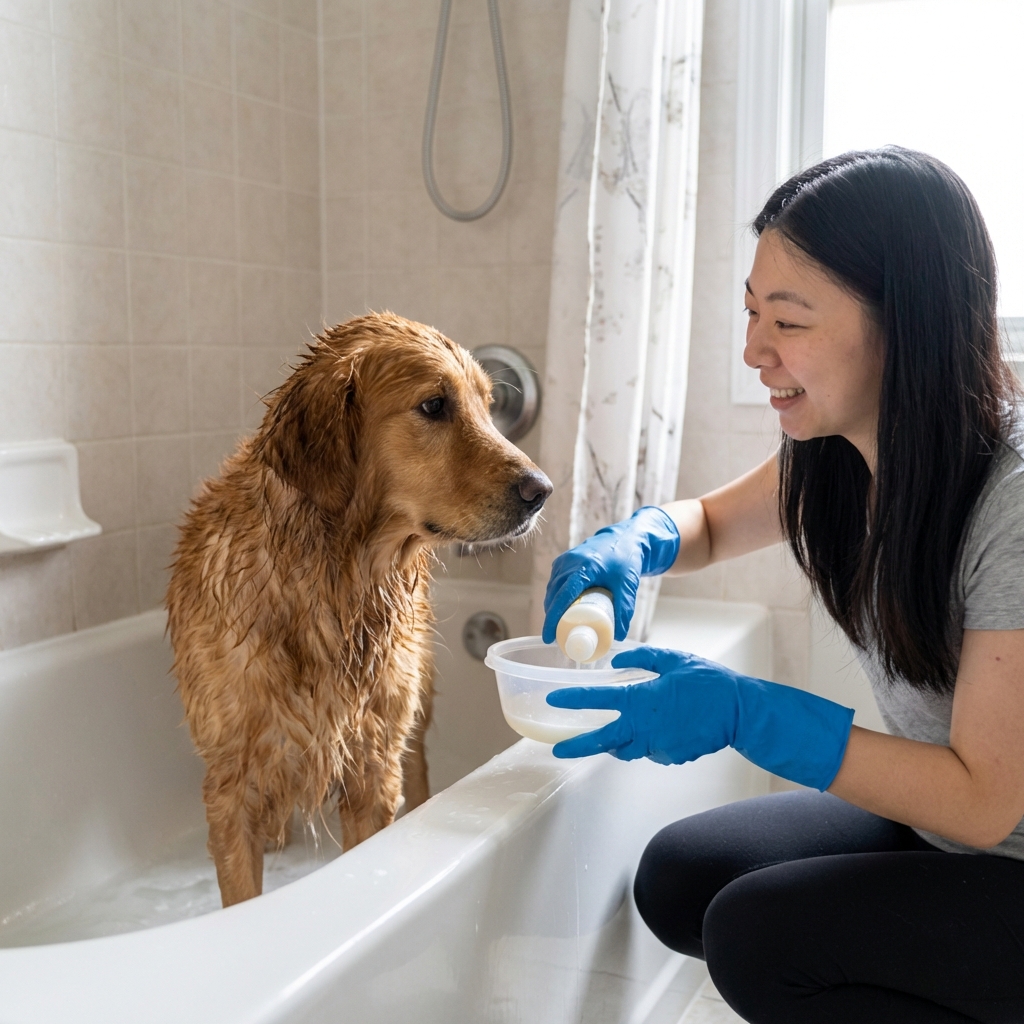
Important safety note: Do not mix and store this in a closed bottle. It can build pressure. Mix it in an open bowl right before use and discard leftovers.
Another heads-up: Even 3% peroxide can lighten some coats, especially black or richly colored fur. The trade-off is usually worth it for odor control, but I like families to know ahead of time.
How to apply it correctly
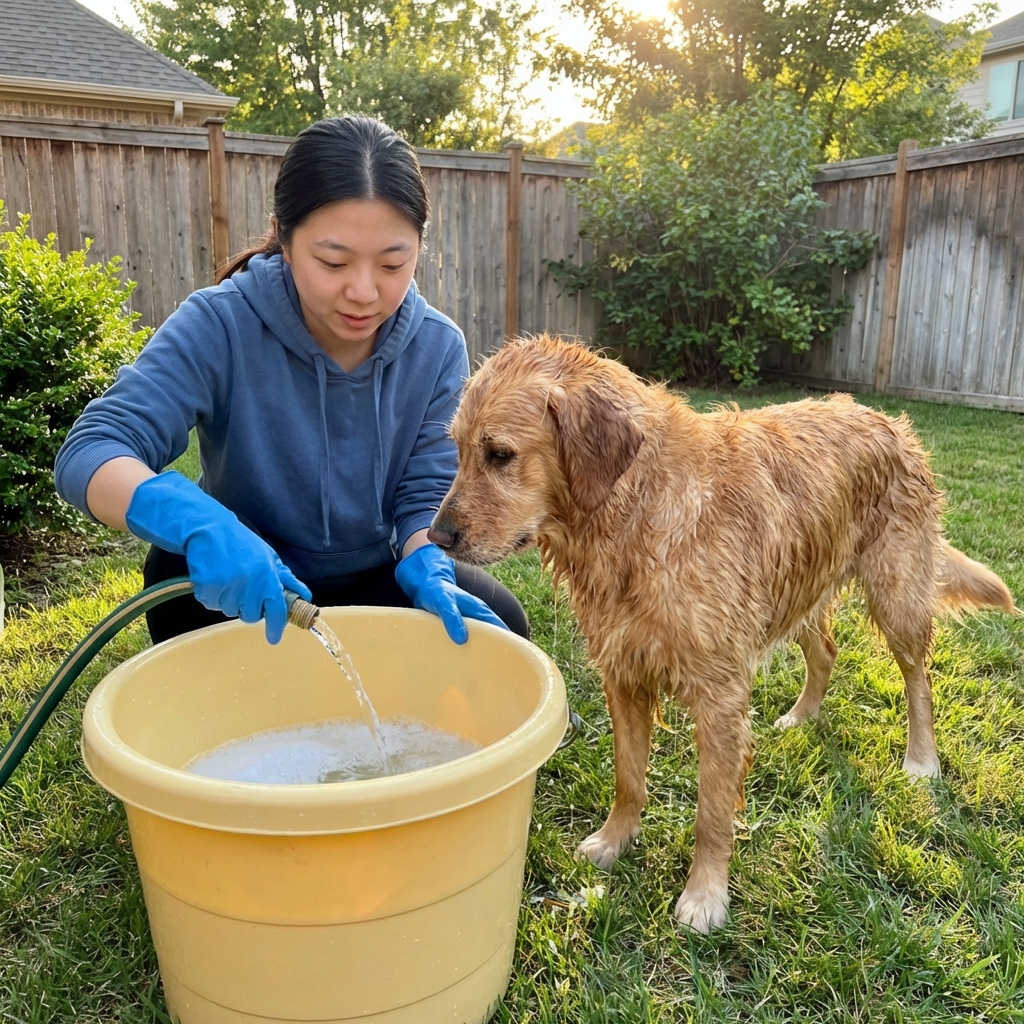
- Ideally start with a dry coat. Pre-wetting can dilute the solution and make it harder for the oxidizing mix to contact the oils. If your dog is already wet, towel dry as much as you can first.
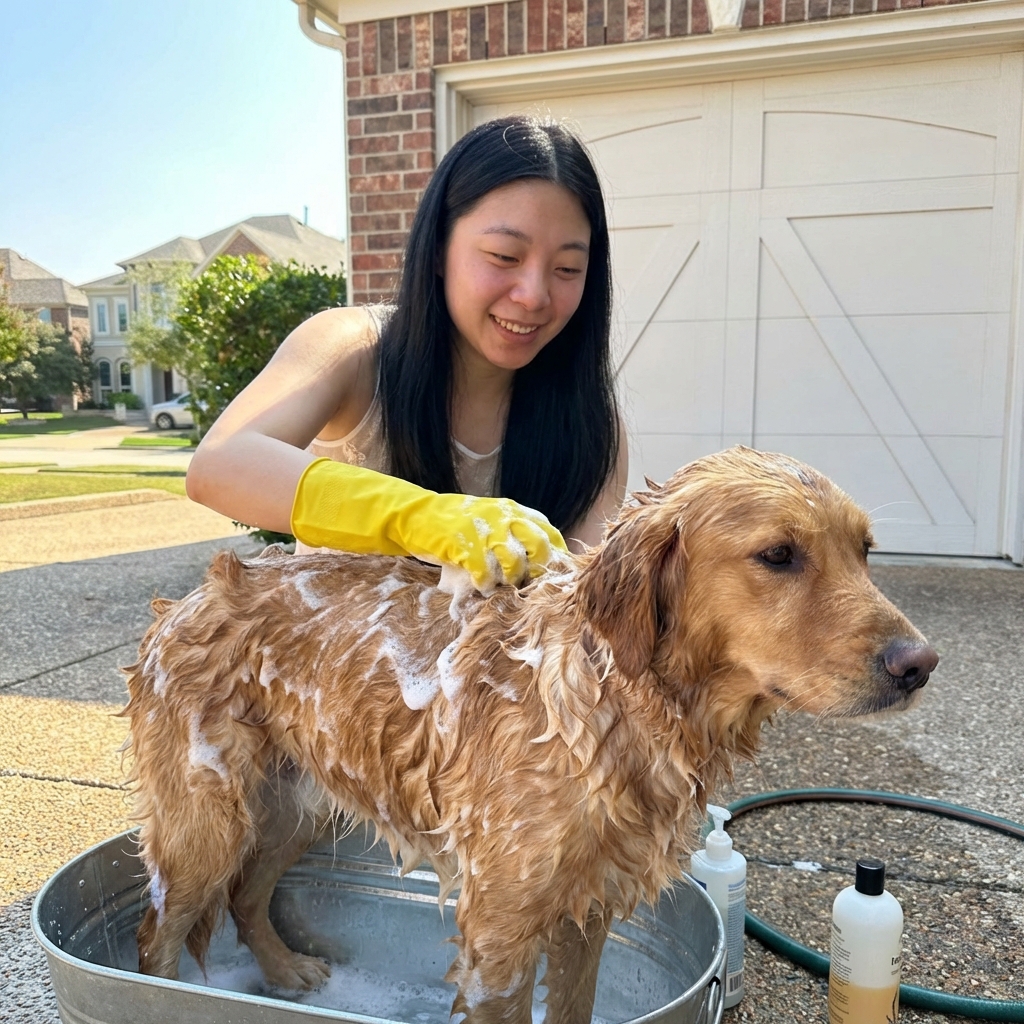
- Wear gloves and old clothes. Skunk oil transfers easily.
- Work the solution into the coat thoroughly, focusing on sprayed areas. Avoid the eyes, inside the ears, and mouth.
- Prevent licking for 5 minutes. Supervise closely and keep the head up. If you have an e-collar, this is a good time to use it.
- Let it sit about 5 minutes. Do not exceed about 10 minutes, especially on sensitive skin.
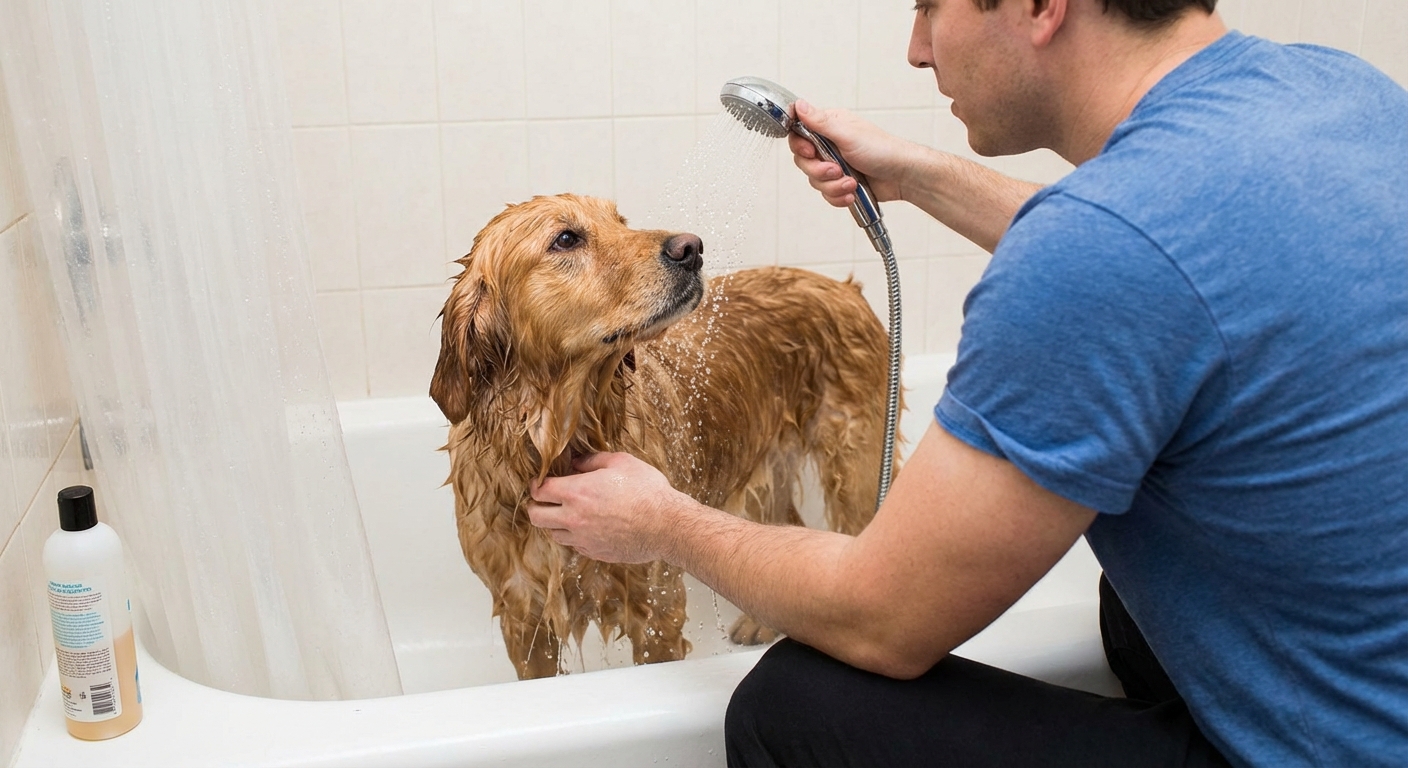
- Rinse well with lukewarm water.
- Shampoo once with pet shampoo and rinse again.
- Repeat if needed (many dogs need 2 rounds).
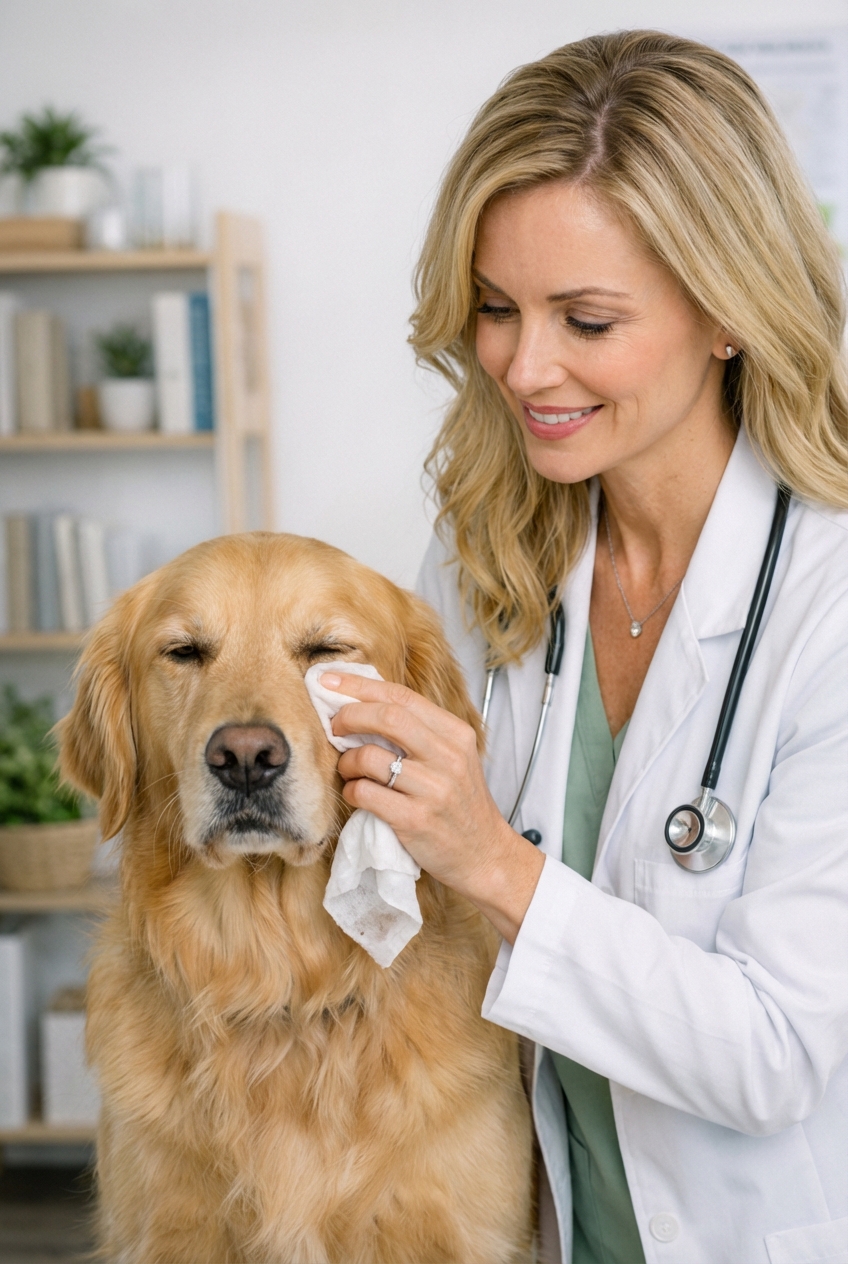
If the face was sprayed, be extra cautious. I prefer a damp washcloth with a tiny amount of diluted pet shampoo and careful wiping, then rinse with a clean wet cloth. If you use any peroxide mix near the face, keep it well away from the eyes, nose, and lips. Eye safety comes first.
The biggest mistake I see is rinsing and soaking the coat with plain water first. If you can, start dry, apply the solution, then rinse. It makes a real difference.
What not to do
- Do not use tomato juice as your main strategy. It does not break down skunk oils consistently.
- Do not use essential oils to cover the smell. Many are irritating or toxic to pets, and masking is not the same as neutralizing.
- Do not use high concentrations of peroxide (above 3%). Stronger peroxide can irritate skin and bleach fur.
- Do not scrub harshly, especially on thin-skinned areas like the belly, armpits, and face.
- Do not use human hair dye or harsh degreasers. Your dog’s skin barrier is more sensitive than ours.
Special situations
Puppies, seniors, and skin issues
If your dog is very young, elderly, has allergies, or has inflamed skin, be gentle and consider calling your vet for a product recommendation. Some dogs do better with a veterinary deodorizing shampoo made specifically for skunk odor.
Long or double coats
Dense coats can hold oil close to the skin. Part the fur and apply the solution down to the skin level. You may need multiple passes and a thorough rinse to avoid residue.
If the smell comes back
This is common. Thioacetates can break down and release odor again, and leftover oils can reactivate when the coat gets damp. Do another treatment and wash any fabric items your dog touched.
Cats
If a cat gets sprayed, call your veterinarian for guidance. Cats groom themselves aggressively, and peroxide mixtures and many home odor cover-ups can be riskier if ingested.
How to remove the smell from your house and gear
Collars, leashes, and harnesses
These often hold the strongest lingering odor.
- Soak washable items in a sink with warm water and dish soap, then launder if safe.
- If the smell remains, repeat or consider replacing inexpensive collars.
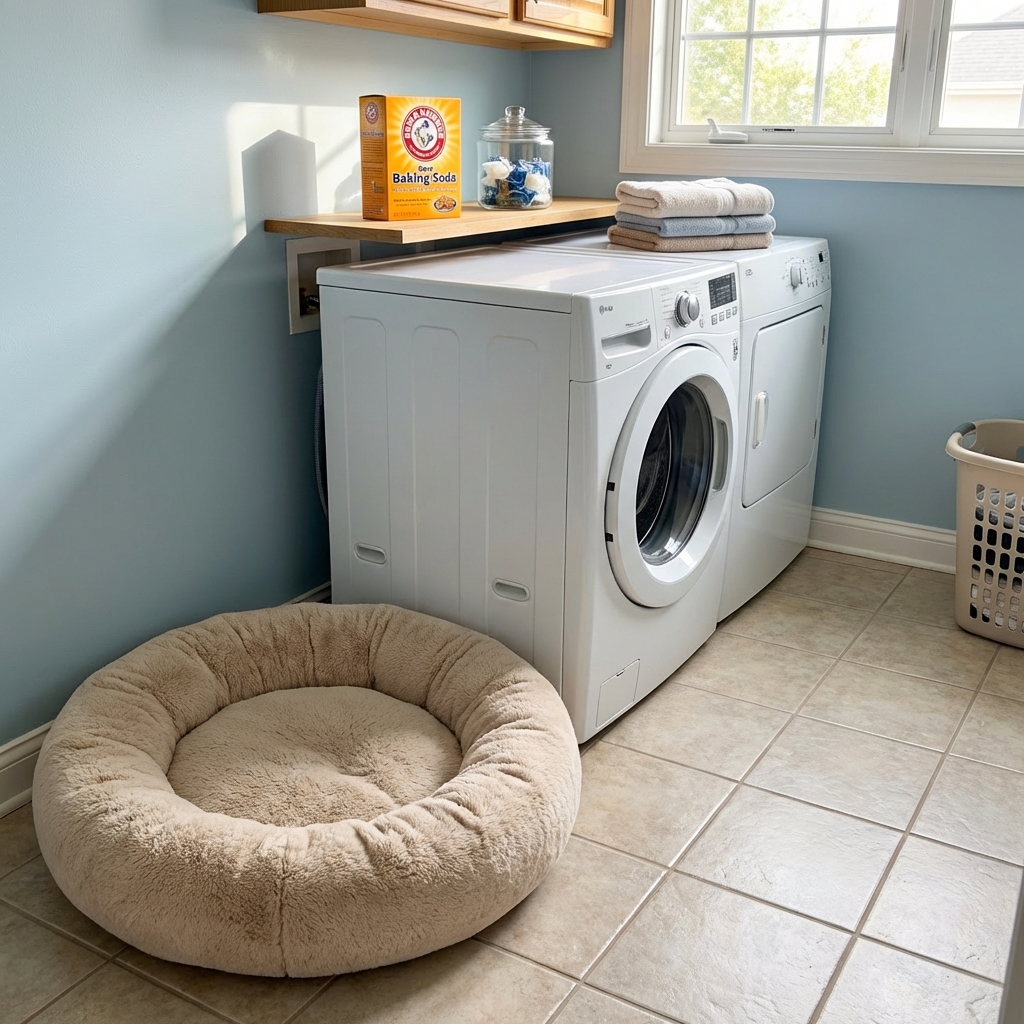
Bedding and fabric
- Wash with regular detergent plus baking soda.
- Air dry in sunlight if possible. Fresh air and UV can help reduce odor.
Floors and hard surfaces
Use a mild degreasing cleaner. Skunk spray is oily, so the goal is to lift the oil off the surface, not just perfume it.
When to call the vet
Most skunk incidents can be handled at home, but please call your veterinarian if you notice any of the following:
- Eye redness, squinting, discharge, a cloudy-looking eye, or persistent pawing at the face
- Vomiting, heavy drooling, or refusal to eat after being sprayed
- Difficulty breathing, wheezing, or extreme lethargy (especially after close-range facial exposure)
- Skin that becomes very red, painful, blistered, or intensely itchy after bathing
- Your dog was sprayed repeatedly or at very close range directly in the face
If it is after hours, an emergency clinic can help you decide whether to come in or continue home care.
Preventing the next skunk encounter
Skunks are most active at dawn, dusk, and overnight. A few simple habits can reduce your odds of a repeat performance.
- Keep dogs on leash during low-light hours.
- Use a flashlight in the yard before letting your dog out.
- Secure trash cans and remove food attractants.
- Block access under decks and sheds where skunks may den.
And if you love hiking or evening walks, keep a small skunk kit at home: peroxide, baking soda, dish soap, gloves, and saline eyewash. Having it ready takes the stress level way down.