Cut your dog’s nails too short and it’s bleeding? Follow calm, step-by-step first aid: firm pressure, styptic powder (or cornstarch), aftercare tips, and...
Article
•
Designer Mixes
How to Cut Your Dog’s Nails at Home

Shari Shidate
Designer Mixes contributor
As a veterinary assistant here in Frisco, Texas, I can tell you one thing with confidence: most dogs are not “being dramatic” about nail trims. Nails have nerves and blood vessels inside (the quick), paws are sensitive, and many pets have had at least one scary experience that made them wary.
The good news is that nail care can become calm, quick, and family-friendly. With the right tools, a simple plan, and a little patience, you can safely trim your dog’s nails at home and help them feel better on their feet.
Why nail trims matter
Long nails are not just a cosmetic issue. Overgrown nails can change how your dog stands and walks, which may contribute to joint strain over time. They can also snag and tear, which is painful and can lead to infection.
- Comfort: Nails that touch the floor can cause pressure and soreness.
- Traction: Long nails can make slipping more likely on tile and hardwood.
- Posture: Dogs may shift weight backward, stressing toes, wrists, elbows, and shoulders.
- Safety: Less scratching, fewer accidental “nail rakes” on kids and furniture.
A helpful goal: when your dog is standing, nails should not click loudly on hard floors and should not visibly curl under.
Know your dog’s nail anatomy
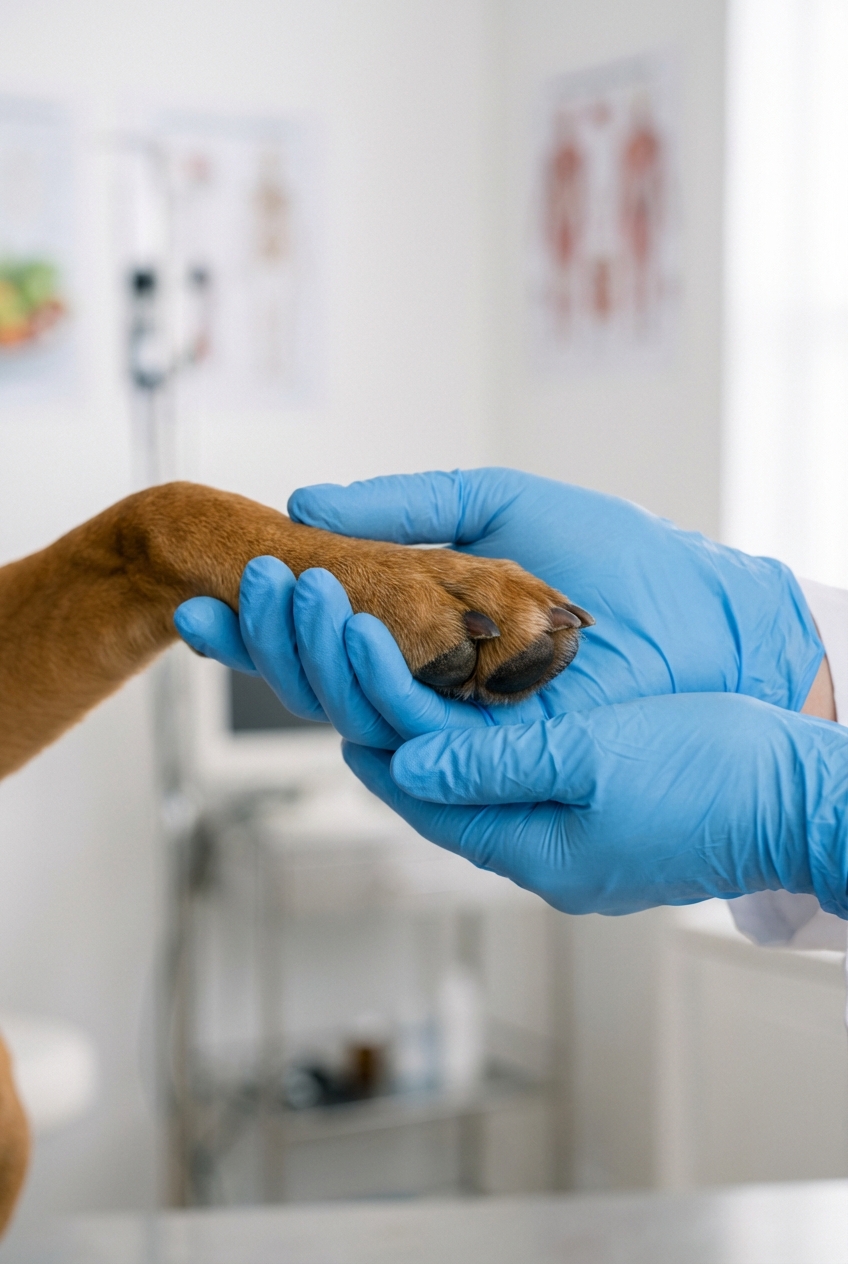
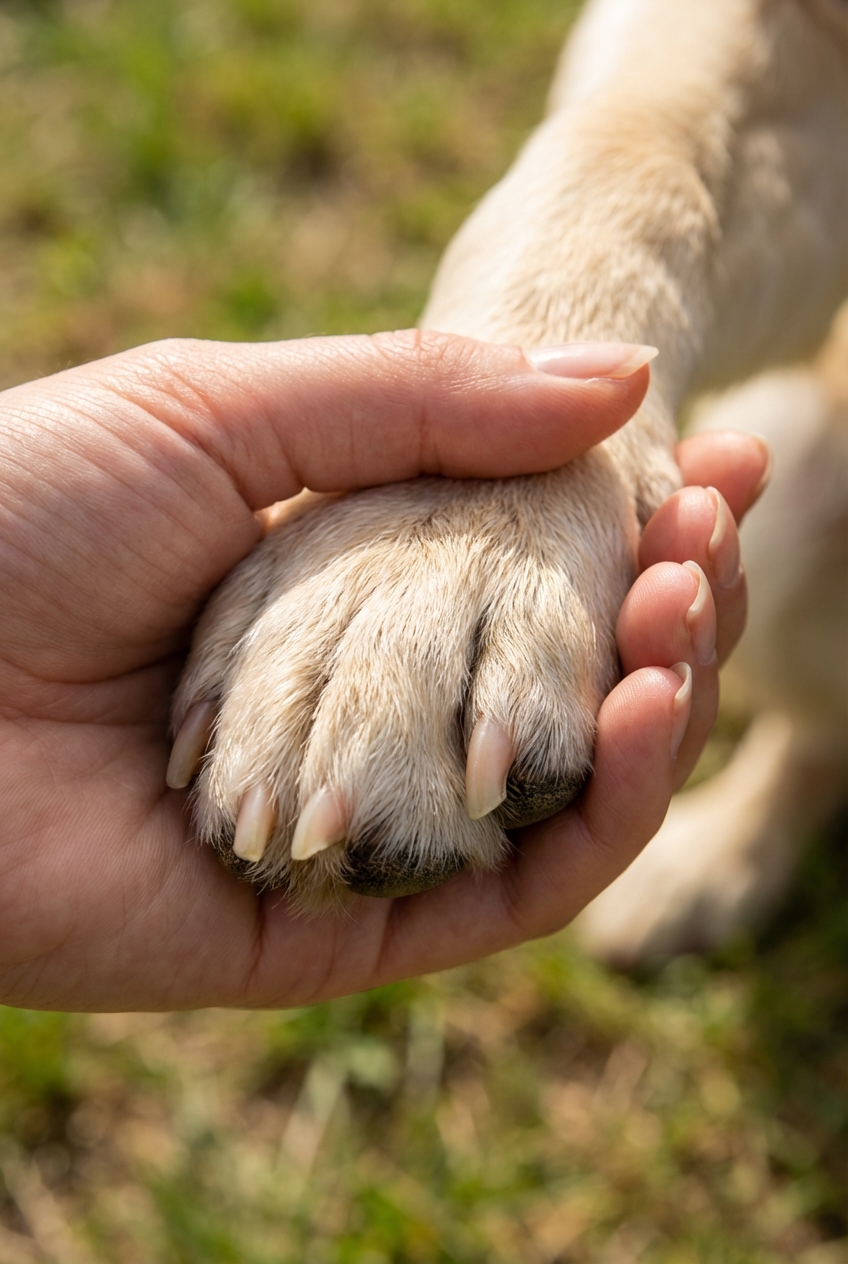
Inside each nail is the quick, which contains blood vessels and nerves. If you cut into it, it can bleed and hurt, and that memory can make future trims harder.
Light nails: The quick often looks like a pink triangle inside the nail.
Dark nails: The quick is harder to see, so you trim more gradually and watch the cut surface as you go.
Tools that make this easier
You do not need a fancy setup, but the right basics help a lot.
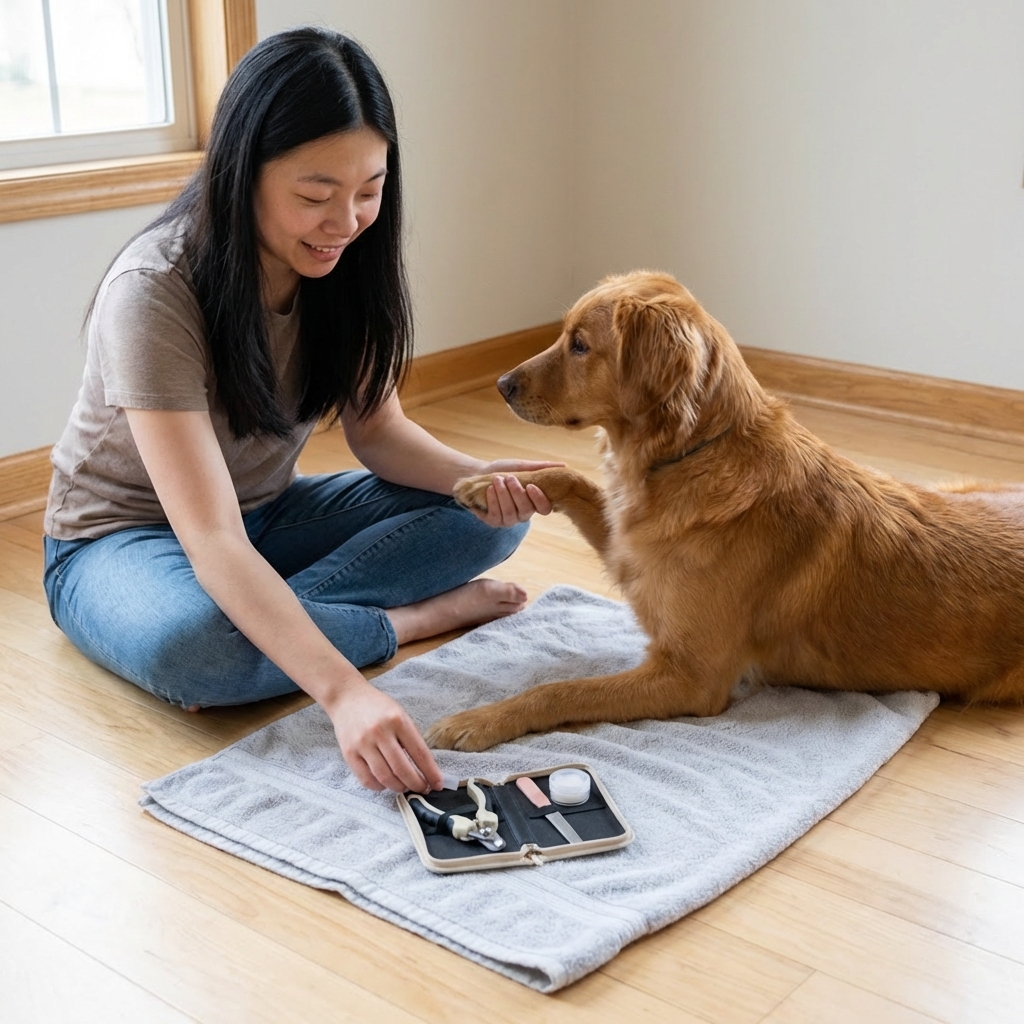
- Dog nail clippers: Scissor-style for medium to large dogs, or guillotine-style for small dogs.
- Nail grinder (optional): Great for smoothing edges and taking tiny amounts off at a time.
- Styptic powder or cornstarch: For minor bleeding if you nick the quick.
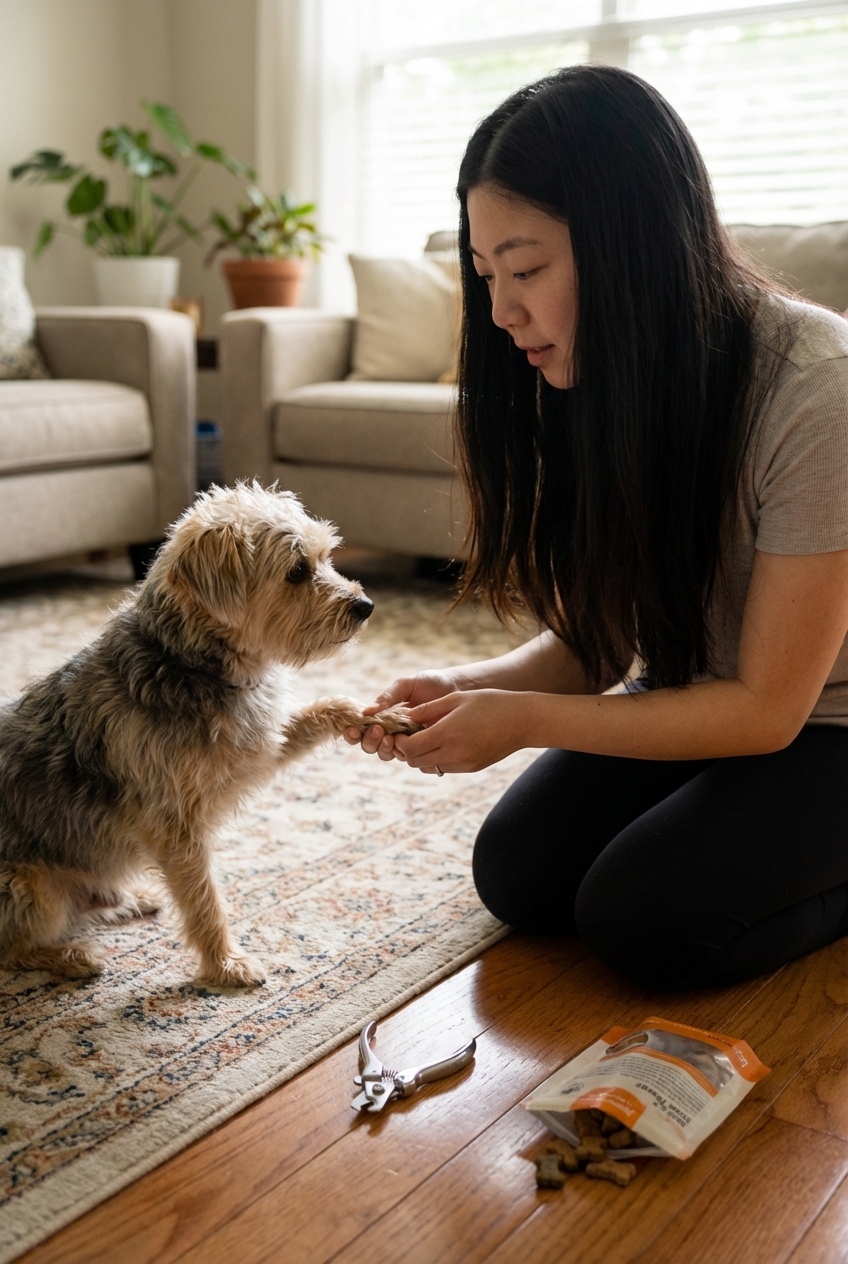
- Treats: Small, soft, high-value treats you can give quickly.
- Good lighting: A bright lamp is your best friend, especially with dark nails.
- Towel or non-slip mat: Helps dogs feel stable and secure.
If your dog is very wiggly, recruit a helper. One person calmly supports and feeds treats, and the other trims.
Set up a calm, family-friendly nail trim routine
If kids want to be involved, give them a job that supports safety and calm. Nail trims should never feel like a wrestling match.
Pick roles
- Adult trimmer: Handles clippers or grinder.
- Adult holder: Supports the dog’s body and keeps them steady.
- Kids: “Treat captain” or “cheerleader” who stays quiet and tosses treats on cue.
Choose the right time
Trim after a walk, play session, or meal when your dog is naturally more relaxed. Avoid trimming when the house is loud or busy.
Keep sessions short
For many dogs, success looks like one paw or even two nails at a time. You can absolutely spread it out across the day or week.
Progress is not “all nails in one sitting.” Progress is a calm dog who trusts you more each session.
How to trim with clippers (step-by-step)
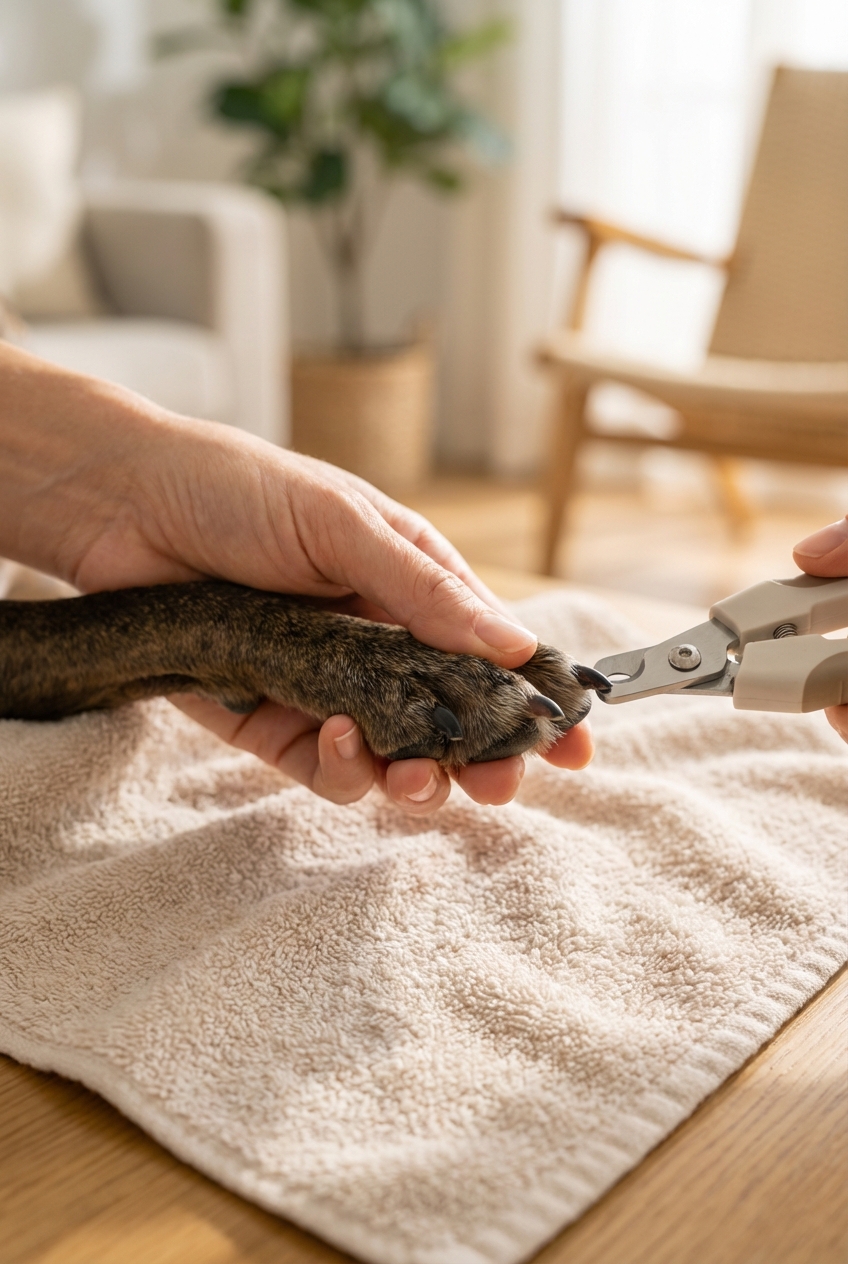
- Get comfortable positioning. Many dogs do best sitting or lying on their side. Small dogs can sit in your lap on a towel.
- Hold the paw gently. Support the toe you are trimming. Do not squeeze the whole foot tightly.
- Find the safe cutting zone. Aim for small trims. If you are unsure, trim less.
- Cut at a slight angle. Follow the natural curve of the nail, taking off the tip.
- Check the nail surface. After each small cut, look at the center of the nail. If you start to see a darker, moist-looking circle or a grayish-pink center, stop. You are close to the quick.
- Reward immediately. Treat after each nail or every couple of nails, depending on your dog’s comfort.
Tip for sharp edges: Clippers can leave corners. If your dog tolerates it, do a quick smooth with a grinder or nail file.
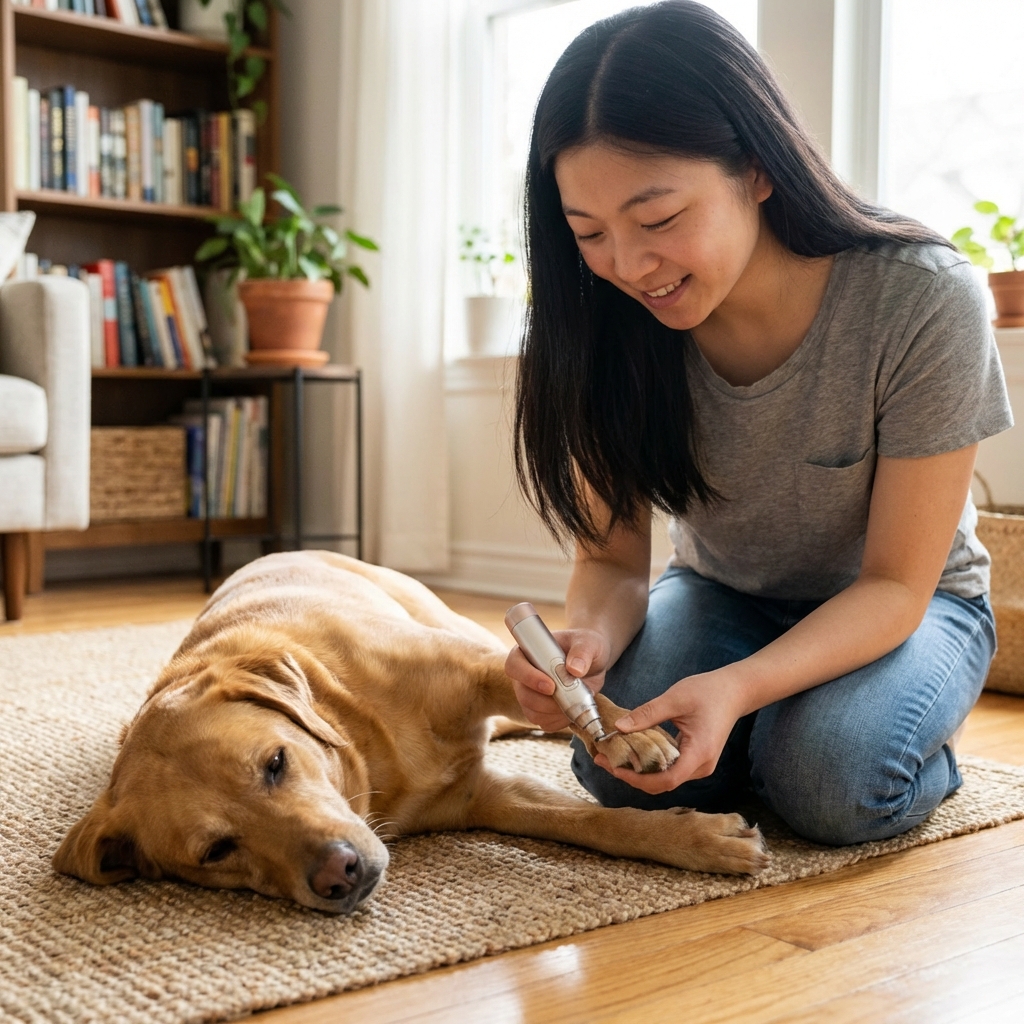
How to use a nail grinder safely
Grinders can be wonderful for anxious dogs because you can remove tiny amounts gradually, but the sound and vibration can be scary at first.
Introduce it slowly
- Let your dog sniff the grinder while it is off. Treat.
- Turn it on briefly far away. Treat.
- Bring it closer over several sessions as your dog stays relaxed.
Grind in short bursts
Touch the nail for 1 to 2 seconds, then lift off. This helps prevent heat buildup. Keep hair and fur away from the spinning tip.
If you cut the quick: what to do
First, take a breath. This happens to many loving, careful pet parents.
- Apply styptic powder directly to the nail tip. If you do not have it, you can use cornstarch in a pinch.
- Hold gentle pressure for 30 to 60 seconds.
- Keep your dog calm and avoid letting them run around until bleeding stops.
- End on a positive note with a treat and praise, even if you stop the session.
If bleeding does not slow after a few minutes, or your dog seems very painful, contact your veterinarian.
How often should you trim?
Most dogs do well with a trim every 2 to 4 weeks, but it depends on activity level and what surfaces they walk on. Dogs who walk on sidewalks often wear nails down naturally, but dewclaws and some back nails may still need regular trimming.
If your dog’s quicks are long (common in dogs who have gone a while between trims), frequent tiny trims can help the quick recede over time. Think: a little bit every week rather than a big trim once a month.
Troubleshooting common nail-trim challenges
“My dog hates having paws touched.”
Start with paw-handling practice when you are not trimming. Touch a paw, treat. Touch a toe, treat. Lift for one second, treat. Keep it short and upbeat.
“My dog pulls away and I’m afraid I’ll hurt them.”
Use a helper, switch to a grinder, and trim fewer nails per session. Safety first. If you cannot keep the paw steady, stop and try again later.
“My dog has black nails and I can’t see the quick.”
Trim paper-thin slices off the tip. Look at the cut surface each time. When you see a darker center, stop. When in doubt, take less and repeat sooner.
“My dog is very anxious or has a bite history.”
Please ask your vet for help. Some dogs need professional handling, fear-free techniques, or medication support for grooming. That is not a failure. It is compassionate care.
When to call the groomer or veterinarian
Home trims are great, but professional help is the best option in some situations.
- Severely overgrown or curling nails
- Broken nails, bleeding nails, or signs of infection
- Dogs with intense fear, panic, or aggression
- Arthritis or pain that makes handling uncomfortable
- Medical issues that affect clotting or healing
If your dog has chronic licking, limping, or red and swollen nail beds, it is worth a vet visit.
A simple, gentle plan you can start today
If you are new to nail trims, try this for one week:
- Day 1: Touch paws and toes for 30 seconds, treat generously.
- Day 2: Show clippers or grinder, treat, no trimming.
- Day 3: Trim or grind one nail, treat, stop.
- Day 4: Repeat with one or two nails.
- Day 5 to 7: Add a few more nails as your dog stays relaxed.
Slow is fast here. When your dog learns that nail trims predict good things, the whole process gets easier for everyone in the family.