

A step-by-step puppy crate training guide: choosing the right crate, building positive associations, first-week routines, nighttime potty breaks, and solutio...
Article
•
Designer Mixes
How to Crate Train a Puppy (Daily Health Guide)

Shari Shidate
Designer Mixes contributor
As a veterinary assistant here in Frisco, Texas, I can tell you this with confidence: a crate can be one of the healthiest, kindest tools you use during puppyhood. When it is introduced gently, a crate becomes a safe, den-like space that supports potty training, better sleep, and calmer behavior. When it is rushed or used for punishment, it can create anxiety and setbacks.
This daily health guide walks you through crate training step-by-step, with realistic timelines, puppy-safe routines, and practical troubleshooting. (And because disease risk and norms vary by area, always follow your veterinarian’s guidance for your specific puppy.)
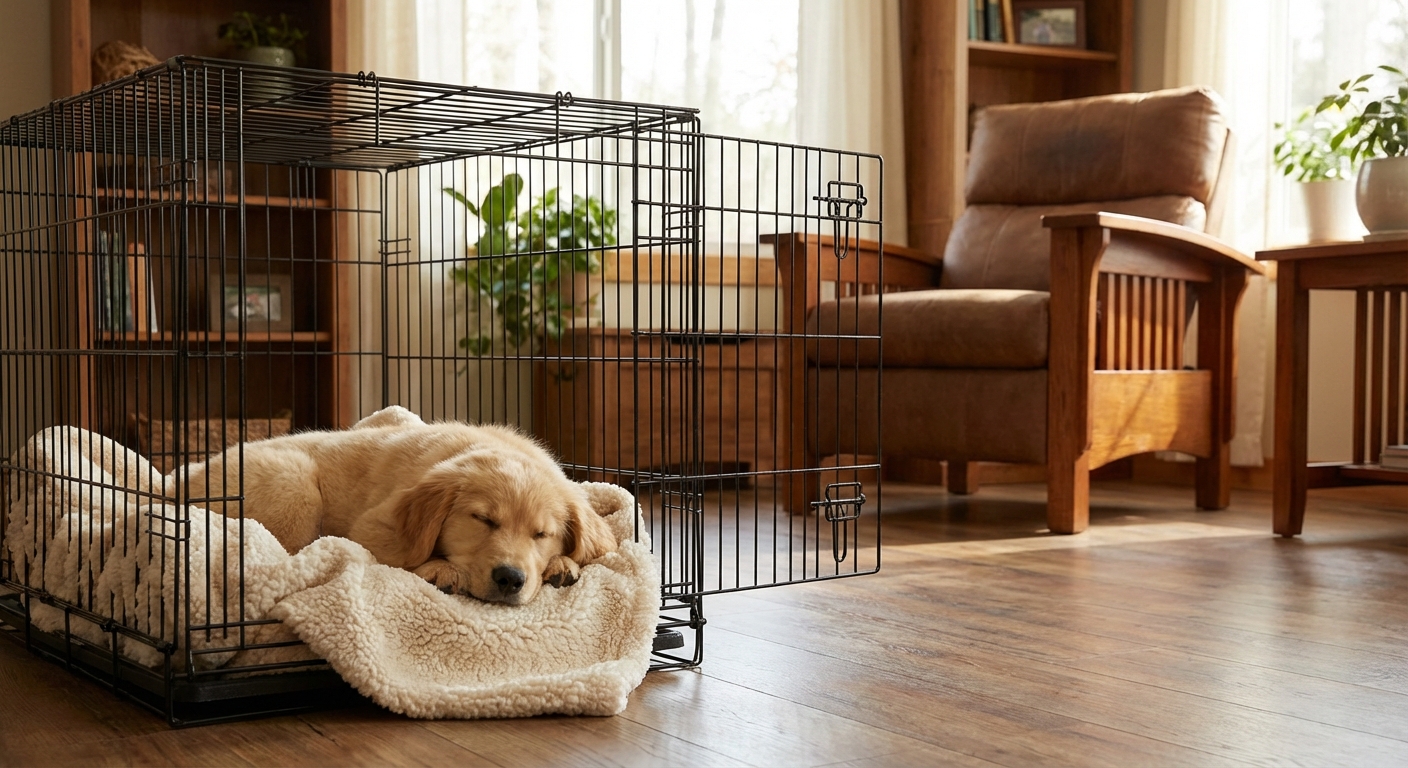
Why crate training supports your puppy’s health
Crate training is not just about convenience. Done correctly, it helps protect your puppy’s physical safety and emotional wellbeing.
- Better sleep supports growth: Puppies need lots of rest for brain development, immune function, and learning.
- Prevents dangerous chewing: Supervised freedom is earned over time. A crate helps prevent ingestion of socks, cords, houseplants, and other hazards.
- Supports potty training: Many puppies prefer not to soil where they sleep, which helps build a routine. Not all puppies have this instinct (especially if they are sick, have parasites, or come from crowded living conditions), so accidents are a training and health clue, not a character flaw.
- Reduces stress during recovery: If your puppy ever needs to rest after spay or neuter, an injury, or a vomiting or diarrhea episode, crate comfort makes temporary confinement safer and less scary.
- Improves travel safety: A crate-trained puppy rides in a more controlled, secure way.
Pick the right crate and setup
Crate size
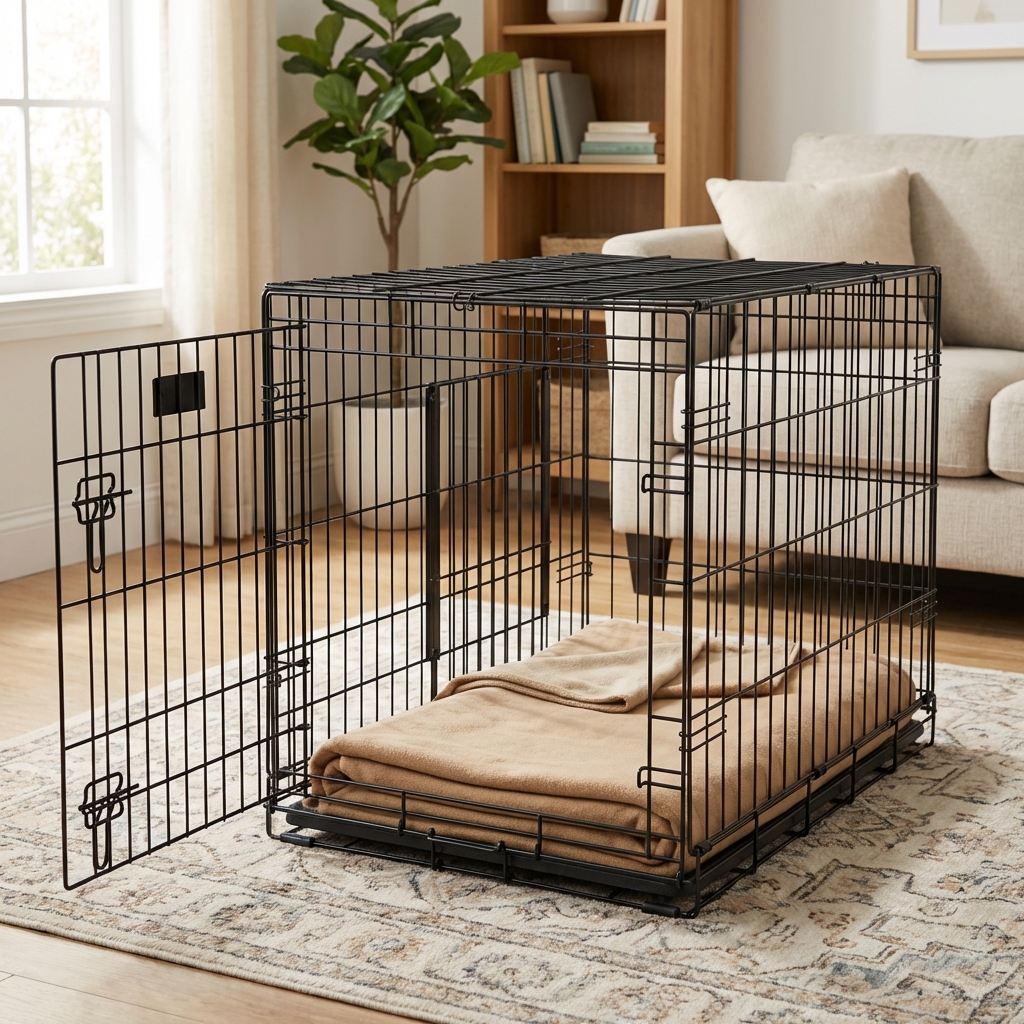
Your puppy should be able to stand up, turn around, and lie down comfortably. If the crate is too large, some puppies will potty in one corner and sleep in the other.
- Wire crate with divider: Great for growing puppies because you can adjust the size.
- Plastic travel crate: Cozier and often calming, especially for naps and travel.
- Soft-sided crate: Better for older, calmer dogs. Many puppies chew or scratch these.
Setup checks
- Safe spacing and stability: Make sure bar spacing is appropriate for tiny breeds so heads or legs cannot get stuck. Confirm the crate is sturdy and sits flat so it does not rattle or slide.
- No snag hazards: Remove collars, harnesses, and anything dangling (tags, leashes) before crate time.
- Temperature matters: Skip heavy covers if your home runs warm or your puppy pants easily. Good airflow is more important than making it dark.
What to put inside
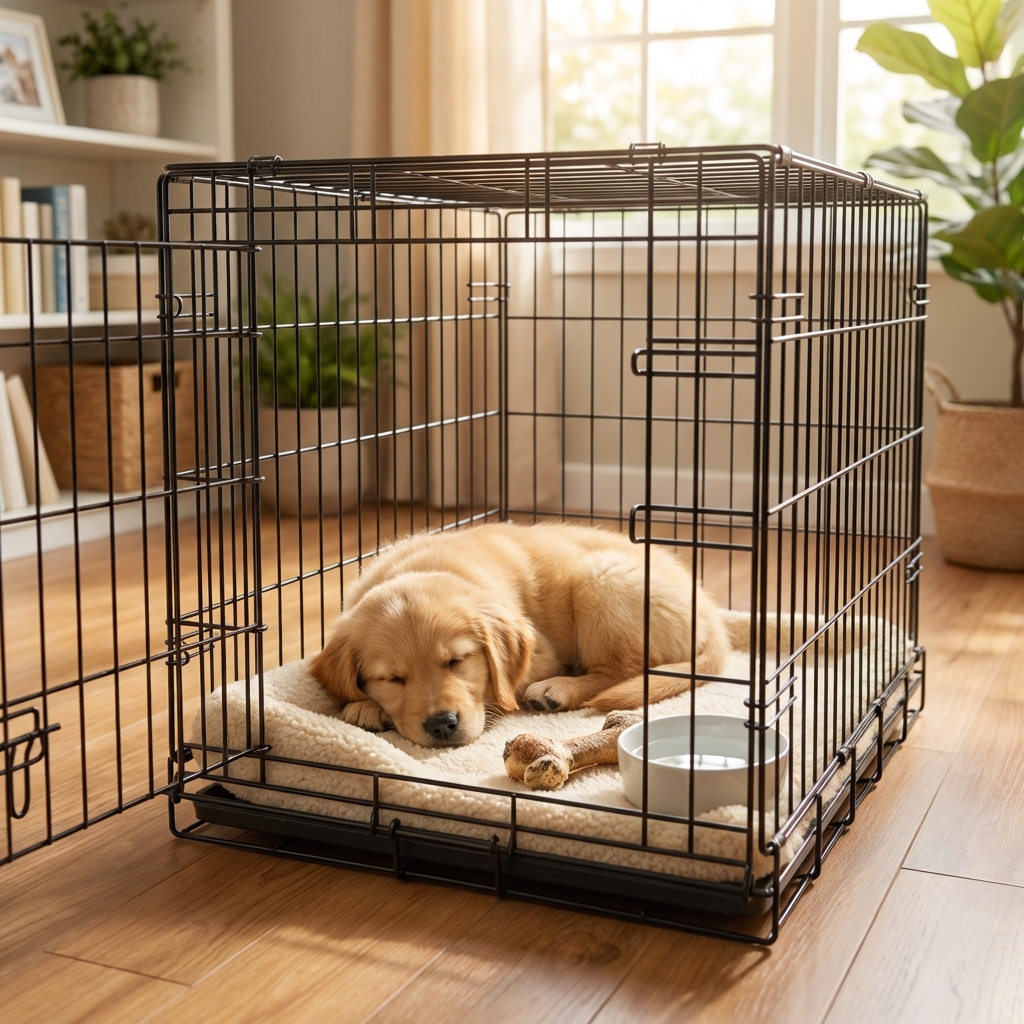
- Comfort item: A washable blanket or towel is fine for many puppies. If your puppy chews fabric, skip it and use a safer mat recommended by your vet or trainer.
- Chew or lick option: A puppy-safe chew (not a choking hazard) can help settle. Many puppies also do well with a stuffed food toy or lick mat that is size-appropriate and supervised until you know your puppy’s style.
- Water: In general, puppies should have regular access to fresh water. For very short, closely supervised crate periods (like a quick shower), many puppies do fine without a bowl inside the crate. For longer crate time, ask your veterinarian about a crate-mounted water bowl to reduce spills and support hydration. Use extra caution in heat, after exercise, and if your puppy has vomiting or diarrhea.
Safety note: Avoid collars in the crate due to snag risk. If you use a collar for ID, remove it for crate time when you are home and supervising the environment.
Your daily crate training plan (first 14 days)
Think of crate training like building a healthy habit. Short, positive sessions beat long, stressful ones every single time.
Days 1 to 3: Make the crate a good place
- Door stays open: Toss a few treats in, let your puppy walk in and out freely.
- Feed near the crate: Start with the bowl just outside, then inside the doorway, then further in as comfort grows.
- Short “settle” moments: When your puppy steps in, calmly praise and drop a treat between their paws.
Goal: your puppy chooses to enter the crate without hesitation.
Days 4 to 7: Add short door-closed sessions
- Close the door for 5 to 30 seconds while your puppy is eating or working on something enjoyable.
- Open before they panic: You are teaching calm, not endurance.
- Practice 5 to 10 mini-sessions daily instead of one long session.
Goal: calm with the door closed for a minute or two while you are nearby.
Days 8 to 10: Build calm alone time
- Step away briefly: Close the door, take one step back, return and reward calm.
- Increase distance and time slowly: Think seconds, then a few minutes.
- Pair with predictable cues: A simple phrase like “Crate time” helps your puppy understand what is happening.
Goal: your puppy can relax for 5 to 15 minutes with you moving around the house.
Days 11 to 14: Add naps and routine
- Plan crate naps: Many puppies do best with a nap after play, training, and a potty break.
- Keep wake windows short: Overtired puppies get bitey and frantic, which makes crating harder.
- Stay consistent at night: Predictability reduces anxiety and speeds potty training.
Goal: your puppy settles for naps and nighttime sleep with fewer protests.
A simple daily schedule you can follow
Every household is different, but this general flow works for many puppies. Adjust the timing based on age and your veterinarian’s guidance.
- Wake up: Potty immediately, then breakfast, then a few minutes of gentle play.
- Training: 3 to 5 minutes of basics like sit, name response, and leash comfort.
- Potty break: Then crate nap (30 to 90 minutes depending on age and activity).
- Repeat: Potty, play, short training, potty, nap.
- Evening: Calm enrichment, potty, then bedtime routine.
Health-friendly tip: Puppies often need a potty break after sleeping, after eating, after playing, and about every 1 to 2 hours when very young. If accidents are happening, it usually means the schedule needs tightening, not that your puppy is being “stubborn.”

How long can a puppy stay in a crate?
Crate time should match your puppy’s age, bladder capacity, recent water intake, and comfort level. You will often hear a guideline of up to about one hour per month of age during the day, but it is not reliable for every puppy. Many young puppies need breaks sooner, and illness or excitement can shorten that window.
- 8 to 10 weeks: often 30 to 60 minutes during the day before a potty break
- 11 to 14 weeks: often 1 to 2 hours
- 4 to 6 months: often 2 to 4 hours
Humane limit: Even for older puppies, try not to make the crate a long-term holding area. If your puppy is routinely crated most of the day, it is a sign you may need a pet sitter, a safe puppy-proofed pen setup, or a daycare option that fits vaccine status and your veterinarian’s recommendations.
If you are gone longer than your puppy can reasonably hold it, plan for a trusted pet sitter, a safe puppy-proofed pen area, or a daycare option that fits your puppy’s vaccine status and your veterinarian’s recommendations.
Night crate training
Night is where many families struggle, especially the first week. The goal is comfort plus consistency.
Best practices
- Keep the crate close: Many puppies settle faster when the crate is near your bed for the first few weeks.
- Potty before bed: Give a calm potty break right before lights out.
- Make night boring: If your puppy wakes to potty, keep lights low, no play, straight outside and back in.
- Use a routine: Same order each night: potty, crate, quiet phrase, lights out.
Should you let them cry it out?
Some mild fussing is normal as a puppy learns a new skill. But prolonged panic can increase fear of the crate. “Panic” can look like drooling, frantic escape attempts, biting bars hard enough to risk teeth, clawing until nails bleed, or escalating louder and louder instead of settling.
If your puppy escalates instead of settling, go back a step in training. Comfort them calmly without turning it into playtime, and make sure basic needs are met: potty, not too hot or cold, not hungry, and not overtired.
Crate training do’s and don’ts
Do
- Reward calm behavior in and around the crate.
- Use the crate for naps so it becomes a sleep cue.
- Give a potty break before and after crating.
- Keep it positive with treats, meals, and calm praise.
Don’t
- Do not use the crate as punishment. You want your puppy to feel safe inside.
- Do not force your puppy into the crate. Lure and reward instead.
- Do not leave young puppies crated too long. That leads to accidents, stress, and setbacks.
- Do not rush. Faster is not better if your puppy is overwhelmed.
Troubleshooting common problems
“My puppy cries as soon as the door closes.”
- Go back to shorter sessions, even 5 seconds, and reward calm.
- Try feeding meals in the crate with the door open, then briefly closed.
- Use a predictable pre-crate routine: potty, short play, then crate.
“My puppy has accidents in the crate.”
- Check crate size. Too much space often causes this.
- Increase potty breaks and track timing for a few days.
- Talk with your veterinarian if accidents are sudden, frequent, or paired with straining, blood, vomiting, diarrhea, or excessive thirst. Puppies can get urinary and GI issues too.
“My puppy bites the crate bars or tries to escape.”
- Make sure your puppy had a potty break and is not overtired.
- Add a brief calming activity before crating, like a few minutes of sniffing outside.
- Consider a supervised food toy to help your puppy settle.
- Reward quiet moments so your puppy learns what works.
“My puppy is fine in the crate, but panics when I leave.”
This may be separation-related distress. True separation anxiety is less common in very young puppies, but distress can absolutely happen, especially during big life changes. Start with tiny departures, return before panic, and build slowly.
If the distress is intense (salivation, frantic escape attempts, self-injury) or worsening, involve a qualified positive-reinforcement trainer and your veterinarian early. Getting help sooner is kinder and often easier.
Crate training and vaccines
Many families want to socialize their puppy while staying mindful about disease risk. That is smart. Until your veterinarian confirms your puppy is well-protected for your area, focus on safer social exposure.
- Choose lower-risk environments: clean friends’ homes, carried outings, or yards with no access from unknown dogs (and ideally no recent visits from unvaccinated dogs). Ask your vet what “safe” looks like in your neighborhood, especially for parvo risk.
- Avoid unknown dog traffic areas: dog parks and heavily used potty spots can carry viruses and parasites.
- Use the crate for rest: socialization is tiring. A restful crate nap helps your puppy recover and stay regulated.
When to talk to your vet
Crate training is behavioral, but health can affect behavior. Please check in with your veterinarian if you notice:
- Diarrhea, vomiting, or loss of appetite
- Sudden accidents or frequent urination
- Coughing, lethargy, fever, or nasal discharge
- Extreme panic that does not improve with gentle training
Warm reminder: crate training should make your puppy feel safer over time. If it is consistently getting worse, that is your cue to slow down and get support.
Bottom line
Crate training is a daily practice, not a one-time event. If you keep sessions short, positive, and consistent, most puppies learn to feel good about their crate because it predicts rest, comfort, and safety. And that is exactly what we want for a growing body and a growing brain.
If you are unsure how to adjust for your puppy’s age, breed, or your workday, your veterinarian and a qualified positive-reinforcement trainer can help you fine-tune a plan that fits your home.