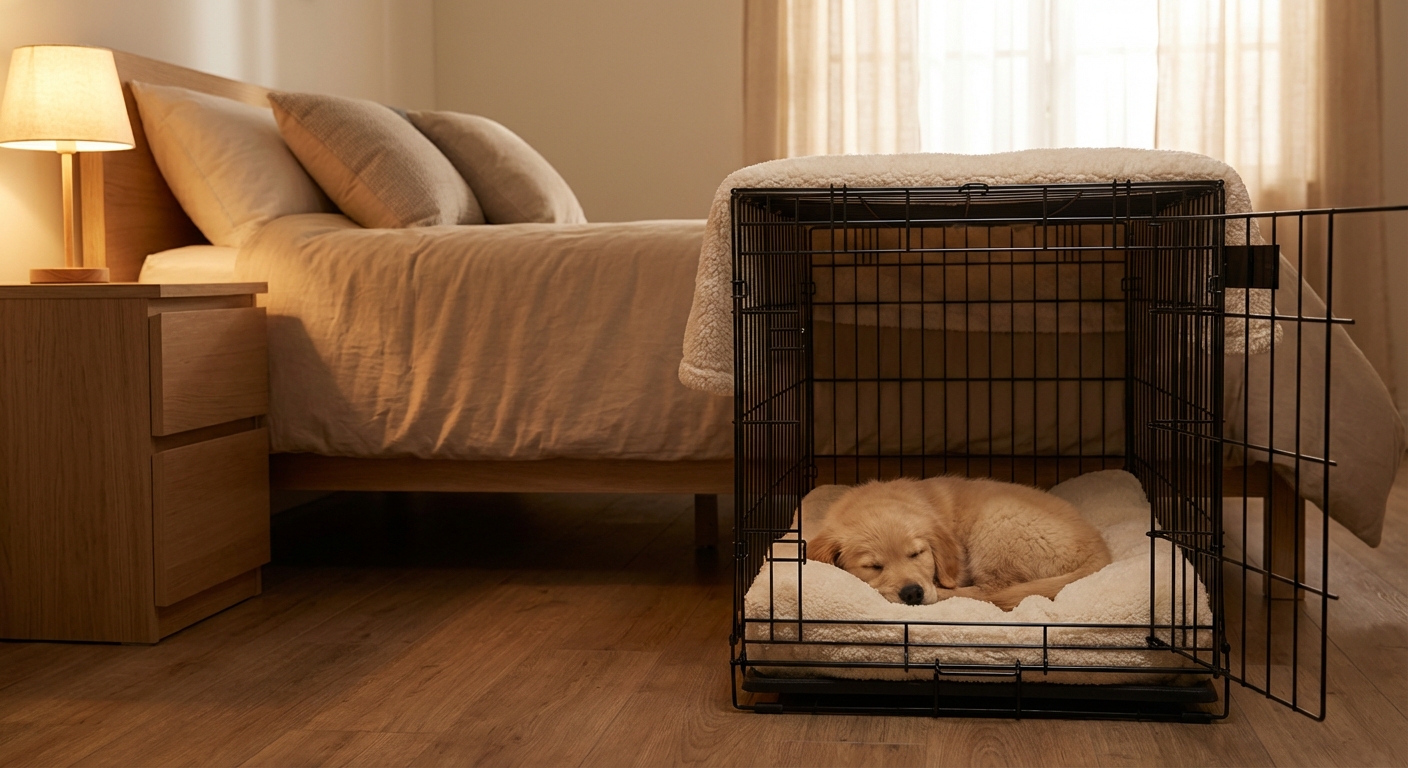
A step-by-step puppy crate training guide: choosing the right crate, building positive associations, first-week routines, nighttime potty breaks, and solutio...
Article
•
Designer Mixes
How to Crate Train a Puppy

Shari Shidate
Designer Mixes contributor
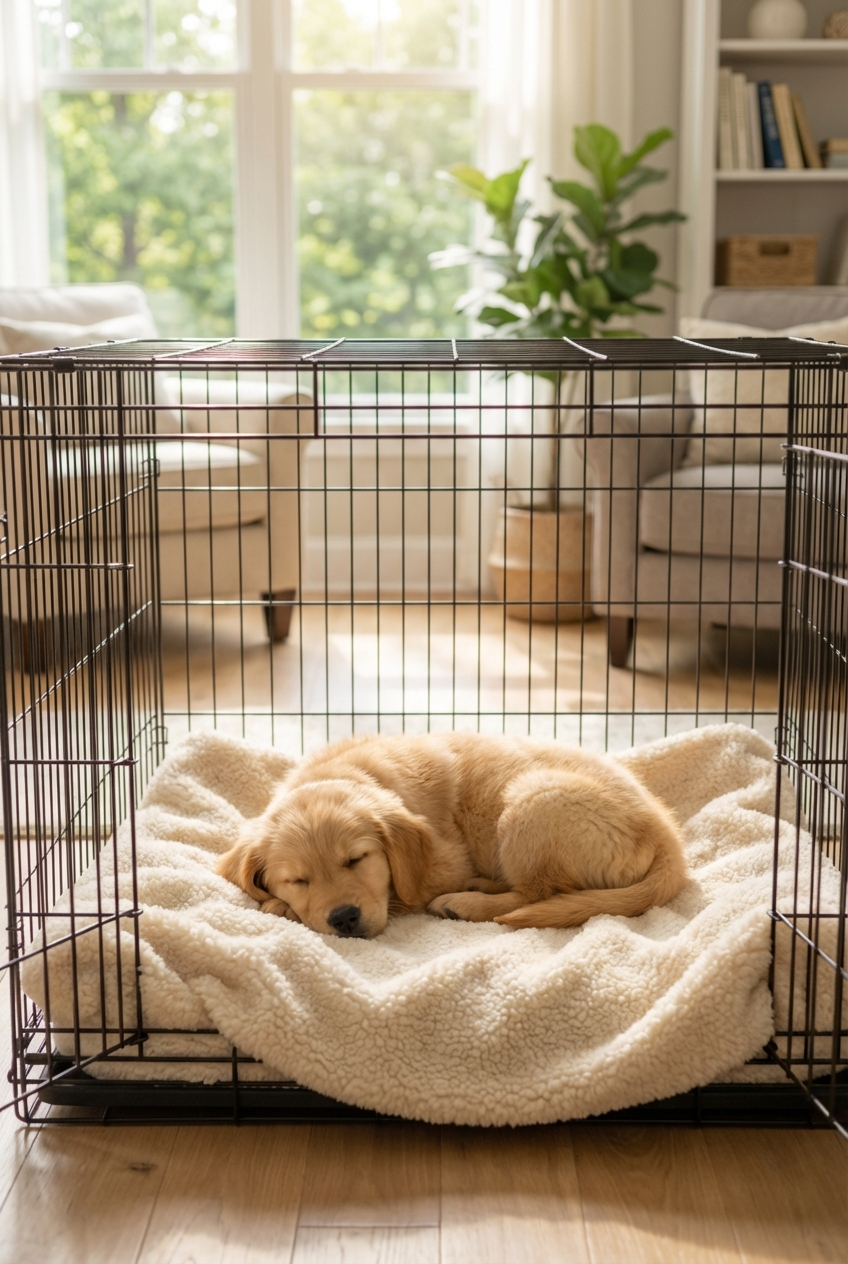
Crate training is one of the kindest tools you can give a puppy when it’s done with patience and positive reinforcement. A properly introduced crate becomes a safe, cozy “bedroom” that supports potty training, prevents chewing mishaps, and helps your puppy learn to settle. As a veterinary assistant here in Frisco, Texas, I also love it because it can make vet visits, travel, and recovery from illness or surgery much less stressful.
Important note: A crate is never a punishment. It’s a management and comfort tool. If your puppy is frightened, panicking, or screaming for long periods, that’s a sign the steps are moving too fast.
Why crate training supports wellness
Crate training is about more than convenience. It can support your puppy’s health and behavior in several practical ways:
- Potty training support: Many puppies avoid soiling their sleeping area, so a correctly sized crate can help build bladder and bowel habits.
- Safety: Prevents chewing cords, swallowing socks, or getting into household toxins when you cannot supervise.
- Better rest: Puppies need a lot of sleep. A calm space can reduce overstimulation, which may lower nipping and “zoomies.”
- Confidence in new places: A familiar crate can help many puppies feel more secure during travel, grooming, boarding, and veterinary care.
When families struggle with crate training, it’s usually because the puppy is asked to tolerate too much isolation too soon, or because the crate setup is uncomfortable. The fix is almost always: smaller steps, better rewards, and better timing.
Picking the right crate and setup
Crate type
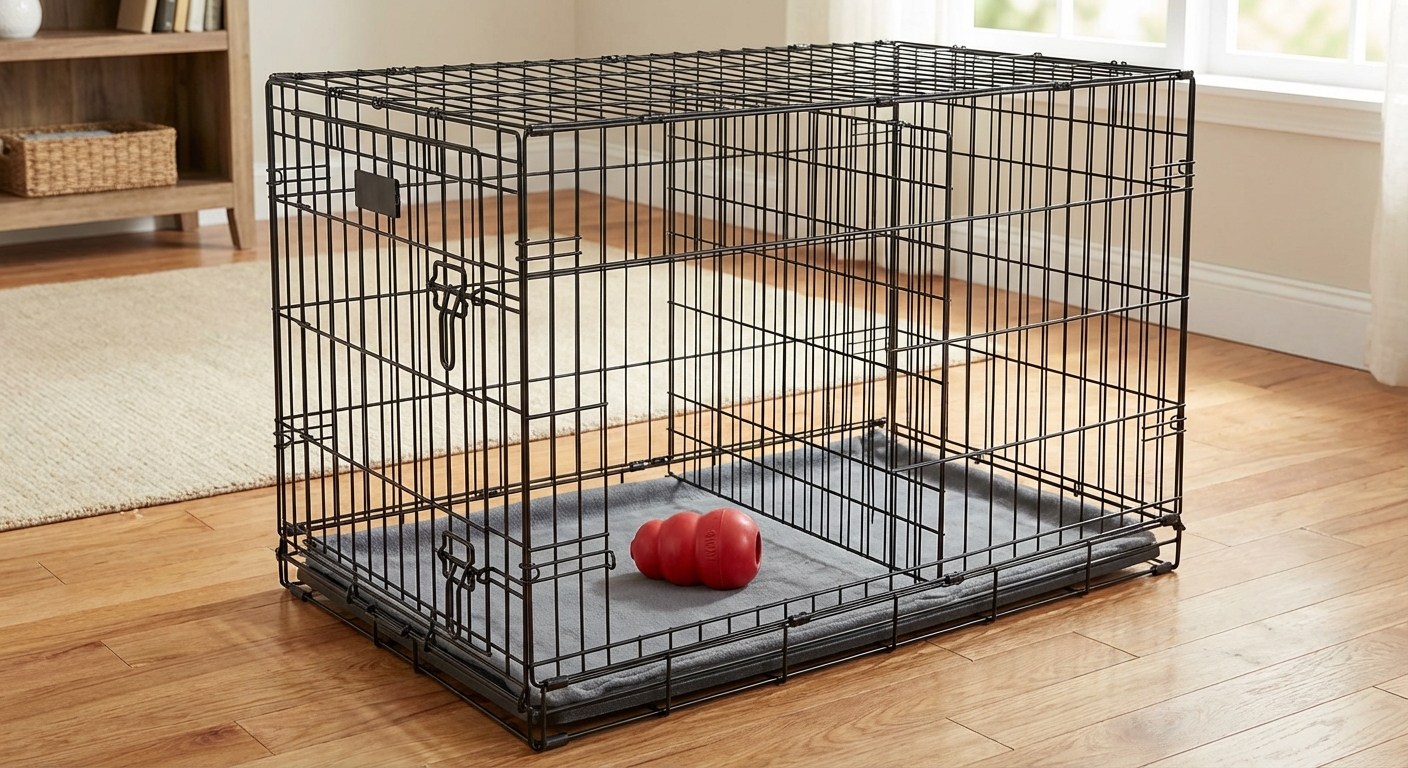
- Wire crates: Great airflow and visibility. Often come with a divider, which is very helpful for potty training.
- Plastic kennels: More den-like and may feel safer for some pups, especially for travel.
- Soft crates: Not ideal for most puppies because chewing and scratching can destroy them quickly.
Correct size matters
Your puppy should be able to stand up, turn around, and lie down comfortably. Too large can encourage potty accidents in one corner. If you’re buying for a growing puppy, use a divider to adjust the space as they grow.
Comfort and safety
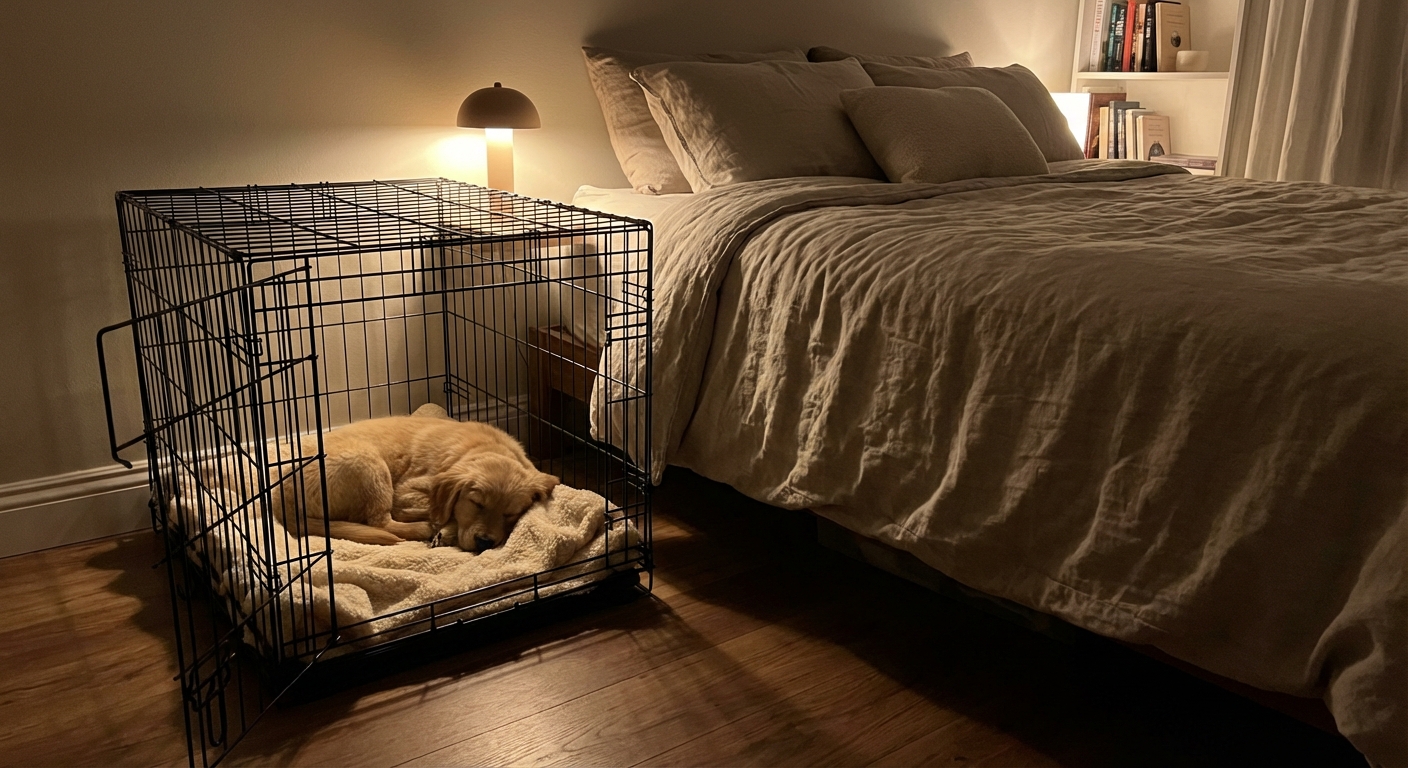
- Location: Start in a family area during the day so your puppy does not feel isolated. Many people move the crate to the bedroom at night early on.
- Bedding: Use washable bedding. If your puppy shreds fabric or tries to eat it, switch to a safer option like a flat crate pad or a towel you can monitor.
- Collars off: Remove collars, harnesses, and dangling tags in the crate to reduce the risk of snagging.
- Water: For short crated periods (often under about 1 to 2 hours), many puppies do fine without water. For longer periods, warm rooms, after exercise, or if your vet has advised extra hydration, use a spill-resistant bowl designed for crates.
- Chew item: Provide a safe, size-appropriate chew or food-stuffed toy to keep the mouth busy. Supervise new chews at first, and avoid high-risk items like cooked bones.
- Secure setup: Make sure the crate is stable, latched properly, and placed where it will not slide or tip if your puppy shifts around.
How to introduce the crate (step-by-step)
Think of crate training as teaching a new skill: “Go in, relax, and feel safe.” The key is to create lots of tiny wins.
Step 1: Make the crate a treat zone
- Prop the door open so it cannot swing and startle your puppy.
- Toss a few small treats just inside the doorway. Let your puppy go in and come right back out.
- Gradually toss treats farther inside, letting your puppy choose to enter.
Step 2: Feed meals in the crate
Place the bowl at the front at first, then slowly move it deeper over a few meals. This builds a positive association quickly.
Step 3: Add a cue and reward calm
When your puppy is happily stepping in, add a simple cue like “Crate” or “Bed.” Reward with a treat when they go in. Then start rewarding calm behaviors such as sitting, lying down, or chewing a toy inside.
Step 4: Close the door briefly
- Close the door for 1 to 3 seconds while your puppy is eating or chewing something great.
- Open it before your puppy worries.
- Repeat and gradually increase time: 10 seconds, 30 seconds, 1 minute, then a few minutes.
Step 5: Build gentle distance
Once your puppy can relax with the door closed, take one step away, come back, and reward. Slowly build up to moving around the room, then briefly leaving and returning.
Success looks boring: a puppy who goes into the crate, sighs, and falls asleep. If there’s worry, go back a step and make it easier.
High-value reward ideas: tiny bits of chicken, cheese, freeze-dried salmon, or whatever your puppy is wild about. For some picky pups, their regular kibble works best when it’s paired with a little praise and a calm tone.
Easy stuffed-toy option: smear a thin layer of canned puppy food or plain yogurt (if tolerated) inside a food toy, add a few pieces of kibble, and freeze it for a longer-lasting project.
Nighttime crate training
Night is often where families feel the most pressure, because everyone is tired. A little planning makes a big difference.
Best practices for the first weeks
- Keep the crate close: Many puppies settle faster when the crate is next to your bed. You can gradually move it farther away.
- Potty breaks are normal: Young puppies often need to go out during the night. Keep trips boring: leash on, potty, quiet praise, back to bed.
- Last call: Offer a potty break right before bedtime.
- Help them wind down: A brief sniff walk, a gentle chew, or a calm routine before bed helps your puppy sleep.
Note: Puppies often hold their bladder longer while asleep than when awake. Daytime “awake time” needs can be much more frequent.
How long can a puppy stay in a crate?
Puppies have small bladders and big needs for movement and social time. You will hear the guideline of about one hour per month of age, plus one hour. It can be a helpful starting point for some puppies in ideal conditions, but it is not a strict rule and it varies a lot based on size, individual maturity, sleep vs awake, heat, and health.
- 8 to 10 weeks: Often 30 to 90 minutes between potty breaks when awake.
- 10 to 16 weeks: Gradual improvement, but still frequent breaks.
- Over 4 months: Longer stretches become more realistic with a solid routine, especially overnight.
Even if your puppy can “hold it,” they still need exercise, training, enrichment, and connection. Crating for long workdays without support often leads to accidents and frustration behaviors. If your schedule requires longer confinement, consider a midday break from a trusted friend, family member, or pet sitter.
Potty training + crate training
Crate training is a management tool that supports potty training. It prevents roaming accidents and helps you predict potty needs.
A simple daily rhythm
- Take your puppy out immediately after waking up.
- Take your puppy out after eating and drinking.
- Take your puppy out after play or training.
- Take your puppy out before crating and right after coming out.
If your puppy has an accident in the crate, the crate is likely too big, the potty breaks are too far apart, or there is an underlying medical issue like a urinary tract infection. If accidents are sudden or frequent, call your veterinarian.
Troubleshooting common problems
Whining or barking
- First check basics: Have they pottied recently? Are they hungry, too hot, too cold, or needing a safe chew?
- Reward quiet: Wait for a brief pause, then calmly reward and release if appropriate.
- Make it easier: If your puppy escalates, shorten the session and increase the value of rewards. Build back up more gradually.
Separation-related distress
If your puppy drools heavily, injures themselves trying to escape, or cannot settle even with gradual training, talk with your veterinarian and consider a qualified trainer who uses positive reinforcement. Early support can prevent long-term anxiety.
Chewing the crate or bedding
- Increase appropriate chewing options, especially after play.
- Remove unsafe bedding temporarily if it’s being shredded and swallowed.
- Make sure your puppy’s daily routine includes exercise and enrichment, not just confinement.
Refusing to enter
Go back to “treat at the doorway” games and feed meals near the crate. Avoid pushing or pulling your puppy into the crate, because that can create a lasting negative association.
Do’s and don’ts
Do
- Keep sessions short and frequent, especially in the beginning.
- Use high-value rewards such as tiny chicken pieces, freeze-dried treats, or a stuffed food toy.
- Create a routine: potty, calm play, crate rest, repeat.
- Practice when your puppy is already a little tired, not bursting with energy.
- If you have kids, teach them to help by calmly tossing treats in the crate and then giving the puppy space.
Don’t
- Use the crate as punishment.
- Let kids bang on the crate or bother the puppy inside.
- Try to “wait out” panic. From a learning standpoint, releasing during intense screaming can accidentally teach that screaming works, but your puppy’s welfare comes first. If your puppy is escalating, at risk of self-injury, or truly panicking, end the session, help them calm down, and restart with an easier step next time.
- Use a crate as the only solution for separation anxiety without a plan. If distress is ongoing, get help early.
- Expect overnight perfection. Most puppies need time, consistency, and a gentle pace.
When to ask your vet for help
Crate training should improve with time. If it is getting worse, or you notice any of the following, it’s smart to check in with your veterinarian:
- Sudden potty accidents or frequent urination.
- Vomiting, diarrhea, or appetite changes.
- Heavy drooling, frantic escape attempts, or self-injury in the crate.
- Persistent nighttime distress even after gradual training, adequate potty breaks, and a consistent routine.
Your vet can rule out medical causes and help you find the right behavioral support if needed. Sometimes small changes like adjusting feeding times, choosing a different crate style, or adding structured enrichment can make a big difference.
Quick starter plan (3 days)
Day 1
- Door propped open, treat toss game for 3 to 5 minutes, twice a day.
- Feed one meal at the crate doorway or just inside.
Day 2
- Feed meals inside the crate.
- Introduce a stuffed toy inside, close door for 5 to 20 seconds while chewing.
Day 3
- Short closed-door sessions of 1 to 3 minutes with you nearby.
- Start adding one or two steps away, then return and reward calm.
If your puppy is breezing through, you can progress. If your puppy is worried, scale it back. The goal is comfort first, time second.