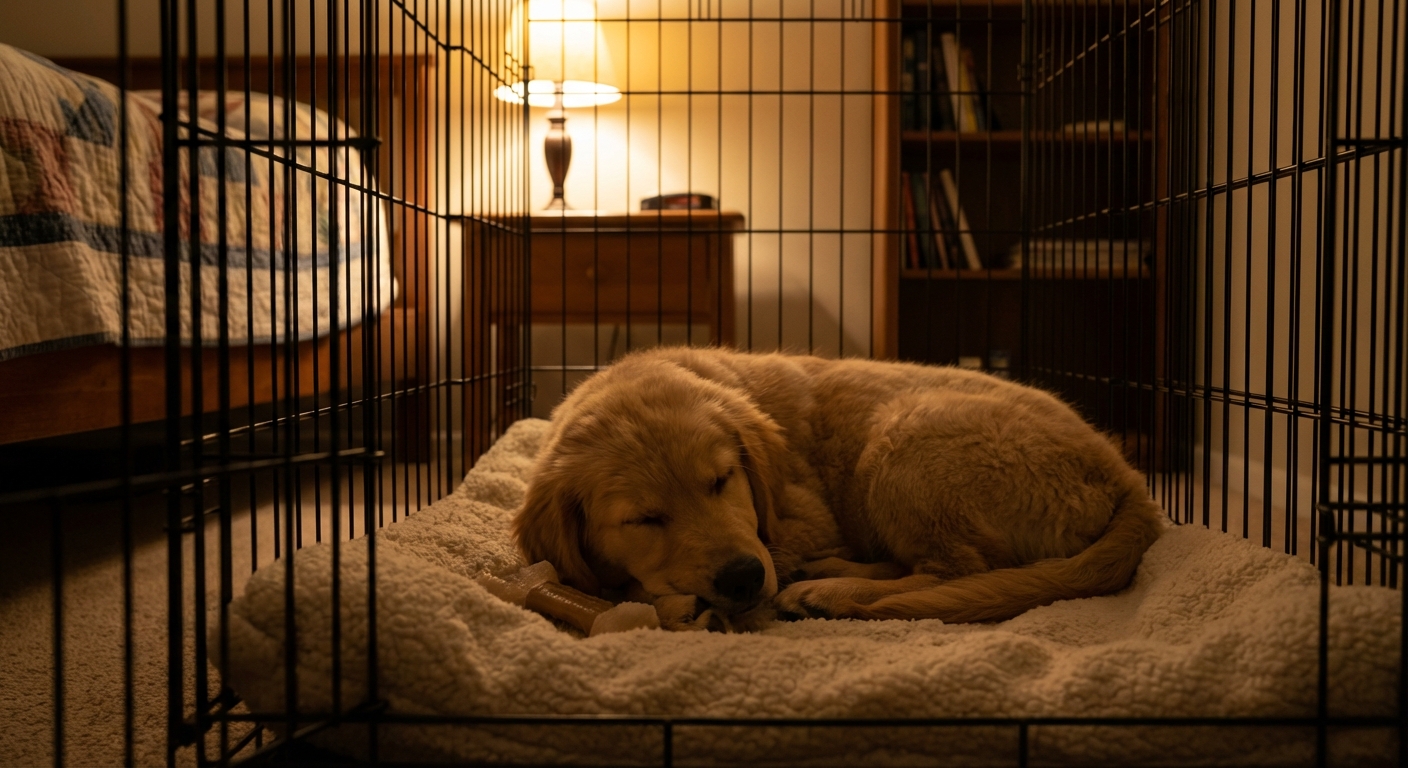
A step-by-step puppy crate training guide: choosing the right crate, building positive associations, first-week routines, nighttime potty breaks, and solutio...
Article
•
Designer Mixes
How to Crate Train a Puppy

Shari Shidate
Designer Mixes contributor
Crate training can feel like a big, emotional hurdle, especially the first time your puppy whines at night. But when it is done kindly and consistently, a crate becomes a safe “den” that supports potty training, prevents unsafe chewing, and helps your puppy learn how to settle.
As a veterinary assistant, I also love crate training because it prepares your dog for real life. Vet visits, grooming, travel, post-surgery rest, and emergencies are all easier when a dog is comfortable in a crate.
Quick note: This guide is general education and not a substitute for individualized veterinary advice. If you are unsure what is normal for your puppy, check in with your veterinarian.
Pick the right crate and set it up
Crate size
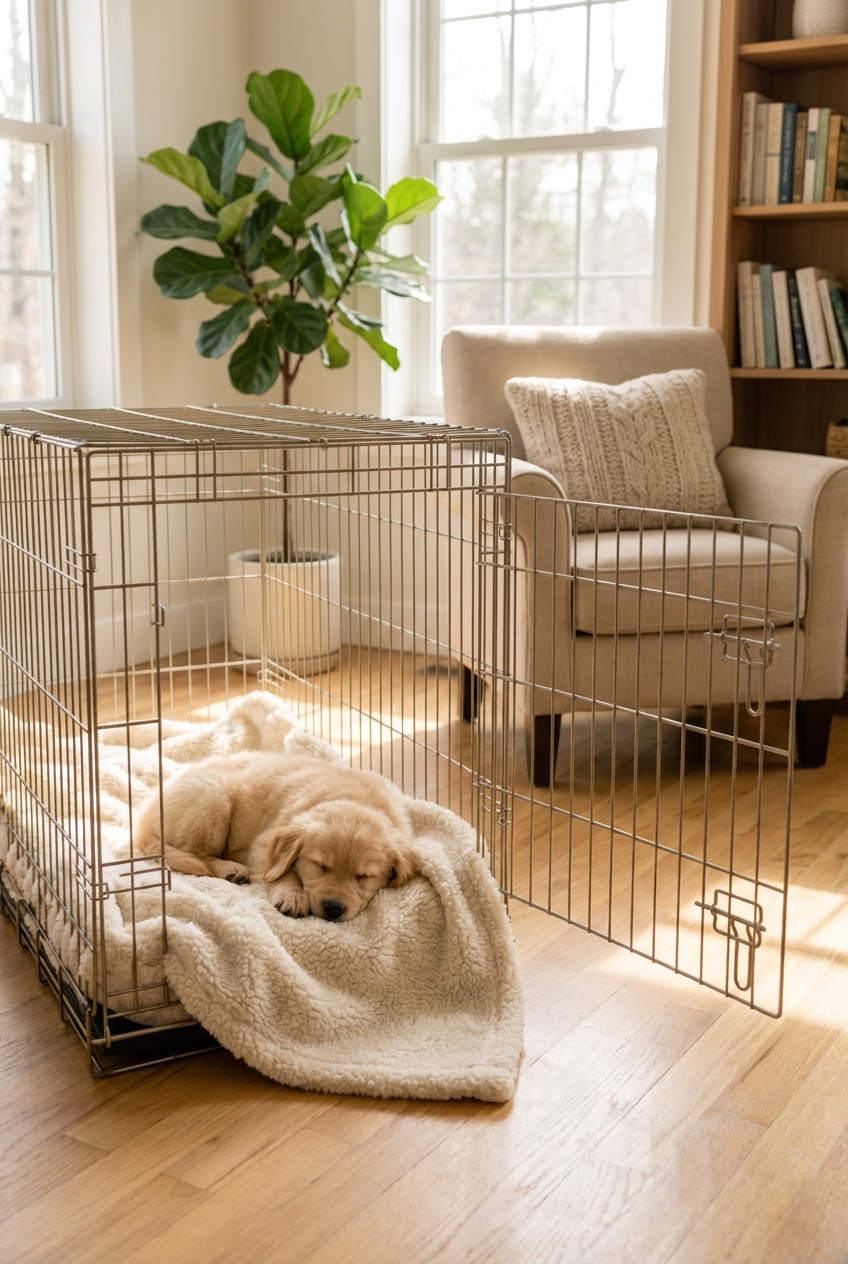
Your puppy should be able to stand up, turn around, and lie down comfortably. For potty training, you do not want the crate so large that your puppy can sleep on one end and potty on the other.
- Wire crates are popular because they are airy and often come with a divider panel to adjust space as your puppy grows.
- Plastic crates feel cozier and can be helpful for dogs who settle better in a more enclosed space.
- Soft crates are best saved for after your puppy is reliably calm and not chewing or scratching.
Location and comfort
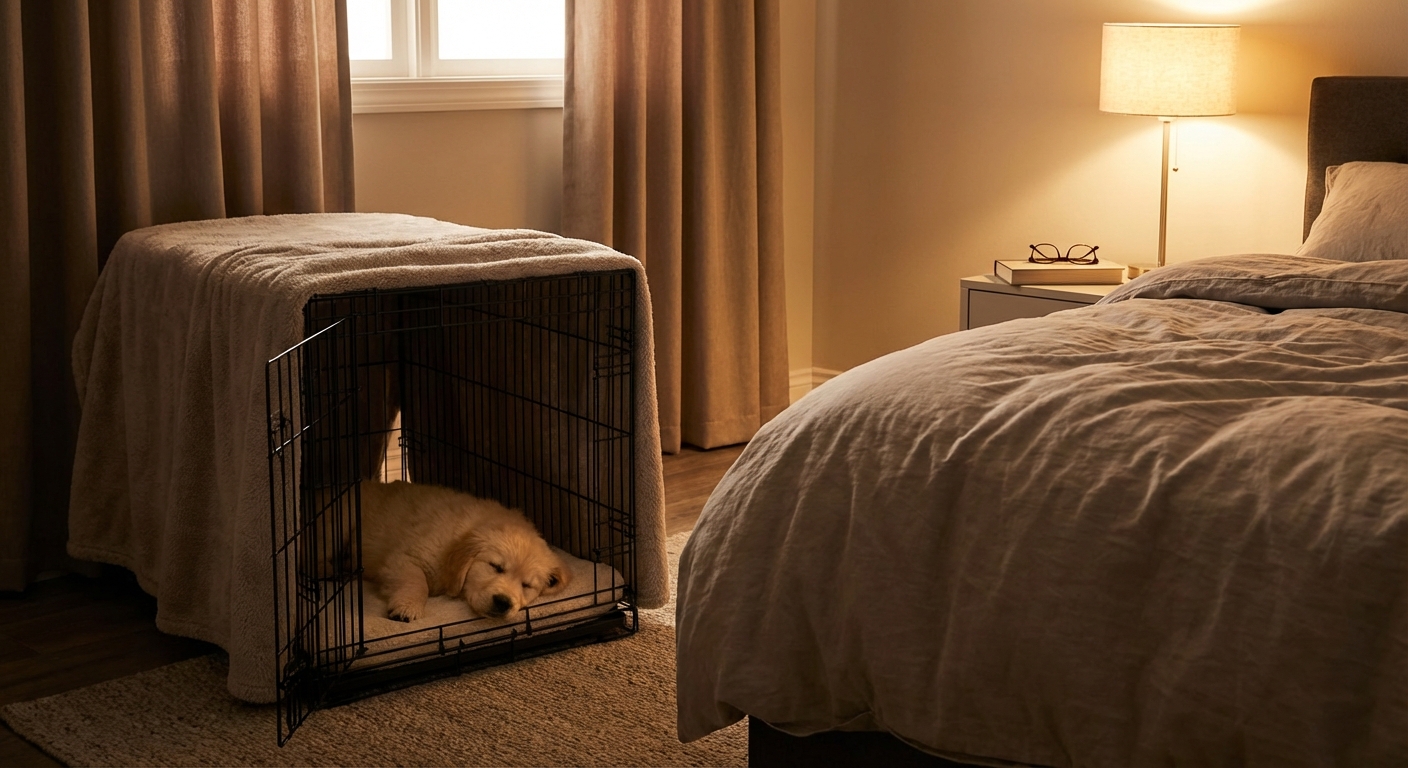
Place the crate where your puppy can still feel part of the family, like the living room during the day. At night, most young puppies do best with the crate near your bed for the first week or two.
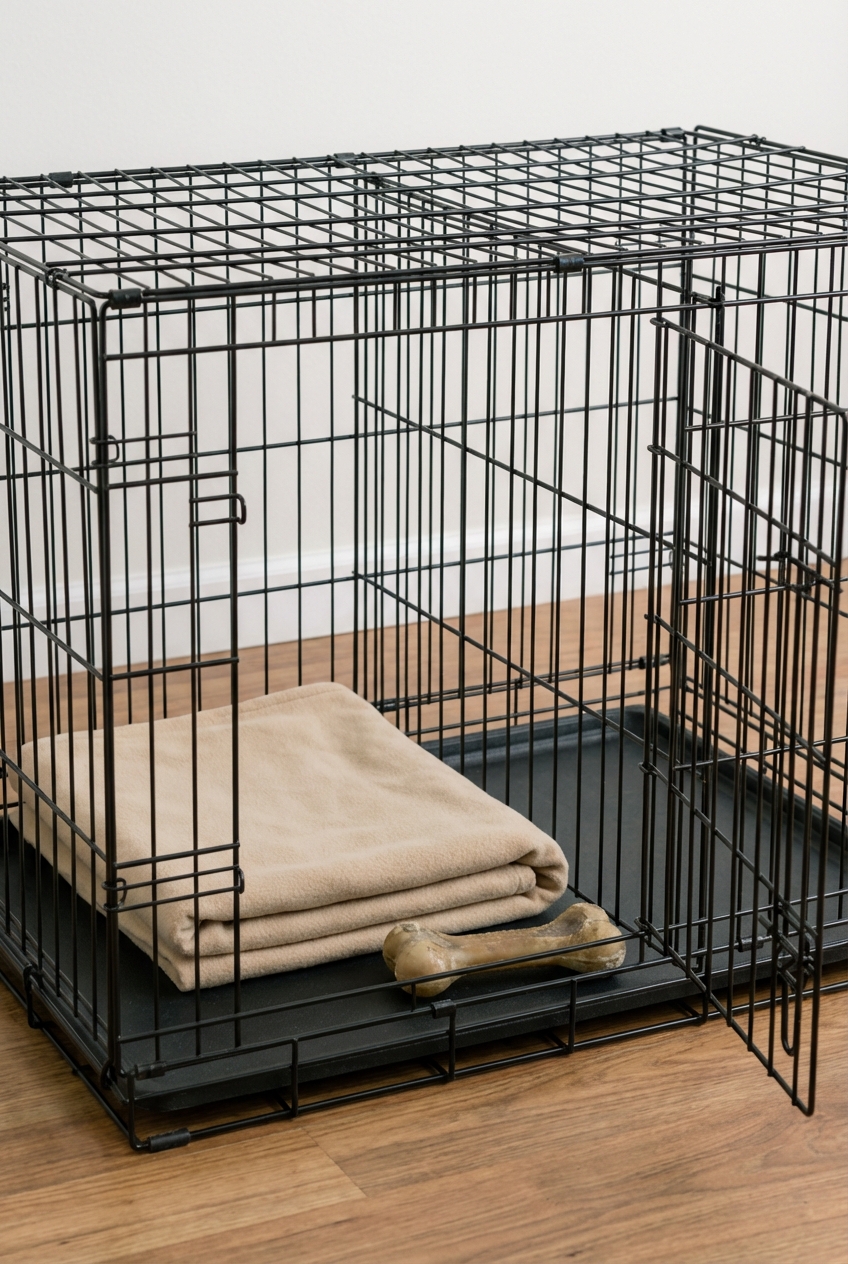
- Add a washable blanket or crate pad. For heavy chewers, start with simple bedding and upgrade later.
- Water: Offer water up to bedtime and make sure your puppy has access again first thing in the morning. Many healthy puppies can go overnight without water once your veterinarian confirms they are on an appropriate potty routine, but hydration needs vary with age, diet, heat, and medical status.
- If you offer water in the crate, use a spill-resistant setup like a clipped-on bowl or crate bottle that is positioned safely.
- A light cover over part of the crate can help some pups relax, but keep airflow strong and leave an uncovered side for ventilation.
Before you start
Crate training works best when your puppy’s basic needs are met first. A pup who is bursting with energy or needs to potty will struggle to settle.
- Potty first: Always take your puppy out right before crating.
- Exercise and play: Short play sessions, a little training, and a sniff walk go a long way.
- Food schedule: Predictable meals help predictable potty times. Many families stop food 2 to 3 hours before bedtime. Ask your veterinarian what is appropriate for your puppy’s age and breed.
- Comfort: If your puppy is very young, they may truly need an overnight potty break. That is normal.
Step-by-step crate training
This is reward-based, puppy-friendly training that aligns with modern positive-reinforcement best practices.
Step 1: Make it a treat zone
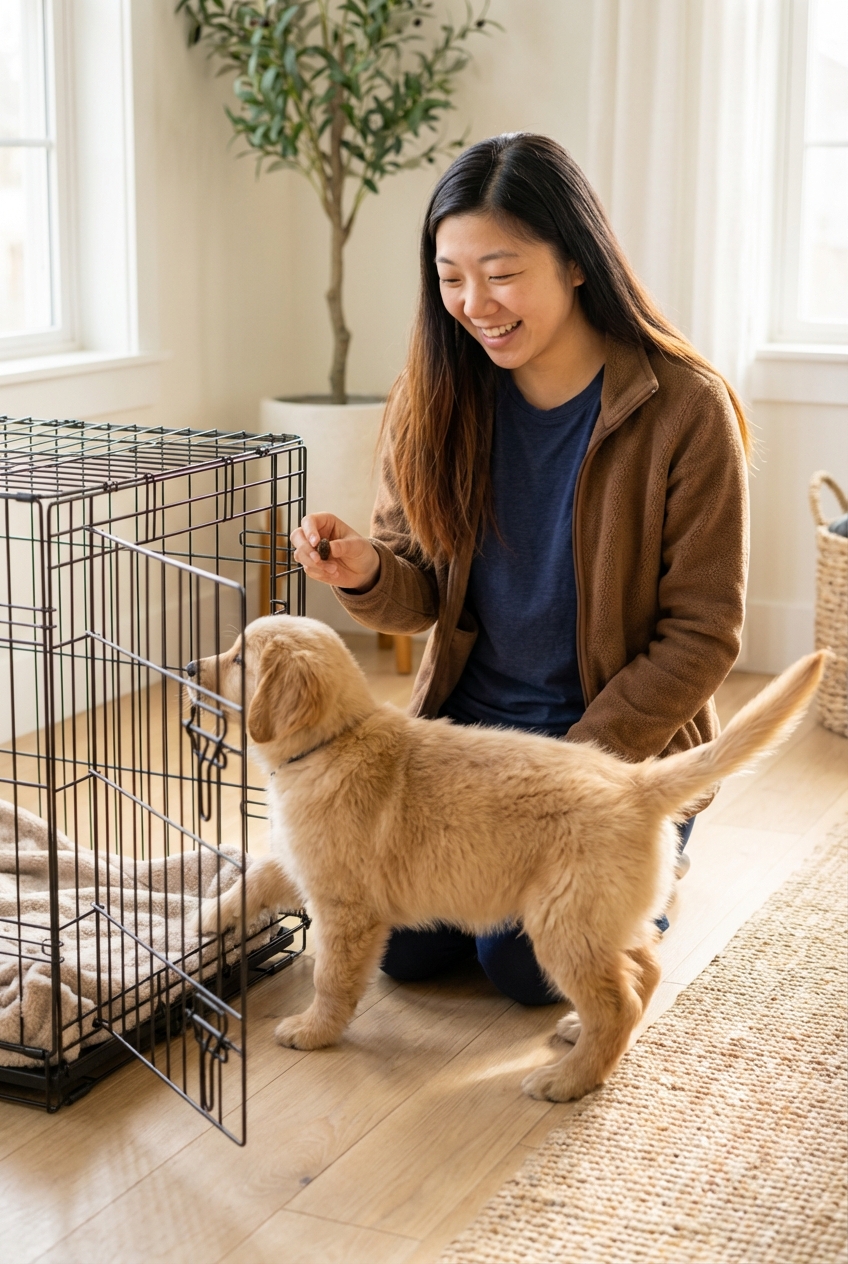
Keep the door open and toss high-value treats inside. Let your puppy go in and come back out freely. Praise softly and keep it upbeat.
- Feed meals near the crate, then just inside the crate, then fully inside as your puppy gets comfortable.
- Scatter a few treats in the crate randomly during the day so your puppy “discovers” good things there.
Step 2: Add a cue and short door time
Once your puppy is happily walking in, add a simple cue like “crate” or “bed.” When they step in, treat. Then gently close the door for 5 to 10 seconds, treat again, and open the door before they panic.
Repeat and build time slowly over multiple sessions or days: 10 seconds, 30 seconds, 1 minute, 3 minutes, and so on. If your puppy cries, you increased duration too fast.
Step 3: Add a safe chew or food toy
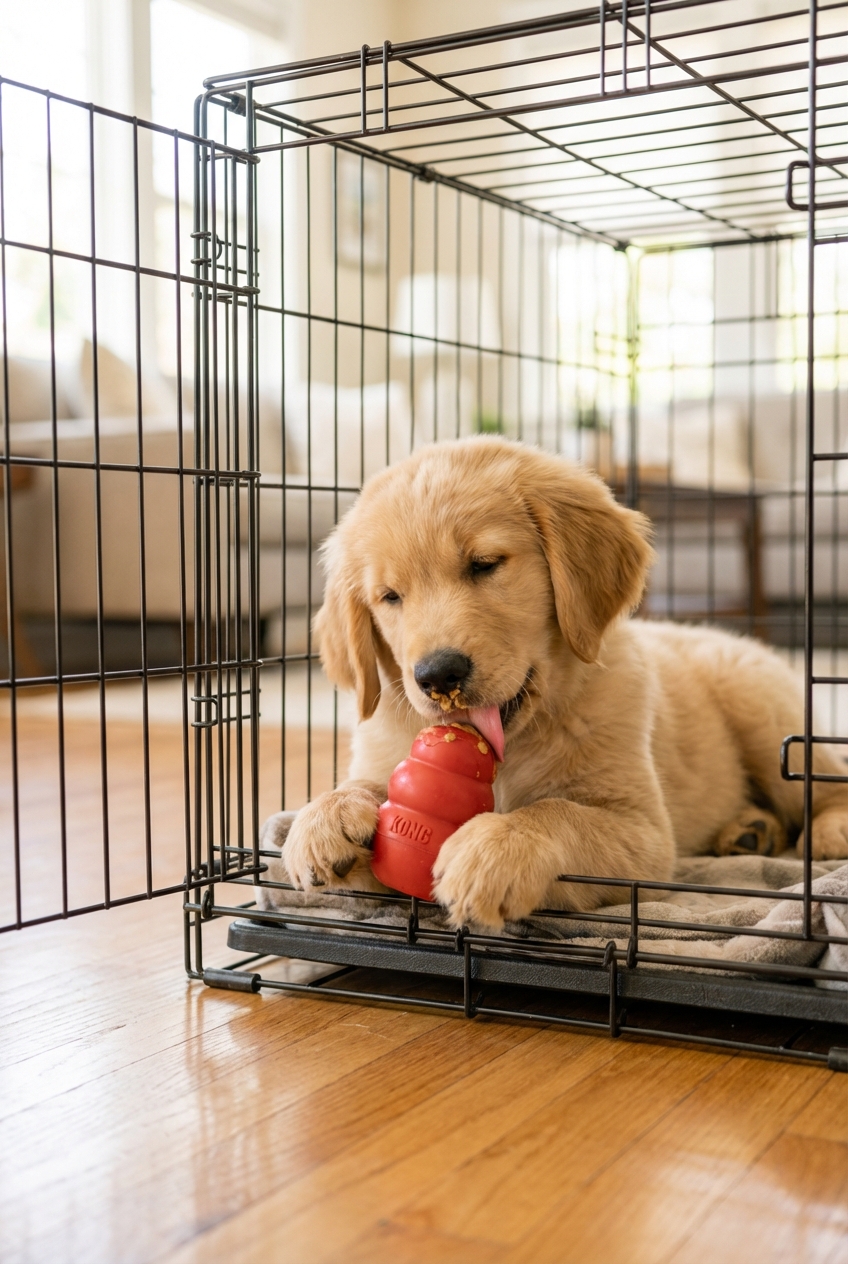
Many puppies learn best when they have something soothing to do in the crate. A stuffed food toy or a safe chew can help build a positive association.
- Choose puppy-appropriate options and supervise at first.
- Skip items that can break into sharp pieces or be swallowed.
- If you use a stuffed toy, adjust the difficulty so your puppy does not get frustrated.
Step 4: Practice calm departures
Start crating your puppy for very short periods while you move around the house. Then do tiny “pretend departures” like stepping outside for 10 seconds and coming back in calmly.
The goal is to teach: “People leave, people come back, and I can relax.”
Step 5: Crate naps
Puppies need a lot of sleep, often 16 to 20 hours a day depending on age and the individual puppy. Planned crate naps can prevent the overtired “zoomies” that lead to biting and chaos.
- Use a consistent nap routine: potty, quiet play, crate with a small reward.
- Keep the environment calm: dim lights, low noise.
Nighttime crate training
Night is when many families feel stuck, but it usually improves quickly with routine.
A simple bedtime routine
- Last potty trip.
- Quiet cuddle or calm petting for a minute or two.
- Into the crate with a small treat.
- Lights down and minimal talking.
What to do about whining
Whining can mean “I need to potty,” “I’m lonely,” or “I’m frustrated.” Your job is to respond thoughtfully, not emotionally.
- Rule out potty needs: If it has been a while, take your puppy out on leash, keep it boring, then straight back to the crate.
- If you are sure they do not need to potty: Wait for a brief pause in whining, then offer a calm “good quiet.” Avoid letting whining become the ticket out of the crate.
- Consider proximity: Many young puppies settle better when the crate is near your bed at first.
Tip from the clinic: If your puppy is suddenly unable to settle after improving, consider an upset stomach, parasites, or pain. It is worth a quick call to your veterinarian.
Crate time limits
Crates are a helpful tool, but they are not meant to be a “storage” space. Puppies need frequent potty breaks, movement, and social time.
- Very young puppies: Plan on frequent breaks and short daytime crate sessions.
- General rule of thumb: Many puppies can hold their bladder about months of age + 1 hour during the day, but this is only a rough guide. Some need to go out more often, especially after naps, meals, and play.
- When in doubt: Choose more breaks, not fewer. If you need longer confinement, consider a puppy-proof playpen or gated area with a potty option (as your trainer or vet recommends).
Crate training and potty training
Puppies usually avoid soiling where they sleep, which is why correct crate size and a consistent schedule matter.
Good potty times
- Immediately after waking
- After eating
- After play
- Before and after crating
- Before bedtime
Accidents happen. If your puppy has an accident in the crate, do not punish. Clean thoroughly with an enzymatic cleaner and avoid ammonia-based products, which can smell like urine to dogs. Then revisit crate size, timing, and how quickly you increased crate duration.
Common mistakes
Using the crate as punishment
If the crate only appears when your puppy “did something wrong,” it stops feeling safe. Instead, use the crate for naps, calm breaks, and meals.
Going too fast
If your puppy panics, you jumped ahead. Go back to the last easy step and build again.
Letting a puppy cry for long periods
Some pups can escalate into real distress. Crate training should teach calm, not fear. If you are stuck, shorten sessions and increase positive associations.
Skipping daytime practice
If the only crate time is at night, your puppy has not had enough chances to learn the skill. Add short daytime sessions when your puppy is naturally sleepy.
When it is more than protest
Some vocalizing is normal in the early stages. But intense panic is different, and “pushing through” can make it worse.
Red flags
- Drooling, shaking, or heavy panting that does not settle
- Frantic escape attempts, bent bars, or broken teeth
- Self-injury (bloody nose, torn nails)
- Prolonged panic that escalates instead of improving
If you see these signs, stop increasing crate time and get help early from your veterinarian and a qualified positive-reinforcement trainer. In some cases, a crate is not the safest option in the short term. A playpen or gated puppy-proof space can be a better bridge while you build comfort.
How long it takes
Most puppies make noticeable progress in 1 to 2 weeks with consistent daily practice, but full comfort can take longer. Temperament, age, prior experiences, and your routine all matter.
Your goal is not a perfectly silent puppy overnight. Your goal is steady improvement: shorter settling time, longer calm stretches, and fewer stress signals.
Safety notes
- Collars and tags: For many dogs, it is safer to remove collars before crating to prevent snagging.
- Chew safety: Only provide chews that are appropriate for your puppy’s age and chewing style.
- Heat: Make sure the crate area is cool and well ventilated.
- Medical concerns: If your puppy has diarrhea, vomiting, frequent accidents, or seems painful, contact your veterinarian.
If you ever feel overwhelmed, you are not failing. Crate training is a skill for both of you, and small, consistent steps truly add up.
References
- American Veterinary Society of Animal Behavior (AVSAB). Position statements on humane training and behavior.
- Merck Veterinary Manual. Dog behavior and training overview.
- American Animal Hospital Association (AAHA). Puppy and dog care and behavior resources.