Pet loss can be devastating. This guide shares what helps most: healthy ways to express grief, goodbye rituals, easing guilt after euthanasia, steady routine...
Article
•
Designer Mixes
How to Comfort a Dying Cat at Home Safely

Shari Shidate
Designer Mixes contributor
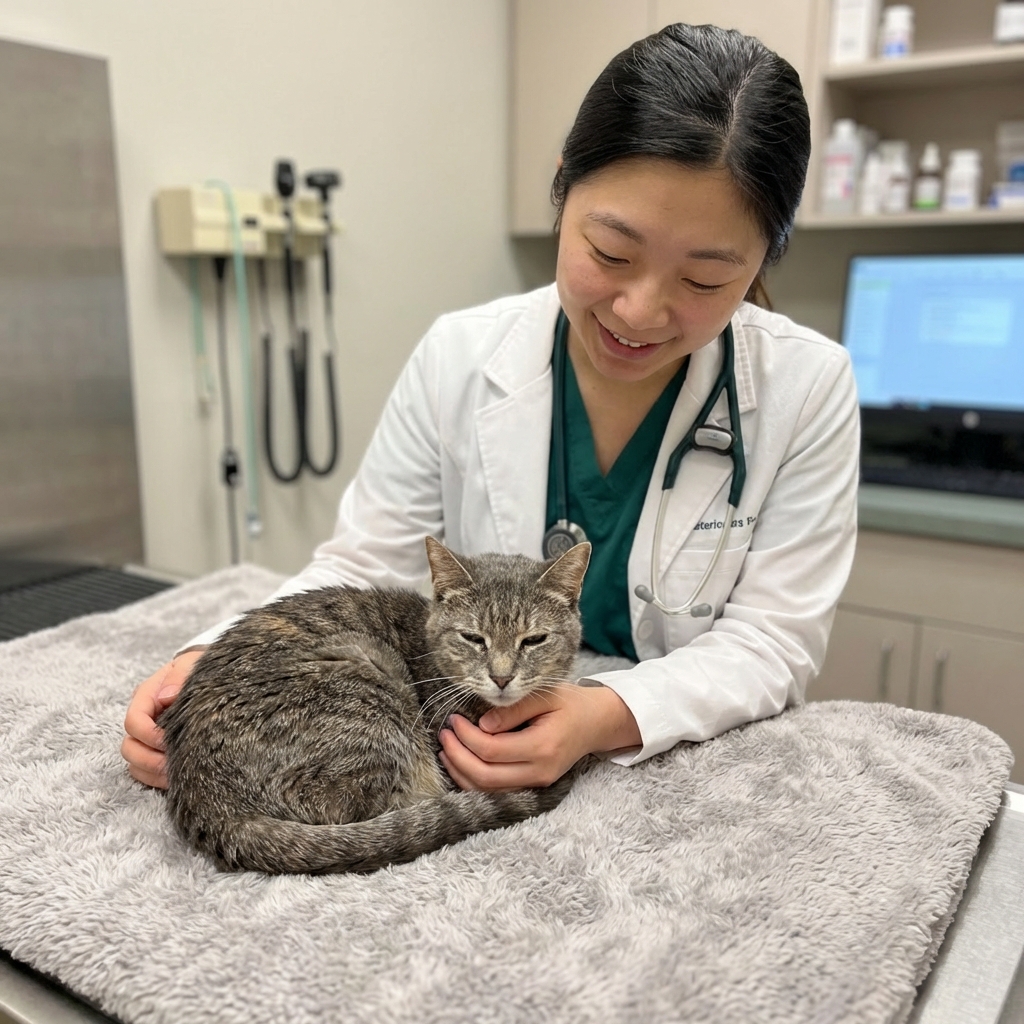
When a cat is nearing the end of life, what they need most is comfort, calm, and safety. As a veterinary assistant, I have seen how small, gentle changes at home can ease pain, reduce anxiety, and help a family feel more confident during a heartbreaking time.
Important: Many signs people associate with “dying” can also happen with treatable, even reversible medical crises. If you are seeing sudden changes, or you are unsure what is happening, it is always appropriate to call your veterinarian or an emergency clinic for guidance.
This guide focuses on practical steps you can take right now, plus clear signs that it is time to call your veterinarian or an emergency clinic.
Start with a safety check
Before you change anything, take a quick look at your cat and the room they are in. A very sick cat can become weak quickly, and small hazards can turn into big problems.
- Prevent falls: Block stairs, close off balconies, and keep your cat on one level if possible.
- Reduce slipping: Put down yoga mats, rugs, or towels to create traction on tile or wood floors.
- Limit access to unsafe hiding spots: Cats often hide when they feel unwell. Choose a safe, easy-to-reach “nest” area so you can check on them easily without having to reach into cramped or risky spaces later.
- Keep other pets and loud activity away: Even friendly housemates can stress a fragile cat.
If your cat is having trouble breathing, cannot stand, seems confused, or is crying out in pain, skip home adjustments and call your veterinarian right away.
Create a calm comfort zone
Think of this like hospice care at home. Hospice is comfort-focused care that aims to reduce suffering and support quality of life, ideally with veterinary guidance and a clear plan for what to do if things change.
Your cat does not need a big space. They need a quiet, predictable one.
Choose the right spot
- A warm, dim, low-traffic room
- Easy access for you, especially at night
- Away from fans or vents blowing directly on them
Build a soft “nest”
Use layers so you can adjust quickly if there is nausea, drooling, or accidents.
- Soft blanket or fleece on top
- Absorbent pad underneath (puppy pad or washable incontinence pad)
- Rolled towel “bumpers” around the sides for support

Keep it soothing
- Sound: Keep voices soft. Consider gentle white noise if the home is busy.
- Light: Natural light is fine, but avoid harsh overhead lighting.
- Scent: Skip essential oil diffusers and strong cleaners. Cats are sensitive to many fragrances.
Comfort basics
Cats at the end of life often struggle to regulate temperature and may not shift positions as easily. Your goal is to prevent discomfort without overwhelming them.
Warmth, safely
- Offer a warm blanket from the dryer or a pet-safe heating pad on low, placed under half the bedding so your cat can move away if they get too warm.
- A well-wrapped hot water bottle can also work. Make sure it is leak-free and not hot.
- Aim for warm, not hot. Always test with your inner wrist.
- Never put a heating source directly against fragile skin. Extra caution is needed for very thin cats or cats with reduced sensation (for example, neuropathy), since burns can happen more easily.
Positioning help
- Use a rolled towel under the chest or behind the back to prevent slumping.
- If they seem uncomfortable on one side, gently help them shift. Move slowly and pause if they resist.
- If breathing seems harder when they are curled tightly, try supporting them in a slightly more upright, chest-forward position.
Touch that reassures
Some cats want closeness, others want quiet. Watch their signals.
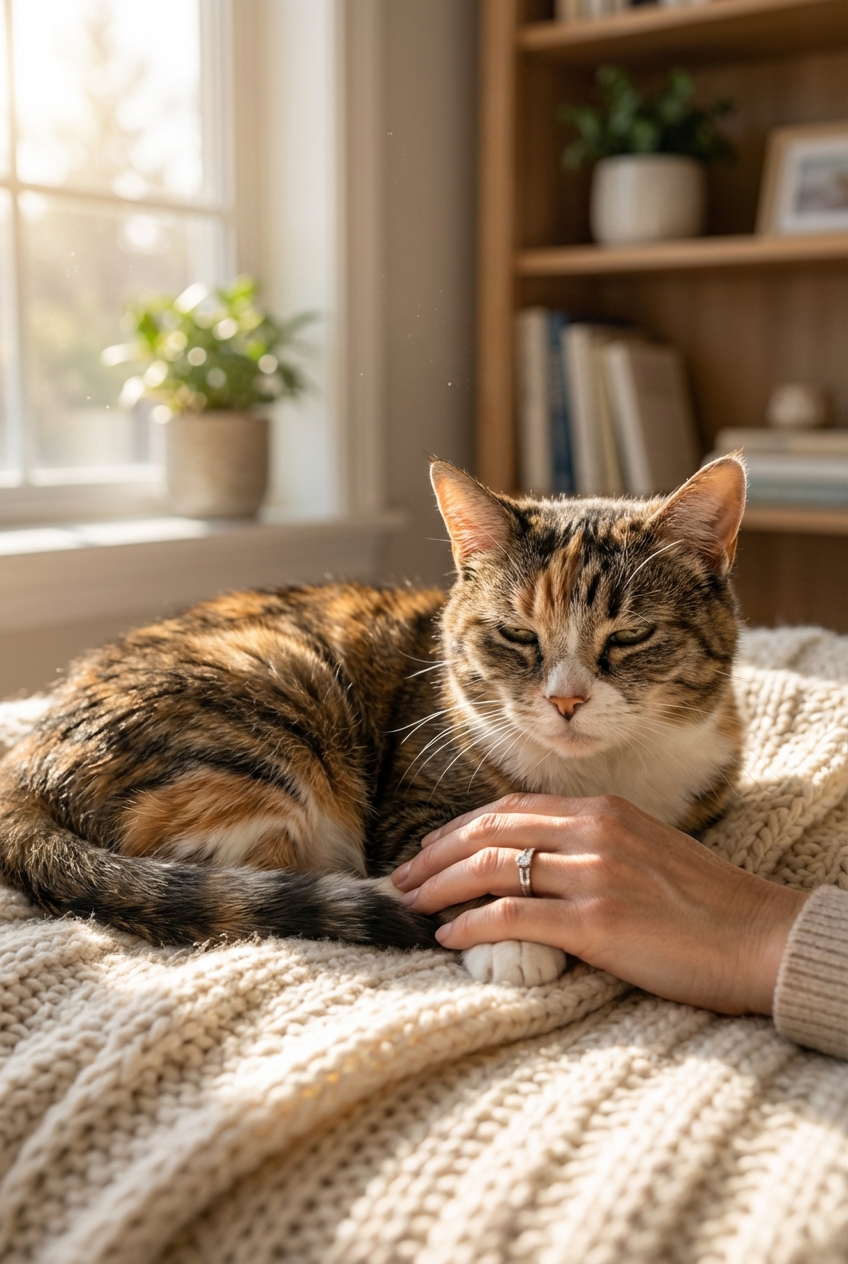
- Offer slow strokes on the head, cheeks, or shoulders if they enjoy it.
- Avoid pressing on the belly or sore areas.
- If they pull away, flatten ears, twitch the tail, or growl, switch to simply sitting nearby.
Food and water
It is deeply upsetting when a cat stops eating or drinking, but near the end of life it can be part of the natural process. The goal is comfort, not forcing intake.
Encourage, do not pressure
- Offer small amounts of strong-smelling foods (warmed wet food, tuna water in moderation, or pet-safe broths).
- If offering broth, avoid onion, garlic, and added seasonings. Even “low-sodium” broth may not be appropriate for some cats with heart or kidney disease. When in doubt, ask your veterinarian what is safest for your cat.
- Try a flat plate rather than a deep bowl if whiskers seem sensitive.
- Keep water close. Some cats prefer a shallow dish.
Do not force-feed unless your veterinarian instructed you to
For a weak cat, forced feeding can lead to stress or aspiration, which is when food or liquid goes into the lungs. Aspiration can cause severe breathing distress and pneumonia.
Ask your veterinarian about nausea and appetite support
Medications like anti-nausea drugs, appetite stimulants, constipation support, and pain relief can make a huge difference. Dosing is not one-size-fits-all, especially for cats with kidney disease, liver disease, or heart disease.
Medication stress matters
If giving medication becomes a struggle, do not feel like you have to “win the battle.” Call your veterinarian and ask about easier options such as compounded liquids, smaller tablets, or transdermal medications when appropriate.
Litter access
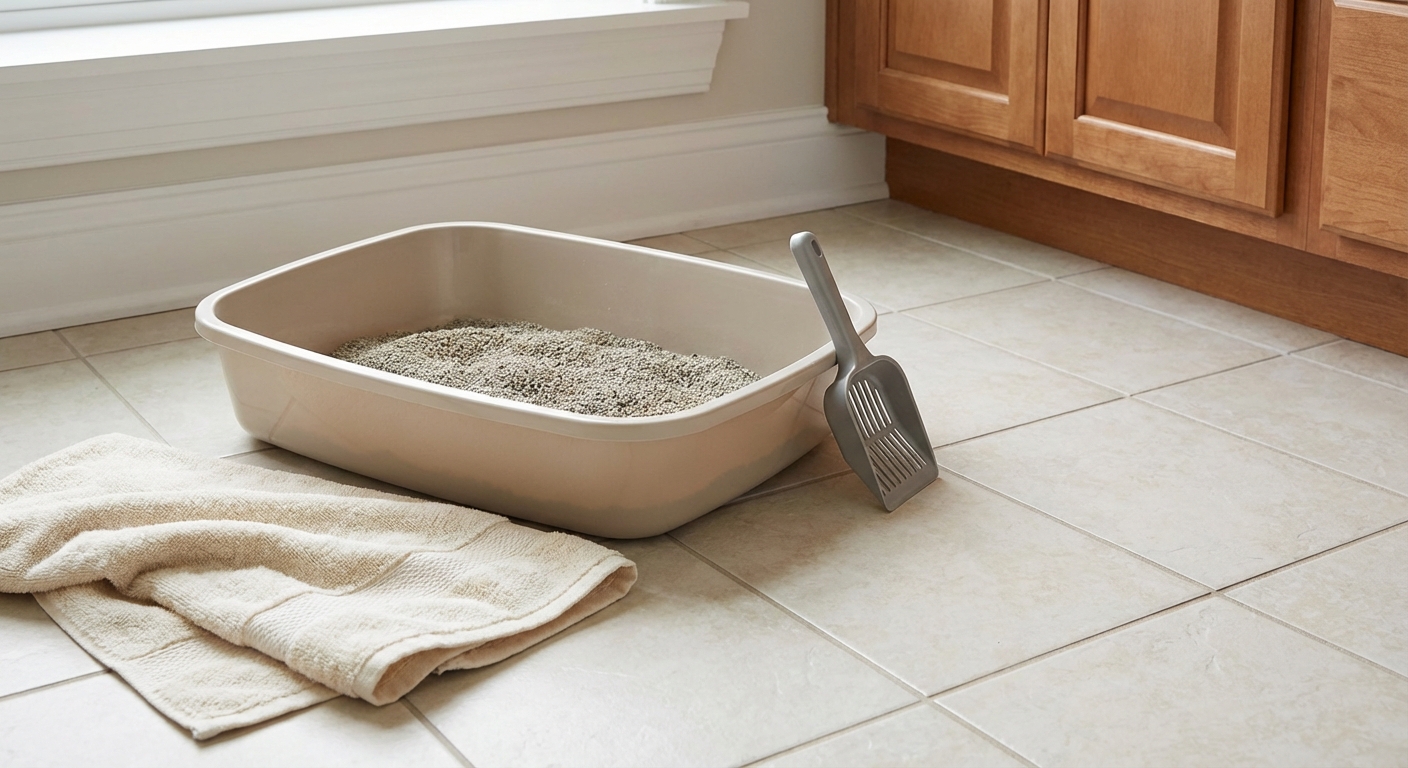
A cat who is very ill may want to use the litter box but cannot get there in time, cannot step into a high-sided box, or cannot posture comfortably.
- Use a low-entry litter pan or a shallow tray temporarily.
- Place the box very close to the bed area, but not right beside their head.
- Use a soft, unscented litter if paws are sensitive.
- If your cat is too weak to stand, use absorbent pads and keep them clean and dry.
Urinary and constipation red flags
Some litter box changes are emergencies, even in older or chronically ill cats. Call your veterinarian or an emergency clinic immediately if you see:
- Repeated trips to the litter box with little or no urine
- Straining, crying, or sudden agitation in the box
- No urine output (especially in male cats)
- A hard, painful abdomen
- Severe constipation with repeated straining, or no stool for an unusual length of time for your cat
Hygiene and skin care
When cats are weak, they can develop urine scald, matted fur, or sore spots from staying in one position. Gentle hygiene is a comfort measure, not a cosmetic one.
Keep them clean
- Use a warm, damp cloth to clean urine or stool from fur and skin.
- Pat dry fully. Moisture trapped in fur can irritate skin.
- Skip full baths unless your veterinarian recommends it. Baths can be exhausting and chilling.
Prevent pressure sores
- Add extra padding under hips and shoulders.
- If your cat tolerates it, help them change sides every few hours.
- Check bony areas for redness, thinning fur, or skin breakdown.
Dehydration can be hard to judge
Dehydration signs may include dry or tacky gums, lethargy, and worsening weakness. Some signs (like “sunken eyes”) are not reliable in every cat. If you suspect dehydration, your veterinarian can help you decide whether fluids are appropriate based on the underlying condition and your goals of care.
Pain and breathing
In my experience, families often worry most about whether their cat is hurting and whether they are struggling to breathe. Those are the right concerns to focus on.
Common signs of pain in cats
- Hiding or withdrawing
- Growling, hissing, or flinching when touched
- Fast breathing or tense body posture
- Not wanting to move, jump, or change positions
- Restlessness, inability to get comfortable
Breathing red flags
Call a veterinarian or emergency clinic immediately if you see:
- Open-mouth breathing
- Very fast breathing at rest, or exaggerated belly effort
- Blue or gray gums or tongue
- Wheezing, gurgling, or repeated choking sounds
- Collapse or severe weakness
If you want a simple number to track, you can count breaths while your cat is resting (one rise and fall of the chest equals one breath) for 15 seconds and multiply by 4. If the rate suddenly increases, or breathing looks like work, call your veterinarian even if your cat is still responsive.
Important: Never give human pain medications like ibuprofen, acetaminophen, naproxen, or aspirin unless a veterinarian specifically prescribed it for your cat. Many human medications are toxic to cats.
What to expect
Every cat is different, but there are common changes as the body slows down. Knowing what might happen can reduce fear. If these changes are happening earlier in the illness or they seem distressing, they can also signal a crisis. Trust your instincts and call your veterinarian.
- More sleeping: Longer, deeper rest periods.
- Less interest in food and water: Often gradual, sometimes sudden.
- Cooler ears and paws: Circulation decreases.
- Less grooming: Coat may look unkempt.
- Changes in breathing: Breaths may become irregular.
- Confusion or restlessness: Sometimes seen in the final day or two.
In the final hours to days, some cats may have longer pauses between breaths. Earlier in the course of illness, pauses or dramatic breathing changes should be treated as urgent and assessed by a veterinarian.
When to consider euthanasia
Sometimes the kindest, safest comfort you can provide is a peaceful goodbye with medical support. In-home euthanasia can be a gentle option for cats who are stressed by car rides or clinics.
Quality-of-life questions
- Is my cat able to rest comfortably most of the day?
- Are pain medications actually helping?
- Is breathing easy, or does it look like work?
- Can my cat get to the litter box, or are they soiling themselves repeatedly?
- Are there more bad days than good days now?
If you are unsure, call your veterinarian and describe what you are seeing. Many clinics can guide you through a quality-of-life assessment and help you plan a humane timeline.
What to ask your veterinarian
- Pain control plan and how to tell if it is working
- Nausea control and appetite support
- Constipation support and whether a stool softener is appropriate
- Anxiety support or mild sedation options if your cat cannot settle
- Whether fluids could help, or could worsen comfort, for your cat’s condition
- What to do after hours, including oxygen options if breathing worsens
- Whether in-home euthanasia is available and how quickly it can be scheduled
Comfort checklist
- Set up a quiet, padded resting space on one level of the home
- Offer gentle warmth with an escape option
- Bring water and litter close by
- Keep lighting low and noise minimal
- Offer small, tempting foods, but do not force
- Keep your cat clean and dry
- Track pain and breathing changes and call your veterinarian with concerns
- Keep children and other pets calm and supervised around your cat
You do not have to do this perfectly. You just have to keep your cat safe, comfortable, and surrounded by love, and ask for help when you need it.
Veterinary resources
If your cat seems uncomfortable, it is always appropriate to call your veterinarian. If it is after hours, many areas have an emergency clinic or an on-call service.
- Call your veterinarian and ask about: pain control, nausea control, appetite support, constipation support, hospice options, and in-home euthanasia
- If your cat is struggling to breathe, cannot settle, cannot urinate, or cannot stand, go to an emergency clinic immediately
Scope note: This guide is meant to support and educate, not to diagnose. Your veterinary team is the best source of advice for your cat’s specific condition.