A calm, pet-friendly guide to cleaning your dog’s ears at home: safety checks, supplies to use (and avoid), step-by-step technique, frequency tips, and vet...
Article
•
Designer Mixes
How to Clean Your Dog’s Ears

Shari Shidate
Designer Mixes contributor
Ear problems are a common reason dogs end up at the vet. The good news is that routine, gentle ear cleaning can help reduce wax, moisture, and everyday debris for many dogs, especially floppy-eared pups and dogs with allergies. For some dogs, it may also help reduce the chance of repeat flare-ups when used as part of a vet-guided plan.
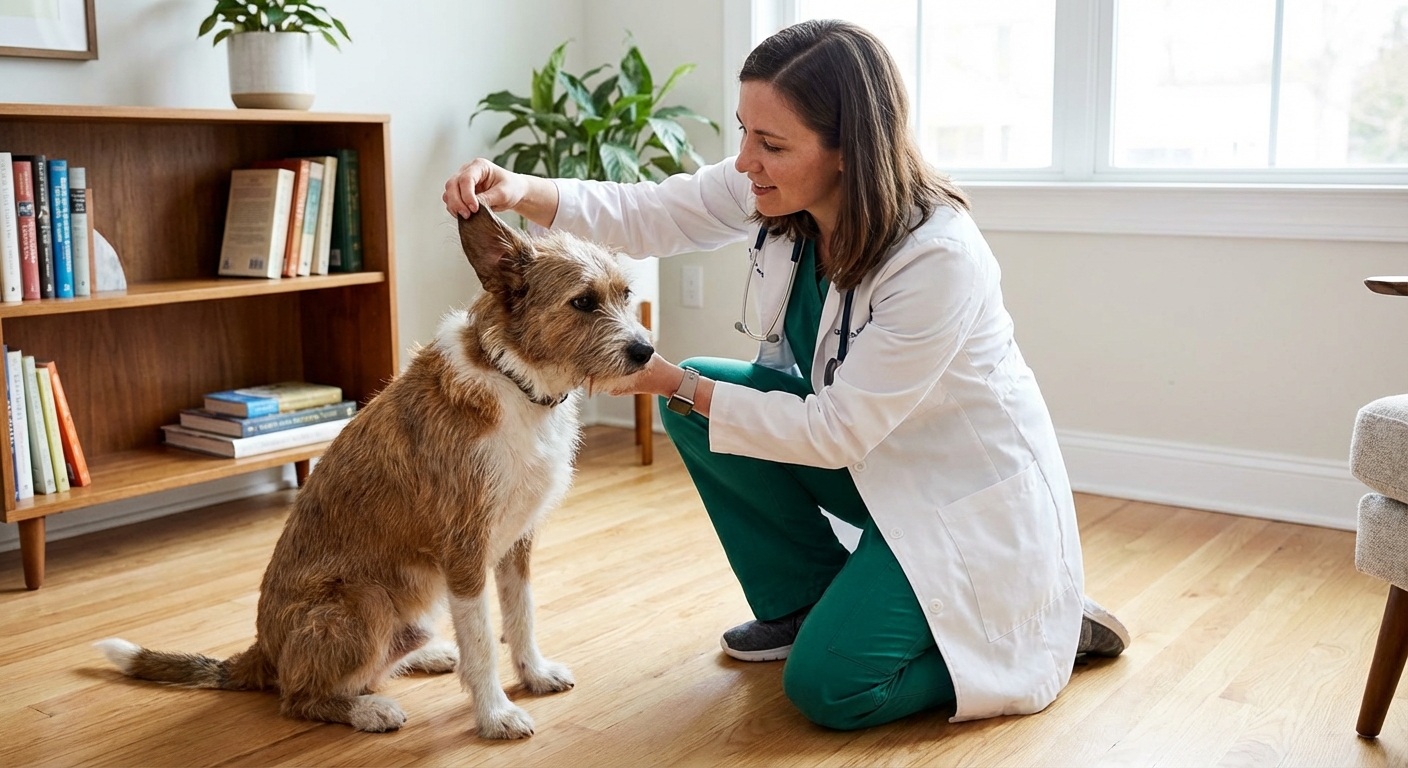
As a veterinary assistant, I want you to feel confident doing this at home, without pain, stress, or guesswork. In this guide, I’ll walk you through when to clean, how to do it safely, and when it’s time to call your veterinarian.
Quick note: This guide supports basic home care, but it does not replace an exam. When in doubt, call your vet.
First, should you clean your dog’s ears?
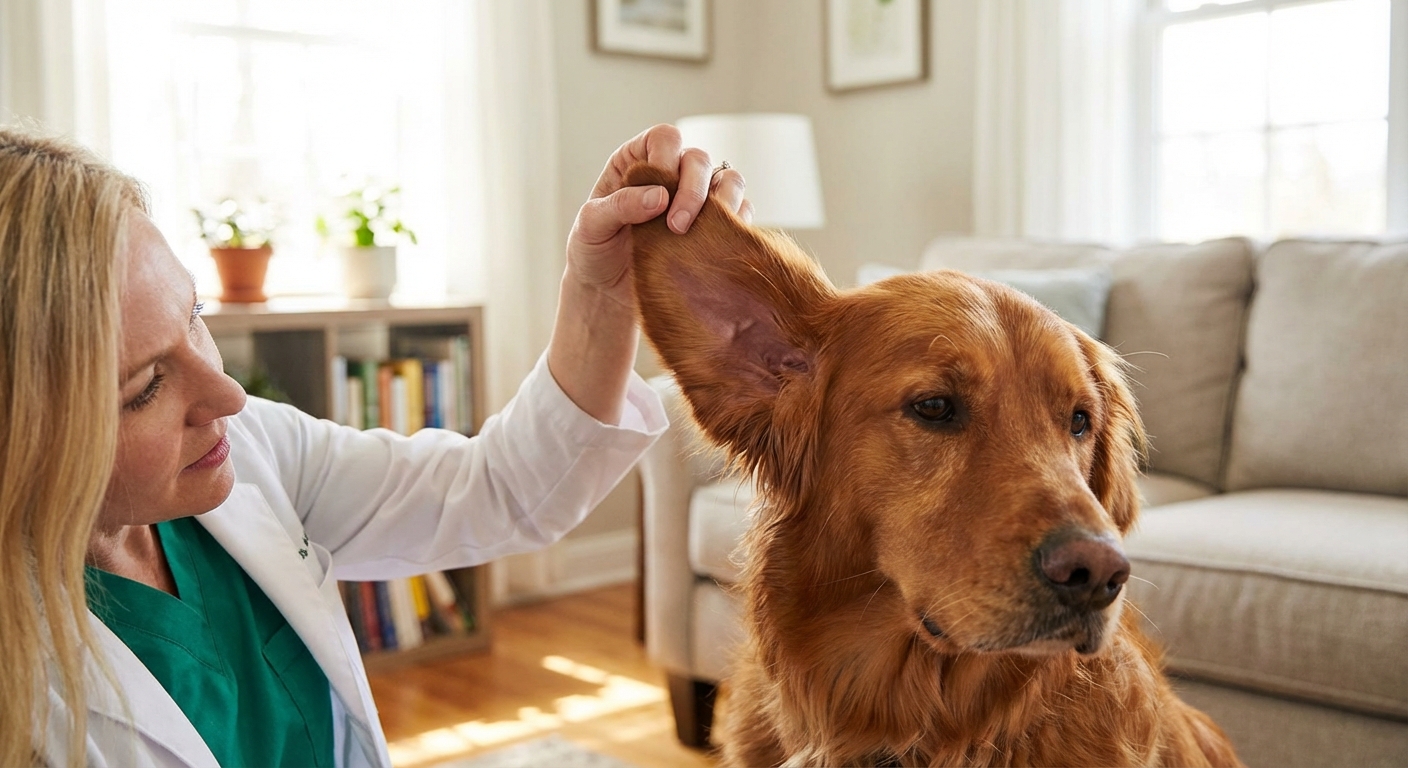
Some dogs truly need regular ear cleaning. Others do best with very little ear interference. The goal is to keep the ear canal healthy, not to make it squeaky clean.
Dogs who often benefit from routine ear cleaning
- Floppy-eared breeds (less airflow, more moisture trapped)
- Swimmers or dogs who get frequent baths (especially if your vet recommends post-water ear care)
- Allergy-prone dogs (environmental or food allergies can inflame ear tissue)
- Dogs with hairy ear canals (debris can get trapped more easily)
Dogs who may not need much cleaning
- Dogs with naturally clean, dry ears and no odor
- Dogs who get irritated when ears are cleaned too often
If you are unsure, ask your veterinarian what schedule makes sense for your dog specifically. Ear cleaning is helpful when it is the right amount and the right technique, with the right product.
Signs your dog’s ears need attention
Cleaning can help with mild wax buildup or everyday gunk. But if you see signs of infection or injury, skip the home cleaning and get veterinary guidance first.
Normal wax and mild buildup
- Light brown or tan wax
- Small amount of debris near the opening
- No strong odor
- Skin that looks light pink (mild pink is normal)
- No swelling or pain
Red flags that need a vet visit
- Strong, sour, or “yeasty” odor
- Dark, coffee-ground debris (can be ear mites, but can also be heavy wax, yeast, or infection-related debris)
- Yellow or green discharge
- Significant redness, swelling, or heat
- Pain when you touch the ear, or your dog cries or pulls away
- Head tilt, loss of balance, or rapid side-to-side eye movements (nystagmus) (could suggest deeper ear involvement)
- Bleeding or an open wound
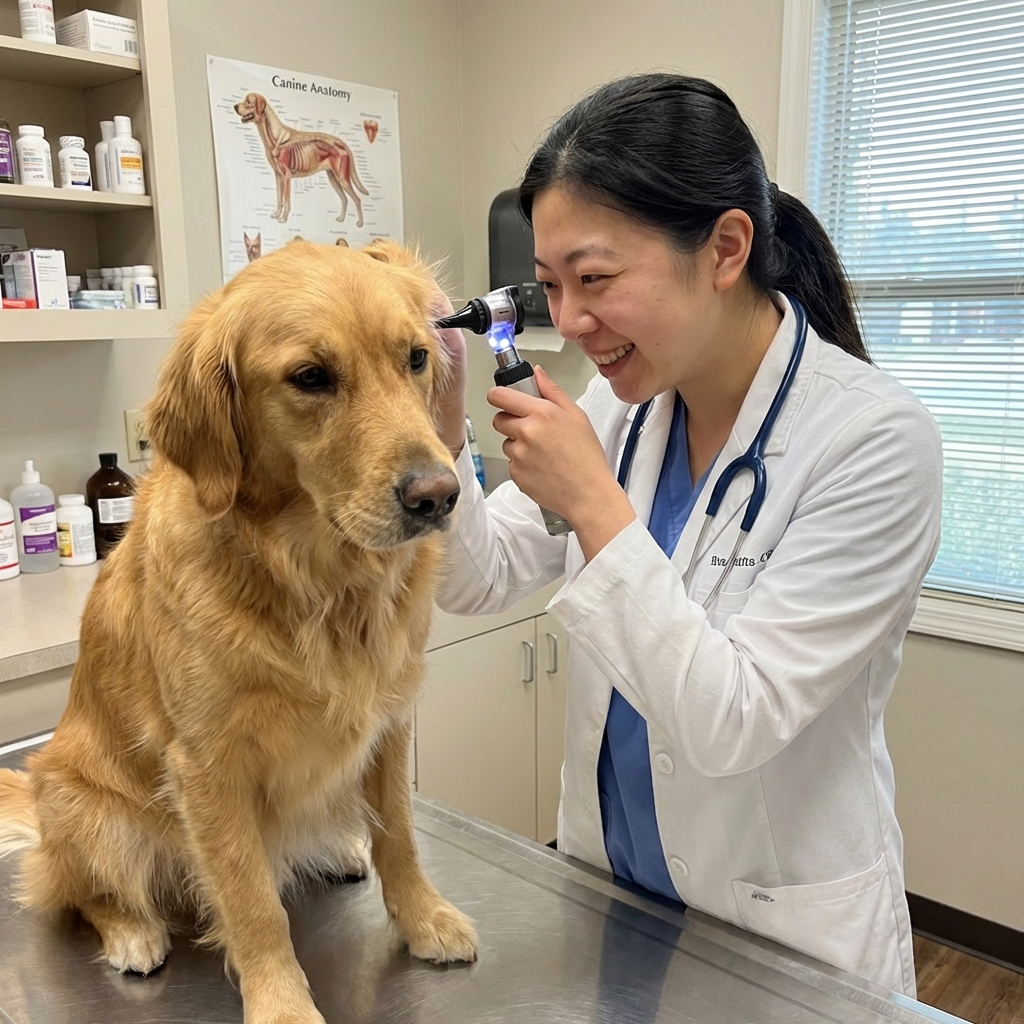
These symptoms can indicate yeast, bacteria, ear mites, a foreign body, or an allergy flare. Many infections require prescription medication and sometimes an ear cytology test to choose the right treatment.
What to use (and what to avoid)
What you should use
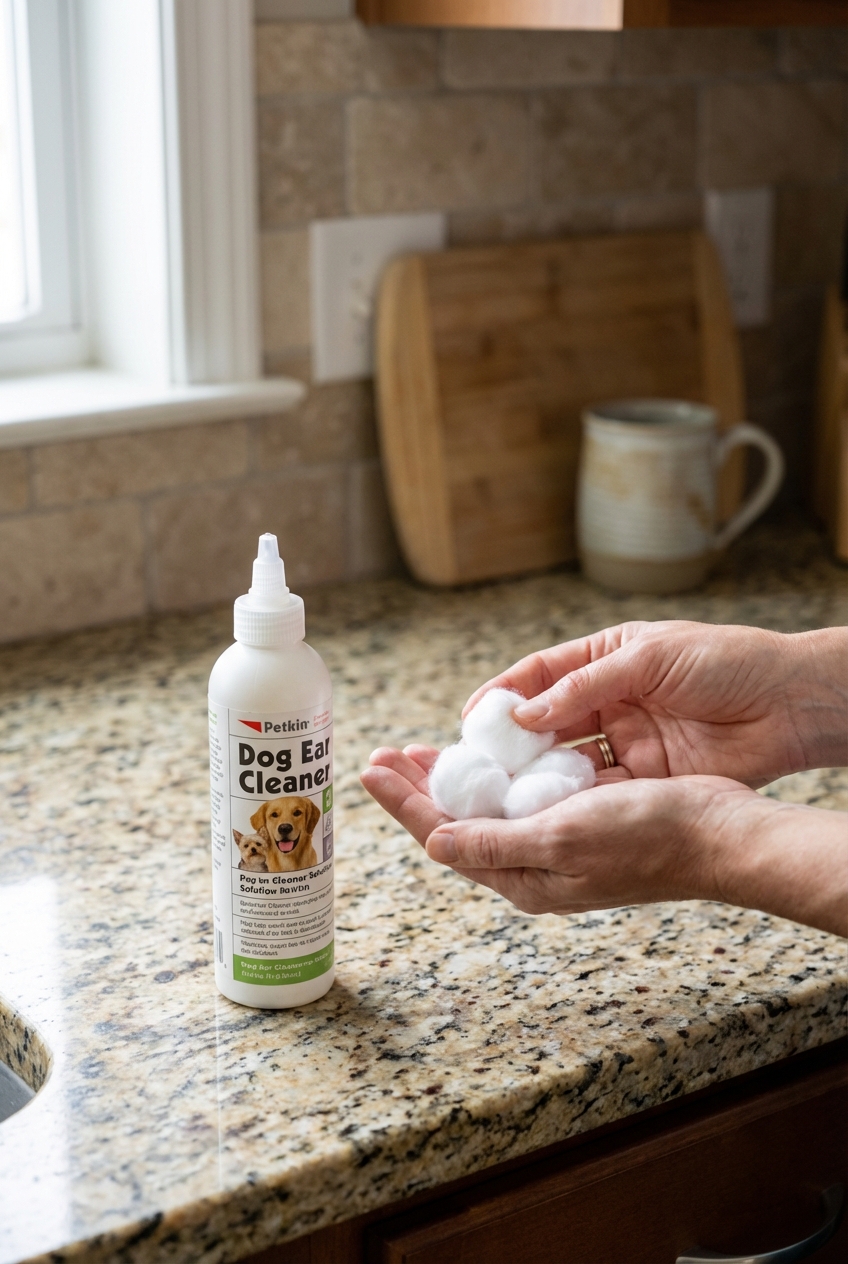
- Veterinarian-recommended ear cleaner made for dogs
- Cotton balls or gauze squares for wiping the visible part of the ear
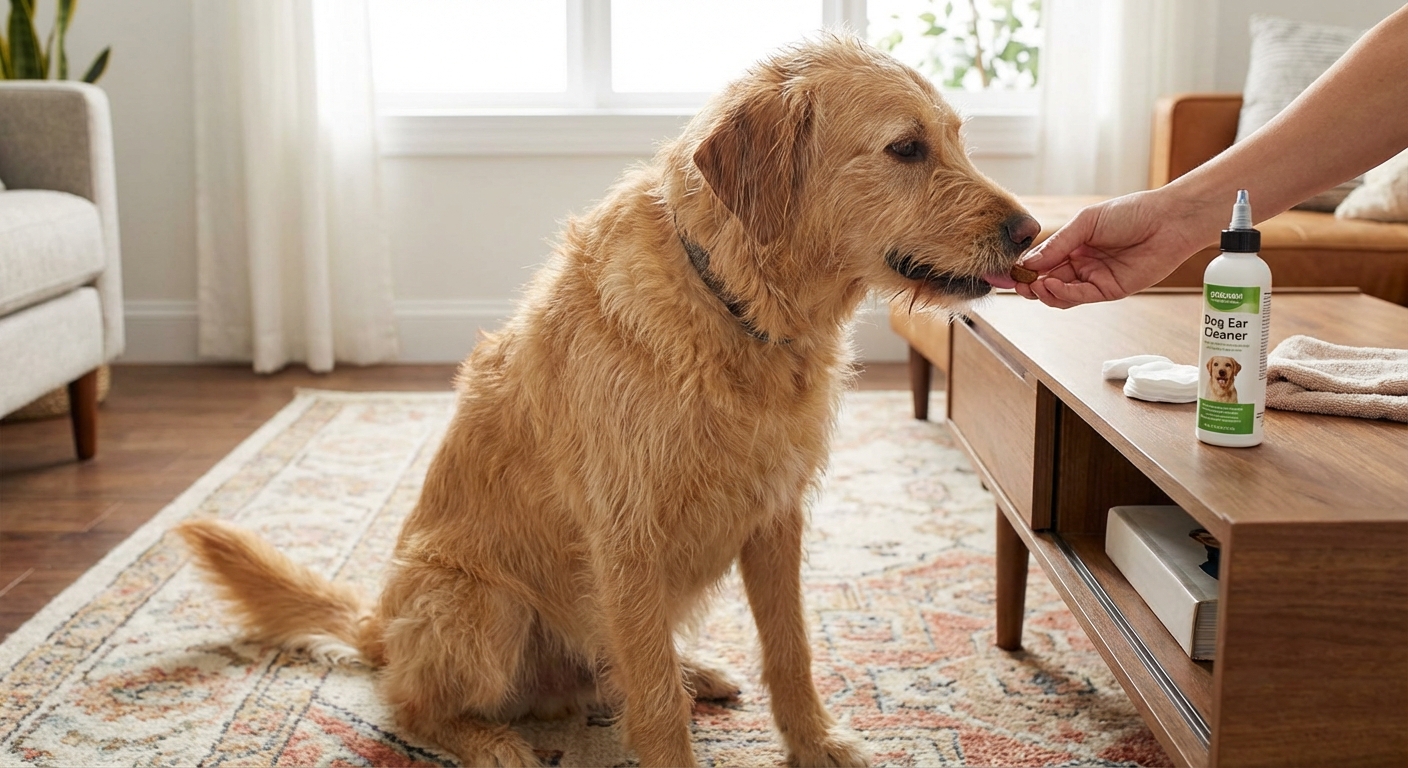
- Treats to help your dog build a positive association
- A towel because you should expect head shaking afterward
What to avoid
- Cotton swabs inside the ear canal (they can push debris deeper and risk injury)
- Hydrogen peroxide (can irritate healthy tissue)
- Rubbing alcohol (stings inflamed ears and dries too aggressively)
- Homemade vinegar mixtures unless specifically directed by your veterinarian (can burn if the ear is inflamed or ulcerated)
- Essential oils in the ear (many can be irritating or unsafe for pets)
If your dog has had chronic ear trouble, ask your veterinarian which cleanser is best. Some cleaners are drying, some break down wax, and some support a healthier ear pH. Some formulas use chlorhexidine or acidifying ingredients, which can be helpful in the right situation but irritating in the wrong one. Using the wrong product can make recurring issues worse.
Before you clean: safety check
Do not put liquids into the ear and do not attempt deep cleaning if you suspect a ruptured eardrum or a more serious problem. Call your vet first if your dog has:
- Severe pain when the ear is touched
- Head tilt, loss of balance, or disorientation
- Rapid side-to-side eye movements (nystagmus)
- Known trauma to the ear, or a sudden intense reaction after scratching
- Sudden hearing changes
In these cases, your vet may want to examine the ear drum before any cleanser is used.
Step-by-step: how to clean your dog’s ears
Plan for a calm time when your dog is relaxed. If your dog is wiggly, recruit a helper to offer treats and gentle reassurance.
1) Set up your supplies
Have everything within reach: ear cleaner, cotton balls or gauze, towel, and treats. Choose a space that is easy to clean.
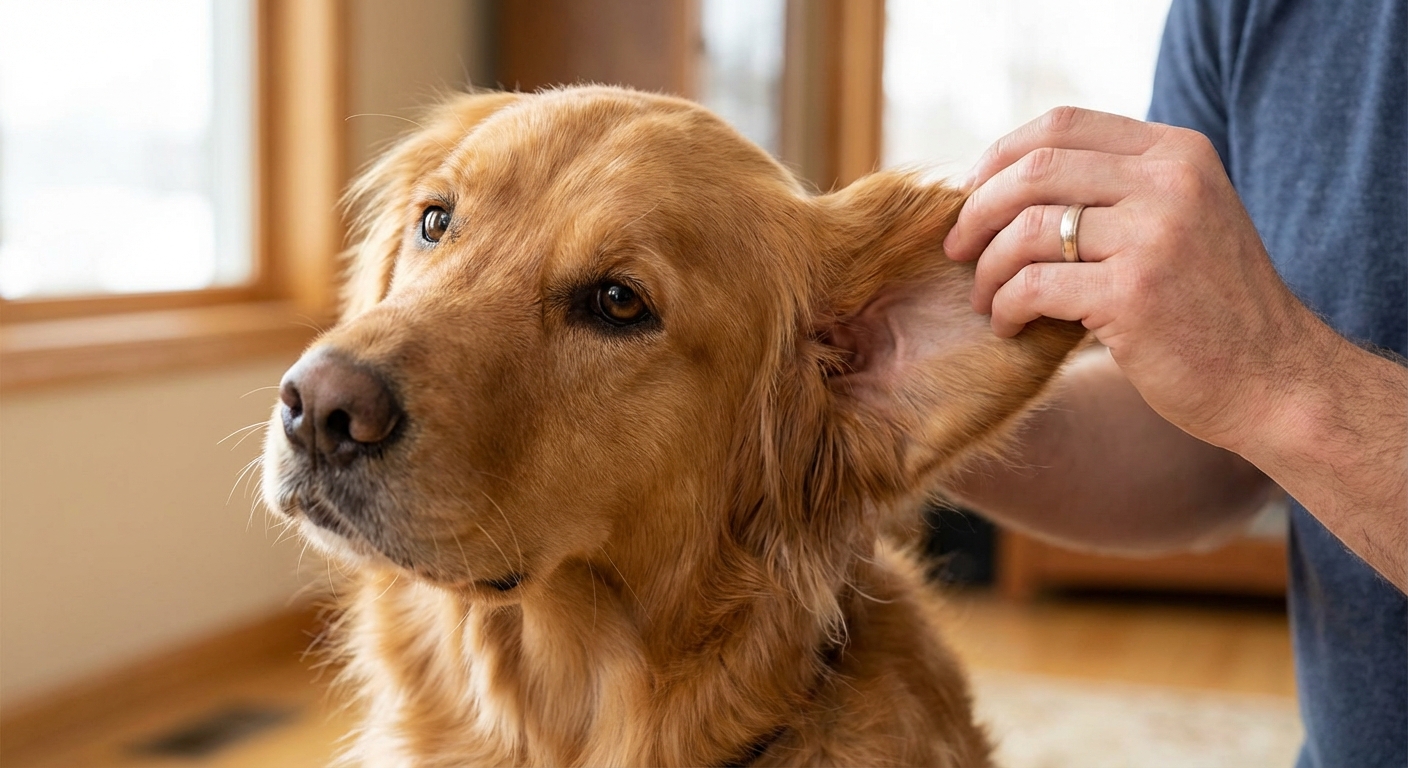
2) Gently lift the ear flap and look
Take a quick peek. If you see heavy discharge, severe redness, or your dog reacts painfully, stop and call your vet.
3) Add cleaner to the ear canal (enough to hear it)
Hold the ear flap up and place the tip of the bottle near the opening. Squeeze a generous amount into the canal. Do not force the nozzle into the canal and avoid touching the tip directly to the skin when possible to keep the bottle clean. If your vet has warned you about a possible ear drum issue, skip this step and call them.
4) Massage the base of the ear for 20 to 30 seconds
This is the magic part. You should hear a squishy sound as the cleaner loosens wax and debris deeper in the canal.
5) Let your dog shake
Step back and let your dog shake their head. This helps bring debris outward. Use your towel if needed.
6) Wipe the visible area only
Use cotton balls or gauze to wipe away debris from the inner ear flap and the outer opening. Do not push material down into the canal.
7) Reward and keep it positive
Finish with a treat, praise, or a favorite activity. The goal is to make ear cleaning a normal, low-stress routine.
If your dog uses prescription ear meds
If your veterinarian has prescribed ear drops, ask these two questions (it really matters):
- Should I clean before medicating? Many plans do, but not always.
- How long should I wait after cleaning? Some vets prefer a short wait so the medication is not diluted by excess cleanser.
If you are unsure, call your clinic and confirm the best order and timing for your dog’s specific medication.
How often should you clean your dog’s ears?
There is no one-size-fits-all schedule. Over-cleaning can irritate the ear canal, and under-cleaning can allow wax and moisture to build up. Here are general guidelines you can discuss with your veterinarian:
- Healthy ears, no history of issues: every few weeks or only as needed
- Floppy ears, mild wax buildup: about once weekly or every other week
- Swimmers: consider cleaning after swimming or bathing if your vet recommends it
- Chronic ear problems: follow your vet’s plan closely, which may include maintenance cleaning plus medications
Tip: If the ears look clean, smell normal, and your dog is comfortable, you may not need to clean that day. It is okay to do less when ears are healthy.
Common mistakes that cause ear cleaning to backfire
- Cleaning an infected ear without treatment. Cleaning alone rarely resolves infection and can be painful.
- Cleaning too often. More is not always better, especially for sensitive ears.
- Not using enough cleaner. A few drops often do not loosen debris effectively.
- Skipping the massage. The massage is what breaks up wax and distributes cleaner down the canal.
- Using cotton swabs. They can push debris deeper and irritate the ear canal.
- Using the same cotton ball repeatedly. Switch to fresh cotton as it gets dirty to avoid rubbing debris back onto the skin.
- Ignoring the underlying cause. Allergies, moisture, ear shape, and yeast or bacterial overgrowth often drive repeat problems.
Special situations
Puppies
Puppies can get ear mites and may scratch more. If you see dark debris and intense itchiness, get a vet exam. Many over-the-counter products are not the right fit for mites, and some can irritate a young ear canal.
Dogs with allergies
If ear issues keep returning, think bigger than the ears. Allergies are a very common root cause. Your vet may recommend diet trials, allergy medications, or targeted ear therapy.
Ear hair and plucking
Many owners ask whether they should pluck ear hair. In some dogs, plucking can inflame the canal and make irritation worse. In others, your vet or groomer may recommend gentle, limited hair removal if it is trapping debris and moisture. When in doubt, do not pluck and ask your veterinarian what is best for your dog.
Dogs who hate ear cleaning
Start small. Touch the ear flap and treat. Then add a quick wipe and treat. Then add cleanser another day. Slow progress is still progress. If your dog becomes fearful or snappy, ask your vet about anxiety-reducing strategies and safer handling options.
When to call your veterinarian
Call your vet if you notice:
- Persistent odor or discharge
- Recurring head shaking or ear scratching
- Red, swollen, painful ears
- Symptoms that return within days of cleaning
- Balance issues, head tilt, or rapid side-to-side eye movements (nystagmus)
Ear infections can move deeper and become much harder to treat if they are delayed. A quick ear cytology and a targeted medication plan can make a huge difference.
If cleaning hurts your dog, pause. Healthy ear cleaning should be mildly annoying at worst, not painful.
A simple at-home ear care routine
If your dog tends to get mild buildup, here is an easy routine you can follow:
- Weekly: quick sniff-check and visual check
- As needed: gentle cleaning using a dog-safe ear cleanser
- After water play: towel-dry ears well and consider a vet-approved cleanser if recommended
- Monthly: note patterns like seasonal flare-ups, new foods, or new grooming products
Ear health is often a mirror of overall health. If your dog has itchy skin, paw licking, or recurring anal gland issues along with ear problems, it is worth asking your vet about allergies or diet support.