Get rid of cat urine odor at the source with an evidence-based plan: find hidden spots with UV light, use enzymatic cleaners correctly, avoid risky products,...
Article
•
Designer Mixes
How to Clean Dog Pee From Carpet

Shari Shidate
Designer Mixes contributor
Dog pee on carpet happens to the best of us. Whether you are house-training a puppy, caring for a senior dog, or dealing with stress marking, the goal is always the same: remove the urine, clear the smell, and protect your carpet and pad so your dog is not tempted to return to the same spot.
As a veterinary assistant in Frisco, Texas, I am a big believer in calm, consistent cleanup. Quick action and the right products make a huge difference.
Why urine smell lingers
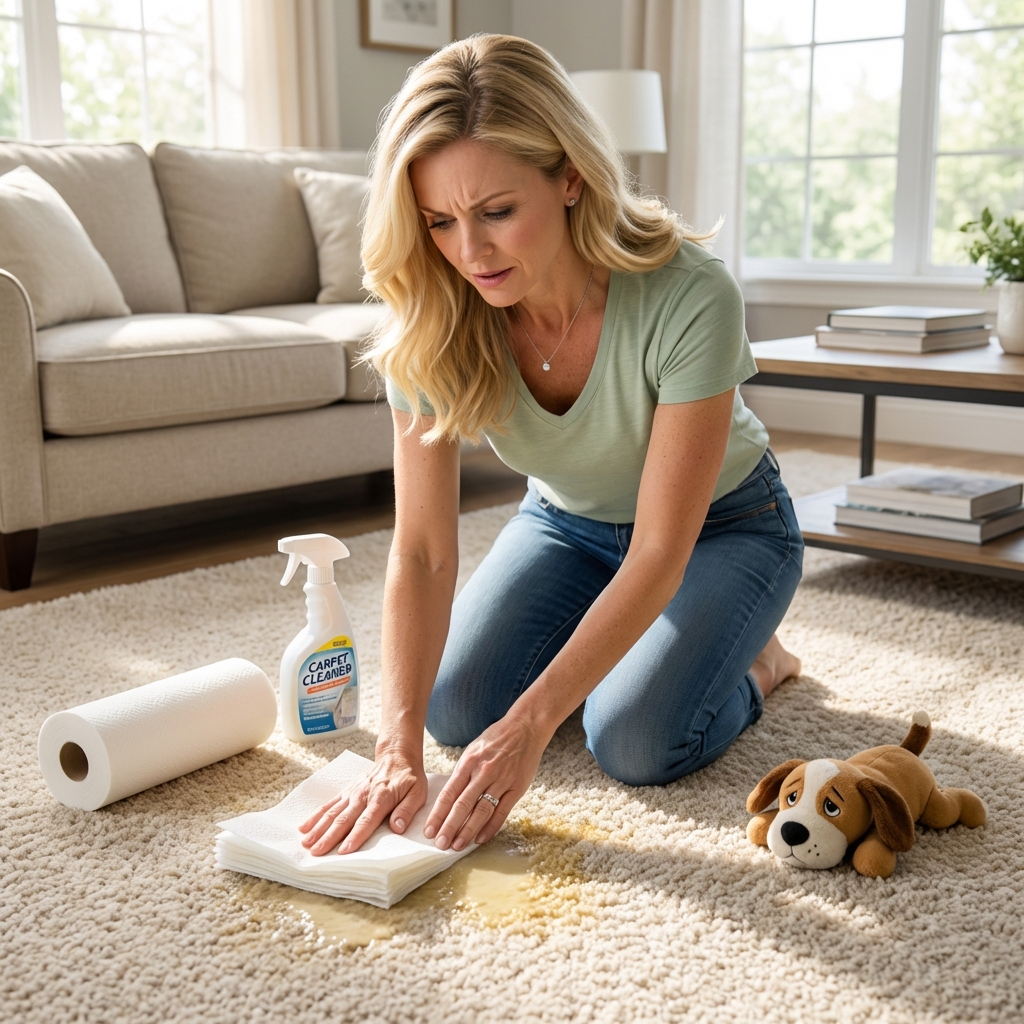
Urine is more than a wet spot. As it dries, it leaves behind urea, uric acid crystals, and bacteria. If urine soaks into the pad or subfloor, odor can persist and reappear with humidity. That lingering scent is also a powerful cue for dogs to re-soil the area.
The most effective approach is a two-part plan:
- Physical removal of as much liquid as possible.
- Enzymatic breakdown of the remaining urine residues.
Act fast: fresh pee cleanup
Quick safety note: Test any cleaner on an inconspicuous spot first for colorfastness. Keep kids and pets off the area until it is fully dry.
Step 1: Blot, do not rub
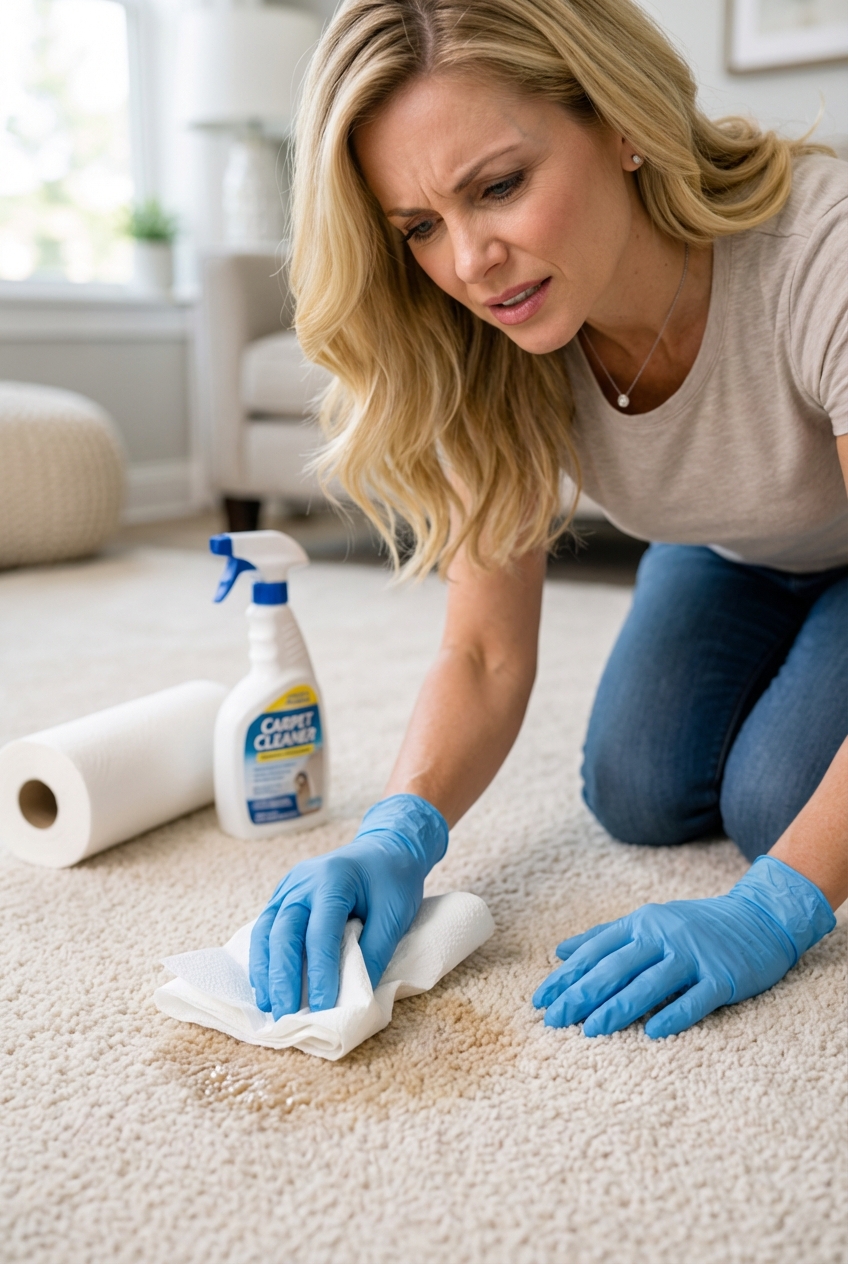
Use paper towels or clean white cloths. Press firmly and blot repeatedly. Rubbing pushes urine deeper into the fibers and padding.
Step 2: Rinse lightly
Pour a small amount of cool water on the spot, then blot again. This dilutes what is left in the carpet. Skip hot water because heat can make urine odors harder to remove and can set some stains.
Step 3: Use an enzyme cleaner
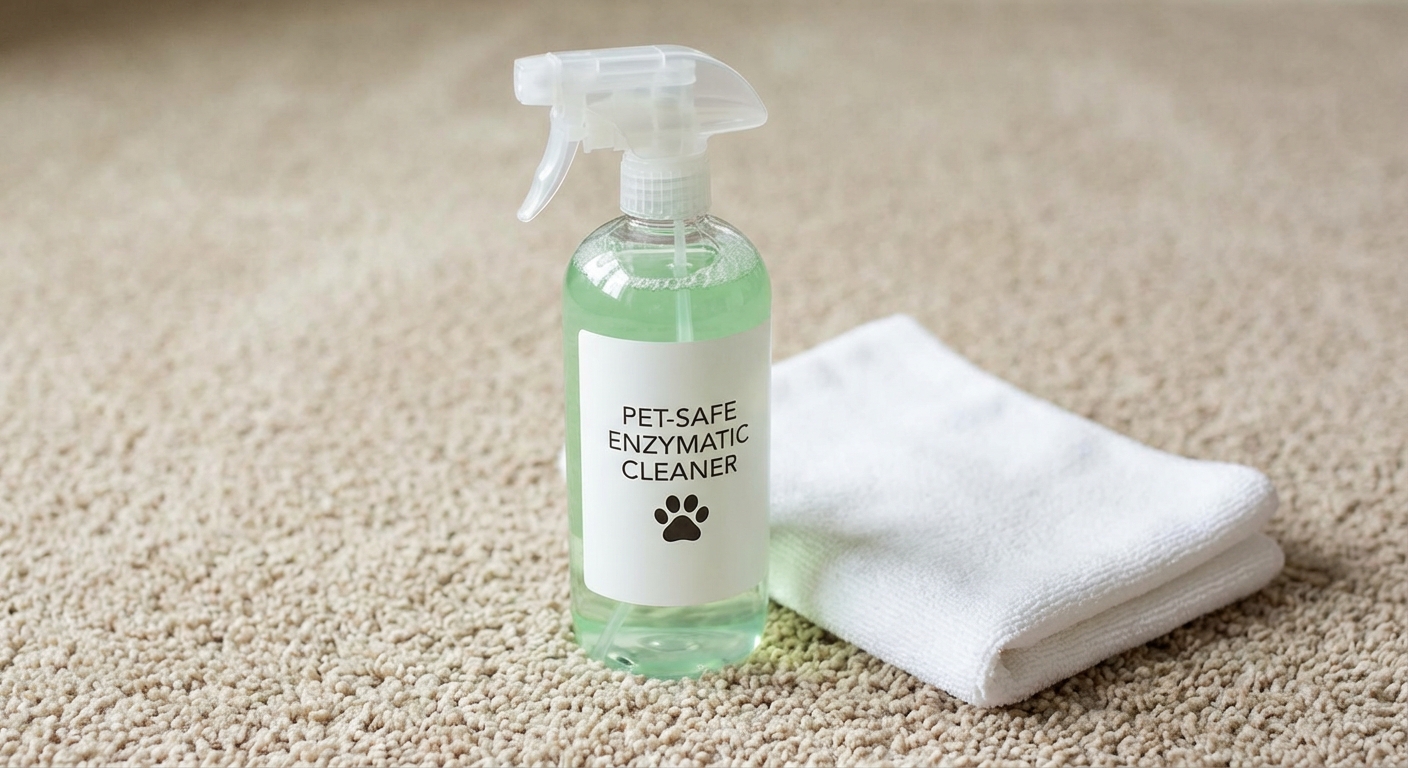
Choose a pet-specific enzymatic cleaner. Enzymes help digest the organic compounds that cause lingering odor, which is why they are usually more successful than soap alone.
- Selection tip: Look for products labeled “enzymatic” or “enzyme and bacteria” that specifically mention urine. Avoid anything with added ammonia or heavy masking fragrance if your dog is sensitive.
- Saturate the area according to label instructions. Many products need to reach as deep as the urine did, including padding.
- Let it dwell for the full recommended time. This is where most people rush and lose effectiveness.
- Blot excess moisture. Air-dry completely.
To speed drying, use a fan and open windows if weather allows. Good airflow helps prevent musty smells.
Dried or old urine stains
If you found the spot later, the urine has likely soaked deeper and dried. You can still fix it, but you may need more saturation and time.
Step 1: Rehydrate the area
Lightly dampen with cool water to help the enzyme solution spread and penetrate.
Step 2: Enzyme soak
Apply enzyme cleaner generously. Cover the spot with a towel to slow evaporation, and allow the product to work as directed. For stubborn odors, it is common to need a second application once the first is fully dry.
Step 3: Pull moisture out
If you have a wet-dry vacuum, use it to extract after dwell time. If not, blot and weigh down a towel with a heavy object for 30 to 60 minutes to wick out deeper moisture.
Extraction note: A wet-dry vac is for suction and extraction only. Avoid carpet shampooers and steamers until the odor is fully neutralized, since heat and heavy moisture can make the problem harder to solve.
Vinegar and baking soda
These can be useful in a pinch, but they are not a replacement for enzymes if the goal is complete odor removal.
- White vinegar (mixed 1:1 with water) can help reduce some odor and discourage bacterial growth. Always test on an inconspicuous area first.
- Baking soda can absorb residual smells after the area is cleaned and nearly dry. Sprinkle lightly, let sit several hours, then vacuum.
Important: Do not mix vinegar with bleach or other chemicals. Also do not layer vinegar on top of enzyme cleaner at the same time, because changing pH can reduce enzyme performance. If you want to use both, do them on separate days after the carpet is fully dry.
What not to do
- Do not steam clean a urine spot before it is fully neutralized. Heat can drive residues deeper and make urine odors harder to remove.
- Do not use ammonia-based cleaners. The strong ammonia-like smell is similar to what develops as urine breaks down, and it can signal to some dogs that this is a bathroom area.
- Do not over-wet without extraction. Too much liquid can push urine into the pad and increase drying time, which can lead to mildew.
Find hidden pee spots
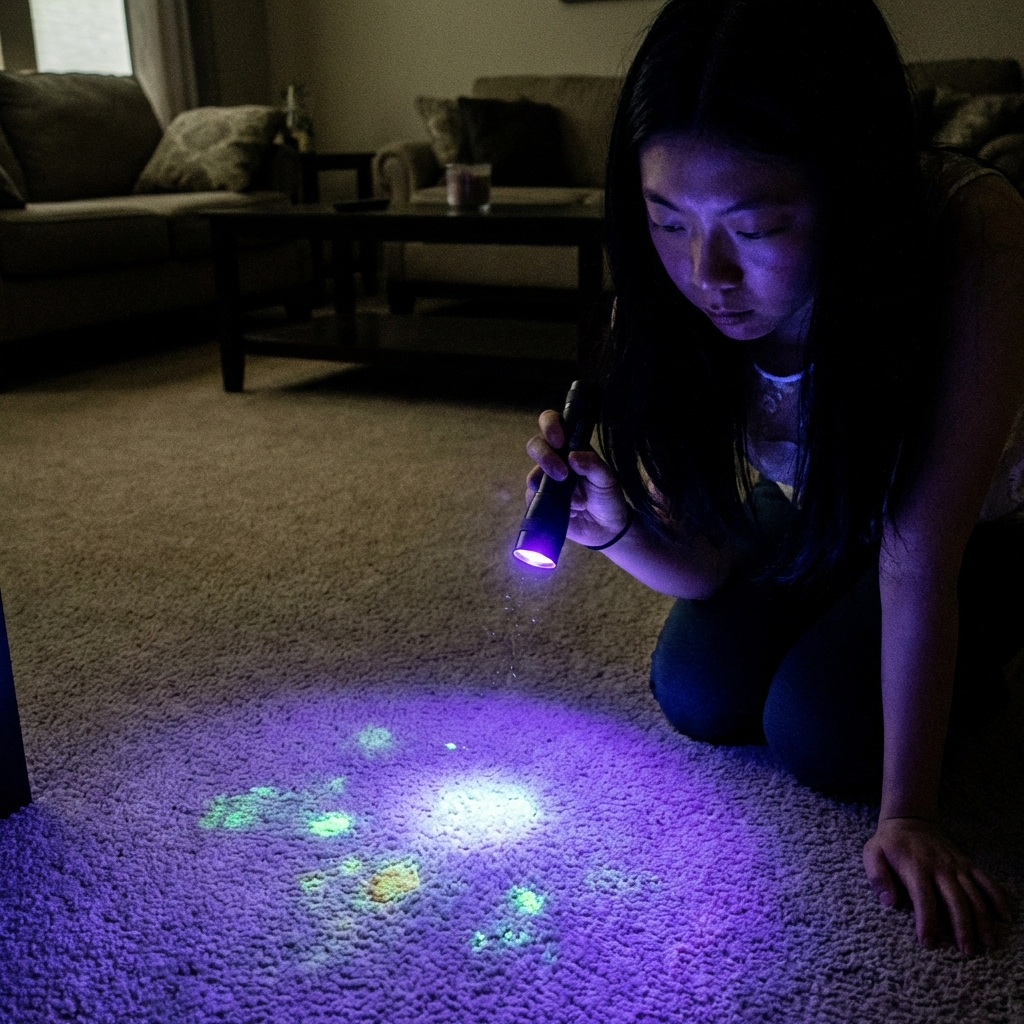
If your dog keeps returning to an area or you notice odor but cannot see a stain, a UV blacklight can help you locate possible dried urine. Use it in a dark room, mark the edges of the spot with painter’s tape, then clean the entire affected zone.
Quick caveat: urine often fluoresces, but so can cleaners, beverages, and other stains. UV is a locating tool, not proof.
When the pad or subfloor is involved
If the urine has soaked through to the padding, surface cleaning may not be enough. Signs include odor that returns after drying, or a stain that keeps reappearing.
Your options:
- Deep enzyme saturation to reach the pad (follow product directions carefully and extract moisture).
- Lift a corner of carpet and treat the pad directly if you can do so safely.
- Replace the pad section if the odor is severe or long-standing.
- Call a professional carpet cleaner experienced with pet urine and enzymatic treatments.
One more practical note: some carpet types (including wool) and some backings can be damaged by over-saturation. When in doubt, follow the carpet manufacturer’s guidance or use a pro.
Stop repeat accidents
Cleaning is only half the solution. If accidents are recurring, you can support your dog with a few practical steps:
- Increase potty breaks, especially after naps, meals, and play.
- Reward outdoor potty immediately with praise and a small treat.
- Block access to favorite accident areas temporarily with a baby gate or closed door.
- Use a belly band for male marking in the short term, paired with training and cleanup.
If accidents are new or increasing, consider a vet visit. Urinary tract infections, bladder stones, kidney disease, diabetes, pain, and cognitive changes in seniors can all change bathroom habits.
When to call the vet
Please reach out to your veterinarian promptly if you notice:
- Straining to urinate or frequent squatting with little output
- Blood in urine
- Crying or discomfort when peeing
- Sudden house-soiling in a previously trained dog
- Excess thirst, increased urination, or accidents overnight
Tip from the clinic: Take a photo of the product you used to clean and let your vet know if your dog licked the area. Some cleaners can irritate sensitive mouths and stomachs.
Quick checklist
- Blot fast and firmly
- Rinse with cool water and blot again
- Saturate with a pet enzyme cleaner and allow full dwell time
- Extract or blot moisture and let dry completely (use a fan for faster drying)
- Use baking soda only after cleaning and near-dry (optional)
- Address the cause so it does not keep happening