A vet assistant’s guide to safe dog ear cleaning: the right supplies, what to avoid, simple fill–massage–shake steps, cleaning frequency, and red flags...
Article
•
Designer Mixes
How to Clean a Dog’s Ears

Shari Shidate
Designer Mixes contributor
Ear cleaning sounds intimidating, but it is one of those simple habits that can make a big difference in your dog’s comfort and long-term health. As a veterinary assistant here in Frisco, Texas, I have seen many ear problems that were preceded by mild wax buildup, trapped moisture, or a little itch that kept getting ignored. Most true ear infections still have an underlying cause, like allergies, anatomy, or chronic inflammation, but gentle maintenance can help keep ears from becoming the perfect environment for yeast and bacteria.
The good news is that most dogs only need gentle, occasional cleaning, and when you do it the right way, it is quick, calm, and safe. For most dogs, the whole process takes just a few minutes.
Do all dogs need ear cleaning?
Not always. Healthy ears are usually self-cleaning. Some dogs almost never need help, while others need routine care because of their ear shape, coat, lifestyle, or allergies.
Dogs that often need more ear care
- Floppy-eared breeds (less airflow can mean more moisture)
- Hairy ear canals (hair can trap wax and debris)
- Frequent swimmers or bath lovers
- Dogs with seasonal or food allergies (inflammation changes the ear’s environment)
- Dogs with a history of ear infections
If your dog’s ears look clean, smell normal, and your dog is not scratching, shaking, or sensitive when you touch the ear, you may not need to clean them at all. Over-cleaning can irritate the ear canal.
What a healthy ear looks and smells like
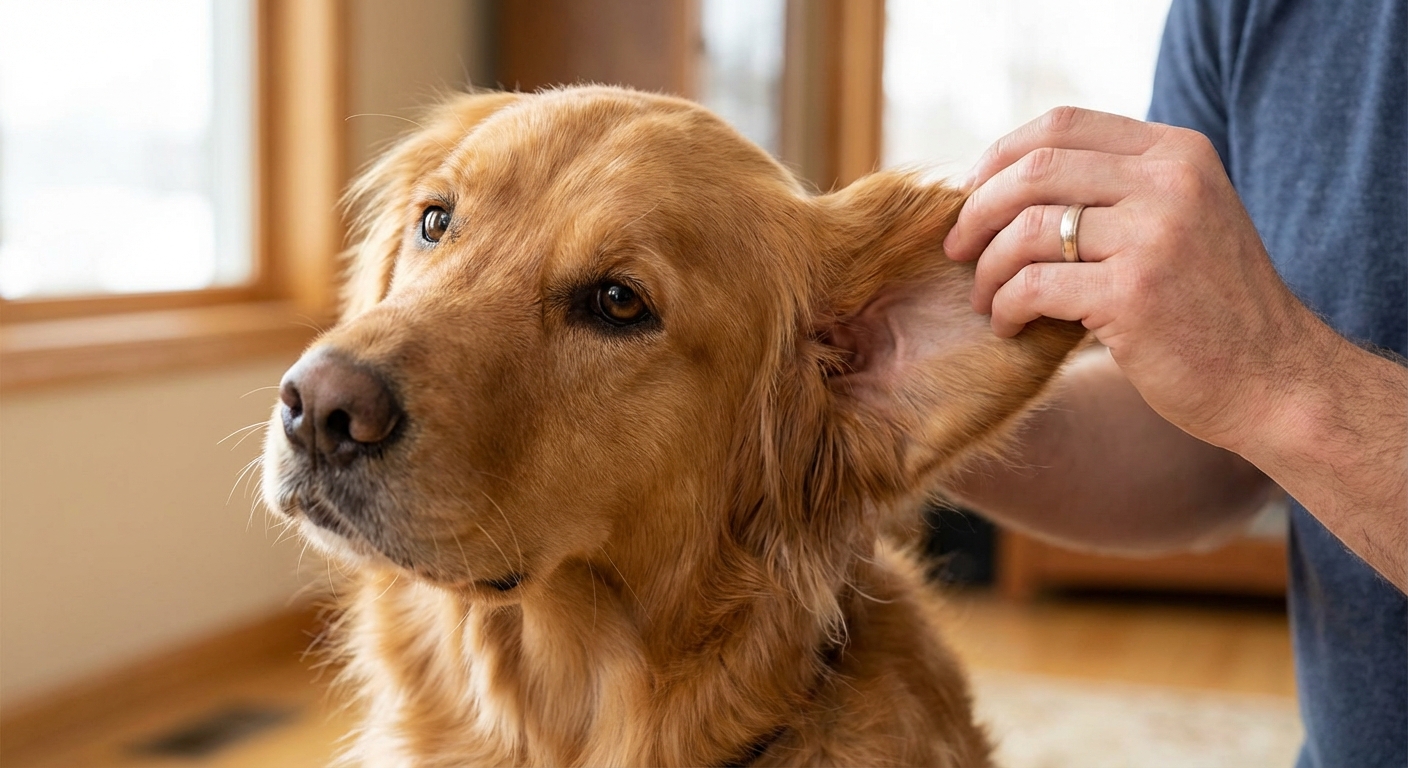
A normal ear is lightly pink inside, has little to no odor, and may have a small amount of pale wax. Your dog should allow you to touch and gently lift the ear flap without pain.
Signs your dog needs a vet visit, not a home cleaning
- Strong odor (yeasty, sour, or foul smell)
- Redness, swelling, or heat
- Dark brown or black debris (especially if it looks like coffee grounds) plus intense itching
- Yellow, green, or pus-like discharge
- Bleeding or scabs
- Head tilt, off-balance walking, or unusual eye movements
- Crying, snapping, or obvious pain when the ear is touched
- Constant head shaking or scratching that does not settle
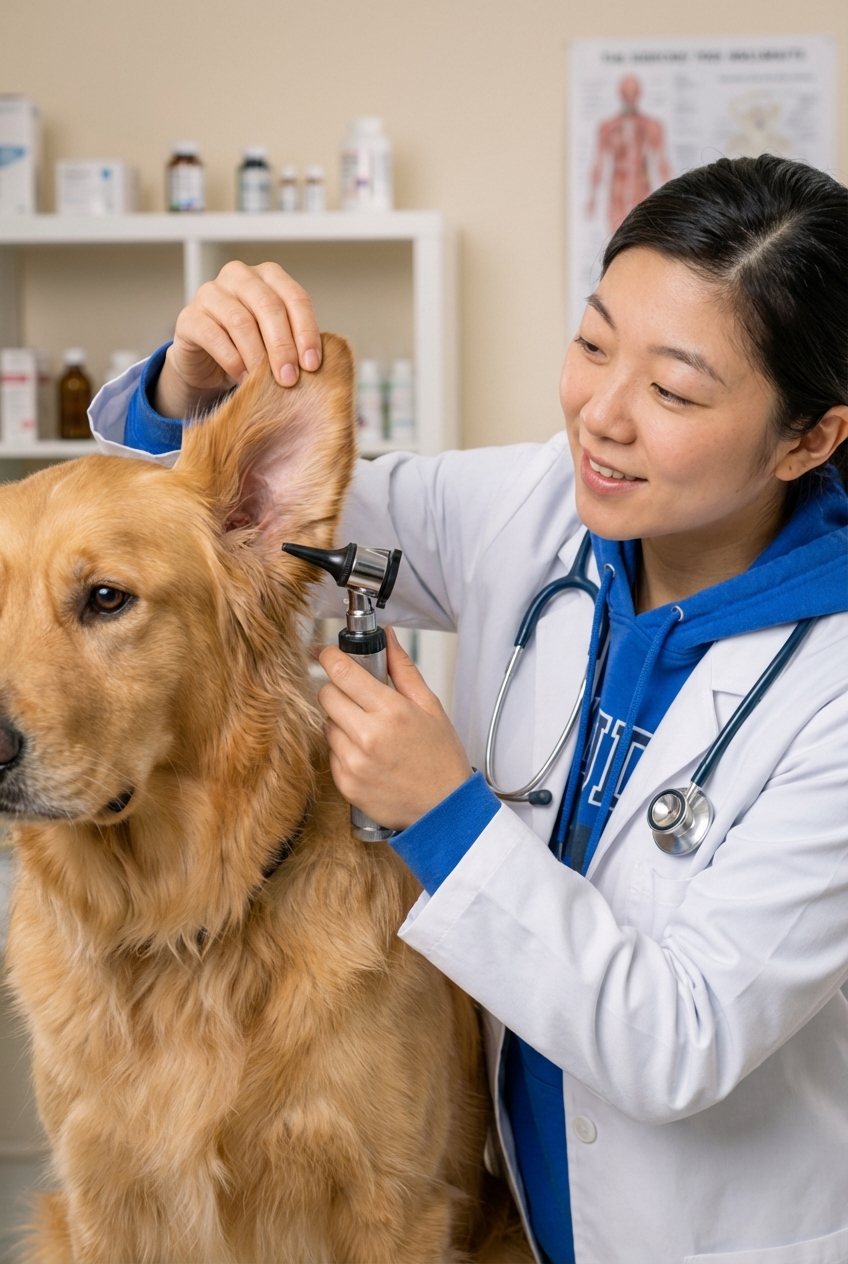
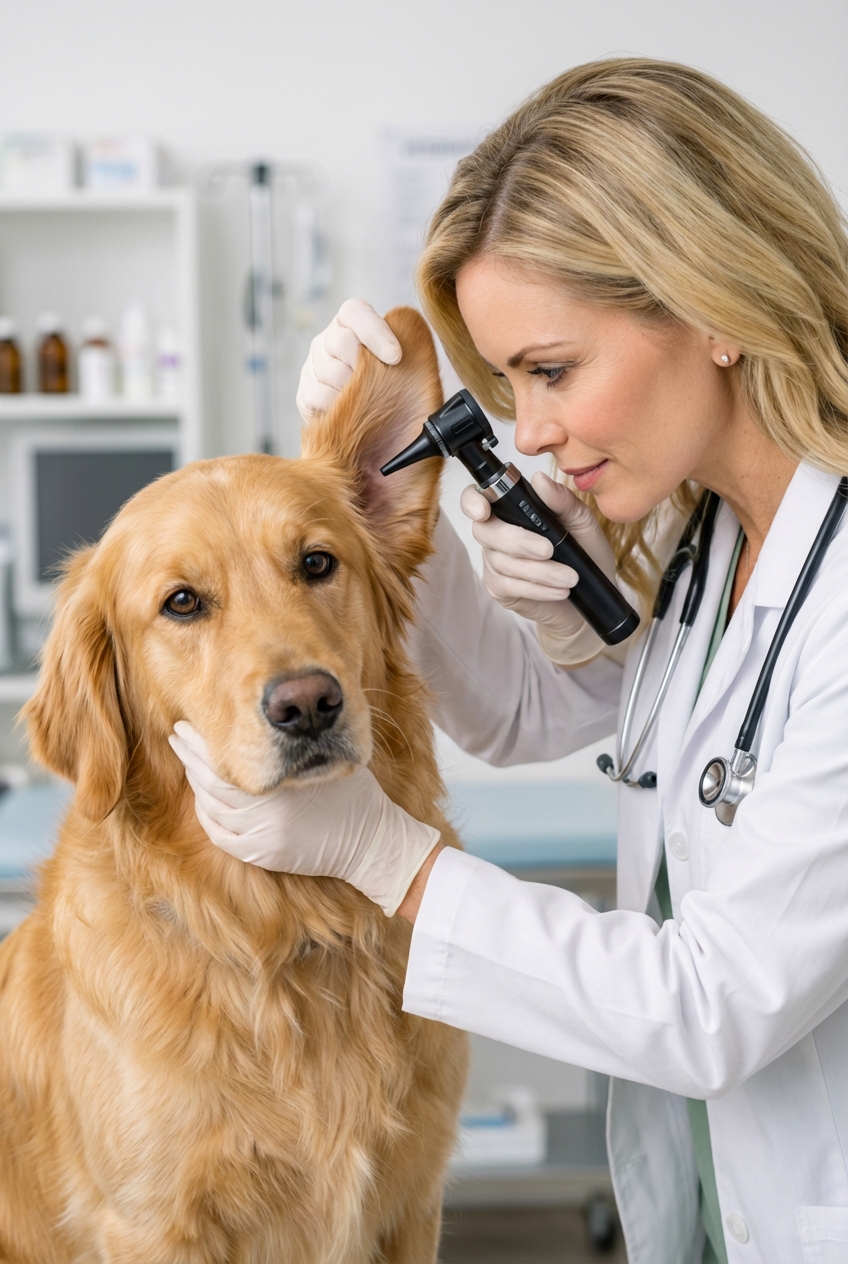
If you see these, cleaning can make things worse or be very painful. A veterinarian needs to look into the ear canal and decide whether medication is needed. Issues like mites, yeast, bacteria, foreign material (like foxtails), polyps, or allergies can look similar at home, but the treatment is very different.
Important safety note: if your veterinarian has ever mentioned a ruptured eardrum, an eardrum injury, or chronic middle ear disease, do not put anything into the ear unless your veterinarian specifically tells you to. Some products can be harmful if the eardrum is not intact.
What you need (and what to avoid)
What to use
- Veterinarian-approved ear cleaning solution made for dogs
- Cotton balls or gauze squares
- Towel (your dog will shake)
- Treats to keep the experience positive
Comfort tip: use room-temperature solution. Cold fluid can be startling and make some dogs more reactive.
What to avoid
- Q-tips or cotton swabs inside the ear canal (you can push debris deeper or injure the eardrum)
- Hydrogen peroxide or alcohol unless specifically directed by your veterinarian (both can sting and irritate)
- Essential oils in the ear (many are too harsh or unsafe)
- Homemade vinegar mixes unless your veterinarian has recommended it for your specific dog (it can burn if the ear is inflamed)
If your dog has frequent ear issues, ask your veterinarian which cleaner is best. The right product depends on whether the ear tends to be waxy, oily, or prone to yeast, and on your dog’s medical history.
Step-by-step: how to clean your dog’s ears safely
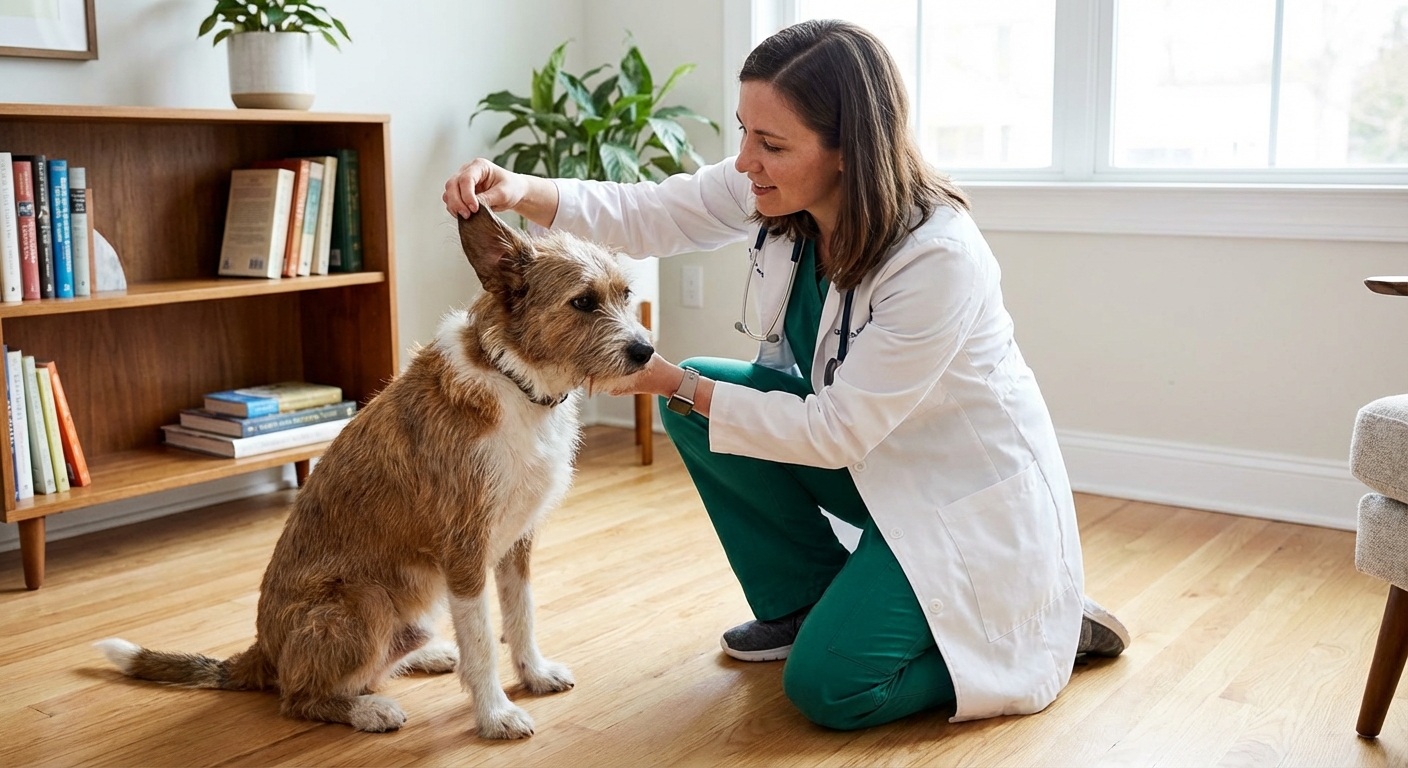
Pick a calm time. After a walk or play session is often perfect. Your goal is gentle cleaning of the visible ear canal and ear flap, not deep digging. If your dog is anxious, reactive, very wiggly, or has a history of painful ears, go slowly, use extra treats, and consider having a second person help. If anyone is getting stressed, it is okay to stop and try again later.
1) Set up and get your dog comfortable
- Place a towel under your dog.
- Have cotton balls and cleaner within reach.
- Give a small treat before you start.
2) Lift the ear flap and look first
Take a quick peek. If you see severe redness, swelling, lots of discharge, or your dog reacts in pain, stop and call your veterinarian.
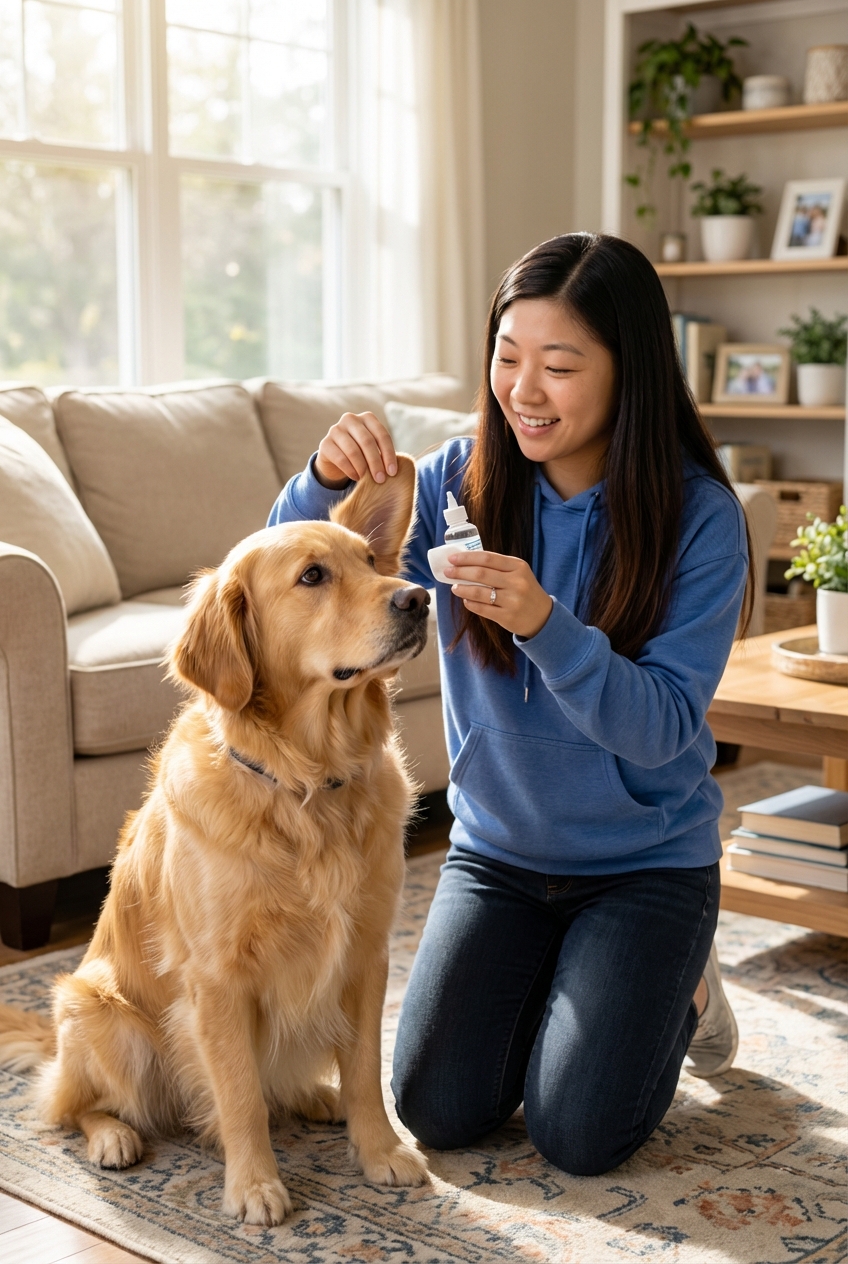
3) Add cleaner to the canal opening
Hold the ear flap up and gently squeeze the cleaner into the ear canal opening. Follow the label directions closely, since products vary. In general, you want enough solution to thoroughly coat the canal. Some cleaners are used more generously than others, and your veterinarian may recommend a specific amount for your dog.
4) Massage the base of the ear for 20 to 30 seconds
This is the magic step. You should hear a soft “squish” sound. The massage loosens wax and debris so it can come out on its own.
5) Let your dog shake
Step back. Ear shaking is helpful because it brings material up and out of the canal.
6) Wipe the visible area only
Use cotton balls or gauze to wipe the inside of the ear flap and the areas you can easily see. Replace cotton as it gets dirty. Do not insert anything into the ear canal, even if you think you can reach the gunk.
7) Stop before you overdo it
When the cotton comes away mostly clean, you are done. Give praise and treats so your dog learns that ear cleaning is not scary.
After cleaning: what to watch for
A little temporary pinkness from wiping can happen, but your dog should not act painful. If you notice worsening redness, swelling, continued head shaking, foul odor, or discomfort that lasts more than a short time, call your veterinarian.
How often should you clean your dog’s ears?
There is no one perfect schedule. A good starting point for many dogs is:
- Most dogs: only as needed, often every few weeks or less
- Swimmers or frequent bathers: after swimming, and based on your veterinarian’s guidance
- Allergy-prone dogs: weekly or per your veterinarian’s plan, especially during flare-ups
If you are cleaning more than once a week for long periods, it is worth checking in with your veterinarian. Frequent buildup often points to an underlying issue like allergies, yeast, or chronic inflammation.
Aftercare: keeping ears healthier between cleanings
Dry ears after water
Moisture is a common trigger for yeast and bacterial growth. After swimming or bathing, gently dry the ear flap and the visible opening with a towel. If your veterinarian recommends a drying ear product for your dog, use it exactly as directed.
Manage allergies
Recurring ear trouble is frequently allergy-related. If you notice licking paws, rubbing the face, recurrent ear gunk, or seasonal itching, talk with your vet about an allergy plan. Cleaning helps symptoms, but it does not fix the cause.
Keep grooming gentle
If your dog has heavy hair around the ears, regular grooming can improve airflow. Do not pluck ear hair unless your veterinarian specifically recommends it for your dog, because plucking can inflame the canal in some cases.
Common mistakes I see (and how to avoid them)
- Cleaning an actively infected ear: If it hurts, smells bad, or is very red, get a vet exam first.
- Using Q-tips: Wipe only what you can see.
- Not massaging long enough: The massage loosens debris, which is the whole point.
- Stopping your dog from shaking: Shaking is helpful and normal.
- Using the wrong cleaner: Some ears need wax-dissolving formulas, others need gentle maintenance. When in doubt, ask your veterinarian what to use.
When to call your veterinarian
If your dog is repeatedly getting ear infections, scratching a lot, or if the ear odor and discharge return quickly after cleaning, it is time for a deeper look. Ear problems can involve bacteria, yeast, mites, allergies, foreign material (like foxtails), or even polyps. The treatment is different depending on the cause.
Trust your instincts: if your dog seems painful or the ear smells “off,” pause the home care and get veterinary guidance. A quick exam now can prevent a long, uncomfortable infection later.
Medical note: This article is general education and is not a substitute for veterinary diagnosis or treatment. If you are unsure whether it is safe to clean your dog’s ears, call your clinic first.
Quick checklist
- Use a dog-safe ear cleaner and cotton balls or gauze.
- Use the amount directed on the label or by your veterinarian, massage 20 to 30 seconds, then let your dog shake.
- Wipe what you can see, never dig deep.
- Clean only as often as your dog needs.
- See a vet for pain, odor, redness, heavy discharge, or coffee-ground debris.
With a little practice, ear cleaning becomes one of those simple, confidence-building care routines. Your dog stays more comfortable, and you get peace of mind knowing you are catching problems early.