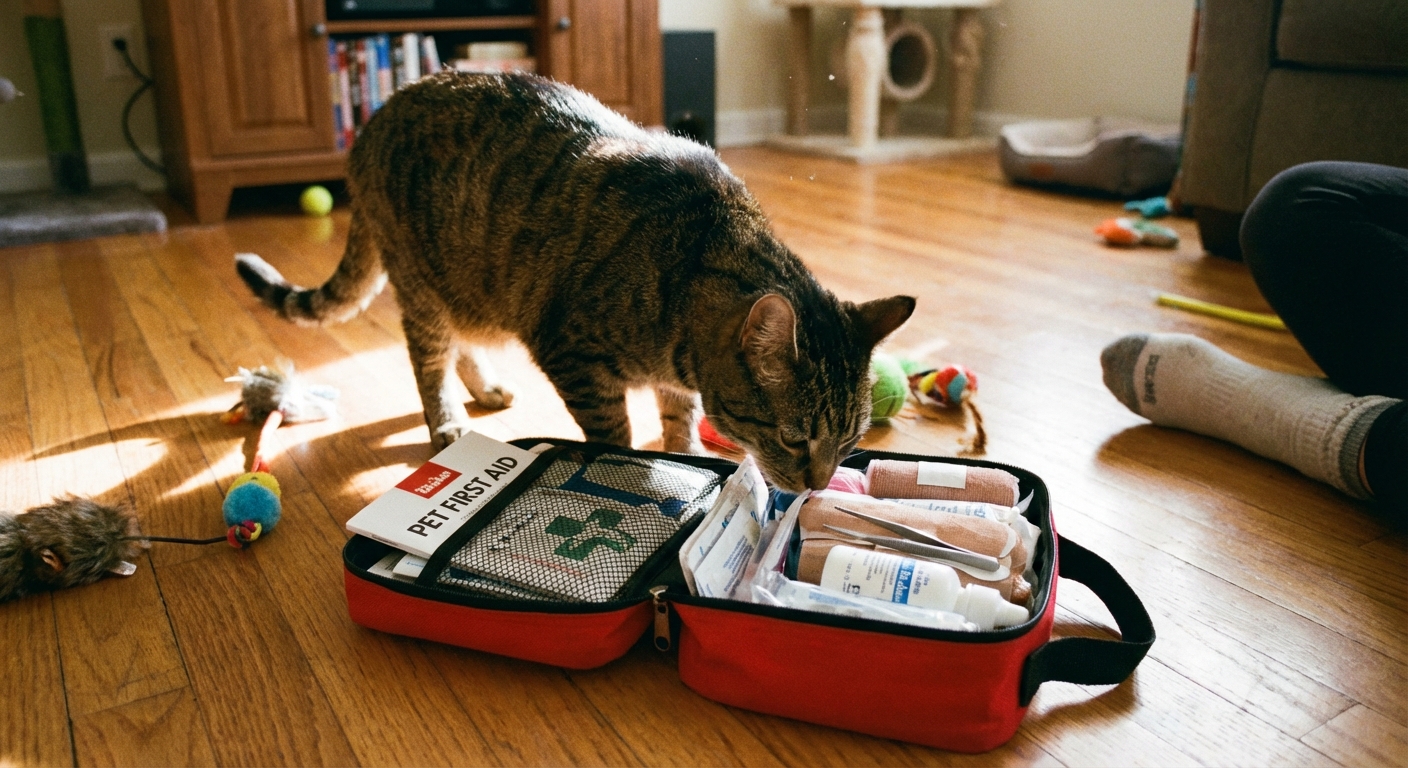
Build calm first-aid habits for your cat with quick nose-to-tail checks, gentle “purrito” practice, a simple kit list, and clear emergency warning signs.
Article
•
Designer Mixes
How to Clean a Cat Wound

Shari Shidate
Designer Mixes contributor
Cats are masters at hiding pain, so a small puncture or scrape can look minor while hiding a deeper problem underneath. The goal of cleaning a cat wound at home is simple: reduce germs, protect the tissue, and spot red flags early so you can get veterinary help before an infection takes hold.
In this guide, I will walk you through commonly veterinarian-recommended, cat-safe steps you can use for minor wounds, plus clear signs that mean it is time to stop home care and call your vet.
First, decide if it is safe to treat at home
Home cleaning is only appropriate for small, superficial wounds, like a mild scrape or a tiny cut that is not deep and is not actively bleeding. Cats commonly get puncture wounds from bites or fights, and those are the ones that most often look small but become infected quickly.
If you think it is a bite or puncture wound, do not rely on home care. Even if it looks tiny, call your vet so they can advise you on next steps.
Call a veterinarian now if you notice any of these
- Heavy bleeding or continuous bleeding that does not stop within 5 to 10 minutes of uninterrupted gentle pressure
- Deep punctures, especially from another cat, dog, or wild animal
- A wound near the eye, inside the mouth, on the genitals, or around the anus
- Visible fat, muscle, or bone, or gaping edges that may need stitches
- Swelling, heat, pus, foul odor, or increasing redness
- Your cat seems unwell: hiding, feverish, not eating, limping, painful, or unusually aggressive when touched
- You suspect an abscess (a painful lump, often after a fight), whether it has ruptured or not
- The wound is from a burn or any chemical exposure
- Your cat has health risks like diabetes, kidney disease, or is on steroids or other immune-suppressing medications
If your cat is likely to bite or you cannot handle them safely, stop and call your vet. A quick phone triage can prevent a small problem from turning into a big one.
What to gather before you start
Having everything ready reduces stress for you and your cat. Most cats tolerate wound care better when it is calm, quick, and predictable.
- Clean gauze pads or soft cloth
- Sterile saline (store-bought) or homemade saline (recipe below)
- A syringe (no needle) or a squeeze bottle for gentle flushing
- Disposable gloves (optional but helpful)
- Clean towel for a gentle “cat burrito” wrap
- Treats for rewards
- Elizabethan collar or soft recovery collar if licking is likely
How to make saline at home
If you do not have sterile saline, you can make a simple rinse using clean, boiled water:
- Mix 1 teaspoon of table salt into 2 cups of boiled water, then let it cool to lukewarm (not hot).
Use it the same day if possible and store it in a clean, covered container. If anything looks cloudy or dirty, discard and remake.
Important: Homemade saline is a reasonable option for gently rinsing minor superficial wounds when you cannot get sterile saline right away. It is not a substitute for veterinary care for bite wounds, punctures, deep wounds, or wounds with spreading redness, swelling, or pain.
Step-by-step: cleaning a minor cat wound
1) Keep everyone safe and calm
Even sweet cats can bite when scared or painful. If your cat is stressed, ask someone to help you gently hold them, or wrap your cat in a towel with only the injured area exposed. Speak softly, work efficiently, and take breaks if needed. If you cannot do this safely, stop and call your vet.
2) Control bleeding first
If the wound is slowly bleeding or oozing, apply gentle, steady pressure with gauze for several minutes. Avoid repeatedly lifting the gauze to “check” because that can restart bleeding.
3) Trim fur only if you can do it safely
If fur is stuck in the wound, it can trap bacteria. If your cat allows it, you can carefully clip fur around the area using clippers designed for pets. Skip scissors because it is too easy to nick skin. If your cat is wiggly or the wound is painful, leave this step for the vet.
4) Flush with saline
This is the most important step for cleaning. Use lukewarm saline and gently flush the wound to remove dirt and reduce bacterial load. Pat the surrounding fur and skin dry with gauze to reduce moisture and irritation. Do not scrub the wound bed because scrubbing can damage healing tissue.
5) Use antiseptic only if instructed
For some minor wounds, your veterinarian may recommend a very dilute antiseptic rinse. In many cases, saline alone is enough for initial home care of a superficial scrape or cut.
Do not use concentrated antiseptics like chlorhexidine or iodine products without dilution instructions from your vet, and do not use peroxide or alcohol (more on that below). Also, if this is a bite or puncture, do not treat it like a simple scrape. Call your vet even if it looks small.
6) Prevent licking
Licking feels soothing to cats, but it can introduce bacteria and reopen tissue. Use an e-collar or soft recovery collar if your cat is determined to lick. This step is often what makes the difference between a wound that heals and a wound that turns into an infection.
7) Recheck twice daily
Look for changes in size, swelling, heat, odor, discharge, or pain. A wound that looks worse after 24 hours, or does not clearly look better within 48 hours, deserves a veterinary exam.
What not to put on a cat wound
This is where loving pet parents can accidentally cause setbacks. Cats groom themselves, and many common household products are not cat-safe if licked.
- Hydrogen peroxide: damages healthy tissue and can delay healing
- Rubbing alcohol: painful and irritating, slows healing
- Essential oils: many are toxic to cats even in small amounts
- Human antibiotic ointments unless your vet specifically approves: some ingredients can cause irritation, and licking is a concern
- Human painkillers (acetaminophen, ibuprofen, aspirin): can be dangerous or toxic to cats. If your cat seems painful, call your vet for safe options.
- Powders, herbal pastes, or “natural” remedies that are not vet-reviewed for cats
- Bandages unless your vet tells you how to place them: tight wraps can reduce circulation, and moisture trapped under bandages can worsen infection
If you do bandage a spot under veterinary guidance, it should be monitored closely for swelling of toes, slipping, dampness, odor, or increased pain, and changed as directed.
Bites, punctures, and abscesses
One of the biggest “gotchas” in cat wound care is the classic cat fight puncture. A cat’s teeth create a narrow hole that seals over quickly, which can trap bacteria under the skin. That bacteria can multiply and form an abscess within a few days, often around 2 to 5 days after the injury.
Signs of an abscess
- A tender swelling or lump, often on the head, neck, base of tail, or legs
- Warmth, redness, and pain around the area
- Sudden lethargy, fever, hiding, reduced appetite
- A ruptured area that is draining thick fluid and smells bad
Abscesses nearly always need veterinary treatment, which can include clipping, thorough flushing, pain relief, and antibiotics. If you suspect one, do not wait it out.
How long should healing take?
For a small superficial wound, you should see gradual improvement day by day. Mild redness can be normal early on, but it should not spread. The wound should become less tender, not more.
- Within 24 hours: bleeding stopped, no new swelling, your cat is comfortable
- Within 48 hours: looks cleaner, less red, less sensitive
- Within 7 to 14 days: most minor wounds are closed and stable
If your cat keeps reopening the spot, healing can take much longer. In that case, collar use and a vet check are worth it.
When to see the vet soon
Some situations are not an emergency, but they still deserve a prompt exam. If you can do only one thing as a pet parent, do this: trust your instincts. If something feels off, it probably is.
- The wound is not clearly improving within 48 hours
- Your cat is limping or guarding the area
- There is pus, a bad smell, or increasing discharge
- There is spreading redness or a growing lump
- Your cat is not eating normally, or is acting withdrawn
Veterinary care is not just about antibiotics. Pain control and proper wound management can dramatically improve healing and comfort.
A simple home routine
If your veterinarian agrees the wound can be managed at home, keep things simple and consistent:
- Check the wound morning and night in good light.
- Flush with saline if there is visible debris or mild discharge.
- Pat surrounding fur and skin dry after cleaning.
- Keep your cat indoors and prevent rough play until healed.
- Use a recovery collar if licking is an issue.
- Take a quick photo daily so you can compare progress.
The best wound care is calm, clean, and consistent. If the wound is deep, painful, a puncture, or getting worse, the kindest thing you can do is let your veterinary team take over.