Stop dog fleas quickly with a proven 3-part plan: treat your dog with safe, vet-recommended meds, deep-clean your home, and tackle the yard if needed—plus ...
Article
•
Designer Mixes
How to Check Your Dog for Fleas

Shari Shidate
Designer Mixes contributor
If your dog is suddenly scratching, chewing, or acting “off,” fleas are one of the first things I think about as a veterinary assistant. The good news is that checking for fleas at home is simple, and your dog’s behavior can give you helpful clues about where to look.
In this guide, I will walk you through the most reliable at-home checks, what flea-related behavior can look like, and when it is time to call your vet.
Flea behavior clues to watch
Fleas do not only cause itching. Discomfort can also affect sleep and mood, but these signs are not specific to fleas. Watch for these common patterns, then confirm with a quick physical check.
Itching patterns that suggest fleas
- Sudden, intense scratching, especially if it comes in bursts
- Chewing or nibbling at the skin, often near the tail base or back legs
- Rubbing the face on carpet or furniture
- Overgrooming in one area until the hair thins
Quieter behavior changes
- Restlessness and trouble settling down at night
- Irritability when touched in itchy spots
- Avoiding play or seeming distracted during walks
- Ear scratching or head shaking, which can happen with itchiness but is more often linked to ear infections, allergies, ear mites, or debris. Check for fleas around the neck and under the collar, and consider a vet ear exam if this persists.
Important note: allergies, skin infections, mites, and dry skin can mimic fleas. That is why a quick physical check is so helpful.
Safety note: If your dog is painful, very anxious, or may bite, stop and ask your vet or groomer to help. A stressed dog can react quickly during skin checks.
Fast home check: 60-second scan
If your dog is wiggly or does not love grooming, start with this fast scan. You are looking for live fleas (tiny, fast, dark brown insects) and flea dirt (black specks that look like pepper).
Where fleas like to hide
- Base of the tail and along the rump
- Belly and inner thighs
- Armpits and groin
- Neck, especially under the collar
- Behind the ears
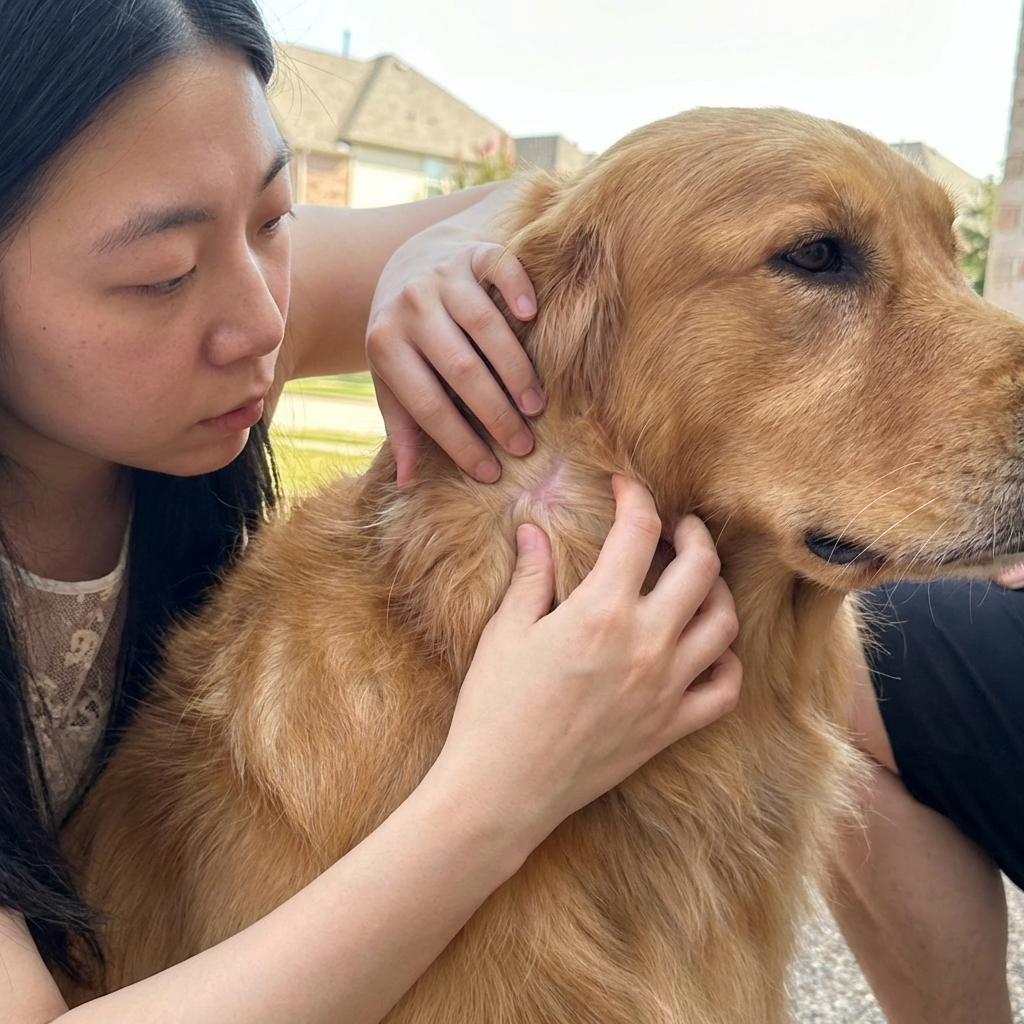
Part the fur all the way down to the skin and look closely. Fleas move quickly, so good lighting helps.
Most reliable: wet paper towel test
This is one of my favorite at-home tricks because it helps you confirm fleas even when you do not catch a live one.
What you need
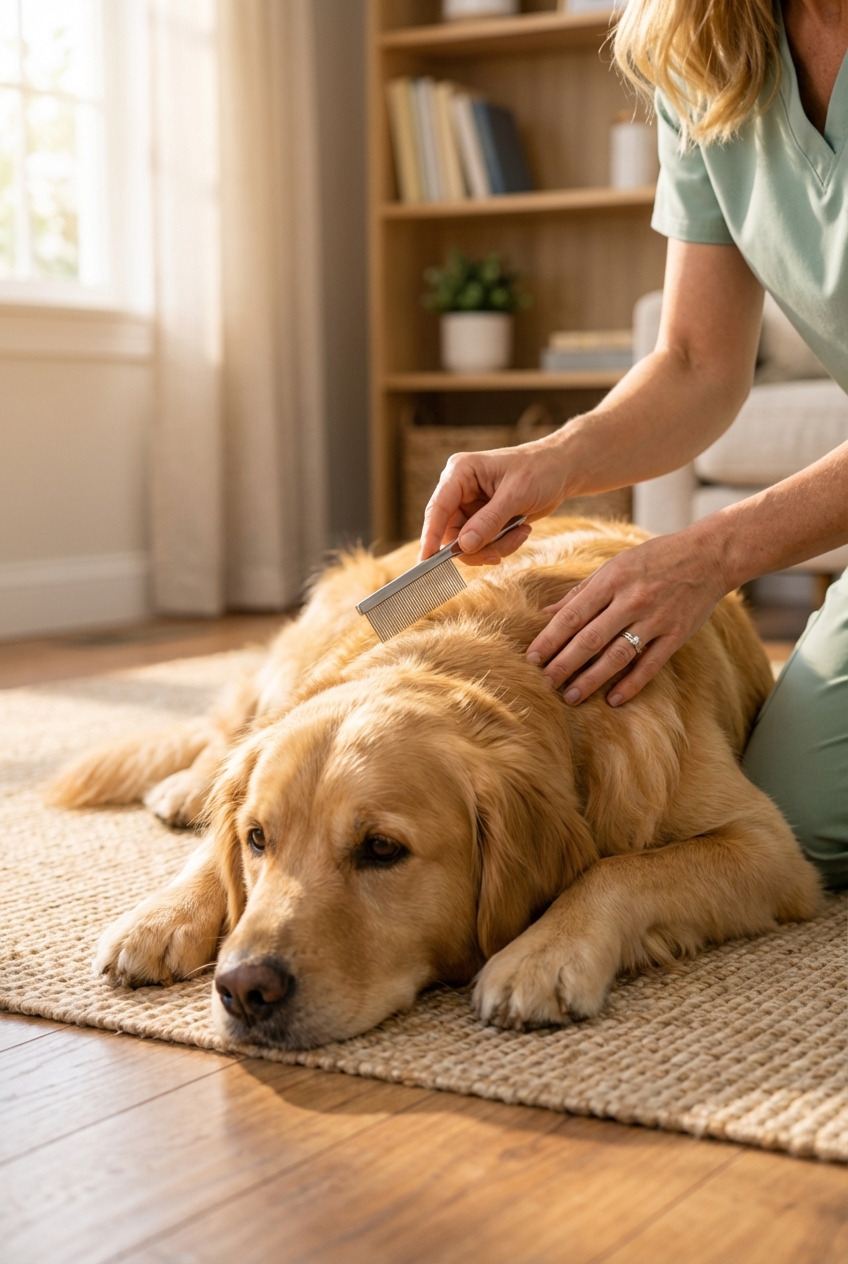
- A fine-tooth flea comb, or a regular comb if that is all you have
- A white paper towel or cotton pad
- A little water
How to do it
- Comb through the areas listed above, especially the tail base and belly.
- Tap the comb debris onto the white paper towel.
- Add a few drops of water.
If the black specks turn reddish-brown, that strongly suggests flea dirt because it is digested blood. If it stays black, it may just be dirt, but keep checking.
If your dog has a thick coat, try combing in short sections and checking the towel each time.
How to check by coat type
Dogs come in all kinds of coats, and your approach matters.
Curly or dense coats (like Poodle mixes)
- Use a flea comb and go slowly in layers.
- Focus on the tail base and belly where hair is often less dense.
- If matting is present, fleas and flea dirt can hide inside mats. Consider a groomer or vet visit for a safe, thorough check.
Double coats (like Husky, Shepherd, or Aussie mixes)
- Part the coat all the way to the skin in multiple spots.
- Use bright light. Fleas can disappear into the undercoat fast.
Short coats
- Live fleas are easier to spot, but do not skip the flea dirt test.
- Check the belly and inner thighs carefully.
What flea bites can look like
Not every dog reacts the same. Some dogs barely itch, while others have a big inflammatory response called flea allergy dermatitis.
Common skin findings
- Red bumps or small scabs, especially along the back half of the body
- Hair thinning near the tail base
- Red, irritated belly or inner thighs
- Hot spots (moist, painful patches from chewing and licking)
A helpful clue: if the worst itch is near the tail base, fleas jump high on the suspect list.
What else could it be?
If you do not find fleas or flea dirt, or the itch does not improve with good flea control, these are common look-alikes your vet may consider:
- Seasonal or environmental allergies
- Food allergy
- Mites (including sarcoptic mange)
- Yeast or bacterial skin infection
- Dry skin or irritation from shampoos or grooming products
Check your home too
Here is the part many families miss: adult fleas live on pets, but most life stages are off the pet. Eggs, larvae, and pupae can be in your home even if you only saw a couple fleas.
Quick home checks
- Look for your dog scratching after time on a favorite rug or couch.
- Check bedding for black specks.
- Wear white socks and walk on carpet, then check for tiny dark fleas that may jump. This is a helpful clue, but it is not definitive and can miss infestations.
When this is urgent
Most flea issues are treatable, but some situations should be handled quickly.
Call your vet promptly if you notice
- Pale gums, weakness, or collapsing (fleas can contribute to anemia, especially in small dogs and puppies)
- Widespread open sores, swelling, or pus
- Severe itch that keeps your dog from sleeping or eating
- Puppies, seniors, or medically fragile dogs with any suspected flea infestation
Also ask your veterinarian about tapeworm prevention. Dogs can get tapeworms by swallowing fleas during grooming.
What to do if you confirm fleas
If you find live fleas or flea dirt, your next step is to treat your dog and your environment at the same time.
Dog + home basics
- Use a veterinarian-recommended flea preventive (oral or topical) appropriate for your dog’s age and weight.
- Wash bedding in hot water and dry on high heat.
- Vacuum carpets, rugs, baseboards, and couch cushions frequently for at least 2 to 4 weeks, and longer if you are still seeing fleas. Dispose of the vacuum contents right away.
- Treat all pets in the household, not just the itchy one.
It is common to see fleas for a short period after starting treatment because new adults can emerge from pupae in the environment. Staying consistent with prevention and cleaning is what breaks the cycle.
Please avoid using multiple flea products at once unless your veterinarian confirms the combination is safe. Some ingredient overlaps can increase side effects.
Important multi-pet safety note: If you have cats, never use dog-only flea products on them. Some dog products, especially those containing permethrin, can be dangerous for cats. Ask your vet for cat-safe options.
A simple weekly habit
Even when your dog is on prevention, I love a quick weekly check because it helps you catch early problems before they become a full household infestation.
- Pick one day a week.
- Do a quick tail base and belly scan.
- Run a flea comb through 10 to 20 strokes.
- Do the wet paper towel test if you see specks.
If you would like, bring a photo of what you found or a sample on tape to your vet. It can speed up diagnosis and make sure you are treating the right issue.