
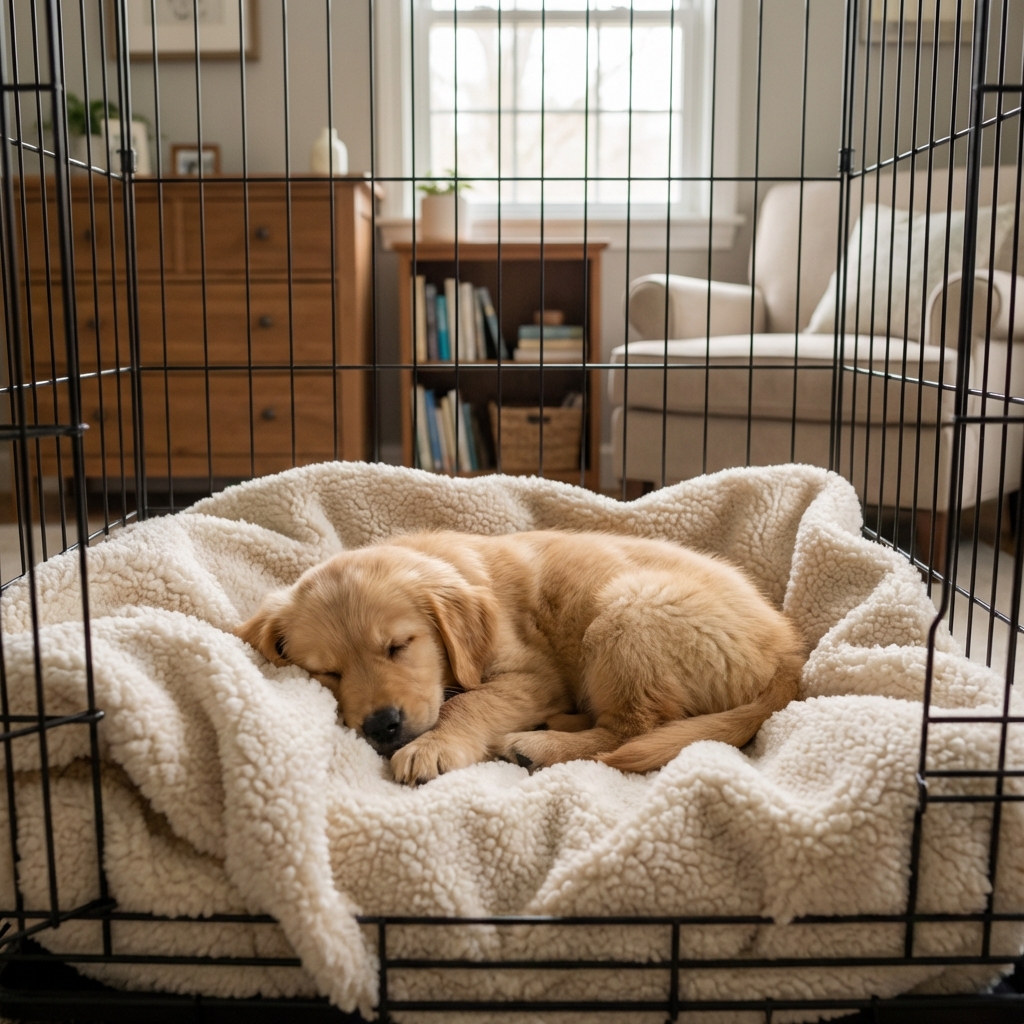
Make your puppy’s first night home smoother with a calm bedtime routine, crate setup tips, realistic potty-break timing, feeding guidance, and puppy-proofi...
Article
•
Designer Mixes
How to Care for a Shih Tzu Puppy

Shari Shidate
Designer Mixes contributor
Shih Tzu puppies are little heart-stealers with big needs. Their flat(ish) faces, long coat, and tiny mouths mean they benefit from a few specific care habits from day one. The goal is simple: keep your puppy comfortable, safe, and confidently learning what “normal life” feels like.
As a veterinary assistant, I always tell new puppy parents the same thing: consistency beats perfection. You do not have to do everything at once. Start with the basics, build routines, and you will be amazed at how quickly your Shih Tzu settles in.
Before you bring your puppy home
Must-have supplies
- Crate sized for adult Shih Tzu with a divider panel
- Puppy-safe playpen or baby gates for a small, controlled area
- Harness (preferably step-in) plus a lightweight leash
- Shallow food and water bowls that are easy on a small face
- Enzymatic cleaner for potty training accidents
- Soft slicker brush, metal comb, and puppy-safe detangling spray
- Nail trimmers or grinder, and styptic powder just in case
- Toothbrush and dog toothpaste (start early)
- Toys: one chew, one tug, one puzzle, one comfort toy
Puppy-proofing (Shih Tzu specific)
- Pick up small objects, hair ties, and kids' toys. Shih Tzus can be surprisingly quick to swallow things.
- Keep electrical cords covered or blocked off.
- Secure trash cans and laundry hampers.
- Avoid letting your puppy jump off couches or beds. Small joints, developing growth plates, and kneecaps (patellas) are easier to strain in little dogs. Pet stairs or a “no jumping” rule can help.
Feeding your Shih Tzu puppy
Nutrition is a foundation for coat quality, gut health, growth, and immune function. Shih Tzus are prone to dental crowding and can be picky eaters, so early structure really helps.
How much and how often
- 8 to 12 weeks: 3 to 4 small meals per day
- 3 to 6 months: 3 meals per day
- 6 to 12 months: usually 2 meals per day
Use the feeding guide on your food bag as a starting point, then adjust based on your puppy’s body condition. You want a growing puppy that is sturdy, not chubby.
Choosing a food
Look for a puppy formula labeled “complete and balanced” and made for small breeds if possible. Small-breed puppy kibbles are easier for tiny mouths and can support steady growth.
Treats and training calories
Treats are wonderful for training, but keep them small and count them as calories. A helpful rule of thumb is to keep treats to about 10% or less of daily calories. For Shih Tzus, I love using tiny soft training treats or even a few pieces of their regular kibble for easy sessions.
Hydration
Fresh water should be available all day. If your Shih Tzu has a very flat face, a wider, shallow bowl can be more comfortable than a deep one.
Veterinary note: If your puppy is very small, talk to your vet about hypoglycemia risk. Tiny puppies can crash if they skip meals or get stressed. Signs include weakness, trembling, or acting “spacey.” Treat this as urgent and contact your veterinary clinic or an emergency hospital right away. Do not try home remedies unless your vet directs you.
Potty training that actually works
Shih Tzu puppies can learn potty training beautifully, but they thrive on a predictable schedule. The biggest mistake I see is waiting for the puppy to “tell you” they need to go. At first, you tell them by taking them out on time.
Your first 2-week potty schedule
- First thing in the morning
- After every meal
- After every nap
- After play sessions
- Before bedtime
- Every 2 to 3 hours during the day (you can stretch this as they mature)
Nighttime reality check: at 8 to 12 weeks, many puppies still need 1 to 2 overnight potty trips. This improves quickly with consistency.
Make one potty spot
Take your puppy to the same spot on leash. Use a simple cue like “go potty,” then reward within 1 to 2 seconds of finishing. Timing is everything.
Crate training for potty success
A properly sized crate helps because puppies avoid soiling where they sleep. The crate should be large enough to stand up and turn around, but not so large that they can potty in one corner and sleep in another.
If accidents happen
- Do not punish. Puppies do not connect punishment with the earlier action.
- Clean with an enzymatic cleaner so the scent does not invite repeat accidents.
- Adjust your schedule. Most accidents are a timing issue.
Grooming and coat care
Shih Tzus are famous for their beautiful hair, and that hair can mat fast. Starting grooming early makes it normal and stress-free.
Brushing basics
- Brush daily if you plan to keep a longer coat.
- If your puppy is in a “puppy cut,” brush at least 3 to 4 times per week.
- Use a slicker brush, then follow with a metal comb to find hidden tangles.
Bathing
Most puppies do well with a bath every 3 to 4 weeks, or more often if they get messy. Always dry thoroughly, especially around the face, armpits, and groin, where moisture can contribute to skin irritation.
Face care and tear staining
Many Shih Tzus have watery eyes, and mild tear staining is often cosmetic. Gently wipe the face daily with a soft, damp cloth and keep hair trimmed away from the eyes. If tearing seems excessive or you notice redness, squinting, yellow-green discharge, or your puppy seems painful, check in with your vet. Issues like scratches, infections, allergies, blocked tear ducts, or eyelid problems can progress quickly.
Ears and nails
- Nails: tiny trims weekly are easier than big trims monthly.
- Ears: check weekly for odor, redness, or heavy wax. Ask your groomer or vet team to show you safe cleaning.
Training and socialization
Shih Tzus are smart, affectionate, and sometimes a little stubborn. The secret is short, upbeat sessions and lots of repetition. Aim for 2 to 5 minutes, a few times a day.
Top skills to teach first
- Name game: say their name, reward eye contact
- Potty routine: cue and reward
- Crate calm: treat for entering and settling
- Gentle handling: paws, ears, mouth, brushing
- Leave it and drop it for safety
Socialization done safely
Socialization is not just meeting dogs. It is calmly experiencing the world: different floors, people with hats, vacuum sounds, car rides, and grooming tools. There is a critical learning window in puppyhood, so the goal is safe exposure, not isolation.
- Keep experiences positive and brief.
- Prioritize low-risk interactions like healthy, vaccinated, puppy-friendly dogs and clean environments.
- Avoid high-risk areas with unknown dogs or heavy dog traffic (like busy dog parks) until your vet says your puppy is adequately protected for your region.
- Enroll in a well-run puppy class once your veterinarian says it is appropriate.
Confidence tip: Pair new things with treats. When your puppy learns “new stuff equals good stuff,” you prevent fear later.
Exercise and play
Shih Tzu puppies need exercise, but they do not need long runs. Their joints are still developing, and many have shorter noses that can make heavy exercise in heat harder.
Good daily activity
- Several short play sessions
- Short leash walks (and indoor leash practice)
- Puzzle toys and sniff games for mental exercise
If your puppy is not fully vaccinated yet, your vet may recommend safer options like a private yard, carrying your puppy in public, or choosing low-dog-traffic areas based on local parvo risk.
Watch for overheating
In warmer climates and during summer weather, heat safety is real. Shih Tzus can overheat faster than many breeds. Avoid midday heat, provide shade and water, and stop if your puppy is panting heavily, slowing down, or seems distressed.
Health essentials
Your veterinarian is your partner through the puppy months. At your first visit, bring any paperwork from the breeder or rescue and ask for a clear timeline based on your puppy’s age and your local disease risk.
Common puppy care milestones
- Vaccines: typically a series of puppy boosters, then adult boosters. Many puppies start around 6 to 8 weeks and continue every few weeks until the series is complete, but timing varies.
- Fecal test and deworming: many puppies have intestinal parasites.
- Flea and tick prevention: discuss best options for your area.
- Heartworm prevention: critical in many regions.
- Microchip: strongly recommended.
- Spay or neuter: ask your vet about timing for your puppy’s size, health, and lifestyle.
Shih Tzu health issues to know
- Brachycephalic airway concerns: noisy breathing and snoring can be common, but severe effort, repeated collapsing, or blue or pale gums are not normal. Use a harness (not a neck collar) and avoid overexertion, especially in heat.
- Eye injuries: their prominent eyes can be more vulnerable to scratches.
- Dental crowding: start tooth brushing early and plan for professional dental care as they age.
- Knee issues (patellar luxation): keep your puppy lean and avoid lots of jumping.
If you see vomiting that will not stop, diarrhea with blood, refusal to eat, lethargy, coughing, difficulty breathing, or sudden eye squinting, call your vet right away.
Sleep and routines
Most Shih Tzu puppies want to be close to you. That is sweet, but it also means you will want to gently teach independence so they can relax when you step away.
Bedtime tips
- Place the crate near your bed for the first few nights so your puppy feels secure.
- Offer a comfort item like a soft toy.
- Take one last potty break right before sleep.
Prevent separation anxiety habits
- Practice short “alone time” daily using a playpen or crate with a chew.
- Keep departures and arrivals calm and low-key.
- Reward quiet, relaxed behavior.
Quick checklist
- Daily: potty schedule, short play and training, face wipe, fresh water, quick coat check for tangles
- Several times weekly: brushing (more if coat is long), short leash skills
- Weekly: nails, ear check, teeth brushing practice
- Monthly: grooming appointment or at-home bath, weight check
- Ongoing: vaccines and parasite prevention as directed by your veterinarian
Your Shih Tzu puppy does not need perfection. They need your steady routines, gentle boundaries, and lots of positive practice. If you build those habits now, you will set your pup up for a lifetime of easier grooming, good manners, and that classic Shih Tzu sweetness.
