A calm, vet-informed puppy care guide covering puppy-proofing, the first 72 hours, potty routines, vaccines and parasite prevention, feeding, crate training,...
Article
•
Designer Mixes
How to Care for a Puppy: Behavior Basics

Shari Shidate
Designer Mixes contributor
Bringing home a puppy is equal parts joy and chaos. One minute they are snuggling, the next they are chewing a table leg or having an accident right after you came back inside. The good news is that puppy behavior is not “bad,” it is normal development. With a few evidence-based habits, you can shape that wild puppy energy into a polite, confident adult dog.
As a veterinary assistant here in Frisco, Texas, I see the same pattern again and again: puppies thrive when their needs are met consistently. Think of behavior as communication. Your job is to teach your puppy what works in your home and prevent them from practicing what doesn’t work.
What puppy behavior is telling you
Puppies explore the world with their mouths, learn through repetition, and have limited bladder control. Most “problem” behaviors come from one of four things: normal teething, too much freedom too soon, not enough sleep, or unclear reinforcement.
- Chewing is a biological need, especially during teething.
- Mouthing and nipping is play behavior plus poor impulse control.
- Barking and whining often signals frustration, excitement, or needing a break.
- Accidents usually mean the schedule or supervision is off, not that your puppy is stubborn.
When you view behavior this way, the solution becomes clearer: manage the environment, reward what you want, and teach skills in tiny, realistic steps.
The first week: set up success
Create a safe puppy zone
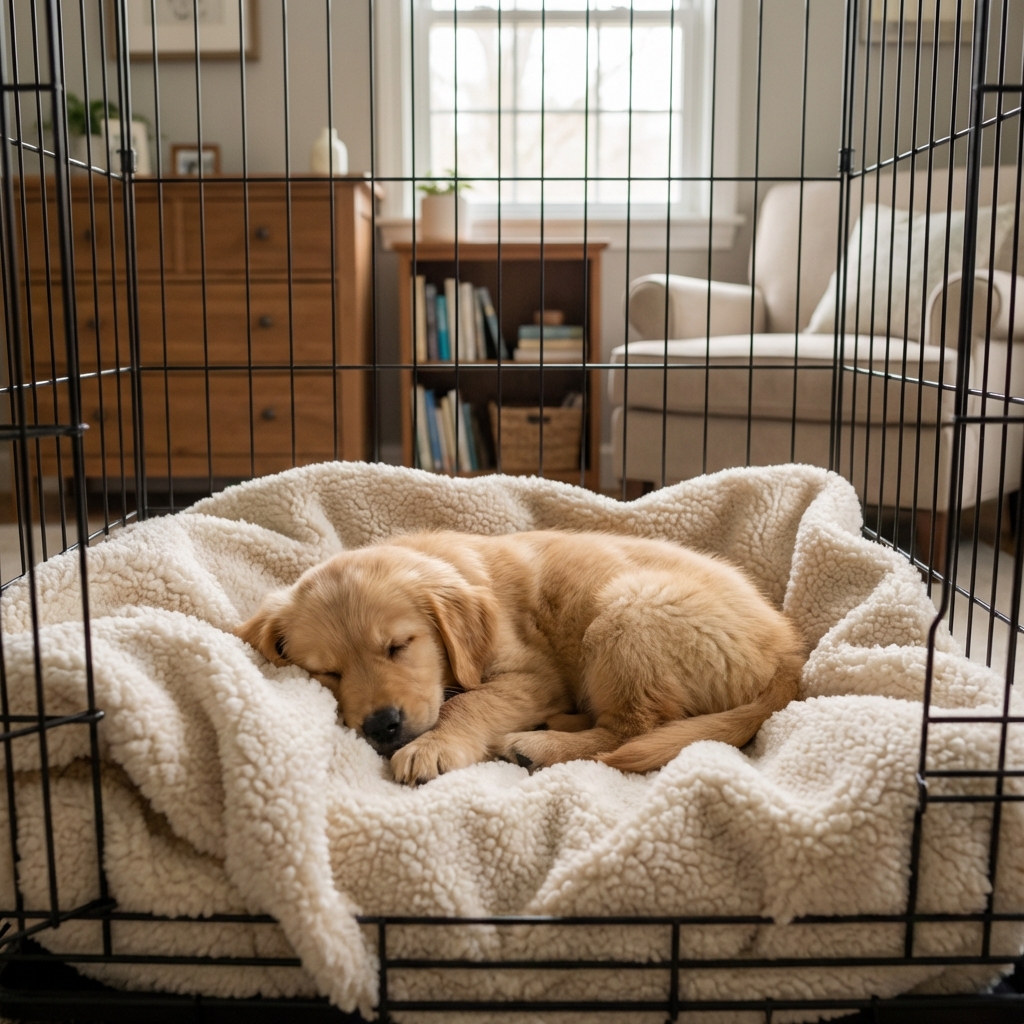
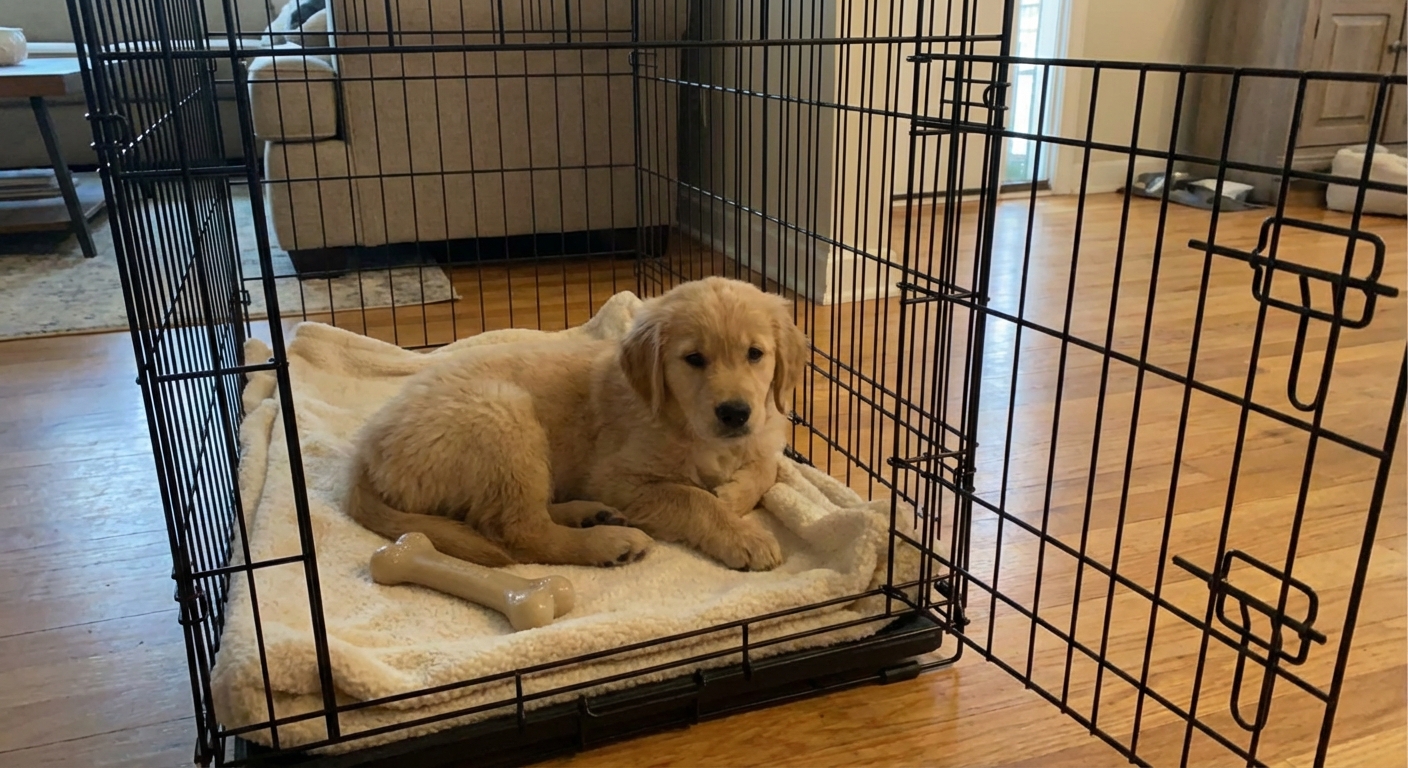
Use a crate plus an exercise pen or baby gate setup. This is not about “confinement,” it is about preventing rehearsals of chewing furniture, chasing kids, or sneaking off to potty.
- Crate should be big enough to stand up, turn around, and lie down comfortably.
- Add a washable bed or towel, a safe chew, and water if appropriate for your setup.
- Rotate toys to keep them interesting.
Puppy-proof like a toddler
- Pick up shoes, kids’ toys, socks, and anything chewable.
- Hide cords or use cord covers.
- Block access to stairs and high-risk rooms at first.
- Choose easy-to-clean surfaces while training is underway.
Prevention is powerful. Every time your puppy steals a sock and turns it into a fun chase game, the behavior gets stronger.
House training that works
House training is mostly timing and supervision. A puppy who is loose in the house too soon will have accidents. A puppy who is managed well learns quickly.
Simple schedule
- Take your puppy out first thing in the morning.
- Then every 1 to 2 hours when awake for many puppies, especially early on.
- Very young puppies (often 8 to 10 weeks) may need trips as often as every 30 to 60 minutes when awake.
- A helpful rule of thumb for the maximum time between breaks is age in months + 1 hour, but many puppies need more frequent trips, especially during play and excitement.
- Always after sleeping, eating, drinking, playing, and training.
- One more trip out right before bedtime.
Reward the right spot
When your puppy goes potty outside, use calm praise and give a treat as soon as they finish. Timing matters. You are teaching “potty happens here.”
What to do about accidents
- If you catch them mid-accident, calmly pick them up and go outside.
- If you find it later, clean it with an enzymatic cleaner and move on.
- Do not punish. Punishment can teach puppies to hide when they need to go.
If accidents keep happening, the fix is usually one of these: more frequent potty trips, tighter supervision, or smaller freedom zones.
Once the potty routine feels steadier, most families notice the next big challenge: sharp little teeth.
Puppy biting and nipping
Puppies bite for play, teething relief, and attention. Your goal is not to stop the mouth overnight. Your goal is to teach gentle and provide safe, appropriate outlets for chewing.
What helps most
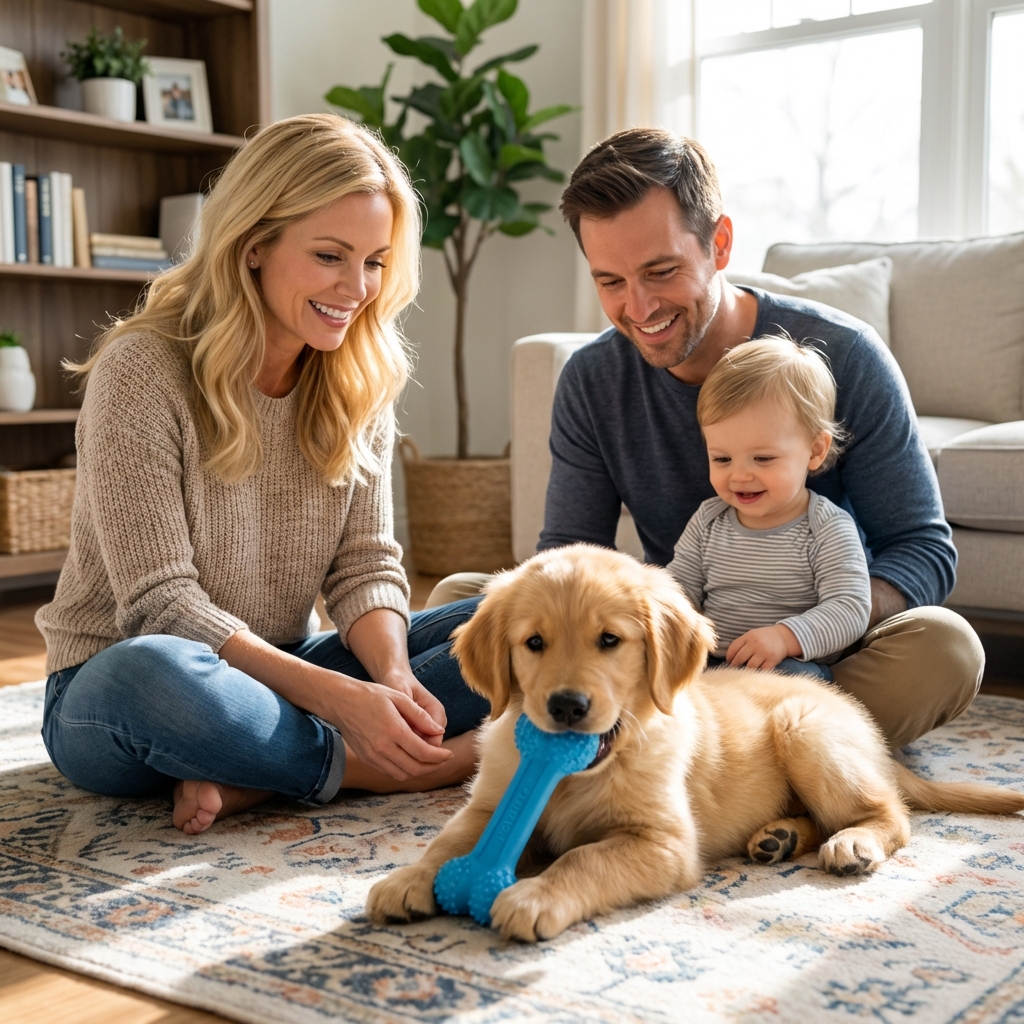
- Chew rotation: offer a mix of textures, including rubber chews and long-lasting chews your veterinarian recommends.
- Chew safety: supervise chews, choose size-appropriate items, and avoid very hard options that can crack teeth (for many dogs, things like cooked bones and very hard antlers are common culprits).
- Redirection: when teeth touch skin, calmly offer a toy and praise when they bite the toy instead.
- End the game: if puppy keeps biting, pause play for 10 to 20 seconds. This teaches that biting makes fun stop.
- More sleep: overtired puppies get extra mouthy. Young puppies often sleep a lot, commonly in the range of 18 to 20 hours a day, though it varies by age and individual.
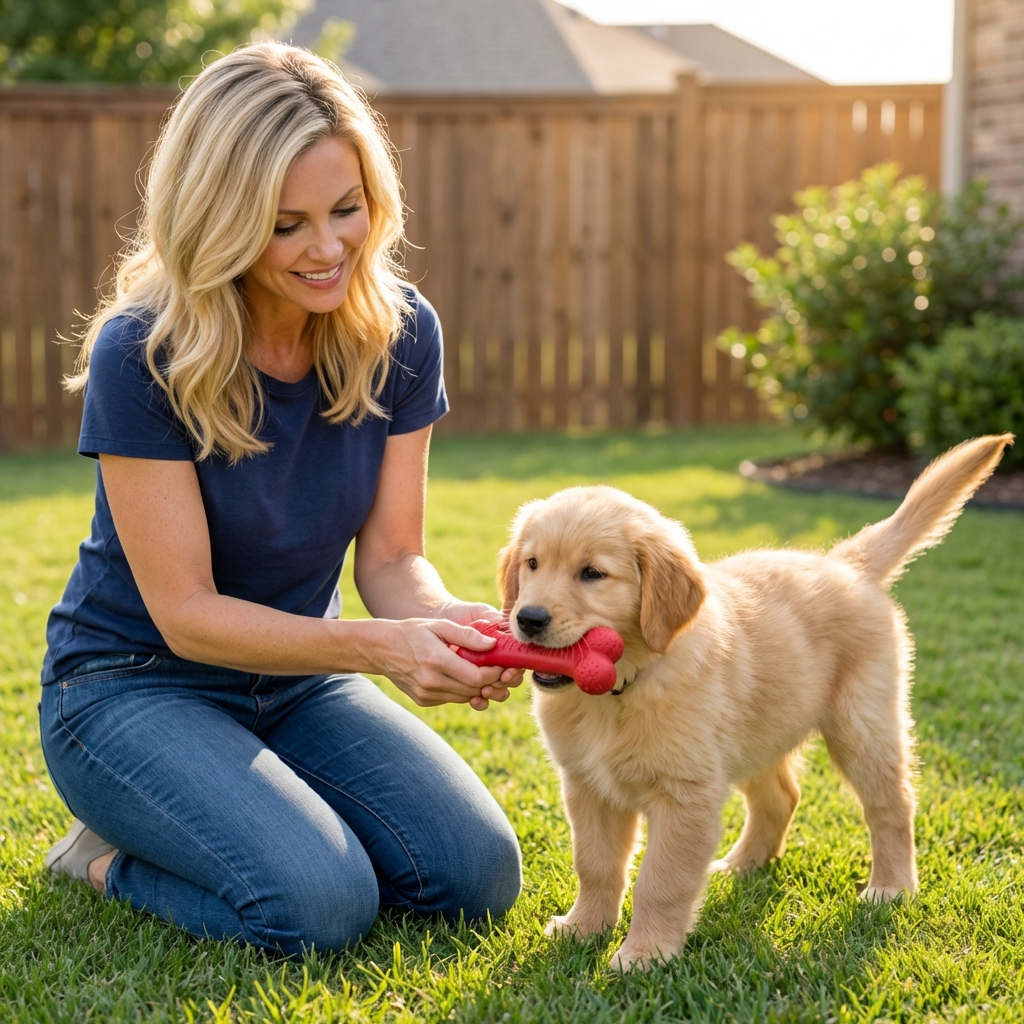
A quick reality check: if your puppy is biting hard and cannot settle, that is often a sign they are overstimulated. A short, calm break in their crate or pen with a chew can be a kindness, not a punishment.
Socialization done safely
Socialization is not just meeting lots of dogs. It is carefully pairing new experiences with good outcomes so your puppy learns the world is safe.
This is time-sensitive. The prime socialization window is often described as roughly 3 to 14 (sometimes up to 16) weeks, so gentle, safe exposure early matters.
What to focus on
- Different people: ages, hats, sunglasses, uniforms.
- Surfaces: grass, concrete, tile, gravel.
- Sounds: vacuum, doorbell, traffic at a distance.
- Handling: gentle touches to paws, ears, mouth, and collar.
Safety notes
Talk with your veterinarian about the right balance between disease prevention and socialization based on your area and your puppy’s vaccine schedule. Risk varies by region and lifestyle, and your vet can help you tailor a plan. Many puppies can safely socialize through controlled options like:
- Meeting known healthy, vaccinated adult dogs.
- Puppy classes that require vaccine records and sanitize spaces.
- Carrying your puppy in new places to observe without touching the ground, if your veterinarian recommends it for your area.
Watch body language. A puppy who leans away, freezes, or tucks their tail needs more distance and slower exposure. Confidence grows when your puppy feels they can choose and retreat.
As your puppy’s world expands, training gives them simple “jobs” to do when they feel excited or unsure.
Training basics
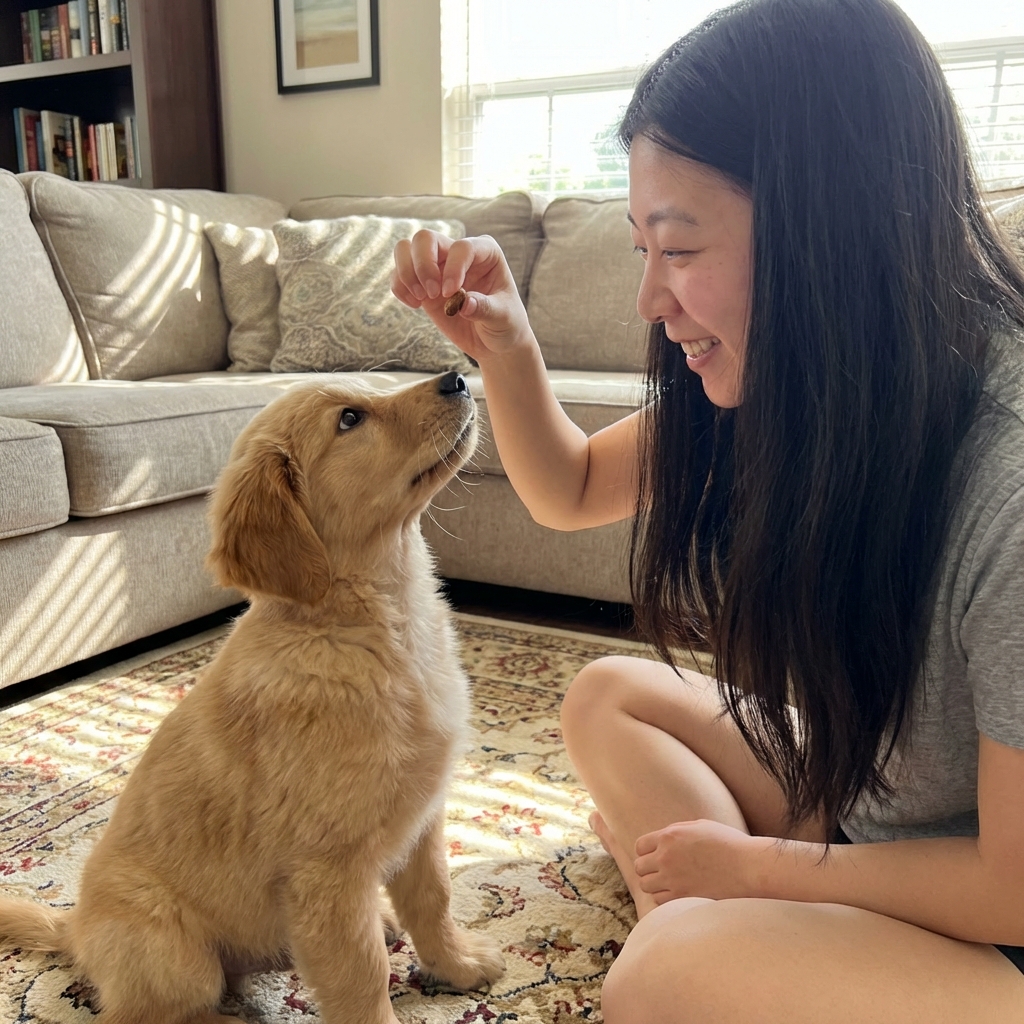
Puppies learn fastest with rewards, repetition, and tiny steps. Aim for 3 to 5 mini-sessions per day that last 1 to 3 minutes each.
Start with these skills
- Name game: say their name once, reward eye contact.
- Touch: reward them for booping your hand with their nose. Great for recall later.
- Sit and down: use luring with a treat, then reward.
- Drop it and trade: swap toys for treats so giving things up feels safe.
- Settle: reward calm behavior on a mat or dog bed.
If training feels stuck, reduce distractions, increase value of treats, and make the goal easier. Progress is not linear, especially during teething and growth spurts.
Crate training and alone time
Crate training can support house training, safety, and travel. Done well, a crate becomes a nap spot, not a stress trigger.
Make the crate feel good
- Feed meals near the crate, then inside the crate.
- Give a special chew only when they are in the crate.
- Start with short sessions while you are home, then gradually add brief alone time.
How long is too long
Young puppies cannot comfortably “hold it” for long periods. Plan for regular potty breaks and avoid crating longer than your puppy can handle for their age and training level. If your schedule is tight, consider a safe pen setup, a midday dog walker, or help from a friend.
Normal whining vs true distress
A little protest can be normal when routines change. But nonstop screaming, drooling, or panic behavior is a sign you need to slow down and get help. Separation-related issues are easiest to address early.
If you need support, look for a CPDT-KA certified trainer, a Fear Free professional, or a veterinary behaviorist for more complex cases.
Exercise and enrichment
Puppies need activity, but they also need the right kind. Too much intense exercise can create an over-aroused puppy who cannot settle.
Healthy outlets
- Sniff walks and exploration in safe areas.
- Food puzzles and treat scatters in the yard.
- Short training games that work their brain.
- Gentle play with breaks built in.
A simple baseline is to think in short sessions instead of long workouts. Avoid forced running, repetitive jumping, and long stair sessions, especially for large-breed puppies. If you are unsure what is appropriate, ask your veterinarian, since growth plates and joint health matter.
One of my favorite simple enrichment tricks is feeding part of a meal from a snuffle mat or puzzle toy. It slows eating, builds focus, and satisfies natural foraging instincts.
When behavior is medical
Not every behavior problem is training. Sometimes your puppy is uncomfortable. Check in with your veterinarian if you notice:
- Sudden aggression or pain when touched.
- Frequent urination, straining, or blood in urine.
- Persistent diarrhea or vomiting.
- Extreme itchiness, ear shaking, or skin redness.
- Lethargy, refusing food, or unusual crying.
As a vet assistant, I always encourage families to trust their gut. If something feels off, ask. Early care is often simpler and less expensive.
Quick checklist
- Supervise or confine. Freedom is earned slowly.
- Potty schedule plus rewards outside.
- Chew toys available in every room you use.
- Daily gentle socialization with safety in mind.
- Short training sessions, multiple times a day.
- Plenty of sleep and calm breaks.
- Call your veterinarian if behavior changes suddenly.
You do not need perfection. You need consistency. A puppy who practices the right habits for a few weeks becomes a dog you can trust for years.