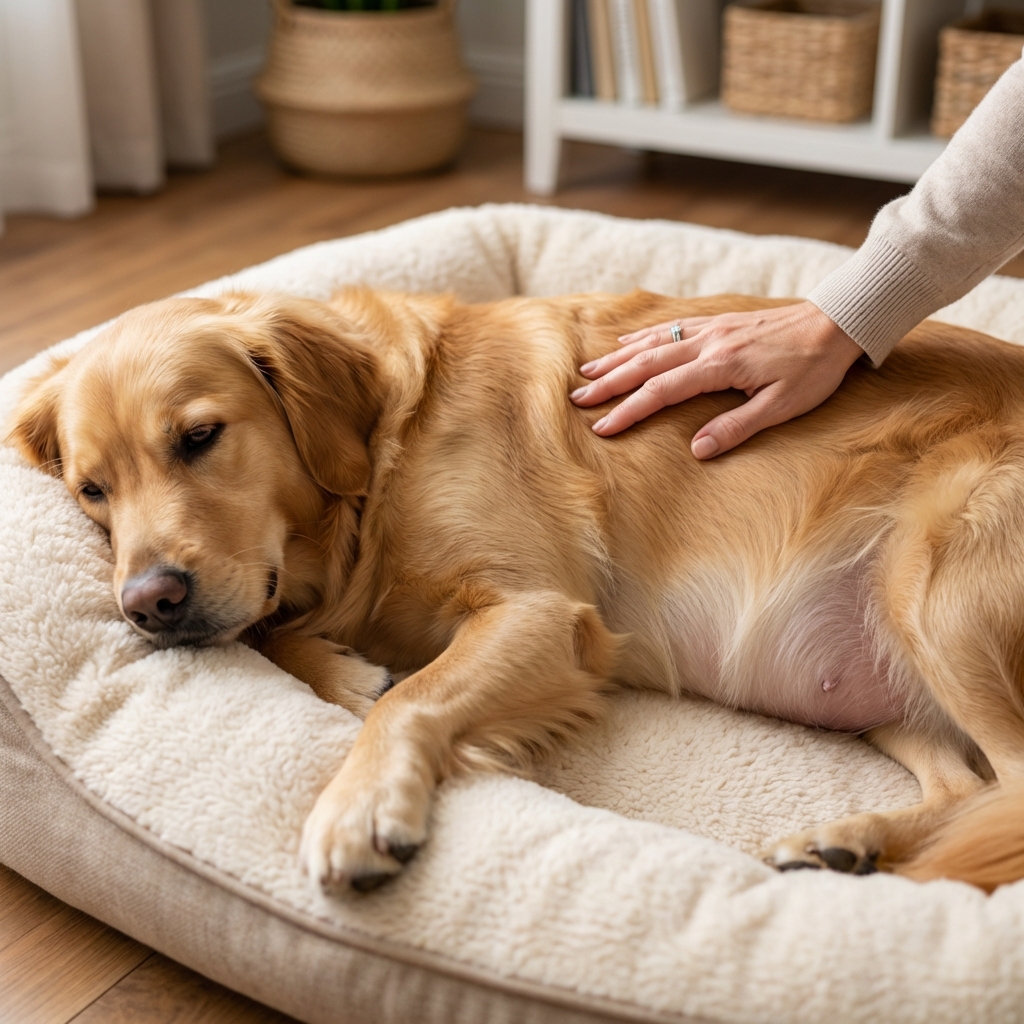
Track your dog’s pregnancy week by week with vet-informed milestones, common symptoms, confirmation tests, feeding guidance, whelping setup, labor signs, a...
Article
•
Designer Mixes
How to Care for a Pregnant Dog

Shari Shidate
Designer Mixes contributor
Seeing your dog pregnant can be exciting and a little nerve-wracking at the same time. As a veterinary assistant, I can tell you the good news: most healthy dogs do very well with pregnancy when their care is steady, calm, and guided by your veterinarian.
This overview walks you through what to do by stage, what to feed, what to avoid, and when to call the veterinarian. You will also find a simple whelping prep list so you can feel ready when the big day arrives.
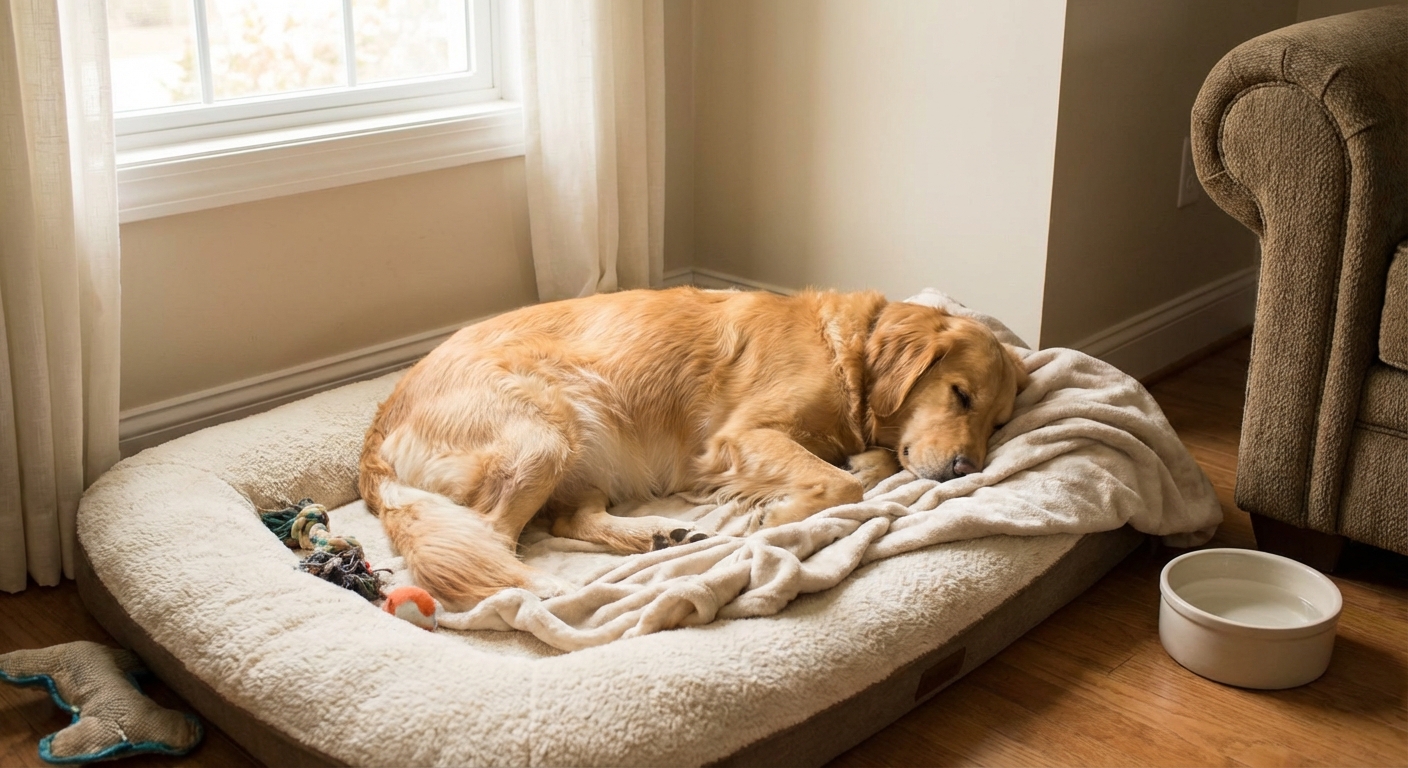
First step: confirm with your veterinarian
If you suspect your dog is pregnant, schedule a veterinary visit early. It is tempting to rely on a calendar and guess, but breeding dates are not always precise, and early guidance helps prevent problems later.
Quick note on timing: when you see “day” references below, they may be counted from breeding or from estimated ovulation, depending on how your veterinarian is dating the pregnancy.
How pregnancy is confirmed
- Physical exam: your veterinarian checks overall health, weight, hydration, gums, and belly comfort.
- Ultrasound: commonly used around days 21 to 25 and on (timing varies) to confirm pregnancy and check fetal viability.
- Relaxin test (blood test): often helpful after about 3 to 4 weeks, but testing too early can lead to false negatives.
- X-rays: used in late pregnancy to estimate puppy count once skeletons mineralize. Many clinics can see fetal skeletons around day 45, but counts are often easier and more accurate closer to day 55 and later.
Knowing an approximate due date and an estimated puppy count is more than “fun information.” It helps you recognize when labor is taking too long and when to seek emergency care.
Pregnancy timeline (about 63 days)
Canine pregnancy is typically about 63 days from ovulation, but the total length can vary, especially when you count from breeding. From a practical standpoint, many dogs deliver within about 57 to 72 days after breeding unless your veterinarian has more specific ovulation timing.

Early stage (weeks 1 to 4)
- Appetite may be normal, slightly decreased, or picky for a short time.
- You might see mild tiredness.
- Some dogs have light nausea. Vomiting is not always an emergency, but it should be discussed with your veterinarian.
Middle stage (weeks 4 to 6)
- Abdomen gradually enlarges.
- Nipples become more prominent; mammary glands may enlarge.
- Energy is often fairly normal, but long strenuous activity is not ideal.
Late stage (weeks 6 to delivery)
- Appetite usually increases, but the stomach has less room, so smaller meals help.
- She may start nesting behaviors.
- You may notice milk production closer to delivery, but not always.
Nutrition
Nutrition is one of the most important factors you can control for a healthy pregnancy and healthy puppies. The goal is steady body condition, not rapid weight gain early on.
When to increase calories
Most dogs do not need a big calorie increase in the first half of pregnancy. In general, calorie needs rise most in the last third (roughly weeks 6 to 9). Your veterinarian may recommend a gradual increase as her abdomen expands and fetal growth accelerates.
What food to choose
- Complete and balanced diet: diets formulated for growth or all life stages are commonly recommended during pregnancy and lactation. These diets are designed to support fetal development and later milk production.
- Fresh foods can be supportive: but pregnancy is not the time for improvising. If you want to add wholesome toppers, keep them modest and consistent, and confirm with your veterinarian.
Smart add-ons (ask first)
- Cooked eggs for highly digestible protein.
- Plain yogurt in small amounts if your dog tolerates dairy.
- Cooked, dog-safe vegetables like carrots or green beans for gentle fiber.
Calcium warning
Do not give calcium supplements unless your veterinarian specifically instructs you to. Over-supplementing calcium during pregnancy can interfere with natural calcium regulation and is associated with a higher risk of eclampsia (dangerously low blood calcium) during nursing.
Hydration matters
Fresh water should always be available. Dehydration can worsen constipation, reduce appetite, and complicate labor recovery.

Exercise and routine
Healthy movement supports muscle tone and digestion, and it keeps stress lower. The key is to avoid extremes.
- Best choice: calm, regular leash walks and gentle play.
- Avoid: intense sprinting, high jumps, slippery floors, rough dog-park play, and long endurance activity in heat.
- Late pregnancy tip: shorter, more frequent walks are often better than one long walk.
Also try to keep her environment predictable. Stress hormones can affect appetite, sleep, and overall wellbeing.
Veterinary care
Your veterinarian will tailor care to your dog’s age, breed, litter size, and medical history.
Parasite control
Parasites can be passed to puppies and can weaken mom during pregnancy and nursing. Only use preventives that your veterinarian says are safe for pregnancy. Do not guess, and do not use leftover medications.
Many veterinarians also recommend a pregnancy-safe deworming plan during late pregnancy and sometimes while nursing to reduce roundworm and hookworm transmission to puppies. Timing and product choice matter, so this is still very much a “ask your veterinarian” item.
Vaccines and medications
- Ideally, vaccines are updated before breeding.
- If she is already pregnant, your veterinarian will weigh risk versus benefit. Avoid over-the-counter products unless approved.
Weight and body condition checks
Monitoring body condition is more helpful than focusing on pounds alone. You want a dog who is neither thin nor overweight going into delivery and nursing.
Set up a whelping area
Plan to have the whelping space ready at least 1 to 2 weeks before the due window. Let her investigate it so it feels familiar.

Whelping box basics
- Quiet and warm: away from foot traffic, drafts, and other pets.
- Easy to clean: washable bedding and simple surfaces help hygiene.
- Safe containment: puppies should not be able to wander, and mom should be able to step out briefly.
- Optional safety feature: pig rails (also called roll bars) can help reduce the risk of accidental puppy crushing.
Supplies checklist
- Clean towels and disposable absorbent pads
- Digital rectal thermometer (and lubricant) if your veterinarian wants you tracking temperature
- Kitchen scale or small pet scale for daily puppy weights
- Whelping box bedding you can swap quickly
- Your veterinarian’s phone number and the nearest emergency clinic address
Safe warmth for newborns
Puppies cannot regulate temperature well early on. If you use a heating pad, place it under half the box (so puppies can crawl away if they get too warm), keep it on low, and prevent direct contact to avoid burns.
Signs labor is near
Every dog is a bit different, but these are common “it is getting close” signals.
- Restlessness or nesting
- Reduced appetite in the last 12 to 24 hours
- More clingy or, sometimes, more private behavior
- Clear vaginal discharge can be normal close to labor (your veterinarian can clarify what is normal for your dog)
Temperature tracking (if advised)
Some breeders and veterinarians use temperature drops as a clue that labor may start within about 24 hours. This is not foolproof and should never replace watching your dog’s behavior and calling your veterinarian when something seems off.
Call your veterinarian right away
Trust your instincts. If you feel worried, call. These situations are especially urgent:
- Green, dark, or foul-smelling discharge before any puppy is delivered, especially if your dog seems unwell or no puppy follows soon after
- Strong pushing for 20 to 30 minutes with no puppy produced
- More than 2 hours between puppies when you know there are more, especially if she is actively straining or seems exhausted
- Extreme lethargy, collapse, pale gums, or trouble breathing
- Heavy bleeding or signs of severe pain
- Vomiting repeatedly, refusal to drink, or dehydration
- Seizures, tremors, stiff gait during nursing or shortly after delivery (possible eclampsia)
If your dog is a brachycephalic breed (like a French Bulldog) or has a history of dystocia, talk early with your veterinarian about delivery planning, including the possibility of a scheduled C-section.
After delivery
Once puppies arrive, your dog’s energy demands rise sharply. Nursing is hard work.
Feeding during lactation
- Expect to increase food significantly over the first 2 to 3 weeks of nursing.
- Many moms do best with multiple meals per day and constant access to fresh water.
Keep puppies thriving
- Warmth: puppies need steady warmth and should never feel cool to the touch.
- Daily weights: steady gains are a great sign. Poor weight gain is an early red flag.
- Watch nursing: in the first day, puppies should nurse often. If a puppy is crying nonstop, feels cool, cannot latch, or is being pushed aside, call your veterinarian promptly.
Postpartum warning signs
- Fever, foul discharge, or refusal to eat
- Hard, painful mammary glands, or milk that looks abnormal
- Behavior that suggests distress or confusion
Your veterinarian may recommend a postpartum check for mom and puppies, sometimes within 24 to 48 hours, to confirm everyone is stable.
Frequently asked questions
Should I deworm a pregnant dog?
Many veterinarians do recommend a deworming protocol to reduce transmission to puppies, but timing and product selection matter. Some plans focus on late pregnancy and early nursing. This is a “do not DIY” area. Ask your veterinarian for a pregnancy-safe plan.
Can a pregnant dog take flea and tick medication?
Some products are considered safer than others in pregnancy, and recommendations can change. Use only what your veterinarian approves.
Can I switch foods during pregnancy?
Yes, but do it gradually and with purpose. Abrupt food changes can cause diarrhea and dehydration, which is the last thing you want during pregnancy. If your veterinarian recommends a growth diet, transition over 7 to 10 days if possible.
This article is educational and not a substitute for veterinary care. If you think your dog is pregnant or in labor distress, contact your veterinarian or an emergency clinic right away.