A clear, family-friendly guide to male dog neuter recovery time: what’s normal day by day, incision care, cone alternatives, kid and pet rules, and when to...
Article
•
Designer Mixes
How To Care For a Dog After Neutering

Shari Shidate
Designer Mixes contributor
Neutering is one of the most common surgeries for dogs, and for most pups the recovery is smooth. Still, the first 7 to 14 days matter a lot because your dog cannot tell you when something feels “off.” The goal is simple: protect the incision, keep activity low, and support calm behavior while the body heals.
As a veterinary assistant, I like to remind families that many “post-neuter problems” are actually too much activity too soon, or licking that introduces bacteria. The good news is you can prevent most issues with a few practical routines at home.
What to expect after neutering
Every clinic has slightly different instructions, so always follow your veterinarian’s discharge sheet first. In general, here is what is common after a routine neuter:
- Sleepiness for 12 to 24 hours from anesthesia. Mild grogginess can sometimes linger into 24 to 48 hours.
- Lower appetite the first evening. Many dogs eat normally by the next day, but a lighter appetite can occasionally last a day or two.
- Mild swelling or bruising around the incision or scrotal area. It should improve, not worsen.
- Less patience or mild clinginess. A day at the vet and anesthesia can be stressful.
If your dog seems uncomfortable, use only the pain medications your veterinarian prescribed. Never give human pain relievers like ibuprofen, naproxen, or acetaminophen unless your veterinarian has explicitly instructed it. These can be dangerous for dogs when used incorrectly.
First 24 hours
Set up a calm spot
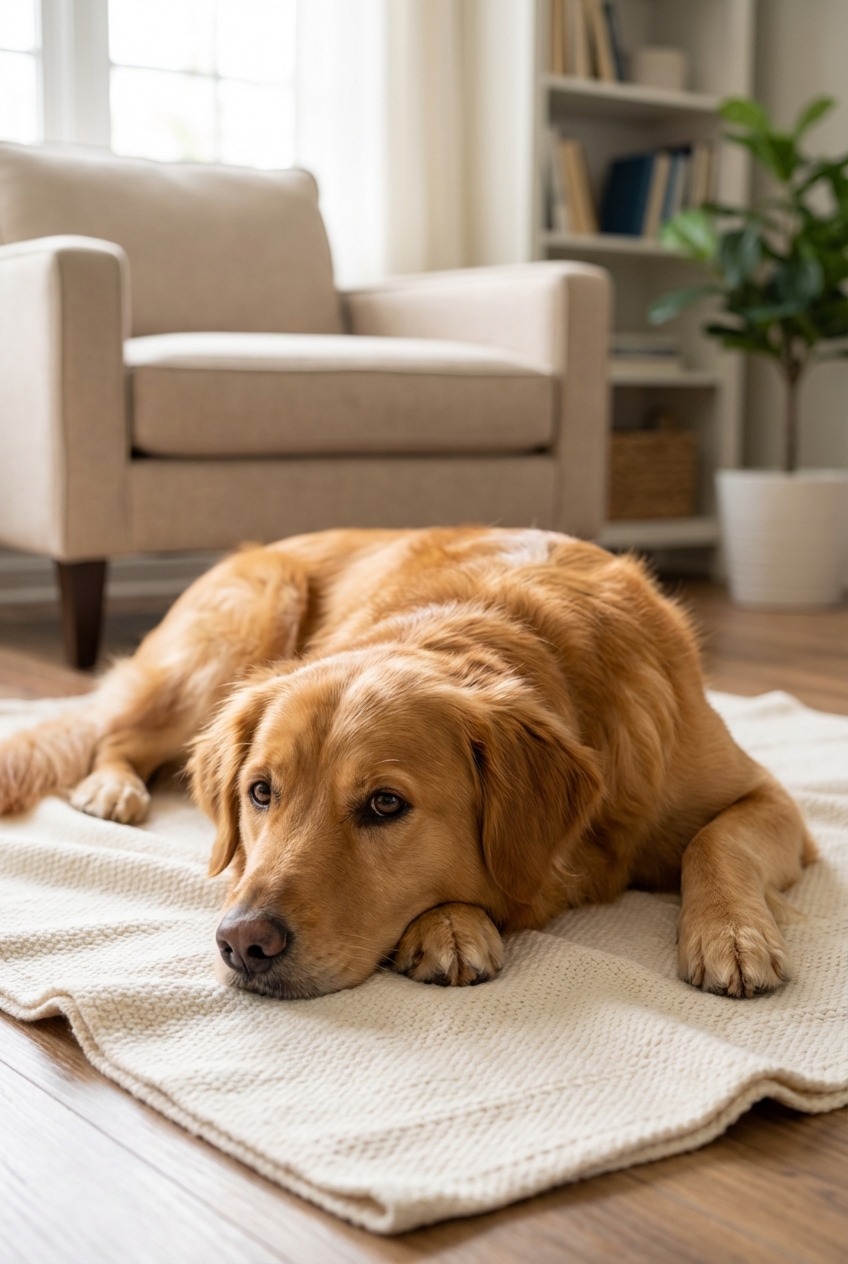
Pick a quiet area away from stairs and rough play. A washable blanket or dog bed is ideal. If you have other pets, consider separating them for the first night so your recovering dog can fully relax.
Food and water
Offer small amounts of water when you get home. For dinner, many clinics recommend a smaller meal. If your dog vomits, call your veterinarian for next steps.
Bathroom breaks
Take your dog out on a leash only. Keep the trip boring and short. No running, no stairs if you can avoid them, and no jumping back onto furniture.
Incision care
The incision is small, but it is still a surgical wound. Most complications happen when dogs lick or when owners miss early signs of irritation.
Check it twice daily
Good lighting helps. You are looking for:
- Normal: a thin, closed line; mild redness; minimal swelling; a little bruising. A small, firm lump under the incision can also be a normal part of healing.
- Not normal: gaping edges, thick discharge, strong odor, increasing redness, heat, or swelling. Rapid, ballooning swelling is especially concerning.
Keep it clean and dry
- No baths until your veterinarian says it is okay, often 7 to 14 days or until a recheck.
- Avoid swimming or muddy yards.
- Do not apply ointments, hydrogen peroxide, or alcohol unless instructed. These can delay healing.
Prevent licking and chewing
Many dogs will lick “just enough” to cause trouble. Use one of these, based on your dog’s personality and what your veterinarian approves:
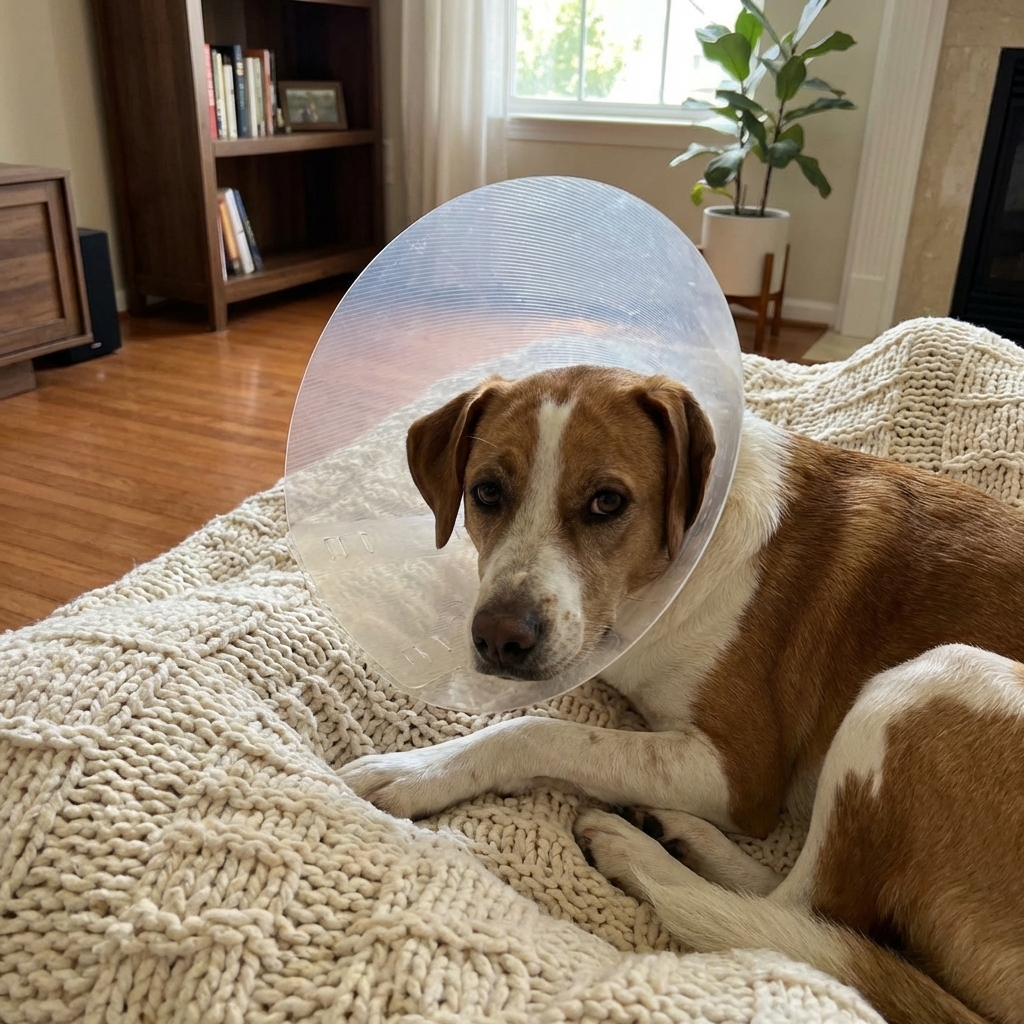
- Elizabethan collar (cone) for reliable protection.
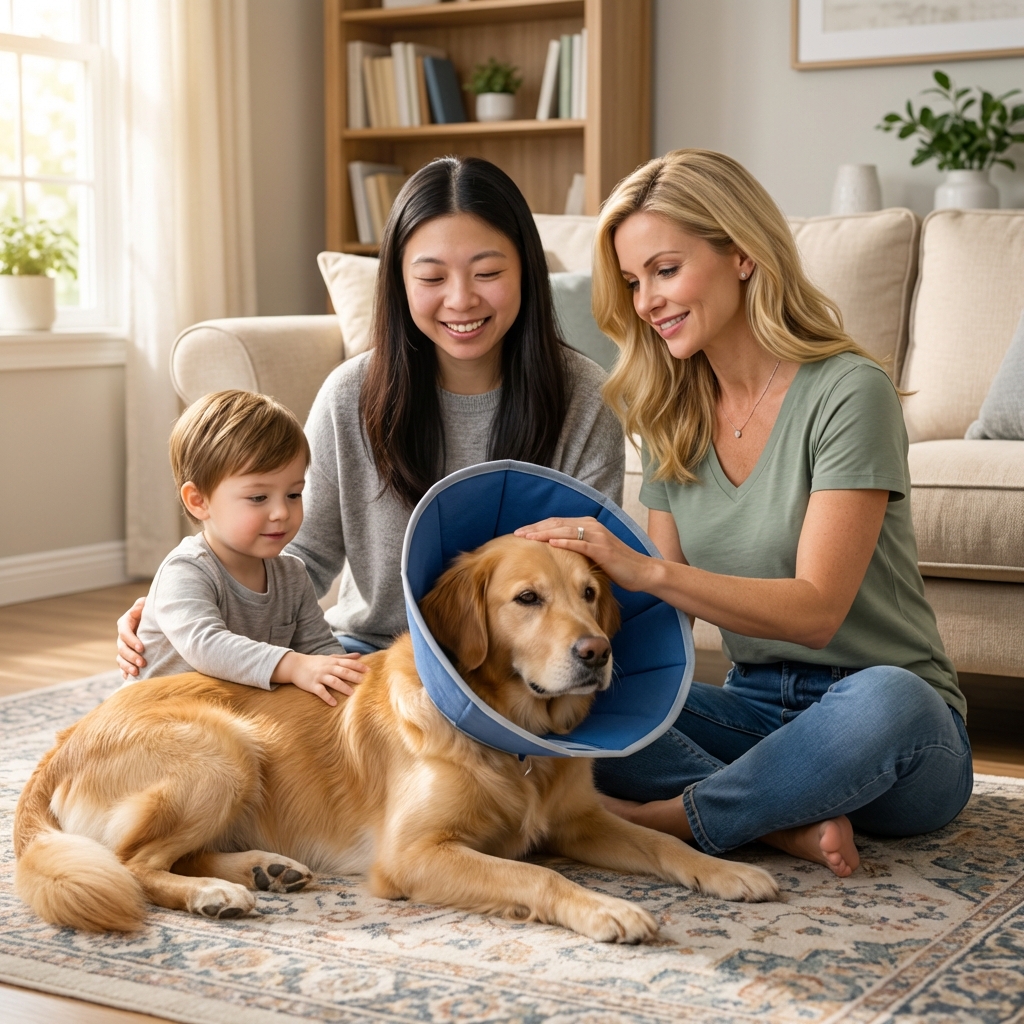
- Inflatable collar for some dogs, as long as they still cannot reach the incision.
- Post-surgical recovery suit for dogs who panic with a cone, if it keeps the site covered and dry.
In most cases, the cone or suit should stay on at all times until your veterinarian clears it, often 10 to 14 days. If your vet says it is okay to remove it during supervision, remember this: if you cannot watch, the protection stays on.
Sutures, glue, and rechecks
Some dogs have dissolvable sutures under the skin and no stitches to remove. Others have external sutures or staples that need to come out at a recheck. Follow your clinic’s instructions, even if the incision looks “fine” to you.
Activity restriction
Your dog may feel better before they are fully healed. That mismatch is why we see swelling, fluid pockets, and re-opened incisions.
For 7 to 14 days, avoid
- Running, wrestling, and rough play
- Jumping on and off beds or couches
- Stairs, if possible
- Dog parks and daycare
- Off-leash zoomies in the yard
What is allowed
- Leash potty breaks
- Very short, slow leash walks if your veterinarian allows it, often after the first day
- Quiet enrichment that does not involve bouncing or twisting
Returning to normal activity
Once your veterinarian clears your dog, increase activity gradually over a few days. Start with short, controlled walks before returning to full-speed play.
Behavior changes
Neutering can influence some hormone-driven behaviors, but it is not a personality reset. It is also not instant. Testosterone levels take time to decrease, and learned habits still need training. Even hormonally influenced behaviors can be stubborn in some dogs.
Changes you might see over time
- Less roaming and less intense interest in seeking females in heat
- Reduced urine marking in some dogs, especially if it was not a long-standing habit
- Less mounting when it is hormonally driven, though some mounting is excitement or play
Behavior shifts, when they happen, often take weeks to months, not days.
What may not change
- Protective behavior, fearfulness, or reactivity rooted in anxiety
- Habits your dog has practiced for months or years
- High energy in young dogs
Short-term changes after surgery
For the first few days, some dogs are extra vocal, restless, or clingy. This is often discomfort, disorientation from anesthesia, or frustration from wearing a cone. If your dog seems unusually agitated, call your veterinarian. Pain control can make a huge difference in recovery behavior.
Keeping your dog calm
Calm is not just a temperament trait. It is something we can support with structure.
Use calm enrichment
- Food puzzles that your dog can do while lying down
- Lick mats with vet-approved soft foods
- Sniff games like hiding kibble in a towel on the floor
Keep training gentle
Practice low-motion cues like “sit,” “touch,” and “place,” and reward calm behavior. Skip anything that gets your dog hopping or spinning.
Ask your vet about calming help
Some dogs truly struggle with confinement. Your veterinarian may recommend a temporary calming plan, which could include supplements or medications that are safe for your dog’s health history.
Pain meds and medications
Give medications exactly as prescribed. Some meds are meant to be finished, and others are “as needed,” so follow your label and your discharge instructions. Call your clinic if you miss a dose or your dog spits pills out. Do not double up unless your veterinarian tells you to.
Signs your dog may be uncomfortable include:
- Whining, panting, or restlessness when not hot
- Not wanting to lie down or having trouble settling
- Hunched posture
- Sudden irritability when touched near the back end
When to call the vet
Trust your instincts. If something feels wrong, it is always appropriate to call. Contact your veterinarian promptly if you notice:
- Bleeding that does not stop quickly
- Vomiting more than once, or repeated diarrhea
- Refusal to eat for more than 24 hours
- Incision opening, missing sutures, or visible tissue
- Yellow, green, or foul-smelling discharge
- Rapidly increasing swelling, heat, or redness
- Lethargy that does not improve after the first day or two
- Difficulty urinating
Male-specific note: Some scrotal swelling or bruising can be more noticeable in larger dogs, older dogs, or very active dogs. Mild swelling that slowly improves can be normal. Swelling that grows quickly, becomes very painful, feels hot, leaks fluid, or makes walking difficult deserves a same-day call.
If your dog collapses, has pale gums, or seems unable to breathe comfortably, seek emergency care.
Recovery timeline
Healing speed varies by age, size, closure method, and activity level. Your clinic may clear your dog earlier or later, so use this as a general guide and default to your discharge sheet.
Days 1 to 2
- Sleepy, quiet, short leash potty breaks
- Strict no running or jumping
- Incision checks morning and evening
Days 3 to 7
- Energy often returns and this is when dogs try to overdo it
- Continue cone or recovery suit
- Leash walks only, as approved by your vet
Days 8 to 14
- Incision should look calmer and less red
- Continue restrictions until your veterinarian clears normal activity
- Attend any recheck appointment if scheduled
Other pets and kids
If you have multiple pets or children, set clear “recovery rules” so your dog can heal without setbacks:
- Keep greetings calm and brief
- No wrestling, chase games, or tug
- Use baby gates or a crate to create a safe buffer
- Supervise at all times until your dog is cleared for normal play
Long-term care
Once your dog is fully healed, the biggest long-term considerations are weight management and training follow-through.
- Watch calories: Some dogs gain weight more easily after neutering. Ask your vet if you should adjust portions.
- Build healthy routines: Daily walks, enrichment, and consistent training help prevent boredom behaviors.
- Keep working on behavior: If your dog had reactive or anxious behaviors before neutering, behavior modification and positive reinforcement training are still the best tools.
Recovery is not just “waiting it out.” A calm plan, incision protection, and controlled activity are the fastest path back to your dog’s normal happy life.