Stop kitten biting without punishment. Learn why kittens bite, how to freeze and disengage, redirect to toys, prevent ankle attacks, and build a daily play r...
Article
•
Designer Mixes
How to Calm Down a Kitten

Shari Shidate
Designer Mixes contributor
Kittens are tiny, adorable bundles of curiosity, and sometimes that curiosity looks a lot like chaos. If your kitten is racing from room to room, play-biting your hands, or crying at night, you are not doing anything wrong. In most cases, your kitten is doing exactly what a developing feline nervous system is designed to do: explore, practice hunting skills, and learn what feels safe.
In clinic settings, I like to start with this reassuring truth: calming a kitten is less about “stopping behavior” and more about meeting a need. When you meet the need, the behavior usually settles on its own.
Quick start
- Reset the room: move your kitten to a small, quiet, kitten-proofed space for 10 to 20 minutes.
- Play then feed: 5 to 15 minutes of wand-toy play, then a small meal or snack.
- Lower the volume: dim lights, reduce noise, and use calm, slow movements.
Why kittens get wound up
Understanding the “why” makes the “how” much easier. Most kitten hyperactivity has a normal explanation, but a few situations deserve a closer look.
Common, normal reasons
- Zoomies and play drive: Kittens often have bursts of energy, especially in the evening or early morning.
- Overstimulation: Too much petting, noise, or handling can flip them from calm to frantic.
- Learning boundaries: They test what is allowed, including biting, climbing, and nighttime meowing.
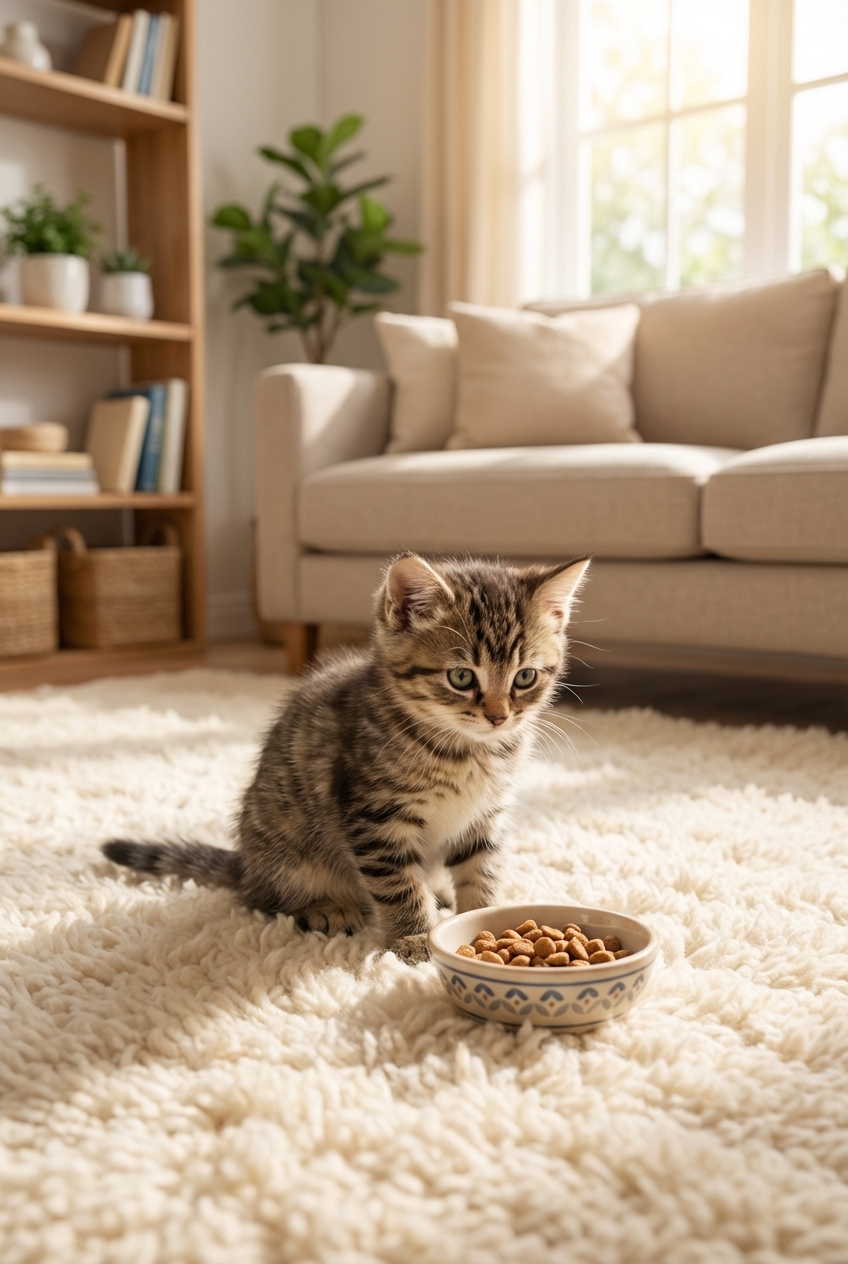
- Hunger or thirst: A growing kitten needs frequent meals and fresh water.
- Loneliness: Solo kittens often seek attention more intensely, especially at night.
Age matters
Expectations change fast as kittens grow. Under about 12 weeks, nighttime crying and clinginess are especially common, and many kittens still need extra reassurance as they adjust. By 4 to 6 months, you may see bigger energy spikes, stronger hunting play, and more confidence, which can look like “wild” behavior if their day is boring.
When to consider a health issue
If your kitten is suddenly unable to settle and this is new, or you notice any of the following, it is worth calling your veterinarian:
- Diarrhea, vomiting, poor appetite, or weight loss
- Wheezing, coughing, nasal discharge, or labored breathing
- Excessive scratching, hair loss, scabs, or fleas you cannot control
- Persistent crying that seems painful, panicked, or out of character
- Lethargy mixed with episodes of agitation
Parasites, fleas, GI upset, and pain can all make a kitten restless. It is always okay to check in, especially with very young kittens.
The fastest safe ways to calm a kitten
If you need a calm-down strategy right now, choose options that lower arousal without scaring your kitten. Avoid yelling, spraying water, or physical punishment. Those methods can increase anxiety and make handling harder long-term.
1) Reduce stimulation and create a quiet zone
Pick a small area like a bathroom, laundry room, or a playpen setup. Before you place your kitten there, do a quick kitten-proofing scan: remove cleaners, strings, hair ties, small swallowable items, and block access to cords.
Provide:
- A cozy bed or blanket
- A litter box (kept away from food and bed)
- Fresh water
- A small meal or snack if it has been a while
- One or two toys, not a whole pile
Dim the lights, lower the noise, and let your kitten decompress for 10 to 20 minutes. Think of it as a reset room.
2) Use calm, steady body language
Kittens read your energy. Slow your movements, speak softly, and try not to hover. If your kitten is frantic, sit on the floor slightly sideways rather than facing head-on, and let them come to you.
3) Offer a productive outlet
A routine that follows natural feline behavior patterns often helps kittens settle because it gives their brain a clear finish line. A quick sequence to try:
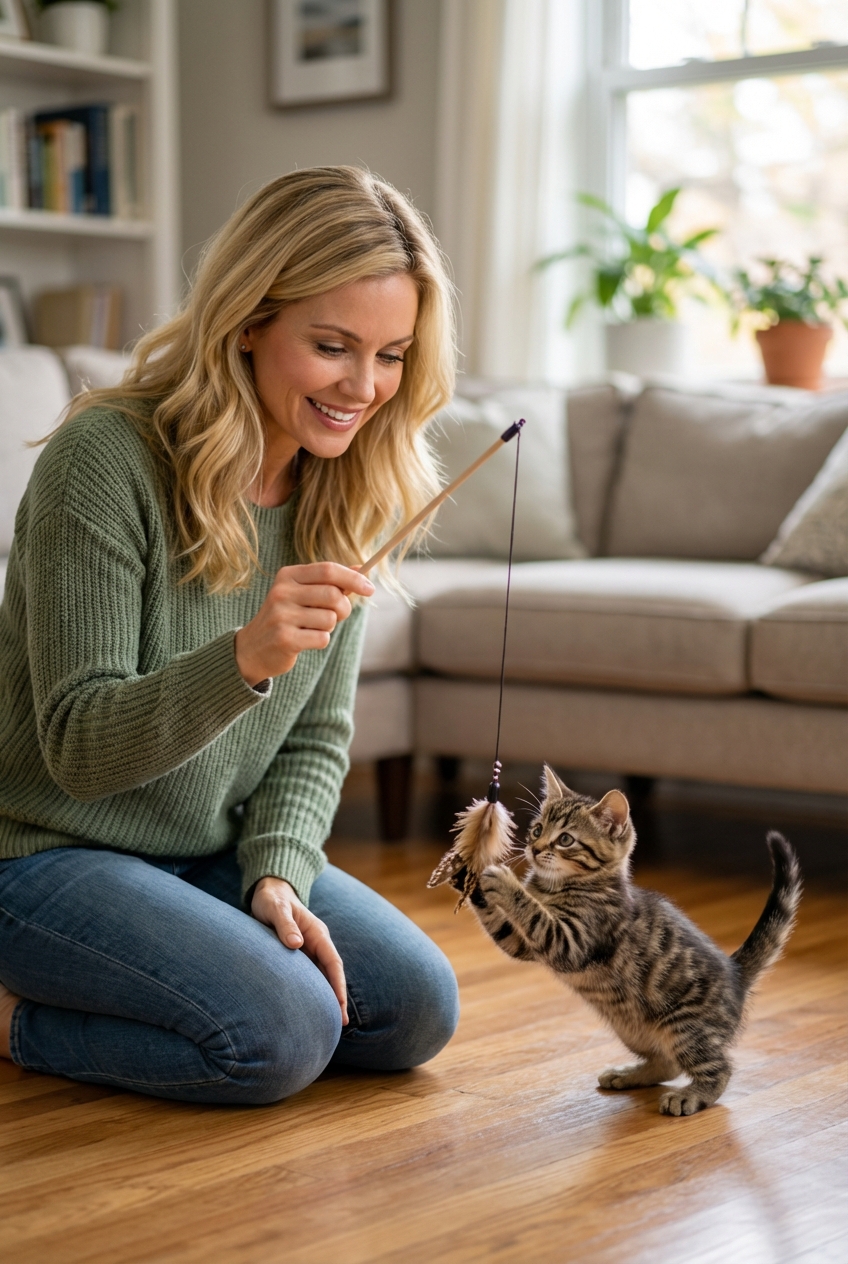
- Hunt: Use a wand toy for 5 to 10 minutes.
- Catch: Let your kitten “win” the toy a few times.
- Eat: Offer a small meal after play.
- Groom: Gentle brushing if they enjoy it.
- Sleep: Many kittens will conk out afterward.
This is a commonly recommended enrichment flow and it is well-supported by basic behavior principles: meet the drive, then help the body transition into rest.
What to do about biting and wild play
Play biting is extremely common. Your goal is to teach that human skin is not a toy, while still giving your kitten a healthy way to play.
Swap, do not scold
If teeth touch skin, calmly stop moving your hand, then offer an appropriate toy immediately. Movement excites prey drive, so pulling away quickly can make biting more intense.
Use short play sessions
Instead of one huge playtime, aim for 3 to 5 mini sessions. Many kittens do best with frequent bursts of play that match their natural rhythm.
Avoid rough hand play
Wrestling with hands teaches kittens that fingers are prey. It is adorable now and painful later.
Use a short reset if needed
If your kitten is too amped to redirect, use the quiet zone for a brief nervous system break, then try again with a toy.
Calming a kitten at night
Nighttime is a top concern for new kitten families, especially when meowing and zoomies interrupt sleep. Some night noise is normal, particularly in the first week home and in kittens under 12 weeks. That said, sudden or intense crying can also signal illness or discomfort, so trust your instincts and call your vet if something feels off.
Build a bedtime routine
- Play: 10 to 15 minutes with a wand toy in the evening.
- Feed: Offer dinner or a small bedtime snack.
- Settle: Place them in their sleep area with a cozy bed.
This routine supports that play then eat then sleep pattern that helps kittens settle.
Make the sleep setup kitten-friendly
Many kittens feel safest in a smaller space at night. Consider a bedroom, large crate, or playpen with:
- Soft bedding
- Litter box
- Water
- A safe plush toy
- A covered hide spot like a small cat cave
Respond thoughtfully to meowing
If your kitten is healthy and safe, try not to accidentally teach that crying always earns playtime. For very young kittens, a brief reassurance check can be appropriate, then return to a consistent routine. If you do get up, keep it boring: quick litter and water check, no big lights, no exciting play.
Tools that can help
These options are commonly used in feline behavior plans. They are not magic, but they can support your training and routine.
Pheromone diffusers
Synthetic feline facial pheromones can help some kittens feel more secure in a new environment. Place a diffuser near the main kitten area and evaluate over at least several days, with a full effect sometimes taking a few weeks depending on the kitten and the product.
Food puzzles and slow feeders
These channel energy into foraging behavior and reduce boredom. For kittens, keep it easy at first and prioritize safety and supervision.
More vertical space
A small cat tree, a window perch, or a sturdy shelf system gives kittens a place to climb and observe, which can reduce frantic running and attention-seeking.
Comfort items for young kittens
If your kitten is very young and recently separated from littermates, warmth can be soothing. Use a pet-safe heating pad on a low setting under part of the bedding, with a towel layer between the pad and the blanket, so your kitten can choose a cooler spot. Check the temperature with your hand and avoid direct contact to prevent burns.
Some kittens also seem to settle with gentle “companion” cues like a heartbeat-style toy. A ticking clock is sometimes suggested anecdotally, but results vary. If you try it, keep it out of reach of chewing and cords, and skip anything with small loose parts.
Consider a kitten buddy
In some households, adopting two compatible kittens can reduce boredom and loneliness because they can wrestle and learn boundaries together. It is not the right fit for every home, but if your solo kitten seems persistently under-stimulated, it can be worth discussing with your shelter or rescue.
What not to do
These approaches often backfire, especially with sensitive kittens:
- Yelling: increases fear and can worsen arousal.
- Spraying water: may stop behavior briefly but often increases anxiety and avoidance.
- Scruffing: can cause stress and is not a recommended training method for companion cats.
- Chasing: turns the situation into a game or heightens panic.
- Too much restraint: can escalate squirming, scratching, and fear responses.
When to get professional help
If you have tried routine, enrichment, and gentle redirection for a couple of weeks and your kitten still cannot settle, it is okay to ask for support. Talk to your veterinarian about:
- Medical screening if behavior changed suddenly
- Parasite prevention and itch control
- Nutrition support for a growing kitten, including how often to feed at your kitten’s age
- A referral to a qualified feline behavior professional if needed
If your kitten feels safe, has a predictable routine, and gets daily play that mimics hunting, calm behavior becomes much easier to teach and maintain.
With a little structure and a lot of patience, most kittens grow into wonderful, steady companions. You are building that foundation right now.