Learn why dogs fear storms and how to help fast: build a safe comfort zone, block noise and flashes, use treats and pressure therapy, plus vet-backed meds an...
Article
•
Designer Mixes
How to Calm Dogs During Thunder

Shari Shidate
Designer Mixes contributor
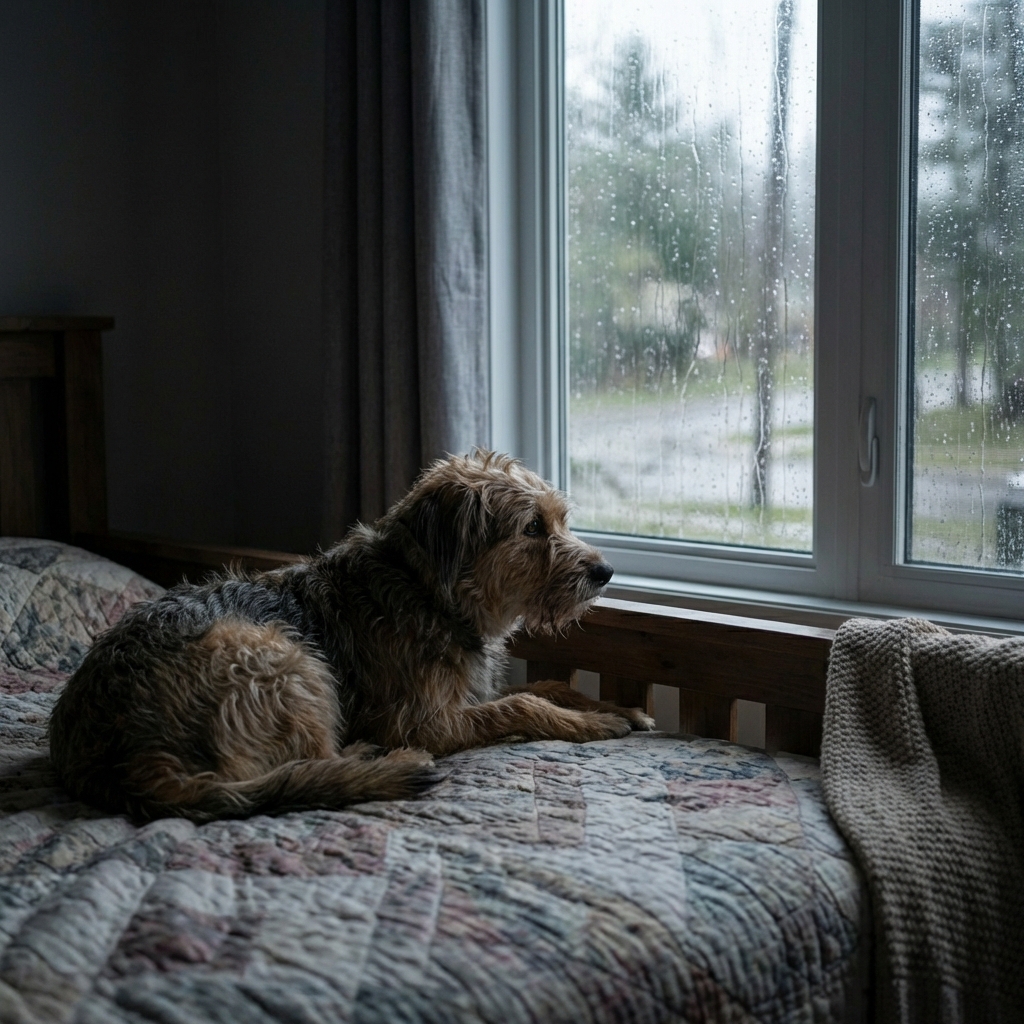
As a veterinary assistant here in Frisco, Texas, I can tell you this is one of the most common warm-weather questions I hear: “What can I do when my dog panics during a storm?” Thunder anxiety is real, and it can look like shaking, panting, pacing, hiding, drooling, clinginess, barking, or even trying to escape.
The good news is that many dogs can feel better with a plan that combines environment, training, and in some cases, veterinarian-approved calming tools.
Why thunder scares dogs
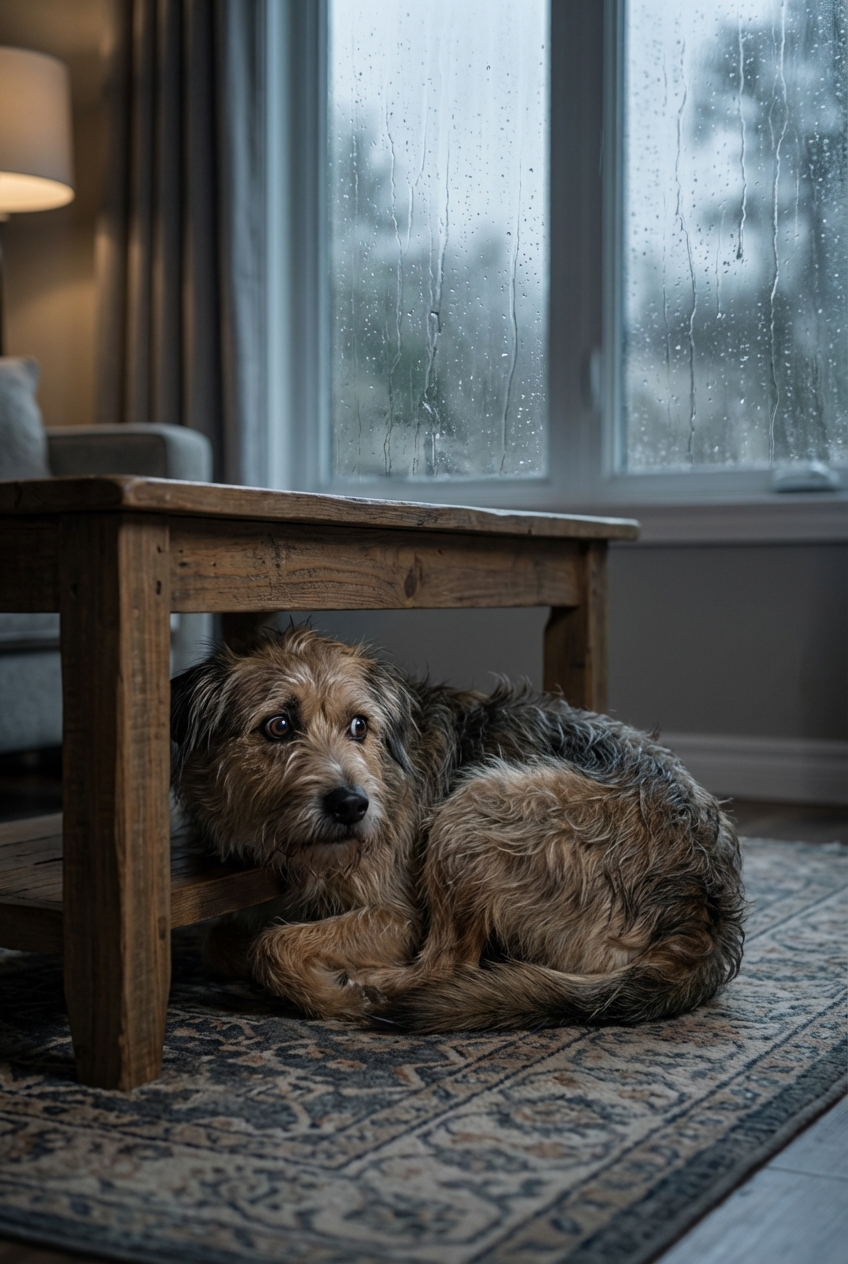
Dogs experience storms differently than we do. Thunder is loud, unpredictable, and it often comes with other factors that can add to fear.
- Noise and vibration: Low-frequency rumbles can travel through floors and walls, not just the air.
- Flashes and pressure changes: Some dogs seem to react to lightning and shifting barometric pressure before thunder is obvious to us. It is hard to prove in any one dog, but it is a commonly suspected contributor.
- Static electricity: Some experts suspect static buildup in the coat during storms may contribute to discomfort for certain dogs. The evidence is mixed, but it is a possible piece of the puzzle.
- Learning history: One scary experience, like being left alone during a big storm, can teach a dog that thunder is dangerous.
Nervous vs. panic
It helps to match your approach to what your dog is actually feeling.
Mild to moderate fear
- Seeks you out, but can still take treats
- Startles at thunder, then settles
- Pants or paces but responds to a cue like “sit”
Severe fear or panic
- Cannot eat, cannot focus, frantic pacing
- Attempts to escape doors, crates, or windows
- Self-injury from scratching, chewing, or crashing into objects
- Accidents indoors or destructive behavior during storms
If you see panic signs, please involve your veterinarian sooner rather than later. Panic is not “bad behavior.” It is an overwhelmed nervous system.
During a storm
1) Create a safe “storm station”
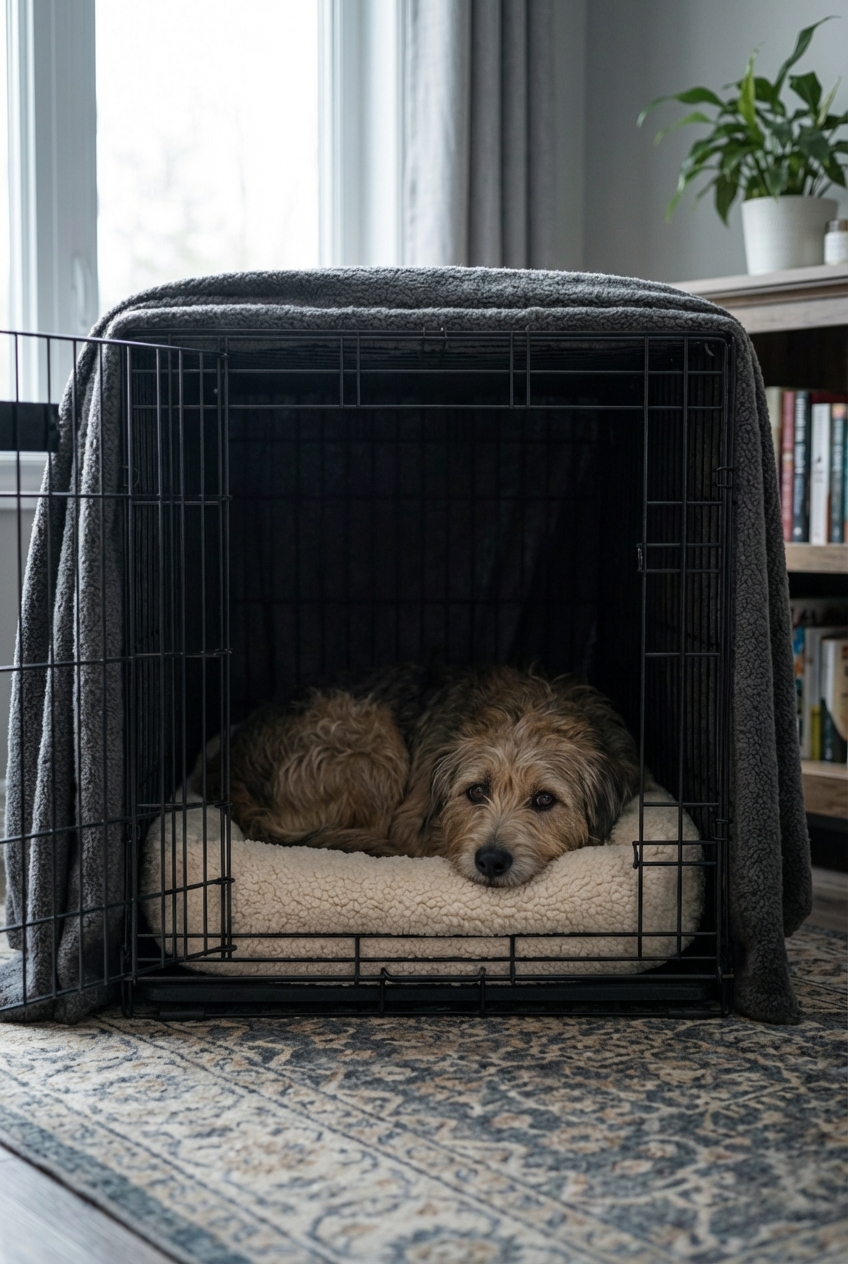
Pick one spot and make it consistent. Many dogs prefer a darker, interior area like a closet, bathroom, or a covered crate.
- Add a thick bed or folded blankets to reduce vibration.
- Close curtains and keep lights on to soften lightning flashes.
- Offer a crate cover if your dog likes being enclosed. If they hate crates, do not force it.
2) Add steady background sound
Use white noise, a fan, TV, or calm music. The key is steady sound, not a volume war with the storm.
- Try white noise near the storm station.
- Keep the sound at a comfortable level, especially if your dog is noise-sensitive.
3) Offer a safe chew or lick
Chewing and licking are naturally soothing for many dogs.
- Stuffed food puzzle (frozen can last longer)
- Long-lasting chew that is appropriate for your dog’s chewing style
- Lick mat with a thin layer of dog-safe spread
Safety note: Only offer chews you trust your dog with while supervised. If your dog is too panicked to chew safely, skip this step.
4) Be calm and supportive
You do not need to ignore your dog. Quiet, confident reassurance is okay. What we want to avoid is accidentally adding extra excitement to the moment.
- Speak softly and move slowly.
- Pet your dog if they seek it, especially long strokes along the shoulders or chest.
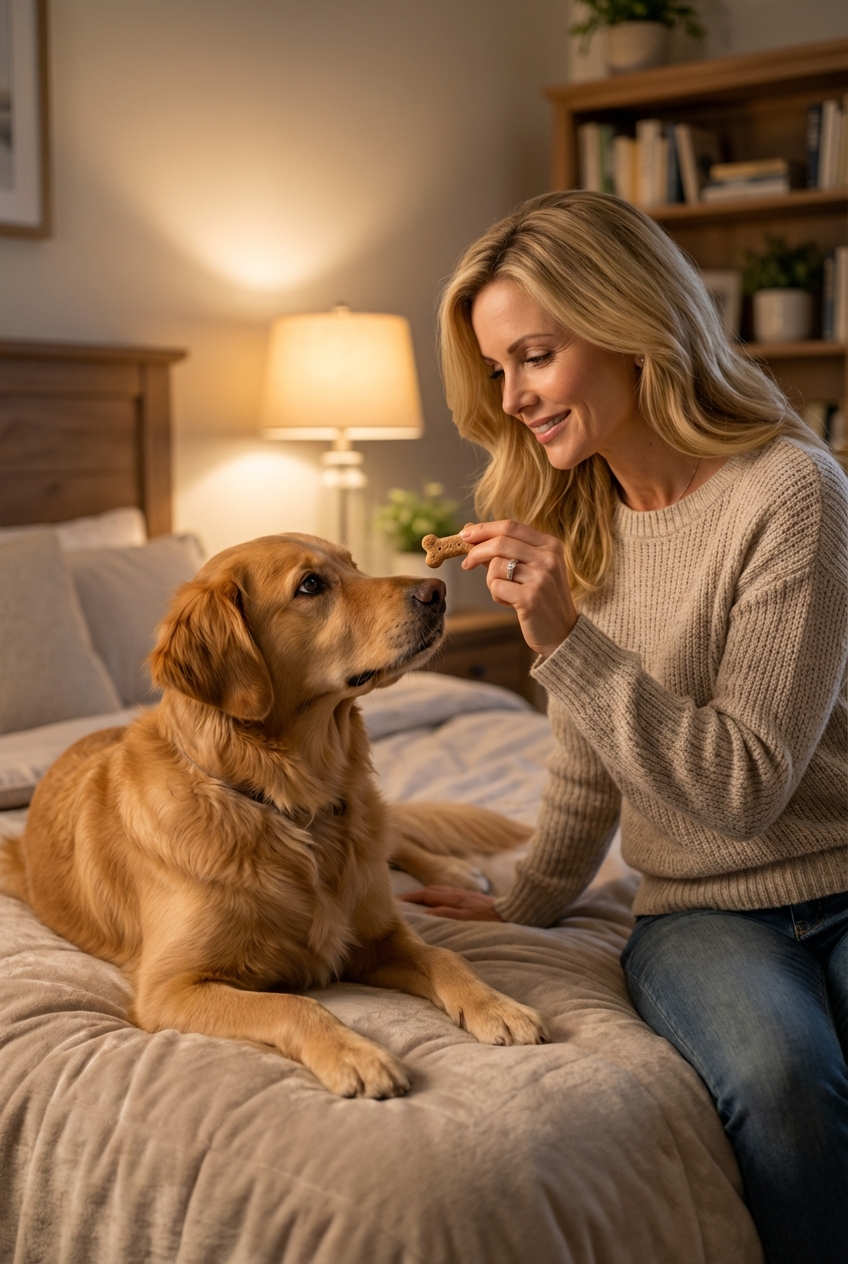
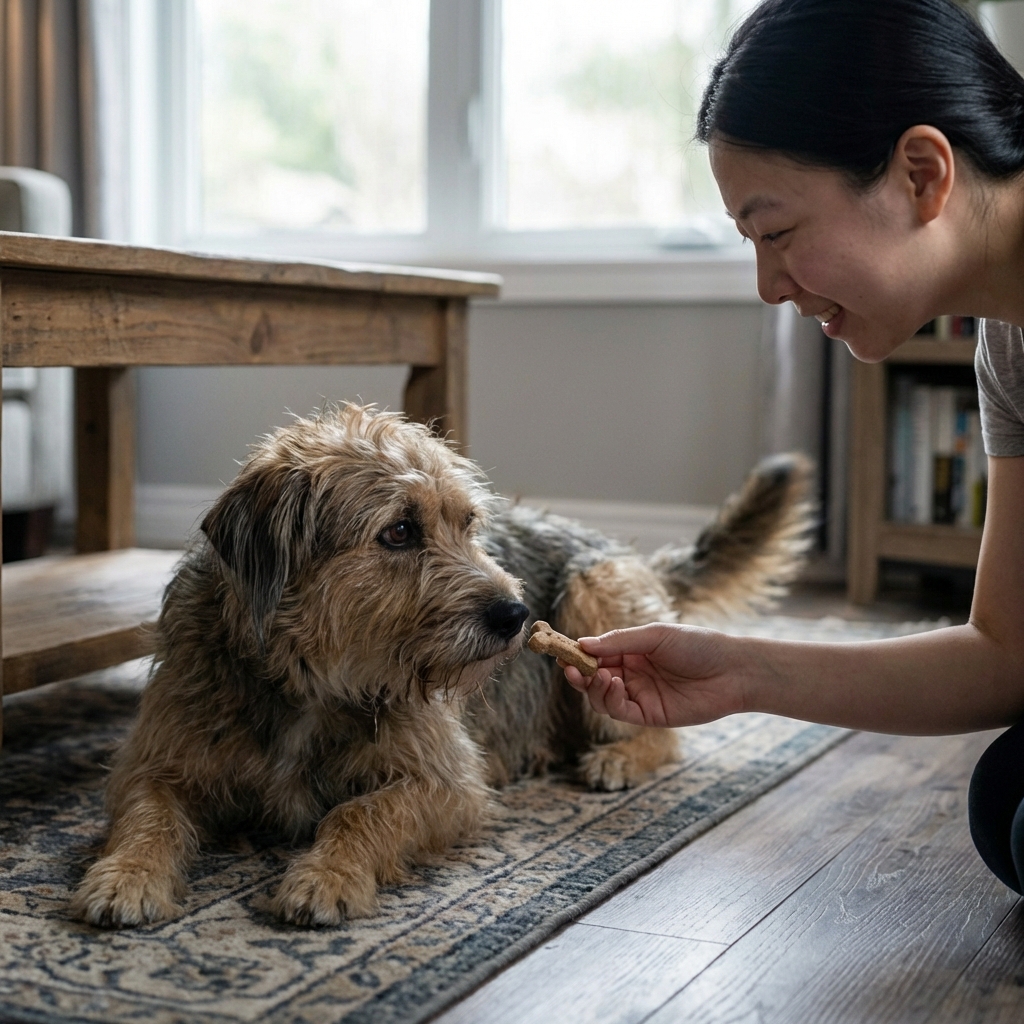
- Try a simple “sniff game” like scattering a few treats on a rug if they can still eat.
5) Try gentle pressure
Some dogs relax with gentle, even pressure.
- Thunder shirts or snug anxiety wraps can help certain dogs.
- Test it on a calm day first, never for the first time mid-storm.
6) Prioritize safety
- Secure exits: Close and lock doors, and keep windows secured. If your dog bolts, this is when accidents happen.
- Check ID: Make sure collar tags are current and your dog’s microchip info is up to date, especially if escape attempts are part of the pattern.
- Potty breaks: Do not take a panicking dog outside during active thunder if you can avoid it. If a quick potty break is necessary, use a leash and secure harness, and keep it brief.
Before thunder starts
The best storm plan starts when the sky is still clear.
Track storms early
Use weather alerts on your phone. If you know storms are coming, you can set up your dog’s environment and start calming routines early. This is also when situational tools and medications work best.
Practice “thunder = treats”
This is a training approach called desensitization and counterconditioning. You are teaching your dog that storm sounds predict something good.
- Play a thunder recording at a very low volume.
- Feed high-value treats during the sound.
- Stop the treats when the sound stops.
- Over days to weeks, slowly increase volume only if your dog stays relaxed.
If your dog reacts at any point, the volume is too high. Go back to an easier level. Slow is fast with fear.
Train an “emergency settle”
Train a simple mat cue on calm days.
- Place a blanket or mat in your dog’s storm station.
- Reward them for stepping on it, lying down, and staying.
- Add a calm cue like “settle” or “safe place.”
Lower baseline stress
A tired, fulfilled dog is often more resilient. During stormy seasons, prioritize:
- Regular exercise suited to age and health
- Sniff walks and enrichment (sniffing is naturally calming for many dogs and can help lower arousal)
- Predictable routines
- Positive training sessions that build confidence
Calming products
There is no single “best” product for every dog. A few options have some evidence and widespread clinical use behind them, but results vary by dog, and supplement quality varies by brand. When in doubt, ask your veterinarian what they trust and what fits your dog’s health history.
Options that may help
- Pheromone therapy: Dog-appeasing pheromone diffusers or collars may reduce anxiety for some dogs.
- Calming supplements: Some veterinarian-recommended products include ingredients like L-theanine, alpha-casozepine, or colostrum-based calming blends. Ask your vet about reputable brands and appropriate dosing.
- Pressure wraps: Thunder shirts or other snug wraps help some dogs, especially when introduced on calm days.
- Prescription medications: For severe thunder panic, situational anti-anxiety medication can be life-changing. Many work best when given before the storm, so talk with your veterinarian ahead of time about timing and a plan.
Use caution
- Essential oils: Many are irritating or toxic to pets, especially when diffused in enclosed spaces.
- Human OTC meds: Do not give human over-the-counter medications (like sleep aids or pain relievers) unless your veterinarian specifically instructs you to. Some are dangerous for dogs.
- Sedatives without anxiety relief: Some medications can immobilize a dog without reducing fear. That can worsen distress. Always use vet guidance.
- Flooding the fear: Forcing your dog to endure storms without support can intensify the phobia.
Common mistakes
- Punishing fear behaviors: Never scold shaking, barking, or hiding. It increases stress and damages trust.
- Forcing a crate: If your dog is trying to escape, they can hurt themselves. Choose safety over “containment.”
- Waiting too long to ask for help: Storm phobias often escalate over time. Early support is kinder and usually more effective.
- Changing everything mid-storm: New wraps, new crates, new rooms can be stressful in the moment. Practice ahead of time.
When to call your vet
Please reach out if:
- Your dog cannot settle, will not eat, or seems panicked for long periods
- You see escape attempts or self-injury
- Storm anxiety is getting worse each season
- Your dog also struggles with separation anxiety or generalized anxiety
It can also help to work with a qualified behavior professional alongside your vet. Look for a credentialed trainer or consultant (for example, IAABC or CCPDT), or ask about a veterinary behaviorist for severe cases.
Thunder phobia is treatable. With the right mix of training and medical support when needed, many dogs go from “terror” to “tolerable,” and some even learn to rest through storms.
If your dog is scared, you are not failing them. You are noticing, and that is the first step toward helping.
Quick checklist
- Set up the storm station (dark, quiet, padded)
- Turn on steady sound (white noise, fan, TV)
- Offer a safe chew or lick if appropriate
- Stay calm, slow, and supportive
- Use a wrap or pheromones if your dog already tolerates them
- Secure doors and windows, and confirm ID and microchip info
- For severe fear, ask your veterinarian about a plan before the next storm