Recognize cat anxiety signs like hiding, over-grooming, vocalizing, and litter box changes. Learn vet-first red flags plus home steps—routine, play, enrich...
Article
•
Designer Mixes
How to Calm a Stressed Cat Naturally

Shari Shidate
Designer Mixes contributor
If your cat is acting off lately, hiding more than usual, yowling at night , overgrooming, or suddenly having litter box issues , stress may be part of the picture. Cats are sensitive and routine-loving. Small changes we barely notice can feel huge to them.
The good news is that many cases of feline stress improve with the right environment, gentle behavior support, and a few calming tools with some research behind them. Below I will walk you through what to look for, what to try first, and when it is time to call your veterinarian.
How to tell if your cat is stressed
Stress can look different from cat to cat. Some cats shut down and hide. Others get clingy or reactive. These are common signs I see in clinic and in foster homes:
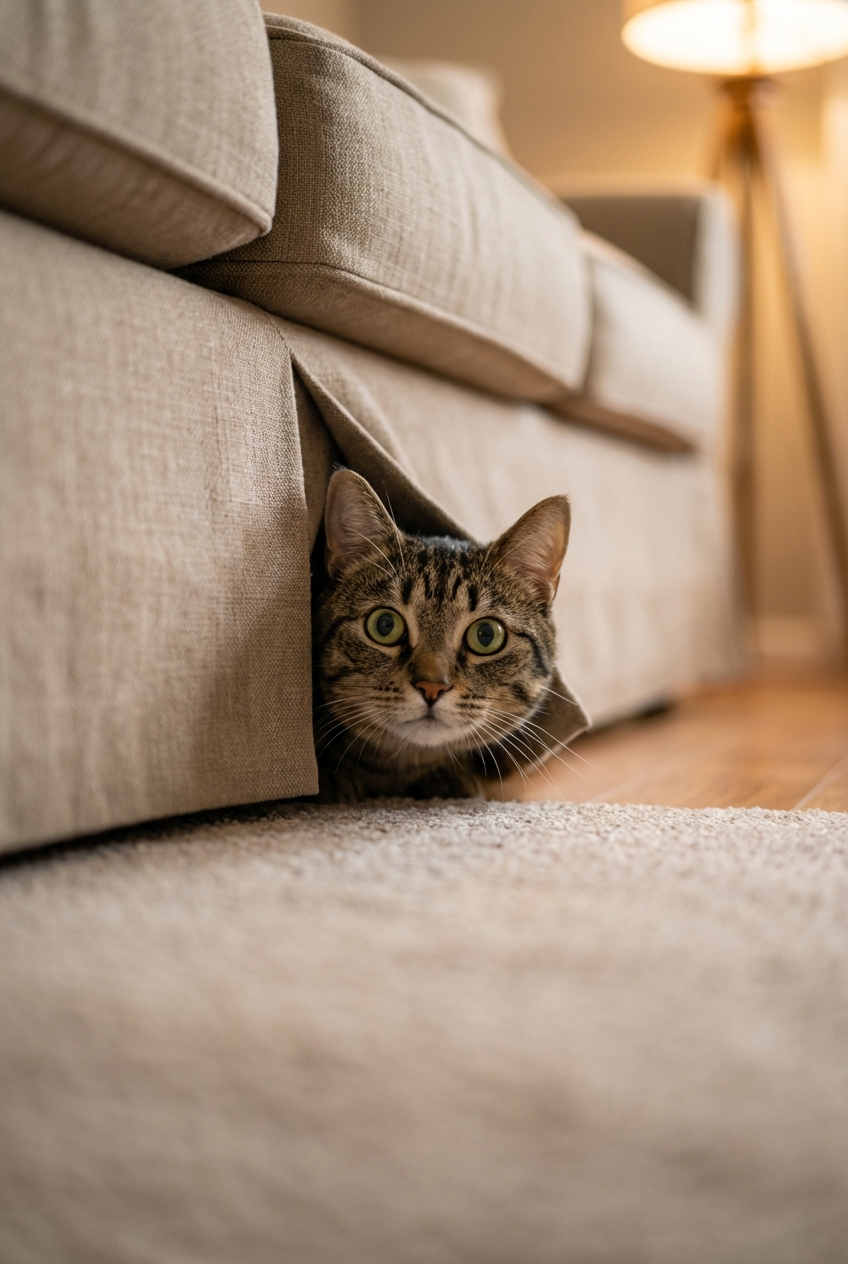
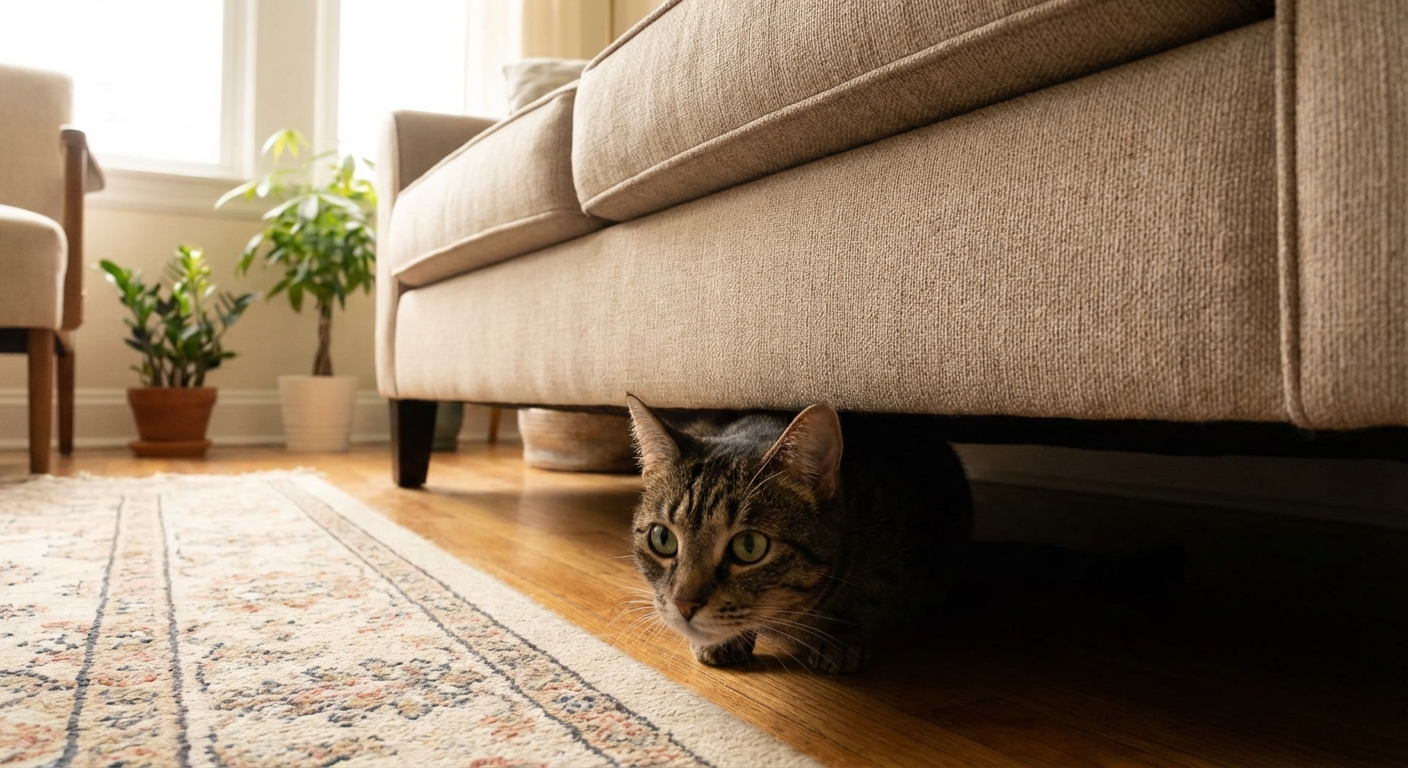
- Hiding more than usual or staying under beds and furniture
- Changes in appetite (eating less, eating too fast, or begging more)
- Litter box changes (urinating outside the box, constipation, diarrhea)
- Overgrooming, hair loss , or increased dandruff
- More vocalizing, especially at night
- Aggression toward people or other pets, or sudden swatting
- Restlessness, pacing, or hypervigilance
- Stress-related illnesses that flare up, like feline idiopathic cystitis (painful urinary signs without infection)
Important: If your cat is straining to urinate, crying in the litter box, or producing only small drops of urine, treat it as an emergency and seek veterinary care right away. Urinary blockages are most common in male cats, but any cat with severe urinary signs needs prompt care.
Common causes of stress in cats
Cats thrive on predictability. Stress often starts with something new or different in their territory, routine, or relationships.
Environmental and routine triggers
- Moving, remodeling, new furniture, or strong smells (paint, cleaners, perfumes)
- Schedule changes, travel, guests, or noisy events
- Construction noise, fireworks, thunderstorms
- Outdoor cats visible through windows
Social stress
- New pet or new baby
- Conflict between cats in the home (even subtle staring and blocking hallways)
- Separation from a preferred person
Health-related stress
Pain and illness are major stressors and can change behavior quickly. Dental disease, arthritis, thyroid disease, GI upset, and urinary discomfort are common examples. When behavior changes are sudden, a veterinary check is always a smart first step.
Rule out medical causes first
I love natural support, but I also do not want you to miss a medical problem that looks like stress. When changes are sudden or intense, start with a vet visit so you can rule out pain, infection, and hormone changes. A few common examples:
- Litter box changes: feline idiopathic cystitis, urinary crystals, arthritis (pain climbing into the box), constipation
- Night yowling: in older cats, hyperthyroidism, high blood pressure, pain, or cognitive dysfunction can be contributors
- Irritability or hiding: dental pain and arthritis are frequent culprits
Once your cat feels better physically, behavior plans and calming tools tend to work much better.
Natural ways to calm a stressed cat
When I help families support a stressed cat, I like to start with the basics: safety, territory, and routine. These strategies are gentle, natural, and supported by feline behavior guidance.
1) Create a predictable daily routine
Cats feel secure when the day follows a pattern. Try to keep these as consistent as possible:
- Meal times
- Play time
- Litter box cleaning
- Bedtime routines (especially for cats that yowl at night)
If your schedule is hectic, timed feeders can help create consistency without you having to be home at the exact same minute every day.
2) Set up a true safe zone
Every cat should have a quiet area where they can retreat and not be bothered. This is especially important in multi-pet homes or homes with kids.
- Choose a low-traffic room or corner
- Add a covered bed or a box with soft bedding
- Provide food, water, and a litter box nearby if needed
- Use a white noise machine or a fan if outside noise is an issue
Let your cat choose when to come out. Forced social time can backfire and increase stress.
3) Upgrade your cat furniture options
Confidence grows when cats can control their space. Think vertical and hidden.
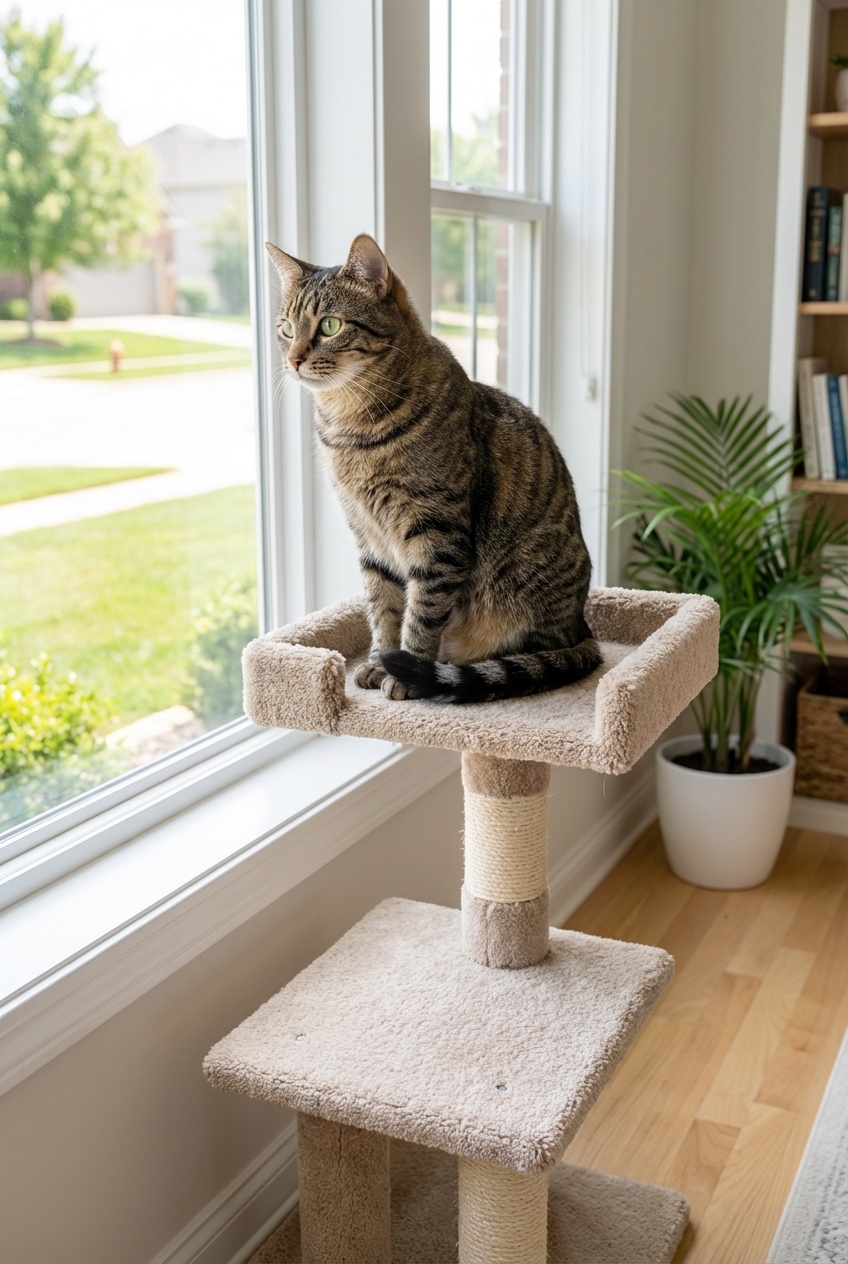
- Vertical space: cat trees, wall shelves, sturdy window perches
- Hiding space: tunnels, boxes, covered beds
- Scratch zones: at least one vertical and one horizontal scratcher
Scratching is not bad behavior. It is a normal stress reliever and territory marker. Place scratchers near where your cat already likes to scratch, then reward use with treats or a calm good job.
Play therapy
For many cats, stress is tied to unmet behavioral needs and not enough enrichment. Short, structured play sessions can lower tension and improve sleep. Aim for 5 to 10 minutes, once or twice daily, and end with a small meal or treat to mimic the natural hunt-eat-groom-sleep cycle.
Best toys for stress relief
- Wand toys (keep hands safe and encourage chasing)
- Small prey toys that skitter
- Food puzzles and treat balls for mental enrichment
Tips: Rotate toys every few days to keep things fresh. End play while your cat is still having fun, before overstimulation kicks in. If your cat gets wound up, keep sessions slower and shorter. Not every cat wants high-speed play, especially seniors or cats with arthritis.
Litter box setup
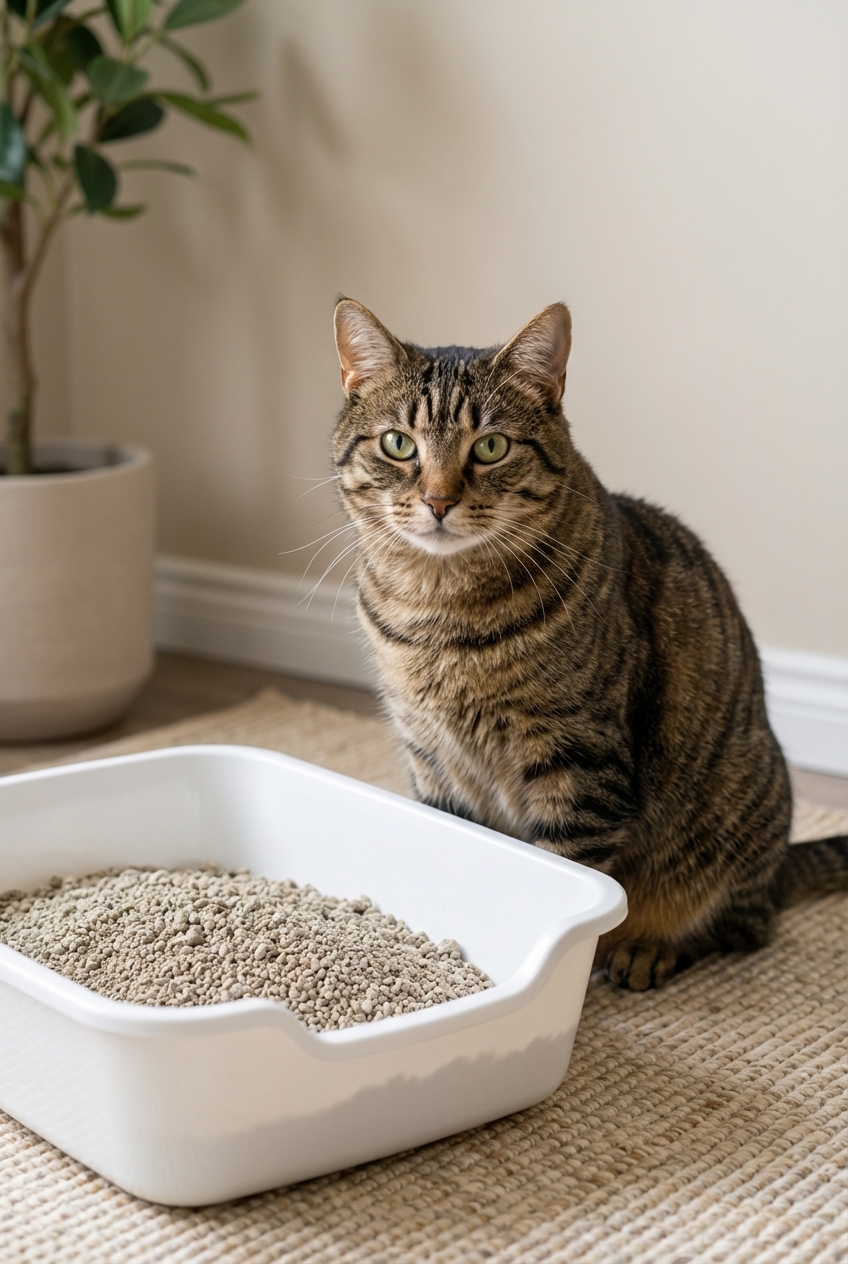
Litter box stress is real. When the box setup is not right, cats can feel vulnerable. That anxiety can show up as avoidance or accidents.
Quick litter box checklist
- Number of boxes: ideally one per cat, plus one extra
- Location: quiet, accessible, not trapped in a corner where another cat can guard it
- Cleanliness: scoop daily
- Deep cleaning: wash boxes weekly with mild, unscented soap and warm water, then rinse well. Avoid strong-smelling cleaners that can create litter aversion.
- Litter type: many cats prefer unscented, clumping, sand-like texture
- Box style: some cats prefer uncovered boxes for airflow and easy exits, while others like more privacy. If you use a covered box and see avoidance, try uncovered for a couple of weeks.
If your cat is suddenly going outside the box, please do not assume it is spite. Cats do not think like that. Think pain, fear, or aversion, then troubleshoot gently.
Pheromones and scents
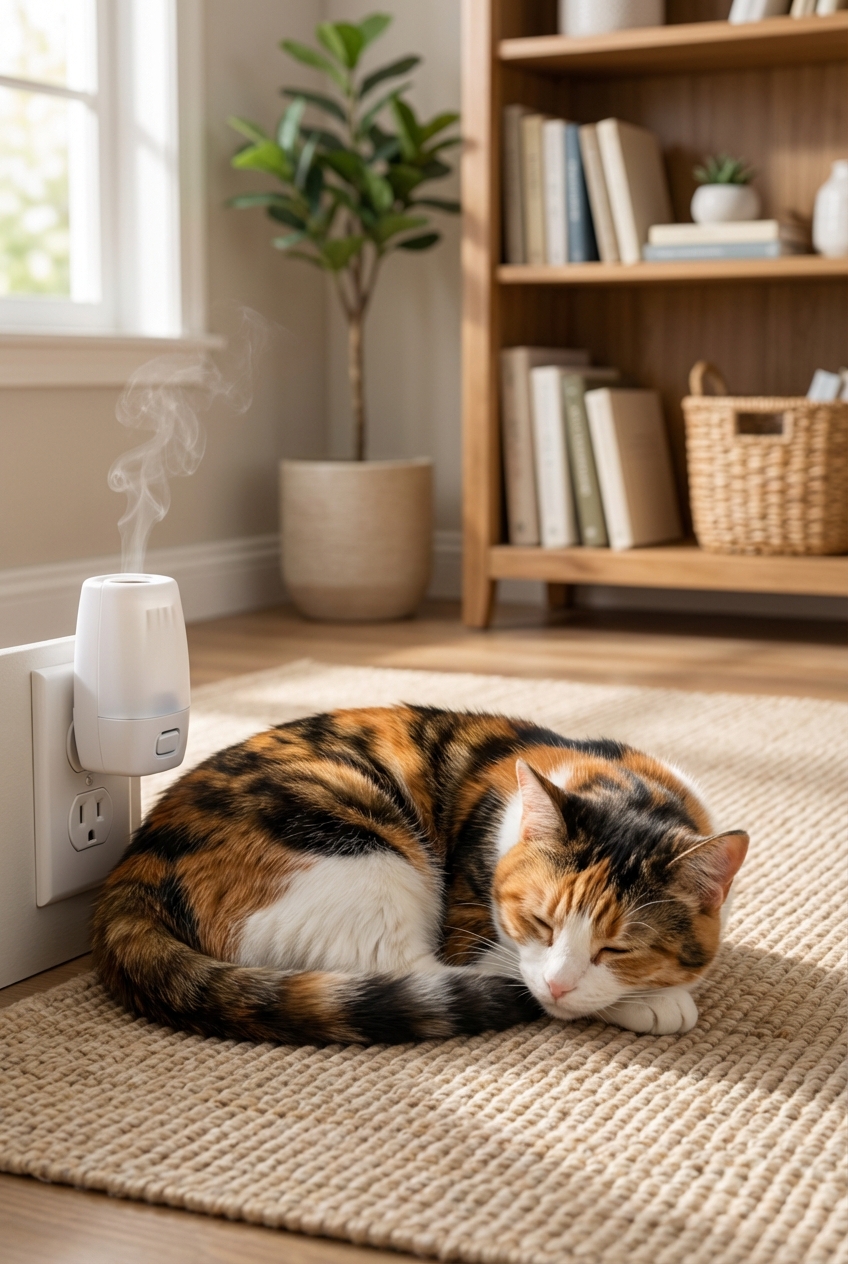
A low-risk option to consider is a feline facial pheromone diffuser or spray. These products mimic the calming scent cats naturally leave when they rub their cheeks on furniture. Evidence is mixed to moderate depending on the cat and the outcome being measured, but some families do see meaningful improvement.
- Plug-in diffusers can help for whole-room support
- Sprays can help for carriers, bedding, and specific areas
For a fair trial, give pheromones 2 to 4 weeks and combine them with environmental changes.
Safety note: Be very cautious with essential oils . Many essential oils can be irritating or toxic to cats, especially when diffused or applied to fur. If you want a scent-based calming approach, pheromone products are a much safer starting place.
Calming supplements
Some cats benefit from nutraceuticals, especially during predictable stress events like travel, visitors, or household changes. Effects are typically mild, and evidence varies by ingredient and product. Common ingredients used in feline calming products include:
- L-theanine (an amino acid studied for relaxation support)
- Alpha-casozepine (a milk-derived peptide used for calming)
- Chamomile (included in some pet-specific blends, with limited cat-specific research)
- Tryptophan (a serotonin precursor used in some formulas, with product-dependent evidence)
Choose products made specifically for cats and follow label directions carefully. Natural does not always mean safe, especially for cats with liver disease, kidney disease, or those on medication.
My best advice: Talk with your veterinarian before starting any supplement if your cat has health conditions, is on prescriptions, is pregnant, or is a senior. If a product promises instant results or sedation, skip it and ask your vet for safer options.
Calm your cat in the moment
If your cat is actively stressed, here are simple steps that often help right away:
- Lower stimulation: dim lights, reduce noise, pause TV or music
- Give distance: let your cat retreat without being followed
- Offer a hiding spot: a box on its side with a blanket can work in minutes
- Use a calm voice: slow, quiet, predictable
- Try a lickable treat: licking can be soothing for some cats
Avoid punishment, raised voices, or forced handling. Those responses teach your cat that you are part of the scary experience, even if your intention is to correct the behavior.
What not to do
- Do not punish accidents, hiding, or growling
- Do not force introductions between cats or between a cat and a new dog
- Do not trap your cat in a carrier without conditioning and breaks. Practice with the carrier out, treats inside, and short calm sessions.
- Do not use essential oil diffusers as a calming strategy for cats
Multi-cat homes
Many stressed cats are not anxious because of the house, they are anxious because of the relationships inside it. The most common pattern is subtle resource guarding.
Easy changes that help
- Separate key resources: food bowls, water, litter boxes, resting spots
- Add more vertical space so cats can pass each other without conflict
- Place multiple scratching stations
- Use pheromone support in main living areas
If you are adding a new cat
Go slower than you think you need to. Start with separate rooms, then do scent swapping (blankets, bedding) and brief site swaps before any face-to-face time. If there has been a real fight, a reintroduction plan is often kinder and more effective than hoping they will forget.
If there is active fighting, a structured behavior plan and veterinary guidance can make a huge difference. Early help is always easier than trying to fix months of built-up tension.
When to see a veterinarian
Please schedule a veterinary visit if:
- Behavior changes are sudden or severe
- Your cat is not eating for 24 hours (or even less for kittens)
- There is vomiting, diarrhea, weight loss, or drinking more than usual
- There are any urinary signs: frequent trips to the box, straining, blood-tinged urine
- Your cat is overgrooming to the point of skin irritation or wounds
Sometimes the best calming plan starts with pain control, dental care, or treatment for a medical condition. Once your cat feels better, behavior often improves quickly.
Stress is not just an emotion for cats. It can affect appetite, digestion, skin health, and urinary function. When we reduce stress, we support the whole cat.
A simple 7-day plan
If you want a starting point, here is a gentle plan you can try this week:
- Day 1: Pick a quiet safe zone and set it up with a cozy hide
- Day 2: Add one new vertical perch or window seat
- Day 3: Start one 5 to 10 minute play session, followed by a small meal
- Day 4: Review litter box setup and improve one thing (location, box style, or litter)
- Day 5: Add a pheromone diffuser in the main area and plan to reassess in 2 to 4 weeks
- Day 6: Introduce a food puzzle or treat ball
- Day 7: Observe changes and write down what helped, then repeat what worked
Small changes done consistently usually beat big changes done once. Your cat is watching for stability, and you can absolutely provide that.