Puppy biting is usually normal. Learn why it happens and how to reduce it fast with redirects, reverse time-outs, calm breaks, naps, enrichment, and teething...
Article
•
Designer Mixes
How to Calm a Puppy Down From Biting

Shari Shidate
Designer Mixes contributor
Puppy biting is one of the most common reasons new pet parents feel overwhelmed. The good news is this behavior is normal, and it is very teachable. Puppies explore the world with their mouths. They are learning bite pressure, and many are coping with teething discomfort and big emotions in a small body.
As a veterinary assistant, I want you to know two things can be true at once: puppy biting is developmentally expected, and you do not have to “just live with it.” With calm, consistent steps, most families can reduce biting over days to weeks and teach your puppy what to do instead. (Teething and growth spurts can cause temporary regressions, so do not panic if you have an off day.)
Quick note: This article is educational and not a substitute for veterinary care or individualized behavior advice. If you are worried about safety or your puppy’s behavior feels intense, please reach out to your veterinarian or a qualified, force-free trainer.
Why puppies bite so much
When we understand the “why,” we can choose the right solution instead of reacting in the moment.
- Teething and mouth exploration: Puppies have sore gums and a strong urge to chew. Teething often ramps up around 12 to 16 weeks and can peak through roughly 6 to 7 months, but every puppy is different.
- Overtired or overstimulated: Many puppy biting episodes happen right before a nap is needed. A classic example is the evening “witching hour” when they get zoomy and mouthy.
- Play skills in progress: Puppies learn bite inhibition through feedback. Your job is to provide that feedback in a safe, consistent way.
- Attention seeking: If biting makes you squeal, chase, or wave hands around, it can accidentally become a “game.”
- Breed and individual temperament: Mouthier breeds and higher-drive puppies often need more structured outlets.
What “normal” often looks like: loose, wiggly body language, playful bouncing, and biting that happens during play or excitement.
What can be more concerning: stiff posture, hard staring, low growling, snapping around food or a prized item, or biting that happens when you are not interacting (for example, you simply walk by). If you see those patterns, skip DIY troubleshooting and get professional help early.
Calm biting in the moment
When teeth touch skin, you want a plan you can repeat 100 times without escalating the excitement. Here is my go-to approach.
Step 1: Freeze and go still
Movement is thrilling to puppies. The moment biting starts, stop moving your hands, stop talking, and avoid eye contact for 2 to 3 seconds. This removes the “reward” of big reactions.
Common scenario: If your puppy grabs at your ankles while you walk, stop your feet, cross your arms, and become boring. Then redirect.
Step 2: Redirect to a chew or tug
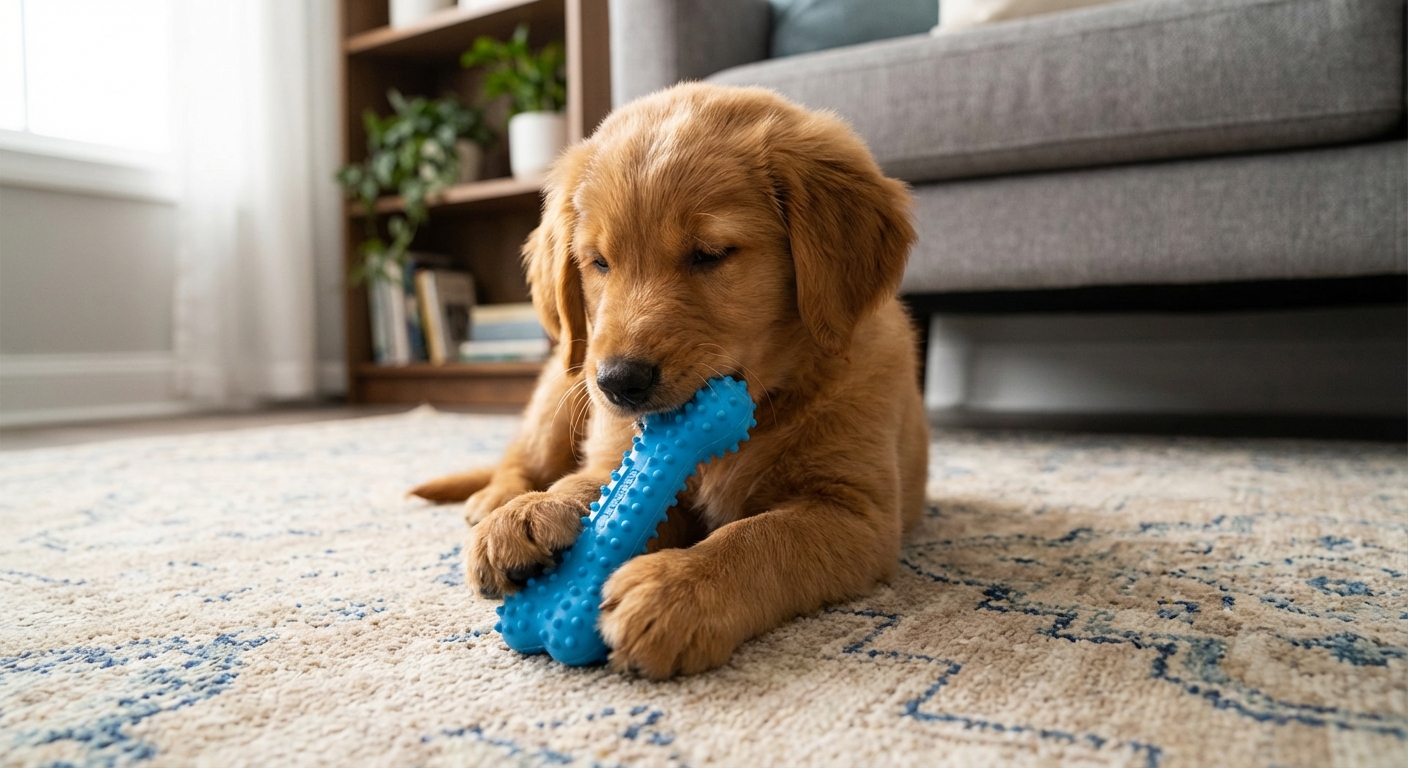
Calmly offer a toy to bite instead. Keep a toy in every room, and consider carrying one in your pocket during high-bite times.
- Place the toy right at their mouth so it is an easy switch.
- Praise softly when they take the toy: “Good toy.”
Step 3: If they return to skin, pause play
If your puppy ignores the toy and keeps biting, do a short, boring time-out from attention. This is not about punishment. It is simply removing your attention for a moment so biting does not pay off.
- Stand up and step behind a baby gate, or leave the room for 10 to 20 seconds.
- Return quietly and offer a toy again.
This teaches a simple rule: teeth on skin makes fun stop, teeth on toys makes fun continue.
Tip for success: Make sure your puppy is safe during the pause and not rehearsing biting a child, another pet, or your pant leg. A playpen, crate, or gated puppy-proof area helps.
Prevent biting
Prevention is the secret weapon. A puppy who is well-rested, appropriately exercised, and given safe chewing outlets bites far less.
1) Use a nap routine
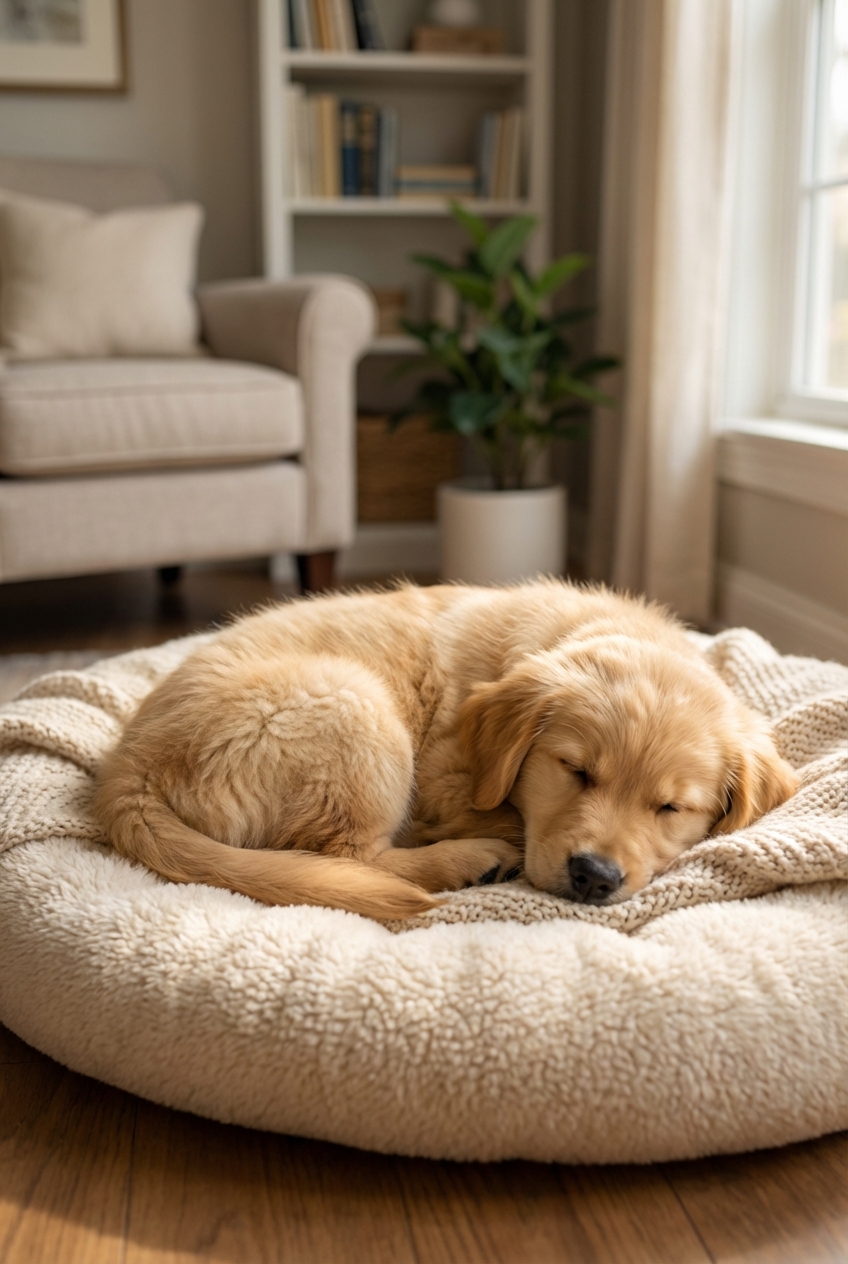
Many puppies need a lot of sleep, often around 16 to 20 hours per day. If your puppy gets nippy, wild, and unable to settle, it is often sleepiness, not stubbornness.
- Try a rhythm like 1 hour up, 2 hours down (adjust to your puppy).
- Use a crate or playpen to help them truly rest.
2) Feed with enrichment
Instead of delivering every meal in a bowl, use food for calm activities that satisfy the urge to chew and lick.
- Stuffed KONG-style rubber toy
- Lick mat with a thin smear of dog-safe food
- Snuffle mat for nose work
Licking and sniffing are often calming behaviors for dogs, and they are a healthy way to burn off mental energy.
3) Choose teething-safe chews
Choose chews based on your puppy’s size and chewing intensity. In general, aim for “firm but not rock-hard.” Extremely hard chews can risk tooth fractures, even in young dogs.
- Rule of thumb: Avoid chews you cannot indent with a fingernail or that feel like a rock.
- Higher risk for teeth: antlers, real bones, very hard nylon-style bones (especially for power chewers).
- Chilled options: a wet washcloth twisted and frozen, puppy-safe teething rings
- Rubber chews: puppy-specific rubber toys
- Veterinarian-approved dental chews: sized correctly for your puppy
Safety note: Always supervise chews and remove pieces that could be swallowed.
4) Add short training (2 to 5 minutes)
Training is mental exercise. A few minutes goes a long way for a puppy brain.
- Teach sit, touch (nose to hand), and down
- Reward calm behavior with tiny treats
- End before your puppy gets frustrated
5) Exercise, but do not overdo it
Appropriate exercise helps, but more is not always better for a growing body. Skip repetitive high-impact activities like long runs, lots of jumping, or hard stair workouts. Aim for age-appropriate play, short sniff walks, and training games.
6) Use simple management tools
- Baby gates and playpens: Reduce opportunities to rehearse biting.
- House line (indoor leash): A lightweight leash can help you guide your puppy away from ankles without grabbing their collar.
- Wear-and-carry plan: Long sleeves and a pocket toy can save your skin during the bitey weeks.
Teach bite inhibition
Bite inhibition means your puppy learns to control jaw pressure. This is a safety skill, and it is one reason puppies bite during development.
A simple method
- If the bite is too hard, calmly say “Ouch” or “Too bad” in a normal voice.
- Immediately go still for a moment.
- Redirect to a toy.
- If they keep biting hard, use the same brief, boring pause from attention for 10 to 20 seconds.
You are not trying to scare your puppy. You are giving consistent feedback and showing the correct outlet.
Mistakes to avoid
- Wrestling with hands: This teaches that hands are toys.
- High-pitched squealing: Some puppies get more excited and bite more.
- Aversives and intimidation: Scruff shaking, alpha rolls, pinning, grabbing the muzzle, or tapping the nose can increase fear and stress. They can also worsen biting over time.
- Bitter sprays as a main strategy: These are mixed results. Some puppies ignore them, and some learn to tolerate them. Use management and training first.
- Too much freedom: If your puppy is biting constantly, reduce access to the whole house and use gates or a playpen.
- Skipping naps: An overtired puppy is a bitey puppy.
When kids are involved
Puppies and children can be a wonderful match, but this stage requires management for everyone’s safety.
- Teach kids to be “tree still” if the puppy gets mouthy: arms crossed, stand still, look away.
- Use baby gates to separate when play gets too intense.
- Choose structured games like “toss the treat” instead of running and squealing.
- Adult supervision is non-negotiable during the biting phase.
Red flags
Most puppy biting is normal. Still, I recommend checking in with your veterinarian or a qualified, force-free trainer if you notice:
- Sudden increase in biting along with signs of pain (yelping, sensitivity, limping)
- Guarding behavior around food or toys with stiff posture, growling, or snapping
- Bites that break skin repeatedly despite consistent training and management
- Extreme hyperactivity that does not improve with rest and enrichment
- Stiff body language, hard staring, or biting that feels “serious” rather than playful
Early support makes a huge difference, and it is not a sign you failed. It is a sign you are paying attention.
A simple daily plan
If you want a clear starting point, try this for a week:
- Morning: potty, short sniff walk, breakfast in a puzzle toy, nap
- Midday: 3-minute training session, chew time, nap
- Afternoon: gentle play with toys only, practice “touch,” nap
- Evening: calmer enrichment (lick mat), brief potty breaks, early bedtime
Most families see improvement when they combine structure + naps + redirection + consistent consequences for biting.
You are not raising an “aggressive” puppy. You are raising a puppy who is learning. Stay calm, stay consistent, and celebrate the small wins.