Step-by-step home care for mild dog diarrhea and vomiting: short food break, small sips of water, bland diet, pumpkin, probiotics, dehydration checks, and ur...
Article
•
Designer Mixes
How to Calm a Dog’s Upset Stomach

Shari Shidate
Designer Mixes contributor
As a veterinary assistant, I can tell you this is one of the most common worries I hear from dog parents: your pup looks uncomfortable and you just want to help fast. Maybe they are drooling, licking their lips, eating grass, or having loose stool. The good news is that many mild stomach upsets settle with simple, safe at-home steps.
Quick note: I cannot diagnose your dog online, and home care is only for mild, short-lived symptoms in an otherwise stable dog. If anything feels “off,” trust your gut and call your veterinary team.
Below, I will walk you through what to do, what not to do, and when it is time to call your vet.
First: check for red flags
Before trying home care, do a quick safety scan. If any of these are happening, skip the tips and contact your veterinarian or an emergency clinic right away.
- Repeated vomiting or trying to vomit with little coming up
- Blood in vomit or stool, or stool that is black and tar-like
- Bloated, hard abdomen, restlessness, or unproductive retching (this can be an emergency)
- Severe lethargy, collapse, pale gums, or trouble breathing
- Signs of dehydration (sticky gums, sunken eyes, weakness)
- Possible toxin exposure or chewing/swallowing foreign objects (socks, toys, cooked bones, string)
- Puppies, seniors, pregnant dogs, or dogs with chronic conditions (like kidney disease, diabetes, pancreatitis)
- Vomiting or diarrhea lasting longer than 24 hours, even if mild
If you are unsure, it is always okay to call your vet and ask. A two-minute phone call can prevent a long night.
What an upset stomach can look like
Dogs rarely say, “My tummy hurts,” but their bodies tell us plenty. Common signs include:
- Nausea signs: drooling, lip licking, swallowing repeatedly
- Eating grass, dirt, or odd items
- Skipping meals or eating more slowly than normal
- Gurgling sounds, burping, or passing gas
- Loose stool or an urgent need to go out
- Vomiting or dry heaving
Step-by-step: how to calm a mild upset stomach
1) Food: pause or go small
For some adult dogs with mild vomiting or nausea, giving the stomach a short break can help. Some veterinarians may recommend a brief fast, while others prefer starting with very small bland meals sooner. The best plan depends on your dog’s age, size, and health.
- Adult dogs: if your dog is bright, alert, and only mildly affected, ask your vet whether to pause food briefly or offer small bland meals right away.
- Puppies and toy breeds: do not fast without veterinary guidance. They can get low blood sugar more easily.
2) Prioritize hydration
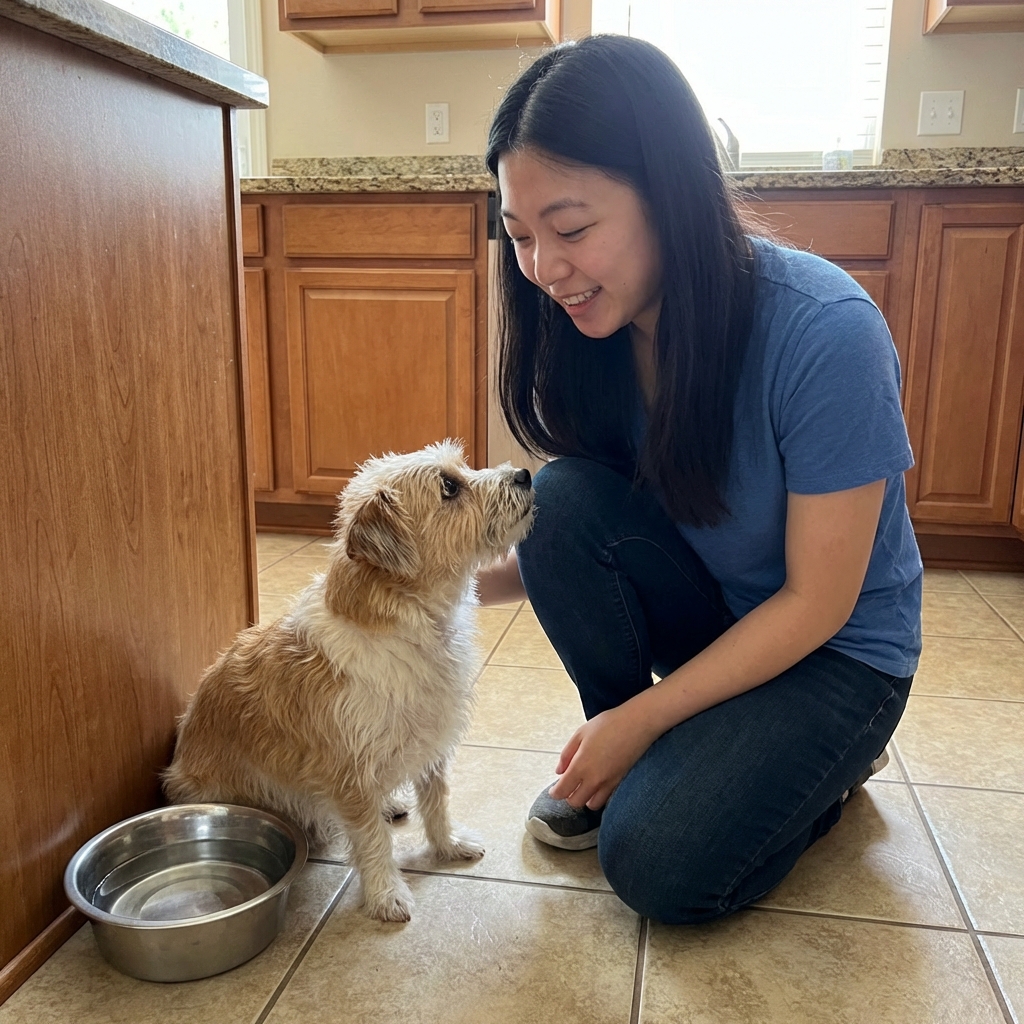
Hydration is often the difference between “we can monitor at home” and “we need the vet.” Offer small, frequent sips of water instead of a huge bowl all at once, especially if vomiting has happened.
- Small dogs: start with about 1 to 2 tablespoons every 15 to 30 minutes.
- Medium to large dogs: start with a few tablespoons up to about 1/4 cup every 15 to 30 minutes.
- If your dog gulps water and vomits again, reduce the amount and slow it down.
- You can ask your vet if an unflavored electrolyte solution is appropriate for your dog.
3) Try a bland, gentle meal
Once vomiting has stopped and your dog seems interested in food, start with a simple bland diet in small portions. The goal is easy-to-digest protein plus a gentle carbohydrate.
- Common options: boiled skinless chicken breast with white rice
- Other vet-approved options: lean ground turkey, or low-fat cottage cheese in some cases
Serve small meals throughout the day rather than one large portion. If your dog keeps it down and stools improve, keep the bland diet for about 2 to 3 days.
Simple transition example: Day 1 to 2: bland diet only. Day 3: mix 75% bland with 25% regular food. Day 4: 50/50. Day 5: 25% bland with 75% regular food. If symptoms return, slow down and call your vet.
4) Support the gut (carefully)
The intestinal tract has a huge relationship with immunity, mood, and digestion. For mild diarrhea, a veterinarian-recommended probiotic can be helpful.
- Use products made for dogs when possible.
- Avoid random “gut” supplements that do not list strains or amounts.
- If your dog is on antibiotics or has chronic GI disease, ask your vet which probiotic fits best.
5) Keep things calm and boring
Stress can worsen nausea and diarrhea. Provide a quiet space, short leash walks for potty breaks, and avoid intense exercise for 24 hours while the stomach settles.
Also keep meals and treats simple. Sudden diet changes, new chews, and rich table scraps are some of the most common triggers I see, and jumping back to the regular diet too quickly can cause a relapse.
Good to know
Dogs can get stress tummy too
Big changes like travel, visitors, storms, boarding, or even a schedule change can trigger loose stool. A predictable routine and calming environment can help more than you might expect.
Digestion can move fast
In some dogs, food can move through the digestive tract in as little as 8 to 24 hours, although it varies a lot by diet, size, and health. That is why a small diet slip like table scraps or a new treat can show up quickly as soft stool.
Dehydration can sneak up
Vomiting and diarrhea pull water and electrolytes out of the body. Even if your dog still wants to drink, they can fall behind. Check gum moisture a few times a day (they should feel slick, not tacky), and ask your vet about the “skin tent” test if you are not sure how to do it correctly.
What not to do
- Do not give human medications like Pepto-Bismol, aspirin, ibuprofen, or antidiarrheals unless your veterinarian specifically tells you to. Some can be toxic, interact with other meds, or mask symptoms. Bismuth products can also darken stool, which can make it harder to spot true black, tar-like stool from bleeding.
- Do not switch foods repeatedly in one day. Too many changes can worsen GI upset.
- Do not feed rich foods like bacon, greasy meat, cheese-heavy snacks, or buttery leftovers. These can trigger pancreatitis in some dogs.
- Do not force food into a nauseated dog. Focus on hydration and reassess.
When to see the vet (even if symptoms seem mild)
Please call your vet if you notice any of the following:
- Vomiting more than once or twice in a day
- Diarrhea that is very watery, frequent, or continues past 24 hours
- Your dog will not drink, or cannot keep water down
- Abdominal pain, hunched posture, shaking, or whining
- Weight loss, repeated episodes of GI upset, or changes that keep coming back
Ongoing stomach problems can point to parasites, food intolerance, pancreatitis, inflammatory bowel disease, Addison’s disease, or other conditions that really do need diagnostics and a tailored plan. If diarrhea persists, your vet may recommend a fecal test to check for parasites, even in dogs on prevention.
Quick home checklist
- Keep fresh water available, offer small sips if needed
- Rest and a quiet space
- Small bland meals once vomiting stops and appetite returns
- Vet-approved probiotic if appropriate
- Monitor stool, energy level, gum moisture, and appetite
- Call your vet if anything worsens or lasts longer than a day
A gentle reminder from Frisco
If your dog has an upset stomach, you are not failing as a dog parent. Dogs explore with their mouths, and their digestive systems can be sensitive. Start simple, stay consistent, and do not hesitate to bring your veterinary team into the loop. You know your dog best, and you deserve support when something feels off.