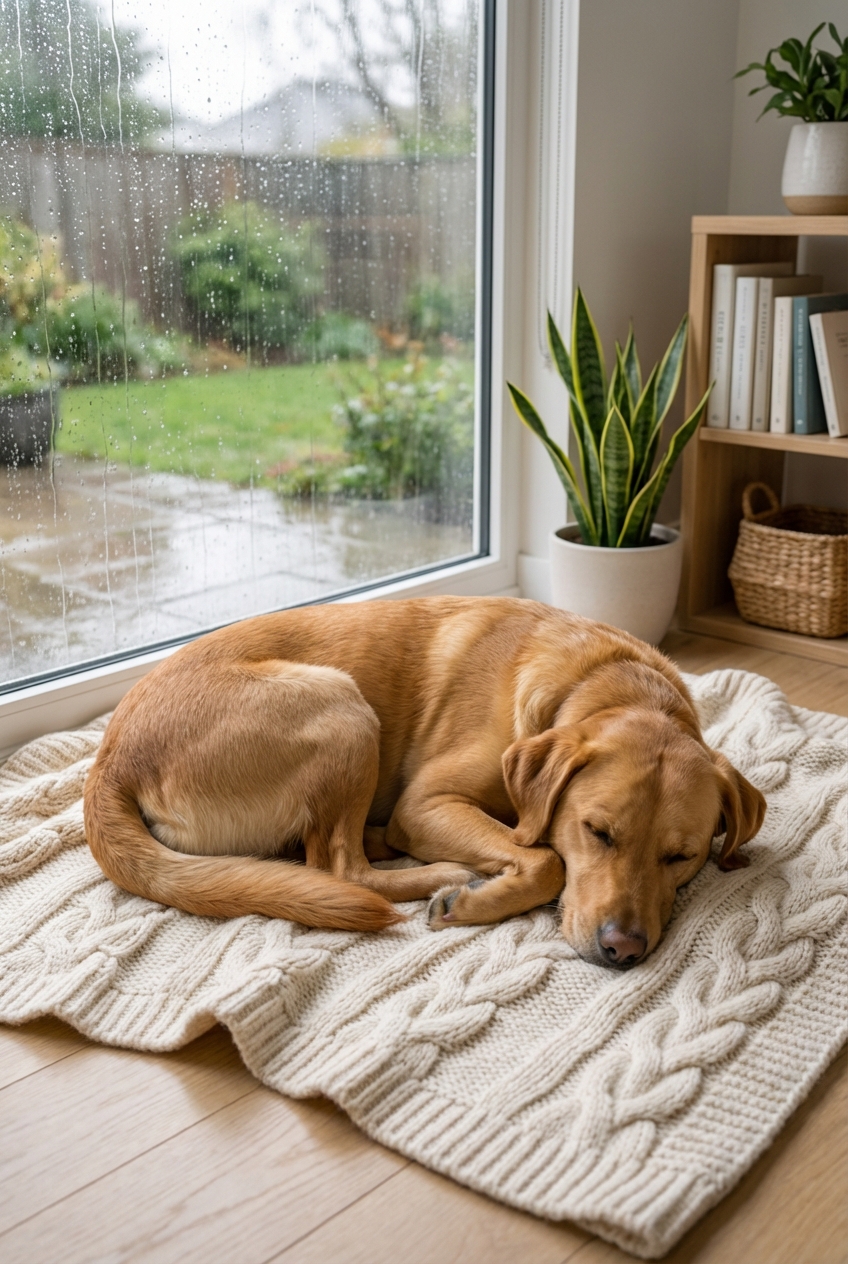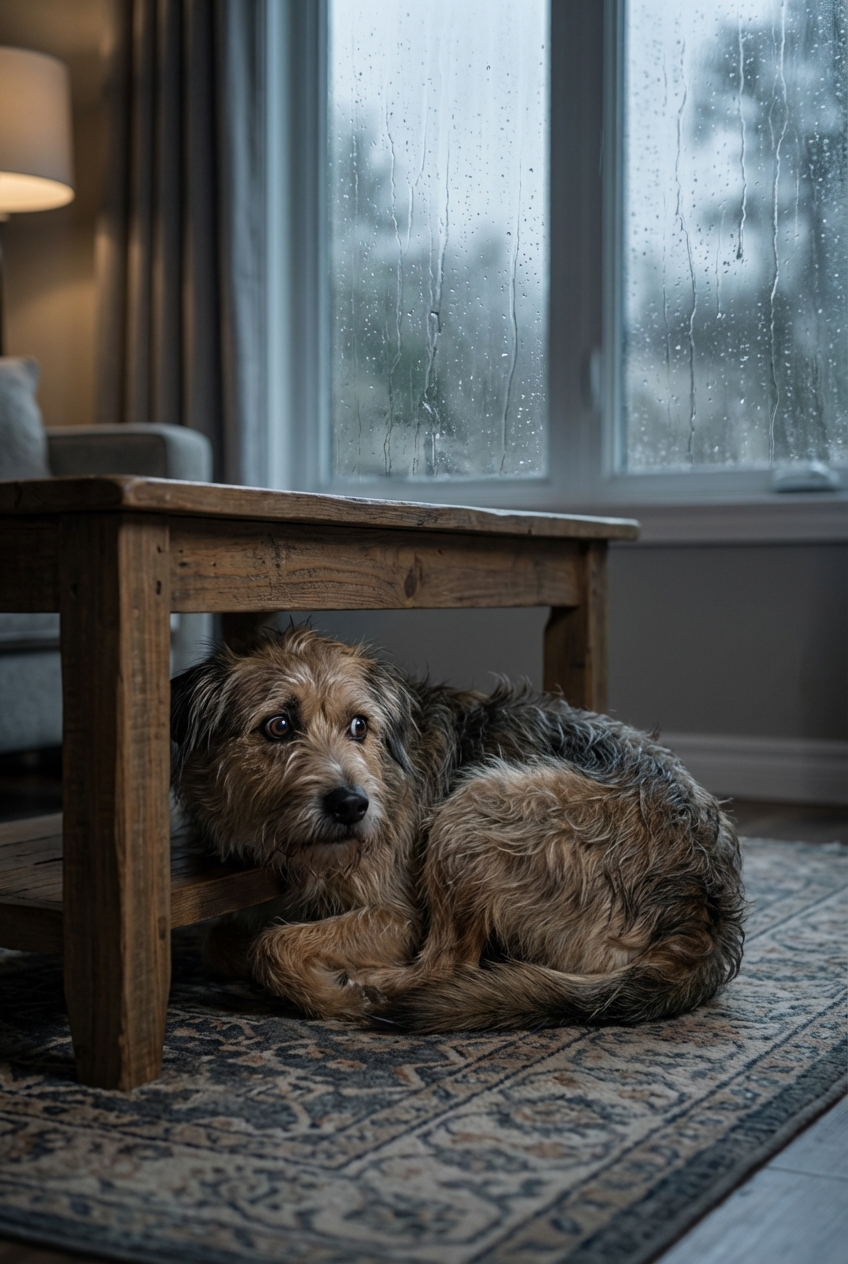
Thunderstorms can trigger shaking, hiding, and escape attempts. Learn vet-backed ways to calm your dog: storm station setup, steady sound, chews, training, w...
Article
•
Designer Mixes
How to Calm a Dog During a Thunderstorm

Shari Shidate
Designer Mixes contributor
Thunderstorms can turn a normally confident dog into a trembling, pacing, drooling bundle of stress. If that is your pup, you are not alone. Noise sensitivity is common, and for some dogs it can grow into a full thunder phobia over time.
As a veterinary assistant here in Frisco, Texas, I have seen the best results when families use a calm, step-by-step plan. The goal is not to force bravery. The goal is to lower fear, improve your dog’s sense of safety, and prevent panic from getting rehearsed again and again.
Why thunderstorms scare dogs
Thunderstorm fear is not always just about the noise. Dogs can react to several storm-related triggers at once, including:
- Sudden loud sound from thunder, hail, or wind.
- Barometric pressure changes that occur before and during storms.
- Flashes of light from lightning.
- Vibration that travels through floors and walls.
- Static electricity that may build up in a dog’s coat during storms (some dogs seem sensitive to this).
Because storms are unpredictable, many dogs also feel trapped. That sense of having no escape can increase panic behaviors like scratching doors, chewing through crates, or trying to wedge behind a toilet.
Signs your dog is anxious (and when it is serious)
Some dogs show subtle stress long before you hear thunder. Watch for:
- Yawning, lip licking, or sudden shedding
- Pacing, panting, trembling
- Clinginess, hiding, trying to get in your lap
- Barking, whining, or “alerting” at windows
- Accidents in the house
- Destructive behavior or escape attempts
Urgent safety note: If your dog is injuring themselves, breaking teeth, bleeding from frantic scratching, or jumping through windows, this is beyond basic calming tips. Please call your veterinarian. These dogs often need prescription help and a behavior plan.
Do this first: set up a safe storm plan
1) Create a comfort zone before the storm hits
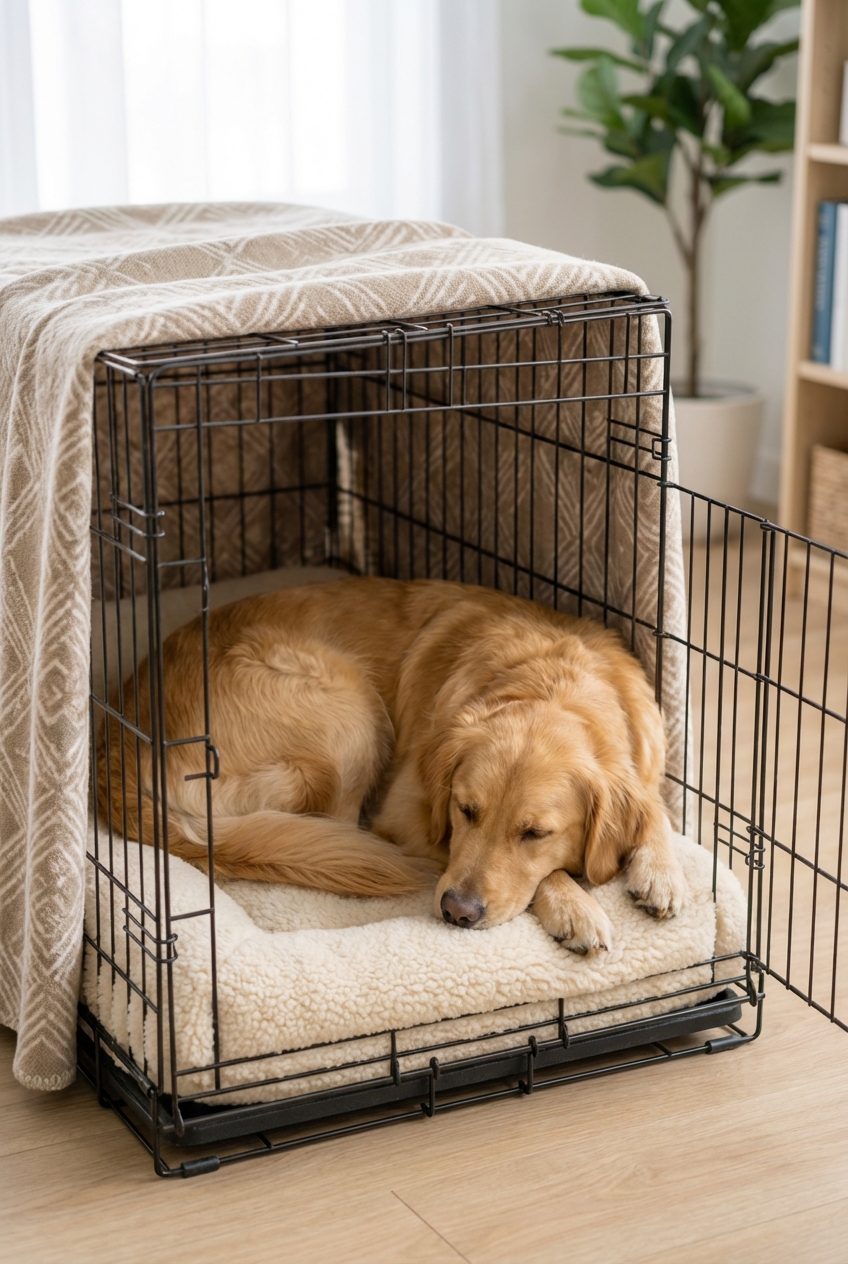
Pick one “storm spot” and make it inviting on normal days so it is not only associated with scary weather. Many dogs prefer:
- An interior closet or bathroom
- A covered crate (only if your dog is crate-comfortable)
- A corner of a quiet bedroom away from windows
Add thick bedding, a favorite chew, and a water bowl. If your dog likes pressure, add a snug blanket they can burrow under.
2) Reduce sound and flashes
- Close curtains or blinds to limit lightning flashes.
- Turn on a fan, white noise machine, or air purifier.
- Play steady background audio at a moderate volume. Many dogs do well with classical music or simple “brown noise.”
Place your dog’s comfort zone where sound is naturally muffled, like a bathroom or interior hallway.
3) Give your dog something to do with their mouth
Chewing and licking can help dogs self-soothe. Try:
- A stuffed frozen food toy
- A lick mat with a thin smear of dog-safe food
- A long-lasting chew that is appropriate for your dog’s chewing style
If your dog is too anxious to eat, that is common. Use the plan below, and speak to your veterinarian about medication support for bigger storms.
How to calm your dog during the storm (in the moment)
Stay calm and matter-of-fact
Your dog takes cues from you, but you do not need to act like nothing is happening. I recommend calm, normal behavior and a steady voice. You can offer comfort if your dog seeks you out.
Comforting is okay (yes, really)
A very common myth is that petting “rewards fear.” Fear is an emotion, not a behavior your dog is choosing for treats. Gentle reassurance can help, as long as you are not amping things up with frantic energy. If your dog wants to lean into you, let them.
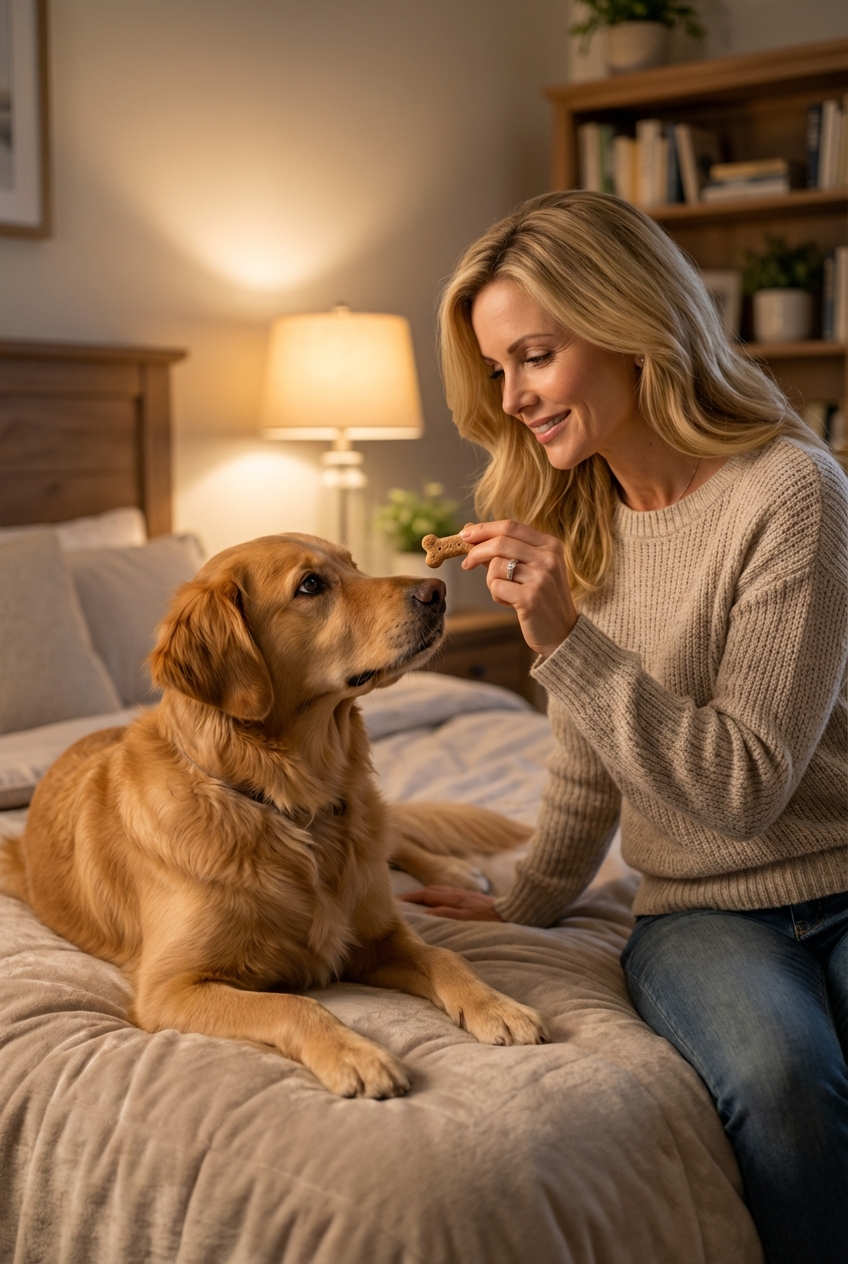
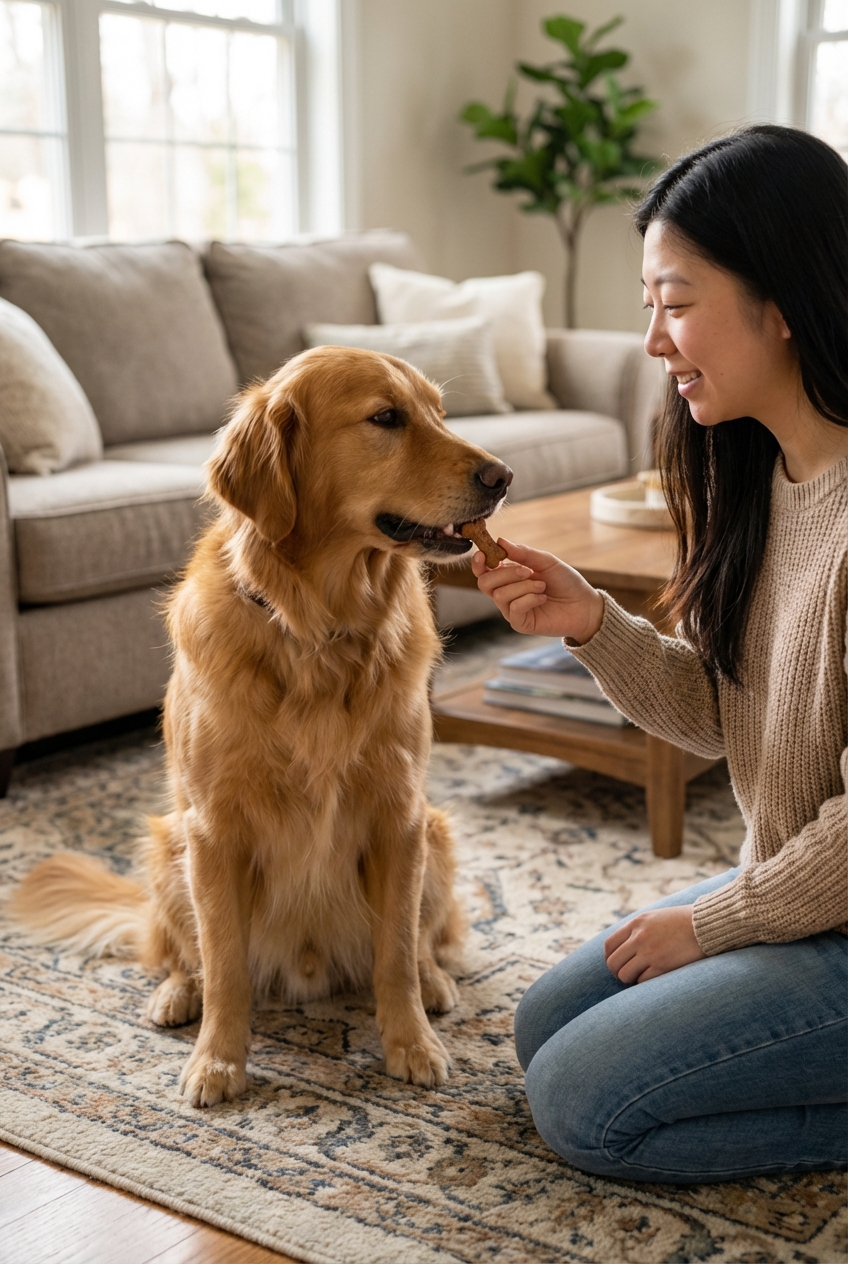
Use high-value rewards for brave moments
If your dog is able to take treats, reward calm choices such as:
- Going to their comfort zone
- Settling on a bed
- Checking in with you and then relaxing
Keep treats small and easy to swallow. You are looking for frequent little “wins.”
Try pressure therapy if your dog likes it
Some dogs relax with gentle, even pressure. Options include:
- A well-fitted anxiety wrap or thunder shirt
- A snug blanket your dog can crawl under
- Safe leaning against you or between your legs if your dog chooses it
Not every dog enjoys pressure. If they struggle or seem more distressed, stop and switch strategies.
Never punish fear behavior
Scolding for barking, trembling, or hiding usually increases stress and can make future storms worse. Focus on safety and calming the nervous system.
Calming tools that can help (what is evidence-based)
Pheromones
Dog-appeasing pheromone products (often sold as diffusers or sprays) may help mild to moderate anxiety for some dogs. They work best when started before storm season and used consistently in the area your dog rests.
Supplements
Some over-the-counter calming supplements include ingredients like L-theanine, alpha-casozepine, or colostrum-based calming blends. Response varies by dog. Talk with your veterinarian before combining supplements, especially if your dog takes other medications.
Prescription medication (sometimes the kindest choice)
For dogs with true thunder phobia, medication can be life-changing. There are fast-acting options used specifically for storms, and longer-term options for dogs with broader anxiety. Your veterinarian can help you choose based on your dog’s history and overall health.
If your dog is panicking, hurting themselves, or cannot recover for hours after storms, please do not wait. You are not failing them by using medication. You are protecting their brain from practicing terror.
Training that reduces fear over time
Desensitization and counterconditioning
This is the gold standard approach: you pair storm sounds with something wonderful at a volume so low your dog stays under threshold. Over many sessions, the sound predicts good things rather than danger.
- Use a high-quality thunder recording.
- Start at a very low volume for a short session (30 to 90 seconds).
- Feed tiny high-value treats the whole time.
- Stop while your dog is still relaxed.
- Gradually increase volume over days or weeks.
If your dog shows stress (panting, pacing, refusing food), the volume is too high. Go back a step.
Teach a “go to your safe spot” cue
Practice when it is calm outside. Toss treats into the comfort zone, say a cue like “bed” or “safe,” and reward your dog for choosing to settle there. This gives you a simple, positive routine when storms start building.
What not to do
- Do not force your dog outside to “prove it is safe.” This often backfires.
- Do not trap a panicking dog in a crate if they are trying to break out. Use a safer, more open comfort area and talk to your vet.
- Do not ignore escalating fear year after year. Thunder phobia tends to worsen without help.
- Do not use essential oils without veterinary guidance. Some oils can irritate airways or be toxic if ingested.
Quick checklist for the next storm
If storms are in the forecast, here is a simple plan you can follow:
- Take your dog out to potty early.
- Close blinds and set up the comfort zone.
- Start white noise or calming music.
- Offer a chew or frozen food toy.
- Use an anxiety wrap if your dog likes it.
- If prescribed, give storm medication early enough to work.
- Reward calm behavior and stay steady.
And after the storm passes, do something normal and positive. A short sniff walk (if it is safe) can help reset the nervous system.
When to call your veterinarian or a behavior professional
Please reach out for help if you notice any of the following:
- Panic that lasts longer than the storm
- Self-injury or destructive escape attempts
- Refusal to eat for extended periods during storms
- Anxiety that is spreading to other noises (fireworks, trucks, beeps)
A veterinarian can rule out pain or medical issues that worsen anxiety, and a qualified trainer or veterinary behaviorist can tailor a training plan. With the right support, many dogs improve significantly.
You do not have to “wait it out.” Thunder fear is treatable, and small changes now can prevent bigger fear later.