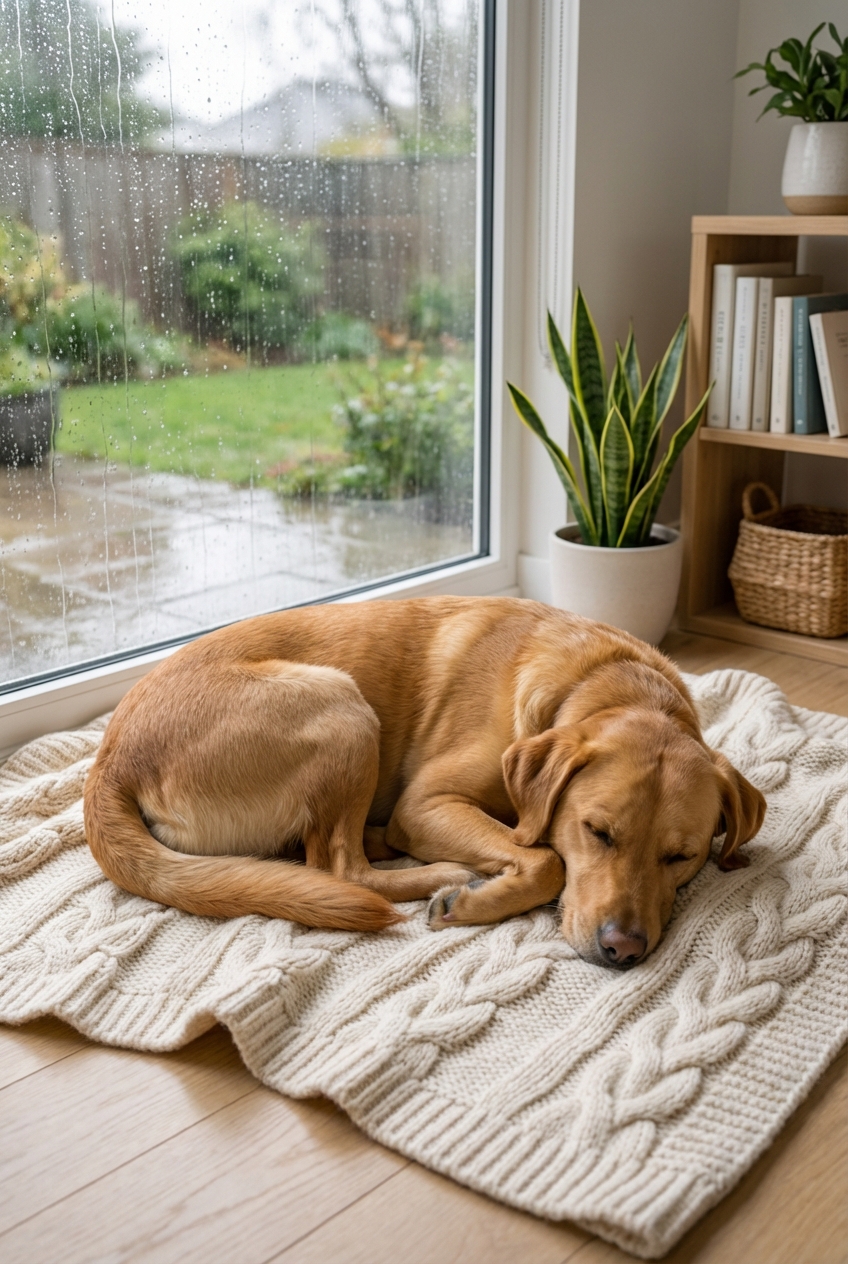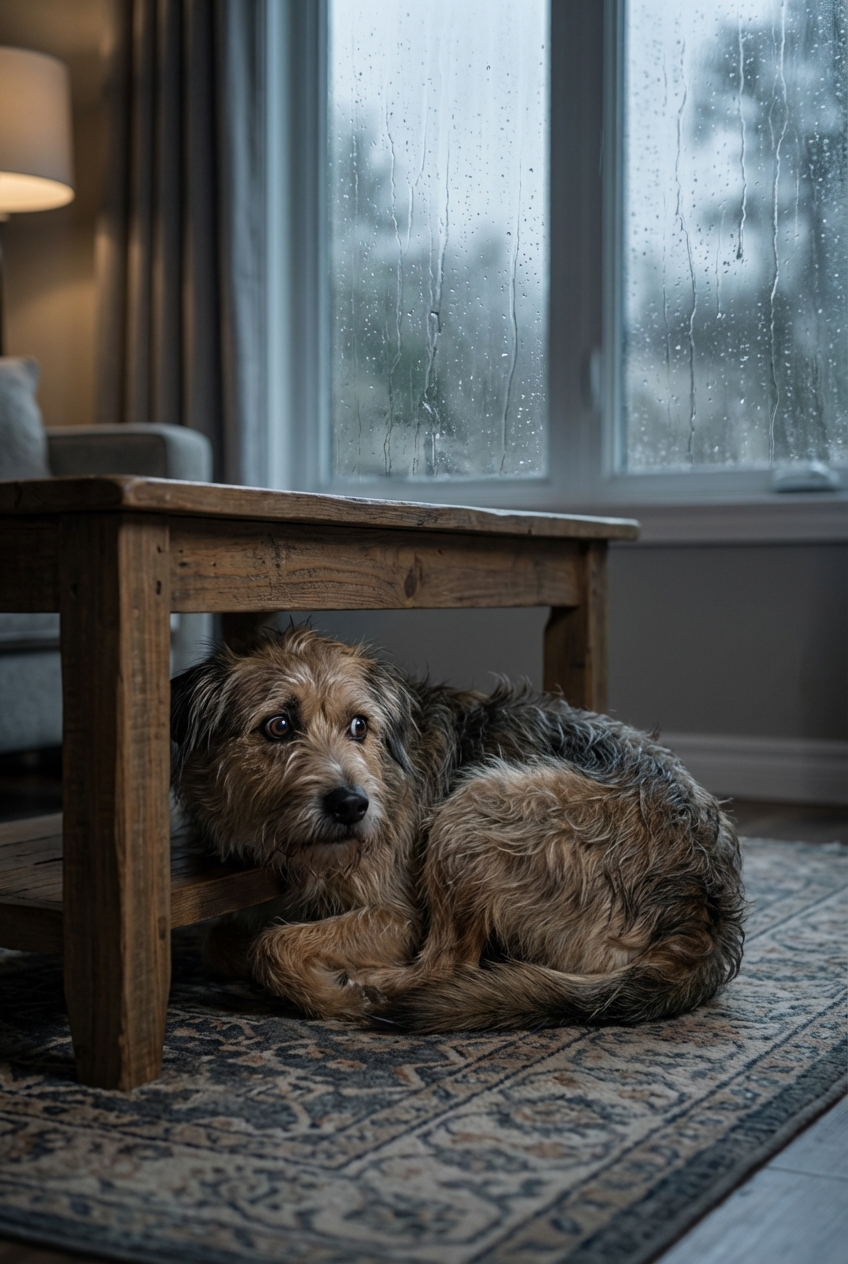
Thunderstorms can trigger shaking, hiding, and escape attempts. Learn vet-backed ways to calm your dog: storm station setup, steady sound, chews, training, w...
Article
•
Designer Mixes
How to Calm a Dog During a Storm

Shari Shidate
Designer Mixes contributor
Storms can feel downright scary to dogs. Thunder is loud, unpredictable, and often paired with pressure changes, wind, and flashing light. As a veterinary assistant here in Frisco, Texas, I have seen sweet, confident dogs turn into shaking, panting shadows of themselves the moment the sky rumbles.
The good news is that many dogs can improve with the right support. How much they improve depends on severity, overall anxiety levels, and consistency, but even severe cases often get better with a plan and veterinary guidance.
Why storms upset dogs
Storm fear is not just about noise. Many dogs react to a combination of triggers:
- Sound sensitivity to thunder, wind, and hail
- Flashes of lightning and fast-moving shadows
- Pressure changes that may contribute for some dogs
- Static electricity that some researchers and clinicians suspect may play a role in certain situations
- Learned fear after one intense storm experience
Some dogs show mild stress. Others go into full panic. Knowing what you are seeing helps you choose the right level of support.
Signs your dog needs help
Storm anxiety can look different from dog to dog. Common signs include:
- Panting, drooling, trembling
- Pacing, inability to settle
- Hiding in closets, bathrooms, or under furniture
- Clinginess, following you closely
- Whining, barking, or howling
- Destructive behavior, scratching at doors, chewing
- Attempts to escape the home or crate
- Accidents in the house
If your dog is injuring themselves trying to escape or is panicking for hours, that is a strong signal to involve your veterinarian. Severe storm phobia is a medical and behavioral welfare issue, not a discipline problem.
What to do during a storm
1) Create a safe, cozy storm spot
Pick a place that is naturally quieter, like an interior bathroom, laundry room, or walk-in closet. Set it up before storm season when possible.
- Add a thick bed or folded blankets for comfort and sound dampening
- Close curtains and keep lighting soft
- Offer a favorite chew or stuffed food toy if your dog will eat
- Stay nearby if your dog wants your presence
2) Use sound strategically
White noise, a fan, or calming music can reduce how sharp thunder sounds. The goal is not silence. It is a steady background that softens sudden booms.
- Turn on a box fan, air purifier, or a white-noise app
- Keep the TV on at a normal volume
- Close windows to reduce wind noise and sudden cracks
3) Stay calm and steady
Dogs are excellent at reading us. Comfort does not "reinforce" fear, but some dogs do get more worked up when we get high-energy or overly worried. Aim for calm, steady support.
- Speak in a calm, even voice
- Move slowly and predictably
- Offer comfort if your dog seeks it, and keep your energy low
4) Give your dog something to do
For mild to moderate anxiety, gentle enrichment can help shift the brain toward safer, more familiar routines.
- Snuffle mat with small treats
- Frozen stuffed toy with a lickable filling
- Simple "find it" game indoors using treats
If your dog refuses food, that is okay. Many anxious dogs cannot eat. Focus on comfort and safety.
5) Try pressure therapy if your dog likes it
Some dogs relax with gentle pressure from a well-fitted anxiety wrap or snug shirt. It is not a cure, but it can be one helpful tool.
Important: introduce it on calm days first. Do not wait until a storm is already happening.
6) Prevent escape
In clinic, I have seen dogs bolt through a cracked door the second thunder hits, even dogs who normally have great manners. A little prevention goes a long way.
- Keep doors, garage access, and gates secured
- Block access to known exit points if your dog panics and runs
- For potty breaks, use a leash even in a fenced yard during storms
- Make sure your dog has a collar ID tag and is microchipped with current contact info
What not to do
- Do not punish shaking, hiding, barking, or accidents. Fear is not disobedience.
- Do not force a dog out of a hiding spot unless there is a safety issue. That can increase panic and reduce trust.
- Do not confine an escape-risk dog in a crate if they have a history of hurting themselves trying to get out. Some dogs are safer in a small room instead.
- Do not use essential oils or strong scents around pets unless your veterinarian specifically approves. Many are irritating, and some are toxic.
How to prepare before storm season
Step 1: Watch the forecast and start early
Many calming tools work best when given before the first thunder clap. If storms are predicted, set up your dog’s storm spot, close blinds, and turn on white noise ahead of time.
Step 2: Practice happy thunder training
This is called desensitization and counterconditioning. You pair very low-level storm sounds with something your dog loves, like treats or play. Over time, many dogs can develop a less fearful response.
- Use a quality thunder recording at a very low volume
- Feed tiny, high-value treats while the sound plays
- Stop the treats when the sound stops
- Keep sessions short, 2 to 5 minutes, and end while your dog is still relaxed
- Slowly increase volume over days to weeks, not minutes
If your dog becomes tense, you moved too fast. Lower the volume and rebuild.
Step 3: Build a relaxation cue
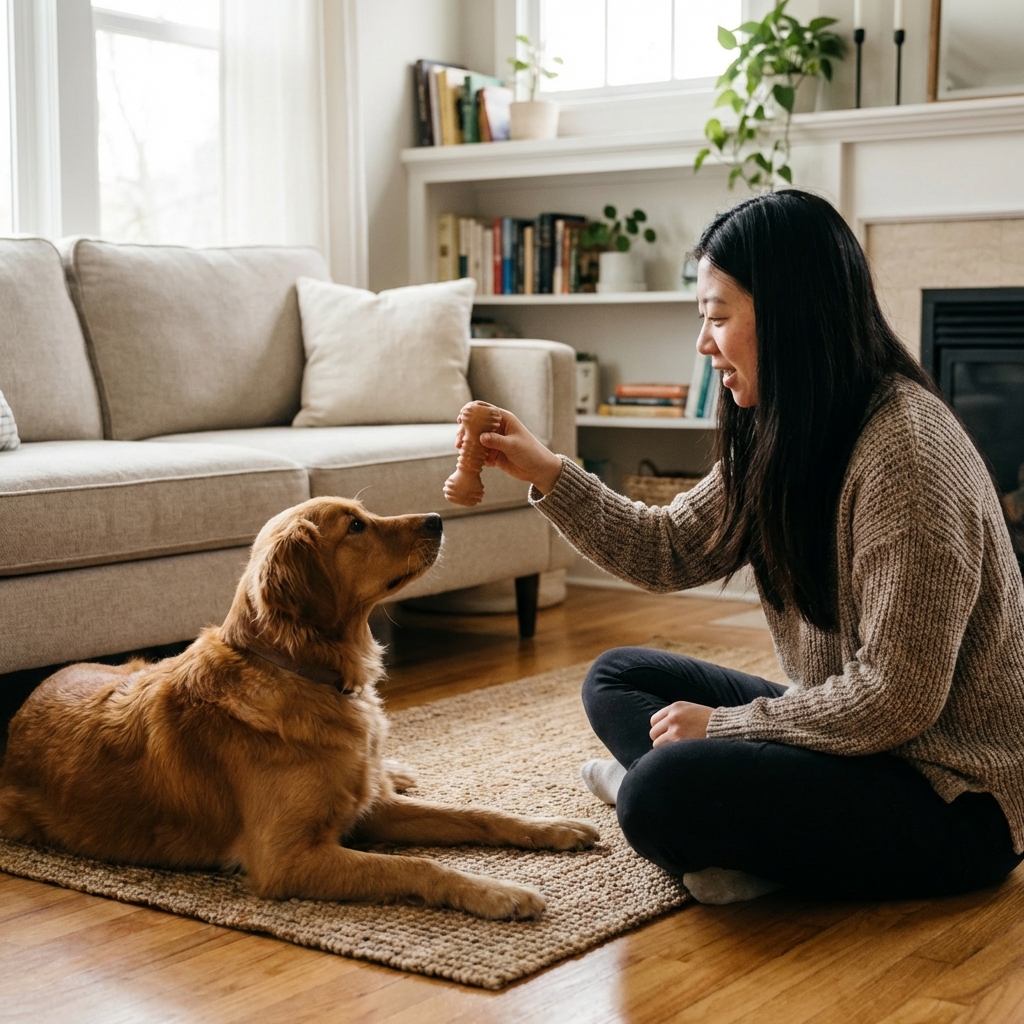
Teach a calm routine that you can use during storms: a mat, a chew, and steady background noise. With repetition on non-storm days, the routine itself can become soothing.
Calming aids that may help
There is no single solution that works for every dog, but these are commonly used options. Always check with your veterinarian first, especially if your dog is on other medications or has health conditions.
Over-the-counter options
- Anxiety wraps for gentle pressure support
- Pheromone diffusers or sprays designed for dogs
- L-theanine or alpha-casozepine based chews may help some dogs, but timing matters
Tip: trial any supplement on a calm day first so you can watch for stomach upset or unexpected agitation.
Also: many "natural" products are marketed for anxiety, including CBD. Quality and dosing can vary widely, so talk with your vet before trying them.
Vet-recommended diets and supplements
- Prescription calming diets that require veterinary authorization
- Targeted supplements your veterinarian recommends based on your dog’s health and history
Prescription medication
For moderate to severe storm anxiety, medication can be life-changing. Some medications are given as needed before storms. Others are daily, especially if your dog has anxiety beyond storms.
This is not "drugging your dog." It is reducing panic so your dog can learn and recover. When fear is extreme, training alone often cannot break through.
When to get extra help
If your dog’s fear is intense or getting worse, consider adding professional behavior support. Your veterinarian can help you find the right fit, such as a board-certified veterinary behaviorist (DACVB) or a certified trainer who has specific experience with fear and anxiety cases.
When to call your vet right away
Please reach out promptly if you notice any of the following:
- Your dog breaks teeth, nails, or bleeds while trying to escape
- Panic lasts long after the storm ends
- Your dog refuses food and water for an extended period during storm cycles
- New anxiety in an older dog, which can sometimes be linked to pain, hearing changes, or cognitive decline
- Any collapse, weakness, or breathing distress
If your dog’s anxiety is escalating with each storm, that is also a sign to intervene sooner rather than later. The earlier we treat fear, the easier it is to improve.
Quick storm plan you can save
Before thunder: Set up storm spot, close blinds, turn on white noise, offer a chew or lick toy, give vet-approved calming aid if needed.
During thunder: Calm voice, steady behavior, allow hiding, block escape routes, keep ID on collar, leash for quick potty breaks, stay close if your dog seeks you.
After storm: Offer a potty break, and reward settling or relaxing when it happens. Note what helped so you can repeat it next time.
Progress can be gradual, and that is okay. Consistency is what teaches your dog that storms are manageable.